

P0308 on 2007-2013 BMW M3: Cylinder 8 Misfire Causes and Fixes
P0308 on a BMW M3 indicates a misfire in cylinder 8. The most common causes are a failed ignition coil or a worn spark plug. Swapping the coil from cylinder 8 with another cylinder is the fastest way to diagnose a bad coil. Less common but platform-specific causes include throttle body actuators and ionic current control modules.
- P0308 signifies a misfire in cylinder 8, most often caused by a bad ignition coil or spark plug.
- A simple diagnostic step is to swap the ignition coil from cylinder 8 to another cylinder to see if the misfire code follows the coil.
- On the S65 engine, be aware of platform-specific issues like failing throttle body actuators, which can also cause misfires and will usually be accompanied by other specific fault codes.
- Any unusual engine knocking or ticking noise alongside a misfire code should be taken very seriously, as it could be a sign of impending rod bearing failure, a known critical flaw in this engine.
What's Unique About the 2007-2013 BMW M3
The E9x M3's S65 engine is a high-revving, naturally aspirated V8 known for its performance but also for specific, well-documented issues. While a P0308 code is often a simple ignition problem, on this platform it can sometimes be an early symptom of more serious, engine-specific failures like faulty throttle body actuators, a failing idle control valve, or a bad ionic current control module. In worst-case scenarios, unusual engine noises accompanying a misfire could point to the infamous rod bearing wear issue.
Symptoms You May Notice
- Rough or vibrating idle, which may worsen after 20-30 seconds.
- Hesitation or stumbling during acceleration, sometimes specifically between 2000-3000 RPM.
- Noticeable loss of engine power.
- Solid or flashing Check Engine Light.
- Increased fuel consumption and smell of raw fuel from the exhaust.
- The car may enter a reduced power 'limp mode', often with DSC and EML lights on.
- Increased pops and bangs from the exhaust.
- Replacing all fuel injectors when only one is bad.
- Replacing the fuel pump for a single-cylinder misfire, as a pump issue would typically affect multiple cylinders.
- Replacing coils and plugs repeatedly when the actual cause is a faulty Ionic Current Control Module.
Most Likely Causes
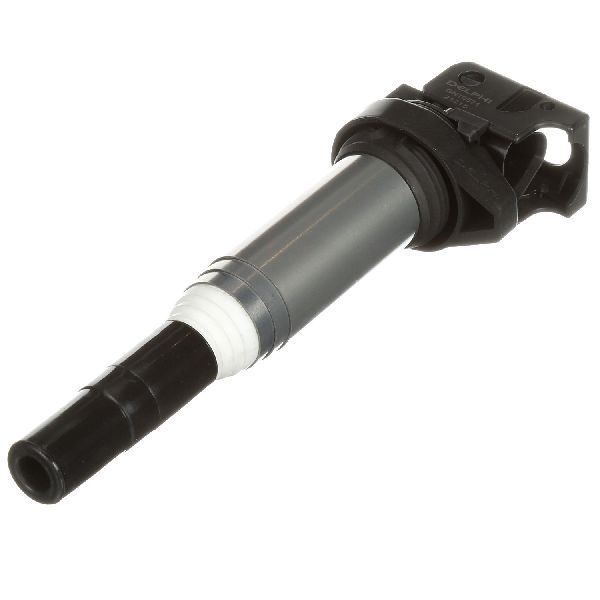
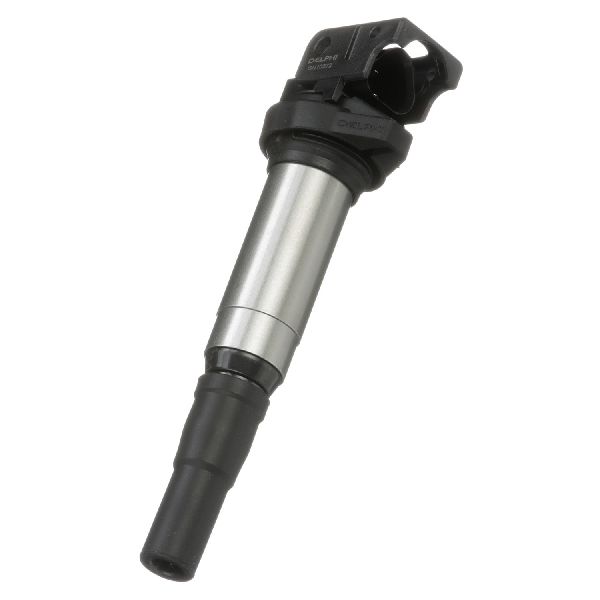
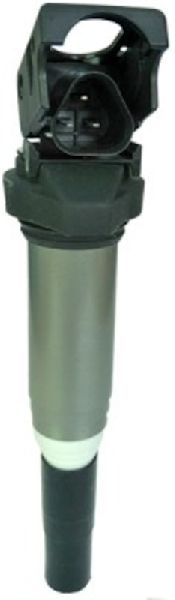
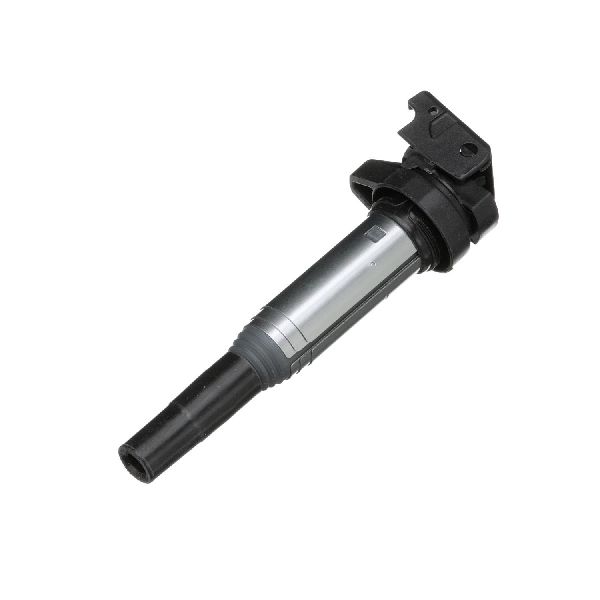
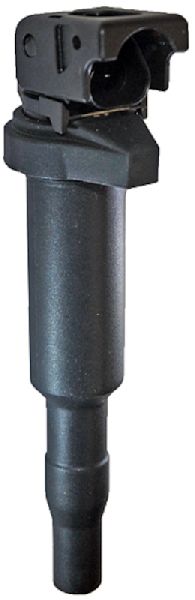
- Ignition Coil Failure 🔴 High Probability → Shop Ignition Coil Coil-on-plug systems on the high-revving S65 are subjected to significant heat and vibration, leading to a high failure rate over time. Eldor became the OEM supplier after widespread issues with earlier Bosch coils.
How to confirm: Swap the ignition coil from cylinder 8 with an adjacent cylinder (e.g., cylinder 7). Clear the codes and drive the car. If the code changes to P0307, the ignition coil is faulty. Do not rely on a multimeter resistance test, as the integrated ionic current monitoring circuitry makes simple resistance checks inconclusive.
Typical fix: Replace the faulty ignition coil. It is often recommended to replace all 8 coils at the same time, especially on higher mileage vehicles or if the brand is being updated (e.g., from Bosch to Eldor).
Est. part cost: $40-$80 per coil - Worn Spark Plug 🔴 High Probability → Shop Spark Plug
How to confirm: After ruling out the ignition coil, remove the spark plug from cylinder 8. Inspect it for wear, fouling (black, oily, or white deposits), or an incorrect gap. An oil-fouled plug on the threads can also indicate a leaking valve cover gasket or spark plug tube seal.
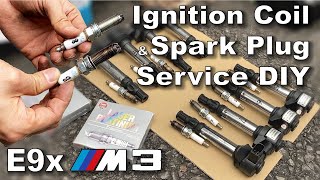
Typical fix: Replace the spark plug in cylinder 8. BMW recommends changing all spark plugs at regular intervals (around every 37,000 miles). If they are due for service, replace all 8 with the correct NGK plugs. 🎬 Watch: Step-by-step spark plug and ignition coil service guide.
Est. part cost: $15-$30 per plug - Faulty Fuel Injector 🟡 Medium Probability → Shop Fuel Injector Fuel injectors on the S65 can become clogged or stick open, especially with age and varying fuel quality. A stuck-open injector is a serious risk, as it can wash oil from the cylinder walls, leading to bore scoring and catastrophic engine damage.
How to confirm: If swapping the coil and plug doesn't resolve the issue, the injector is a likely culprit. A cold start with a very rough, fuel-smelling idle that smooths out can point to a leaky injector. Injector resistance can be checked with a multimeter; a healthy injector should read between 10-16 ohms, and all injectors should have similar values. Unlike some other BMW engines, S65 injectors do not require coding after replacement.
Typical fix: Replace the faulty fuel injector. Given the risk of failure, many owners proactively replace all 8 injectors as preventative maintenance.
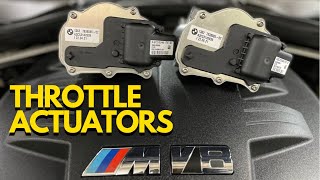
Est. part cost: $150-$300 per injector - Throttle Body Actuator Failure 🟡 Medium Probability The S65 engine uses two throttle body actuators (one for each bank) which are a notorious failure point due to wear of internal plastic gears and electronics. A failing actuator for Bank 2 (cylinders 5-8) can cause misfires across that bank, sometimes starting with just one cylinder like P0308 before affecting the others.
How to confirm: Look for specific BMW fault codes like 2B16 (Bank 2), 2B57, or CDC0 which directly point to the throttle actuators. The car will often go into limp mode with DSC and EML lights on. Sometimes, a failing actuator on one bank can even cause misfire codes on the opposite bank.
Typical fix: Replace the faulty throttle body actuator. Since both actuators are prone to failure and have the same amount of wear, it is highly recommended to replace them as a pair. 🎬 See this walkthrough for replacing your throttle body actuators.
Est. part cost: $700-$900 per actuator
Rare But Worth Checking
- Ionic Current Control Module Failure: The S65 (and S85) uses two of these modules to control ignition timing and detect misfires. They are a known failure point and can cause a persistent, isolated misfire code on a single cylinder that doesn't resolve after swapping coils or plugs. The diagnostic step is to swap the modules between Bank 1 and Bank 2 and see if the misfire moves to the other bank (e.g., P0308 becomes P0301).
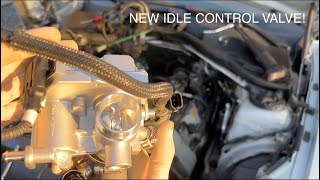
- Idle Control Valve (ICV) Failure: A failing ICV is another common S65 issue that can cause a rough, fluctuating, or stalling idle and may be accompanied by misfire codes. If the misfire is most prominent at idle, the ICV should be investigated.
- Rod Bearing Wear: This is a catastrophic engine failure and a well-known, critical issue for the S65 engine due to tight factory clearances. While it doesn't always present with a misfire code, any unusual engine noise (ticking, knocking) accompanying a misfire should be investigated immediately by a professional. Often, there is no warning before failure.
- Low Compression: A mechanical issue like a leaking valve, worn piston rings, or a damaged head gasket can cause a loss of compression in cylinder 8, leading to a persistent misfire. This is less common and requires a compression or leak-down test to diagnose.
- Vacuum Leak: A leak in the intake manifold gasket, a cracked crankcase vent hose, or an improperly seated intake plenum can lean out the air-fuel mixture and cause misfires. This is usually diagnosed with a smoke test.
- Missing Ground Connection: In one documented case on M3Post, a persistent bank-wide misfire was traced to grounding nuts that were not reinstalled on the engine wiring harness after a previous repair, causing voltage spikes.
Diagnosis Steps
- Read the fault codes with a BMW-capable OBD-II scanner to confirm P0308 and check for any other related codes (e.g., throttle actuator or oxygen sensor faults).
- Identify cylinder 8. On the S65 V8, cylinders 1-4 are on the passenger side (Bank 1, US models) and 5-8 are on the driver's side (Bank 2). Cylinder 8 is the rearmost cylinder on the driver's side.
- Swap the ignition coil from cylinder 8 with the coil from cylinder 7. Clear the codes and run the engine. If the code changes to P0307, the coil is bad.
- If the misfire remains on cylinder 8, swap the spark plug from cylinder 8 with cylinder 7. Clear codes and re-test. If the code moves to P0307, the spark plug was the issue.
- If the misfire still remains on cylinder 8, inspect the fuel injector wiring and connector for damage. Also inspect the valve cover area for oil leaks that could foul the spark plug connection.
- If basic ignition parts are ruled out, consider S65-specific components. Swap the Ionic Current Control Modules between Bank 1 and Bank 2. They are located on top of the valve covers. If the P0308 code moves to a cylinder on Bank 1 (e.g., P0301-P0304), the module is faulty.
- If bank-wide codes (P0305-P0308) are present with throttle body codes (2B16, 2B57), the Bank 2 throttle actuator is the primary suspect.
- If the issue persists, a professional should perform a fuel injector test and a compression/leak-down test on cylinder 8 to check for mechanical integrity.
Parts You'll Likely Need
- Ignition Coil
(OEM #12138657273 (Eldor), supersedes 12137841754 (Bosch))— This is the most common failure point for a single-cylinder misfire. The Eldor version is considered an upgrade over the earlier Bosch coils.
Trusted brands: Eldor (Current OEM), Bosch, Delphi
Related Codes That Often Appear With This One
- P0300, P0305, P0306, P0307 — If the P0308 code is accompanied by misfires on the other cylinders of Bank 2 (5, 6, 7), it strongly points to a systemic issue with that bank, most commonly a failing Throttle Body Actuator.
- 2B16, 2B57, CDC0 — These are BMW-specific codes indicating a fault with the Bank 2 throttle body actuator. If you see these along with misfire codes on cylinders 5-8, the actuator is the likely root cause.
- 2B41 — This is a BMW-specific code for 'Misfire with cut-out, several cylinders'. It often appears with a bank-wide misfire event caused by a throttle actuator or other systemic problem.
Platform-Specific Known Issues
- Rod Bearing Failure: The S65 engine is infamous for premature rod bearing wear due to tight clearances. This is a catastrophic failure that requires a full engine rebuild or replacement. Proactive replacement is a common practice in the owner community, typically around 60,000-80,000 miles.
- Throttle Body Actuator Failure: The plastic gears inside the throttle actuators wear out, causing limp mode, DSC errors, and misfires, often across an entire bank (cylinders 1-4 or 5-8). It's a matter of 'when,' not 'if,' they will fail.
Mechanic-Grade Diagnostic Values
- Low-Pressure Fuel System Pressure — expected: 3.0 to 6.0 BAR (43.5 to 87 PSI), regulated by the DME.. Failure: Pressure that is unstable or consistently below 3.0 BAR can indicate a weak fuel pump or faulty pressure sensor.
- Fuel Injector Resistance — expected: 10 - 16 Ohms. A real-world measurement on a healthy S65 showed 11.8 Ohms.. Failure: A reading of infinite resistance (open circuit) or significantly lower than other injectors indicates a faulty injector. All 8 injectors should have very similar resistance values.
- Scan Tool Live Data: Fuel Injection Timing — expected: Approximately 3ms at idle for healthy cylinders.. Failure: In a case of a bank-wide misfire on Bank 2 (cylinders 5-8), the injection timing for the entire bank was 0ms, indicating the DME had shut off fuel to those cylinders, likely due to a fault with the throttle actuator or primary O2 sensor for that bank.
Hidden / Shadow Codes Worth Checking
- 2B49: Misfire impairing exhaust emission, cylinder 8. This is the DME's specific, more detailed version of P0308. (see via BMW-specific diagnostic software like ISTA, INPA, or a high-end scanner.)
- 2B3D: Misfire with cutout, cylinder 8. This indicates the DME has actively shut down the injector for cylinder 8 to prevent damage, usually from a severe or persistent misfire. (see via BMW-specific diagnostic software like ISTA, INPA, or a high-end scanner.)
- 2B41: Misfire with cutout, several cylinders. Often seen with bank-wide misfires caused by a throttle actuator or ionic module failure. (see via BMW-specific diagnostic software like ISTA, INPA, or a high-end scanner.)
- 2796: Motor emergency program activated. This is a general limp-mode code that is triggered by more serious faults like throttle actuator failure or significant fuel pressure deviations. (see via BMW-specific diagnostic software like ISTA, INPA, or a high-end scanner.)
Scan Tool Commands That Help
- ISTA (Integrated Service Technical Application): Misfire analysis / Test plan — ISTA can guide a technician through a structured test plan, analyzing misfire counter data that is logged over time, even for misfires that don't trigger a check engine light. This can help differentiate between a random event and a developing hardware problem.
- MSS6X Flasher / Binary Modification Tool: Cold Start Delete (Software Tune) — The S65 cold start high-idle sequence can sometimes cause erroneous misfire codes (e.g., 2B49) to be logged shortly after startup. If misfires only ever occur on a cold start and the car runs perfectly otherwise, some owners opt to tune out this sequence to eliminate the nuisance codes. This is an advanced procedure and not a fix for a genuine mechanical or electrical misfire.
Wiring & Ground Locations
- Engine Ground Strap — Under the car, connecting the engine block to the chassis, near the driver's side (US) header-to-x-pipe connection.. The S65 relies on clean electrical signals for its complex systems, including the ionic current misfire detection. A corroded or loose main ground strap can introduce electrical noise, causing erratic behavior and phantom misfires that are difficult to diagnose.
- DME Connector X60002, Pin 15 — On the MSS60 DME, which is located in the electronics box (E-box) in the engine bay plenum.. This is the specific pin that sends the signal from the DME to the ignition coil for cylinder 8. A technician can use this for advanced diagnostics, such as checking for a signal with an oscilloscope if a persistent misfire on cylinder 8 cannot be solved by swapping components.
Real Owner Repair Stories
- M3Post forum user (E9x M3 S65) — Persistent misfires that could not be diagnosed.
❌ Tried (didn't work) Smoke test, Water test on the intake plenum
✅ What actually fixed it The Intake Air Temperature (IAT) sensor's mounting hole in the plenum had broken tabs, creating a small vacuum leak only under high engine vacuum (deceleration). This type of leak is not detectable by a standard smoke test. The fix was to repair or replace the intake plenum. - CarTechnoloGY forum user (E93 M3 S65) — Misfires on multiple cylinders.
❌ Tried (didn't work) Focusing on ignition and fuel components on the engine.
✅ What actually fixed it The user was advised that if misfires consistently appear after filling the fuel tank, the cause is often a faulty fuel tank breather valve (EVAP system), part number 13-90-7-838-281. - YouTube video (applies to S85, but same principle for S65) (BMW M5 S85 (similar ionic control system)) — Persistent misfire on a single cylinder.
❌ Tried (didn't work) Replacing ignition coil on the affected cylinder, Replacing spark plug on the affected cylinder
✅ What actually fixed it The Ionic Current Control Module for the affected bank was faulty. The diagnosis was confirmed by swapping the modules between Bank 1 and Bank 2; the misfire code moved to a cylinder on the opposite bank, proving the module was the cause.
"I Checked Everything" — The Actual Cause
- A confirmed repair story showed that persistent misfires were caused by a hairline crack/leak at the Intake Air Temperature (IAT) sensor's mounting boss on the intake plenum. This leak was too small to be found with a typical smoke test but would open under high engine vacuum, leaning out the mixture and causing misfires. The fix required repairing or replacing the plenum.
OEM Part Supersession History
12137841754 (Bosch)→12138657273 (Eldor)— The original Bosch ignition coils had a higher failure rate. The Eldor coils are considered the more reliable OEM replacement.
Model Year Variations Within This Range
- Pre-May 15, 2008 vs. Post-May 15, 2008: The accessory belt routing and several pulleys were changed. Early models have a standard single-sided V-belt, while later models use a double-sided V-belt. This is critical to know when ordering belts or servicing the front of the engine.
- 2008-2010 vs. 2011-2013 (approx.): The original rod bearing material was a copper-lead alloy. Around 2011, BMW switched to a tin-aluminum alloy. This change is relevant to the well-known rod bearing wear issue, as the detection methods and wear characteristics differ between the two types. Note that the changeover may not be a clean cut by model year.
- 2008 vs. 2009+: The iDrive (CIC) navigation and entertainment system was significantly updated for the 2009 model year. Also, the clutch was redesigned in 2009; replacing a clutch on a 2008 model requires updating to the newer pressure plate and associated parts.
Diagnostic Flowchart
Real Owner Stories
Aggregated from forums and TSBs cited above. Mileages and costs reflect what owners reported in those sources.
2007-2013 BMW M3 E90/E92
Symptoms: Engine malfunction light came on with reduced power and RPMs limited to 4k. The car was rumbling and noticeably louder. An OBD scan showed cylinders 5, 6, 7, and 8 were all misfiring (P0300, P0305, P0306, P0307, P0308).
What fixed it: Diagnosed as a bank-wide misfire issue, typically resolved by replacing the Bank 2 Throttle Body Actuator.
Source hint: m3post.bimmerpost.com owner report
2007-2013 BMW M3 E90/E92
Symptoms: Persistent misfire codes that would not go away despite standard troubleshooting.
What fixed it: Replaced missing grounding nuts on the engine wiring harness that were left off during a previous throttle actuator replacement job, which had been causing voltage spikes.
Source hint: M3Post (E90 E92): SOLVED: Another help with codes thread...
2007-2013 BMW M3 E90/E92
Symptoms: P0308 code accompanied by engine hesitation and stumbling specifically between 2000-3000 RPM.
What fixed it: Replacing the Idle Control Valve was suggested and utilized after spark plugs and ignition coils failed to resolve the lower RPM hesitation.
Source hint: M3Post (E90 E92): Engine rumbles and stumbles in lower RPM
Related OBD-II Codes
Frequently Asked Questions
Do I need to code the new fuel injectors on my S65 engine if I replace them to fix P0308?
Can I test the ignition coil on my M3 with a multimeter to confirm it's causing the P0308 code?
My M3 has a P0308 code and smells strongly of raw fuel. What is the worst-case scenario?
I have misfire codes for cylinders 5, 6, 7, and 8 along with DSC and EML lights. Is this just a bad coil?
Which brand of ignition coils should I use for my 2007-2013 BMW M3?
How do I test the Ionic Current Control Module for a cylinder 8 misfire?
Helpful Videos
We Have This Part in Stock


The information in this article is provided for general reference and educational purposes only. Vehicle specifications, procedures, and part compatibility can vary by production date, trim level, and region. Always consult your vehicle's factory service manual and verify part numbers before purchasing or performing repairs. Safety-critical components such as airbags, seat belts, and braking systems should be installed by a qualified professional.
- BMW M3:
- 🧭 Diagnostic Flowchart
- 🎬 Helpful Videos
- 🛍️ Shop This Part
- What's Unique About the 2007-2013 BMW M3
- Symptoms You May Notice
- Most Likely Causes
- Rare But Worth Checking
- Diagnosis Steps
- Parts You'll Likely Need
- Related Codes That Often Appear With This One
- Platform-Specific Known Issues
- Mechanic-Grade Diagnostic Values
- Hidden / Shadow Codes Worth Checking
- Scan Tool Commands That Help
- Wiring & Ground Locations
- Real Owner Repair Stories
- "I Checked Everything" — The Actual Cause
- OEM Part Supersession History
- Model Year Variations Within This Range
- Real Owner Stories
- 2007-2013 BMW M3 E90/E92
- 2007-2013 BMW M3 E90/E92
- 2007-2013 BMW M3 E90/E92
- Related OBD-II Codes
- Frequently Asked Questions
- 🎟️ Get 5% Off