

P0308 on 2011-2016 BMW M5: Cylinder 8 Misfire Causes and Fixes
P0308 on a 2011-2016 BMW M5 means cylinder 8 is misfiring. The most common causes are a bad ignition coil or spark plug. A failing fuel injector is also a strong possibility on the S63 engine. Start by swapping the coil and plug from cylinder 8 to another cylinder to see if the fault follows. If the misfire persists, the fuel injector is the next likely culprit.
- P0308 on your M5 is a misfire on cylinder 8, the rearmost cylinder on the driver's side.
- Start your diagnosis with the easiest and cheapest parts: swap the ignition coil, then the spark plug, to another cylinder to see if the fault moves.
- Failing fuel injectors are a very common problem on this specific engine. If coils and plugs are good, the injector is the next likely suspect.
- Due to the engine's design, accessing cylinder 8 can be challenging and may require moving other components like the engine computers.
- Do not drive with a flashing check engine light, as this indicates a severe misfire that can cause expensive catalytic converter damage.
What's Unique About the 2011-2016 BMW M5
The S63 is a high-performance 'hot-vee' engine, meaning its twin turbochargers are located in the valley between the cylinder banks. This design creates extreme heat that can shorten the life of ignition coils, spark plugs, and especially the direct fuel injectors. Fuel injectors are a particularly well-documented failure point on this engine, with BMW extending the warranty on them for many vehicles and releasing multiple updated versions (known as 'indexes') to improve reliability.
Symptoms You May Notice
- Rough or vibrating idle.
- Hesitation or stumbling during acceleration.
- Noticeable loss of engine power.
- Flashing or solid Check Engine Light.
- "Drivetrain Malfunction" message on the iDrive screen.
- Increased fuel consumption.
- Smell of fuel from the exhaust.
- Replacing oxygen sensors. While a misfire can affect O2 sensor readings, the sensor itself is rarely the cause of a single-cylinder misfire code. The issue is more likely upstream (ignition or fuel).
- Replacing the mass airflow (MAF) sensors. A faulty MAF sensor would typically cause issues across an entire cylinder bank or trigger other specific codes, not just P0308.
Most Likely Causes
- Ignition Coil Failure 🔴 High Probability → Shop Ignition Coil The 'hot-vee' design of the S63 engine exposes the ignition coils to extreme heat, leading to a higher-than-average failure rate.
How to confirm: Swap the ignition coil from cylinder 8 with another cylinder (e.g., cylinder 7). Clear the codes and drive the car. If the code changes to P0307, the ignition coil is faulty. This is a common and effective diagnostic step mentioned in owner forums.
Typical fix: Replace the faulty ignition coil. It is often recommended to replace all 8 coils at the same time, especially if they are original or old, to prevent future misfires on other cylinders. 🎬 Watch: Step-by-step guide to replacing S63 ignition coils.
Est. part cost: $40-$80 per coil - Worn or Fouled Spark Plug 🔴 High Probability → Shop Spark Plug High cylinder pressures from the twin-turbo setup cause spark plugs to wear more quickly than in naturally aspirated engines. They are a regular maintenance item with a shorter service interval on these high-performance engines.
How to confirm: After confirming the coil is good, swap the spark plug from cylinder 8 with another cylinder. If the misfire code follows the spark plug, the plug is bad. Visually inspect the plug for wear, carbon fouling, or oil contamination. A fuel smell on the plug can indicate an injector issue.
Typical fix: Replace the spark plug. It is best practice to replace all 8 spark plugs at the same time to ensure consistent performance. The S63 requires a special 14mm 12-point thin-wall socket. 🎬 See this DIY walkthrough for replacing your spark plugs.
Est. part cost: $15-$30 per plug - Fuel Injector Failure 🔴 High Probability → Shop Fuel Injector Direct fuel injectors on the S63 engine are a known common failure item. They can become clogged, leak, or get stuck open. A leaking injector can wash oil from cylinder walls, leading to catastrophic engine damage like spun rod bearings. BMW has issued several revised versions ('indexes') of these injectors to improve reliability.
How to confirm: If swapping the coil and plug does not resolve the misfire on cylinder 8, the injector is the next likely cause. Diagnosis can be confirmed using BMW's ISTA software to shut off individual injectors and observe changes in engine smoothness. A tell-tale sign of a leaking injector can be a puff of white or gray smoke and a fuel smell on a cold start. A spark plug that is consistently black and sooty, even after replacement, points strongly to a faulty injector on that cylinder.
Typical fix: Replace the fuel injector. This is a complex job that requires special tools for removal/installation and the new injector must be coded to the DME with its specific flow rate values. It is highly recommended to replace all 8 injectors with the latest available index number (Index 12 or higher). Mixing injectors with index 10 or lower with index 11 or higher is not recommended.
Est. part cost: $150-$250 per injector (OEM)
Rare But Worth Checking
- Low Compression: If ignition and fuel components are confirmed good, a compression test should be performed to check for internal engine mechanical issues like a bad valve, worn piston rings, or even scored cylinder walls from a failed injector.
- Vacuum Leak: A leak in a vacuum hose or intake manifold gasket could introduce unmetered air and cause a lean misfire, though this would often affect multiple cylinders or an entire bank.
- VANOS System Fault: A failing VANOS solenoid can cause rough idle, hesitation, and misfire codes. While typically affecting an entire bank, a sticky solenoid could contribute to issues on a single cylinder under specific conditions. Symptoms often include a rattling noise on cold starts.
Diagnosis Steps
- Read the fault codes using an OBD-II scanner to confirm P0308 and check for any other codes.
- For the S63 engine, cylinder 8 is the rearmost cylinder on the driver's side (Bank 2, US LHD vehicles). Cylinders 1-4 are on the passenger side (Bank 1), and 5-8 are on the driver's side.
- Swap the ignition coil from cylinder 8 with an adjacent cylinder (e.g., cylinder 7). Clear the codes and run the engine to see if the misfire moves to the new cylinder (P0307). If it does, the coil is bad.
- If the misfire remains on cylinder 8, swap the spark plug from cylinder 8 with the one from the cylinder you just used. Clear codes and test again. If the misfire moves, the spark plug is bad.
- If the misfire still stays on cylinder 8, the fuel injector is the most likely culprit. This is a more involved repair. A professional can use ISTA software to perform a cylinder smoothness test or selectively disable injectors to confirm the fault.
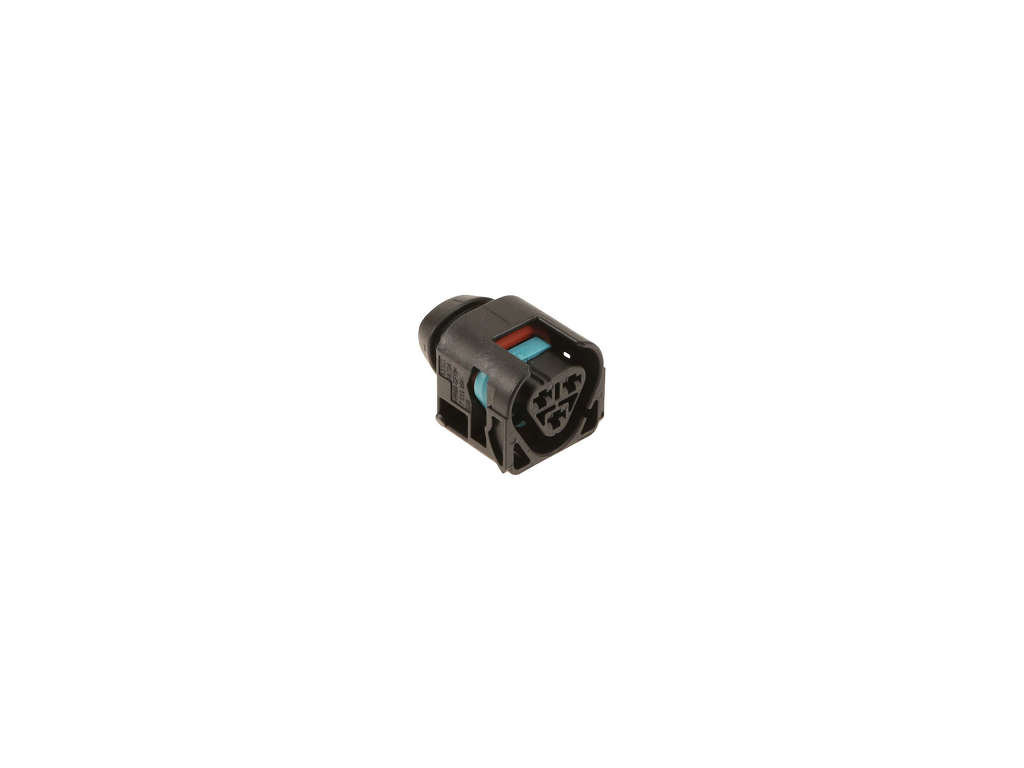
- Inspect the wiring and connector for the ignition coil and fuel injector on cylinder 8 for any signs of damage or corrosion. A loose connector on an ignition coil can cause a misfire.
- If all else fails, perform a cylinder compression test and a leak-down test to rule out mechanical engine problems.
Parts You'll Likely Need
- Ignition Coil
(OEM #12138616153)— This is the most common and easiest-to-replace part that causes a misfire. Heat from the engine often leads to premature failure.
Trusted brands: Bosch, Delphi, Eldor
OEM price range: $60-$90
Aftermarket price range: $40-$70 - Spark Plug
(OEM #12120037582)— Spark plugs are a regular wear item on this high-output engine and a frequent cause of misfires.
Trusted brands: NGK, Bosch
OEM price range: $25-$40
Aftermarket price range: $15-$30 - Fuel Injector (Direct Injection)
(OEM #13538616079)— A very common failure point on the S63 engine. It's crucial to get the latest 'index' version available (Index 12), as earlier versions were prone to issues. Failure to replace a faulty injector can lead to more severe engine damage.
Trusted brands: Bosch (OEM), Vitesco
OEM price range: $150-$250
Aftermarket price range: $80-$150
Related Codes That Often Appear With This One
- P0300 — If multiple components are failing or if the issue is systemic (like low fuel pressure or a major vacuum leak), a P0300 'Random/Multiple Cylinder Misfire' code may appear alongside P0308.
- P0301-P0307 — If other cylinder-specific misfire codes are present (e.g., P0305, P0306, P0307 on the same bank), it points towards a more widespread issue like failing injectors, a vacuum leak affecting multiple cylinders, or a problem with a component shared by that bank of cylinders, like a VANOS solenoid or O2 sensor.
- 2A82 / 2A87 — These are VANOS-related codes for the intake and exhaust camshafts. If a VANOS solenoid is failing, it can disrupt timing and lead to misfires, potentially triggering these codes alongside the P0308.
- P0087 — This code indicates 'Fuel Rail/System Pressure - Too Low'. While it often points to a failing high-pressure fuel pump (HPFP), it can also be triggered by a severely leaking fuel injector causing a drop in rail pressure, which in turn can cause misfires.
Technical Service Bulletins (TSBs) & Recalls
- SI B01 06 18: References the extended limited warranty for engine fuel injectors on certain models with the S63 engine.
- SI B13 08 15: Discusses an updated fuel injector part number for S63 engines, highlighting material updates and performance characteristics.
- SI B13 07 12: Outlines the official diagnostic procedure using ISTA, starting with the misfire test plan before checking other fuel system components. It specifies replacing injectors by bank if they are below index 11.
Platform-Specific Known Issues
- BMW extended the limited warranty for fuel injectors on many S63 engines to 10 years or 120,000 miles due to high failure rates. Owners should check with a BMW dealer to see if their vehicle is covered.
- The S63 engine requires a special 14mm 12-point (bi-hex) thin-wall spark plug socket for spark plug changes.
- Accessing the rear cylinders (4 and 8) can be difficult and may require removing the DMEs (engine computers) and coolant expansion tanks for clearance.
- When replacing fuel injectors, they must be coded to the DME. This process calibrates the DME for the precise flow rate of each new injector. Failure to code new injectors can result in continued rough running.
Mechanic-Grade Diagnostic Values
- High-Pressure Fuel Rail Pressure (Direct Injection) — expected: Approximately 10 MPa (1450 PSI) at idle.. Failure: Significant drops below the target pressure, especially under load, can indicate a failing High-Pressure Fuel Pump (HPFP) or a leaking injector. Codes like P0087 may accompany this.
- Low-Pressure Fuel System Pressure — expected: Approximately 670 kPa (6.7 Bar or 97 PSI) at idle.. Failure: Pressure below 5 Bar (72 PSI) can indicate a failing in-tank low-pressure fuel pump (LPFP), which will starve the HPFPs and cause misfires, often across multiple cylinders.
- ISTA Rough Running Values — expected: The permissible range for smooth operation is typically within -7 to +7 on the ISTA scale.. Failure: A cylinder consistently showing a value significantly higher than the others (e.g., a blue line for cylinder 1 spiking above 7) indicates a misfire or poor combustion on that cylinder. Note that software versions can affect how accurately the faulty cylinder is identified.
- Knock Sensor Voltage (Live Data) — expected: Should be relatively low and consistent across all cylinders (e.g., under 5V).. Failure: A single cylinder showing a drastically higher voltage (e.g., 15V while others are under 5V) is an outlier that can point to a severe combustion issue or a faulty knock sensor/wiring on that cylinder.
Scan Tool Commands That Help
- ISTA: Misfire detection test plan (AT1214_DI8MISFIRE_20) — This is the official starting point for any misfire complaint on the S63. It runs a guided diagnostic, including a smooth running test, to identify the faulty cylinder(s) before recommending further steps.
- ISTA: Injector Quantity Compensation (Coding) — This function is mandatory after replacing any fuel injector. It requires entering the two 3-digit calibration values printed on the new injector to adjust the DME for its precise flow rate. Failure to do this will cause rough running and continued misfires.
- ISTA: Valvetronic limit position learning — After major engine work or if Valvetronic system faults are suspected, this function re-learns the physical end stops of the eccentric shaft, which is critical for proper air management and preventing misfires.
Wiring & Ground Locations
- Ignition Coil Connector — On top of each ignition coil, under the plastic engine cover.. A loose or improperly seated electrical connector on the cylinder 8 ignition coil is a simple but possible cause for a P0308 misfire. A firm push to ensure it 'clicks' into place is a crucial check during diagnosis.
- Engine Ground Straps — There are multiple ground straps on the S63 engine. Key locations are from the chassis to the engine block and from the valve covers. Visually inspect for corrosion or breakage.. A poor engine ground can cause a weak spark or erratic sensor readings, leading to misfires that can be difficult to diagnose. While it would typically affect more than one cylinder, it's a fundamental check when electrical issues are suspected.
Real Owner Repair Stories
- Reddit user on r/BmwTech (2010 BMW X6M (S63 engine)) — Recurring misfire on cylinder 6 with a check engine light. The spark plug for that cylinder was repeatedly found to be black and sooty.
❌ Tried (didn't work) Replacing the spark plug (the new one also became sooty)., Swapping the ignition coil with another cylinder (misfire did not move).
✅ What actually fixed it The consensus and next logical step pointed directly to a bad fuel injector on cylinder 6, which was causing a rich condition and fouling the plug. The owner was running older 'Index 7' injectors.
OEM Part Supersession History
13537537317, 13537565138, 13537585261→13538616079 (Current as of Index 12)— Multiple revisions were made to improve reliability and address high failure rates. The latest injectors (Index 11 and higher) feature different internal construction and calibration.
Heads up: Injectors with an index of 10 or lower should NOT be mixed with injectors of index 11 or higher on the same engine bank. Doing so will cause running issues due to different flow characteristics. It is best practice to replace all 8 with the latest index.
Model Year Variations Within This Range
- 2011-2017 (F10 M5): The engine in the F10 M5 is the S63TÜ (Technical Update). Compared to the original S63 in the X5/X6 M, it added VALVETRONIC, used a higher compression ratio (10.0:1 vs 9.3:1), and ran higher boost pressure (1.5 bar vs 1.2 bar). While the core misfire causes are the same, these changes put different stresses on the components.
Diagnostic Flowchart
Other Known Issues on This Vehicle
Issues unrelated to this code that are worth knowing about as an owner of this generation:
- Rod Bearing Wear/Failure 🔴 High — A known concern for S63 engines, though frequency is debated. Can occur even at lower mileages (50k-70k miles). Often exacerbated by long oil change intervals or leaking fuel injectors diluting the oil.
- Excessive Oil Consumption 🟠 Medium — Commonly reported, often attributed to the 'hot-vee' design causing oil to burn off, but can also be a symptom of failing valve stem seals or turbo seals. Consumption of up to 1 liter per 800-1000 miles is sometimes considered 'normal' by dealers but can indicate underlying issues.
- Timing Chain Stretch / Guide Failure 🔴 High → Shop Engine Timing Chain — The timing chains can stretch over time, and the plastic guides can become brittle and break due to heat. Symptoms often start with a rattling noise on cold starts around 70,000-100,000 miles. Failure can be catastrophic. (Ref: No recall, but addressed in some cases via BMW 'Customer Care Package' for the related N63 engine.)
- Valve Stem Seal Degradation 🟠 Medium — The seals harden over time due to engine heat, allowing oil to leak into the combustion chambers. This is a primary cause of oil consumption and blue/gray smoke from the exhaust, especially after idling. Most common on higher mileage engines (70k-120k miles).
- VANOS Solenoid Failure 🟡 Low — Solenoids can become clogged or fail electronically, typically between 80,000 and 120,000 miles. This leads to rough idle, hesitation, and loss of power. It's a relatively common maintenance item on many modern BMW engines.
Used vs. New Parts: Buying Guide for This Vehicle
When a used part is the smart pick: Used parts are generally not recommended for critical fuel and ignition components on the S63 engine. However, a used ignition coil from a known low-mileage (<50,000 miles) donor vehicle could be a cost-effective option for diagnosis or a temporary fix.
Donor-vehicle mileage cap: roughly under 50000 miles for the part to have meaningful remaining life.
What to inspect on the donor part:
- For an ignition coil, check for cracks in the plastic housing or corrosion on the electrical connector.
- Verify the part number on the component matches the required OEM part.
- Ask for the VIN of the donor car to verify its mileage and production date.
OEM-only on this vehicle (don't cheap out):
- Fuel Injectors: Absolutely critical to buy new, OEM (Bosch/Vitesco) or Genuine BMW parts of the latest index (12 or higher). Used injectors are a huge gamble due to unknown history, potential clogging, and the high risk of mixing incompatible index numbers.
- Spark Plugs: These are wear items and should always be purchased new.
Aftermarket brands forum-validated for this vehicle:
- Bosch (Ignition Coils, Spark Plugs, Fuel Injectors - often the Original Equipment Manufacturer)
- Delphi (Ignition Coils)
- Eldor (Ignition Coils)
- NGK (Spark Plugs)
- Vitesco (Fuel Injectors - an OEM supplier)
Brands owners have reported issues with on this vehicle:
- Unbranded or no-name ignition coils and fuel injectors from online marketplaces. These often have high failure rates and can cause persistent issues. For fuel injectors specifically, counterfeit parts are a known problem and can lead to engine damage.
Real Owner Stories
Aggregated from forums and TSBs cited above. Mileages and costs reflect what owners reported in those sources.
2013 BMW M5 S63 — ~60000 miles
Symptoms: Misfires and 'Drivetrain Malfunction' messages. The owner noted that coils, plugs, and injectors are the primary causes of these issues on the platform.
What fixed it: Replacement of ignition coils and spark plugs, following the standard diagnostic procedure of swapping components to identify the fault.
Source hint: M5POST / Bimmerpost forum threads
2014 BMW M5 S63
Symptoms: A puff of white or gray smoke and a fuel smell on a cold start, along with a persistent misfire code.
What fixed it: Replacement of the fuel injector with a new Index 12 unit and coding the new flow rate values to the DME.
Source hint: SI B13 08 15 and Bimmerfest forum discussions
Related OBD-II Codes
Frequently Asked Questions
Is there an extended warranty for the fuel injectors on my 2011-2016 BMW M5?
Which cylinder is cylinder 8 on my S63 engine?
Can I mix different index fuel injectors if I only want to replace the one on cylinder 8?
Why do the ignition coils fail so frequently on the F10 M5?
Do I need any special tools to change the spark plugs to fix a P0308 code?
Is it true that a P0308 misfire can lead to engine bearing failure?
Helpful Videos

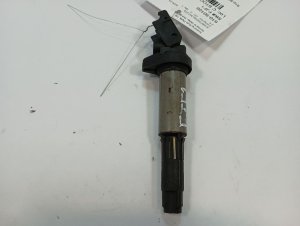
Used OEM Parts in Stock
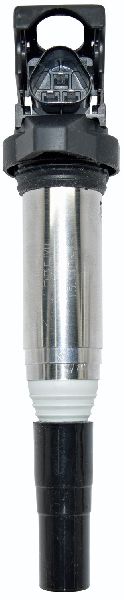
New Aftermarket Parts Available

The information in this article is provided for general reference and educational purposes only. Vehicle specifications, procedures, and part compatibility can vary by production date, trim level, and region. Always consult your vehicle's factory service manual and verify part numbers before purchasing or performing repairs. Safety-critical components such as airbags, seat belts, and braking systems should be installed by a qualified professional.
- BMW M5:
- 🧭 Diagnostic Flowchart
- 🎬 Helpful Videos
- 🛍️ Shop This Part
- What's Unique About the 2011-2016 BMW M5
- Symptoms You May Notice
- Most Likely Causes
- Rare But Worth Checking
- Diagnosis Steps
- Parts You'll Likely Need
- Related Codes That Often Appear With This One
- Technical Service Bulletins (TSBs) & Recalls
- Platform-Specific Known Issues
- Mechanic-Grade Diagnostic Values
- Scan Tool Commands That Help
- Wiring & Ground Locations
- Real Owner Repair Stories
- OEM Part Supersession History
- Model Year Variations Within This Range
- Other Known Issues on This Vehicle
- Used vs. New Parts: Buying Guide for This Vehicle
- Real Owner Stories
- 2013 BMW M5 S63 — ~60000 miles
- 2014 BMW M5 S63
- Related OBD-II Codes
- Frequently Asked Questions
- 🎟️ Get 5% Off