

P0308 on 2016-2022 Buick Envision: Understanding an Impossible Misfire Code
A P0308 code on a Buick Envision indicates 'Cylinder 8 Misfire', which is impossible as this vehicle only has a 4-cylinder engine. The issue is not a real misfire, but likely a faulty scan tool, a software glitch in the Engine Control Module (ECM), or a significant electrical problem causing the computer to report erroneous data.
- P0308 is an impossible code for a Buick Envision, as it only has 4 cylinders.
- Do not attempt to diagnose a mechanical misfire. The problem is with the reporting system.
- The first step is to verify the code using a different, high-quality scan tool.
- If the code is confirmed, the issue is likely with the ECM software or a wiring fault, requiring professional diagnosis.
- Consulting a dealer to check for ECM software updates is a key diagnostic step.
What's Unique About the 2016-2022 Buick ENVISION
The Buick Envision platform is unique in this context because it physically cannot have a cylinder 8. General Motors often uses a shared software architecture for its Engine Control Modules (like the ACDelco E92 used in this generation) across various models, including those with V6 and V8 engines. This means the software is capable of generating a P0308 code, even on a 4-cylinder engine where it's not applicable. The appearance of this specific code on an Envision is a red flag for a system-level error—such as a scan tool misinterpretation, internal ECM fault, or communication bus problem—rather than a standard engine component failure.
Diagnostic Flowchart
Tap your situation to follow the diagnostic path that matches what you're seeing on this vehicle.
Generation note: This guide covers the first generation (2016-2020) and the start of the second generation (2021-2022) of the Buick Envision. Both generations use 4-cylinder engines (2.5L I4 LCV, 2.0L Turbo I4 LTG), so a P0308 code is impossible on any of them.
Symptoms You May Notice
- Check Engine Light is on
- Code P0308 present on scan tool
- Potential for other seemingly random and unrelated error codes
- Possible erratic behavior from vehicle electronics (if caused by a major electrical fault)
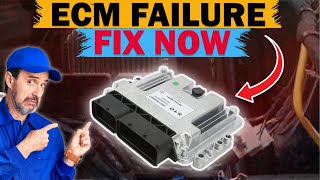
- In rare cases of ECM failure, symptoms could include intermittent stalling, no-start conditions, or reduced engine power mode. 🎬 Watch: Common symptoms of a failing Engine Control Module
- Searching for a physical misfire on cylinder 8.
- Replacing spark plugs, ignition coils, or fuel injectors in an attempt to fix the code.
- Assuming the engine is a V8 without verifying vehicle specifications.
Most Likely Causes
- Faulty or Incompatible Scan Tool 🔴 High Probability Generic or low-quality OBD-II readers, especially inexpensive Bluetooth ELM327 clones, can sometimes misinterpret manufacturer-specific data packets from the GM CAN bus, leading to the display of incorrect or impossible codes.
How to confirm: Use a different, high-quality, professional-grade scan tool to read the codes again. If the P0308 code does not reappear, the original scan tool was the issue. A professional shop or dealer using a GM GDS2 tool would provide the most reliable result.
Typical fix: Discard the faulty scan tool and use a reliable one for future diagnostics.
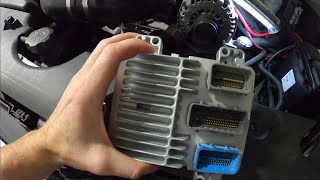
Est. part cost: $50-$500 - Engine Control Module (ECM) Software Corruption 🟡 Medium Probability → Shop Engine Control Module (ECM) The complex software in the ACDelco E92 ECM can experience glitches or data corruption (DTC P0601), causing it to report erroneous data, such as a misfire on a non-existent cylinder. This can sometimes be triggered by voltage fluctuations or other system faults.
How to confirm: This is a diagnosis of exclusion. If a high-quality scan tool confirms the code and there are no wiring issues, the ECM software is the likely culprit. A GM dealer or specialist shop can check for software updates against the vehicle's VIN.
Typical fix: A technician will use a GM-specific tool (like GDS2 with an MDI 2 interface) to reflash the ECM with the latest software version. 🎬 See how technicians reflash and reprogram GM modules In rare cases where the module is internally damaged, the ECM must be replaced.
Est. part cost: $0-$1000 - Major Electrical System Fault ⚪ Low Probability A poor ground, voltage spike, intermittent power supply, or corrosion at the ECM connectors can cause the module to behave erratically and generate false codes. The ECM relies on stable voltage and clean grounds to function correctly.
How to confirm: Inspect the main battery terminals, engine ground straps (like G103), and the ECM's own power and ground connections for corrosion or damage. A multimeter would be used to verify stable voltage at the ECM connector pins. A visual inspection of the ECM connectors for any signs of moisture or corrosion is critical.
Typical fix: Repairing the faulty wiring, cleaning ground connections, or replacing a failing alternator or battery.
Est. part cost: $10-$600
Rare But Worth Checking
- Internal ECM Hardware Failure:
Diagnosis Steps
- Confirm the P0308 code with a second, high-quality scan tool (preferably a GM GDS2 compatible device) to rule out a reader error.
- If the code persists, perform a full vehicle scan to check for any other Diagnostic Trouble Codes (DTCs), especially communication (U-codes) or internal ECM (P06xx) errors.
- Check for any available Technical Service Bulletins (TSBs) related to ECM software updates for your specific VIN. A dealer or authorized service center can perform this check.
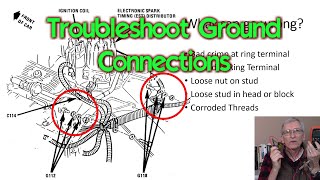
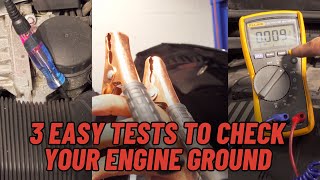
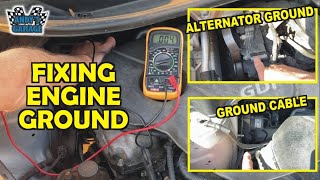
- Inspect the battery, battery terminals, and primary engine/chassis ground connections for tightness and corrosion. Key grounds for the ECM on this platform include G101 and G103. 🎬 Watch: How to properly troubleshoot automotive ground circuits
- Disconnect the ECM connectors (X1, X2, X3) and carefully inspect the pins and sockets for any signs of corrosion, moisture, or contamination.
- Visually inspect the wiring harness leading to the ECM for any signs of damage, chafing, or rodent activity.
- If all else fails, consult a professional technician or a GM dealership. They can perform advanced diagnostics, force an ECM software reflash, and determine if the ECM itself has failed and requires replacement.
Parts You'll Likely Need
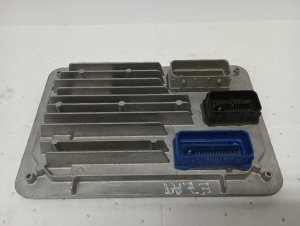
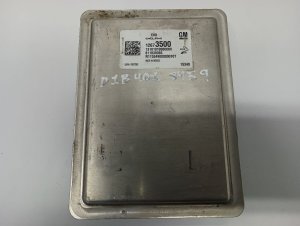
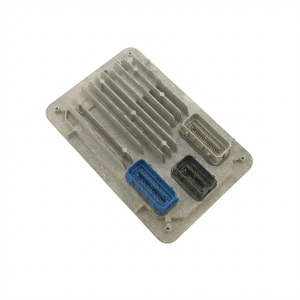
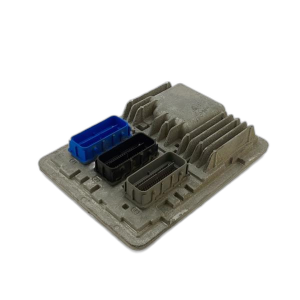
- Engine Control Module (ECM)
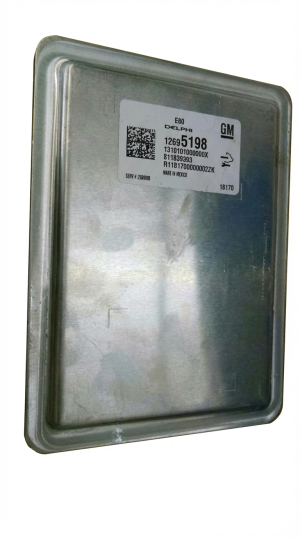
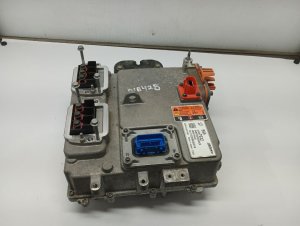
(OEM #Example: ACDelco E92 family, specific P/N is VIN-dependent (e.g., 12675754, 12688950))— In the rare event of an internal hardware or non-correctable software failure, the ECM itself may need to be replaced. This is a last resort. The replacement must be programmed by a dealer or qualified shop.
Trusted brands: ACDelco (GM Genuine)
OEM price range: $600-$1200
Aftermarket price range: $300-$700
Related Codes That Often Appear With This One
- P0300 — If the ECM is malfunctioning, it might also set a P0300 (Random/Multiple Cylinder Misfire) code in addition to the erroneous P0308.
- U-codes (e.g., U0100, U1977) — Network communication codes (U-codes) may accompany P0308 if the root cause is an electrical or module communication failure between the ECM and other modules on the CAN bus.
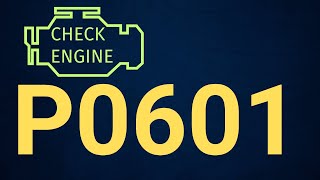
- P0601, P0606 — These codes indicate an internal ECM memory or processor fault, which would be a direct cause for the ECM generating erroneous data like a P0308 on a 4-cylinder engine.
Technical Service Bulletins (TSBs) & Recalls
- PIP5628G: This TSB gives technicians a template for diagnosing misfires (P0300-P0308) and requires detailed data collection before contacting GM's Technical Assistance Center. It does not specifically address phantom codes but confirms the diagnostic logic's existence for a P0308, which is the root of why it can appear on a 4-cylinder vehicle's scan report.
- 19-NA-219: This bulletin, while for V8 engines, also lists the full P0300-P0308 code range, reinforcing that GM's diagnostic software suite is designed to cover up to 8 cylinders.
Platform-Specific Known Issues
- The GM Technical Service Bulletin #PIP5628G provides a general diagnostic framework for misfire codes from P0300 to P0308, indicating that the software logic covers an 8-cylinder range. This confirms the ECM software has the capability to report on 8 cylinders, even when installed in a 4-cylinder vehicle, making a phantom code like P0308 possible during a fault condition.
- No owner reports of this specific P0308 code on a Buick Envision were found in major automotive forums, suggesting it is an extremely rare anomaly. However, the underlying causes (scan tool error, ECM glitch) are well-documented across the GM family.
Mechanic-Grade Diagnostic Values
- Battery Voltage (Key Off, Engine Off) — expected: ~12.6 Volts. Failure: Voltage below 12.4V may indicate a weak battery, which can cause unpredictable electronic module behavior.
- Charging System Voltage (Engine Running) — expected: 13.5 - 14.5 Volts. Failure: Voltage that is too low, too high, or fluctuating can indicate an alternator or regulator problem, leading to voltage spikes that can corrupt ECM data or cause phantom codes.
Hidden / Shadow Codes Worth Checking
- P0601: Internal Control Module Memory Check Sum Error. This indicates a fatal memory error within the ECM itself, a direct cause for generating phantom codes. (see via A professional OBD-II scanner or GM's GDS2 software.)
- P0606: ECM/PCM Processor Fault. This points to a failure in the ECM's main processor, which can lead to completely unpredictable behavior, including setting impossible codes like P0308. (see via A professional OBD-II scanner or GM's GDS2 software.)
- U0100: Lost Communication With ECM/PCM. This code suggests a network problem where other modules cannot communicate with the engine computer, often due to power or ground issues affecting the ECM. (see via A professional OBD-II scanner capable of reading network (U-series) codes.)
Scan Tool Commands That Help
- GDS2 (GM Global Diagnostic System 2): Module Diagnostics > ECM > ECU Info — To verify that the scan tool is properly communicating with the ECM and to read its part number, software version, and VIN. This helps confirm the ECM is online and responsive before further testing.
- GDS2 (GM Global Diagnostic System 2): Vehicle DTC Information (Full Scan) — To query all modules on the vehicle for stored DTCs. This is critical for finding accompanying U-codes or P06xx codes that point to the root cause of the phantom P0308.
- GDS2 (GM Global Diagnostic System 2): SPS2 (Service Programming System) — This function is used to reflash the ECM with updated or factory software. It's the required step to fix software corruption and must be performed after replacing an ECM.
Wiring & Ground Locations
- G101 — Located at the front of the engine, lower block area.. This is a primary ground point for the Engine Control Module (ECM) and Transmission Control Module (TCM). A poor connection here can cause unstable voltage and erratic ECM behavior, leading to phantom codes.
- G103 — Located at the left rear of the engine compartment on the cowl, above the brake booster, or on the left frame rail on some models.. This ground serves the Body Control Module (BCM) and the Data Link Connector (DLC). A fault here can cause communication errors between the scan tool and the ECM, or general electrical issues that could affect the ECM.
- ECM Connectors X1 (Blue), X2 (Black), X3 (Gray) — The ECM is typically located in the engine bay. The three large connectors are designated X1, X2, and X3.. These are the main interface points for all ECM power, ground, and sensor signals. Inspecting these connectors for corrosion, moisture, or backed-out pins is a critical step when diagnosing any ECM-related fault, including phantom codes.
Model Year Variations Within This Range
- 2016-2020: The first generation offered both a 2.5L LCV naturally aspirated engine and a 2.0L LTG turbocharged engine.
- 2021-2022: For the second generation, the 2.5L engine was discontinued. All models in this range use a 2.0L turbocharged four-cylinder. The vehicle was completely redesigned on the E2XX platform.
- 2019: The 2.0L turbo engine was paired with a new nine-speed automatic transmission, replacing the previous six-speed. This change in powertrain components could affect related diagnostic software.
Helpful Videos
We Have This Part in Stock

The information in this article is provided for general reference and educational purposes only. Vehicle specifications, procedures, and part compatibility can vary by production date, trim level, and region. Always consult your vehicle's factory service manual and verify part numbers before purchasing or performing repairs. Safety-critical components such as airbags, seat belts, and braking systems should be installed by a qualified professional.
- Buick ENVISION:
- 🧭 Diagnostic Flowchart
- 🎬 Helpful Videos
- 🛍️ Shop This Part
- What's Unique About the 2016-2022 Buick ENVISION
- Symptoms You May Notice
- Most Likely Causes
- Rare But Worth Checking
- Diagnosis Steps
- Parts You'll Likely Need
- Related Codes That Often Appear With This One
- Technical Service Bulletins (TSBs) & Recalls
- Platform-Specific Known Issues
- Mechanic-Grade Diagnostic Values
- Hidden / Shadow Codes Worth Checking
- Scan Tool Commands That Help
- Wiring & Ground Locations
- Model Year Variations Within This Range
- 🎟️ Get 5% Off