

P0308 on 2008-2009 Buick LaCrosse: Cylinder 8 Misfire Causes and Fixes
P0308 on a Buick LaCrosse indicates a misfire in cylinder 8. This code only applies to the 2008-2009 LaCrosse Super with the 5.3L V8. The most common causes are a bad ignition coil, a worn spark plug, or a faulty fuel injector. Cylinder 8 is on the front bank (near the radiator), making it easier to access. More serious issues can involve the engine's valvetrain, a known weak point. Expect to pay $40-$80 for a coil or injector and around $15 for a quality spark plug.
- P0308 is only for the 2008-2009 Buick LaCrosse Super with the 5.3L V8.
- Start your diagnosis with the simple, common parts: swap the ignition coil, then inspect the spark plug for cylinder 8.
- Be aware that the 5.3L V8 has known issues with its valvetrain, specifically the AFM lifters and camshaft, which can cause a persistent misfire.
- A flashing check engine light indicates a severe misfire; limit driving to prevent expensive damage to the catalytic converter.
- If a simple ignition or fuel part swap doesn't fix the issue, a compression test is the next critical step to check for mechanical engine problems.
What's Unique About the 2005-2012 Buick LACROSSE
This code is exclusive to the 2008-2009 LaCrosse Super, the only model in this year range with a V8 engine. This 5.3L LS4 V8 is mounted transversely (sideways), which places cylinder 8 on the front bank of cylinders, closer to the radiator, making it more accessible than the rear cylinders against the firewall. The engine is equipped with Active Fuel Management (AFM), a system that deactivates cylinders to save fuel. While cylinder 8 is not an AFM cylinder, the system's components, particularly the valve lifters and camshaft, are a known weak point on this engine family. A failing AFM lifter or a worn cam lobe can cause persistent misfires, making internal engine assessment more critical on this platform compared to others.
Diagnostic Flowchart
Tap your situation to follow the diagnostic path that matches what you're seeing on this vehicle.
Generation note: The 2005-2012 year range covers two LaCrosse generations. However, the P0308 code is only possible on the first generation 'Super' trim, sold from 2008-2009, as it was the only model equipped with a V8 engine. Models from 2005-2007 and 2010-2012 were only available with V6 or I4 engines and cannot generate this code.
Symptoms You May Notice
- Rough or vibrating idle
- Hesitation or stumbling during acceleration
- Noticeable loss of engine power
- Flashing Check Engine Light (indicates a severe misfire)
- Solid Check Engine Light
- Smell of raw fuel from the exhaust
- Engine ticking or chirping noise, especially if related to valvetrain issues 🎬 See how to distinguish lifter tick from other engine noises.
- Replacing the oxygen (O2) sensors. A misfire will often disrupt exhaust readings and may trigger O2 sensor codes, but the root cause is the misfire itself, not the sensor.
Most Likely Causes
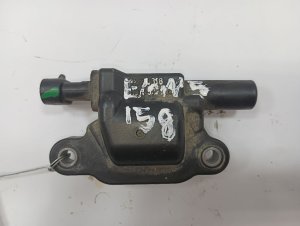
- Faulty Ignition Coil 🔴 High Probability → Shop Ignition Coil Ignition coils are a common wear item that can fail from heat and vibration over time, leading to a weak or absent spark.
How to confirm: Swap the ignition coil from cylinder 8 with another cylinder (e.g., cylinder 6, which is also on the front bank). Clear the codes and drive the vehicle. If the code changes to P0306, the coil is bad. For a more technical check, a multimeter can be used to test the secondary resistance of the coil; a good reading for an ACDelco D555 is around 7.8k ohms.
Typical fix: Replace the faulty ignition coil. 🎬 Watch this quick guide on how to replace an ignition coil. It is often recommended to replace the spark plug at the same time.
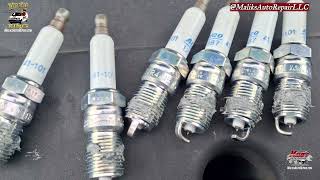
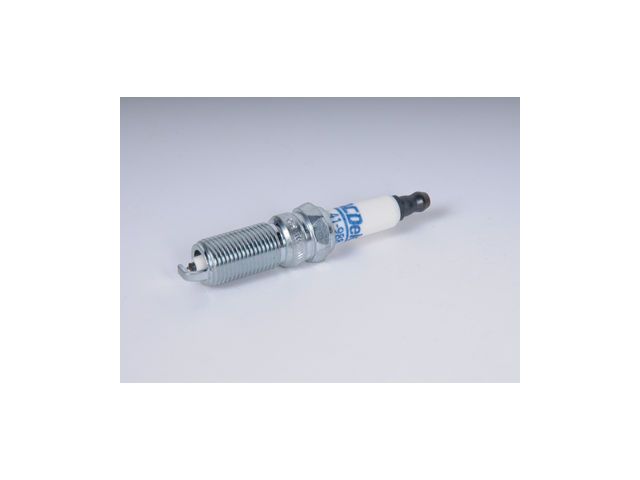
Est. part cost: $40-$80 - Worn or Fouled Spark Plug 🔴 High Probability → Shop Spark Plug Spark plugs have a finite service life and are considered a maintenance item. The manufacturer recommends replacement every 100,000 miles, but they can fail sooner.
How to confirm: Remove the spark plug from cylinder 8 and inspect it. Look for heavy carbon buildup, oil fouling, or a worn/damaged electrode. Compare it to a plug from a working cylinder. A worn plug is a very common cause of a single-cylinder misfire.
Typical fix: Replace the spark plug. It is best practice to replace all 8 spark plugs as a set to ensure even performance.
Est. part cost: $10-$20 per plug - Faulty Fuel Injector 🟡 Medium Probability → Shop Fuel Injector
How to confirm: After ruling out ignition issues, you can test the injector. A professional can perform a flow test. A DIY method is to listen for a consistent 'clicking' sound from the injector with a mechanic's stethoscope. You can also swap the injector with another cylinder, but this is more labor-intensive.
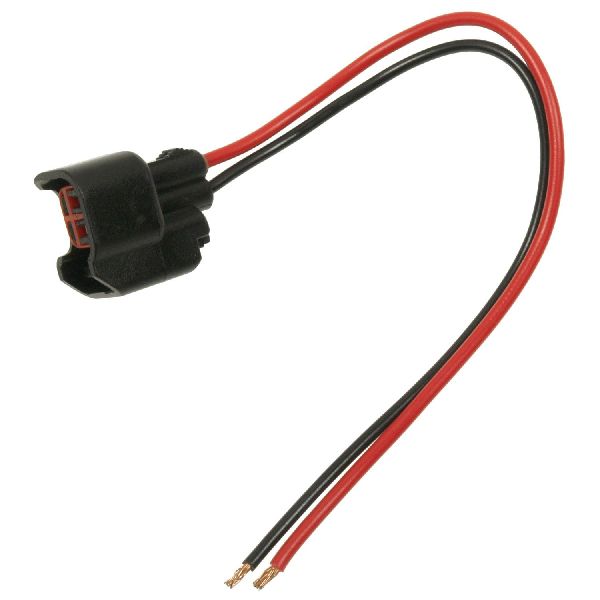
Typical fix: Replace the faulty fuel injector. It's also wise to check the fuel injector wiring for damage.
Est. part cost: $50-$100 - Failed AFM Lifter or Worn Camshaft Lobe ⚪ Low Probability → Shop Engine Valve Lifter The 5.3L LS4 engine uses an Active Fuel Management (AFM) system, and its lifters are a known failure point that can cause misfires. While cylinder 8 is not an AFM cylinder, a failing lifter on another cylinder can lead to camshaft damage (worn lobes), which can then cause a misfire on any cylinder, including #8. GM TSB 19-NA-219 specifically addresses misfires P0300-P0308 resulting from worn cam lobes.
How to confirm: This requires more advanced diagnostics. A ticking or chirping noise from the engine that follows camshaft speed (half of engine RPM) is a strong indicator. A compression test on cylinder 8 will show low compression if a cam lobe is worn. A real-world example is an Impala SS owner who chased a misfire, eventually finding near-zero compression due to a valvetrain issue.
Typical fix: This is a significant repair requiring replacement of the camshaft and all lifters, including the AFM and standard lifters. The Valve Lifter Oil Manifold (VLOM) is also typically replaced. This job is best left to a professional.
Est. part cost: $500-$1200+
Rare But Worth Checking
- Clogged VLOM Filter: The Valve Lifter Oil Manifold (VLOM) has a small filter screen underneath the oil pressure sensor. If this screen gets clogged with sludge, it can restrict oil flow and pressure to the valvetrain, potentially causing lifter issues and misfires. TSB PIP4568P notes that low oil pressure, aeration, or sludge can cause lifter failure.
- Intake Manifold Gasket Leak: → Shop Engine Intake Manifold A vacuum leak from a failed intake manifold gasket near the port for cylinder 8 can lean out the air/fuel mixture enough to cause a misfire on just that cylinder.
Diagnosis Steps
- Read the code with an OBD-II scanner to confirm P0308 and check for any other codes. A flashing check engine light indicates a severe misfire that could damage the catalytic converter.
- Pop the hood and perform a visual inspection. Cylinder 8 is on the front bank (near the radiator), on the passenger side of the engine. Check the spark plug wire and the ignition coil wiring for any visible damage or loose connections.
- To test the ignition coil, swap the coil from cylinder 8 with one from another cylinder on the same bank (e.g., cylinder 6). Clear the codes and run the engine. If the code changes to P0306, the ignition coil is the faulty part.
- If the code remains P0308, perform the same swap test with the spark plug. If the code follows the plug, you've found the issue.
- If the ignition system checks out, inspect the fuel injector. Check the wiring connector for damage. Listen for a steady clicking with a stethoscope. Swapping the injector is a definitive test but requires more work.
- If all ignition and fuel components for cylinder 8 are good, a mechanical issue is likely. Listen for a persistent ticking or chirping noise from the engine. Perform a compression test on cylinder 8. Low compression points towards internal engine problems like a bad lifter, worn cam lobe, or piston ring issues.
- If compression is low, further investigation into the valvetrain, specifically the AFM lifters and camshaft, is necessary. This is often best handled by a professional mechanic familiar with GM V8s.
Parts You'll Likely Need
- Ignition Coil
(OEM #D555)— An ignition coil provides the high voltage needed to create a spark. It is a common failure item and one of the most likely causes of a single-cylinder misfire.
Trusted brands: ACDelco, Delphi, NGK
OEM price range: $60-$80
Aftermarket price range: $30-$50 - Spark Plug
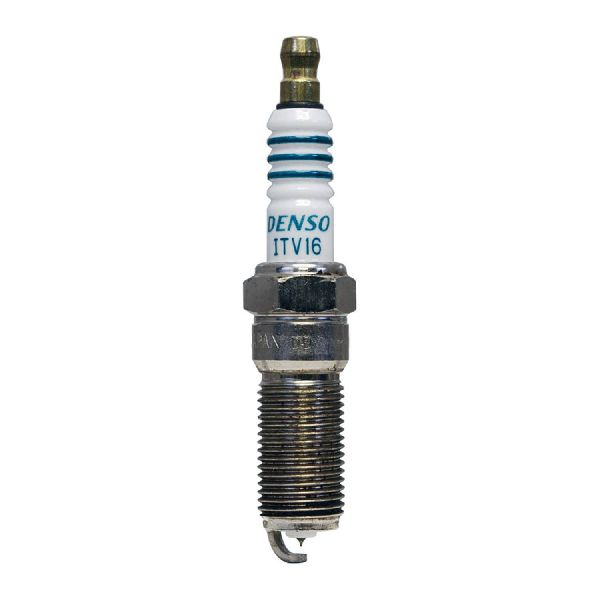
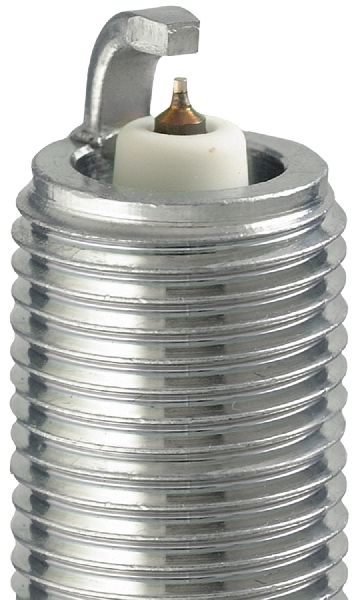
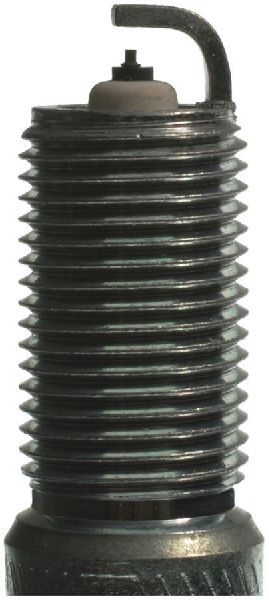
(OEM #41-108)— Spark plugs are a routine maintenance item that wear out over time. A fouled or worn plug cannot create a strong enough spark for proper combustion.
Trusted brands: ACDelco, NGK, Bosch
OEM price range: $12-$18
Aftermarket price range: $8-$15 - Fuel Injector
(OEM #217-2255)— A clogged or electrically failed fuel injector will prevent the correct amount of fuel from being delivered to cylinder 8, causing a misfire.
Trusted brands: ACDelco, Bosch, Standard Motor Products
OEM price range: $70-$100
Aftermarket price range: $40-$70
Related Codes That Often Appear With This One
- P0300 — If the misfire is intermittent or other cylinders are also misfiring, a P0300 (Random/Multiple Cylinder Misfire) code will often accompany P0308.
Technical Service Bulletins (TSBs) & Recalls
- PIP5628G: Mentions diagnosing misfire codes P0300-P0308.
- 19-NA-219: A diagnostic tip for misfire codes (P0300-P0308) and/or engine noises (chirp, squeak, tick). It lists potential causes as a worn camshaft lobe, a sticking valve, a broken valve spring, or a collapsed AFM lifter, confirming that valvetrain issues can cause a misfire on any cylinder.
- PIP4568P: Describes misfires on AFM cylinders (1
Platform-Specific Known Issues
- The Active Fuel Management (AFM) system is a known point of failure. A collapsed or stuck lifter is a common cause of misfires and engine noise on the 5.3L V8. GM has issued several Technical Service Bulletins (TSBs) related to this issue, such as PIP4568P and 19-NA-219, which detail diagnostic steps for misfires caused by valvetrain problems.
- The 4T65E-HD transmission, while designated 'heavy duty', is considered by some owners to be a weak link when paired with the torque of the 5.3L V8, with some experiencing premature failures.
Mechanic-Grade Diagnostic Values
- Fuel Pressure (Key On, Engine Off) — expected: 55-62 PSI (approx. 400 kPa). The LS4 uses a returnless system with a target pressure of 58 PSI.. Failure: Significantly lower pressure indicates a weak fuel pump, clogged filter, or faulty regulator. Pressure that drops quickly after the pump primes can indicate a leaking injector.
- Fuel Injector Resistance — expected: 13.0 - 13.4 ohms when measured cold.. Failure: A reading that is significantly higher (open circuit) or lower (shorted coil) indicates a failed injector. All injectors should have similar resistance values.
- Scan Tool Misfire Counter (Current & History) — expected: Zero or very few counts on all cylinders.. Failure: A rapidly increasing count on cylinder 8 confirms a live misfire. High counts in the history data for cylinder 8 (or others) can point to an intermittent problem even if the misfire isn't happening now.
Hidden / Shadow Codes Worth Checking
- Mode $06 Misfire Counts: Mode $06 data can show misfire counts for each cylinder during the current and last 10 driving cycles. This can reveal if cylinder 8 is misfiring below the threshold required to set a P0308 code, or if other cylinders are also contributing. (see via A professional scan tool or an advanced consumer-grade scanner with Mode $06 capability.)
Scan Tool Commands That Help
- GM Tech2 / GDS2 (or equivalent professional scanner): Cylinder Power Balance Test — To confirm a loss of contribution from cylinder 8. The scanner will sequentially disable each cylinder and measure the RPM drop. A cylinder with a misfire will show little to no RPM drop when disabled.
- GM Tech2 / GDS2 (or equivalent professional scanner): Crankshaft Position (CKP) Variation Relearn — This procedure is required after replacing the crankshaft, crankshaft position sensor, or ECM. If not performed, the ECM may inaccurately detect misfires and set false P030x codes.
Wiring & Ground Locations
- ECM Location — Left front of the engine compartment.. Knowing the location is critical for inspecting the main harness connectors and checking for voltage/ground at the source.
- G115 — On a transmission stud, to the right of the starter.. This is a primary engine ground. A loose or corroded connection here can cause a host of issues, including erratic sensor readings and misfires.
- G202 — Left side of the dash, at the base of the steering column.. This is an interior ground point that serves multiple components, including modules that communicate with the ECM. While less likely to cause a single-cylinder misfire, a poor connection can cause bizarre electrical issues.
- Ignition Coil/Injector Harness — Running across the front (radiator side) valve cover for cylinders 2, 4, 6, 8.. This harness is exposed to significant heat. Inspect for brittle insulation, cracked connectors, or chafing against brackets, especially at the connector for cylinder 8.
Real Owner Repair Stories
- Grand Prix Forums user 'Viprklr' (2007 Pontiac Grand Prix GXP (5.3L LS4 V8)) — Loud ticking from injector #1 area, bucking when warm.
❌ Tried (didn't work) The user initially suspected an injector issue.
✅ What actually fixed it The primary issue was a failed torque converter. However, during diagnosis, the user measured all 8 fuel injectors and found them to be between 13.0 and 13.4 ohms, providing an excellent real-world specification for a healthy set of LS4 injectors. - YouTube channel 'RickStuff' (Pontiac Grand Prix GXP (5.3L LS4 V8)) — P0307 (Cylinder 7 Misfire).
❌ Tried (didn't work) Initial diagnosis pointed to an ignition component.
✅ What actually fixed it The ignition coil for cylinder 7 was found to be physically cracked and was replaced, which solved the misfire. The owner also replaced the spark plugs as a maintenance item and noted the plug from the misfiring cylinder was fouled with fuel.
"I Checked Everything" — The Actual Cause
- A high-RPM misfire that doesn't occur at idle may not be caused by a vacuum leak that a smoke test would find. A weak valve spring can cause 'valve float' at higher engine speeds, where the valve doesn't close completely in time. This leads to a loss of compression and a misfire that only appears under load or at high RPM, but the intake system would remain perfectly sealed.
OEM Part Supersession History
12639516 (and others)→12740071— This is the part number for the Active Fuel Management (AFM) valve lifter assembly. The part has been superseded multiple times (older numbers include 12571595, 12619820, 12632143), suggesting revisions were made to address the high failure rate of these components.
Helpful Videos
Used OEM Parts in Stock
New Aftermarket Parts Available


The information in this article is provided for general reference and educational purposes only. Vehicle specifications, procedures, and part compatibility can vary by production date, trim level, and region. Always consult your vehicle's factory service manual and verify part numbers before purchasing or performing repairs. Safety-critical components such as airbags, seat belts, and braking systems should be installed by a qualified professional.
- Buick LACROSSE:
- 🧭 Diagnostic Flowchart
- 🎬 Helpful Videos
- 🛍️ Shop This Part
- What's Unique About the 2005-2012 Buick LACROSSE
- Symptoms You May Notice
- Most Likely Causes
- Rare But Worth Checking
- Diagnosis Steps
- Parts You'll Likely Need
- Related Codes That Often Appear With This One
- Technical Service Bulletins (TSBs) & Recalls
- Platform-Specific Known Issues
- Mechanic-Grade Diagnostic Values
- Hidden / Shadow Codes Worth Checking
- Scan Tool Commands That Help
- Wiring & Ground Locations
- Real Owner Repair Stories
- "I Checked Everything" — The Actual Cause
- OEM Part Supersession History
- 🎟️ Get 5% Off