

P0308 on 2011-2018 Buick Regal: An Impossible Misfire Code Explained
The code P0308 signifies a misfire in cylinder number 8. However, the 2011-2018 Buick Regal was only produced with 4-cylinder and 6-cylinder engines. Seeing this code is highly unusual and likely indicates a scan tool error, a typo of another code (e.g., P0300-P0306), or a rare internal fault in the Engine Control Module (ECM).
- P0308 means 'Cylinder 8 Misfire', but the 2011-2018 Buick Regal does not have a cylinder 8.
- The most likely cause for seeing this code is an error with your OBD-II scan tool or a simple typo.
- Before attempting any repairs, verify the code with a second, different scanner.
- Confirm you are not misreading another code, such as P0300 (random misfire) or P0301-P0306.
- If a misfire is felt but the code is wrong, use a scan tool's Mode $06 function to view raw misfire counts per cylinder to find the real culprit.
- If the code is consistently P0308 across multiple scanners, professional diagnosis is required to investigate a potential, though rare, ECM fault.
What's Unique About the 2011-2018 Buick REGAL
The 2011-2018 Buick Regal platform is based on the GM Epsilon II architecture, which it shares with vehicles like the Chevrolet Malibu, Cadillac XTS, and Opel Insignia. This platform, used for mid-size and full-size cars, exclusively utilized 4-cylinder and V6 engines in the Regal. It never had a V8 option, making a legitimate P0308 code impossible as there is no cylinder 8. The provided NHTSA Technical Service Bulletin (TSB) #PIP5628G mentions the code range P0300-P0308, but this is a general GM bulletin that provides a diagnostic template for technicians working on any GM vehicle with a misfire, including V8-equipped trucks and cars. It does not confirm P0308 is possible on a Regal.
Diagnostic Flowchart
Tap your situation to follow the diagnostic path that matches what you're seeing on this vehicle.
Symptoms You May Notice
- Check Engine Light is on or flashing
- Rough or shaky idle
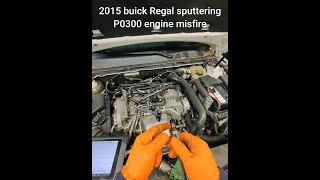
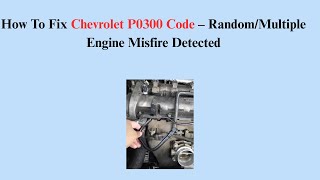
- Hesitation or stumbling during acceleration 🎬 Watch: See how a Buick Regal misfire looks and sounds.
- Loss of engine power
- Poor fuel economy
- Fuel smell from the exhaust
- Attempting to locate and replace ignition or fuel components for a non-existent 'cylinder 8'.
- Replacing parts for other cylinders without first verifying the correct trouble code.
- Unnecessarily replacing the ECM without first ruling out a scan tool error with a secondary, professional-grade scanner.
Most Likely Causes
- Scan Tool Error or Typo 🔴 High Probability The code is fundamentally incompatible with the vehicle's hardware. Low-quality or generic scan tools may misinterpret data from the ECM, leading to the display of an incorrect or non-existent code.
How to confirm: Re-scan the vehicle's computer with a different, high-quality OBD-II scanner. Carefully verify that the code is not P0300 (Random Misfire) or a specific cylinder that exists on the engine (P0301-P0306).
Typical fix: Confirm the correct trouble code and proceed with diagnosing that specific code.
Est. part cost: $0 - Engine Control Module (ECM) Internal Fault ⚪ Low Probability → Shop Engine Control Module (ECM) While rare, a software glitch, internal driver circuit failure, or data corruption within the ECM could theoretically generate an erroneous code. An internal short in an ignition coil can sometimes damage the ECM's driver circuit, leading to strange misfire-related behavior.
How to confirm: This is a diagnosis of exclusion. If multiple professional-grade scan tools consistently report P0308 on a vehicle with no cylinder 8, and all other possibilities are exhausted, the ECM itself becomes the primary suspect. A technician may need to check for software updates or perform advanced module diagnostics. In some forum discussions, owners suspect a faulty ECM when misfire codes appear randomly or are deleted by the module itself.
Typical fix: Reprogramming or replacing the Engine Control Module. This requires specialized tools and procedures to match the new module to the vehicle's VIN and security system.
Est. part cost: $400-$1200
Diagnosis Steps
- Step 1: Double-check the code. Immediately re-scan the vehicle with the same scanner to ensure you read it correctly.
- Step 2: Verify the code with a different, preferably professional-grade, OBD-II scanner. This is the most critical step to rule out a fault with the initial tool.
- Step 3: Confirm the code is not a typo. Check if it is actually P0300, P0301, P0302, P0303, P0304 (for 4-cylinder engines) or P0305, P0306 (for V6 engines).
- Step 4: If a true misfire is felt, but the code is nonsensical, use a scan tool with Mode $06 data. This allows you to see the raw misfire counts for each individual cylinder as recorded by the ECM, which can reveal which cylinder is actually having a problem even if the main trouble code is wrong. 🎬 Watch: Learn how to use Mode $06 to find misfires.
- Step 5: If the code P0308 persists across multiple scanners, treat the situation as a potential ECM issue. Check with a dealer or qualified shop for any available ECM software updates from the manufacturer.
- Step 6: As a final step before replacing the ECM, a technician should verify power and ground signals to the module and check the communication network for faults. This is a diagnosis of last resort.
- Step 7: Consult a professional technician for advanced diagnostics if the code cannot be resolved, as it may require checking the ECM and its communication network.
Parts You'll Likely Need
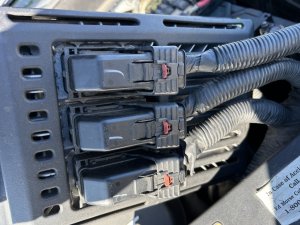
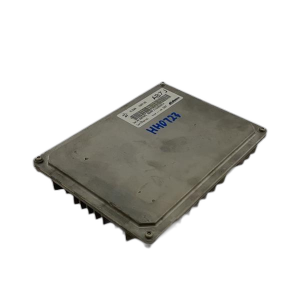
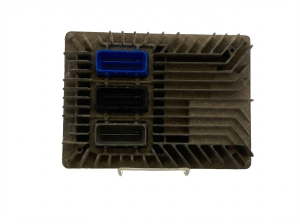
- Engine Control Module (ECM)
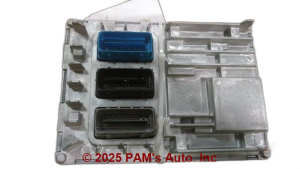
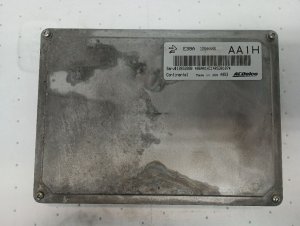
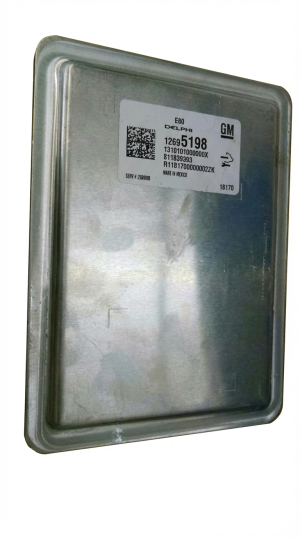
(OEM #12651993, 12653998, 12642569)— In the extremely rare case that this code is not a scanner error, it would point to a critical internal failure of the ECM itself, which is responsible for generating trouble codes. Part numbers vary by year and engine. For example, 12651993 fits some 2011 models, while 12653998 fits some 2013-2016 models. Always verify the correct part number with the vehicle's VIN.
Trusted brands: ACDelco
OEM price range: $600-$1200
Aftermarket price range: $400-$800
Related Codes That Often Appear With This One
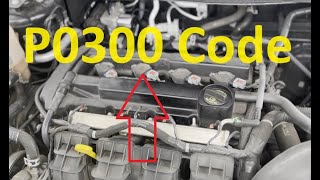
- P0300 — If the scan tool is malfunctioning, it might misinterpret a P0300 (Random/Multiple Cylinder Misfire) code as a specific cylinder.
- P0606 — In the rare event of an actual ECM internal fault, a processor error code like P0606 might accompany the impossible P0308 code.
Technical Service Bulletins (TSBs) & Recalls
- PIP5628G: A general GM TSB providing a diagnostic checklist for technicians to use when contacting the Technical Assistance Center (TAC) for misfire codes (P0300-P0308) and/or P050D. It is not specific to the Regal and its inclusion of P0308 is to cover the full range of GM engines, including V8s. It asks for data like fuel trims, compression test results, and injector balance test results.
Platform-Specific Known Issues
- The primary vehicle-specific issue is the fundamental incompatibility of the P0308 code with any engine offered in the 2011-2018 Buick Regal lineup.
- No credible forum threads or owner accounts could be found where a P0308 was a legitimate, recurring code on a 2011-2018 Buick Regal, reinforcing the high probability of it being a scan tool or data error.
Mechanic-Grade Diagnostic Values
- Ignition Coil Primary Winding Resistance — expected: 0.4 to 2.0 ohms. Failure: A reading outside this range indicates a faulty coil.
- Ignition Coil Secondary Winding Resistance — expected: 6,000 to 10,000 ohms (6k-10k Ω). Failure: A reading outside this range suggests the coil is bad and needs replacement.
Scan Tool Commands That Help
- GDS2 (GM Dealer Scan Tool): Cylinder Power Balance Test — When a misfire is felt but the code is nonsensical (like P0308) or intermittent. This test disables one cylinder at a time (by cutting fuel or spark) and measures the RPM drop. A cylinder that causes little or no RPM drop when disabled is the one not contributing power, thus identifying the true misfiring cylinder.
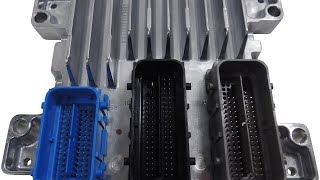
- GDS2 / J2534 Pass-Thru Device: Service Programming System (SPS) - Replace and Program ECU — This function is required when replacing the ECM. It programs the new module with the vehicle's VIN, security information, and the latest calibration files to ensure it communicates correctly with other modules. 🎬 See this walkthrough on replacing and programming a GM ECM.
- GDS2 / High-End Scan Tool: Crankshaft Position Variation Relearn — After replacing an ECM, this procedure may be required. If not performed, a code like P0315 may set and the check engine light will remain on. The procedure synchronizes the new ECM with the crankshaft position sensor's signal.
- GDS2 / High-End Scan Tool: Vehicle Theft Deterrent (VTD) Relearn — Required after installing a new ECM to marry the module to the vehicle's anti-theft system. Without this procedure, the vehicle will not start. It typically involves a timed key cycling process that can take around 10-12 minutes.
Wiring & Ground Locations
- G103 — Located at the left rear of the engine compartment on the cowl, typically above the brake booster.. This ground serves the Body Control Module (BCM) and the Data Link Connector (DLC). A poor connection here could cause communication issues between the ECM and a scan tool, potentially leading to erroneous code readings.
- G105 — Located at the left front of the engine compartment, often behind the cooling fan relays.. While primarily for lighting and cooling fans, ensuring all engine bay grounds are clean and tight is a critical step when diagnosing any bizarre electrical issue, including a potentially faulty ECM.
- Engine Wiring Harness — General area around the engine, particularly near the ECM/TCM bracket, upper control arms, and shock towers.. GM has issued bulletins for other platforms regarding engine wiring harness chafing against brackets. While not specific to P0308 on a Regal, a short-to-ground or short-to-voltage in the harness could theoretically cause the ECM to behave erratically and generate phantom codes. A visual inspection for chafed or damaged wiring is a valid diagnostic step.
OEM Part Supersession History
12616889, 12630908, 12637106, 12642665, 12650256→12651993— Standard part evolution and consolidation by the manufacturer.
Heads up: This ECM is for early models in the generation and may not be compatible with the updated 2014+ vehicles.12633555→12653998— Standard part evolution for newer hardware.
Heads up: This ECM is associated with the 2014 model year refresh and later vehicles. It requires programming upon installation.
Model Year Variations Within This Range
- 2014-2018: The 2014 model year refresh introduced a new 2.0L Turbo (LTG) engine and made significant changes to the vehicle's electronics. The ECM hardware changed, with part numbers like 12653998 becoming common. Diagnostics for a potential ECM fault would need to account for the correct hardware and software for pre- and post-refresh models.
- 2011-2013: Early models in this generation used different ECM part numbers, such as 12651993. While the 'impossible code' scenario remains the same, the physical part and its specific software are different from the 2014+ refresh models.
Helpful Videos

We Have This Part in Stock

The information in this article is provided for general reference and educational purposes only. Vehicle specifications, procedures, and part compatibility can vary by production date, trim level, and region. Always consult your vehicle's factory service manual and verify part numbers before purchasing or performing repairs. Safety-critical components such as airbags, seat belts, and braking systems should be installed by a qualified professional.
- Buick REGAL:
- 🧭 Diagnostic Flowchart
- 🎬 Helpful Videos
- 🛍️ Shop This Part
- What's Unique About the 2011-2018 Buick REGAL
- Symptoms You May Notice
- Most Likely Causes
- Diagnosis Steps
- Parts You'll Likely Need
- Related Codes That Often Appear With This One
- Technical Service Bulletins (TSBs) & Recalls
- Platform-Specific Known Issues
- Mechanic-Grade Diagnostic Values
- Scan Tool Commands That Help
- Wiring & Ground Locations
- OEM Part Supersession History
- Model Year Variations Within This Range
- 🎟️ Get 5% Off