

P0308 on 2006-2010 Cadillac CTS-V: Cylinder 8 Misfire Causes and Fixes
P0308 on a CTS-V means cylinder 8 is misfiring. The most likely cause is a bad spark plug or ignition coil, which are simple DIY fixes. However, be aware that a known TSB points to more serious internal engine problems like a worn camshaft or lifter, a documented issue for this engine family.
- P0308 signifies a misfire on cylinder 8, the rearmost cylinder on the passenger side.
- Start your diagnosis by swapping the ignition coil and spark plug from cylinder 8 to another cylinder to see if the misfire follows. This is the fastest way to identify the most common culprits.
- Do not ignore a flashing check engine light. It signals a severe misfire that can cause rapid and expensive damage to your catalytic converters.
- Be aware that while ignition parts are the most likely cause, a more serious and costly internal engine issue involving the camshaft and lifters is a documented possibility for this code on these engines, as per TSB #PIP4138R.
What's Unique About the 2006-2010 Cadillac CTS-V
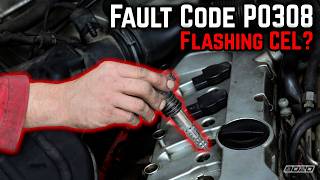
The 2006-2010 CTS-V spans two generations with powerful V8 engines: the first-gen's LS2 and the second-gen's supercharged LSA. While standard ignition issues are common, these high-performance GM engines have a documented history of valvetrain problems. A Technical Service Bulletin (TSB #19-NA-219, which supersedes #PIP4138R) specifically mentions that a P0308 code can be caused by a worn camshaft lobe or lifter, a more severe issue than a simple spark plug or coil failure. 🎬 Watch: A quick breakdown of the P0308 misfire code. Cylinder 8's location at the rear passenger side of the engine bay also makes it prone to heat soak, which can accelerate the failure of ignition coils and spark plug wires.
Diagnostic Flowchart
Tap your situation to follow the diagnostic path that matches what you're seeing on this vehicle.
Generation note: The 2006-2010 year range covers two distinct CTS-V generations. The 2006-2007 models belong to the first generation and are equipped with a 6.0L LS2 V8. The 2009-2010 models are part of the second generation and feature a 6.2L supercharged LSA V8. While many misfire causes are similar, the LSA's supercharger adds a layer of complexity and heat.
Symptoms You May Notice
- Rough or shaking idle
- Hesitation or stumbling during acceleration
- Noticeable loss of engine power
- Solid or flashing Check Engine Light
- Engine noise described as a chirp, squeak, or tick, which may occur at half of crankshaft speed
- Fuel smell from the exhaust due to unburned fuel
- Replacing only the spark plugs without testing the ignition coil is a common mistake. The 'swap test' for the coil is a crucial diagnostic step that should not be skipped.
- Assuming a major mechanical failure (like the camshaft) before thoroughly ruling out all ignition and fuel system components. Always follow a logical diagnostic path from simplest to most complex.
Most Likely Causes
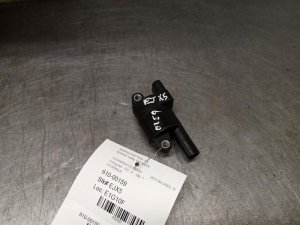
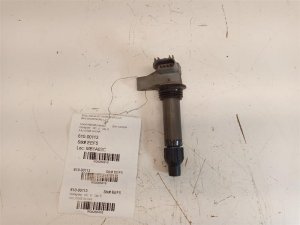
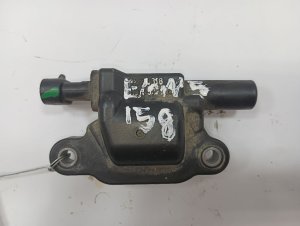
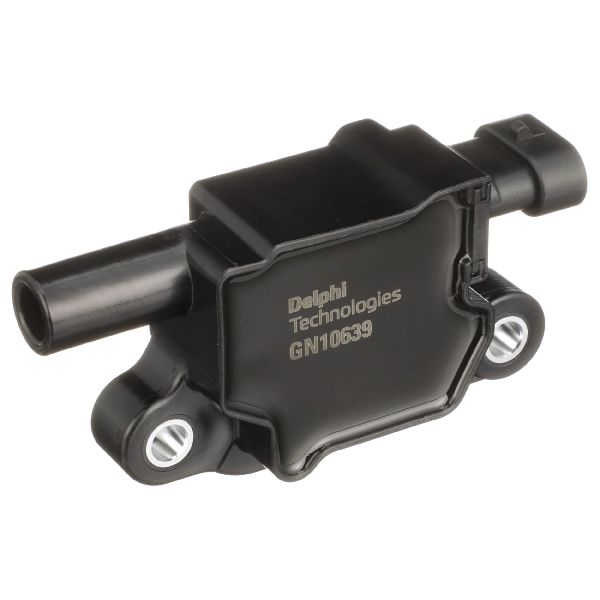
- Faulty Ignition Coil 🔴 High Probability → Shop Ignition Coil Cylinder 8 is located at the rear of the engine bay on the passenger side, where heat can accumulate and contribute to premature failure of ignition components like the coil and its wiring.
How to confirm: Swap the ignition coil from cylinder 8 with another cylinder (e.g., cylinder 6 on the same bank). Clear the codes and run the engine. If the misfire code changes to P0306, the coil is faulty.
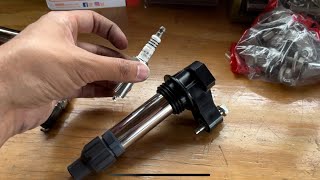
Typical fix: Replace the faulty ignition coil. It is often recommended to replace the corresponding spark plug at the same time. The OEM coil for the LS2 is often a square-shaped coil (ACDelco D510C / GM 12611424), while the LSA may use a different style. Always verify the original part. 🎬 See a real-world diagnosis of a CTS-V misfire.
Est. part cost: $45-$90 - Worn or Fouled Spark Plug 🔴 High Probability → Shop Spark Plug Spark plugs are normal wear items. High-performance engines like the LS2 and especially the supercharged LSA are demanding on plugs, leading to faster wear or fouling.
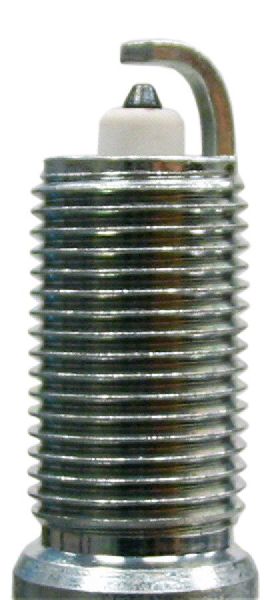
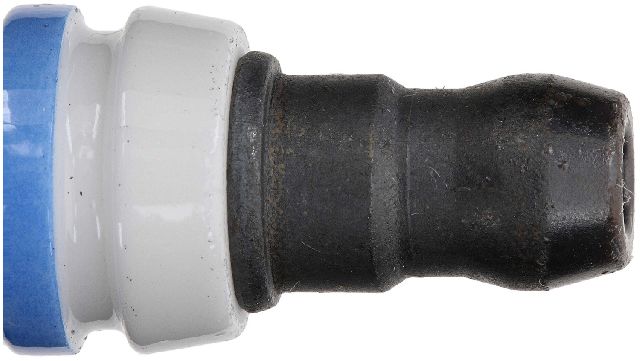
How to confirm: Remove the spark plug from cylinder 8 and inspect for wear (worn electrode), damage (cracked porcelain), or fouling from oil or carbon. Compare it to a plug from a cylinder that is firing correctly.
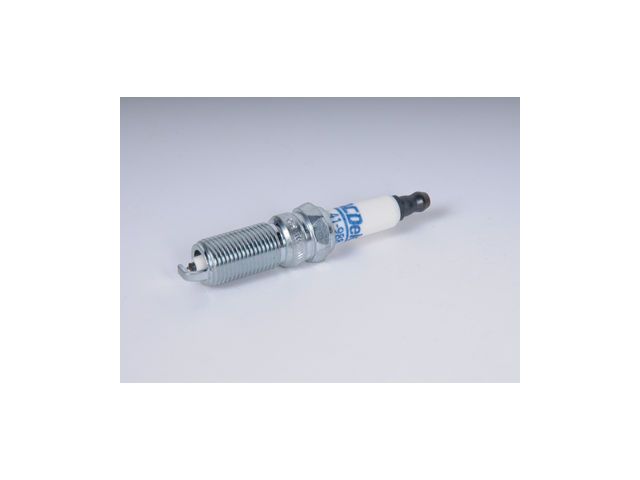
Typical fix: Replace the spark plug. It is best practice to replace all 8 plugs if they are near the end of their service life. Use high-quality iridium plugs like the OEM ACDelco 41-110 or 41-162 for the LS2 and 41-104 for the LSA.
Est. part cost: $10-$25 per plug - Damaged Spark Plug Wire 🟡 Medium Probability → Shop Spark Plug The wire boot's proximity to the hot exhaust manifold can cause it to become brittle, crack, or melt over time, allowing the spark to arc to ground. This is a very common failure point on LS-family engines.
How to confirm: Visually inspect the spark plug wire for cylinder 8 for any signs of damage, melting, or corrosion, especially at the boot. Test its resistance with a multimeter; a healthy wire should have a specific resistance per foot (check manufacturer specs).
Typical fix: Replace the spark plug wire set. It's best to replace them as a complete set with a quality brand like ACDelco or MSD.
Est. part cost: $60-$120 - Worn Camshaft Lobe and/or Lifter 🟡 Medium Probability → Shop Engine Camshaft As documented in GM TSB #19-NA-219 (formerly PIP4138R), this engine family can experience worn cam lobes or lifters, leading to misfires and ticking noises. This is a known weak point in the valvetrain of some LS engines.
How to confirm: This is a complex diagnosis. It often follows the elimination of ignition and fuel system faults. A key indicator can be a persistent ticking or chirping noise at half engine speed that does not go away when the fuel injector is disabled. Diagnosis requires removing the valve cover to check for a rocker arm with excessive play or a bent pushrod, and may ultimately require internal engine inspection.
Typical fix: Requires replacement of the camshaft and all lifters. This is a significant and labor-intensive repair. 🎬 Watch: How to repair common LS motor lifter failures.
Est. part cost: $500-$1500+ - Faulty Fuel Injector ⚪ Low Probability → Shop Fuel Injector Injectors can become clogged with deposits from fuel or fail electrically over time, leading to an improper fuel mixture in cylinder 8.
How to confirm: Listen to the injector with a mechanic's stethoscope for a consistent clicking sound. You can also swap the injector with another cylinder to see if the misfire follows, though this is more labor-intensive than swapping a coil.
Typical fix: Replace the faulty fuel injector. It's recommended to replace the seals as well.
Est. part cost: $70-$150
Rare But Worth Checking
- Broken Valve Spring: LS-family engines can sometimes experience valve spring failure, which will cause a persistent misfire and potentially a ticking noise on the affected cylinder. TSB #19-NA-219 also lists this as a possible cause to investigate.
- Low Cylinder Compression: Indicates a more serious internal engine problem like a bad valve, worn piston rings, or a leaking head gasket. A compression test is required to confirm.
- Vacuum Leak: A vacuum leak near the intake manifold runner for cylinder 8 can lean out the air/fuel mixture and cause a misfire. This could be from a bad intake manifold gasket.
- Faulty MAF or Oxygen Sensor: While less likely to cause a single-cylinder misfire, a faulty MAF or O2 sensor can provide incorrect data to the PCM, leading to improper fueling that could manifest in one cylinder before others.
Diagnosis Steps
- Read the code with an OBD-II scanner and note any other codes present. Freeze frame data can show the conditions under which the misfire occurred.
- Perform a visual inspection of the cylinder 8 area (rear passenger side), looking for damaged wires, loose connectors, or signs of heat damage to the spark plug wire boot.
- Swap the ignition coil from cylinder 8 with cylinder 6. Clear the codes and run the engine. If the code changes to P0306, the coil is bad.
- If the code remains P0308, swap the spark plug from cylinder 8 with cylinder 6. If the code changes to P0306, the plug is bad.
- If the misfire remains on cylinder 8, inspect the spark plug wire for damage and test its resistance with a multimeter.
- If ignition components are good, test the cylinder 8 fuel injector by listening for its operation or checking its resistance.
- If the ignition and fuel systems seem okay, perform a cylinder compression test and a cylinder leak-down test to check for mechanical engine problems like bad rings, valves, or head gasket.
- If compression is good but a ticking noise is present, investigate for a worn camshaft/lifter per TSB #19-NA-219. This may involve removing the valve cover to inspect valvetrain components.
Parts You'll Likely Need
- Ignition Coil
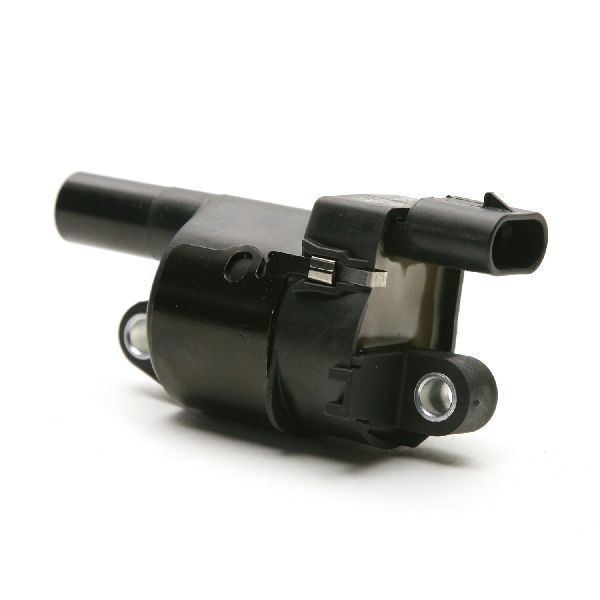
(OEM #ACDelco D510C (GM 12611424) for LS2; ACDelco D514A (GM 12573190) for LSA. Verify original part.)— A primary cause of single-cylinder misfires due to heat and electrical stress. The square-style D510C is common on the LS2.
Trusted brands: ACDelco, Delphi, DENSO
OEM price range: $70-$110
Aftermarket price range: $45-$90 - Spark Plug
(OEM #ACDelco 41-110 or 41-162 (LS2); 41-104 (LSA))— Spark plugs are a common wear item and the most frequent cause of misfires.
Trusted brands: ACDelco, NGK
OEM price range: $15-$25
Aftermarket price range: $10-$20 - Spark Plug Wire Set
(OEM #ACDelco 748RR (LS2))— The wire boot for cylinder 8 is prone to heat damage from the nearby exhaust manifold.
Trusted brands: ACDelco, MSD, Granatelli
OEM price range: $80-$130
Aftermarket price range: $60-$120 - Camshaft and Lifter Kit — Required to fix the known valvetrain issue described in TSB #19-NA-219, which is a potential cause for a P0308 misfire.
Related Codes That Often Appear With This One
- P0300 — If the underlying issue, such as a failing fuel pump, major vacuum leak, or widespread valtrain wear, begins to affect other cylinders, a P0300 (Random/Multiple Cylinder Misfire) may be triggered alongside P0308.
Technical Service Bulletins (TSBs) & Recalls
- 19-NA-219: This bulletin replaces PIP4138R. It provides diagnostic tips for technicians when a misfire (P0300-P0308) or engine noise (chirp, squeak, tick) is present. It points to potential causes like a worn camshaft lobe, lifter, sticking valve, or broken valve spring after standard diagnostics fail to find the cause.
Platform-Specific Known Issues
- A known issue documented in TSB #19-NA-219 (superseding PIP4138R) involves worn camshaft lobes and/or lifters causing misfires (P0300-P0308) and potential engine noises. Diagnosis should rule out simpler ignition/fuel issues first before suspecting this more serious mechanical failure.
Mechanic-Grade Diagnostic Values
- Fuel Pressure (Key On, Engine Off) — expected: 380-410 kPa (55-60 psi). Failure: Pressure below this range suggests a weak fuel pump or a leak in the system. Pressure above this range can indicate a faulty fuel pressure regulator.
- Fuel Injector Resistance — expected: Approx. 11.0 - 14.0 Ohms. Failure: A multimeter reading of 'OL' (Open Loop) or infinite resistance means the injector's internal coil is broken. A reading significantly outside the expected range also indicates a faulty injector.
- Cylinder Compression — expected: Approx. 120-150 PSI per cylinder, with minimal variation between cylinders.. Failure: A reading significantly below 100 PSI, or a variation of more than 15-20% from other cylinders, points to a mechanical issue like worn piston rings, bad valves, or a head gasket leak.
Scan Tool Commands That Help
- GM Tech 2 / GDS2 or Professional Bidirectional Scanner: Cylinder Power Balance Test — This function allows the technician to disable one cylinder at a time and observe the corresponding drop in engine RPM. If disabling cylinder 8 results in a much smaller RPM drop than other cylinders, it confirms that cylinder 8 is not contributing its share of power, verifying the misfire without component swapping.
- GM Tech 2 / GDS2 or Professional Bidirectional Scanner: Misfire Counter / Misfire History Data — To view the number of misfire events per cylinder in real-time and over a drive cycle. This is more precise than a simple trouble code, showing the severity and frequency of the misfire on cylinder 8 compared to others, which might be misfiring slightly but not enough to set their own codes.
- GM Tech 2 / GDS2 or Professional Bidirectional Scanner: Crankshaft Position (CKP) Variation Relearn — This procedure is mandatory after replacing the crankshaft position sensor, PCM, or major engine components like the crankshaft itself. It calibrates the PCM to the specific variations of the crankshaft reluctor wheel, ensuring accurate misfire detection. Failure to perform this can lead to false misfire codes or a failure to detect real ones.
Wiring & Ground Locations
- G102 — Located at the left rear of the engine.. This is the designated ground point for all eight ignition coils. A loose, corroded, or broken connection at G102 can cause a weak or intermittent ground for the ignition system, potentially leading to a misfire on one or more cylinders, including cylinder 8. This should be inspected early in the diagnostic process for any electrical-related misfire.
- Ignition Coil Connector — On top of the valve cover, plugged into the ignition coil for cylinder 8 (rear passenger side).. The connector and its wiring are a common failure point. Technicians should check for a solid connection, signs of heat damage (brittle plastic, melted wires), and test for 12V power, ground, and the trigger signal from the PCM at the connector's pins using a wiring diagram for reference.
OEM Part Supersession History
ACDelco D510C (GM 12611424)→N/A - Still a current part number— This is the 'square' style ignition coil, commonly found on the 2006-2007 CTS-V with the LS2 engine. It is known for its distinct shape.
Heads up: While other coils may be electrically compatible, the physical shape of the D510C is different from the round D514A or truck-style D585 coils, which can affect fitment with specific brackets or wiring harness lengths.ACDelco D514A (GM 12573190)→N/A - Still a current part number— This is a 'round body' style ignition coil used on many Gen IV LS engines, including the LSA in the 2009-2010 CTS-V.
Heads up: This coil is physically different from the square D510C coil. While electrically similar, they are not a direct physical swap without ensuring the mounting bracket and connector orientation are correct.
Model Year Variations Within This Range
- 2006-2007: The 2006-2007 models received the 6.0L LS2 V8, an upgraded rear differential over the earlier 2004-2005 models, and added steering wheel mounted stereo controls.
- 2009-2010: The second-generation CTS-V introduced the 6.2L supercharged LSA V8, which was a detuned version of the Corvette ZR1's LS9 engine, producing 556 hp in the Cadillac. The LSA features a 1.9L supercharger and wet-sump oiling system.
Helpful Videos
Used OEM Parts in Stock
New Aftermarket Parts Available


The information in this article is provided for general reference and educational purposes only. Vehicle specifications, procedures, and part compatibility can vary by production date, trim level, and region. Always consult your vehicle's factory service manual and verify part numbers before purchasing or performing repairs. Safety-critical components such as airbags, seat belts, and braking systems should be installed by a qualified professional.
- Cadillac CTS-V:
- 🧭 Diagnostic Flowchart
- 🎬 Helpful Videos
- 🛍️ Shop This Part
- What's Unique About the 2006-2010 Cadillac CTS-V
- Symptoms You May Notice
- Most Likely Causes
- Rare But Worth Checking
- Diagnosis Steps
- Parts You'll Likely Need
- Related Codes That Often Appear With This One
- Technical Service Bulletins (TSBs) & Recalls
- Platform-Specific Known Issues
- Mechanic-Grade Diagnostic Values
- Scan Tool Commands That Help
- Wiring & Ground Locations
- OEM Part Supersession History
- Model Year Variations Within This Range
- 🎟️ Get 5% Off