

P0308 on 2002-2009 Cadillac Escalade: Cylinder 8 Misfire Causes and Fixes
P0308 indicates a misfire in cylinder 8. On the 2002-2009 Escalade, this is most often caused by a bad spark plug, ignition coil, or spark plug wire. On 2007-2009 models with the 6.2L engine, a failed AFM lifter is also a significant possibility. A basic ignition tune-up is the first step, but fuel system issues or mechanical faults can also be the cause.
- P0308 is a misfire on cylinder 8, the rearmost cylinder on the passenger side.
- Always start diagnosis with the simple, high-probability items: spark plug, ignition coil, and spark plug wire.
- The 'coil swap' is the fastest way to diagnose a bad ignition coil.
- For 2007-2009 models, be aware that a failed AFM lifter is a known and serious potential cause if basic ignition and fuel checks don't solve the problem.
- Do not ignore a flashing check engine light, as it signals a severe misfire that can quickly destroy your catalytic converter.
What's Unique About the 2002-2009 Cadillac ESCALADE
The 2002-2009 Escalade spans two generations with different V8 engines, leading to distinct common issues. The earlier 2002-2006 models with the 6.0L LQ9 engine are known for robust but simple ignition systems where plugs and coils are the usual suspects. The 2007-2009 models introduced the 6.2L L92 engine with Active Fuel Management (AFM), which deactivates cylinders to save fuel. This AFM system, while innovative, brought a new, more serious potential cause for misfires: failed valve lifters, which became the subject of class-action lawsuits. Cylinder 8 is one of the AFM-managed cylinders, making it susceptible to this failure on 2007+ models.
Diagnostic Flowchart
Tap your situation to follow the diagnostic path that matches what you're seeing on this vehicle.
Generation note: This range covers the second generation (2002-2006, GMT800 platform) and the start of the third generation (2007-2009, GMT900 platform). The 2002-2006 models typically used the 5.3L LM7 or 6.0L LQ9 Vortec engines. The 2007-2009 models used the 6.2L L92 V8, which included Active Fuel Management (AFM). This AFM system is a key difference, as its lifters are a known failure point causing misfires on the later models.
Symptoms You May Notice
- Rough or shaking idle
- Hesitation or stumbling during acceleration
- Noticeable loss of engine power
- Solid or flashing Check Engine Light
- Fuel smell from the exhaust
- Decreased fuel economy
- Replacing only the spark plug when the ignition coil is the actual problem.
- Replacing fuel system components when the issue is a mechanical failure like a bad lifter on 2007+ models.
- Assuming a fuel-fouled plug is a spark issue, when it could be a stuck-open fuel injector.
Most Likely Causes
- Worn or Fouled Spark Plug 🔴 High Probability → Shop Spark Plug Spark plugs are a standard maintenance item and a primary cause of single-cylinder misfires on any gasoline engine. Cylinder 8 is in the rear on the passenger side, making it difficult to access and sometimes neglected during tune-ups.
How to confirm: Remove the spark plug from cylinder 8 and inspect it. Look for a worn electrode, heavy carbon deposits, oil/coolant fouling, or cracks in the porcelain. A fuel-soaked plug can indicate a lack of spark or a stuck injector. Compare it to a plug from a working cylinder.
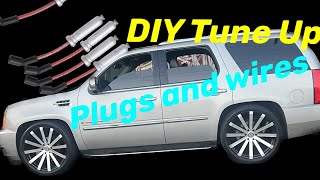
Typical fix: Replace the spark plug. It is recommended to replace all 8 spark plugs at the same time 🎬 Watch: DIY guide to changing plugs, wires, and coils for even performance. Use high-quality plugs like ACDelco Iridium (41-110 or 41-962 depending on year).
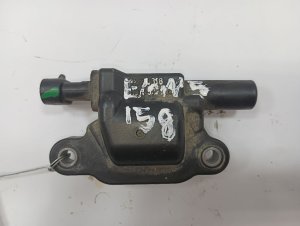
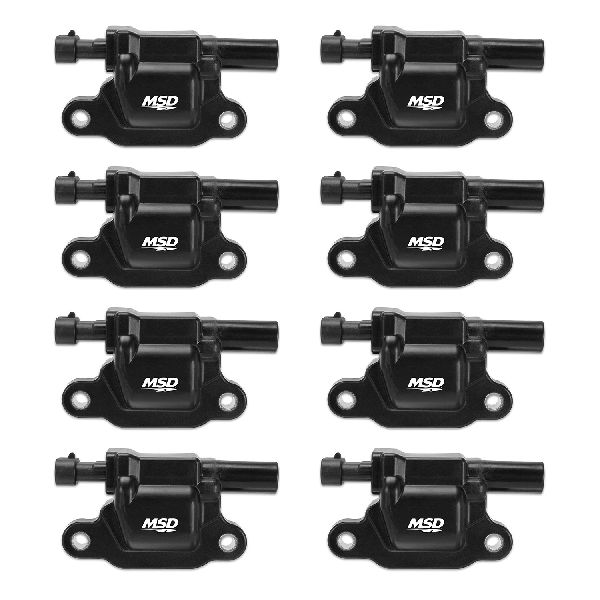
Est. part cost: $8-$20 per plug - Failed Ignition Coil 🔴 High Probability → Shop Ignition Coil The coil-on-plug design is reliable, but heat and age can cause individual coils to fail. This is a very common failure point on GM V8 engines. Cylinder 8's location at the rear of the engine bay can subject its coil to more heat.
How to confirm: Swap the ignition coil from cylinder 8 with another cylinder (e.g., cylinder 6). Clear the codes and drive the vehicle. If the code changes to P0306, the coil is bad.
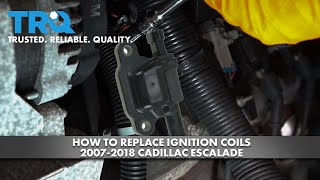
Typical fix: Replace the faulty ignition coil. ACDelco is the original equipment manufacturer. GMT800 (2002-2006) models often use the D585 coil, while GMT900 (2007-2009) models use the D510C. 🎬 See this walkthrough for replacing your ignition coils
Est. part cost: $40-$80 - Defective Spark Plug Wire 🟡 Medium Probability → Shop Spark Plug Spark plug wires can degrade over time due to high engine temperatures, causing the spark to weaken or arc to the engine block. Improper routing can also cause cross-firing.
How to confirm: Visually inspect the wire for cracks, burns, or corrosion. Test its resistance with a multimeter; a reading above 30,000 ohms indicates a bad wire.
Typical fix: Replace the spark plug wire. It's good practice to replace the full set with a quality brand like ACDelco.
Est. part cost: $50-$100 for a set - Clogged or Failed Fuel Injector 🟡 Medium Probability → Shop Fuel Injector Fuel injectors can become clogged with deposits or fail electronically, preventing the correct amount of fuel from being delivered to cylinder 8. Sitting for long periods can cause injectors to get gummed up.
How to confirm: Use a mechanic's stethoscope or a long screwdriver to listen to the injector; it should make a consistent clicking sound. A more definitive test is to swap the injector with another cylinder to see if the misfire follows. A noid light can also be used to confirm the injector is receiving an electrical signal.
Typical fix: Replace the faulty fuel injector. It's also wise to have the other injectors professionally cleaned and tested. Some owners have had success clearing a clogged injector by using a fuel system cleaner.
Est. part cost: $70-$150 - Failed AFM/DOD Lifter (2007-2009 models) 🟡 Medium Probability → Shop Engine Valve Lifter The 6.2L L92 engine features Active Fuel Management (AFM), which uses special lifters that can fail, often by collapsing or getting stuck. This prevents the valve from opening correctly, causing a persistent misfire. Cylinder 8 is one of the cylinders deactivated by AFM. This is a widely documented problem and the subject of TSBs and lawsuits.
How to confirm: This is a more complex diagnosis. It often starts with ruling out ignition and fuel issues. A compression test may show low readings. A distinct ticking or chirping noise from the engine, especially on startup, is a common symptom. Professional diagnosis is often required, which may involve removing the valve cover to inspect rocker arm movement.
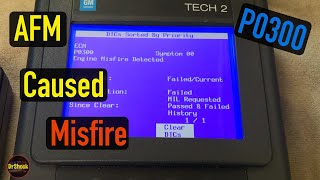
Typical fix: Requires replacing the faulty lifter, and often the camshaft as well if it has been damaged. Many owners opt to replace all AFM lifters or install an AFM-delete kit to prevent future failures. This is a significant and costly repair. 🎬 Watch: How to diagnose AFM-related single cylinder misfires
Est. part cost: $500-$1500+
Rare But Worth Checking
- Intake Manifold Gasket Leak: → Shop Engine Intake Manifold These gaskets can fail, creating a vacuum leak near cylinder 8. This leans out the air/fuel mixture and causes a misfire. Symptoms can include a hissing sound. A smoke test is the best way to confirm a leak.
- Low Compression (Internal Engine Damage): Though less common than lifter failure, issues like a burnt valve, damaged piston, or worn piston rings can cause a loss of compression and a misfire. A compression test followed by a cylinder leak-down test will diagnose this.
- Cracked Cylinder Head / Blown Head Gasket: → Shop Engine Cylinder Head A coolant leak into the cylinder can cause a misfire and will produce a wet, sometimes white-ish spark plug. This points to a possible head gasket or cylinder head issue, which would be a major repair confirmed with a leak-down test.
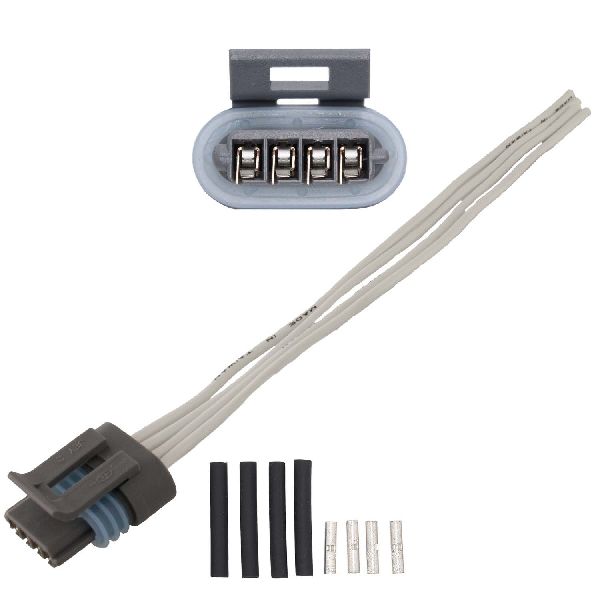
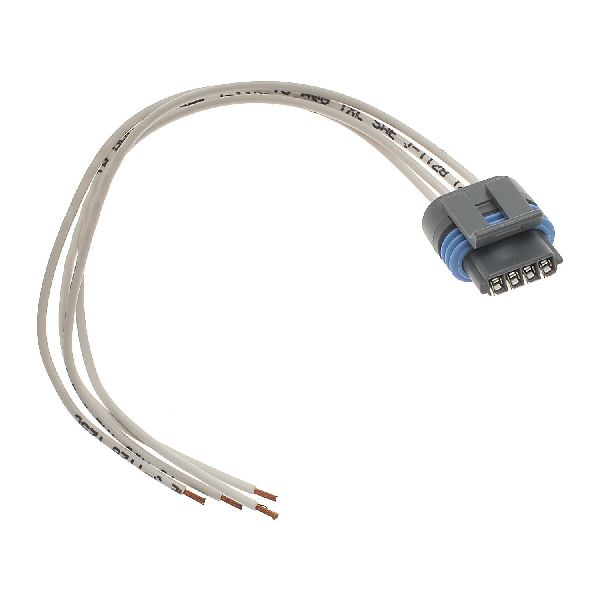
- Faulty Injector Harness Connector: A forum member reported chasing a cylinder 8 misfire that was ultimately caused by a poor connection at the injector harness plug. The plastic connector was not seating securely. This is a cheap fix but can be hard to diagnose.
Diagnosis Steps
- Read the code with an OBD-II scanner and check for any other stored codes. Note freeze-frame data if available.
- Visually inspect the area around cylinder 8 (rear passenger side of the engine) for any obvious issues like a loose connector, damaged wire, or signs of leaks.
- Swap the ignition coil from cylinder 8 with cylinder 6. Clear the codes and test drive. If the code changes to P0306, the coil is faulty.
- If the misfire remains on cylinder 8, inspect the spark plug. A fuel-soaked plug may indicate a stuck injector, while a clean but wet plug could be coolant. Swap the spark plug with cylinder 4. If the code changes to P0304, the plug is bad.
- Inspect the spark plug wire for cylinder 8 for any damage or corrosion. Test its resistance with a multimeter; it should not exceed 30,000 ohms.
- Listen to the fuel injector on cylinder 8 with a stethoscope to ensure it's clicking. Compare the sound to a known good injector. Check the injector harness connector for a secure fit.
- If ignition and fuel delivery seem okay, perform a compression test on cylinder 8 to check for mechanical engine health. A normal reading is typically 120-150 PSI.
- For 2007-2009 models, if a ticking noise is present or compression is low, suspect an AFM lifter failure. This may require professional diagnosis.
- If a vacuum leak is suspected, perform a smoke test to check the intake manifold gasket and vacuum hoses.
Parts You'll Likely Need
- Ignition Coil
(OEM #ACDelco D585 (2002-06) / D510C (2007-09))— A primary cause of single-cylinder misfires due to failure from heat and age. Part numbers differ by generation.
Related Codes That Often Appear With This One
- P0300 — If the misfire is intermittent or affects multiple cylinders, a P0300 (Random/Multiple Cylinder Misfire) may be stored alongside P0308.
- P0171/P0174 — If the misfire is caused by a vacuum leak, such as a bad intake manifold gasket, the engine may run lean, triggering these codes for Bank 1 and/or Bank 2.
Technical Service Bulletins (TSBs) & Recalls
- PIP5628G: This bulletin provides a diagnostic template for technicians to gather specific information when contacting GM's Technical Assistance Center (TAC) for misfire codes P0300-P0308. It emphasizes checking fuel trims, performing compression/leak-down tests, and inspecting for abnormal noises, especially on AFM cylinders.
Platform-Specific Known Issues
- AFM Lifter Failure on 6.2L L92 (2007-2009): → Shop Engine Valve Lifter The most significant vehicle-specific issue for the third-generation Escalade is the failure of the Active Fuel Management (AFM) lifters. Cylinder 8 is an AFM cylinder. When a lifter collapses or sticks, it causes a dead miss that cannot be fixed with a simple tune-up. Symptoms include a persistent P0308 and a distinct engine tick. The repair is labor-intensive, often requiring replacement of all lifters and sometimes the camshaft.
- Importance of OEM Spider Injectors (2002-2006): On earlier models with a central 'spider' fuel injection assembly, using non-OEM replacement parts can lead to premature failure. One owner on a forum traced their P0308 code to a failed aftermarket injector that was less than a year old, which was dumping raw fuel into the cylinder.
Mechanic-Grade Diagnostic Values
- Fuel Pressure (2007+ 6.2L V8) — expected: 55-62 PSI. Failure: Pressure below 55 PSI can indicate a weak fuel pump or clogged filter, potentially causing a lean misfire.
- Ignition Coil Primary Resistance — expected: 0.4 - 2.0 Ohms. Failure: A reading of 0 indicates a short, while an infinite (OL) reading indicates an open circuit. Either requires replacement.
- Ignition Coil Secondary Resistance — expected: 6,000 - 30,000 Ohms. Failure: Readings outside this range suggest the internal secondary windings are faulty, leading to a weak or no spark.
- Fuel Injector Resistance — expected: 11.0 - 16.0 Ohms, with all injectors within 0.5 Ohms of each other.. Failure: An 'OL' (open) or 0.0 (shorted) reading indicates a failed injector. Significant deviation from the other injectors indicates a failing coil inside the injector.
- Fuel Injector Pulse Width (at idle) — expected: Approximately 3.4 milliseconds. Failure: Significantly higher or lower pulse width on one cylinder could indicate the ECM is trying to compensate for a mechanical issue or vacuum leak.
Hidden / Shadow Codes Worth Checking
- Mode 6, Test ID $A9: Provides access to the onboard misfire counters for Cylinder 8. This includes the 'Exponential Weighted Moving Average' (EWMA) misfire count over the last 10 driving cycles. (see via A professional scan tool with Mode 6 data capability. This allows a technician to see if misfires are recent and frequent, even if they haven't been severe enough to keep the check engine light on continuously.)
Scan Tool Commands That Help
- Tech2 / GDS2 or equivalent professional scanner: Cylinder Power Balance Test — This active test is used to confirm a dead cylinder when P0308 is present. The tool commands the ECM to sequentially cut fuel to each cylinder. A healthy cylinder will cause a noticeable drop in engine RPM. If there is no RPM drop when cylinder 8 is deactivated, it confirms that cylinder was not contributing power to begin with.
Wiring & Ground Locations
- G102 (2002-2006 GMT800) — Located at the left rear of the engine block.. This is the specific ground point for all 8 ignition coils. Corrosion or a loose connection here can cause a weak or intermittent spark on one or more cylinders, including cylinder 8.
- G103 (2007-2009 GMT900) — Located on the front of the passenger side (right) cylinder head.. This is a primary engine-to-chassis ground. A poor connection can cause widespread electrical issues, affecting sensor readings and component performance.
- G104 (2007-2009 GMT900) — Located on the rear of the driver's side (left) cylinder head.. This is another critical engine ground, often connected via a ground strap to the firewall. A bad ground here can lead to unexplained electrical gremlins, including misfires.
OEM Part Supersession History
ACDelco D585 style (round heat sink fins)→ACDelco D510C style (flat top)— Generational change in engine design and coil mounting.
Heads up: The D585 'truck coil' is for 2002-2006 GMT800 models and is not physically compatible with the 2007-2009 GMT900 models, which use the D510C coil. They have different shapes and mounting brackets.
Model Year Variations Within This Range
- 2007: The fuel injector electrical connector style changed around the 2007 model year from the earlier Mini Delphi/Multec 2 style to the USCAR / EV6 style. This is a critical detail when ordering replacement injectors, as the harness will only fit one type.
- 2002-2006 vs 2007-2009: The location of primary engine grounds changed between the GMT800 and GMT900 platforms. For example, the ignition coil ground G102 is on the left rear of the engine on GMT800, while main grounds G103/G104 are on the cylinder heads on GMT900.
Helpful Videos
Used OEM Parts in Stock
New Aftermarket Parts Available


The information in this article is provided for general reference and educational purposes only. Vehicle specifications, procedures, and part compatibility can vary by production date, trim level, and region. Always consult your vehicle's factory service manual and verify part numbers before purchasing or performing repairs. Safety-critical components such as airbags, seat belts, and braking systems should be installed by a qualified professional.
- Cadillac ESCALADE:
- 🧭 Diagnostic Flowchart
- 🎬 Helpful Videos
- 🛍️ Shop This Part
- What's Unique About the 2002-2009 Cadillac ESCALADE
- Symptoms You May Notice
- Most Likely Causes
- Rare But Worth Checking
- Diagnosis Steps
- Parts You'll Likely Need
- Related Codes That Often Appear With This One
- Technical Service Bulletins (TSBs) & Recalls
- Platform-Specific Known Issues
- Mechanic-Grade Diagnostic Values
- Hidden / Shadow Codes Worth Checking
- Scan Tool Commands That Help
- Wiring & Ground Locations
- OEM Part Supersession History
- Model Year Variations Within This Range
- 🎟️ Get 5% Off