

P0308 on 2003-2010 Cadillac Escalade ESV: Cylinder 8 Misfire Causes and Fixes
P0308 on a Cadillac Escalade ESV indicates a misfire in cylinder 8. The most common causes are a faulty spark plug, ignition coil, or spark plug wire. For 2007 and newer models with the 6.2L V8, a failed Active Fuel Management (AFM) lifter is also a significant possibility, often requiring more in-depth mechanical repair.
- P0308 specifically points to a misfire in cylinder 8.
- Start your diagnosis with the cheapest and easiest parts: the spark plug, spark plug wire, and ignition coil.
- A simple way to test the ignition coil is to swap it with another cylinder and see if the misfire code follows it.
- For 2007-2010 models, if ignition and fuel system checks don't find the problem, a failed AFM lifter is a strong possibility.
- Do not ignore a flashing check engine light, as it signals a severe misfire that can quickly damage your expensive catalytic converter.
What's Unique About the 2003-2010 Cadillac ESCALADE ESV
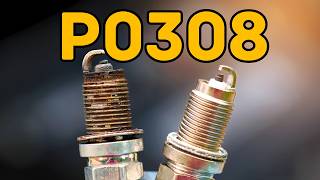
The 2003-2010 Escalade ESV spans two generations, the GMT800 (2003-2006) and GMT900 (2007-2010). While both use robust V8 engines, the GMT900 models introduced Active Fuel Management (AFM), also known as Displacement on Demand (DOD), on the 6.2L L92 V8. This system deactivates cylinders 1, 4, 6, and 7 to save fuel under light loads. Unfortunately, the specialized AFM lifters are a known failure point and can collapse or get stuck, leading to persistent misfires. While cylinder 8 is not an AFM cylinder, issues within the AFM system, such as oil pressure problems controlled by the Valve Lifter Oil Manifold (VLOM), can sometimes contribute to problems in other cylinders. Therefore, on 2007-2010 models, a P0308 code 🎬 Watch: A deep dive into the real causes of P0308 misfires. warrants a closer look at the entire valvetrain and oiling system in addition to the usual ignition and fuel system checks.
Diagnostic Flowchart
Tap your situation to follow the diagnostic path that matches what you're seeing on this vehicle.
Generation note: This range covers the GMT800 (2003-2006) with the 6.0L LQ9 V8 and the GMT900 (2007-2010) with the 6.2L L92 V8. The most significant difference is the introduction of Active Fuel Management (AFM) on the 6.2L engine starting in 2007, which adds a potential cause for misfires (lifter failure) not typically seen on the earlier 6.0L engines. The earlier LQ9 is a simpler design without the complexities and failure modes of AFM.
Symptoms You May Notice
- Rough or shaking engine idle.
- Hesitation or stumbling during acceleration.
- Noticeable loss of engine power.
- Check Engine Light is on solid or flashing.
- "Service StabiliTrak" or "Traction Control Off" message may appear on the dash.
- A smell of gasoline from the exhaust.
- A distinct ticking, chirping, or squeaking noise from the engine bay, which could indicate a mechanical valvetrain issue.
- Replacing fuel injectors before confirming the failure. Ignition system components are far more likely to be the cause and are easier to test.
- Assuming a major mechanical failure (like AFM lifters) on a 2007+ model before thoroughly testing the spark plug, coil, and wire. Always start with the simplest and most common causes.
- Replacing only the spark plug when it is fouled with oil or coolant, without addressing the root cause of the fouling (e.g., valve seals, piston rings, or head gasket leak).
Most Likely Causes
- Worn or Fouled Spark Plug 🔴 High Probability → Shop Spark Plug Spark plugs are regular wear items. Cylinder 8's location at the back of the engine bay on the passenger side can sometimes lead to it being overlooked during maintenance, and higher operating temperatures can potentially shorten plug life.
How to confirm: Remove the spark plug from cylinder 8 and inspect it for wear (worn electrode), carbon buildup, or oil/coolant fouling. A wet plug can indicate a head gasket or crack issue. Compare it to a plug from a known good cylinder.
Typical fix: Replace the spark plug. It's best practice to replace all 8 spark plugs at the same time with the correct OEM-spec plugs.
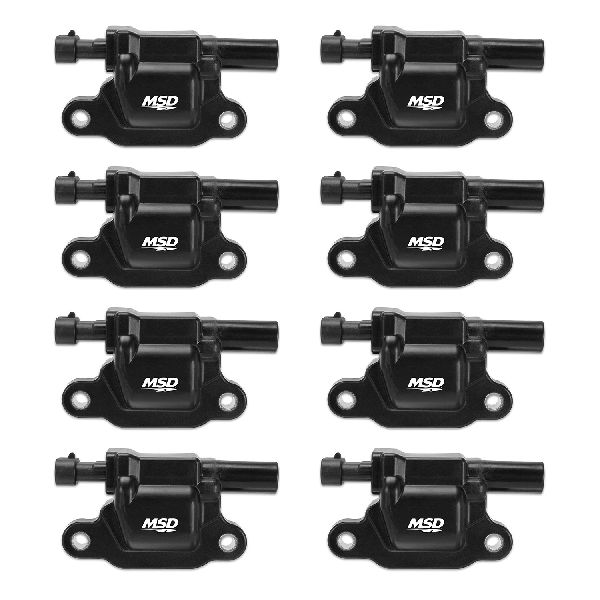
Est. part cost: $5-$20 per plug - Faulty Ignition Coil 🔴 High Probability → Shop Ignition Coil
How to confirm: Swap the ignition coil from cylinder 8 with another cylinder (e.g., cylinder 6, which is easier to access). Clear the codes and run the engine. If the code changes to P0306, the ignition coil is bad. This is a definitive and cost-free diagnostic step.
Typical fix: Replace the faulty ignition coil. Using OEM brands like ACDelco is highly recommended for longevity.
Est. part cost: $40-$90 - Bad Spark Plug Wire 🟡 Medium Probability → Shop Spark Plug
How to confirm: Visually inspect the wire for cracks, burns, or corrosion, especially on the boot at both ends. You can also test its resistance with a multimeter; it should be within the manufacturer's specification (typically a few thousand ohms per foot). An intermittent misfire under load can sometimes be traced to a failing wire.
Typical fix: Replace the spark plug wire. It is often recommended to replace the full set of 8 wires at the same time.
Est. part cost: $50-$100 for a set - Failed Active Fuel Management (AFM) Lifter 🟡 Medium Probability → Shop Engine Valve Lifter This applies to 2007-2010 models with the 6.2L engine. The AFM system deactivates cylinders to save fuel, but the lifters are a known weak point. While cylinder 8 is not a deactivation cylinder, problems with the system's oiling, controlled by the VLOM (Valve Lifter Oil Manifold), can lead to lifter failure on any cylinder. A stuck or collapsed lifter prevents the valve from opening correctly.
How to confirm: This is an advanced diagnosis. It often starts with a compression test. A mechanic may need to remove the valve cover to observe valve movement or use a scope. The definitive diagnosis involves removing the intake manifold and valley cover to inspect the lifters and camshaft for damage.
Typical fix: Requires replacing the faulty lifter(s) and often the camshaft if it has been damaged by the failed lifter roller. Many owners opt to perform an 'AFM delete' at this time, replacing the specialized AFM lifters, valley cover, and camshaft with standard, non-AFM components for improved reliability.
Est. part cost: $300-$1500+ - Clogged or Faulty Fuel Injector ⚪ Low Probability → Shop Fuel Injector
How to confirm: Listen for a clicking sound from the injector with a mechanic's stethoscope. A more definitive test is to swap the injector with another cylinder, but this is labor-intensive as it requires removing the fuel rail. A professional can perform a fuel injector balance test.
Typical fix: Replace the faulty fuel injector. GM issued bulletin 20-NA-098 regarding injector replacement guidelines.
Est. part cost: $70-$150 - Intake Manifold Gasket Leak ⚪ Low Probability → Shop Engine Intake Manifold
How to confirm: With the engine running, spray a small amount of brake cleaner or starting fluid near the intake port for cylinder 8. If the engine RPM changes or stumbles, a vacuum leak is present. This allows unmetered air into the cylinder, creating a lean condition and misfire.
Typical fix: Replace the intake manifold gaskets. This is a moderately labor-intensive job.
Est. part cost: $40-$80
Rare But Worth Checking
- Low Engine Compression: Could be due to a worn piston ring, a bad valve, a cracked cylinder head, or a blown head gasket. A compression test and cylinder leak-down test will confirm this. A leak-down test showing air escaping into the coolant could point to a head or gasket issue.
- Worn Camshaft Lobe: → Shop Engine Camshaft Often accompanied by a distinct ticking or chirping noise. This prevents the valve from opening fully, causing a misfire. Inspection requires removing the valve cover to measure valve lift or removing the lifters to visually inspect the cam lobe.
- Broken Valve Spring: Can cause an intermittent or consistent misfire and may produce a ticking sound. This is identified by removing the valve cover and inspecting the springs for visible breaks.
Diagnosis Steps
- Retrieve all stored trouble codes with an OBD-II scanner. Note if the Check Engine Light is flashing, which indicates a severe misfire.
- Use the scanner's live data function to monitor misfire counts for each cylinder. Confirm that cylinder 8 is the primary offender.
- Visually inspect the area around cylinder 8 (rear passenger side) for any obvious issues like a disconnected wire, damaged harness, or fluid leaks.
- Swap the ignition coil from cylinder 8 with cylinder 6. Clear the codes and drive the vehicle. If the code changes to P0306, the coil is faulty.
- If the misfire remains on cylinder 8, inspect the spark plug. Look for excessive wear, fouling (oil, fuel, or carbon), or an incorrect gap. Replace if necessary.
- Inspect the spark plug wire for any visible damage or test its resistance with a multimeter. If it's original, consider replacing it as a maintenance item.
- If ignition components are good, check for a vacuum leak around the intake manifold gasket for cylinder 8 using brake cleaner and listening for a change in engine idle.
- Listen to the fuel injector on cylinder 8 with a stethoscope to ensure it's clicking. Compare the sound to an adjacent injector.
- If the above steps do not identify the cause, perform a compression test on cylinder 8. A healthy cylinder should have compression above 120 PSI and be within 15% of other cylinders.
- For 2007-2010 models, if compression is low or a ticking noise is present, the next step is to inspect the valvetrain, specifically the lifters and camshaft, for AFM-related failure.
Parts You'll Likely Need
- Ignition
Related Codes That Often Appear With This One
- P0300 — If the misfire is intermittent or affects multiple cylinders, a P0300 (Random Misfire) code may be stored alongside P0308.
- P0171 — If the misfire is caused by a vacuum leak or a clogged fuel injector, the engine may run lean on that bank, triggering a 'System Too Lean (Bank 1)' code.
- P0174 — If the misfire is caused by a vacuum leak or a clogged fuel injector, the engine may run lean on that bank, triggering a 'System Too Lean (Bank 2)' code. Cylinder 8 is on Bank 2.
Technical Service Bulletins (TSBs) & Recalls
- PIP5628G: This bulletin provides a diagnostic template for technicians to use when contacting GM's Technical Assistance Center (TAC) for persistent misfire codes (P0300-P0308). It emphasizes collecting specific scan tool data and performing foundational checks like compression and leak-down tests.
- 19-NA-219: This bulletin addresses engine noises (tick, chirp, squeak) and misfires (P0300-P0308). It points to potential causes like a worn camshaft lobe, sticking valve, broken valve spring, or a collapsed AFM lifter, providing diagnostic direction when initial checks don't find the cause.
- 20-NA-098: Provides information and guidelines for replacing fuel injectors when dealing with various misfire and fuel trim-related DTCs.
Platform-Specific Known Issues
- On 2007-2010 models with the 6.2L V8, failure of the Active Fuel Management (AFM) system is a well-documented cause of misfires and engine noise. This typically involves a collapsed lifter on one of the AFM cylinders (1, 4, 6, 7), but the issue can manifest on any cylinder due to systemic problems. TSB 19-NA-219 provides diagnostic guidance for these valvetrain issues.
- Excessive oil consumption on AFM-equipped engines (2007+) is a known issue that can lead to low oil levels, which in turn can exacerbate AFM lifter problems. It is crucial to check the oil level immediately when a misfire code appears.
- The location of cylinder 8 at the rearmost passenger side of the engine bay makes access to the spark plug, wire, and coil more difficult than for other cylinders, which can sometimes lead to these components being neglected during routine service.
Mechanic-Grade Diagnostic Values
- Ignition Coil Primary Resistance — expected: 0.500 ohms. Failure: A reading significantly higher or lower than the specification, or an open circuit.
- Ignition Coil Secondary Resistance — expected: 2K ohms (2,000 ohms). Failure: A reading significantly outside this value indicates an internal coil winding failure.
- Engine Compression (Running) — expected: Above 25 PSI. Failure: If running compression on a cylinder stays below 25 PSI regardless of AFM solenoid commands, it indicates a mechanically collapsed or stuck AFM lifter.
- Engine Compression (Static) — expected: 120-150 PSI and within 15% of other cylinders. Failure: A reading below 120 PSI or with a significant variance from other cylinders points to mechanical issues like worn rings, valves, or a head gasket leak.
- AFM Solenoid Resistance — expected: 11 to 18 ohms. Failure: A resistance reading outside of this range at the VLOM connector indicates a faulty solenoid.
Scan Tool Commands That Help
- Tech 2 / GDS2: Cylinder Deactivation (Active Fuel Management) System Compression Test — This function in the factory scan tool allows a technician to command AFM solenoids on and off while monitoring running compression to diagnose a mechanically stuck or collapsed lifter.
- Tech 2 / GDS2: Cylinder Deactivation (Active Fuel Management) Valve Lifter Oil Manifold Diagnosis and Testing — This is a guided test in the service manual that uses the scan tool to isolate a fault within the VLOM itself after a potential lifter issue has been identified.
- OBD-II Scanner (Advanced): Cylinder Balance Test — Used during initial diagnosis to confirm which cylinder is underperforming. It compares the power contribution of each cylinder, and for a P0308, it should show a lower contribution from cylinder 8.
Wiring & Ground Locations
- G102 — Located at the left rear of the engine.. This is the primary ground point for all 8 ignition coils. A loose or corroded connection here can cause intermittent misfires on any cylinder, including cylinder 8.
- G103 — Located at the left rear of the engine compartment on the cowl, above the brake booster.. This ground serves the Engine Control Module (ECM) among many other components. A poor ground here can cause a wide range of erratic engine management behavior, including false misfire detection.
- Cylinder Head Grounds — There are ground straps connecting the cylinder heads to the chassis/frame on GMT900 vehicles.. The ignition system relies on a solid ground path through the engine block and cylinder heads. Ensuring these straps are clean and tight is a critical step in diagnosing persistent or hard-to-trace misfires.
Real Owner Repair Stories
- The Hull Truth Boating and Fishing Forum (2014 GMC 6.2L (Similar L92-family engine)) — Check engine light and misfire.
❌ Tried (didn't work) Initial diagnosis was unclear.
✅ What actually fixed it The root cause was a broken valve spring. The dealer initially replaced only the spring, but the engine still ran rough. The final fix required replacing the intake manifold and all valve springs to resolve the issue completely. - Tahoe Yukon Forum (2018 Yukon Denali with 89k miles (Later model with similar AFM system)) — Check engine light with a cylinder #7 misfire and a general misfire code (P0300) after accelerating quickly from a stop. Rough idle and fuel-rich exhaust smell.
❌ Tried (didn't work) The user immediately suspected a lifter issue based on symptoms.
✅ What actually fixed it Upon removing the valve cover, it was confirmed to be a bad AFM lifter on cylinder #7. The user planned a full AFM delete, including replacing the camshaft, AFM lifters with standard LS7 lifters, and plugging the AFM oil ports in the block.
OEM Part Supersession History
12570616→12611424 (Service P/N D510C)— Standard part evolution and potential design improvements.
Heads up: The D510C is specified for square-shaped coils. Some service bulletins note a second design from a different manufacturer (Melco-Mitsubishi) was also used, so visual confirmation is recommended.
Model Year Variations Within This Range
- 2007-2010: Models from 2007-onward use the 6.2L L92 engine with Active Fuel Management (AFM). This introduces the entire VLOM, AFM lifters, and associated oiling system as a potential point of failure for misfires, a system not present on the 2003-2006 6.0L LQ9 engines.
- 2007-2009: GM Service Bulletin PIP4568L specifically addresses AFM lifter issues causing misfires on cylinders 1, 4, 6, or 7 for Escalade models up to 2013. It details diagnostic procedures for collapsed or stuck lifters that are highly relevant for this vehicle range.
Helpful Videos
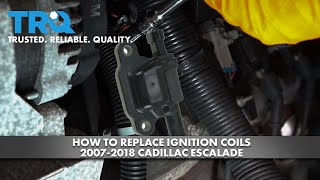
We Have This Part in Stock

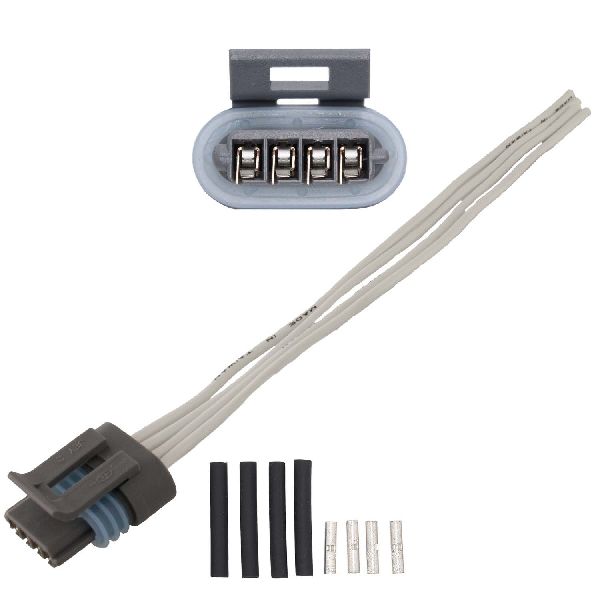
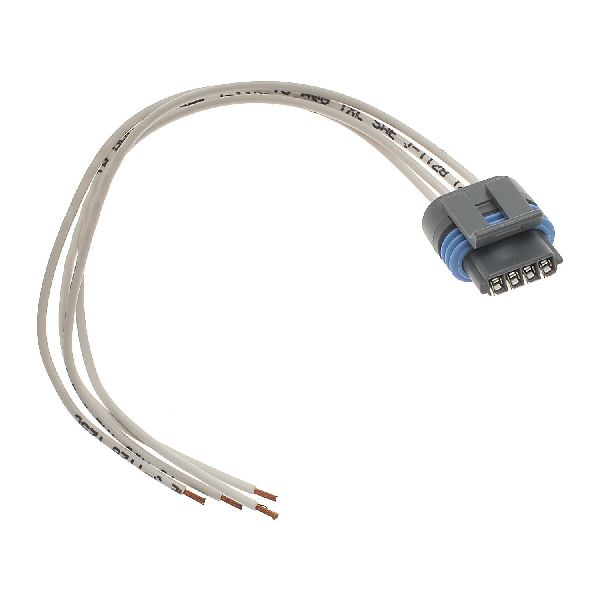

The information in this article is provided for general reference and educational purposes only. Vehicle specifications, procedures, and part compatibility can vary by production date, trim level, and region. Always consult your vehicle's factory service manual and verify part numbers before purchasing or performing repairs. Safety-critical components such as airbags, seat belts, and braking systems should be installed by a qualified professional.
- Cadillac ESCALADE ESV:
- 🧭 Diagnostic Flowchart
- 🎬 Helpful Videos
- 🛍️ Shop This Part
- What's Unique About the 2003-2010 Cadillac ESCALADE ESV
- Symptoms You May Notice
- Most Likely Causes
- Rare But Worth Checking
- Diagnosis Steps
- Parts You'll Likely Need
- Related Codes That Often Appear With This One
- Technical Service Bulletins (TSBs) & Recalls
- Platform-Specific Known Issues
- Mechanic-Grade Diagnostic Values
- Scan Tool Commands That Help
- Wiring & Ground Locations
- Real Owner Repair Stories
- OEM Part Supersession History
- Model Year Variations Within This Range
- 🎟️ Get 5% Off