

P0308 on 2011-2018 Cadillac Escalade ESV: Cylinder 8 Misfire Causes and Fixes
P0308 indicates a misfire in cylinder 8. On the Escalade ESV, this is most often caused by a bad ignition coil or spark plug. However, a failed Active Fuel Management (AFM) lifter is a significant and costly possibility unique to this GM V8 engine, often requiring camshaft replacement as well.
- P0308 is a misfire on cylinder 8, the rearmost cylinder on the passenger side.
- Start your diagnosis with the simple and common fixes: swap the ignition coil, then the spark plug, to see if the misfire moves to another cylinder.
- Be aware that a persistent P0308 code, especially if accompanied by an engine ticking noise, strongly points to a failed Active Fuel Management (AFM) lifter, a known and expensive issue with this engine.
- Driving with a flashing check engine light is not advised, as it can quickly lead to catalytic converter damage.
What's Unique About the 2011-2018 Cadillac ESCALADE ESV
The 6.2L V8 engine in this generation of Escalade uses an Active Fuel Management (AFM) system to improve fuel economy by deactivating cylinders. This system is a known weak point, with the specialized lifters being prone to failure. A collapsed or stuck AFM lifter is a common cause for a P0308 misfire on this platform, a more severe issue than the typical ignition system faults. This is corroborated by manufacturer technical service bulletins that specifically address this failure mode. The failure is so common that class-action lawsuits have been filed against GM regarding this issue.
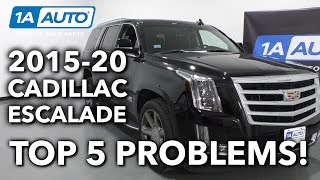
🎬 Watch: Top 5 common problems for this Escalade generationDiagnostic Flowchart
Tap your situation to follow the diagnostic path that matches what you're seeing on this vehicle.
Generation note: This range covers the end of the third generation (2011-2014, L94 engine) and the beginning of the fourth generation (2015-2018, L86 engine). Both generations use a 6.2L V8 engine with Active Fuel Management (AFM), and both are susceptible to the common causes listed, including ignition component and AFM lifter failures.
Symptoms You May Notice
- Flashing or solid Check Engine Light
- Rough or shaking idle
- Engine hesitation or stumbling during acceleration
- Noticeable loss of engine power
- A ticking or tapping noise from the engine, which could indicate a lifter issue.
- Stabilitrak and Traction Control lights may illuminate, as the engine misfire can cause the system to disable itself for safety.
- Harsh shifting from the transmission.
- Replacing only the spark plug when the ignition coil is the actual cause.
- Replacing ignition components repeatedly when the underlying issue is a mechanical failure like a collapsed AFM lifter.
- Assuming a ticking noise is a simple exhaust leak when it is a sign of a failing lifter.
Most Likely Causes
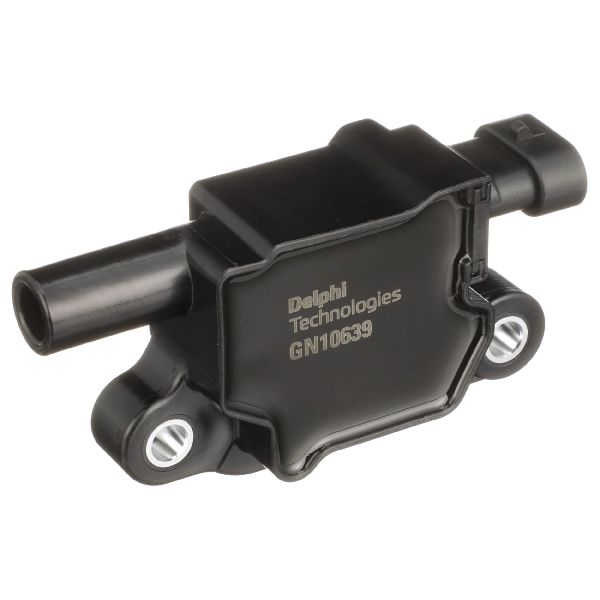
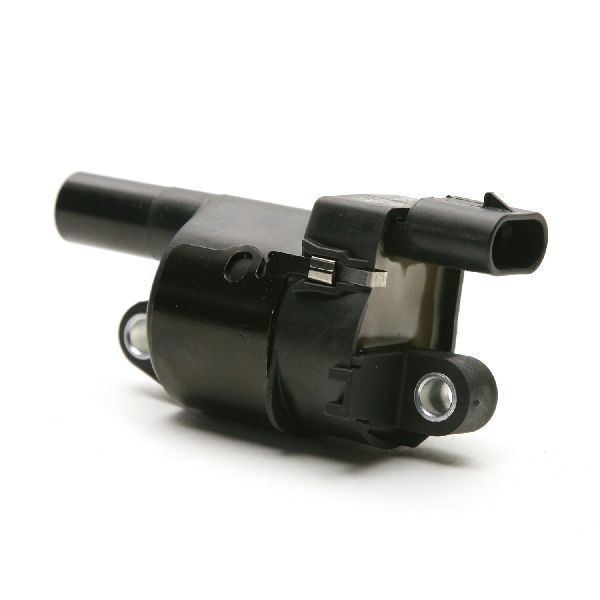
- Faulty Ignition Coil 🔴 High Probability → Shop Ignition Coil Coil-on-plug systems are common failure points on many vehicles due to constant exposure to high heat and vibration in the engine bay. It's a frequent maintenance item.
How to confirm: Swap the ignition coil from cylinder 8 with another cylinder (e.g., cylinder 6). Clear the codes with a scanner, start the engine, and see if the code changes to P0306. If it does, the coil is bad.
Typical fix: Replace the faulty ignition coil. It's often recommended to replace the corresponding spark plug at the same time. Use a small amount of dielectric grease inside the boot to ensure a good seal and prevent corrosion.
Est. part cost: $35-$90 - Worn or Fouled Spark Plug 🔴 High Probability → Shop Spark Plug
How to confirm: After confirming the coil is good, remove and inspect the spark plug from cylinder 8. Look for wear on the electrode, heavy carbon buildup, oil fouling, or signs of coolant (a whitish or greenish deposit), which would indicate a more serious issue like a head gasket leak. You can also swap the plug with another cylinder to see if the misfire follows.
Typical fix: Replace the spark plug. It is best practice to replace all 8 spark plugs if they are near the end of their 100,000-mile service life. Ensure new plugs are gapped correctly and torqued to specification.
Est. part cost: $8-$20 per plug - Failed Active Fuel Management (AFM) Lifter 🟡 Medium Probability → Shop Engine Valve Lifter The AFM system lifters are a well-documented failure point on this engine, as noted in GM TSBs like #PIP4568S and 19-NA-219. They can become stuck, collapse, or fail to unlock, preventing the valve from opening correctly and causing a persistent misfire. This can be caused by oil pressure issues or internal failure of the lifter mechanism.
How to confirm: This is a more complex diagnosis. A distinct ticking or tapping noise is a strong indicator. A mechanic will start by ruling out ignition and fuel issues, then perform a compression test. Low or zero compression on cylinder 8 points to a mechanical problem. Further diagnosis involves removing the valve cover to check for bent pushrods or a rocker arm with excessive play, which indicates a collapsed lifter.
Typical fix: This is a labor-intensive repair that requires removing the cylinder head. The faulty lifter(s), lifter guides, and head gasket must be replaced. Crucially, the camshaft must be inspected for damage, as a failed lifter roller can quickly destroy the corresponding cam lobe. Many owners opt to replace all AFM lifters or install an 'AFM delete kit' to prevent future failures. This repair can cost thousands of dollars at a shop.
Est. part cost: $500-$1500 for lifters, guides, gaskets, and a new camshaft - Clogged or Faulty Fuel Injector ⚪ Low Probability → Shop Fuel Injector
How to confirm: Listen for a clicking sound from the injector with a mechanic's stethoscope to ensure it's activating. A 'noid light' can confirm it's receiving an electrical signal. Swapping the injector with another cylinder is a definitive but labor-intensive test, as it is located under the intake manifold.
Typical fix: Replace the faulty fuel injector. It's recommended to replace the seals on surrounding injectors if the fuel rail is removed.
Est. part cost: $50-$150
Rare But Worth Checking
- Worn Camshaft Lobe: → Shop Engine Camshaft This is often a direct result of a failed lifter. TSB #PIP4138P and 19-NA-219 specifically call out checking for a worn camshaft lobe when diagnosing misfires on these engines. If a lifter is replaced, the camshaft must be inspected for damage, as installing a new lifter on a damaged cam will lead to immediate failure.
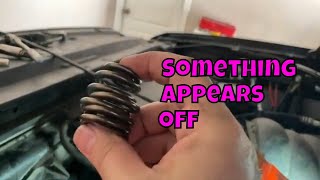
- Bent Pushrod or Broken Valve Spring: A potential consequence of a valvetrain issue, such as a stuck lifter or valve. A broken valve spring can also cause a misfire and is mentioned as a possibility in TSB 19-NA-219. These can be identified during a visual inspection when the valve cover is removed.
- Vacuum Leak: A vacuum leak, particularly from a cracked or leaking intake manifold gasket near cylinder 8, could lean out the air/fuel mixture enough to cause a misfire, especially at idle.
- Internal Coolant Leak: In rare cases, TSB 18-NA-115 describes engine block porosity that can cause a small coolant leak into the cylinder, causing a misfire on cold starts that may disappear as the engine warms up. A wet spark plug with a greenish deposit can be an indicator, confirmed with a cylinder leak-down test.
Diagnosis Steps
- Read the code with an OBD-II scanner to confirm P0308 is present and check for any other codes.
- Locate cylinder 8. On the 6.2L V8, it is the rearmost cylinder on the passenger side (right bank). The cylinders are numbered 1-3-5-7 on the driver's side (front to back) and 2-4-6-8 on the passenger side (front to back).
- Swap the ignition coil from cylinder 8 with cylinder 6 (the next one forward on the same bank).
- Clear the codes and drive the vehicle. If the code returns as P0306, the ignition coil is faulty.
- If the misfire remains on cylinder 8 (P0308 returns), swap the spark plug from cylinder 8 with cylinder 6.
- Clear codes and drive again. If the code moves to P0306, the spark plug is faulty.
- If P0308 persists, inspect the wiring and connector for the ignition coil and fuel injector for any visible damage, corrosion, or looseness.
- Listen for a distinct ticking noise from the passenger side of the engine, which strongly points towards a lifter issue.
- If the above steps do not identify the cause, a more advanced diagnosis is needed. This includes a compression test and a cylinder leak-down test. Low or zero compression often confirms an internal mechanical problem like a failed AFM lifter, bent valve, or worn camshaft lobe. A reading of 150-170 PSI is considered good, while significant loss indicates a problem.
- If a mechanical fault is suspected, the next step is to remove the valve cover for visual inspection of the valvetrain components (rocker arms, pushrods, valve springs).
Parts You'll Likely Need
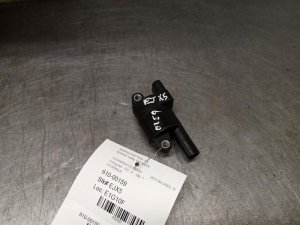
- Ignition Coil
(OEM #12611424 (Gen III, ~2011-2014) / 12708496 (Gen IV, ~2015-2018))— This is one of the most common failure items for a single-cylinder misfire. Heat and vibration cause them to fail over time.
Trusted brands: ACDelco, Delphi
OEM price range: $40-$90
Aftermarket price range: $25-$60 - Iridium Spark Plug
(OEM #41-162 (or 41-110 depending on year))— Spark plugs are a regular maintenance item and can become worn or fouled, leading to a weak or inconsistent spark.
Trusted brands: ACDelco, NGK
OEM price range: $10-$20
Aftermarket price range: $8-$15 - AFM Valve Lifter Kit
(OEM #12699990 (Kit may include multiple parts, verify by VIN))— A known mechanical weak point on this engine. A failed lifter will cause a persistent misfire that ignition parts won't fix. Replacement often involves a set of lifters, guides, and gaskets.
Trusted brands: ACDelco, General Motors
OEM price range: $200-$400 (for a set of 8)
Related Codes That Often Appear With This One
- P0300 — This code means 'Random/Multiple Cylinder Misfire Detected'. A severe misfire on cylinder 8 can sometimes be accompanied by the more general P0300 code, especially if the issue is beginning to affect other cylinders or is intermittent.
- P3400 — This code means 'Cylinder Deactivation System Bank 1'. It may appear alongside a misfire code if the fault is related to the AFM system itself. Note that cylinder 8 is on Bank 2, but an overall AFM system fault can trigger this code.
Technical Service Bulletins (TSBs) & Recalls
- PIP5628G: Notes that information is needed for diagnosing misfire codes P0300-P0308.
- PIP4138P: Advises technicians to check for worn camshaft lobes or lifters if standard diagnostics do not resolve a P0300-P0308 misfire code.
- 19-NA-219: Provides detailed diagnostic steps for misfires and engine noises, listing worn cam lobes, sticking valves, broken valve springs, and collapsed AFM lifters as potential causes.
- PIP4568S: Specifically addresses engine misfires on AFM cylinders (1, 4, 6, or 7) and tick noises resulting from a collapsed or unlocked AFM lifter.
- 18-NA-115: Discusses rare cases of cold start misfires caused by engine block porosity leading to coolant entry into a cylinder.
Platform-Specific Known Issues
- Active Fuel Management (AFM) Lifter Failure: → Shop Engine Valve Lifter The most significant issue for this platform. The V8 engine deactivates four cylinders under light load to save fuel. The hydraulic lifters used for this system are a common point of failure. They can collapse or get stuck in the lifter bore, leading to a misfire and potential camshaft damage. TSBs #PIP5628G, #PIP4138P, and 19-NA-219 all reference misfire codes in relation to this internal engine diagnosis. The repair is extensive and costly.
- AFM Delete as a Permanent Solution: Due to the high failure rate of AFM components, many owners and independent shops opt to perform an 'AFM delete' during the repair. This involves replacing the AFM lifters, camshaft, and sometimes the Valley Lifter Oil Manifold (VLOM) with non-AFM components from the GM performance parts catalog (like those used in LS3 engines). This provides a more durable, permanent fix at the cost of the fuel-saving cylinder deactivation feature.
Mechanic-Grade Diagnostic Values
- Engine Compression Test — expected: 150-170 PSI per cylinder, with minimal variation between cylinders.. Failure: Significantly lower pressure (e.g., below 100 PSI) or zero pressure on cylinder 8 indicates a mechanical sealing issue (piston rings, valves, head gasket).
- Cylinder Leak-Down Test — expected: Less than 10-15% leakage.. Failure: High leakage percentage (e.g., over 20%) confirms a sealing problem. Listening for where the air escapes (intake, exhaust, or crankcase) pinpoints the fault. A mechanic identified a head/gasket issue on a P0308 code when the cylinder failed to hold pressure at 60 PSI.
Scan Tool Commands That Help
- GDS2 / Tech2 (or equivalent high-end scanner): Misfire Graphic / Misfire Counter — To monitor live and historical misfire counts for each specific cylinder. This helps confirm the misfire is isolated to cylinder 8 and is not occurring randomly on other cylinders, which would suggest a different root cause.
- GDS2 / Tech2 (or equivalent high-end scanner): AFM Cylinder Deactivation / Solenoid Test — To manually command the Valve Lifter Oil Manifold (VLOM) solenoids to activate and deactivate. A technician can use this to test the electrical function of the solenoids when diagnosing an AFM-related issue. Note: This specific test may not work on 2017-2018 models according to TSB 19-NA-219.
Wiring & Ground Locations
- G102 — Located at the left rear of the engine.. This single ground point is responsible for grounding all eight ignition coils. Corrosion or a loose connection here can cause erratic spark and misfires on one or more cylinders, including cylinder 8.
- Cylinder Head Grounds (2015+) — On the back of the cylinder heads. One wire goes to the vehicle body, and another connects to the main engine wiring harness.. These are primary engine grounds. If the ground on the passenger side head (Bank 2) is loose or corroded, it could cause electrical issues for components on that bank, including the ignition coil and fuel injector for cylinder 8.
- Ignition Coil Connector — Directly on top of the ignition coil for cylinder 8.. This is a 4-pin connector. The pins provide power, ground, and the trigger signal from the ECM. A damaged connector, spread terminals, or corroded pins can directly cause a misfire on only that cylinder.
Real Owner Repair Stories
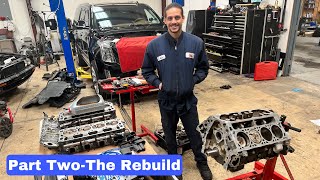
- Alex The Car Doctor, YouTube (2016 Cadillac Escalade) — Initially a ticking noise, which progressed to a severe, constant misfire (skip).
❌ Tried (didn't work) The owner had previously taken it to another shop with no resolution.
✅ What actually fixed it The AFM lifter for cylinder 8 had completely disintegrated, destroying the roller, chewing up the camshaft lobe, and scoring the lifter bore in the engine block. The fix required a partial engine teardown, sending the block to a machine shop to repair the bore, and then reassembling the engine with a new camshaft and a full set of new lifters. - Julio Auto MekaniKo, YouTube (2016 Cadillac Escalade) — P0308 misfire on cylinder 8.
❌ Tried (didn't work) Initial diagnosis pointed away from common lifter issues.
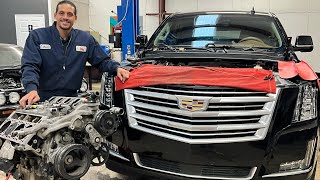
✅ What actually fixed it The spark plug for cylinder 8 was found to be wet with coolant. A subsequent cylinder leak-down test showed significant leakage, failing to hold pressure at 60 PSI. The root cause was determined to be an internal coolant leak from either a failed head gasket or a crack in the cylinder head, requiring removal of the head for machine shop inspection and repair. - Tahoe Yukon Forum user (2007 Tahoe 5.3L (similar AFM system)) — Failed oil pressure sensor, oil weeping from rear of engine, low oil pressure readings (15-25psi), and AFM system would not engage.
❌ Tried (didn't work) Initially just replacing the oil pressure sensor.
✅ What actually fixed it The user removed the intake manifold and discovered 7 of the 11 bolts for the Valve Lifter Oil Manifold (VLOM) were finger-loose. Replacing the entire VLOM assembly (which includes the solenoids and gaskets) restored proper oil pressure and engine function. This highlights how loose VLOM bolts can cause oil pressure problems that lead to lifter failure.
"I Checked Everything" — The Actual Cause
- In one documented case, a P0308 was not caused by a vacuum leak, ignition, or fuel issue. Standard diagnostics were inconclusive. The spark plug was found to be wet with coolant, and a cylinder leak-down test confirmed a significant internal leak, pointing to a bad head gasket or cracked cylinder head. A smoke test for vacuum leaks would have shown no faults.
OEM Part Supersession History
HL-7011 (Elgin Aftermarket for AFM)→HL-7025 (Elgin Aftermarket for DFM/AFM)— GM released a revised lifter design for the newer Dynamic Fuel Management (DFM) engines around 2022. This new lifter is backward-compatible with the older Active Fuel Management (AFM) engines.
Heads up: The new DFM lifter (HL-7025) can be used in older AFM engines. However, the original AFM-only lifter (HL-7011) CANNOT be used in the newer DFM engines. This is critical for anyone sourcing parts for a 2019+ vehicle or using newer parts on an older engine.
Model Year Variations Within This Range
- 2011-2014 vs 2015-2018: The engine changed from the Gen IV L94 V8 to the Gen V L86 V8. While both are 6.2L with AFM, they use different ignition coils (e.g., ACDelco D510C/12611424 for Gen IV vs D521C/12708496 for Gen V) and have different internal designs, though both are prone to lifter failure.
- 2017-2018: According to GM TSB 19-NA-219, the scan tool function to command the AFM system on/off for diagnostic purposes does not work on 2017 and 2018 models, making it harder to isolate valvetrain noise related to the AFM lifters on these specific years.
Helpful Videos
Used OEM Parts in Stock
New Aftermarket Parts Available


The information in this article is provided for general reference and educational purposes only. Vehicle specifications, procedures, and part compatibility can vary by production date, trim level, and region. Always consult your vehicle's factory service manual and verify part numbers before purchasing or performing repairs. Safety-critical components such as airbags, seat belts, and braking systems should be installed by a qualified professional.
- Cadillac ESCALADE ESV:
- 🧭 Diagnostic Flowchart
- 🎬 Helpful Videos
- 🛍️ Shop This Part
- What's Unique About the 2011-2018 Cadillac ESCALADE ESV
- Symptoms You May Notice
- Most Likely Causes
- Rare But Worth Checking
- Diagnosis Steps
- Parts You'll Likely Need
- Related Codes That Often Appear With This One
- Technical Service Bulletins (TSBs) & Recalls
- Platform-Specific Known Issues
- Mechanic-Grade Diagnostic Values
- Scan Tool Commands That Help
- Wiring & Ground Locations
- Real Owner Repair Stories
- "I Checked Everything" — The Actual Cause
- OEM Part Supersession History
- Model Year Variations Within This Range
- 🎟️ Get 5% Off