

P0308 on 2017-2022 Cadillac XT5: Explaining the Phantom Cylinder 8 Misfire Code
Your Cadillac XT5 does not have a cylinder 8. The P0308 code is a 'phantom' code, often caused by an ECM software glitch or triggered alongside a random misfire code (P0300). The fix is not to replace parts for a non-existent cylinder, but to perform professional diagnostics, check for ECM software updates, or diagnose the cause of the P0300 code.
- Do not look for or buy parts for cylinder 8 on your Cadillac XT5; it does not exist.
- P0308 on this vehicle is a 'phantom code' that points to a software or system-level problem.
- The most common scenario is the P0308 appearing with a P0300 (Random Misfire). Diagnose the P0300 code first.
- If P0308 appears alone, your first step should be to have a dealer check for an ECM software update.
- This is not a typical DIY repair. Professional diagnostic tools are required to avoid wasting time and money.
What's Unique About the 2017-2022 Cadillac XT5
The Cadillac XT5 uses a GM engine control module (ECM) that is also used in vehicles with V8 engines, such as the Chevrolet Tahoe or Silverado. Because of this shared software and hardware base, the ECM has the capability to report a P0308 code, even though the physical cylinder does not exist on the XT5. General Motors is aware of this anomaly, as evidenced by Technical Service Bulletin #PIP5628G, which groups P0308 with other misfire codes (P0300-P0307) and provides a specific data-gathering template for technicians. This directs the repair focus away from a non-existent mechanical part and toward software or system-level diagnosis.
Diagnostic Flowchart
Tap your situation to follow the diagnostic path that matches what you're seeing on this vehicle.
Symptoms You May Notice
- Flashing or solid Check Engine Light
- Rough or unstable idle
- Engine hesitation or stumbling during acceleration
- Reduced engine power
- The vehicle may go into 'limp mode'
- No noticeable symptoms, with only the code present
- Attempting to locate and replace the spark plug for cylinder 8.
- Attempting to locate and replace the ignition coil for cylinder 8.
- Attempting to locate and replace the fuel injector for cylinder 8.
Most Likely Causes
- Engine Control Module (ECM) Software Anomaly 🔴 High Probability → Shop Engine Control Module (ECM) The ECM software is shared with V8 platforms, making it capable of erroneously setting a P0308 code. GM has issued TSBs that involve checking for the latest calibrations.
How to confirm: A GM dealer or qualified shop with access to GM's service information system (TIS2Web) must check if a newer ECM calibration is available for the vehicle's VIN.
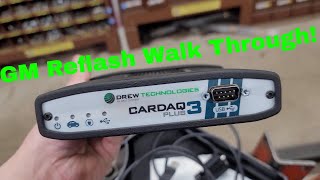
Typical fix: Reprogramming (reflashing) the ECM with the latest software version. 🎬 See how technicians perform a GM module software reflash.
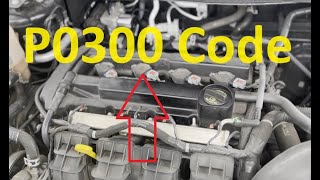
Est. part cost: $0 - Accompanying P0300 (Random Misfire) Code 🔴 High Probability The P0308 code is often triggered as a 'ghost' code when the ECM detects legitimate, but random, misfires across the actual cylinders (1-6). The true fault lies with the cause of the P0300. 🎬 Watch: Understanding common causes and fixes for P0300 misfire codes.
How to confirm: Scan for other codes. If P0300 is present, the diagnostic priority is to find the source of the random misfire (e.g., vacuum leak, fuel delivery issue, carbon buildup on valves).
Typical fix: Diagnose and repair the root cause of the P0300 code. This could involve replacing a faulty fuel injector, cleaning intake valves, or repairing a vacuum leak. The P0308 code will typically resolve itself once the primary issue is fixed.
Est. part cost: $50-$700 - Faulty Engine Control Module (ECM) ⚪ Low Probability → Shop Engine Control Module (ECM)
How to confirm: This is a diagnosis of exclusion. If all software is up to date and no other causes for misfires can be found, the ECM itself may be malfunctioning and generating phantom codes. This requires advanced professional diagnostics.
Typical fix: Replacement of the ECM, which must be programmed to the vehicle's VIN.
Est. part cost: $600-$1500
Diagnosis Steps
- Confirm the presence of code P0308 using a reliable OBD-II scanner.
- Acknowledge that the Cadillac XT5 does not have a cylinder 8. Do not attempt to locate physical components for this cylinder.
- Check for any other stored trouble codes, paying close attention to P0300 (Random Misfire) or any specific cylinder codes (P0301-P0306).
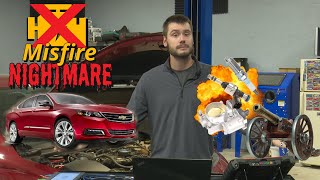
- If P0300 or other misfire codes are present, prioritize diagnosing them. The P0308 is a secondary symptom. Common causes for P0300 on the 3.6L V6 include faulty fuel injectors, carbon buildup on intake valves, or ignition system faults. 🎬 Watch a professional diagnostic walkthrough for GM 3.6L misfires.
- If P0308 appears alone, the primary suspect is an ECM software issue. Contact a GM dealership or a qualified independent shop to check for available ECM software updates (reflashes) for your vehicle's VIN.
- Follow the diagnostic guidance in GM Technical Service Bulletin #PIP5628G, which provides a detailed template for technicians to gather data (freeze frame records, fuel trims, compression test results) when a P0300-P0308 code is present.
- If all software is current and no other faults are found, the ECM itself may be faulty, requiring advanced testing to confirm before replacement.
Parts You'll Likely Need
- Engine Control Module (ECM) Reprogramming — This is not a physical part, but a service. It's the most likely fix if the P0308 code is caused by a known software glitch. A dealer or qualified shop performs this service.
OEM price range: $150-$300
Aftermarket price range: N/A - Engine Control Module (ECM)
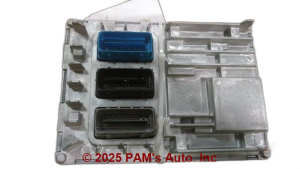
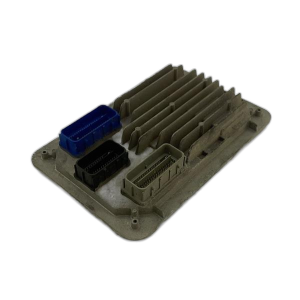
(OEM #ACDelco 12687483 (example for 2018 3.6L), ACDelco 12725663 (superseded))— In the rare case that the module itself has failed and is generating erroneous codes, it will need to be replaced and programmed.
Trusted brands: ACDelco
OEM price range: $800-$1500
Aftermarket price range: $400-$900 - Fuel Injector (for actual cylinders 1-6)
(OEM #ACDelco 12673332)— If P0308 is accompanied by P0300, a faulty fuel injector on one of the V6's actual cylinders is a common cause of the underlying misfire. This is a known issue on the 3.6L LGX engine.
Trusted brands: ACDelco, Bosch
OEM price range: $100-$180
Aftermarket price range: $50-$120
Related Codes That Often Appear With This One
- P0300 — P0300 indicates a random or multiple cylinder misfire. The system-wide instability causing P0300 can confuse the ECM, leading it to log the phantom P0308 code. TSBs for the XT5 often address P0300 in conjunction with specific cylinder misfires.
- P0301-P0306 — These codes indicate a misfire on a specific, real cylinder (1 through 6). The P0308 may appear alongside one of these due to the same underlying ECM glitch.
- P050D — This code relates to a cold start rough idle. GM TSB #PIP5628G explicitly links this code with the P0300-P0308 range, suggesting they can be triggered by the same diagnostic event.
- U0401 — Indicates invalid data received from the ECM. This code may be logged in other modules like the TCM or EBCM when a severe misfire causes the engine to enter a limp mode; it is a symptom of the misfire's effect, not a cause.
Technical Service Bulletins (TSBs) & Recalls
- PIP5628G: This bulletin provides diagnostic aids for technicians encountering misfire codes P0300-P0308 and/or P050D. It confirms that GM is aware of this code range appearing and requires specific data collection (using a 'Misfire template') for diagnosis before contacting the Technical Assistance Center (TAC), pointing to a complex issue.
- 21-NA-147: While not directly for P0308, this TSB is relevant to the platform. It addresses coolant or oil leaking into a spark plug tube due to cylinder head porosity on 3.6L LGX engines, causing a persistent misfire that could trigger a P0300.
- PIP5493E: This TSB for P0300-P0306 on the 3.6L LGX engine instructs technicians to first check for ECM calibrations, then perform standard spark/fuel diagnostics. If no cause is found, it directs them to inspect for broken rocker arms (SRFFs) and issues with camshaft actuators, which are less common root causes.
Platform-Specific Known Issues
- The 3.6L LGX V6 engine can be prone to misfires caused by faulty fuel injectors or significant carbon buildup on the intake valves, which can trigger a P0300 code and, by extension, the phantom P0308.
- A known issue on some 3.6L LGX engines is cylinder head porosity, which can allow coolant to leak into a spark plug tube, causing a persistent misfire. This is documented in TSB 21-NA-147 and would typically set a code for a specific, real cylinder but could contribute to a P0300.
- A Reddit user with a 2019 XT5 experiencing a persistent cylinder 5 misfire (P0305) reported that after replacing the plug, coil, and injector, the final fix was replacing the rocker arms and a cylinder deactivation solenoid, indicating the complexity of diagnosing misfires on this platform.
Mechanic-Grade Diagnostic Values
- Engine Compression Ratio (3.6L LGX) — expected: 11.5:1. Failure: A cylinder with significantly lower compression during a test indicates a mechanical engine problem (e.g., piston rings, valves, head gasket).
- Fuel System — expected: Use regular unleaded gasoline with a posted octane of 87 or higher.. Failure: Using lower octane fuel is not a direct cause, but poor quality fuel can contribute to random misfires (P0300).
- Relative Compression Test — expected: All cylinders should show similar compression waveforms.. Failure: A cylinder with a waveform that deviates significantly from the others suggests a mechanical issue. This test is performed with a lab scope (PICO) or advanced scan tool and is requested by GM's diagnostic procedure.
- Fuel Trims (Short Term/Long Term) — expected: Should be close to 0%, typically within +/- 10%.. Failure: High positive trims indicate a lean condition (vacuum leak, weak fuel delivery); high negative trims indicate a rich condition (leaking injector). This helps diagnose the root cause of an accompanying P0300.
Hidden / Shadow Codes Worth Checking
- Misfire History / Misfire Counters: This is not a DTC but a live data parameter showing the number of misfire events per cylinder. It is essential for identifying which real cylinder is causing the instability that may trigger a phantom P0308. (see via Requires a professional scan tool with live data graphing capabilities, such as the GM GDS2.)
Scan Tool Commands That Help
- GDS2 (or equivalent professional scanner): Crankshaft Position System Variation Learn — This procedure must be performed after replacing the crankshaft position sensor, ECM, or making major engine repairs. It synchronizes the sensor with the crankshaft's rotational variations. Failure to perform the relearn can cause the ECM to incorrectly interpret data and set false misfire codes like P0300 or P0308.
- GDS2: Injector Balance Test — This test is used to identify a fuel injector that is flowing more or less fuel than the others. It's a key step in diagnosing a P0300 code when a fuel system fault is suspected, as requested by GM's diagnostic TSB.
- GDS2: AFIT (Active Fuel Injector Tester) — This is a more advanced injector test than the standard balance test. TSB PIP5628G notes this procedure should be used for best results over the basic GDS balance test, especially for low/no flow injectors.
Wiring & Ground Locations
- G102 (Typical GM) — Typically located on the rear of a cylinder head.. This is a common ground point for the ignition coils. A loose or corroded G102 could cause weak or intermittent spark on one or more cylinders, leading to a P0300 code and subsequent phantom codes.
- G103 / G104 (Typical GM) — Often found on the front or rear of the cylinder heads, or on the cowl above the brake booster.. These are primary engine and ECM ground points. A poor connection here can cause a wide range of erratic electrical behavior, including the ECM logging false or phantom trouble codes like P0308.
Real Owner Repair Stories
- Reddit user 'rayman1675' in r/Cadillac (2019 Cadillac XT5, ~50,000 miles) — Persistent P0305 (Cylinder 5 Misfire)
❌ Tried (didn't work) Replacing the spark plug for cylinder 5, Replacing the ignition coil for cylinder 5, Replacing the fuel injector for cylinder 5
✅ What actually fixed it The dealership replaced the rocker arms and the oil control valve (solenoid) for cylinder 5. The user noted this is a known issue for cracked rocker arms on this engine.
"I Checked Everything" — The Actual Cause
- In cases where a persistent misfire (P0301-P0306) accompanies the P0308 and standard diagnostics (plugs, coils, injectors, vacuum leaks) find no fault, the root cause may be mechanical or hydraulic. TSBs and owner reports point to cracked rocker arms or faulty Active Fuel Management (AFM) oil control valves, which would not be found with a smoke test and require removing the valve covers to inspect.
When the Usual Fixes Don't Work
- While an ECM reflash or diagnosing a P0300 are the most common resolutions, a real-world repair on a 2019 XT5 with a persistent misfire shows that the issue can be more complex. After replacing the spark plug, coil, and injector to no effect, the actual fix was replacing the rocker arms and a related oil control solenoid for the affected cylinder. This indicates that for the 3.6L LGX engine, valvetrain mechanical/hydraulic issues should be considered if the 'big three' ignition and fuel parts do not solve an underlying misfire.
Model Year Variations Within This Range
- 2020-2022: The 2020 model year introduced a major refresh, including a new standard 2.0L Turbo I4 (LSY) engine alongside the existing 3.6L V6 (LGX). While the P0308 phantom code applies to both, the underlying causes of a real P0300 misfire may differ between the two engines. The refresh also included significant interior and exterior styling changes.
Helpful Videos
Used OEM Parts in Stock
New Aftermarket Parts Available


The information in this article is provided for general reference and educational purposes only. Vehicle specifications, procedures, and part compatibility can vary by production date, trim level, and region. Always consult your vehicle's factory service manual and verify part numbers before purchasing or performing repairs. Safety-critical components such as airbags, seat belts, and braking systems should be installed by a qualified professional.
- Cadillac XT5:
- 🧭 Diagnostic Flowchart
- 🎬 Helpful Videos
- 🛍️ Shop This Part
- What's Unique About the 2017-2022 Cadillac XT5
- Symptoms You May Notice
- Most Likely Causes
- Diagnosis Steps
- Parts You'll Likely Need
- Related Codes That Often Appear With This One
- Technical Service Bulletins (TSBs) & Recalls
- Platform-Specific Known Issues
- Mechanic-Grade Diagnostic Values
- Hidden / Shadow Codes Worth Checking
- Scan Tool Commands That Help
- Wiring & Ground Locations
- Real Owner Repair Stories
- "I Checked Everything" — The Actual Cause
- When the Usual Fixes Don't Work
- Model Year Variations Within This Range
- 🎟️ Get 5% Off