

P0308 on 2013-2019 Cadillac XTS: Why Your V6 is Showing a V8 Misfire Code
A P0308 code on a Cadillac XTS is an anomaly, as the vehicle only has a V6 engine. This code indicates a misfire on cylinder 8, which doesn't exist. The most likely cause is an issue with the diagnostic tool, a faulty Engine Control Module (ECM), or incorrect ECM programming, not an actual engine misfire on a non-existent cylinder.
- P0308 should not appear on a Cadillac XTS, as it is a V6 and has no cylinder 8.
- The most likely causes are not mechanical but electronic: a faulty scan tool, incorrect ECM programming, or a CAN bus network error.
- Diagnosis requires a high-quality, professional scan tool to rule out a 'ghost code' and to check the ECM's programming.
- Do not replace any physical engine parts for 'cylinder 8' before confirming the source of the erroneous code.
What's Unique About the 2013-2019 Cadillac XTS
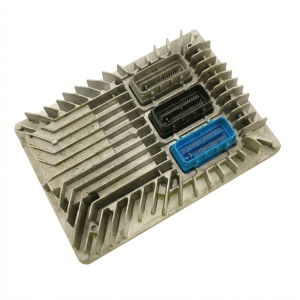
The central issue for the Cadillac XTS regarding a P0308 code is that it's a logical impossibility. The vehicle was produced with the 3.6L LFX V6 and the twin-turbo 3.6L LF3 V6, neither of which has more than six cylinders. The appearance of this code points away from a standard tune-up part (like a spark plug or coil) and towards a more complex problem. The ECM used in many of these vehicles is the ACDelco E78, a sophisticated torque-based controller. If this module has been replaced with one from a V8 vehicle and not flashed, or if its software is corrupted, it may erroneously believe it is managing an 8-cylinder engine, leading to the ghost code.
Diagnostic Flowchart
Tap your situation to follow the diagnostic path that matches what you're seeing on this vehicle.
Symptoms You May Notice
- Check Engine Light is on.
- The primary symptom is the P0308 code itself, which is incorrect for the vehicle.
- If a real misfire is occurring on one of the six cylinders, you may also experience: a rough idle, engine hesitation or stumbling during acceleration, and reduced engine power.
- In cases of network communication issues, other seemingly unrelated electronic glitches may occur.
- A flashing check engine light may occur if a severe misfire is happening on an actual cylinder, which can quickly damage the catalytic converter.
- Searching for a physical 'Cylinder 8' to replace its spark plug or ignition coil. The engine does not have a cylinder 8.
- Replacing ignition or fuel parts for other cylinders without first confirming why the incorrect code is being generated.
- Immediately replacing the ECM without verifying its programming and checking for scan tool or network faults first.
Most Likely Causes
- Incompatible or Faulty Scan Tool 🔴 High Probability Generic or low-quality OBD-II readers can sometimes misinterpret manufacturer-specific data from the GM-LAN (CAN bus) network, leading to the display of incorrect or 'ghost' codes.
How to confirm: Scan the vehicle with a different, high-quality professional scan tool (such as a GM MDI with GDS2 software) to see if the same code appears. If the code disappears with a better tool, the original scanner was the issue.
Typical fix: Use a reliable, professional-grade scan tool for diagnosis.
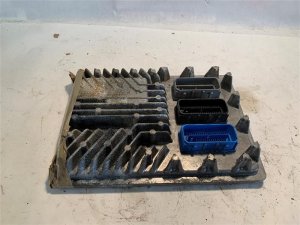
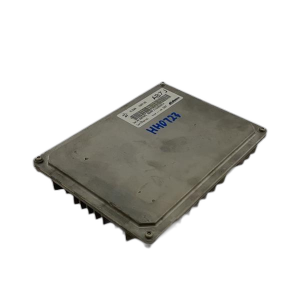
Est. part cost: $0 (if borrowing a tool) - $500+ (to purchase a professional tool) - Faulty or Incorrectly Programmed Engine Control Module (ECM) 🟡 Medium Probability → Shop Engine Control Module (ECM) If the ECM (often an ACDelco E78) was replaced with a used unit from a V8-equipped vehicle (like an Escalade or Silverado) and not properly flashed with the correct VIN and calibration for the XTS V6, it may operate on the assumption that it is controlling a V8 engine. Software corruption from a failed programming attempt can also cause the ECM to misinterpret its own data or set false codes like P0606.
How to confirm: A technician must use a professional scan tool like GM GDS2 to verify that the ECM's calibration ID, VIN, and internal engine type parameter match the vehicle. A history check on the vehicle may also reveal a recent ECM replacement.
Typical fix: The ECM must be reprogrammed (flashed) with the correct software for the Cadillac XTS V6 using the GM Service Programming System (SPS). In cases of internal ECM failure, the module will need to be replaced and programmed.
Est. part cost: $100-$250 (for reprogramming service) or $400-$1000 (for a new ECM) - CAN Bus or Network Communication Error ⚪ Low Probability Complex vehicle electrical systems with multiple modules on the GM-LAN can suffer from communication issues. A fault in a seemingly unrelated module or wiring can corrupt data packets, leading to erroneous trouble codes being logged by the ECM. A poor ground connection at a key location can also cause widespread data errors.
How to confirm: Check for any network-related trouble codes (U-codes). A technician would use an oscilloscope or advanced scan tool to monitor CAN bus traffic for errors, 🎬 See this walkthrough on how to troubleshoot CAN BUS faults. shorts, or open circuits. Checking for corroded connectors or damaged wiring harnesses, especially at main ECM ground points like G101 and G102, is a key step.
Typical fix: Diagnose and repair the source of the network fault, which could be a wiring issue, a faulty module, or a poor connection. This often requires consulting wiring diagrams and checking powers and grounds at various modules.
Est. part cost: $0 (for a loose connector) - $500+ (for module replacement or complex wiring repair)
Diagnosis Steps
- Confirm the code. Use a high-quality OBD-II scanner to verify that P0308 is present. Note any other codes, especially U-series codes.
- Verify the vehicle configuration. Confirm that the vehicle is a Cadillac XTS with its original V6 engine.
- Re-scan with a professional tool. If a generic scanner was used, re-scan with a GM-specific diagnostic tool (GDS2). If the P0308 code is no longer present, the generic scanner was the cause.
- Check ECM Programming. Have a qualified technician use a professional scan tool to verify the software, calibration ID, and VIN programmed into the ECM are correct for the vehicle. Confirm the engine type parameter is set to 'V6'.
- Address any real misfire symptoms. If the engine is running rough, ignore the '8' in the code. Use the scan tool's live data and Mode $06 data (Test IDs $A2-$A7) to view misfire counts for cylinders 1 through 6. Diagnose the actual misfiring cylinder using standard procedures (checking spark, fuel, and compression).
- Inspect for Network Issues. If other communication (U-series) codes are present, diagnose the vehicle's CAN bus network. This involves checking for wiring damage, corroded connectors, and verifying power and grounds at the ECM (such as G101, G102, G121) and other related modules.
Parts You'll Likely Need
- Engine Control Module (ECM) Reprogramming Service — This is the most likely fix if the ECM has incorrect software. It involves flashing the module with the correct calibration for the XTS V6 using GM's Service Programming System (SPS).
Trusted brands: GM (dealership service)
OEM price range: $150-$300
Aftermarket price range: N/A - Engine Control Module (ECM)
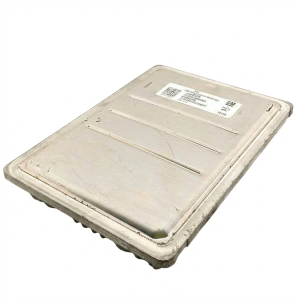
(OEM #12673676, 12655795, 12644446, 12666134 (multiple service numbers exist, must match vehicle hardware))— If the ECM has an internal fault causing it to generate false codes, it will need to be replaced and programmed with the vehicle's VIN.
Trusted brands: ACDelco (OEM)
OEM price range: $600-$1000
Aftermarket price range: $300-$700
Related Codes That Often Appear With This One
- P0300 — If the ECM is confused about its configuration or if there is a genuine random misfire occurring alongside the ghost code, it might also set a P0300 (Random/Multiple Cylinder Misfire) code.
- U-codes (e.g., U0100) — If the root cause is a network problem, various 'Lost Communication' codes with other modules may be present, indicating a broader data bus issue rather than a simple engine fault.
- P0630 — This code for 'VIN Not Programmed or Incompatible - ECM/PCM' can appear if an ECM replacement and programming procedure fails, which could also lead to other erroneous codes like P0308.
Technical Service Bulletins (TSBs) & Recalls
- PIP5628G: '...communicates information that will need to be provided to TAC to aid in diagnosing if a vehicle comes in with misfire and DTC Codes P0300 - P0308 and/or P050D'
Platform-Specific Known Issues
- The provided NHTSA Technical Service Bulletin #PIP5628G mentions diagnostic aid for misfire codes in the range of P0300-P0308, indicating that misfire diagnosis on GM vehicles of this era can be complex enough to require factory technical assistance. While not specific to the erroneous code issue, it highlights the platform's diagnostic intricacies and provides a checklist for technicians when contacting the GM Technical Assistance Center (TAC).
Mechanic-Grade Diagnostic Values
- ACDelco E78 ECM Current Draw (On Bench) — expected: 250-300 mA. Failure: A reading around 130 mA can indicate an internal fault preventing communication or proper power-up.
- ECM 5-Volt Reference Circuit — expected: 5.0 Volts with Key On, Engine Off. Failure: Voltage that is significantly lower or higher than 5.0V, or is not present, indicates a problem with the ECM or the wiring/sensor on that circuit. Check specific pins like X1 Pin 65, 66, or 67 on the ECM connector.
- CAN Bus Voltage — expected: CAN High: ~2.5-3.5V; CAN Low: ~1.5-2.5V. Both should total ~5V.. Failure: Voltages stuck high or low, or shorted to ground/power, indicate a network wiring fault or a failed module (like the ECM's CAN transceiver) pulling the bus down.
Hidden / Shadow Codes Worth Checking
- Mode $06, Test IDs $A2-$A7: These are not trouble codes, but onboard test results for misfire monitoring on a per-cylinder basis. $A2 is for Cylinder 1, $A3 for Cylinder 2, and so on up to $A7 for Cylinder 6. A technician can view the 'Exponential Weighted Moving Average' misfire counts for the last 10 drive cycles. (see via A professional scan tool capable of displaying Mode $06 data. This allows a technician to see if any of the actual six cylinders are logging misfires, even if they haven't reached the threshold to set a specific P0301-P0306 code. This is critical for diagnosing a real misfire that may be occurring alongside the ghost P0308 code.)
Scan Tool Commands That Help
- GM GDS2 (Global Diagnostic System 2): Service Programming System (SPS) — This is the primary function used to fix an incorrectly programmed ECM. A technician selects 'Replace and Reprogram ECU' to load the correct VIN-specific calibration file from GM's servers into the vehicle's ECM. This is mandatory after replacing the ECM or if the existing software is suspected to be corrupt or from a different vehicle type (e.g., a V8).
- GM GDS2 (or other advanced scan tool): Cylinder Balance Test — This active test helps identify a genuinely misfiring cylinder if the driver reports rough running symptoms. The tool commands the ECM to sequentially disable fuel to each cylinder and measures the corresponding drop in RPM. A cylinder with a smaller RPM drop is contributing less power, confirming a real misfire on one of the six cylinders.
Wiring & Ground Locations
- G101 / G106 — Located on the radiator support, G101 on the middle-left and G106 on the upper-left.. These are primary engine compartment ground points. Poor contact here can cause fluctuating voltages and data errors for multiple components, including the ECM, potentially leading to ghost codes.
- G102 — Located on the right front of the engine compartment.. Another critical engine bay ground. Verifying it is clean and tight is a fundamental step in diagnosing any widespread electronic issue or erroneous ECM behavior.
- G121 — Located on the right front of the engine block.. A direct engine block ground is essential for the ECM to get clean signals from sensors mounted to the engine. A poor connection here can disrupt crankshaft and camshaft sensor readings, which are fundamental to misfire detection.
- ECM Ground Pins — Multiple pins on the ECM connectors (e.g., Pin 73 on one E78 X1 connector) serve as grounds.. Verifying continuity between these pins and a known-good chassis ground is essential. A broken ground wire directly at the ECM connector will cause it to malfunction, even if the main chassis grounds are good.
Model Year Variations Within This Range
- 2013-2019: The primary variation is the naturally aspirated 3.6L LFX engine versus the twin-turbo 3.6L LF3 V6. While they share the E78 ECM platform, their software calibrations are completely different. Flashing an ECM with the wrong engine calibration will cause non-start conditions or major running issues, and could potentially generate erroneous codes.
Helpful Videos
We Have This Part in Stock


The information in this article is provided for general reference and educational purposes only. Vehicle specifications, procedures, and part compatibility can vary by production date, trim level, and region. Always consult your vehicle's factory service manual and verify part numbers before purchasing or performing repairs. Safety-critical components such as airbags, seat belts, and braking systems should be installed by a qualified professional.
- Cadillac XTS:
- 🧭 Diagnostic Flowchart
- 🎬 Helpful Videos
- 🛍️ Shop This Part
- What's Unique About the 2013-2019 Cadillac XTS
- Symptoms You May Notice
- Most Likely Causes
- Diagnosis Steps
- Parts You'll Likely Need
- Related Codes That Often Appear With This One
- Technical Service Bulletins (TSBs) & Recalls
- Platform-Specific Known Issues
- Mechanic-Grade Diagnostic Values
- Hidden / Shadow Codes Worth Checking
- Scan Tool Commands That Help
- Wiring & Ground Locations
- Model Year Variations Within This Range
- 🎟️ Get 5% Off