

P0308 on 2003-2008 Chevrolet Express: Cylinder 8 Misfire Causes and Fixes
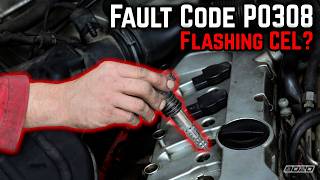
P0308 indicates a misfire on cylinder 8. On these Chevy Express vans, the most likely cause is a failed ignition coil, a worn spark plug, or a bad spark plug wire. Access to cylinder 8 at the rear passenger side is tight. If these common ignition parts don't fix it, the problem could be a more serious internal engine issue like a worn camshaft or a failed lifter, which is a known issue on these V8 engines, documented in GM TSBs.
- P0308 is a misfire on cylinder 8, which is the rearmost cylinder on the passenger side.
- Always start diagnosis by swapping the ignition coil from cylinder 8 with another cylinder to see if the misfire code moves. This is a fast, free, and effective test.
- The most common fixes are replacing the ignition coil, spark plug, or spark plug wire for cylinder 8.
- If ignition and fuel system checks don't resolve the code, be aware of the known issue with worn camshafts and lifters on these engines, which is a more serious and expensive repair.
What's Unique About the 2003-2008 Chevrolet Express
The Vortec V8 engines in this generation of the Express are generally robust, but they have a documented weakness in the valvetrain. While many other GM trucks of the era with similar engines had issues with Active Fuel Management (AFM) lifters, most Express vans in this year range did not have AFM, particularly the 4.8L and 6.0L variants. Despite this, they are still known to suffer from premature wear of standard hydraulic lifters and camshaft lobes, which can cause a persistent P0308 misfire that isn't resolved with typical ignition or fuel system repairs. This mechanical issue is acknowledged in GM Technical Service Bulletin #19-NA-219 (which supersedes earlier versions like PIP4138R) and often presents with a distinct tick, chirp, or squeak.
Symptoms You May Notice
- Rough or shaking idle.
- Hesitation or stumbling during acceleration.
- Noticeable loss of engine power.
- Solid or flashing Check Engine Light.
- Possible fuel smell from the exhaust.
- Ticking, chirping, or squeaking noise from the engine, which may increase with RPM (a strong indicator of a potential camshaft/lifter issue).
- Replacing the Mass Airflow (MAF) sensor or throttle position sensor without proper diagnosis, as these typically cause multiple/random misfires (P0300) rather than a single-cylinder misfire like P0308. One forum user replaced these parts with no success before suspecting a deeper issue.
Most Likely Causes
- Faulty Ignition Coil 🔴 High Probability → Shop Ignition Coil The individual coil-on-plug design means one coil can fail independently. Heat and age are the primary factors, and cylinder 8's location at the rear of the engine bay can exacerbate this.
How to confirm: Swap the ignition coil from cylinder 8 with another cylinder (e.g., cylinder 6, which is the next one forward on the passenger side). Clear the codes and drive. If the code changes to P0306, the coil is bad.
Typical fix: Replace the faulty ignition coil. It's good practice to also replace the spark plug at the same time. Use of a dielectric grease on the boot is recommended.
Est. part cost: $45-$85 - Worn or Fouled Spark Plug / Bad Spark Plug Wire 🔴 High Probability → Shop Spark Plug Spark plugs and wires are standard maintenance items that wear out over time. Cylinder 8 is at the back of the engine bay and can be subjected to high heat. Wires can also be damaged by external factors like fluid leaks.
How to confirm: After ruling out the coil, remove the spark plug from cylinder 8. Inspect it for wear, carbon fouling, oil, or damage to the insulator. Inspect the spark plug wire for cracks, burns, or corrosion. A common and overlooked cause is a leak from the heater core quick-connect fittings on the firewall dripping coolant directly onto the cylinder 8 coil and wire, causing a short.
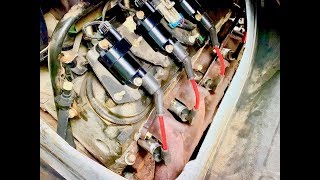
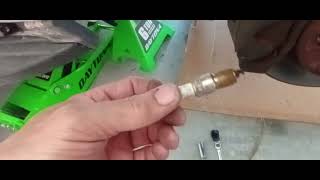
Typical fix: Replace the spark plug and/or spark plug wire. It is recommended to replace all spark plugs and wires 🎬 Watch: Complete walkthrough for replacing plugs, wires, and coils. as a set if they are near their 100,000-mile service life. If a coolant leak is found, it must be repaired to prevent repeat failure.
Est. part cost: $10-$25 for one plug, $50-$100 for a wire set - Clogged or Faulty Fuel Injector 🟡 Medium Probability → Shop Fuel Injector Fuel injectors can become clogged with deposits over time or fail electrically. Some forum users speculate that cylinder 8, being the last on the fuel rail, may be more susceptible to collecting debris.
How to confirm: Listen to the injector with a mechanic's stethoscope to hear if it's clicking. A more definitive test is to swap the fuel injector from cylinder 8 with another cylinder and see if the misfire code follows. Also check the wiring harness connector for damage or corrosion.
Typical fix: Replace the faulty fuel injector. A professional fuel system cleaning may sometimes resolve minor clogs.
Est. part cost: $50-$120 - Worn Camshaft Lobe or Collapsed Lifter 🟡 Medium Probability → Shop Engine Camshaft This is a known mechanical issue on this engine family, documented in GM TSB #19-NA-219 (superseding PIP4138R). It can occur even on engines without AFM. The lifter's roller can fail, causing it to grind down the corresponding lobe on the camshaft.
How to confirm: This is an advanced diagnosis. It often presents with a persistent tick, chirp, or squeak from the engine that occurs at half of crankshaft speed. A mechanic may need to remove the valve cover to inspect valve movement or use a dial indicator to measure valve lift. A significant loss of lift on cylinder 8 confirms a wiped cam lobe.
Typical fix: Requires replacing the camshaft and all 16 valve lifters. This is a significant and labor-intensive repair.
Est. part cost: $500-$1200
Rare But Worth Checking
- Intake Manifold Gasket Leak: → Shop Engine Intake Manifold The intake manifold gaskets on these engines can fail, causing a vacuum leak near a specific cylinder. This leans out the air/fuel mixture and can cause a misfire. A diagnostic technique is to spray carb cleaner near the cylinder 8 runner on the intake manifold and listen for a change in engine idle.
- Low Cylinder Compression: Caused by issues like a leaking valve, broken valve spring, worn piston rings, or a damaged head gasket. A compression test and/or cylinder leak-down test is required to diagnose this.
- Damaged Wiring Harness: The wiring for the ignition coil or fuel injector for cylinder 8 could be melted, chafed, or broken, especially given its location at the rear of the engine. Check the ground connection (G107) on the rear of the passenger side cylinder head, as a loose or corroded ground can cause misfires on that bank.
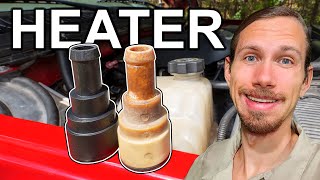
- Leaking Heater Core Hose/Fitting: A surprisingly common issue found in forum discussions is a small coolant leak from the heater hoses or quick-connect fittings near the firewall dripping directly onto the cylinder 8 ignition coil and/or spark plug wire, causing the spark to short out. 🎬 Watch: How to fix those common leaking heater hose connectors.
Diagnosis Steps
- Read the trouble codes with an OBD-II scanner and confirm P0308 is present. Note any other codes and check freeze-frame data.
- Check if the Check Engine Light is flashing. A flashing light indicates a severe, catalyst-damaging misfire. Avoid driving.
- Visually inspect the area around cylinder 8 (rearmost on passenger side). 🎬 See the easy way to access that tricky number 8 plug. Look for damaged wires, loose connectors, and especially for any signs of coolant leaks from the heater hoses on the firewall above the cylinder.
- Swap the ignition coil from cylinder 8 to cylinder 6 (the cylinder directly in front of it). Clear the codes and run the engine. If the code changes to P0306, the ignition coil is the problem.
- If the code remains P0308, inspect the spark plug and spark plug wire for cylinder 8. Replace them if they are worn, fouled, or damaged. Consider replacing them regardless if their age is unknown.
- If ignition components are good, listen to the fuel injector on cylinder 8 with a mechanic's stethoscope for a consistent clicking sound. Consider swapping the injector with another cylinder to see if the misfire follows.
- If the misfire still persists on cylinder 8, listen carefully for a persistent ticking or chirping noise from the passenger side of the engine, which could indicate a worn camshaft or lifter as described in TSB #19-NA-219.
- Perform an engine compression test and a cylinder leak-down test on cylinder 8 to check for mechanical issues like valves, piston rings, or the head gasket.
Parts You'll Likely Need
- Ignition Coil
(OEM #12570616)— This is one of the most common failure points for a single-cylinder misfire on these engines. The original part may be superseded by numbers like 12611424 or ACDelco D510C / UF413.
Trusted brands: ACDelco, Delphi, NGK
OEM price range: $60-$90
Aftermarket price range: $35-$65 - Spark Plug
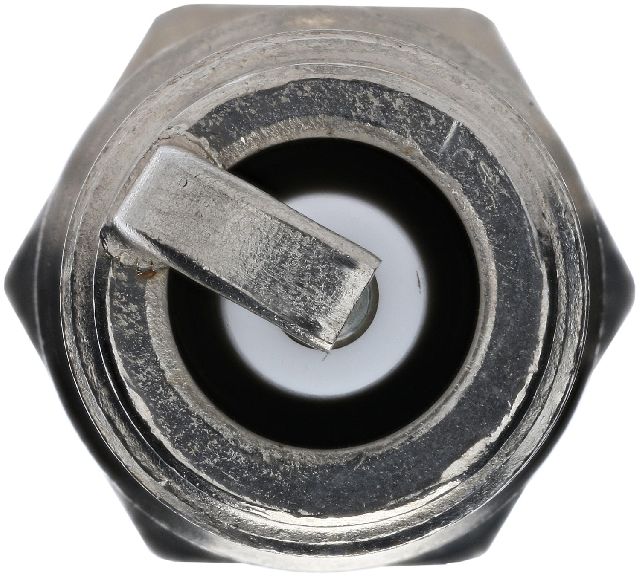
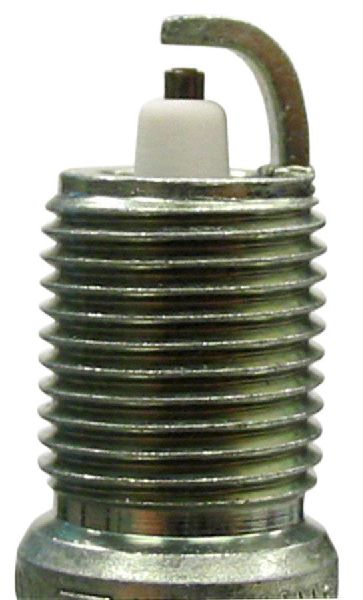
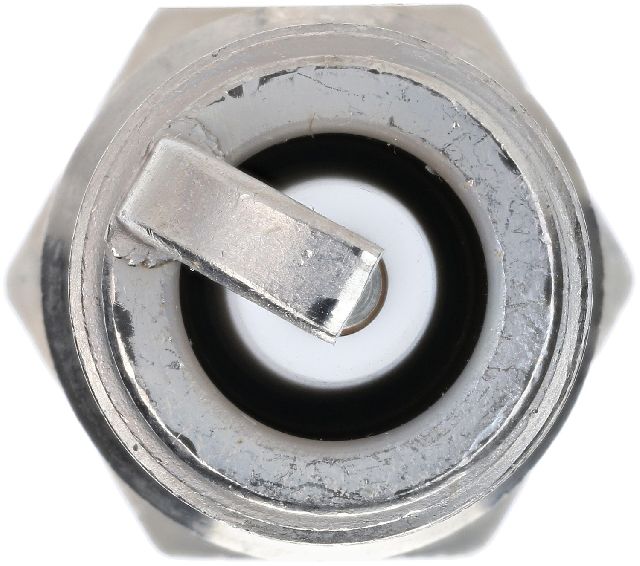
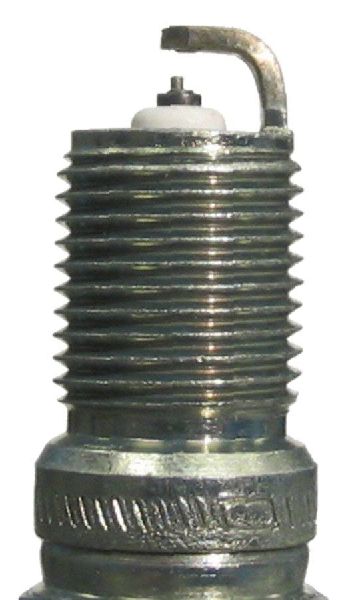
(OEM #41-110)— Spark plugs are a routine maintenance item and a frequent cause of misfires when worn. This is an Iridium plug; do not gap it as it comes pre-gapped.
Trusted brands: ACDelco, NGK
OEM price range: $10-$15
Aftermarket price range: $5-$10 - Spark Plug Wire Set
(OEM #9748RR)— Wires degrade over time from heat and can cause the spark to arc to ground instead of firing the plug. This part number corresponds to ACDelco set 19297032.
Trusted brands: ACDelco, NGK
OEM price range: $70-$100
Aftermarket price range: $50-$80
Related Codes That Often Appear With This One
- P0300 — If the condition causing the P0308 is severe or intermittent, it may also trigger a P0300 'Random/Multiple Cylinder Misfire' code as the overall engine balance is affected.
Technical Service Bulletins (TSBs) & Recalls
- 19-NA-219: This bulletin, which replaces PIP4138R, advises technicians that if standard diagnostics for a misfire code do not isolate the cause, and the issue is accompanied by a tick, chirp, or squeak noise, the problem may be a worn camshaft lobe, sticking valve, or failed lifter. It specifically notes the noise will be at camshaft speed (half of engine RPM).
- PIP4138R: This is the older version of the bulletin that first documented the link between persistent single-cylinder misfires (like P0308) and mechanical valvetrain failure, specifically worn camshaft lobes and lifters, on Gen IV V8 engines.
Platform-Specific Known Issues
- A known issue documented in GM Technical Service Bulletin #19-NA-219 (superseding PIP4138R) describes how a persistent misfire code, often accompanied by a chirp or tick noise, points to a worn camshaft lobe and/or lifter after basic ignition/fuel diagnostics are exhausted.
- The physical location of cylinder 8 at the rearmost passenger side of the engine bay makes access difficult due to the van's 'doghouse' engine cover, complicating diagnosis and repair compared to the same engine in a pickup truck.
- Multiple owner accounts mention a coolant leak from the heater core hoses/fittings on the firewall dripping onto the cylinder 8 ignition components, causing the misfire. This should be a primary visual inspection point.
Mechanic-Grade Diagnostic Values
- Ignition Coil Primary Resistance — expected: 0.4 to 0.9 Ohms is a general range. Some OEM specifications state a tighter range of 0.49—0.57 ohms.. Failure: A reading outside the specified range, or a reading that fluctuates wildly, indicates a failing coil winding.
- Ignition Coil Secondary Resistance — expected: 5,000 to 12,000 Ohms (5k-12k Ω). A specific OEM spec is 9.5—11.1 kΩ.. Failure: A reading significantly outside this range suggests the internal secondary winding is compromised.
- Fuel Injector Voltage (KOEO) — expected: One wire at the injector connector should show 12V+ with the key on, engine off. This is the power feed.. Failure: No voltage on the power feed wire indicates a wiring or fuse issue upstream of the injector.
- Fuel Injector Control Signal (Engine Running) — expected: The second wire (control wire) at the injector connector will show a pulsing ground signal from the PCM when tested with a noid light or oscilloscope. Using a multimeter, it may show a fluctuating voltage reading or ~12V when plugged in, which drops to 0V when unplugged.. Failure: No pulse on the control wire indicates a wiring break between the PCM and injector, or a faulty PCM driver.
- Cylinder Compression — expected: Healthy cylinders typically show 120 to 150 PSI, with less than 15% variation between cylinders.. Failure: A reading significantly below 100 PSI or with high variance from other cylinders points to a mechanical engine problem (valves, rings, head gasket).
Hidden / Shadow Codes Worth Checking
- Mode $06, Monitor ID $A9: This is not a typical DTC, but a specific monitor within the OBD-II system's Mode $06 data that tracks the raw misfire count for cylinder 8. Viewing this data can confirm if the PCM is actively counting misfires on that cylinder, even before the count is high enough to set a P0308 code. (see via An advanced OBD-II scanner or a diagnostic app capable of displaying Mode $06 data.)
Scan Tool Commands That Help
- Tech2 / GDS2 (or equivalent professional scanner): Cylinder Power Balance / Fuel Injector Balance Test — This is a primary bidirectional function to confirm a misfire. The command allows the technician to sequentially disable the fuel injector for each cylinder and observe the corresponding drop in RPM. If disabling cylinder 8 causes little or no change in RPM, it confirms that cylinder is not contributing power.
- Tech2 / GDS2: Crankshaft Position (CKP) Variation Learn — This procedure should be performed after major engine work, or if false misfires are suspected. It helps the PCM learn the minor variations in the crankshaft reluctor wheel to improve the accuracy of misfire detection.
Wiring & Ground Locations
- G107 (Gasoline Engines) — On the rear of the passenger side cylinder head.. This is a ground point for several engine components. A loose or corroded connection here can cause erratic behavior and misfires, particularly for the cylinders on the passenger side bank (2, 4, 6, 8).
- Cylinder 8 Ignition Coil Control (Gen III, ~2003-2006) — PCM Connector C2 (Green), Pin 65. Wire color is typically Red/White.. This is the specific pin on the PCM that sends the signal to fire the ignition coil for cylinder 8. It can be used to test for a signal from the PCM or check for a break in the wire between the PCM and the coil.
- Cylinder 8 Fuel Injector Control (Gen III, ~2003-2006) — PCM Connector C1 (Blue), Pin 79. Wire color is typically Yellow/Black.. This is the pin the PCM uses to pulse the ground for the cylinder 8 fuel injector. Testing here can determine if the PCM is commanding the injector to open.
- Cylinder 8 Ignition Coil Control (Gen IV, ~2007-2008) — PCM Connector C1 (Blue), Pin 73. Wire color is typically Red/White.. For later model years with the Gen IV engine and different PCM, this is the specific control pin for the cylinder 8 ignition coil.
- Cylinder 8 Fuel Injector Control (Gen IV, ~2007-2008) — PCM Connector C2 (Green), Pin 70. Wire color is typically Yellow/Black.. For later model years with the Gen IV engine, this is the specific control pin for the cylinder 8 fuel injector.
Real Owner Repair Stories
- Multiple forum and video sources (Various 2003-2008 GM Trucks/Vans with V8 engines) — Persistent P0308 misfire, sometimes worse in wet weather or after the engine warms up. Rough idle.
❌ Tried (didn't work) Replacing spark plug for cylinder 8, Replacing ignition coil for cylinder 8, Replacing spark plug wire for cylinder 8
✅ What actually fixed it A small, often hard-to-see coolant leak from the plastic heater hose quick-connect fittings on the firewall was dripping directly onto the cylinder 8 ignition coil and/or spark plug wire. The coolant would cause the high voltage spark to short to ground. Replacing the leaking fitting and the contaminated ignition components resolved the misfire.
"I Checked Everything" — The Actual Cause
- A common scenario for a persistent P0308 is when a technician performs a smoke test to check for vacuum leaks and finds none. The actual cause is not a vacuum leak, but a coolant leak from the heater hose fittings on the firewall dripping onto the cylinder 8 ignition coil. This shorts the electrical connection, causing a misfire that standard vacuum leak diagnosis would never find.
When the Usual Fixes Don't Work
- In a thread on Chevrolet Forum, a user with a 2008 Express 4.8L reported a persistent P0308 code despite replacing the #8 ignition coil three times, the MAF sensor, and the throttle sensor. The user did not post a final resolution, which is a common outcome in forums for difficult P0308 cases. This highlights that when the simple ignition parts do not solve the issue, the root cause is often a more complex mechanical problem (like the known camshaft/lifter issue) or an obscure electrical fault that is difficult for a DIYer to diagnose.
OEM Part Supersession History
ACDelco D585 / GM 10457730→ACDelco D510C / GM 12611424 (among others)— Design change for different engine applications and mounting brackets. The D585 is a round coil with an integrated heat sink, often called the 'truck coil' and considered very robust. The D510C is a more compact, square-style coil.
Heads up: While electrically adaptable, the coils have different physical shapes and mounting bolt patterns. They also use different wiring harness connectors. Swapping styles requires changing the mounting bracket and harness pigtail. Furthermore, the optimal ignition dwell time in the PCM's tune may be different, so a swap could affect performance without a corresponding tune adjustment.
Model Year Variations Within This Range
- 2003-2006 vs 2007-2008: A significant transition from Gen III to Gen IV V8 engines occurred around 2007. Gen IV engines (introduced in some 2007+ models) feature different cylinder heads (243/799 castings), flat-top pistons for higher compression, and relocated knock sensors (moved from the valley to the sides of the block) and camshaft position sensor (moved from the rear of the block to the front timing cover). The PCM and crankshaft reluctor wheel also changed from 24x (Gen III) to 58x (Gen IV), impacting diagnostic procedures and tools.
- 2003: The 2003 model year was a transition year for the Express van itself and for the engines. While most received the coil-on-plug ignition system, it's important to verify. Earlier (pre-2003) vans used a distributor and a central 'spider' injector assembly, which have completely different diagnostic paths for a misfire.
Diagnostic Flowchart
Real Owner Stories
Aggregated from forums and TSBs cited above. Mileages and costs reflect what owners reported in those sources.
2008 Chevrolet Express 4.8L
Symptoms: Persistent P0308 code that did not resolve even after replacing the ignition coil three times, along with the MAF and throttle sensors.
What fixed it: The thread highlighted that this code is not always a simple coil fix; other users recommended checking the spark plug, fuel injector, and performing a compression test to find the root cause.
Source hint: ChevroletForum.com thread titled '2008 P0308 troubles'
2001 Chevrolet Express 3500 5.7L V8
Symptoms: A cylinder 8 misfire that completely stumped mechanics after spark plugs, wires, compression tests, and fuel pressure checks all came back normal.
What fixed it: The issue remained unresolved in the thread, illustrating how difficult this specific cylinder misfire can be to diagnose when standard ignition and fuel components test normal.
Source hint: Reddit r/Chevy thread titled 'Unable to figure out the source of a cylinder 8 misfire on a 2001 Express 3500'
2002 Chevrolet Silverado 8.1L
Symptoms: Triggered a P0308 'Cylinder 8 Misfire' code.
What fixed it: The misfire was correctly diagnosed and resolved by addressing a clogged fuel injector.
Source hint: Old-Chevy-Trucks.com Message Forum thread titled 'P0308 'Cylinder 8 Misfire''
Chevrolet Express V8 (Multiple Owner Accounts)
Symptoms: Engine misfire on cylinder 8 caused by fluid dripping onto the ignition components at the rear of the engine bay.
What fixed it: Identified and repaired a coolant leak originating from the heater core hoses/fittings on the firewall that was dripping directly onto the cylinder 8 coil and wire.
Source hint: Multiple owner accounts cited in article context regarding firewall heater core leaks
Related OBD-II Codes
Frequently Asked Questions
Why is cylinder 8 specifically prone to misfires on my Chevrolet Express?
Does TSB 19-NA-219 apply to my 2003-2008 Express V8?
I hear a ticking noise along with my P0308 code. What does that mean?
How can I easily test if the ignition coil on cylinder 8 is bad?
Why is it so difficult to access cylinder 8 on the Express van?
Could a coolant leak cause my P0308 code?
Helpful Videos
Used OEM Parts in Stock
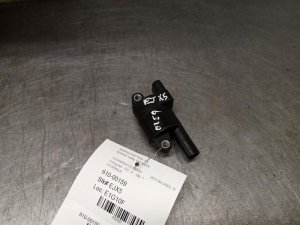
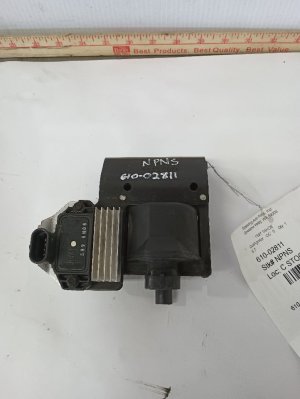
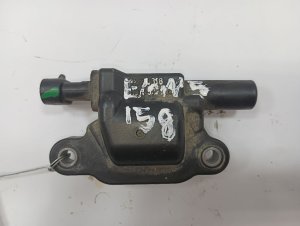
New Aftermarket Parts Available


The information in this article is provided for general reference and educational purposes only. Vehicle specifications, procedures, and part compatibility can vary by production date, trim level, and region. Always consult your vehicle's factory service manual and verify part numbers before purchasing or performing repairs. Safety-critical components such as airbags, seat belts, and braking systems should be installed by a qualified professional.
- Chevrolet Express:
- 🧭 Diagnostic Flowchart
- 🎬 Helpful Videos
- 🛍️ Shop This Part
- What's Unique About the 2003-2008 Chevrolet Express
- Symptoms You May Notice
- Most Likely Causes
- Rare But Worth Checking
- Diagnosis Steps
- Parts You'll Likely Need
- Related Codes That Often Appear With This One
- Technical Service Bulletins (TSBs) & Recalls
- Platform-Specific Known Issues
- Mechanic-Grade Diagnostic Values
- Hidden / Shadow Codes Worth Checking
- Scan Tool Commands That Help
- Wiring & Ground Locations
- Real Owner Repair Stories
- "I Checked Everything" — The Actual Cause
- When the Usual Fixes Don't Work
- OEM Part Supersession History
- Model Year Variations Within This Range
- Real Owner Stories
- 2008 Chevrolet Express 4.8L
- 2001 Chevrolet Express 3500 5.7L V8
- 2002 Chevrolet Silverado 8.1L
- Chevrolet Express V8 (Multiple Owner Accounts)
- Related OBD-II Codes
- Frequently Asked Questions
- 🎟️ Get 5% Off