

P0308 on 1999-2006 Chevrolet Silverado 1500: Cylinder 8 Misfire Causes and Fixes
P0308 means cylinder 8 is misfiring. On this Silverado, the most likely cause is a bad spark plug, ignition coil, or spark plug wire. A full ignition tune-up is a common and effective fix, often costing under $150 for DIY parts. However, persistent issues could point to a leaking intake manifold gasket or, more rarely, a cracked Castech cylinder head.
- P0308 on this Silverado means cylinder 8 (rear passenger side) is misfiring.
- Start your diagnosis with the simple, high-probability causes: spark plug, ignition coil, and spark plug wire for cylinder 8.
- Use the 'swap test' for the coil and plug to confirm the faulty part without spending money.
- A flashing Check Engine Light is serious. Stop driving to prevent expensive damage to your catalytic converter.
- If a full ignition tune-up doesn't fix the code, investigate common platform issues like intake manifold gasket leaks before assuming a more severe mechanical problem.
What's Unique About the 1999-2006 Chevrolet Silverado 1500
The Gen III Vortec V8 engines (4.8L and 5.3L) in this GMT800 generation of Silverado are known for their general durability, but they are also known for specific weak points that can cause a P0308 code. Ignition components like spark plugs, wires, and coils are common failure points due to age and heat exposure. More unique to this platform are issues like leaking intake manifold gaskets, which can cause lean misfires, and in higher-mileage engines, mechanical issues like worn camshafts and lifters can be the underlying cause when a simple tune-up doesn't solve the problem. A specific issue involves the heater core quick-connect hoses on the firewall, which can leak coolant directly onto the cylinder 8 ignition coil and wire, causing a targeted failure.
Symptoms You May Notice
- Rough idle or shaking engine
- Hesitation or stumbling during acceleration
- Reduced engine power
- Flashing or solid Check Engine Light
- Noticeable fuel smell from the exhaust
- Engine ticking or chirping noise (can indicate a mechanical lifter/cam issue)
- Replacing only the spark plug without checking the coil or wire. It's common for all three ignition components to be near the end of their service life.
- Replacing the catalytic converter. A misfire can cause a P0420/P0430 catalyst code, but the misfire is the root cause, not the converter itself. Fixing the misfire first is essential.
- Ignoring the heater core hose leak. If the coolant leak onto the #8 ignition components is not fixed, new plugs and wires will fail again prematurely.
Most Likely Causes
- Worn or Fouled Spark Plug 🔴 High Probability → Shop Spark Plug Spark plugs are a standard maintenance item that wear out over time. GM recommends replacement at 100,000 miles, but they can fail sooner. Cylinder 8's location at the rear can subject it to slightly more heat.
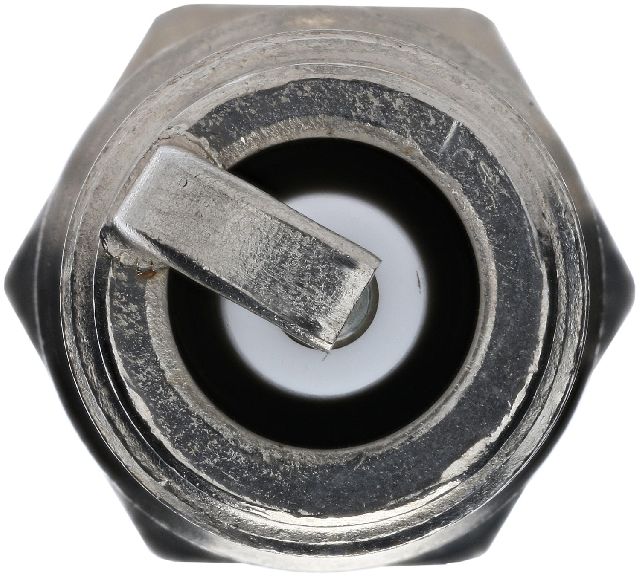
How to confirm: Remove the spark plug from cylinder 8 and inspect it for wear, fouling (black, oily, or white deposits), or damage. A simple test is to swap the cylinder 8 plug with one from another cylinder (e.g., cylinder 6). If the code changes to P0306, the spark plug is the culprit.
Typical fix: Replace the spark plug. It is highly recommended to replace all 8 plugs at the same time for even performance. The correct OEM plug is typically an ACDelco Platinum, part number 41-962.
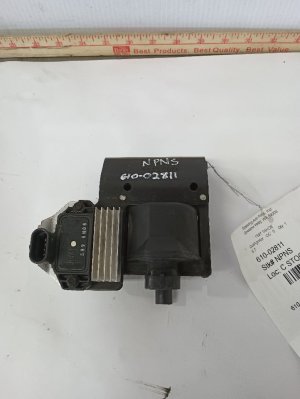
Est. part cost: $20-$60 for a set of 8 ACDelco plugs - Failed Ignition Coil 🔴 High Probability → Shop Ignition Coil These engines use an individual coil-on-plug design. The coils are subjected to significant heat and vibration, leading to eventual failure. The coils used on these trucks are often referred to as the 'D585' style.
How to confirm: Swap the ignition coil from cylinder 8 with another cylinder (e.g., cylinder 6). Clear the codes and run the engine. If the misfire code moves to P0306, the coil is bad.
Typical fix: Replace the single faulty ignition coil. The OEM part is ACDelco D585 (GM #10457730 or #19005218 stamped on the bracket). Ensure you purchase the correct style (round or square body) for your specific year/model, though most in this range use the square 'D585' style.
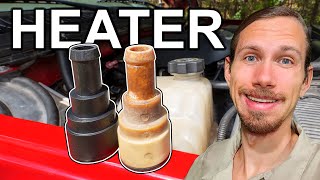
Est. part cost: $25-$50 for one ACDelco or equivalent coil - Bad Spark Plug Wire 🔴 High Probability → Shop Spark Plug Spark plug wires degrade from heat over time, causing the spark to weaken or arc to the engine block. A well-documented issue is coolant leaking from the plastic heater core quick-connect hoses on the firewall, dripping directly onto the #8 plug wire 🎬 Watch: How to fix the common heater hose connector leak. and causing it to fail.
How to confirm: Visually inspect the wire for cracks, burns, or physical damage. Check for a secure connection at the coil and spark plug. You can also test the wire's resistance with a multimeter; a good rule of thumb is under 1,000 ohms per foot.
Typical fix: Replace the spark plug wire. It is best practice to replace all 8 wires as a set. A quality replacement set is ACDelco 9748HH.
Est. part cost: $40-$80 for a set of 8 wires - Clogged or Faulty Fuel Injector 🟡 Medium Probability → Shop Fuel Injector As the last injector on the passenger-side fuel rail, the cylinder 8 injector can sometimes accumulate more debris over time, especially if the fuel system contains rust or sediment.
How to confirm: Use a mechanic's stethoscope or a long screwdriver to listen to the injector. It should make a consistent clicking sound. Compare the sound of injector 8 to a known good cylinder. You can also swap the injector with another cylinder, but this is more labor-intensive.
Typical fix: Clean or replace the fuel injector for cylinder 8. If replacing, it's wise to replace the O-rings on adjacent injectors.
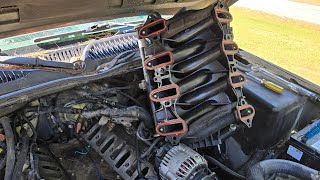
Est. part cost: $40-$90 for one injector - Intake Manifold Gasket Leak 🟡 Medium Probability → Shop Engine Intake Manifold The original intake manifold gaskets on the Vortec V8s are a plastic frame with rubber seals that become brittle and flatten with age and heat cycles, leading to vacuum leaks. This unmetered air leans out the air-fuel mixture, causing misfires, often on the corner cylinders like #8.
How to confirm: With the engine running, carefully spray brake cleaner or a propane torch (unlit) around the intake manifold gasket area for cylinder 8. If the engine idle changes, a leak is present. A smoke test is the most definitive diagnostic method.
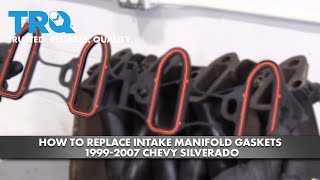
Typical fix: Replace the intake manifold gaskets. The updated Fel-Pro gasket set (part number MS9801T) 🎬 See this walkthrough on replacing your intake manifold gaskets. is a popular, improved design. This is also a good time to replace the knock sensors and harness located under the intake manifold, as they are a common failure point.
Est. part cost: $30-$70 for the Fel-Pro gasket set
Rare But Worth Checking
- Cracked Castech Cylinder Head: → Shop Engine Cylinder Head A known manufacturing defect affects some cylinder heads made by a GM supplier named 'Castech'. These heads, often with casting number 706 or 862, can develop a porosity crack in an oil drain passage, allowing coolant to leak into the crankcase or cylinder. This can cause unexplained coolant loss and foul the spark plug, leading to a persistent misfire. Look for the 'Castech' logo (a battery-like symbol) under the valve cover. GM issued TSB 06-06-01-019B for this issue.
- Worn Camshaft Lobe / Failed Lifter: → Shop Engine Camshaft On higher mileage engines, a worn camshaft lobe or a collapsed lifter can prevent the valves for cylinder 8 from opening and closing properly, resulting in a loss of compression and a mechanical misfire. This is often accompanied by a distinct ticking or chirping sound from the valve cover area. This is a more serious mechanical issue that won't be fixed by ignition or fuel system repairs. TSB Bulletin #PIP4138R notes that if standard diagnostics do not isolate the cause of a P0300-P0308 code, technicians should check specifically for a worn camshaft lobe or lifter.
- Low Fuel Pressure: A weak fuel pump or failing fuel pressure regulator can cause a lean condition that may manifest as a misfire on one or more cylinders. Check fuel pressure with a gauge connected to the fuel rail test port. Pressure should be 55-62 PSI with the key on, engine off.
Diagnosis Steps
- Confirm the code with an OBD-II scanner. 🎬 Watch: Step-by-step guide to diagnosing a cylinder 8 misfire. Note if the Check Engine Light is solid or flashing. A flashing light indicates a severe misfire that can damage the catalytic converter.
- Identify cylinder 8. It is the rearmost cylinder on the passenger side of the engine.
- Visually inspect the area around cylinder 8. Look for obvious signs of damage, loose connectors, or coolant leaking from the heater hoses on the firewall above the cylinder.
- Swap the ignition coil from cylinder 8 with an adjacent, easily accessible cylinder (like cylinder 6, the third cylinder back on the passenger side). Clear the codes and run the engine. If the code changes to P0306, the ignition coil is faulty.
- If the misfire remains on cylinder 8, swap the spark plug from cylinder 8 with the one from the cylinder you just used for the coil swap. Clear codes and re-test. If the code now moves, the spark plug is bad.
- If the misfire still remains on cylinder 8, inspect the spark plug wire for any visible damage, cracks, or burns. Check for a secure connection at both ends. Replace if any doubt.
- If ignition components are confirmed good, check the fuel injector. Use a mechanic's stethoscope to listen for a steady clicking sound from the injector. Compare it to a known good injector.
- Check for vacuum leaks. The most common source is the intake manifold gasket. A smoke test is the most effective way to find a leak.
- If all of the above checks pass, perform a compression test on cylinder 8 to rule out mechanical engine problems like bad valves, piston rings, or a failed head gasket. A reading below 120 PSI or significantly lower than other cylinders indicates a problem. Manufacturer TSB Bulletin #PIP5628G provides specific information that should be provided to technical assistance (TAC) to aid in diagnosing persistent misfire codes like P0308.
Parts You'll Likely Need
- Spark Plugs
(OEM #41-962 or 41-110)— Spark plugs are a primary wear item and the most common cause of a single-cylinder misfire.
Trusted brands: ACDelco, NGK
OEM price range: $40-$80 (set of 8)
Aftermarket price range: $20-$60 (set of 8) - Ignition Coil
(OEM #19418992 (ACDelco, check style))— Individual ignition coils are a frequent failure point on these engines due to heat and age.
Trusted brands: ACDelco, Delphi
OEM price range: $40-$60 (each)
Aftermarket price range: $25-$50 (each) - Spark Plug Wire Set
(OEM #9748HH (ACDelco))— Wires degrade over time from engine heat, causing weak spark. It's best practice to replace them with the spark plugs.
Trusted brands: ACDelco, NGK
OEM price range: $60-$90 (set of 8)
Aftermarket price range: $40-$70 (set of 8) - Intake Manifold Gasket Set
(OEM #89017852 (ACDelco))— A very common failure on the GMT800 platform, causing vacuum leaks that lead to misfires.
Trusted brands: Fel-Pro, ACDelco
OEM price range: $50-$80
Aftermarket price range: $30-$60
Related Codes That Often Appear With This One
- P0300 — If the underlying issue, like a vacuum leak or low fuel pressure, affects multiple cylinders, a P0300 (Random Misfire) code may appear alongside the P0308.
- P0171 / P0174 — These codes indicate a lean condition (too much air, not enough fuel). A vacuum leak from a bad intake manifold gasket is a common cause for both lean codes and misfire codes like P0308.
Technical Service Bulletins (TSBs) & Recalls
- 06-06-01-019B — Addresses gradual coolant loss due to a potential porosity crack in cylinder heads manufactured by Castech.
- 19-NA-219 — Advises checking for worn camshaft lobes or failed lifters as a cause for persistent misfire codes if ignition diagnostics fail.
- Bulletin #PIP4138R — Notes that engines with a Service Engine Soon lamp and misfire codes P0300-P0308 should be inspected for worn camshaft lobes or lifters if standard diagnostics fail.
- Bulletin #PIP5628G — Communicates diagnostic information required for TAC when a vehicle presents with misfire codes P0300 through P0308.
Platform-Specific Known Issues
- Cracked Castech Cylinder Heads: A specific batch of cylinder heads from the manufacturer 'Castech' are known to crack, causing coolant leaks that can foul the spark plug in the affected cylinder. GM issued TSB #06-06-01-019C regarding this issue.
- Intake Manifold Gasket Failure: The factory gaskets are prone to becoming brittle and failing, causing vacuum leaks that are a very common source of random and single-cylinder misfires on these trucks.
Mechanic-Grade Diagnostic Values
- Fuel Pressure (Key ON, Engine OFF) — expected: 55-62 PSI. Failure: Pressure below 55 PSI can indicate a weak fuel pump or clogged filter.
- Fuel Pressure (At Idle) — expected: ~45 PSI. Failure: While lower than KOEO pressure, this is often normal for returnless systems. A significant drop under load is more concerning.
- Fuel Injector Resistance — expected: 11 - 14 ohms. Failure: A reading of 0 ohms (shorted), Open Loop (O.L.), or a variance of more than 1 ohm from other injectors.
- Ignition Coil Secondary Resistance — expected: 6,000 - 10,000 ohms (6kΩ - 10kΩ). Failure: A reading significantly outside this range suggests a bad secondary winding, though swapping coils is often a more practical test.
- Cylinder Compression — expected: 120-150 PSI, with minimal variation between cylinders.. Failure: A cylinder reading significantly lower than others points to a mechanical issue like rings, valves, or head gasket.
Scan Tool Commands That Help
- Tech2 / GDS2 or equivalent professional scan tool: Crankshaft Position Variation Learn (CASE Relearn) — This procedure is required if the crankshaft position sensor, engine, or PCM has been replaced. Failure to perform the relearn can result in a P1336 code and inaccurate misfire detection. The procedure involves applying the brake and accelerating the engine to a specific RPM (around 4000 RPM) until the fuel cuts off, allowing the PCM to learn the variations in the crankshaft reluctor wheel.
- Tech2 / GDS2 or equivalent professional scan tool: Misfire History / Misfire Graphic — To view current and historical misfire counts for each cylinder. This helps confirm that cylinder 8 is the primary offender and can reveal if other cylinders are beginning to misfire under specific conditions (e.g., high RPM, idle).
Wiring & Ground Locations
- G107 (or G104/G108 depending on year/model) — Rear of the passenger side cylinder head.. This is a primary engine-to-chassis ground. A loose or corroded connection at this point can cause erratic behavior in the ignition system, including weak spark or inconsistent ignition coil performance, potentially leading to a misfire code for nearby cylinder 8.
- Ignition Coil Connector for Cylinder 8 — Plugged into the ignition coil for the rearmost cylinder on the passenger side.. The wiring and plastic connector for the cylinder 8 coil are susceptible to heat damage from the exhaust manifold and engine block. The plastic can become brittle, and wires can break internally, causing an intermittent connection and a persistent P0308 code that part-swapping won't fix.
Real Owner Repair Stories
- Reddit user in r/Silverado (2002 Silverado) — Persistent P0308 code for weeks, intermittent backfire under load, engine runs smooth at times and awful at others.
❌ Tried (didn't work) New fuel pump, New fuel pressure regulator, New fuel filter, New ECM, New spark plugs, New spark plug wires, New ignition coils, New fuel injectors, New intake manifold gasket
✅ What actually fixed it The user was leaning towards a mechanical issue as the final step after replacing nearly the entire fuel and ignition system, though a final resolution was not posted. This highlights cases where extensive part replacement does not solve the problem, pointing towards underlying mechanical faults. - Forum post cited by Go-Parts (GMC Sierra 5.3L (GMT800 platform)) — P0308 misfire that would not go away.
❌ Tried (didn't work) Spark plug replacement, Ignition coil replacement/swap, Spark plug wire replacement, Fuel injector swap
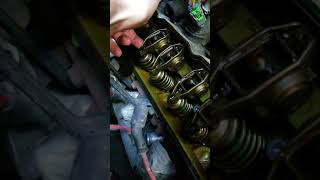
✅ What actually fixed it After removing the valve cover for a visual inspection, a broken valve spring was discovered on cylinder 8. Replacing the broken spring resolved the misfire.
"I Checked Everything" — The Actual Cause
- In some cases, a P0308 misfire can be caused by a mechanical failure like a broken valve spring. A smoke test for vacuum leaks will come back clean, and swapping ignition or fuel components will not resolve the issue. The diagnosis requires a compression test or physical inspection under the valve cover to identify the fault.
- A hairline crack in a Castech cylinder head may not cause a large enough vacuum leak to be detected by a smoke test but can allow a small amount of coolant to foul the spark plug over time, causing a persistent misfire on cylinder 8. The primary symptom is gradual coolant loss with no visible external leaks.
OEM Part Supersession History
10457730, 19005218→ACDelco D585 (GM #12563293)— Part consolidation and design updates over the years for the common 'round' or 'Delphi' style ignition coil.
Heads up: The early 1999-2001 trucks often used a round coil stamped with 19005218. Later models moved to a square 'Magnecor' or 'Delphi' style coil. While electrically similar, the mounting brackets differ. The most common service replacement for many years has been the ACDelco D585, which is a round coil design. Always visually match your original coil style.
Model Year Variations Within This Range
- 1999-2002 vs 2003-2006: The fuel system changed around 2003 from a return-style system to a returnless system. The earlier models have a vacuum-referenced fuel pressure regulator on the fuel rail, while later models have the regulator in the tank with the fuel pump. This can affect fuel pressure diagnosis.
- 1999 vs 2000+: The 1999 model year 5.3L engines had a slightly different camshaft and tuning, resulting in a lower horsepower rating (270 hp) compared to the 2000+ models (285 hp). Some very early 1999-2000 engines also came with iron cylinder heads instead of the more common aluminum heads.
- 2005-2006: Some high-output L33 5.3L engines, often found in 4WD extended cab models, came with higher-flowing '243' casting cylinder heads (from the Z06 Corvette) and a higher-lift camshaft. Additionally, electric cooling fans began to replace the mechanical fan clutch on some models, which is a popular upgrade for older trucks.
Diagnostic Flowchart
Other Known Issues on This Vehicle
Issues unrelated to this code that are worth knowing about as an owner of this generation:
- Instrument Cluster Stepper Motor Failure 🟠 Medium — Extremely common. Gauges (speedometer, tachometer, fuel, etc.) become erratic or stop working entirely. Usually occurs after 50,000 miles. (Ref: NHTSA Action Number: 10013728, GM TSB 07-08-49-018)
- Intermediate Steering Shaft (ISS) Clunk 🟡 Low — Very common. A clunking or popping noise is felt through the steering wheel, especially at low speeds. Caused by poor lubrication from the factory. (Ref: GM TSB 00-02-35-003N)
- Fuel Pump Failure 🔴 High — Common, especially on higher mileage trucks (over 100k miles). Leads to a no-start condition or stalling. The pump is located inside the fuel tank.
- ABS Control Module Failure 🟠 Medium — Fairly common. The ABS and Brake warning lights illuminate on the dash. Often caused by cracked solder joints on the module's circuit board.
- Rusted Brake Lines 🔴 High — Very common in regions that use road salt. The steel brake lines corrode and can fail, resulting in a sudden loss of braking ability. (Ref: NHTSA Recall ID: 14V224000 (for some models))
- Knock Sensor Failure 🟠 Medium — Common. The two knock sensors are located under the intake manifold and sit in wells that can collect moisture and debris, causing corrosion and failure. Often replaced when doing intake manifold gaskets.
Used vs. New Parts: Buying Guide for This Vehicle
When a used part is the smart pick: Used parts like ignition coil brackets, connectors, or a complete engine wiring harness can be a cost-effective choice if the original is physically damaged. A used cylinder head from a reputable salvage yard can also be a viable option, especially if it's a non-Castech casting or has been pressure-tested.
Donor-vehicle mileage cap: roughly under 150000 miles for the part to have meaningful remaining life.
What to inspect on the donor part:
- For ignition coils, check for cracks in the plastic housing and corrosion on the electrical pins.
- For cylinder heads, look for the absence of the 'Castech' battery logo. Inspect carefully for any signs of overheating (warpage) or coolant residue in the oil passages.
- Check the donor vehicle's VIN to confirm the model year and engine code to ensure compatibility.
OEM-only on this vehicle (don't cheap out):
- Ignition Coils: While some aftermarket brands are good, OEM ACDelco or Delphi coils are widely regarded as the most reliable and long-lasting choice for these trucks.
- Intake Manifold Gaskets: The updated Fel-Pro (MS9801T) design is highly recommended over generic, no-name gaskets due to its improved seal design.
Aftermarket brands forum-validated for this vehicle:
- Ignition Coils: Delphi, Denso, NGK
- Spark Plugs: ACDelco, NGK
- Spark Plug Wires: ACDelco, NGK
- Intake Gaskets: Fel-Pro (specifically part MS9801T)
Brands owners have reported issues with on this vehicle:
- Unnamed 'high performance' or budget ignition coils from online marketplaces. Forum users report that cheap aftermarket coils can cause performance issues or fail prematurely.
Real Owner Stories
Aggregated from forums and TSBs cited above. Mileages and costs reflect what owners reported in those sources.
2011 Chevrolet Suburban (Vortec V8) — 250000 miles
Symptoms: P0308 code triggered by external fluid interference.
What fixed it: The owner discovered leaking heater core quick-connect hoses on the firewall were dripping coolant directly onto the #8 spark plug wire, causing it to fail.
Source hint: Reddit r/ChevyTrucks thread titled 'My 11 suburban has 250k on the plug wires, I actually had a p0308 code...'
1999-2006 Chevrolet Silverado 1500 (Vortec V8)
Symptoms: Gradual coolant loss and misfires on specific cylinders.
What fixed it: Identification and replacement of cracked Castech cylinder heads (casting numbers 706 or 862) as described in TSB 06-06-01-019B.
Source hint: GM-Trucks.com forum discussion 'Castech Heads' and PerformanceTrucks.net 'Ever seen an 862 head crack (Castech)?'
Related OBD-II Codes
Frequently Asked Questions
Which specific spark plugs should I use for my 4.8L or 5.3L Silverado to fix a P0308?
I heard there is a TSB for coolant loss and misfires on these trucks. Does it apply to my cylinder heads?
What is the 'D585' coil mentioned for the 1999-2006 Silverado?
Can a vacuum leak cause a P0308 on my 5.3L V8?
Is there a specific part for the intake manifold gasket leak?
If my ignition system is fine but P0308 persists, what should I check next according to GM bulletins?
Helpful Videos

Used OEM Parts in Stock
New Aftermarket Parts Available


The information in this article is provided for general reference and educational purposes only. Vehicle specifications, procedures, and part compatibility can vary by production date, trim level, and region. Always consult your vehicle's factory service manual and verify part numbers before purchasing or performing repairs. Safety-critical components such as airbags, seat belts, and braking systems should be installed by a qualified professional.
- Chevrolet Silverado 1500:
- 🧭 Diagnostic Flowchart
- 🎬 Helpful Videos
- 🛍️ Shop This Part
- What's Unique About the 1999-2006 Chevrolet Silverado 1500
- Symptoms You May Notice
- Most Likely Causes
- Rare But Worth Checking
- Diagnosis Steps
- Parts You'll Likely Need
- Related Codes That Often Appear With This One
- Technical Service Bulletins (TSBs) & Recalls
- Platform-Specific Known Issues
- Mechanic-Grade Diagnostic Values
- Scan Tool Commands That Help
- Wiring & Ground Locations
- Real Owner Repair Stories
- "I Checked Everything" — The Actual Cause
- OEM Part Supersession History
- Model Year Variations Within This Range
- Other Known Issues on This Vehicle
- Used vs. New Parts: Buying Guide for This Vehicle
- Real Owner Stories
- 2011 Chevrolet Suburban (Vortec V8) — 250000 miles
- 1999-2006 Chevrolet Silverado 1500 (Vortec V8)
- Related OBD-II Codes
- Frequently Asked Questions
- 🎟️ Get 5% Off