

P0308 on 2016-2021 Chevrolet Spark: Why This Code Is Impossible and How to Fix Your Misfire
A P0308 code is impossible on a 4-cylinder Chevrolet Spark. The '08' in P0308 indicates a misfire on cylinder #8, but the Spark only has 4 cylinders. This is likely a scan tool error. You probably have a different misfire code (P0301-P0304), most often caused by a bad ignition coil or worn spark plugs.
- P0308 is an impossible code for a 4-cylinder Chevrolet Spark. Your scanner is showing an error.
- You most likely have a misfire on cylinders 1, 2, 3, or 4 (codes P0301-P0304).
- The most probable cause for a misfire on your Spark is a bad ignition coil or a worn-out spark plug.
- A flashing Check Engine Light signals a severe misfire; stop driving immediately to avoid damaging the catalytic converter.
What's Unique About the 2016-2021 Chevrolet SPARK
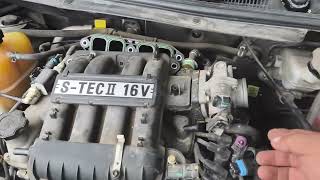
The Chevrolet Spark for this model range uses a 1.4L 4-cylinder Ecotec engine (RPO code LV7). The P030x series of trouble codes is standardized, where the last digit indicates the misfiring cylinder (e.g., P0301 for cylinder 1, P0302 for cylinder 2). Since this engine only has four cylinders, it can only generate misfire codes from P0300 to P0304. The provided NHTSA TSB #PIP5628G mentions codes P0300-P0308 because it is a general GM bulletin intended for service departments that work on everything from 4-cylinder Sparks to V8-powered trucks and Camaros.
Diagnostic Flowchart
Tap your situation to follow the diagnostic path that matches what you're seeing on this vehicle.
Symptoms You May Notice
- Rough or bouncy idle.
- Engine shaking or vibrating.
- Hesitation or stumbling during acceleration.
- Noticeable loss of engine power.
- Check Engine Light is on and may be flashing.
- Reduced fuel economy.
- Replacing only one spark plug when the others are also old.
- Replacing the catalytic converter when it was actually clogged by a persistent, unfixed misfire.
- Replacing an oxygen sensor when it was correctly reporting a lean/rich condition caused by a vacuum leak or fuel issue.
Most Likely Causes
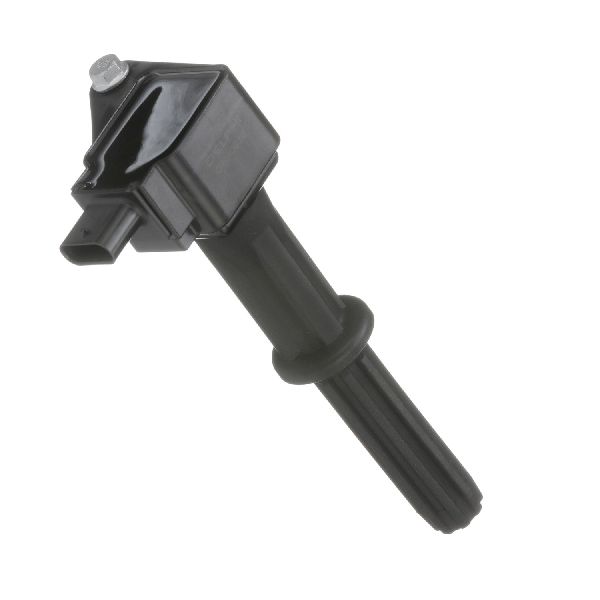
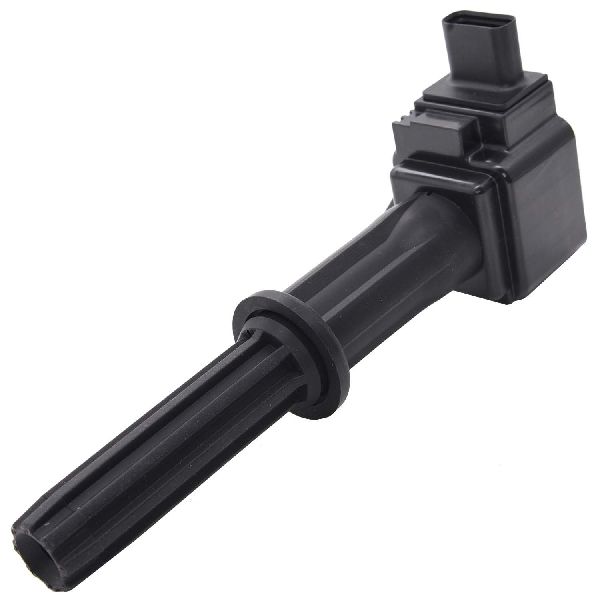
- Faulty Ignition Coil(s) 🔴 High Probability → Shop Ignition Coil Ignition coils are a common failure point on many modern engines, leading to misfires. On the Spark, they are individual 'coil-on-plug' units, making diagnosis straightforward.
How to confirm: The easiest way to confirm a bad coil is to swap it with a coil from a known good cylinder. For example, if you have a P0302 code (Cylinder 2 Misfire), swap the ignition coil from cylinder 2 with the one from cylinder 3. Clear the codes and run the engine. If the code changes to P0303, you have confirmed the coil is faulty.
Typical fix: Replace the failed ignition coil. Many technicians recommend replacing all four coils at the same time, especially on higher mileage vehicles, as they tend to fail around the same time.
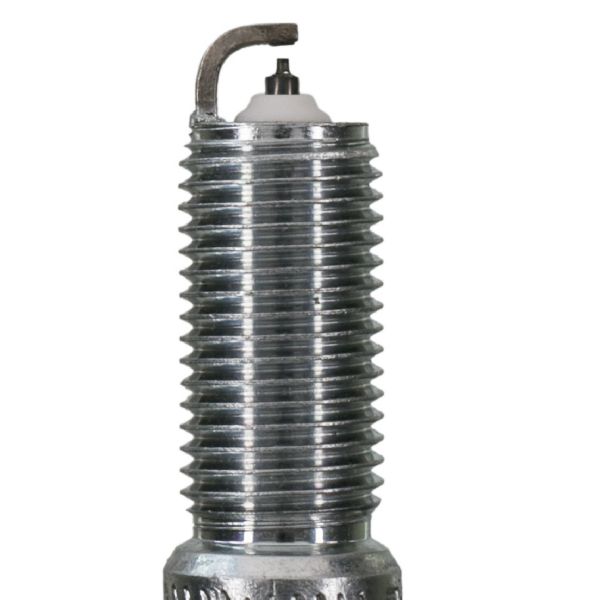
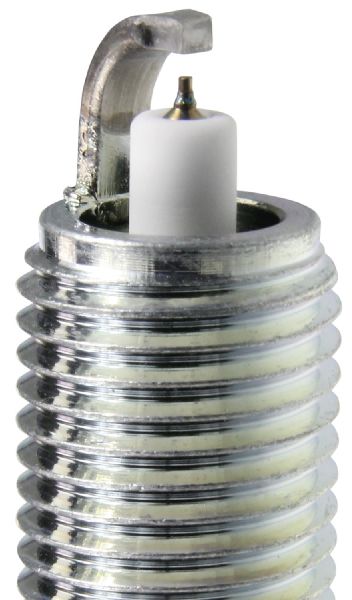
Est. part cost: $35-$60 per coil for a quality aftermarket brand like Delphi or NGK. An OEM ACDelco coil is typically more expensive. - Worn or Fouled Spark Plugs 🔴 High Probability → Shop Spark Plug Spark plugs are a regular maintenance item. If they are not replaced at the recommended interval, the electrodes wear out, causing a weak spark and misfires.
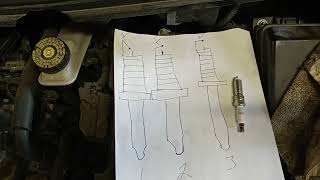
How to confirm: Remove the spark plug from the misfiring cylinder and inspect it. Look for a worn-down center electrode, heavy carbon buildup, or oil/fuel fouling. Compare it to a plug from a good cylinder. The recommended service interval should also be checked.
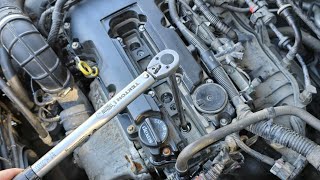
Typical fix: Replace all four spark plugs as a set. 🎬 Watch: Step-by-step spark plug replacement for the 1.4L Spark. It is critical to use the correct type (Iridium for the Spark) and ensure they are gapped correctly, although most come pre-gapped.
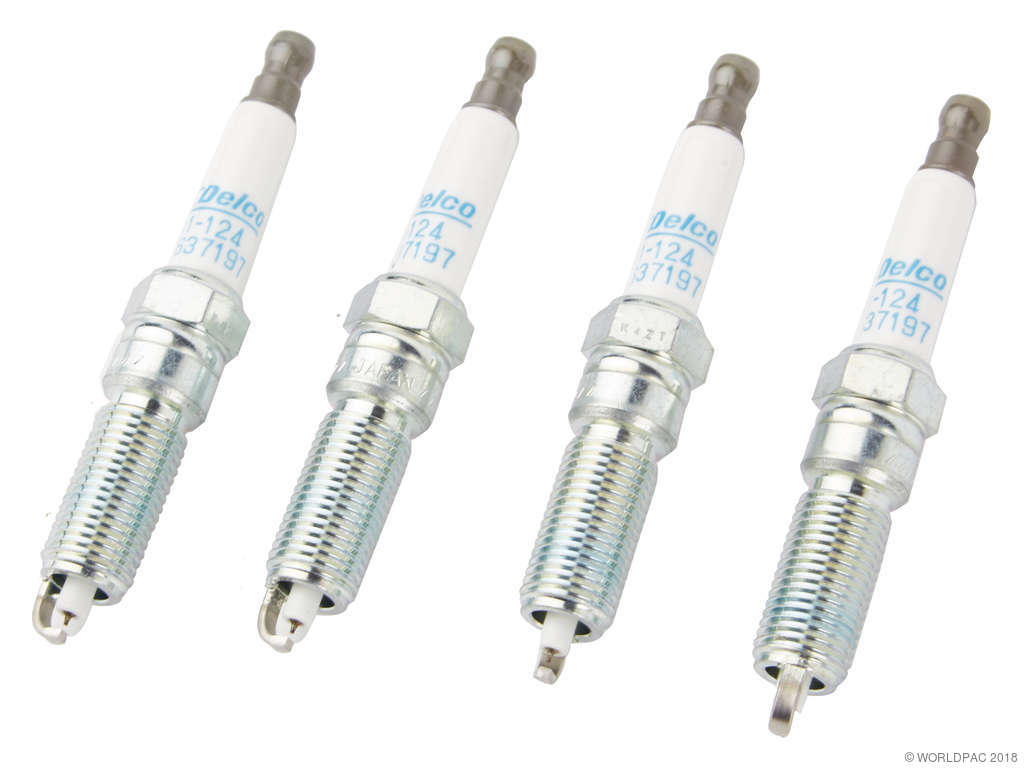
Est. part cost: $40-$60 for a set of four OEM-equivalent Iridium spark plugs from brands like ACDelco or NGK. - Vacuum Leak 🟡 Medium Probability Hoses and gaskets can become brittle and crack over time, allowing unmetered air to enter the engine, which disrupts the air-fuel ratio and can cause random misfires (P0300) or a misfire on a specific cylinder located near the leak.
How to confirm: Visually inspect all vacuum hoses connected to the intake manifold for cracks or disconnections. A mechanic can perform a smoke test, which fills the intake system with smoke to easily reveal the source of any leaks.
Typical fix: Replace the cracked hose or leaking gasket.
Est. part cost: $5-$50 depending on the specific hose or gasket that has failed. - Clogged or Faulty Fuel Injector ⚪ Low Probability → Shop Fuel Injector While less common than ignition issues, a fuel injector can become clogged or fail electronically, preventing the correct amount of fuel from being delivered to a specific cylinder.
How to confirm: A professional can perform a fuel injector balance test to measure the flow from each injector. A DIY method is to listen to each injector with a mechanic's stethoscope; a healthy injector will make a consistent clicking sound.
Typical fix: Replace the faulty fuel injector. It's often recommended to replace the full set if they are original and have high mileage.
Est. part cost: $50-$100+ per injector.
Rare But Worth Checking
- Low Engine Compression: This is a serious mechanical issue, such as a bad valve or worn piston rings. It should be investigated after all ignition and fuel system possibilities have been ruled out. A compression test is needed to diagnose this.
- Faulty Crankshaft Position Sensor: A failing crankshaft position sensor can send incorrect data to the ECU, which can sometimes be misinterpreted as a misfire. This would typically be accompanied by other codes or stalling issues.
Diagnosis Steps
- Confirm the actual trouble code. Since P0308 is impossible, re-scan with a reliable OBD-II scanner to get the correct P030x code (e.g., P0302 for cylinder 2).
- Identify the misfiring cylinder from the code. 🎬 See how to diagnose a P0302 misfire on this engine.
- Swap the ignition coil from the misfiring cylinder with one from an adjacent cylinder.
- Clear the codes and drive the vehicle until the Check Engine Light returns.
- If the code moved to the new cylinder (e.g., P0302 became P0303), the ignition coil is bad and must be replaced.
- If the code stays on the original cylinder, the coil is likely good. Proceed to inspect the spark plug.
- Remove and inspect the spark plug from the misfiring cylinder. Replace all four plugs if they are worn, fouled, or past their service life.
- If coils and plugs are good, check for vacuum leaks by inspecting all intake hoses and gaskets. A smoke test is the most effective method.
- If no vacuum leaks are found, the issue may be with the fuel system (like a fuel injector) or, in rare cases, a mechanical engine problem. These steps typically require professional diagnosis.
Parts You'll Likely Need
- Ignition Coil
(OEM #12673523)— This is one of the most common causes of a specific cylinder misfire on the Spark.
Trusted brands: ACDelco, Delphi, NGK
OEM price range: $70-$100
Aftermarket price range: $35-$60 - Iridium Spark Plugs
(OEM #41-124)— Spark plugs are a routine maintenance item and a primary cause of misfires as they wear out.
Trusted brands: ACDelco, NGK, Champion
OEM price range: $12-$18 per plug
Aftermarket price range: $8-$15 per plug
Related Codes That Often Appear With This One
- P0300 — If the misfire is not isolated to one cylinder and happens randomly across several, P0300 (Random/Multiple Cylinder Misfire Detected) will be set. This often points to a shared cause like a vacuum leak or low fuel pressure. 🎬 Watch: Common causes and fixes for the P0300 random misfire code.
- P0301, P0302, P0303, P0304 — These are the actual, valid misfire codes for the Chevrolet Spark, corresponding to cylinders 1, 2, 3, and 4 respectively. You will see one of these instead of P0308.
- P0171 — System Too Lean (Bank 1). This code often appears with misfire codes if the cause is a vacuum leak, as the unmetered air creates a lean condition.
Technical Service Bulletins (TSBs) & Recalls
- PIP5628G: This is a general GM technical service bulletin regarding engine misfires (codes P0300-P0308) and does not indicate that a Spark can have a P0308 code. It provides diagnostic guidance for technicians across multiple GM models.
Mechanic-Grade Diagnostic Values
- Fuel Tank Pressure Sensor Voltage — expected: 1.3 - 1.7 V. Failure: A reading outside this range can indicate a problem in the EVAP system, which can sometimes contribute to fuel mixture issues.
- Ignition Coil Primary Winding Resistance — expected: 0.4 - 2.0 Ohms (General Spec). Failure: A reading outside this range suggests a faulty coil.
- Ignition Coil Secondary Winding Resistance — expected: 6,000 - 10,000 Ohms (General Spec). Failure: A reading significantly outside this range indicates a breakdown in the secondary coil windings.
Hidden / Shadow Codes Worth Checking
- Misfire History Counts: The Engine Control Module (ECM) stores a running count of misfire events for each cylinder. These counts can be viewed with a professional scan tool (like GM's GDS2) and can reveal intermittent misfires on a cylinder before they are frequent enough to set a specific P030x trouble code. (see via GM GDS2 software or other advanced, professional-grade scan tools with access to manufacturer-specific live data.)
Scan Tool Commands That Help
- GDS2 (or equivalent professional scanner): Crankshaft Position Variation Learn — This procedure must be performed after replacing the crankshaft position sensor or making any repair that disturbs its alignment. It helps the ECM accurately detect misfire events. Failure to perform this can lead to false misfire codes or poor detection.
- GDS2 (or equivalent professional scanner): Injector Balance Test — This function systematically disables one injector at a time while monitoring the RPM drop for each cylinder. If one cylinder has a significantly smaller RPM drop, it indicates that injector was not contributing much to begin with, pointing to a clog or failure.
- GDS2 (or equivalent professional scanner): EVAP Purge/Seal — Used during a smoke test or EVAP system diagnosis. This command seals the EVAP system, allowing a technician to pressurize it and check for leaks that could cause lean conditions and potential misfires.
Wiring & Ground Locations
- G101/G106 (Typical GM) — Often located on the engine block or on the frame cross rail under the crank pulley.. These are primary grounds for the Engine Control Module (ECM) and its sensors. A loose or corroded ground here can cause erratic sensor readings and phantom misfires that are difficult to diagnose.
- G102 (Typical GM) — Typically located on the rear of the engine.. On many GM engines, this ground is specifically for the ignition coils. A poor connection at G102 can weaken spark across all cylinders, leading to random misfires (P0300) or a misfire on the most vulnerable cylinder.
- ECM Connector X1 — The main larger connector at the Engine Control Module.. Wiring diagrams show critical ignition and sensor signals passing through this connector. For example, on a 2020 Spark, ignition control signals are on pins 11, 12, 26, and 37. A corroded pin or loose connection here can cause a misfire on a specific cylinder.
Real Owner Repair Stories
- Reddit user on r/cruze (Chevrolet Cruze with 1.4L Turbo engine (similar PCV design)) — Rough idle and misfires at idle, accompanied by a P0171 lean code, even after replacing common PCV components.
❌ Tried (didn't work) Replacing external PCV components or the valve cover diaphragm.
✅ What actually fixed it The root cause was a failed, non-serviceable check valve located *inside* the intake manifold. This allowed boost pressure into the crankcase, rupturing the valve cover diaphragm and creating a massive unmetered air leak. The final fix was to either replace the entire intake manifold or install a third-party external check valve kit.
"I Checked Everything" — The Actual Cause
- A common scenario on GM 1.4L engines (including the similar Cruze engine) is a persistent lean code (P0171) and misfires where a smoke test reveals no external vacuum leaks. The actual cause is often an internal failure of the PCV check valve inside the intake manifold. This allows unmetered air to be drawn into the crankcase through the main seals, a leak path that a standard smoke test of the intake tract will not detect.
OEM Part Supersession History
12647553→12673523— This is a common practice by manufacturers to revise a part for improved durability, reliability, or a change in supplier. While the exact reason is not public, using the latest part number is always recommended.
Model Year Variations Within This Range
- 2019-2021: The Chevrolet Spark received a cosmetic facelift for the 2019 model year, which included a new front grille, updated headlights, and the introduction of the Chevrolet Infotainment 3 system. However, the core powertrain, the 1.4L LV7 engine and its associated components relevant to misfire diagnosis, remained unchanged throughout the 2016-2021 period.
Helpful Videos

We Have This Part in Stock

The information in this article is provided for general reference and educational purposes only. Vehicle specifications, procedures, and part compatibility can vary by production date, trim level, and region. Always consult your vehicle's factory service manual and verify part numbers before purchasing or performing repairs. Safety-critical components such as airbags, seat belts, and braking systems should be installed by a qualified professional.
- Chevrolet SPARK:
- 🧭 Diagnostic Flowchart
- 🎬 Helpful Videos
- 🛍️ Shop This Part
- What's Unique About the 2016-2021 Chevrolet SPARK
- Symptoms You May Notice
- Most Likely Causes
- Rare But Worth Checking
- Diagnosis Steps
- Parts You'll Likely Need
- Related Codes That Often Appear With This One
- Technical Service Bulletins (TSBs) & Recalls
- Mechanic-Grade Diagnostic Values
- Hidden / Shadow Codes Worth Checking
- Scan Tool Commands That Help
- Wiring & Ground Locations
- Real Owner Repair Stories
- "I Checked Everything" — The Actual Cause
- OEM Part Supersession History
- Model Year Variations Within This Range
- 🎟️ Get 5% Off