

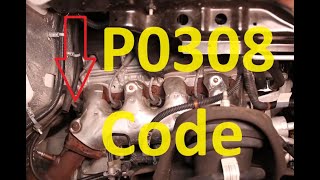
P0308 on 2004-2011 Chevrolet Suburban: Cylinder 8 Misfire Causes and Fixes
P0308 indicates a misfire on cylinder 8. On a 2004-2011 Suburban, this is most often caused by a worn spark plug, a failed ignition coil, or a bad plug wire. A known issue is a coolant leak from heater core lines dripping onto the #8 coil and plug. Expect to pay $10-$25 for a quality spark plug and $35-$60 for an ignition coil. Both are common DIY repairs.
- P0308 signifies a misfire specifically on cylinder 8, which is at the back of the engine on the passenger's side.
- The most common and DIY-friendly fixes are replacing the spark plug and/or ignition coil for cylinder 8.
- A simple diagnostic step is to swap the ignition coil from cylinder 8 to another cylinder and see if the misfire code follows the coil.
- On 2007 and newer models, be aware of potential valvetrain issues (like lifters), especially if a ticking noise is present.
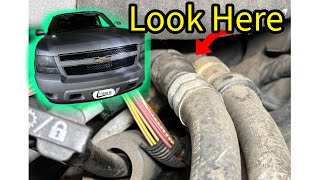
- Check for coolant leaks from the heater hoses above cylinder 8, as this is a known, specific cause for this code on this platform.
What's Unique About the 2004-2011 Chevrolet SUBURBAN
This year range covers two Suburban generations: the GMT800 (2004-2006) and the GMT900 (2007-2011). While standard ignition issues are common to both, the 2007-2011 models with 5.3L or 6.0L V8 engines introduced Active Fuel Management (AFM). This system is known for potential lifter failures that can cause misfires. Although cylinder 8 is not an AFM-deactivated cylinder, issues within the AFM system (like oil pressure problems) or general valvetrain wear can still present as a misfire on any cylinder, including #8. A Reddit user noted their P0308 code was the first sign of what turned out to be a lifter failure. TSB 19-NA-219 also confirms that a worn camshaft lobe or collapsed lifter can cause any P030X code.
Diagnostic Flowchart
Tap your situation to follow the diagnostic path that matches what you're seeing on this vehicle.
Generation note: The 2004-2011 range includes the end of the 9th generation (GMT800, through 2006) and the start of the 10th generation (GMT900, 2007-2011). The most significant difference is the introduction of Active Fuel Management (AFM) on many 2007+ V8 engines, which brought new potential failure points like lifters and the VLOM. The GMT800 is generally considered simpler and easier to work on, while the GMT900 offers a more refined ride and modern interior. Spark plug specifications also differ, with GM recommending ACDelco 41-962 (Platinum) for pre-2007 models and 41-110 (Iridium) for 2007 and newer models.
Symptoms You May Notice
- Rough or shaking idle.
- Hesitation or stumbling during acceleration.
- Noticeable loss of engine power.
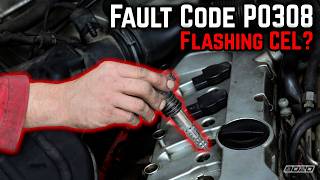
- Flashing or solid Check Engine Light.
- Reduced fuel economy.
- A smell of gasoline or rotten eggs from the exhaust.
- Engine jerking or losing power under heavy load, which can cause the SES light to flash.
- Replacing the oxygen sensor, as a misfire can disrupt O2 sensor readings.
- Replacing the catalytic converter without first fixing the misfire that caused it to fail.
- Assuming an AFM lifter failure on a 2007+ model without realizing cylinder 8 is a non-AFM cylinder (though related oiling issues can still be a factor).
Most Likely Causes
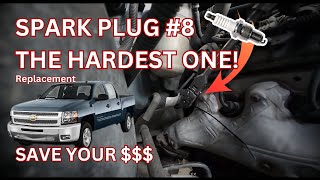
- Worn or Fouled Spark Plug 🔴 High Probability → Shop Spark Plug Cylinder 8 is in a hard-to-reach location at the rear of the passenger-side of the engine bay, meaning it can be neglected during tune-ups. More importantly, 🎬 Watch: This trick makes replacing the hard-to-reach #8 plug easy. coolant leaks from the plastic heater core quick-connect fittings on the firewall are very common and can drip directly onto the #8 plug, wire, and coil, causing a persistent misfire.
How to confirm: Remove the spark plug from cylinder 8 and inspect it for wear, oil fouling, coolant contamination (greenish-white residue), or damage. Compare it to a new plug or a plug from a known-good cylinder. Check the heater hose connections above cylinder 8 for any signs of pink or green coolant crust.
Typical fix: Replace the spark plug. It is recommended to replace all 8 spark plugs if they are near their service interval (typically 100,000 miles). If coolant contamination is found, the leaking heater hose connector must also be replaced.
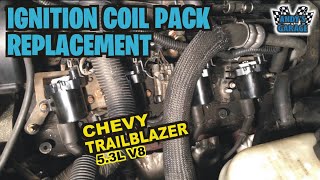
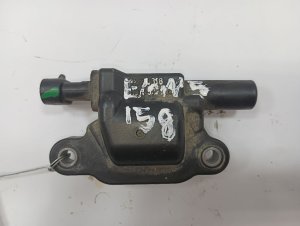
Est. part cost: $10-$25 for a single iridium or platinum plug - Failed Ignition Coil 🔴 High Probability → Shop Ignition Coil Heat and vibration can cause the ignition coil pack to fail over time. Cylinder 8's location can be subject to significant heat soak. Coolant leaks from heater core lines are also a primary cause of coil failure on this specific cylinder.
How to confirm: Swap the ignition coil from cylinder 8 with another cylinder (e.g., cylinder 6). Clear the codes and drive the vehicle. If the misfire code changes to P0306, the ignition coil is faulty. Also inspect the coil and its connector for signs of coolant intrusion.
Typical fix: Replace the faulty ignition coil. The ACDelco D585 is a common, reliable replacement for many of these models.
Est. part cost: $35-$60 - Bad Spark Plug Wire 🟡 Medium Probability → Shop Spark Plug
How to confirm: Inspect the wire for any visible damage, cracks, burns, or coolant saturation. Test the wire's resistance with a multimeter. According to service manual specs cited by owners, resistance should generally be under 20,000 ohms, with many healthy OEM wires reading between 3,000-15,000 ohms depending on length. A reading of infinity (OL) or a fluctuating reading when wiggling the wire indicates it's bad.
Typical fix: Replace the spark plug wire. It's often best to replace the full set.
Est. part cost: $40-$80 for a full set - Clogged or Faulty Fuel Injector ⚪ Low Probability → Shop Fuel Injector
How to confirm: Listen to the injector with a mechanic's stethoscope to ensure it's clicking. You can also test the injector's resistance with a multimeter or swap it with another cylinder to see if the misfire follows. A forum user on TahoeYukonForum confirmed a P0308 was caused by a failed aftermarket injector that was dripping raw fuel.
Typical fix: Clean or replace the fuel injector. Tapping on the injector with a screwdriver handle while the engine is running can sometimes temporarily free a stuck pintle.
Est. part cost: $50-$100
Rare But Worth Checking
- Low Engine Compression: If ignition and fuel system checks don't solve the issue, a mechanical problem could be the cause. This can include a worn camshaft lobe, a stuck/bent valve, or bad piston rings. A compression test is needed to diagnose this. One owner on a forum reported a P0308 that was ultimately caused by a worn camshaft and a stuck lifter.
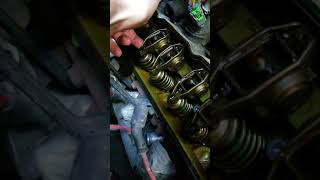
- Collapsed Lifter (AFM or Standard): On 2007+ models with AFM, lifter failure is a known issue. While cylinder 8 is not an AFM cylinder, a standard lifter can still fail. TSB 19-NA-219 explicitly lists a worn camshaft lobe, sticking valve, or collapsed AFM lifter as potential causes for misfires on any cylinder (P0300-P0308) if basic diagnostics fail. This often presents with a distinct ticking or chirping noise. 🎬 Watch: Tips for diagnosing a ticking sound or bad lifter.
- Intake Manifold Gasket Leak: → Shop Engine Intake Manifold A vacuum leak from a failed intake manifold gasket near the cylinder 8 runner can lean out the air/fuel mixture enough to cause a misfire. This is more common on higher mileage engines and may be accompanied by a P0300 code.
Diagnosis Steps
- Read the code with an OBD-II scanner to confirm P0308 and check for any other codes like P0300 or P0358.
- Identify cylinder 8 (rear-most on the passenger side).
- Visually inspect the area above cylinder 8. Look for signs of a coolant leak from the black plastic heater hose quick-connect fittings on the firewall. Any pink or green residue on the coil, wire, or spark plug boot is a major clue.
- Swap the ignition coil from cylinder 8 with cylinder 6 (an easier-to-access cylinder on the same bank). Clear the codes and run the engine. If the code changes to P0306, the coil is bad.
- If the code remains P0308, inspect and swap the spark plug from cylinder 8 with cylinder 4. If the code changes to P0304, the spark plug is bad.
- Inspect the spark plug wire for damage, corrosion, or coolant saturation. Test its resistance with a multimeter; a reading over 20k-30k ohms or an open circuit (OL) indicates a bad wire.
- If ignition components are good, check the fuel injector. Listen for a steady clicking sound with a mechanic's stethoscope. Check for a pulse with a noid light.
- If the above steps do not isolate the problem, perform a compression test on cylinder 8 to check for mechanical engine issues like a bad valve, worn rings, or a failing lifter/cam lobe.
Parts You'll Likely Need
- Ignition Coil
(OEM #12570616 (Often superseded by ACDelco D585 for GMT800))— Ignition coils are a primary failure point for misfires due to heat and age. The ACDelco D585 is a widely used and trusted round-style coil for the GMT800 platform.
Trusted brands: ACDelco, Delphi
OEM price range: $45-$60
Aftermarket price range: $25-$45 - Spark Plug
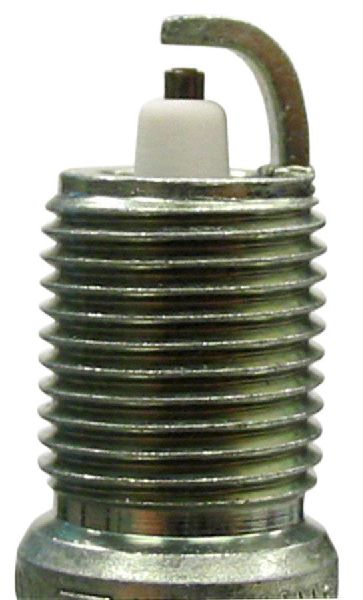
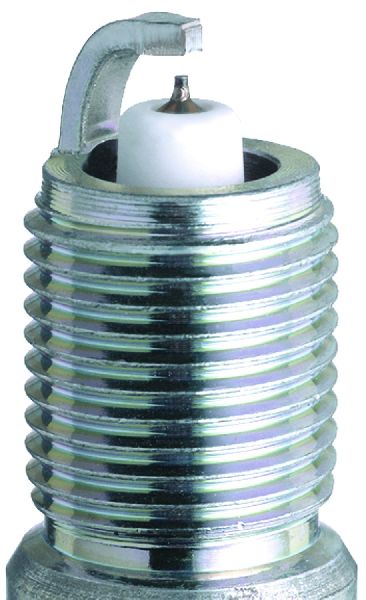
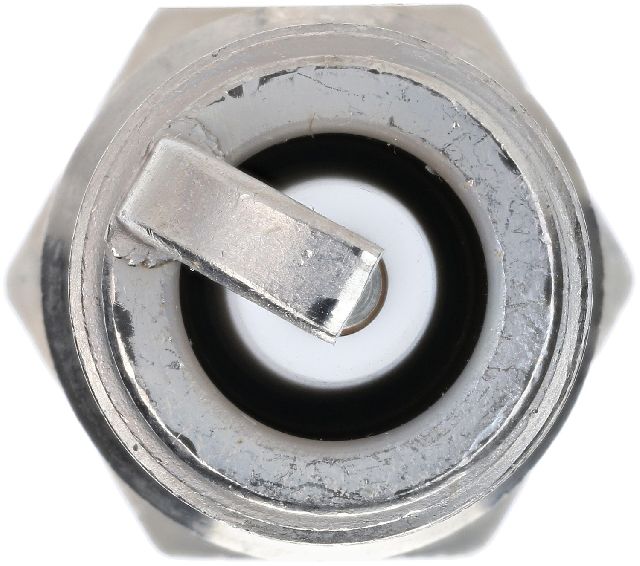
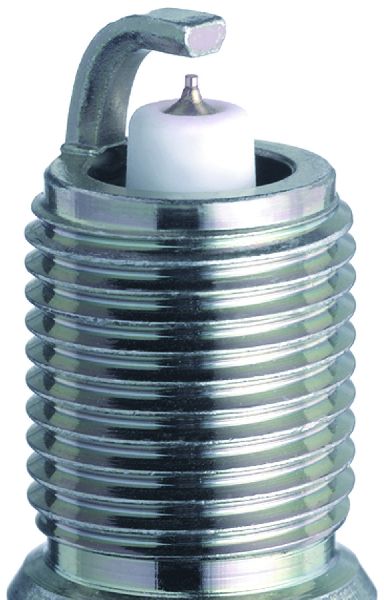
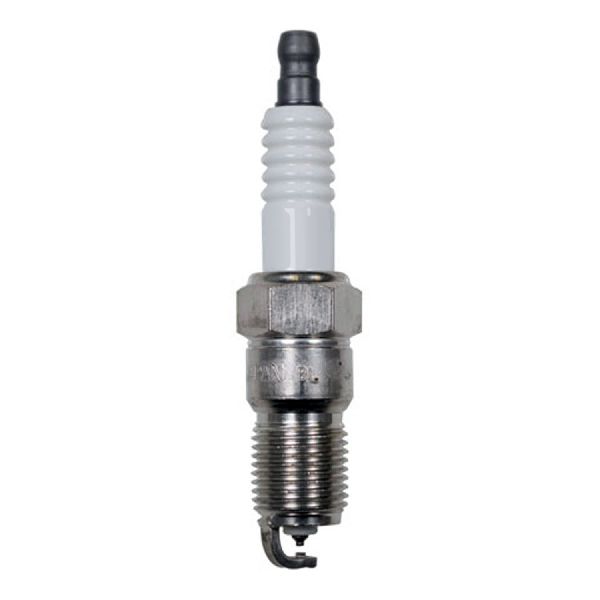
(OEM #ACDelco 41-962 (Platinum for 2004-2006) or ACDelco 41-110 (Iridium for 2007-2011))— Spark plugs are wear items. GM issued a bulletin recommending platinum plugs (41-962) for pre-2007 engines and iridium plugs (41-110) for 2007+ engines.
Trusted brands: ACDelco, NGK
OEM price range: $15-$25
Aftermarket price range: $8-$15 - Spark Plug Wire Set
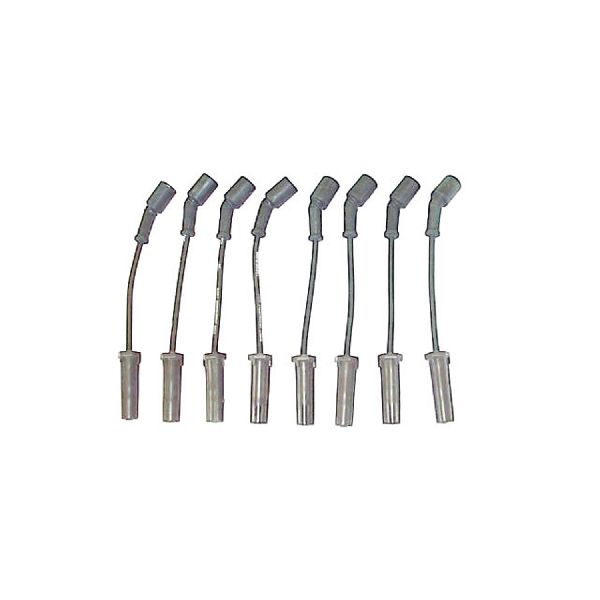
(OEM #ACDelco 9748RR (Example))— The wire carries high voltage from the coil to the plug. Cracks in the insulation or corrosion can cause the spark to weaken or arc to ground, especially if contaminated by a coolant leak.
Trusted brands: ACDelco, NGK/NTK
Related Codes That Often Appear With This One
- P0300 — If the misfire is intermittent or affects multiple cylinders, a P0300 (Random/Multiple Misfire Detected) may appear alongside P0308.
- P0358 — This code indicates a fault in the ignition coil primary/secondary circuit for cylinder 8. If you see P0358 with P0308, it strongly points to a bad ignition coil, a wiring issue to the coil, or a faulty driver in the PCM.
Technical Service Bulletins (TSBs) & Recalls
- Bulletin #PIP5628G: A diagnostic aid for technicians encountering misfire codes P0300-P0308 and/or P050D. It provides a template of information to collect (fuel trims, compression results, etc.) before contacting GM's Technical Assistance Center (TAC).
- Bulletin #19-NA-219: Notes that for V8 engines, misfire codes P0300-P0308 accompanied by a tick, chirp, or squeak noise can be caused by a worn camshaft lobe, lifter roller, sticking valve, or collapsed AFM lifter if standard diagnosis doesn't find the cause.
Platform-Specific Known Issues
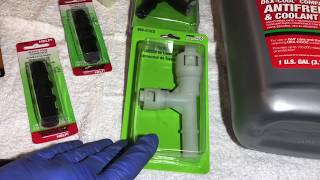
- Heater Core Hose Leak: On many GMT800 and GMT900 models, the plastic heater core quick-connect fittings are located on the firewall directly above the passenger-side valve cover. A crack or o-ring failure in these fittings will cause coolant to drip onto the cylinder 8 ignition coil and spark plug wire, leading to a P0308 code. A Reddit user with an '11 Suburban confirmed this exact scenario: "I actually had a p0308 code 30k ago. It was the heater core quick connects dripping coolant on the #8 plug wire. Fixed coolant leak cleaned up plug wire - p0308 is gone."
- AFM System Complications (2007-2011): The Active Fuel Management system can have issues with collapsed lifters, typically on cylinders 1, 4, 6, or 7. While P0308 points to a non-AFM cylinder, a forum user on TahoeYukonForum with an '08 Tahoe reported a P0308 that was ultimately diagnosed as a stuck lifter and worn camshaft on cylinder 8. GM TSB #19-NA-219 also acknowledges that misfire codes from P0300-P0308 can be related to worn cam lobes or lifters.
Mechanic-Grade Diagnostic Values
- Ignition Coil Primary Winding Resistance — expected: 0.4 to 2.0 ohms. Failure: A reading outside this range suggests a faulty primary winding.
- Ignition Coil Secondary Winding Resistance — expected: 6,000 to 10,000 ohms. Failure: A reading outside this range indicates a problem with the secondary winding.
- Fuel Injector Resistance (Typical) — expected: 11 to 14 ohms (for high-impedance injectors common in these models). Failure: A reading significantly higher or lower, or an open circuit (OL), indicates a bad injector coil.
- Fuel Pressure (Key on, Engine off) — expected: 55-62 PSI. Failure: Pressure below this range can indicate a weak fuel pump or clogged filter, potentially causing a lean misfire.
- Fuel Injector Balance Test Pressure Drop — expected: All cylinders should have a pressure drop within 10 kPa (1.5 psi) of each other.. Failure: A cylinder with a significantly smaller or larger pressure drop indicates a clogged or leaking injector, respectively.
Hidden / Shadow Codes Worth Checking
- Misfire History Counters: A professional scan tool like the GM Tech 2 can display 'Current' and 'History' misfire counts for each cylinder, even if a misfire wasn't severe enough to set a hard code. This can help identify an intermittent issue on cylinder 8 before it becomes constant. (see via GM Tech 2 or equivalent high-end scan tool under 'Misfire Data' or 'Engine Data List'.)
Scan Tool Commands That Help
- GM Tech 2 / GDS2: Fuel Injector Balance Test — Use this after verifying the ignition system is working. This test pulses each injector individually and measures the corresponding drop in fuel rail pressure. It can definitively identify a clogged or underperforming injector on cylinder 8.
- GM Tech 2 / GDS2: Misfire Graph / Data — To monitor live and historical misfire counts per cylinder. This is useful for confirming the misfire is isolated to cylinder 8 and for verifying the repair after work is completed. A small number of random misfires can be normal, but a high count isolated to one cylinder indicates a problem.
- GM Tech 2 / GDS2: Crankshaft Position (CKP) Variation Learn — Perform this relearn procedure after major engine work, PCM replacement, or if you suspect false misfire counts. It helps the PCM more accurately detect misfires by compensating for normal variations in the crankshaft reluctor wheel.
Wiring & Ground Locations
- G103 & G104 — On GMT900 (2007-2011) models, G103 is on the front of the passenger-side cylinder head. G104 is on the rear of the driver-side cylinder head. On GMT800 (2004-2006) models, a key ground (also sometimes labeled G103) is located on the cowl, above the brake booster.. These are primary engine and PCM ground points. A loose or corroded connection at these locations can cause erratic sensor readings and weak ignition spark, leading to misfires that are difficult to diagnose. Cleaning these grounds is a crucial step when troubleshooting persistent electronic issues.
- Cylinder 8 Ignition Coil Connector — Rearmost coil on the passenger side valve cover.. The PCM sends the signal to fire the coil through this connector. The Pink wire should have 12V+ with the key on. The other wire (color varies by year) is the trigger wire pulsed by the PCM. A damaged connector or wiring here will cause a P0308 and possibly a P0358.
Real Owner Repair Stories
- Reddit user on r/ChevyTrucks (2011 Suburban with 220k miles (at time of misfire)) — P0308 code triggered.
❌ Tried (didn't work) Initial diagnosis pointed towards standard ignition components.
✅ What actually fixed it The cause was a coolant leak from the heater core quick-connect fittings on the firewall dripping directly onto the #8 spark plug wire. Fixing the coolant leak and cleaning the wire resolved the P0308 code.
OEM Part Supersession History
12558693 (Square 'Delphi' style coil)→12570616 / ACDelco D585 (Round 'Meltrec' style coil)— The round D585 coils are considered more durable and resistant to heat failure.
Heads up: While both coil types can be made to work, the mounting brackets are different. Using a mix of square and round coils is not recommended.
Model Year Variations Within This Range
- 2004-2006 (Gen III) vs 2007-2011 (Gen IV): The engine architecture changed from Gen III to Gen IV around 2007. Gen III engines have the cam position sensor at the rear of the engine and a 24x crankshaft reluctor wheel. Gen IV engines moved the cam sensor to the front timing cover and use a 58x reluctor wheel. This affects sensor diagnostics and PCM compatibility. Gen IV also introduced Active Fuel Management (AFM), adding lifter failure as a more common cause of misfires.
Helpful Videos
Used OEM Parts in Stock
New Aftermarket Parts Available

The information in this article is provided for general reference and educational purposes only. Vehicle specifications, procedures, and part compatibility can vary by production date, trim level, and region. Always consult your vehicle's factory service manual and verify part numbers before purchasing or performing repairs. Safety-critical components such as airbags, seat belts, and braking systems should be installed by a qualified professional.
- Chevrolet SUBURBAN:
- 🧭 Diagnostic Flowchart
- 🎬 Helpful Videos
- 🛍️ Shop This Part
- What's Unique About the 2004-2011 Chevrolet SUBURBAN
- Symptoms You May Notice
- Most Likely Causes
- Rare But Worth Checking
- Diagnosis Steps
- Parts You'll Likely Need
- Related Codes That Often Appear With This One
- Technical Service Bulletins (TSBs) & Recalls
- Platform-Specific Known Issues
- Mechanic-Grade Diagnostic Values
- Hidden / Shadow Codes Worth Checking
- Scan Tool Commands That Help
- Wiring & Ground Locations
- Real Owner Repair Stories
- OEM Part Supersession History
- Model Year Variations Within This Range
- 🎟️ Get 5% Off