

P0308 on 2013-2020 Chevrolet Trax: Why This Misfire Code Is Impossible and What to Do
The P0308 code means 'Cylinder 8 Misfire,' but this is impossible on a 2013-2020 Chevrolet Trax, which only has a 4-cylinder engine. This is a 'ghost code,' likely from a scanner error. You have a real misfire, but you must re-scan your vehicle to find the correct code, which will be P0300, P0301, P0302, P0303, or P0304.
- P0308 is an impossible 'ghost code' for a Chevy Trax because the vehicle only has a 4-cylinder engine.
- The code indicates a scanner error. You must re-scan with a quality tool to find the true code (P0300-P0304).
- Your vehicle has a real misfire. Do not ignore the symptoms.
- The most likely cause for a real misfire on a 1.4L Trax is a faulty ignition coil pack and/or worn spark plugs.
- A random misfire (P0300) accompanied by a lean code (P0171) and a hissing noise strongly points to a failed PCV system in the valve cover.
- Driving with a flashing check engine light can cause expensive damage to your catalytic converter.
What's Unique About the 2013-2020 Chevrolet TRAX
This situation is not unique to the Trax but is a logical impossibility based on engine configuration. The issue arises when a generic or incompatible OBD-II scanner incorrectly interprets the vehicle's data, leading it to display a 'ghost code' that doesn't apply. While your Trax is experiencing a real misfire, the P0308 code is a misdirection. The actual problem lies with one of the four existing cylinders or a random misfire affecting them all. This has been seen on other GM vehicles with 4-cylinder engines, like the Chevrolet Cruze.
Diagnostic Flowchart
Tap your situation to follow the diagnostic path that matches what you're seeing on this vehicle.
Symptoms You May Notice
- Flashing or solid Check Engine Light
- Rough idle or engine shaking
- Hesitation or stumbling during acceleration
- Noticeable loss of engine power
- Poor fuel economy
- A smell of raw fuel from the exhaust
- "Service Stabilitrak" message on the dash, which is often triggered by a misfire.
- Searching for or attempting to service a non-existent 'Cylinder 8'.
- Replacing parts randomly without first confirming the correct misfire code with a reliable scanner.
- Replacing the valve cover for a PCV leak without checking the intake manifold check valve; a missing check valve will cause the new valve cover to fail quickly.
Most Likely Causes
- Scan Tool Error / Incompatibility 🔴 High Probability Not specific to the vehicle, but common with low-cost or outdated universal scanners that have incorrect databases for a specific vehicle-engine combination.
How to confirm: Use a different, higher-quality OBD-II scanner to re-read the codes. The correct code (e.g., P0301, P0304) should appear.
Typical fix: Obtain the correct DTC and begin diagnosis based on that code.
Est. part cost: $0 - Faulty Ignition Coil (for the actual misfiring cylinder) 🔴 High Probability → Shop Ignition Coil The ignition coil pack on the 1.4L Ecotec engine is a very common failure item, often causing misfires. Oil from a leaking valve cover gasket can also seep into the spark plug wells and damage the coil boots.
How to confirm: Once the correct cylinder is identified (e.g., P0302 for cylinder 2), swap the ignition coil with a neighboring cylinder. If the code moves to the new cylinder (e.g., P0303), the coil is bad. Visual inspection may reveal cracks in the housing or corrosion on the spring inside the boot.
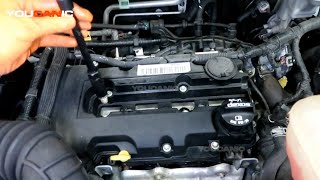
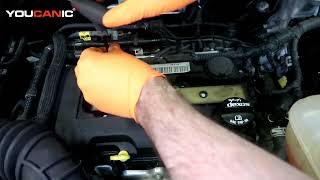
Typical fix: Replace the entire ignition coil pack assembly. 🎬 Watch: Step-by-step guide to replacing your ignition coil pack. It is a single unit containing all four coils.
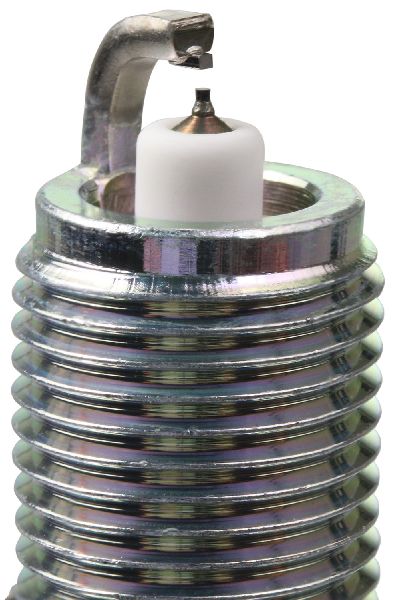
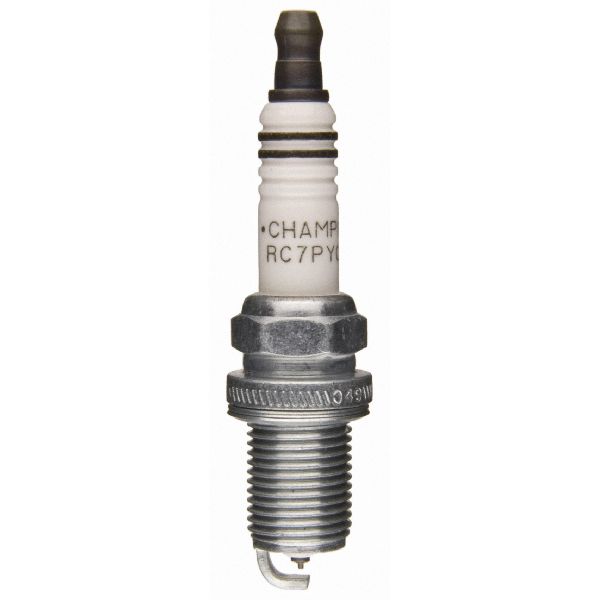
Est. part cost: $100-$250 - Worn or Fouled Spark Plugs (for the actual misfiring cylinder) 🟡 Medium Probability → Shop Spark Plug
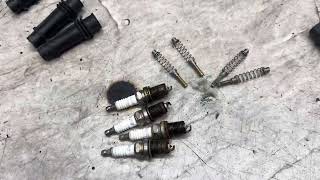
How to confirm: After identifying the correct cylinder, remove the spark plug and inspect it for wear (worn electrode), carbon fouling, or oil contamination. A healthy plug should be light tan. The correct gap is typically 0.028 inches. 🎬 See how to properly remove and replace your spark plugs.
Typical fix: Replace all four spark plugs as a set. It is recommended to do this when replacing the coil pack.
Est. part cost: $25-$60 - Faulty Fuel Injector (for the actual misfiring cylinder) ⚪ Low Probability → Shop Fuel Injector
How to confirm: Listen to the injector with a mechanic's stethoscope; it should have a consistent clicking sound. You can also check its resistance with a multimeter or perform a fuel injector balance test with a capable scan tool.
Typical fix: Replace the faulty fuel injector.
Est. part cost: $50-$120
Rare But Worth Checking
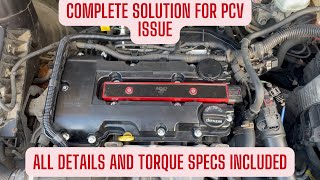
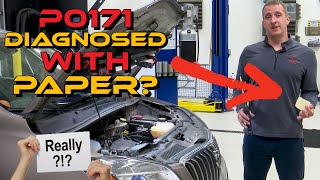
- PCV System Failure: The 1.4L Turbo engine has a known issue with its PCV system. A ruptured diaphragm in the valve cover causes a large vacuum leak (often with a hissing or whistling noise), and a failed check valve in the intake manifold allows boost pressure into the crankcase, which can rupture the valve cover diaphragm. This typically causes a P0300 random misfire and a P0171 lean code.
- Low Cylinder Compression: Internal engine damage like a burnt valve or worn piston rings can cause a persistent misfire in one cylinder. This is a serious mechanical issue requiring a compression test to diagnose. One owner of a 2016 Trax was told they needed a new engine due to a burnt intake valve causing a misfire on cylinder 3.
Diagnosis Steps
- Acknowledge that P0308 is an impossible code for a Chevrolet Trax.
- Obtain a different, reliable OBD-II scan tool.
- Re-scan the vehicle's computer to identify the correct misfire code (e.g., P0300, P0301, P0302, P0303, or P0304).
- If a single cylinder misfire is identified (e.g., P0302), focus diagnosis there. If P0300 (random misfire) is present, suspect a system-wide issue like the PCV system.
- To test for a bad ignition coil (the most common cause), swap the coil from the misfiring cylinder with one from a known good cylinder.
- Clear the codes and run the engine. If the misfire code changes to the cylinder you moved the coil to, the ignition coil is faulty and the entire coil pack should be replaced.
- If the code does not move, inspect the spark plug for the original misfiring cylinder. Look for wear, damage, or fouling. Replace if necessary.
- If P0300 and/or P0171 are present, check the PCV system. With the engine running, listen for a loud hissing from the valve cover. Place a finger over the small hole on the PCV diaphragm cap; if you feel strong suction, the diaphragm is ruptured and the valve cover needs replacement.
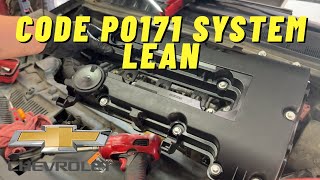
- Crucially, before replacing the valve cover, inspect the PCV check valve inside the intake manifold. Remove the PCV hose and look into the port with a flashlight. If the small, orange, nipple-like valve is missing, the intake manifold must also be repaired or replaced to prevent repeat failure of the new valve cover. 🎬 Watch: Complete walkthrough for replacing the intake manifold and valve cover.
- If the coil, plug, and PCV system are good, the issue may be with the fuel injector or cylinder compression, which may require professional diagnosis.
Parts You'll Likely Need
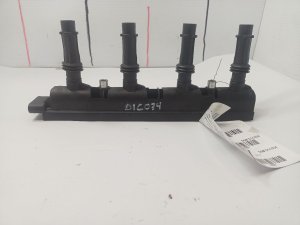
- Ignition Coil Pack
(OEM #55579072)— This is the most frequent cause of misfires on the 1.4L Turbo engine. It is a single cassette that houses all four coils. The original part 55579072 may be superseded by or interchanged with 25198623, 25195107, and UF669.
Trusted brands: ACDelco, Delphi, NGK
OEM price range: $150-$250
Aftermarket price range: $80-$150 - Spark Plugs
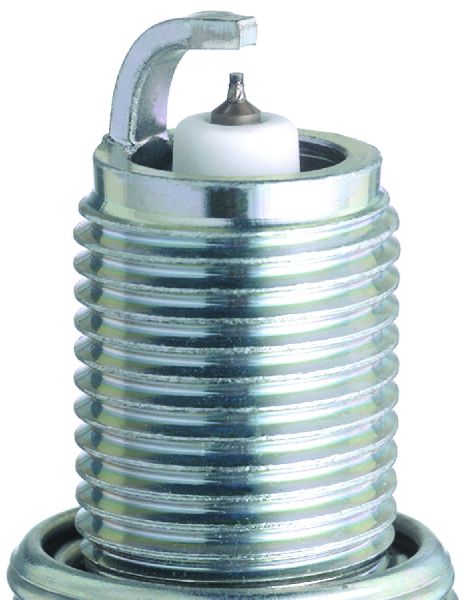
(OEM #55585534)— Spark plugs are a standard maintenance item and a common cause of misfires. They should be replaced with the coil pack. This part number may be listed as 41-122 and is superseded by GM part number 12681655.
Trusted brands: ACDelco, NGK
OEM price range: $40-$70 (set of 4)
Aftermarket price range: $25-$50 (set of 4) - Valve Cover Assembly
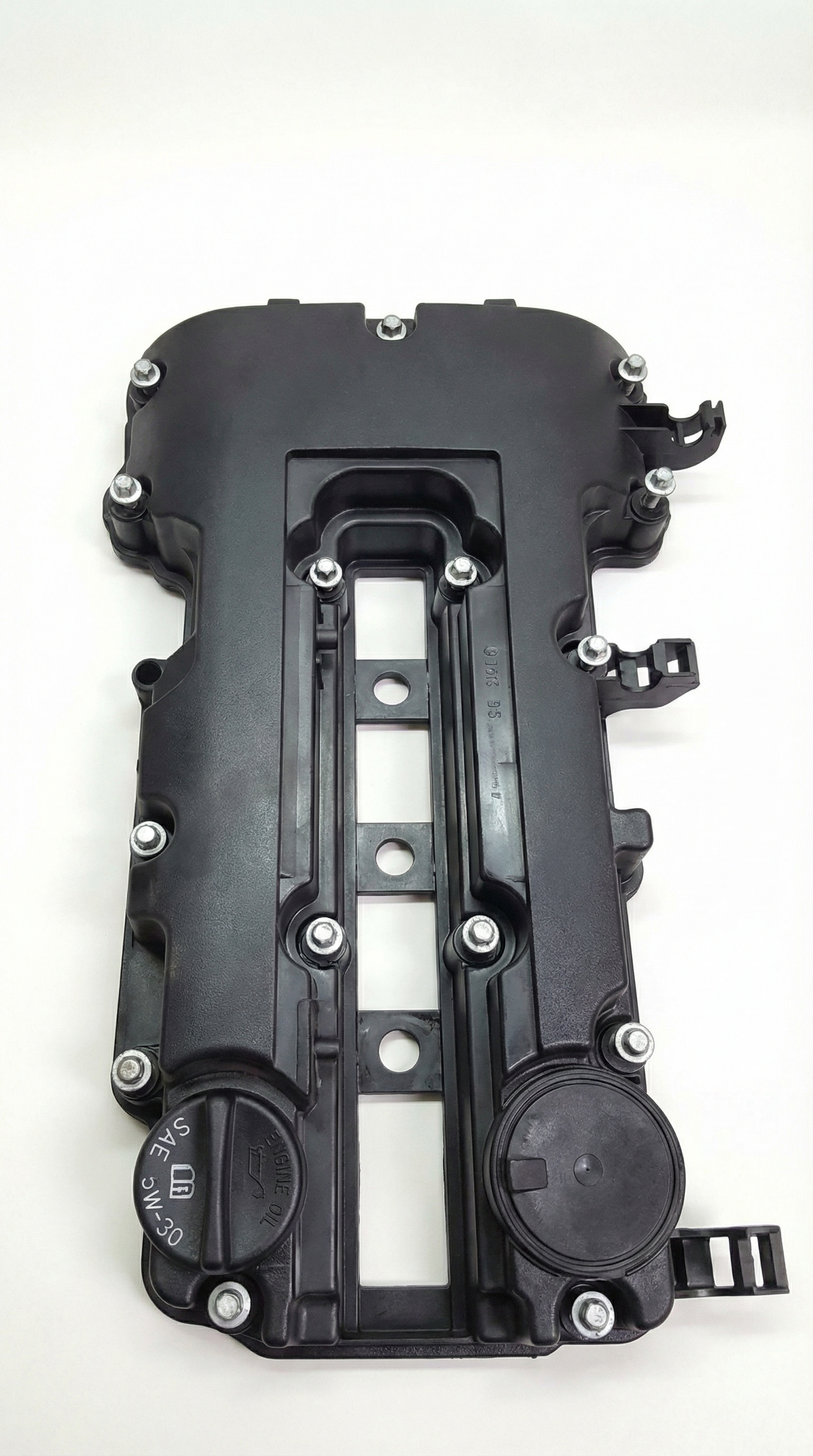
(OEM #25198874)— The integrated PCV diaphragm is a very common failure point, causing vacuum leaks and random misfires (P0300, P0171). The entire cover must be replaced as the diaphragm is not serviced separately. Using a cheap aftermarket cover is not recommended as they often have poor quality gaskets that leak oil.
Trusted brands: ACDelco (GM Genuine)
OEM price range: $120-$200
Aftermarket price range: $50-$100
Related Codes That Often Appear With This One
- P0300 — If the underlying issue (like a vacuum leak or fuel pressure problem) is causing multiple cylinders to misfire randomly, a P0300 will be stored. Your scanner may be erroneously displaying P0308 instead of P0300.
- P0301, P0302, P0303, P0304 — These are the valid single-cylinder misfire codes for a Chevrolet Trax. Your scanner is likely misinterpreting one of these codes as P0308.
- P0171 — This 'System Too Lean' code is very commonly seen with a P0300 on the 1.4L engine when the PCV diaphragm in the valve cover has failed, creating a significant vacuum leak.
Technical Service Bulletins (TSBs) & Recalls
- PIP5628G: A general technical service bulletin regarding diagnostic information for misfire codes (P0300-P0308) on various GM vehicles. Its inclusion of P0308 applies to V8 models, not the 4-cylinder Trax.
- 16-NA-383: A TSB for the 1.4L engine (among others) that notes rough idle and misfire codes (P0300-P0304) can be caused by excessive carbon buildup on intake valves.
Platform-Specific Known Issues
- The provided TSB #PIP5628G is a general diagnostic document for misfire codes ranging from P0300 to P0308 across many GM vehicles; it is not specific evidence that a Trax can have a P0308 code. It serves as a template for technicians to gather data before contacting GM's Technical Assistance Center (TAC).
- A very common real-world misfire story involves a P0304 (Cylinder 4 Misfire). A 2020 Trax owner on Reddit experienced a flashing CEL and shaking, scanned the code, and found the boot for cylinder 4 on the original coil pack had disintegrated. Replacing the coil pack and all four spark plugs resolved the issue completely.
Mechanic-Grade Diagnostic Values
- Ignition Coil Primary Winding Resistance — expected: 0.4 to 2.0 ohms. Failure: A reading of 0 ohms (short) or infinite ohms (open circuit).
- Ignition Coil Secondary Winding Resistance — expected: 6,000 to 10,000 ohms (6k-10k Ω). Failure: Readings significantly outside this range suggest a faulty coil.
- Fuel Injector Coil Resistance — expected: Approximately 12 ohms. Failure: A reading significantly higher or lower than 12 ohms indicates a faulty injector coil.
- Low-Pressure Fuel Pump Pressure — expected: 80-90 PSI. Failure: Pressure below this range can indicate a weak fuel pump, causing lean conditions and misfires.
- Crankcase Vacuum at Idle (PCV System) — expected: 11 to 18 inches of water. Failure: Significantly higher vacuum (e.g., strong suction at the oil cap) indicates a ruptured PCV diaphragm in the valve cover.
Hidden / Shadow Codes Worth Checking
- Mode $06 Misfire Counts: Even when a specific P030x code isn't set, many scan tools can access Mode $06 data, which includes raw misfire counts for each individual cylinder. This is invaluable for identifying the actual problem cylinder when a generic scanner shows an impossible code like P0308 or a random P0300. (see via Use a scan tool that supports Mode $06 test results. Look for Test ID $A2 through $AB, which typically correspond to cylinder misfire data.)
Scan Tool Commands That Help
- GDS2 (GM Dealer Tool) or equivalent professional scanner: Cylinder Power Balance — This function helps identify the specific misfiring cylinder when you have a P0300 (Random Misfire). The tool sequentially disables one fuel injector at a time and measures the RPM drop. If disabling an injector causes no change in RPM, that cylinder wasn't contributing power, confirming it's the source of the misfire.
- GDS2 (GM Dealer Tool) or equivalent professional scanner: Crankshaft Position Variation Learn — This recalibration procedure is necessary after replacing the crankshaft position sensor, flexplate, or ECM. Failure to perform this 'relearn' can cause the ECM to inaccurately detect misfires, potentially leading to false codes.
Wiring & Ground Locations
- G102 / G103 — G102 is reportedly at the left rear of the engine. G103 is on the cowl in the left rear of the engine compartment, above the brake booster.. These grounds are critical for the Engine Control Module (ECM) and ignition system. A loose or corroded ground at these locations can cause erratic behavior, including false misfire signals and incorrect sensor readings, which could potentially be misinterpreted by a generic scan tool.
- Ignition Coil Connector — On top of the engine, connecting to the single ignition coil cassette.. This 4-pin connector supplies power and trigger signals to the coil pack. Corrosion or a loose connection here can cause random misfires (P0300) or misfires on multiple cylinders. The connector has a red locking tab that must be disengaged before the connector can be removed.
OEM Part Supersession History
55579072→25198623— Standard part evolution and supplier changes.
Heads up: The parts are interchangeable. Other compatible part numbers include 25195107 and D521C.
Model Year Variations Within This Range
- 2017-2020: The Trax received a significant facelift for the 2017 model year, including new front/rear fascias and a redesigned interior dashboard and instrument cluster. However, the core powertrain, the 1.4L Ecotec engine and 6-speed automatic transmission, remained mechanically unchanged from the earlier models.
- 2016-2018 (and similar engines): Some vehicles with the 1.4L Turbo engine, including the 2018 Trax, used the LE2 engine variant. These specific model years are mentioned in TSB 18-NA-171 regarding potential low cylinder compression from a cracked piston, an edge-case cause for a persistent misfire.
Helpful Videos
Used OEM Parts in Stock
New Aftermarket Parts Available


The information in this article is provided for general reference and educational purposes only. Vehicle specifications, procedures, and part compatibility can vary by production date, trim level, and region. Always consult your vehicle's factory service manual and verify part numbers before purchasing or performing repairs. Safety-critical components such as airbags, seat belts, and braking systems should be installed by a qualified professional.
- Chevrolet TRAX:
- 🧭 Diagnostic Flowchart
- 🎬 Helpful Videos
- 🛍️ Shop This Part
- What's Unique About the 2013-2020 Chevrolet TRAX
- Symptoms You May Notice
- Most Likely Causes
- Rare But Worth Checking
- Diagnosis Steps
- Parts You'll Likely Need
- Related Codes That Often Appear With This One
- Technical Service Bulletins (TSBs) & Recalls
- Platform-Specific Known Issues
- Mechanic-Grade Diagnostic Values
- Hidden / Shadow Codes Worth Checking
- Scan Tool Commands That Help
- Wiring & Ground Locations
- OEM Part Supersession History
- Model Year Variations Within This Range
- 🎟️ Get 5% Off