

P0308 on 2005-2009 Chevrolet Uplander: Why This Code Is Impossible and How to Find the Real Misfire
A P0308 code is not possible on a 2005-2009 Chevrolet Uplander because its V6 engine only has six cylinders. The code indicates a misfire in cylinder 8. You likely have a different misfire code (P0301-P0306) or a random misfire (P0300). The most common causes for actual misfires are worn spark plugs, faulty spark plug wires, or a bad ignition coil pack, with the rear spark plugs being notoriously difficult to access.
- P0308 is an impossible code for a Chevrolet Uplander; it does not have 8 cylinders. Re-scan your vehicle to find the true code, which will be between P0300 and P0306.
- The most likely cause of an actual misfire on your Uplander is a bad spark plug, plug wire, or ignition coil.
- Replacing the rear three spark plugs is a very difficult job (DIY 4/5) that requires tilting the engine forward.
- Always replace spark plugs and wires as a set to avoid repeating the difficult labor.
- Do not drive with a flashing check engine light, as this indicates a severe misfire that can quickly destroy your expensive catalytic converter.
What's Unique About the 2005-2009 Chevrolet UPLANDER
The key issue with a P0308 on this platform is that it's a physical impossibility. The Uplander's V6 engines (3.5L and 3.9L) simply do not have a cylinder 8. Any misfire diagnosis must be for cylinders 1 through 6 (codes P0301-P0306) or a random misfire (P0300). The provided TSB (PIP5628G) covers a range of misfire codes (P0300-P0308) because it is a general GM document intended for various vehicles, including those with V8 engines, not because P0308 applies to the Uplander specifically.
Diagnostic Flowchart
Tap your situation to follow the diagnostic path that matches what you're seeing on this vehicle.
Symptoms You May Notice
- Rough or shaky idle
- Engine hesitation or stumbling during acceleration
- Reduced engine power
- Decreased fuel economy
- Solid or flashing Check Engine Light
- Engine stalling
- Assuming the code is correct and searching for an 8th cylinder that doesn't exist.
- Replacing only one spark plug or ignition coil when others are likely near the end of their service life.
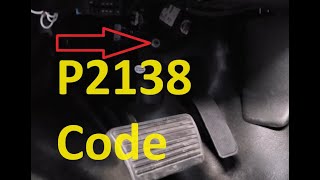
- Replacing the accelerator pedal assembly for a P2138 code without first checking for water intrusion in the IP-to-body harness connector, per TSB 07-06-04-019. 🎬 Watch: How to diagnose and fix the P2138 pedal code.
Most Likely Causes
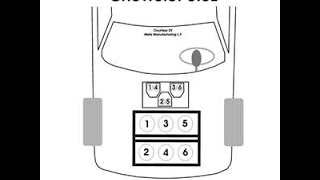
- Worn or Fouled Spark Plugs 🔴 High Probability → Shop Spark Plug Spark plugs are a standard wear item. The rear three plugs (cylinders 1, 3, 5) on the Uplander's transverse V6 are extremely difficult to access, so they are often neglected during routine maintenance. This job is infamous among owners and mechanics.
How to confirm: Inspect the spark plugs for wear, fouling, or an incorrect gap. The 3.5L V6 (LX9) requires a 0.060" gap, while the 3.9L V6 (LZ9/LGD) needs a 0.040" gap. A worn or dirty plug on a specific cylinder points to the problem. The front plugs (2, 4, 6) are easy to check; the rear plugs require significant effort.
Typical fix: Replace all six spark plugs and spark plug wires. It is highly recommended to replace the wires at the same time due to the difficulty of accessing the rear bank. The most common method involves removing the upper engine mount supports ('dog bones') and using a ratchet strap to tilt the engine forward for clearance. Some mechanics also report success by jacking the vehicle and accessing them from underneath.
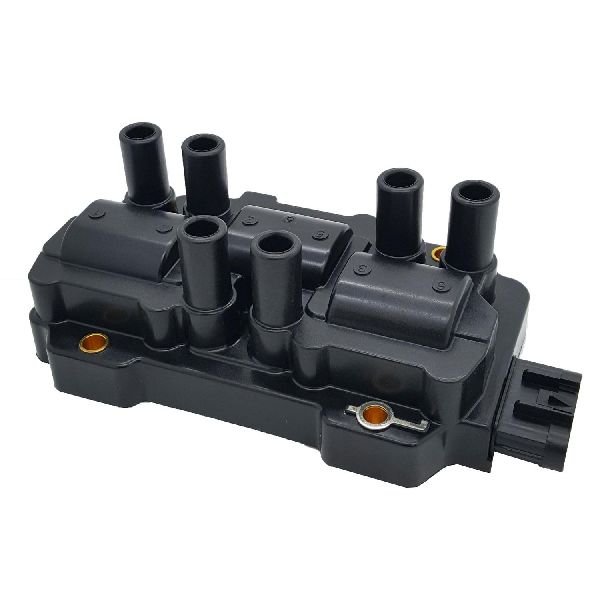
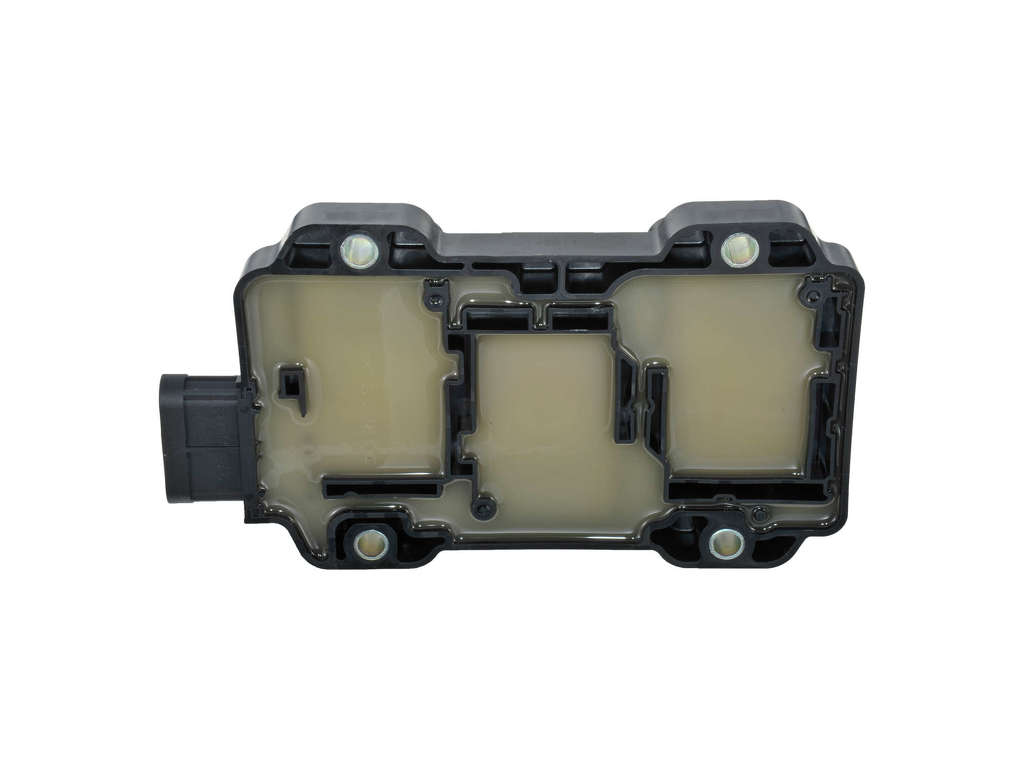
Est. part cost: $40-$120 - Faulty Ignition Coil Pack or Wires 🟡 Medium Probability → Shop Ignition Coil The V6 engines in the Uplander use a single waste-spark ignition coil pack to generate spark for all six cylinders. Over time, heat and vibration can cause a failure in one of the internal coils, leading to a misfire 🎬 See this video to quickly locate the ignition coil pack. on one or more cylinders.
How to confirm: Use an inline spark tester to check for spark at the end of each plug wire. A simpler method is to swap the spark plug wires for two cylinders at the coil pack (e.g., swap #2 and #4) and see if the misfire code moves to the other cylinder (e.g., P0302 becomes P0304).
Typical fix: Replace the entire ignition coil pack and all spark plug wires. Given the labor to access the rear plugs, it's wise to do plugs and wires at the same time.
Est. part cost: $80-$260 - Clogged or Faulty Fuel Injector 🟡 Medium Probability → Shop Fuel Injector Fuel injectors can become clogged with deposits over time, preventing the correct amount of fuel from being sprayed into the cylinder. This is a common issue on many vehicles as they age.
How to confirm: A professional can perform a fuel injector balance test. A DIY method is to listen to each injector with a mechanic's stethoscope; they should all make a consistent clicking sound. You can also swap injectors between cylinders to see if the misfire code follows the injector, though this is labor-intensive.
Typical fix: Replace the faulty fuel injector. It is often recommended to have all injectors professionally cleaned and serviced or replaced as a set if the vehicle has high mileage.
Est. part cost: $50-$150 per injector
Rare But Worth Checking
- Vacuum Leak: A leak in a vacuum hose or a failed intake manifold gasket can lean out the air-fuel mixture and cause random or specific cylinder misfires. The intake manifold plenum gaskets on the 3.5L and 3.9L engines are a known potential leak point.
- Low Fuel Pressure: A weak fuel pump or clogged fuel filter can starve the engine for fuel, leading to misfires, especially under load.
- Incorrect Fuel Composition (Flex Fuel Models): On 3.9L LGD Flex Fuel models, if the engine's alcohol content sensor is inaccurate or the calibration is outdated, it can cause a rich condition (P0172) and random misfires (P0300). A 'Fuel Composition Reset' using a bidirectional scan tool or a dealer-performed calibration update may be required.
- Carbon Buildup on Intake Valves: While more common on direct-injection engines, the port-injected High Value V6 engines can still suffer from carbon deposits on the intake valves over time, restricting airflow and causing rough idle and misfires.
Diagnosis Steps
- Verify the code with a reliable OBD-II scanner. Confirm if it is truly P0308 or another code like P0306 or P0300.
- If the code is confirmed as P0308, assume a scanner error and proceed with diagnosing a general misfire (P0300).
- Identify the misfiring cylinder. If you have a specific code (e.g., P0306), focus on that cylinder. If you have P0300, you will need to check all cylinders.
- Inspect the spark plugs and spark plug wires for the affected cylinder(s). Look for wear, damage, or corrosion. Check that the spark plug gap is correct (0.060" for 3.5L, 0.040" for 3.9L). This will be easy for the front bank (2,4,6) and difficult for the rear (1,3,5).
- Test the ignition system. Check for spark at the plug wire using a spark tester. Swap ignition coil wire positions to see if the misfire follows the coil terminal.
- Test the fuel system. Check fuel pressure to rule out a weak pump or clogged filter. Listen to the fuel injectors to ensure they are all firing with a consistent click.
- If ignition and fuel delivery seem okay, check for vacuum leaks using a smoke machine or by carefully spraying brake cleaner around the intake manifold gasket and vacuum hoses while listening for a change in engine idle.
- For 3.9L Flex Fuel models with P0300 and P0172, investigate the fuel composition sensor data with an advanced scan tool.
- If all else fails, a compression test may be needed to check for mechanical engine problems like a worn camshaft lobe or poor valve seating, as mentioned in GM TSBs.
Parts You'll Likely Need
- Spark Plugs
(OEM #ACDelco 41-100 (Iridium for 3.9L) or 41-962 (Platinum for 3.9L))— These are the most common cause of misfires and are a routine maintenance item. Iridium plugs are recommended for their 100,000-mile lifespan, which is important given the difficult labor involved.
Trusted brands: ACDelco, NGK
OEM price range: $10-$20 per plug
Aftermarket price range: $5-$15 per plug - Ignition Coil Pack
(OEM #ACDelco D597A (fits 3.5L & 3.9L))— The single coil pack is a common failure point that can cause a misfire in one or more cylinders.
Trusted brands: ACDelco, Delphi, NGK
OEM price range: $150-$250
Aftermarket price range: $80-$180 - Spark Plug Wires
(OEM #ACDelco 746SS (3.9L))— Wires degrade over time and should always be replaced with the spark plugs, especially because accessing the rear bank is labor-intensive.
Trusted brands: ACDelco, NGK
OEM price range: $60-$100
Aftermarket price range: $40-$80
Related Codes That Often Appear With This One
- P0300 — This indicates a random or multiple cylinder misfire. If the misfire is intermittent or affects more than one cylinder, P0300 will often appear alongside or instead of a specific cylinder code.
- P0301, P0302, P0303, P0304, P0305, P0306 — These are the actual, possible misfire codes for the Uplander's six cylinders. The issue causing the P0308 reading is almost certainly one of these codes.
- P0172 — On Flex Fuel models, an incorrect fuel composition reading can cause a 'System Too Rich' code along with misfires.
- P2138 — While not a misfire code, this Accelerator Pedal Position sensor code is common on these platforms and can cause similar symptoms like reduced engine power. TSB 07-06-04-019 points to water intrusion in a connector as a common cause, not a faulty pedal.
Technical Service Bulletins (TSBs) & Recalls
- PIP5628G: Communicates diagnostic information needed for misfire codes P0300-P0308, relevant for the general diagnostic process of GM vehicles.
- 07-06-04-019: Details a common cause for DTC P2138 (Reduced Engine Power) being water intrusion into the IP-to-body harness connector in the driver's side kick panel, which can cause symptoms similar to other engine issues. It advises against replacing the accelerator pedal assembly without checking this first.
Platform-Specific Known Issues
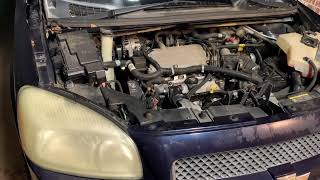
- Accessing the rear three spark plugs (cylinders 1, 3, 5) is extremely difficult due to lack of space. The common procedure involves removing the upper engine mount supports ('dog bones') and using a ratchet strap to tilt the engine forward for clearance. This provides just enough room to access the plugs and wires.
- A forum thread on ChevroletForum.com titled 'Change 07 Uplander plugs' details this exact engine-tilting procedure, with users confirming it works for the 3.9
Mechanic-Grade Diagnostic Values
- Fuel Injector Coil Resistance (3.5L LX9) — expected: ~12.5 Ohms. Failure: A significantly higher reading (open circuit) or lower reading (short) indicates a failed injector.
- Fuel Pressure (Key On) — expected: 380-410 kPa (55-60 psi). Failure: Pressure below this range indicates a weak fuel pump or clogged filter. Pressure that drops more than 34 kPa (5 psi) in one minute indicates a leak.
- Crankshaft Position (CKP) Sensor 5-Volt Reference — expected: 4.8-5.2 Volts. Failure: Voltage outside this range points to a wiring issue or a problem with the ECM.
- Camshaft Position (CMP) Sensor Signal — expected: Switches between 5 Volts and 0 Volts as the engine is cranked.. Failure: A signal stuck at a single value (usually 0 Volts) indicates a failed sensor.
- Injector Balance Rate (at idle, in Park/Neutral) — expected: Between +4.0 mm³ and -6.9 mm³. Failure: Values outside this range on a specific cylinder suggest a fueling or compression issue for that cylinder.
Hidden / Shadow Codes Worth Checking
- Mode 6 Misfire Counters: Most advanced scan tools can access Mode $06 data, which includes misfire counts for each individual cylinder for the current and previous drive cycles. This is extremely useful for identifying which cylinder is the primary offender when only a P0300 (random misfire) is set. (see via An advanced OBD-II scanner with Mode $06 capability. The data will show specific Test IDs (TID) and Component IDs (CID) for each cylinder's misfire count.)
Scan Tool Commands That Help
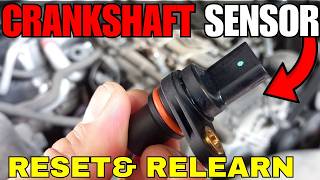
- GM Tech2 / GDS2: Crankshaft Position Variation Learn (CASE Relearn) — This procedure is required after replacing the crankshaft position sensor, ECM, or making major engine repairs. Failure to perform the relearn can cause a P0315 code and lead to persistent, erroneous misfire detection by the ECM.
- GM Tech2 / GDS2: Fuel Injector Balance Test — This test helps diagnose a faulty or clogged fuel injector when a specific cylinder misfire is suspected but not confirmed. The tool commands the fuel pump on, then pulses one injector at a time, measuring the corresponding drop in fuel pressure. The pressure drop should be consistent across all cylinders (typically within 1.5 PSI).
- GM Tech2 / GDS2: Cylinder Power Balance — Used to identify a weak cylinder when a P0300 is present. The tool deactivates one injector at a time while the engine is running. The technician feels for the change in engine vibration. If deactivating a cylinder causes no change in engine smoothness, that cylinder was not contributing power correctly.
- GM Tech2 / GDS2: Fuel Composition Reset — For 3.9L LGD Flex Fuel models, if the vehicle has been run on different ethanol blends, the sensor reading can become skewed. This can lead to a rich condition (P0172) and random misfires (P0300). This function resets the learned alcohol percentage in the ECM.
Wiring & Ground Locations
- G113 / G115 — Located on the engine-to-transmission stud, near the top of the transmission bellhousing.. These are primary engine block grounds. A loose or corroded connection at G113 or G115 can cause erratic behavior from multiple sensors, including the crankshaft and camshaft position sensors, leading to phantom misfire codes.
- Ignition Coil Connector — The main electrical connector on the ignition coil pack assembly.. The pins and wires in this connector can become corroded or damaged from heat and vibration, causing intermittent loss of spark to one or more cylinders. Checking for 12V ignition feed and clean ground connections at this connector is a key diagnostic step.
- ECM (Engine Control Module) — Located inside the air cleaner assembly on 2007+ models.. All sensor data and actuator commands (spark, fuel) route through the ECM. A poor connection at the ECM connectors or a bad ground for the module itself can cause widespread issues, including misfires.
Real Owner Repair Stories
- Car Talk Community Forum (Chevrolet Uplander 3.9L (year not specified, but within range)) — Hesitation when accelerating, rough idle. Intermittent problem became constant after replacing the crankshaft position sensor (CPS).
❌ Tried (didn't work) Replacing the crankshaft position sensor (CPS).
✅ What actually fixed it The user replaced the CPS but did not perform the required Crankshaft Position Variation Learn (CASE Relearn) procedure. The forum members advised that this procedure is mandatory after CPS replacement to synchronize the sensor with the ECM, and failure to do so is a known cause of persistent misfire symptoms. The final fix was to have a shop perform the CASE relearn with a proper scan tool.
OEM Part Supersession History
ACDelco D597A (Ignition Coil)→This part number remains current, but is often cross-referenced with D500C, 5C1612, and E1069 by aftermarket manufacturers.— N/A
Heads up: While many aftermarket coils are available, using a reputable brand like ACDelco or Delphi is recommended, as low-quality coils are a frequent source of repeat failures for misfire issues.
Model Year Variations Within This Range
- 2005: The Uplander was launched with only the 3.5L LX9 V6 engine.
- 2006: The 3.9L LZ9 V6 was added as an option. The wheel lug nut design changed from five to six lugnuts.
- 2007-2009: The 3.5L V6 was dropped, making the 3.9L V6 the standard engine. A Flex Fuel (E85 compatible) version, the LGD V6, was introduced. The AWD system was discontinued as it could not handle the torque of the 3.9L engine.
Helpful Videos

We Have This Part in Stock


The information in this article is provided for general reference and educational purposes only. Vehicle specifications, procedures, and part compatibility can vary by production date, trim level, and region. Always consult your vehicle's factory service manual and verify part numbers before purchasing or performing repairs. Safety-critical components such as airbags, seat belts, and braking systems should be installed by a qualified professional.
- Chevrolet UPLANDER:
- 🧭 Diagnostic Flowchart
- 🎬 Helpful Videos
- 🛍️ Shop This Part
- What's Unique About the 2005-2009 Chevrolet UPLANDER
- Symptoms You May Notice
- Most Likely Causes
- Rare But Worth Checking
- Diagnosis Steps
- Parts You'll Likely Need
- Related Codes That Often Appear With This One
- Technical Service Bulletins (TSBs) & Recalls
- Platform-Specific Known Issues
- Mechanic-Grade Diagnostic Values
- Hidden / Shadow Codes Worth Checking
- Scan Tool Commands That Help
- Wiring & Ground Locations
- Real Owner Repair Stories
- OEM Part Supersession History
- Model Year Variations Within This Range
- 🎟️ Get 5% Off