

P0308 on 2005-2014 Ford Expedition 5.4L: Cylinder 8 Misfire Causes and Fixes
For a P0308 code on a 5.4L Triton, the most likely cause is a failed ignition coil on cylinder 8. A new Motorcraft coil costs about $45-$90. If that's not the issue, it's likely the spark plug, but be aware that plugs on engines built before late 2007 can break during removal. Water leaking from the cowl onto the rear cylinders is another very common cause.
- P0308 on your Expedition is a misfire on cylinder 8, the one at the very back on the driver's side.
- The most likely culprit is a bad ignition coil, which is a simple and relatively cheap part to replace.
- Before replacing parts, swap the cylinder 8 coil with cylinder 7 to see if the misfire code follows the coil. This test confirms a bad coil for free.
- Check for water or oil in the spark plug hole when you pull the coil; this points to a leak that must be fixed.
- If you need to change the spark plug on an engine built before late 2007, be aware of the high risk of breakage and consider having a professional perform the job or have an extraction tool ready.
What's Unique About the 2005-2014 Ford Expedition
The 5.4L 3V Triton V8 engine in this Expedition has a well-documented history of specific issues that directly cause misfires. The most notorious is the two-piece spark plug design (Motorcraft SP-515) used in engines built before October 9, 2007, which can break apart in the cylinder head during removal, turning a simple tune-up into a major repair. Additionally, these engines are prone to ignition coil failures due to heat and water intrusion into the spark plug wells. Cylinder 8, being at the rear of the driver's side, is particularly vulnerable to both concentrated heat and water leaks from the cowl area.
Generation note: This range covers the end of the second generation (2005-2006) and the majority of the third generation (2007-2014) Expedition. The 5.4L 3V Triton engine was used across this entire period, but a key difference is the spark plug design. Engines built before 10/09/2007 use a problematic two-piece design (Motorcraft SP-515, later superseded by SP-546), while later engines use a more reliable one-piece design (Motorcraft SP-509). The engine build date can be found on a sticker on the driver's side valve cover.
Symptoms You May Notice
- Rough or shaking idle
- Engine hesitation or stumbling during acceleration
- Flashing or solid Check Engine Light
- Noticeable loss of power, especially under load
- Reduced fuel economy
- Ticking or tapping sound from the engine bay
- Engine running rough only when towing or under heavy load
- Replacing all spark plugs and coils without first swapping the coil to confirm the diagnosis. This can be expensive and, on pre-2008 models, unnecessarily risky due to plug breakage.
- Replacing the fuel pump when only a single cylinder is misfiring. A fuel pump issue would typically affect all cylinders or cause a no-start condition. However, a failing Fuel Pump Driver Module (FPDM) can cause intermittent issues.
- Assuming a ticking noise is just 'normal' for a Triton engine. A loud tick isolated to one area could be a failing cam follower, which will cause a misfire and lead to catastrophic engine damage.
Most Likely Causes
- Faulty Ignition Coil (Coil-On-Plug) 🔴 High Probability → Shop Ignition Coil The Coil-On-Plug (COP) units on the 5.4L Triton are highly susceptible to failure from engine heat cycles and moisture. Cylinder 8 is at the rearmost position on the driver's side, where heat can be more concentrated and access is tighter.
How to confirm: Swap the ignition coil from cylinder 8 with another cylinder (e.g., cylinder 7, which is directly in front of it). Clear the codes and drive the vehicle. If the code changes to P0307, the coil is faulty. Also inspect the coil boot for carbon tracks (arcing) and the spring for corrosion.
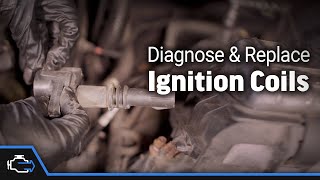
Typical fix: Replace the faulty ignition coil. The OEM part is a Motorcraft DG-511. It is often recommended to replace the spark plug at the same time and apply dielectric grease to the inside of the new coil boot 🎬 Watch: Step-by-step walkthrough for replacing your ignition coils. to seal it against the plug.
Est. part cost: $45-$90 for an OEM Motorcraft coil - Worn or Fouled Spark Plug 🔴 High Probability → Shop Spark Plug The original-spec plugs have a long service interval but can wear out, causing a weak spark. More importantly, engines built before 10/09/2007 use a two-piece design (SP-515/SP-546) that is infamous for the lower barrel seizing in the head due to carbon buildup and breaking during removal.
How to confirm: After ruling out the coil, inspect the spark plug. Look for wear, oil, or coolant fouling. A large gap can cause misfires under load. Pulling the plug is the only way to be certain.
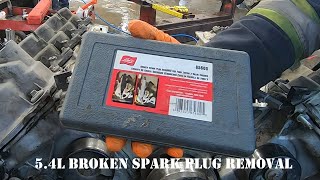
Typical fix: Replace the spark plug. For pre-10/09/2007 models, this job carries a high risk of the plug breaking. Strictly follow Ford's TSB 08-7-6, which involves soaking the plugs with a penetrating fluid (Motorcraft Carburetor Tune-Up Cleaner is specified) on a cold engine. Have a specialized extraction tool (like Lisle 65600 or 65700) on hand 🎬 Watch this guide on removing broken spark plugs safely. before you begin. The updated one-piece plug for these engines is Motorcraft SP-546.
Est. part cost: $8-$20 per plug, plus ~$80 for an extractor tool if needed - Water Intrusion in Spark Plug Well 🟡 Medium Probability → Shop Spark Plug The design of the hood and cowl seal can allow rainwater or washer fluid to leak directly onto the engine, often pooling in the rear spark plug wells (cylinders 4 and 8). This water shorts out the ignition coil, causing a misfire, especially after a heavy rainstorm.
How to confirm: When removing the ignition coil from cylinder 8, look for any signs of moisture, rust, or corrosion on the coil boot and in the spark plug well.
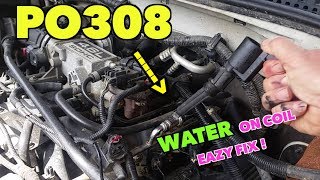
Typical fix: Dry out the spark plug well with compressed air, clean the coil boot, and apply dielectric grease to the boot seal to improve water resistance. The root cause is often a degraded cowl weatherstrip or misaligned plastic cowl panels. Some owners create a small gutter or shield to divert water away from the rear 🎬 See how to find and fix common water intrusion leaks. cylinders.
Est. part cost: $0-$50 for a new seal or DIY shield - Faulty or Clogged Fuel Injector 🟡 Medium Probability → Shop Fuel Injector Fuel injectors can become clogged with deposits over time or fail electrically, preventing the correct amount of fuel from being delivered to cylinder 8. This can cause a lean misfire.
How to confirm: Use a mechanic's stethoscope or a long screwdriver to listen for a consistent clicking sound from the injector on cylinder 8. Compare the sound to a known good injector. You can also use a 'noid light' to verify the electrical connector is receiving a pulse from the PCM. For a more definitive test, you can swap the injector with another cylinder, similar to the coil swap test.
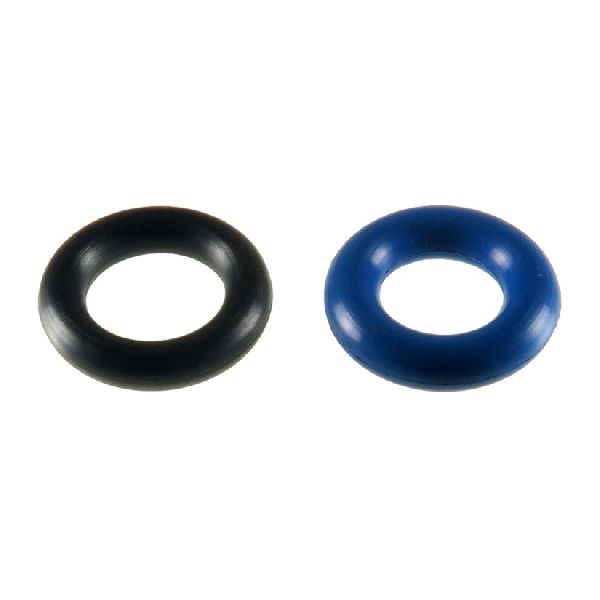
Typical fix: Replace the faulty fuel injector. It's recommended to replace the O-rings as well. Cleaning the injectors is also an option but replacement is often more reliable.
Est. part cost: $40-$90 - Leaking Valve Cover / Spark Plug Tube Gasket ⚪ Low Probability → Shop Engine Valve Cover The valve cover gaskets incorporate seals for the spark plug tubes. Over time, these seals can harden and leak, allowing engine oil to fill the spark plug well, which fouls the plug and can damage the ignition coil boot and short the coil.
How to confirm: When removing the ignition coil, check for the presence of liquid engine oil in the spark plug well. This is a clear sign of a failed gasket.
Typical fix: Replace the valve cover gasket set for the driver's side bank (Bank 2), which includes the spark plug tube seals.
Est. part cost: $50-$100 for a gasket set
Rare But Worth Checking
- Failed Cam Follower / Roller Follower: → Shop Engine Rocker Arm The 5.4L 3V is known for the needle bearings in the cam followers (roller lifters) failing. This causes the roller to seize, grinding a groove into the camshaft lobe for that cylinder. The result is a valve that no longer opens correctly, causing a persistent misfire and a loud, rhythmic ticking or tapping sound from the valve cover area. If ignored, this will lead to catastrophic engine damage.
- Low Engine Compression: If ignition and fuel system checks are inconclusive, a mechanical issue like a burnt valve, worn piston rings, or a damaged cylinder head could be the cause. A compression test on cylinder 8 is needed to confirm this. A healthy cylinder should have compression that is within 15% of the other cylinders.
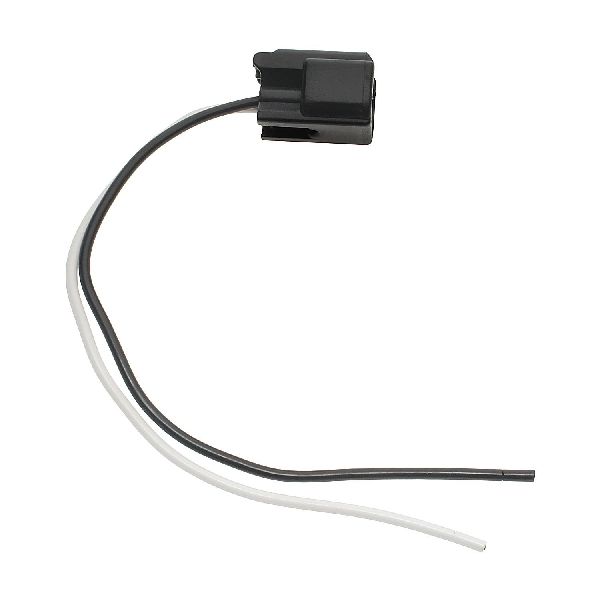
- Damaged Injector or Coil Wiring Harness: The wiring harness running to the coil or injector can become brittle from heat cycles and chafe against the engine, causing a short or open circuit. The plastic locking tabs on the connectors can also break, leading to a poor connection. Wiggling the harness for cylinder 8 while the engine is running may reveal the fault if the idle changes. Pigtail connector replacements are available.
Diagnosis Steps
- Read the code with an OBD-II scanner to confirm P0308 and check for any other codes.
- Note the freeze frame data to see the conditions (engine speed, load, temperature) when the misfire occurred.
- Locate cylinder 8. On the 5.4L V8, it is the rearmost cylinder on the driver's side (Bank 2), closest to the firewall.
- Swap the ignition coil from cylinder 8 with the coil from cylinder 7 (the one in front of it). Clear the codes, and drive the vehicle until the check engine light returns.
- If the code is now P0307, the ignition coil is bad. Replace it with a Motorcraft DG-511.
- If the code remains P0308, the coil is likely good. The next step is to inspect the spark plug and its well. Check for signs of water or oil in the spark plug well, which would indicate a cowl leak or valve cover gasket leak, respectively.
- Carefully remove the spark plug. WARNING: On engines built before 10/09/2007, the two-piece spark plugs are highly prone to breaking. Follow Ford TSB 08-7-6 and have a Lisle 65600 extractor tool ready before you start.
- If the plug and coil are good, suspect a fuel injector. Listen for a clicking sound from the injector. Swap the injector with another cylinder to see if the misfire code follows.
- If ignition and fuel components are ruled out, perform a compression test on cylinder 8 to check for mechanical engine problems like a bad valve or worn rings.
Parts You'll Likely Need
- Ignition Coil (Coil-on-Plug)
(OEM #DG511)— This is the most common failure item for a single-cylinder misfire on the 5.4L 3V engine.
Trusted brands: Motorcraft, Denso, NGK
OEM price range: $45-$60
Aftermarket price range: $25-$45 - Spark Plug
(OEM #SP-515 (or SP-546) / SP-509)— A common wear item and the second most likely cause. The part number depends on the engine build date. Pre-10/9/07 builds use SP-515/SP-546; post-10/9/07 builds use SP-509.
Trusted brands: Motorcraft, Autolite
OEM price range: $12-$20
Aftermarket price range: $8-$15 - Fuel Injector
(OEM #9L3Z-9F593-B)— Less common than ignition parts, but a known cause of misfires if it becomes clogged or fails electrically.
Trusted brands: Motorcraft, Bosch
OEM price range: $70-$90
Aftermarket price range: $40-$60 - Spark Plug Extractor Tool
(OEM #Lisle 65600)— Essential to have on hand if attempting to change spark plugs on an engine built before 10/09/2007, due to the high probability of the original two-piece plugs breaking.
Trusted brands: Lisle, Rotunda
OEM price range: $80-$120
Aftermarket price range: $50-$75
Related Codes That Often Appear With This One
- P0300 — If the misfire is severe or becomes intermittent across multiple cylinders due to a systemic issue like a large vacuum leak, water intrusion affecting multiple cylinders, or a failing Fuel Pump Driver Module.
- P0284 — This code means 'Cylinder 8 Contribution/Balance Fault'. It's a more specific code indicating cylinder 8 is not producing as much power as the others, often due to a failing fuel injector. It can be a precursor to or accompany P0308.
- P0171 or P0174 — If the misfire is caused by a large vacuum leak near cylinder 8 (like a leaking intake manifold gasket), the engine may also run lean, triggering these codes for Bank 1 or Bank 2.
Technical Service Bulletins (TSBs) & Recalls
- TSB 08-7-6: Spark Plug Removal Instructions - 4.6L 3V/5.4L 3V/6.8L 3V. Details the exact procedure for removing the problematic two-piece spark plugs to minimize breakage, including the use of Motorcraft Carburetor Tune-Up Cleaner as a solvent.
- TSB 06-19-8: Addresses cam phaser noise and variable cam timing (VCT) issues.
- TSB 14-0114 / SSM 47331: Relate to intermittent rattles and upper-end engine noises, sometimes pointing to VCT solenoids as a cause, which can be related to overall engine health and misfires.
Platform-Specific Known Issues
- Broken Spark Plugs: Engines built before October 9, 2007, are equipped with two-piece spark plugs that are notorious for separating during removal, leaving the lower shield stuck in the cylinder head. A special extraction tool is required to remove the broken piece.
- Water Leaks: The cowl vent drain can allow water to drip directly onto the back of the engine, soaking the ignition coils for cylinders #4 and #8, causing them to short out.
Mechanic-Grade Diagnostic Values
- Ignition Coil (Motorcraft DG-511) Primary Resistance — expected: 0.55 Ohms. Failure: A significantly higher reading or an open circuit (OL) indicates a bad primary winding.
- Ignition Coil (Motorcraft DG-511) Secondary Resistance — expected: 5,500 Ohms (5.5 kOhms). Failure: Readings significantly outside this value (e.g., over 6.0 kOhms or OL) indicate a bad secondary winding.
- Fuel Injector Resistance — expected: 11.0 to 18.0 Ohms. Failure: A reading of infinity (OL) indicates an open circuit, while a reading near zero indicates a shorted injector.
- Fuel Pressure (Key On, Engine Off) — expected: 30-45 PSI for early models (approx. 2005-2006 with return-style fuel system); 55-70 PSI for later models (approx. 2007-2014 with returnless FPDM-controlled system).. Failure: Pressure significantly below the expected range for your model year can cause lean misfires under load.
- VCT Solenoid Resistance — expected: 5.0 to 15.0 Ohms. Failure: A reading outside this range indicates a faulty solenoid coil.
Scan Tool Commands That Help
- Ford IDS, FORScan, high-end bidirectional scanners (Snap-on, etc.): Power Balance Test — This is the definitive professional method for diagnosing a misfire. It graphically displays the power contribution from each cylinder in real-time. A sharp downward dip for cylinder 8 confirms it is not contributing power. It is superior to just reading the code as it shows the severity and real-time nature of the misfire.
- Ford IDS, FORScan: KOEO/KOER Injector Electrical Self Test (Buzz Test) — To quickly verify the electrical integrity of all fuel injectors from the scanner. The PCM commands each injector to 'click' in sequence. If an injector is silent, it points to a wiring or internal injector electrical fault.
- Ford IDS, FORScan: Monitor VCT PIDs (VCTERROR1/2, VCTDC1/2) — If a misfire on an entire bank is present (e.g., P0305, P0306, P0307, P0308) along with a timing code (P0022 for Bank 2). Monitoring the VCT error and duty cycle PIDs can reveal if the cam timing system is malfunctioning and causing the misfires, rather than an individual component on cylinder 8.
Wiring & Ground Locations
- Cylinder 8 Coil/Injector Harness — Runs along the driver's side (Bank 2) valve cover to the rearmost cylinder by the firewall.. This part of the harness is exposed to significant heat and is in a tight space, making it prone to chafing against the engine or firewall. The plastic connector tabs also become brittle and can break, causing a poor connection at the coil or injector.
- G101 / G102 — Located on the firewall in the engine compartment, often near the PCM on the passenger side.. These are primary grounds for the PCM and multiple engine sensors. A corroded or loose connection here can cause erratic PCM behavior, leading to false misfire detection or incorrect injector/coil commands.
- Engine-to-Firewall Ground Strap — Typically connects from the rear of the passenger side cylinder head to a stud on the firewall.. This is a main ground path for the entire engine block. A poor connection can affect the ground reference for all ignition coils and sensors, potentially causing weak spark or noisy sensor signals that can be interpreted as a misfire.
Real Owner Repair Stories
- YouTube channel 'The G Automotive and More' (2010 Ford F-150 5.4L, 145,000 miles) — Flashing check engine light, hesitation.
❌ Tried (didn't work) Blowing water out of the spark plug well (misfire returned under load).
✅ What actually fixed it Replaced the spark plug for cylinder 8, which had an extremely large, worn gap, and replaced the ignition coil, which had been submerged in water. The mechanic noted the new Motorcraft coil provided a much better seal in the cylinder head opening than the one that was removed. - f150forum.com user story (2002 Ford F-150 5.4L (similar 2V engine architecture)) — Rough running, codes P0304 and P0308.
❌ Tried (didn't work) Initial diagnosis focused on ignition components.
✅ What actually fixed it The intake manifold gasket had failed, causing coolant to leak into the spark plug wells for cylinders 4 and 8 (the two rearmost cylinders). Replacing the intake manifold gaskets resolved the misfires. - Ford Expedition Forum user 'notamechanicbrad' (2011 Ford Expedition, 270,000 miles) — Persistent P0308 misfire.
❌ Tried (didn't work) New spark plug, New ignition coil, New fuel injector, Verified wiring was okay
✅ What actually fixed it The user concluded the only remaining possibilities were mechanical. The diagnostic path led to performing a compression test with the suspected cause being a broken valve spring or failed rocker arm, which are known mechanical failure points on high-mileage 5.4L 3V engines.
"I Checked Everything" — The Actual Cause
- A common diagnostic dead-end occurs when a technician performs a smoke test to find a vacuum leak and finds nothing. However, the root cause isn't unmetered air but a liquid leak into the spark plug well. A failed intake manifold gasket can leak coolant directly into the cylinder #8 plug well, shorting the coil and causing a P0308, but this will not be revealed by a smoke test.
OEM Part Supersession History
Motorcraft SP-515 (also PZH14F)→Motorcraft SP-546— The SP-515 was a two-piece design where the lower ground shield could seize in the cylinder head with carbon buildup and break off during removal. The SP-546 is a revised one-piece design that eliminates this problem.Motorcraft DG-511 (Black Boot)→Motorcraft DG-521 (Brown Boot)— Ford redesigned the cylinder heads around the 2008 model year (starting late 2007) to accommodate a better one-piece spark plug. These new heads require a slightly longer ignition coil boot.
Heads up: The DG-511 and DG-521 are NOT interchangeable. Using the wrong coil will result in a poor seal at the spark plug, leading to moisture intrusion and misfires. The only way to be certain which coil your engine needs is to visually inspect the existing coils. Black boots = DG-511. Brown boots = DG-521.
Model Year Variations Within This Range
- 2005 - Mid-2007: Engines use the problematic two-piece SP-515 spark plugs and the corresponding DG-511 (black boot) ignition coils. VCT solenoid replacement on the earliest models in this range requires removing the entire valve cover.
- Late-2007 - 2014: Engines feature a revised cylinder head design using a one-piece spark plug (Motorcraft SP-509) and the longer DG-521 (brown boot) ignition coil. Many of these later models also feature a larger seal around the VCT solenoid, allowing it to be replaced without removing the valve cover.
- Post-2009: The VCT solenoids were updated again around the 2010 model year with revised internal oil passages to improve oil pressure delivery and reduce failures.
Diagnostic Flowchart
Other Known Issues on This Vehicle
Issues unrelated to this code that are worth knowing about as an owner of this generation:
- Cam Phaser Failure / Timing Chain System Wear 🔴 High → Shop Engine Timing Chain — Extremely common, often starting as a light ticking/diesel-like knock at hot idle between 800-1200 RPM. Can occur as early as 70,000-90,000 miles. (Ref: TSB 06-19-8)
- Two-Piece Spark Plug Breakage (Pre-10/09/2007 Engines) 🔴 High → Shop Spark Plug — Guaranteed to be a risk on any original spark plug change for affected engines. The carbon buildup that causes the breakage is a certainty. (Ref: TSB 08-7-6)
- Fuel Pump Driver Module (FPDM) Failure (Primarily 2005-2008 models) 🔴 High — Very common. The module, mounted to a crossmember near the spare tire, corrodes due to dissimilar metals (aluminum module on a steel frame), causing cracks and water intrusion. Leads to crank-no-start or stalling.
- Cam Follower (Roller Lifter) Failure 🔴 High → Shop Engine Rocker Arm — Common, especially on engines with potential oil pressure issues. Presents as a loud, rhythmic ticking from the valve cover area. If a follower seizes, it will destroy the camshaft lobe.
- Cowl Water Leak 🟠 Medium — Common issue where degraded cowl seals or plastic panels allow rainwater to drip directly onto the rear of the engine, causing misfires in cylinders 4 and 8.
- VCT Solenoid Failure 🟠 Medium — Fairly common. The solenoids get clogged with sludge or fail electrically, causing rough idle, stalling, and timing-related codes. Often a precursor or related symptom to larger cam phaser issues. (Ref: TSB 14-0114)
Used vs. New Parts: Buying Guide for This Vehicle
When a used part is the smart pick: For this specific repair, used parts are generally not recommended for the common failure items. However, a used intake manifold from a low-mileage donor vehicle could be a cost-effective solution if the original is found to be cracked or leaking coolant.
Donor-vehicle mileage cap: roughly under 100000 miles for the part to have meaningful remaining life.
What to inspect on the donor part:
- For an intake manifold, inspect carefully for any hairline cracks, especially around the coolant crossover passages.
- Ensure all gasket surfaces are flat and free of deep scoring.
- Verify all threaded inserts for mounting bolts are intact and not stripped.
OEM-only on this vehicle (don't cheap out):
- VCT Solenoids
- Cam Phasers
- Fuel Pump Driver Module (FPDM)
Aftermarket brands forum-validated for this vehicle:
- Denso (for ignition coils)
- NGK (for ignition coils)
- Standard Motor Products (SMP) (often considered a reliable OEM-equivalent for sensors and coils)
Brands owners have reported issues with on this vehicle:
- Unbranded, generic ignition coils and fuel injectors sold on marketplaces like Amazon or eBay. Forum consensus is that these parts have a very high failure rate, often within a few thousand miles.
Real Owner Stories
Aggregated from forums and TSBs cited above. Mileages and costs reflect what owners reported in those sources.
2008 Ford Expedition 5.4L 3V
Symptoms: The owner experienced a P0308 code and discussed the basics of the cylinder location and common causes like the coil or plug.
What fixed it: Replacing the ignition coil or spark plug.
Source hint: https://www.ford-trucks.com/forums/771101-p0308-code.html - 'P0308 code' on Ford Truck Enthusiasts
2005-2014 Ford Expedition 5.4L 3V
Symptoms: Misfire occurring specifically while towing.
What fixed it: Replacing the ignition coil and spark plugs.
Source hint: https://www.ford-trucks.com/forums/1159293-code-p0308.html - 'code p0308' on Ford Truck Enthusiasts
2005-2014 Ford Expedition 5.4L 3V
Symptoms: Cylinder 8 misfire (DTC P0308).
What fixed it: Replacing the coil boot and spring and applying dielectric grease.
Source hint: https://www.expeditionforum.com/threads/cylinder-8-misfire-dtc-p0308.36979/ - 'Cylinder 8 Misfire - DTC P0308' on Ford Expedition Forum
2005-2014 Ford Expedition 5.4L 3V
Symptoms: Misfire that occurs under load; owner also investigated the wiring harness.
What fixed it: Checking the wiring harness and addressing ignition components.
Source hint: https://www.expeditionforum.com/threads/misfire-in-the-5-4l-engine.44755/ - 'Misfire in the 5.4L engine' on Ford Expedition Forum
Related OBD-II Codes
Frequently Asked Questions
Where is cylinder 8 located on my 5.4L Triton V8?
Which spark plug should I use for my 2005-2014 Expedition to avoid the breakage issue?
Is there a specific procedure I should follow to remove the spark plugs on my 2006 Expedition?
Why does my P0308 code only appear when I am towing or under heavy load?
Can rain cause a P0308 misfire on my Ford Expedition?
What specific ignition coil is recommended for the 5.4L 3V engine?
Helpful Videos
We Have This Part in Stock


The information in this article is provided for general reference and educational purposes only. Vehicle specifications, procedures, and part compatibility can vary by production date, trim level, and region. Always consult your vehicle's factory service manual and verify part numbers before purchasing or performing repairs. Safety-critical components such as airbags, seat belts, and braking systems should be installed by a qualified professional.
- Ford Expedition:
- 🧭 Diagnostic Flowchart
- 🎬 Helpful Videos
- 🛍️ Shop This Part
- What's Unique About the 2005-2014 Ford Expedition
- Symptoms You May Notice
- Most Likely Causes
- Rare But Worth Checking
- Diagnosis Steps
- Parts You'll Likely Need
- Related Codes That Often Appear With This One
- Technical Service Bulletins (TSBs) & Recalls
- Platform-Specific Known Issues
- Mechanic-Grade Diagnostic Values
- Scan Tool Commands That Help
- Wiring & Ground Locations
- Real Owner Repair Stories
- "I Checked Everything" — The Actual Cause
- OEM Part Supersession History
- Model Year Variations Within This Range
- Other Known Issues on This Vehicle
- Used vs. New Parts: Buying Guide for This Vehicle
- Real Owner Stories
- 2008 Ford Expedition 5.4L 3V
- 2005-2014 Ford Expedition 5.4L 3V
- 2005-2014 Ford Expedition 5.4L 3V
- 2005-2014 Ford Expedition 5.4L 3V
- Related OBD-II Codes
- Frequently Asked Questions
- 🎟️ Get 5% Off