

P0308 on 2007-2014 Ford Expedition 5.4L: Cylinder 8 Misfire Causes and Fixes
P0308 means cylinder 8 is misfiring. On the 5.4L 3V Triton, this is most often a bad ignition coil or a worn spark plug. A DIY fix is possible, with a single coil costing around $30-$75, but be aware of the engine's notorious issue with two-piece spark plugs breaking during removal on pre-2008 models. A special extraction tool may be required.
- P0308 on your Expedition is a misfire in cylinder 8, the one closest to the driver at the back of the engine.
- The most likely culprits are a bad ignition coil or a worn-out spark plug.
- A simple and effective diagnostic step is to swap the cylinder 8 ignition coil with another cylinder and see if the misfire code follows it.
- Be prepared for the spark plug to break upon removal, especially on 2007-2008 models. Having a special extractor tool is highly recommended.
- Do not ignore a flashing check engine light, as it signals a severe misfire that can quickly damage your expensive catalytic converters.
What's Unique About the 2007-2014 Ford Expedition
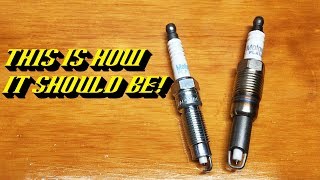
The 5.4L 3V Triton engine in this generation of Expedition has a well-documented and challenging relationship with its spark plugs, particularly in models built before October 2007. Unlike the earlier 2-valve Triton known for blowing plugs out, the 3-valve engine used a two-piece spark plug design (Motorcraft P/N SP-507, PZT1F) that is famous for breaking during removal. Carbon builds up on the long ground electrode shield, causing it to seize in the cylinder head. When attempting to unscrew it, the upper porcelain and hex can break away, leaving the bottom piece stuck. This common failure turns a simple spark plug change into a complex job requiring a special extraction tool, like the Lisle 65600. Ford acknowledged this with Technical Service Bulletin (TSB) 08-7-6, which outlines a specific removal procedure using a solvent soak to loosen carbon. Engines built after 10/9/2007 were fitted with a revised one-piece spark plug design (Motorcraft SP-515, later SP-546) to mitigate this issue.
Symptoms You May Notice
- Rough idle or engine stumbling.
- Hesitation or jerking during acceleration, especially under load.
- Flashing or solid Check Engine Light.
- Noticeable loss of power.
- Engine may be harder to start.
- Decreased fuel economy.
- A ticking or tapping sound from the engine bay, especially at idle.
- Smell of raw fuel from the exhaust.
- Replacing only the spark plug without testing the ignition coil. It's common for a bad coil to foul a new plug quickly.
- Assuming any aftermarket coil or spark plug will work. These engines are known to be sensitive to ignition components; using OEM Motorcraft parts is highly recommended by experienced technicians and owners. There are also reports of counterfeit Motorcraft parts being sold online.
- Immediately assuming a major mechanical failure before thoroughly diagnosing the ignition and fuel systems for cylinder 8.
Most Likely Causes
- Failed Ignition Coil (Coil-On-Plug) 🔴 High Probability → Shop Ignition Coil The Coil-On-Plug (COP) design is a known weak point. They are susceptible to failure from heat cycles and moisture intrusion into the spark plug wells, which can cause the coil to short out or the boot to arc against the cylinder head. Cylinder 8's location at the rear of the engine bay, sometimes under the cowl, makes it particularly vulnerable to collecting water and debris, leading to premature failure. Some owners report only needing to replace the coil boot and spring, not the entire coil assembly.
How to confirm: Swap the ignition coil from cylinder 8 with another cylinder (e.g., cylinder 7). Clear the codes and run the engine. If the code changes to P0307, the coil is faulty. 🎬 Watch: How to diagnose and replace a misfiring ignition coil. Also inspect the coil boot for cracks, oil contamination from a leaking valve cover gasket, or a white, chalky residue indicating arcing.
Typical fix: Replace the faulty ignition coil. It is often recommended to replace the spark plug at the same time. Many owners choose to replace all 8 coils and plugs at once for preventative maintenance, especially on higher mileage vehicles. Applying dielectric grease to the inside of the new coil boot is highly recommended to seal out moisture.
Est. part cost: $30-$75 for one OEM-quality coil - Worn or Fouled Spark Plug 🔴 High Probability → Shop Spark Plug The original-spec two-piece spark plugs (Motorcraft SP-507) are known to cause issues. Even if they don't break, they can become fouled or the gap can wear excessively, leading to a weak spark and misfires. Misfires under heavy load are a classic symptom of a failing spark plug. For pre-2008 models, the removal process itself is a major point of failure.
How to confirm: After ruling out the coil, remove and inspect the spark plug from cylinder 8. Look for excessive wear, carbon fouling, oil, or cracks in the porcelain. Be extremely cautious during removal on pre-2008 engines, following the procedure in TSB 08-7-6 (engine cold, soak with carb cleaner, work back and forth gently).
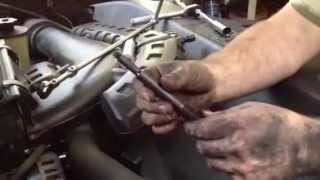
Typical fix: Replace the spark plug. Given the difficulty and risk, it is highly recommended to replace all 8 plugs at the same time using high-quality one-piece design plugs like the Motorcraft SP-546. Use of a special spark plug removal tool like the Lisle 65600 should be anticipated. 🎬 See this detailed walkthrough on using the broken spark plug tool.
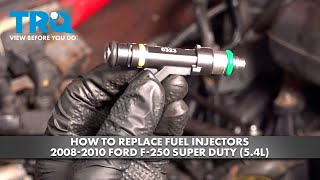
Est. part cost: $10-$20 per spark plug - Faulty Fuel Injector 🟡 Medium Probability → Shop Fuel Injector An injector can become clogged with debris or fail electronically, preventing the correct amount of fuel from being delivered to cylinder 8. TSB 05-13-4 notes that some 5.4L 3V engines can have injectors stick open, causing fouled plugs and misfires. A forum member on f150forum.com with a persistent P0308 after swapping plugs and coils eventually traced it to a bad injector.
How to confirm: A more advanced diagnostic step. One method is to listen to the injector with a mechanic's stethoscope to confirm it's clicking. Another is to use a 'noid light' to verify the electrical pulse from the PCM. Swapping the injector with another cylinder is the most definitive test but is a more involved job.
Typical fix: Replace the faulty fuel injector. It's also wise to check the injector's electrical connector for damage or corrosion.
Est. part cost: $50-$100 for one injector - Vacuum Leak ⚪ Low Probability Hoses and gaskets can become brittle with age and heat, causing unmetered air to enter the intake manifold. A leak near the cylinder 8 intake runner could lean out the mixture for that cylinder specifically, causing a misfire. A common spot is the PCV hose elbow at the rear of the throttle body.
How to confirm: Visually inspect all vacuum lines for cracks or breaks. With the engine running, you can carefully spray brake cleaner or a propane torch (unlit) around suspected areas; a change in engine RPM indicates a leak. Pay close attention to the intake manifold gaskets near cylinder 8.
Typical fix: Replace the cracked hose or faulty gasket.
Est. part cost: $10-$50
Rare But Worth Checking
- Low Cylinder Compression: This is a serious mechanical engine problem, such as a burnt valve, worn piston rings, a failed head gasket, or a damaged roller follower. A forum user on f150forum.com with a persistent P0308 and P0304 found good compression but still suspected a valvetrain issue like a lash adjuster. A compression test is required for diagnosis.
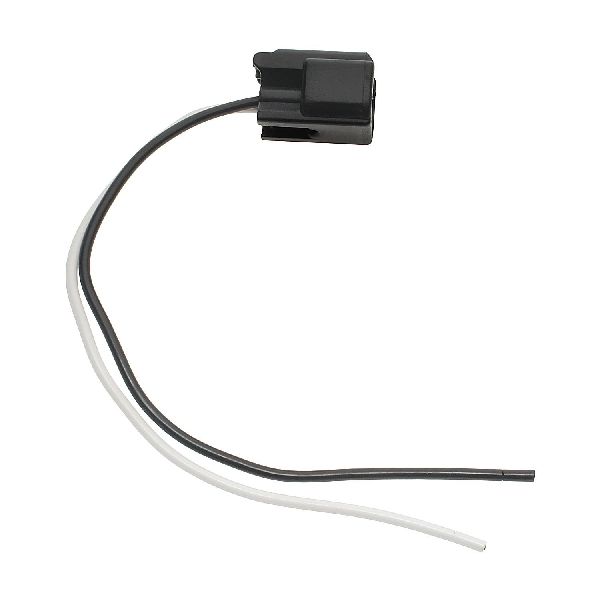
- Damaged Wiring Harness: The wiring or connector for the ignition coil or fuel injector can become brittle and break, causing an intermittent connection. Wiggling the harness for cylinder 8 while the engine is running may reveal a problem if the idle changes. One owner on a forum replaced the connectors for cylinders 4 and 8 in pursuit of a fix.
- VCT System Malfunction: While typically causing codes for multiple cylinders (P0300) or specific VCT codes (P0012, P0022), a failing VCT solenoid or cam phaser can sometimes cause a single cylinder misfire initially. This is a well-known weak point of the 5.4L 3V engine.
Diagnosis Steps
- Read the code with an OBD-II scanner. Confirm P0308 is the primary code. Note any other codes present, like P0316 or P0358.
- Locate cylinder 8 (rear-most cylinder on the driver's side, near the firewall).
- Swap the ignition coil from cylinder 8 with the coil from cylinder 7 (the one in front of it).
- Clear the codes, start the engine, and let it run or drive it briefly until the check engine light returns.
- Re-scan for codes. If the code is now P0307, the ignition coil is bad and needs to be replaced.
- If the code remains P0308, the problem is likely the spark plug, fuel injector, or a mechanical issue with cylinder 8.
- Next, inspect and replace the spark plug in cylinder 8. Proceed with extreme caution on pre-2008 engines due to the risk of the spark plug breaking. Follow the TSB 08-7-6 procedure.
- If the misfire persists, test the fuel injector. Use a noid light to check for an electrical pulse at the injector connector. Check the injector's resistance with a multimeter (expect 11-18 ohms). Consider swapping the injector with another cylinder.
- If ignition and fuel are confirmed good, investigate mechanical causes. Perform a cylinder compression test. A healthy cylinder should have pressure around 150-195 PSI, with minimal variation between cylinders.
- Inspect the valvetrain for cylinder 8 by removing the driver's side valve cover. Look for a dislodged roller follower or a broken valve spring, which are known failure points on this engine.
Parts You'll Likely Need
- Ignition Coil (Coil-On-Plug)
(OEM #DG511)— This is the most frequent failure point for a single-cylinder misfire on the 5.4L 3V engine.
Trusted brands: Motorcraft, Denso - Spark Plug (One-Piece Design)
(OEM #Motorcraft SP-546 (replaces SP-515))— The second most common cause, and a critical maintenance item. The one-piece design prevents the infamous breakage issue of the original plugs.
Trusted brands: Motorcraft, Champion (e.g., #7989) - Broken Spark Plug Extractor Tool
(OEM #Lisle 65600)— Considered essential to have on hand before attempting a spark plug change on a pre-2008 5.4L 3V engine, as plug breakage is very common.
Trusted brands: Lisle, OEMTOOLS - Fuel Injector — A less common but significant cause of a persistent P0308 after ignition components have been replaced.
Trusted brands: Motorcraft, Bosch
Related Codes That Often Appear With This One
- P0316 — Misfire Detected on Startup (First 1000 Revolutions). This code often accompanies a specific cylinder misfire code like P0308, indicating the misfire was present immediately when the engine was started.
- P0300 — Random/Multiple Cylinder Misfire Detected. If you see P0300 along with P0308, it means other cylinders are misfiring too. This points towards a more global issue like a major vacuum leak, low fuel pressure, clogged catalytic converters, or a problem with the VCT system, rather than a single component on cylinder 8.
- P0358 — Ignition Coil 'H' (Cylinder 8) Primary/Secondary Circuit Malfunction. This code specifically points to an electrical fault in the ignition coil's circuit for cylinder 8, rather than just a performance-based misfire. It strongly suggests the coil or its wiring is the culprit.
Technical Service Bulletins (TSBs) & Recalls
- TSB 08-7-6: Outlines the official Ford procedure for removing the original two-piece spark plugs to minimize the chance of breakage. It involves a cold engine and soaking the plugs with a solvent.
- TSB 05-13-4: Addresses issues with hard starting and rough idle caused by intermittently stuck-open fuel injectors, which can lead to misfire codes like P0308.
- TSB 07-21-2014: Authorizes the use of specific thread insert kits (Lock-N-Stitch or Time-Sert) for repairing spark plug threads on 2-valve engines, relevant context for the broader Triton engine family's spark plug issues.
Platform-Specific Known Issues
- Broken Spark Plugs: → Shop Spark Plug The 2007 and early 2008 models with the original two-piece Motorcraft SP-515 plugs are highly prone to breaking during removal. It is critical to follow a specific removal procedure (warm engine, use of penetrating oil) and have an extraction tool ready.
- Water Intrusion: The cowl design on some Ford trucks and SUVs can allow water to drip onto the back of the engine, potentially pooling in the spark plug wells for cylinders 4 and 8, causing the ignition coil to short out.
Mechanic-Grade Diagnostic Values
- Ignition Coil Primary Resistance — expected: 0.55 Ohms for OEM Motorcraft DG511.. Failure: A reading of infinity (Open Loop) or significantly higher/lower than the specification indicates a bad coil winding.
- Ignition Coil Secondary Resistance — expected: 5,500 Ohms (5.5 kOhms) for OEM Motorcraft DG511.. Failure: A reading significantly outside this value suggests the secondary winding has failed.
- Fuel Injector Resistance — expected: 11-18 Ohms.. Failure: A reading of O.L. (open) or near zero (shorted) on a multimeter indicates a failed injector coil.
- Fuel Pressure (Key On, Engine Off) — expected: 35-65 PSI.. Failure: Pressure below this range can indicate a weak fuel pump or clogged filter, potentially causing a lean misfire.
- Mode $06 Misfire Count (per cylinder) — expected: 0 counts during a normal drive cycle.. Failure: A high number of counts logged for Test ID $A9 (Cylinder 8 Misfire Data) confirms the PCM is detecting misfire events, even if a CEL is not yet triggered.
- VCT Solenoid Resistance — expected: 5-15 Ohms.. Failure: A reading outside this range indicates a failed solenoid coil, which can affect timing and indirectly cause misfires.
Hidden / Shadow Codes Worth Checking
- Mode $06, Test ID $A2-$AF: This is not a DTC, but a diagnostic monitor in the generic OBD-II data. Each Test ID from $A2 to $AF corresponds to a specific cylinder's misfire count data (e.g., $A2 for Cyl 1, $A9 for Cyl 8). Technicians use this to see which cylinder is misfiring before a P030X code is officially set. (see via Requires a scan tool capable of reading Mode $06 data, such as Torque Pro, FORScan, or professional-grade scanners.)
Scan Tool Commands That Help
- Ford IDS (or equivalent like FORScan, high-end Snap-on): Power Balance Test — This is the definitive factory method for diagnosing misfires. The tool displays a graph of each cylinder's RPM contribution. It allows the technician to disable individual fuel injectors one by one to see the effect on engine speed. A cylinder that shows a large RPM drop when disabled is healthy; a cylinder that shows little or no drop is the one that is misfiring. This test can quickly confirm the misfire is on cylinder 8 and not a false report.
Wiring & Ground Locations
- G102 / G103 — Located at the right rear of the engine compartment.. These are primary grounds for the engine control system. While not specific to cylinder 8, a poor connection at these points can cause erratic voltage and unpredictable behavior for multiple actuators, including ignition coils and fuel injectors, potentially leading to misfire codes.
- Cylinder 8 Coil-On-Plug Connector — On top of the driver's side valve cover, at the rearmost cylinder closest to the firewall.. This connector provides power and the trigger signal from the PCM to the ignition coil. The pins should be tested for 12V+ on one wire (Key On) and a pulsing ground signal from the PCM on the other while cranking. The connector itself can become brittle and fail, causing an intermittent connection.
Real Owner Repair Stories
- F150online Forums user 'nu-supercrew' (2007 Ford F-150 5.4L) — Misfire under load (hard acceleration or in overdrive), flashing CEL but would not stay on.
❌ Tried (didn't work) Swapped the ignition coil from cylinder 8 to another cylinder., Swapped the spark plug from cylinder 8 to another cylinder., Swapped the fuel injector from cylinder 8 to another cylinder.
✅ What actually fixed it The PCM was incorrectly reporting a P0308 (Cylinder 8) misfire. The actual cause was a broken spark plug tip on cylinder 1. The problem was only found by physically inspecting other spark plugs after the component swaps on cylinder 8 failed to move the code. - Ford F150 Forum user 'Mitch125mx' (2006 Ford F-150 5.4L 3V) — Constant misfire on cylinder 8 (P0308) and a misfire on cylinder 4 (P0304) under load. Good compression (195 PSI) on cylinder 8.
❌ Tried (didn't work) Swapped coil, plug, and injector on cylinder 8 with no change., Pulled upstream O2 sensor to check for a clogged catalytic converter., Visually inspected valvetrain, saw no followers out of place.
✅ What actually fixed it A broken intake valve spring was found on cylinder #4. After replacing the broken spring on cylinder 4, the misfire codes for both cylinder 4 AND cylinder 8 were resolved and the truck ran great. This suggests the severe misfire on #4 was causing a sympathetic or falsely reported code on #8. - Ford F150 Forum user (2008 F-150 5.4L with 160,000 miles) — Flashing CEL, running very rough. Codes for P0304, P0308, and other cylinders.
❌ Tried (didn't work) Swapping coils around did not move the misfire., Replacing all 8 spark plugs resolved all misfires except for cylinder 8.
✅ What actually fixed it The shop performed a compression test and found low compression on cylinder 8. The final diagnosis was a burnt valve, requiring cylinder head work.
When the Usual Fixes Don't Work
- In several documented cases, a persistent P0308 code was not caused by a fault in cylinder 8 at all. One owner found a broken spark plug tip on cylinder 1 was causing the computer to incorrectly flag cylinder 8. Another owner fixed both a P0308 and P0304 code by replacing a single broken valve spring on cylinder 4. This demonstrates that if standard component swaps on cylinder 8 do not resolve or move the code, the actual mechanical fault may lie with another cylinder, causing the PCM to misinterpret crankshaft speed fluctuations.
OEM Part Supersession History
Motorcraft SP-515→Motorcraft SP-546 (or SP-546-X)— The SP-546 is an updated one-piece design that further refines the SP-515 to prevent the breakage issues common with the original two-piece plugs (SP-507).
Heads up: SP-546 and SP-515 are for engines originally equipped with the high-thread, two-piece plugs (black coil boots). They are NOT compatible with later 5.4L engines (approx. 2008+) that came from the factory with brown coil boots and a different head/plug design (SP-509).
Model Year Variations Within This Range
- 2007-Early 2008: These models used the original two-piece spark plug design (Motorcraft SP-507) and typically have black ignition coil boots. They are at high risk for spark plug breakage during removal.
- Mid-2008-2014: These models were equipped from the factory with a revised cylinder head and one-piece spark plug design (initially SP-515, later SP-509). They typically have brown ignition coil boots. The risk of spark plug breakage is significantly lower. It's crucial to verify which plug design is present before service.
- 2007-2008: On some 2007-2008 models, the VCT solenoids cannot be replaced without removing the valve covers because the access hole in the cover is too small. Later models have a larger seal that allows for external replacement.
Diagnostic Flowchart
Other Known Issues on This Vehicle
Issues unrelated to this code that are worth knowing about as an owner of this generation:
- Variable Camshaft Timing (VCT) System Failure 🔴 High → Shop Engine Camshaft — Very common, especially on engines over 100k miles. Often presents as a diesel-like ticking or knocking noise at warm idle.
- Two-Piece Spark Plug Breakage (pre-2008 models) 🔴 High → Shop Spark Plug — Extremely common during the first spark plug change. Affects engines built before 10/9/2007. (Ref: TSB 08-7-6)
- Timing Chain Guide/Tensioner Failure 🔴 High → Shop Engine Timing Chain — Common at higher mileage. Plastic guides break, pieces can clog the oil pump pickup, leading to oil starvation and catastrophic engine failure.
- Fuel Pump Driver Module (FPDM) Failure 🟠 Medium — Common. The module is mounted to the frame and its aluminum body corrodes, causing cracks and allowing moisture in. Leads to no-start or stalling conditions.
- Exhaust Manifold Leaks 🟠 Medium — Common. The manifolds can warp or the mounting studs can break, causing an exhaust leak and a ticking noise, especially when the engine is cold.
- Aluminum Body Panel Corrosion 🟡 Low — Widespread cosmetic issue. Paint bubbles and peels on the aluminum hood and rear tailgate due to contamination during the painting process.
Used vs. New Parts: Buying Guide for This Vehicle
When a used part is the smart pick: For this repair, used parts are generally not recommended due to the high failure rate of the key components. The only potential exception might be a wiring harness connector pigtail if the original is broken, or a complete, low-mileage engine assembly if a major mechanical failure like a burnt valve is diagnosed and the cost is favorable compared to a rebuild.
Donor-vehicle mileage cap: roughly under 80000 miles for the part to have meaningful remaining life.
What to inspect on the donor part:
- For a connector: Check for brittle plastic, cracks, or corrosion on the pins.
- For a complete engine: Ask for maintenance records, check oil condition if possible, and look for external signs of leaks or damage.
OEM-only on this vehicle (don't cheap out):
- Ignition Coils: The 5.4L 3V is notoriously sensitive to coil quality. Motorcraft (DG511) is the most recommended brand to avoid repeat misfires.
- Spark Plugs: Motorcraft (SP-546) is the proven replacement. Aftermarket plugs can cause performance issues.
- VCT Solenoids: If diagnosis leads to the VCT system, only use Ford/Motorcraft OEM parts (8L3Z-6M280-B). Aftermarket solenoids are known to be unreliable in this engine.
- Cam Phasers: Similar to VCT solenoids, only OEM Ford parts should be used for a lasting repair.
Aftermarket brands forum-validated for this vehicle:
- While OEM is best, some users report success with high-quality aftermarket coils from brands like Denso or NGK, but reports are less consistent than with Motorcraft.
Brands owners have reported issues with on this vehicle:
- Unbranded, low-cost ignition coil sets from online marketplaces are frequently reported to fail quickly, sometimes within days or weeks, causing the misfire to return.
Real Owner Stories
Aggregated from forums and TSBs cited above. Mileages and costs reflect what owners reported in those sources.
2008 Ford F-150 5.4L 3V Triton
Symptoms: Misfires occurring under heavy load.
What fixed it: Identified as a likely coil, plug, or injector issue; standard diagnostic involves swapping components to isolate the failure.
Source hint: https://www.ford-trucks.com/forums/771389-p0308-code.html
Ford Expedition 5.4L 3V Triton
Symptoms: Cylinder 8 misfire (P0308).
What fixed it: Replacing the coil boot and spring and using dielectric grease to seal out moisture.
Source hint: https://www.expeditionforum.com/threads/cylinder-8-misfire-dtc-p0308.36399/
Ford F-150 5.4L 3V Triton
Symptoms: Persistent P0308 code that remained even after swapping spark plugs and ignition coils.
What fixed it: The owner performed a compression test and valvetrain inspection, eventually tracing the issue to a bad fuel injector.
Source hint: https://www.f150forum.com/f4/p0308-p0304-499395/
Related OBD-II Codes
Frequently Asked Questions
Which spark plugs should I use for my 2007-2014 Ford Expedition 5.4L 3V to avoid the breakage issue?
Is there an official Ford procedure for removing spark plugs on my 2007 Expedition without breaking them?
Why does my Expedition keep getting a P0308 code specifically after it rains?
Can a faulty fuel injector cause a P0308 on the Triton 5.4L 3V?
Do I need to replace the entire ignition coil if only the boot is damaged?
What special tools do I need to change the plugs on a pre-2008 5.4L 3V engine?
Helpful Videos

We Have This Part in Stock


The information in this article is provided for general reference and educational purposes only. Vehicle specifications, procedures, and part compatibility can vary by production date, trim level, and region. Always consult your vehicle's factory service manual and verify part numbers before purchasing or performing repairs. Safety-critical components such as airbags, seat belts, and braking systems should be installed by a qualified professional.
- Ford Expedition:
- 🧭 Diagnostic Flowchart
- 🎬 Helpful Videos
- 🛍️ Shop This Part
- What's Unique About the 2007-2014 Ford Expedition
- Symptoms You May Notice
- Most Likely Causes
- Rare But Worth Checking
- Diagnosis Steps
- Parts You'll Likely Need
- Related Codes That Often Appear With This One
- Technical Service Bulletins (TSBs) & Recalls
- Platform-Specific Known Issues
- Mechanic-Grade Diagnostic Values
- Hidden / Shadow Codes Worth Checking
- Scan Tool Commands That Help
- Wiring & Ground Locations
- Real Owner Repair Stories
- When the Usual Fixes Don't Work
- OEM Part Supersession History
- Model Year Variations Within This Range
- Other Known Issues on This Vehicle
- Used vs. New Parts: Buying Guide for This Vehicle
- Real Owner Stories
- 2008 Ford F-150 5.4L 3V Triton
- Ford Expedition 5.4L 3V Triton
- Ford F-150 5.4L 3V Triton
- Related OBD-II Codes
- Frequently Asked Questions
- 🎟️ Get 5% Off