

P0308 on 2006-2010 Ford Explorer 4.6L V8: Cylinder 8 Misfire Causes and Fixes
P0308 on a 2006-2010 Explorer with the 4.6L V8 is most often caused by a faulty ignition coil or a worn spark plug on cylinder 8. A very common vehicle-specific issue is a water leak from the wiper cowl dripping directly onto the cylinder 8 coil, causing it to short out. Expect to pay $40-$75 for a new Motorcraft coil. Sealing the cowl leak with RTV silicone is a critical preventative step.
- For a P0308 on a 2006-2010 Explorer, the first step is to check for water in the cylinder 8 spark plug well, especially if the misfire started after rain.
- The most likely failed parts are the ignition coil and/or the spark plug for cylinder 8.
- A simple diagnostic is to swap the ignition coil from cylinder 8 to another cylinder and see if the misfire code follows it.
- Be extremely cautious if you decide to change the spark plugs, as the original two-piece design is known to break off in the cylinder head.
- Do not ignore a flashing check engine light, as it signals a severe misfire that can quickly destroy the expensive catalytic converter.
What's Unique About the 2006-2010 Ford Explorer
On this specific generation of Ford Explorer with the 4.6L V8, cylinder 8 is located on the driver's side, at the very back of the engine bay against the firewall. Its location makes it uniquely vulnerable to a water leak from the seam of the plastic windshield wiper cowl directly above it. After a heavy rain or car wash, water can drip past the degraded factory seal, run down onto the coil, and fill the spark plug well. This causes the spark to short to ground instead of firing the plug, leading to a P0308 misfire. This is a widely documented issue and the first thing to check if the misfire appears after wet weather.
🎬 Watch: Why cylinder 8 is prone to water leaks.Symptoms You May Notice
- Flashing or solid Check Engine Light
- Rough or shaking idle
- Engine stumbling or hesitating during acceleration
- Noticeable loss of power
- Increased fuel consumption
- Smell of raw fuel from the exhaust
- Engine shaking or vibrating, especially under load
- Replacing only the spark plug when the root cause was a water leak that also damaged the new plug and coil.
- Replacing the fuel injector before properly diagnosing the ignition system (coil and plug), which is a far more common failure point.
- Assuming the coil is bad without first checking for water in the spark plug well, which may only require drying and sealing the cowl leak.
Most Likely Causes
- Water Intrusion into Spark Plug Well #8 🔴 High Probability → Shop Spark Plug The seam and fastener locations in the plastic wiper cowl are positioned directly over the cylinder 8 ignition coil. The factory foam seal degrades over time, allowing water to drip down, fill the spark plug well, and short out the ignition coil. This is a well-known design flaw for this platform.
How to confirm: Visually inspect the cylinder 8 spark plug well (driver's side, rearmost cylinder) for any signs of water, rust, or corrosion, especially if the misfire started after a rainstorm or car wash. You may see water pooled around the ignition coil boot.
Typical fix: Remove the ignition coil, use compressed air to blow all water out of the spark plug well, and thoroughly dry the coil and its boot. Re-seal the wiper cowl seam above cylinder 8 using a quality RTV silicone sealant like Permatex Ultra Black. The coil and spark plug may need replacement if they are corroded or damaged by the water.
Est. part cost: $10-$20 (Sealant) - Faulty Ignition Coil (Coil-on-Plug) 🔴 High Probability → Shop Ignition Coil Ford's modular engines are known for ignition coils failing with age and heat cycles. The issue is often accelerated by the water leak mentioned above or by oil leaks from the valve cover gasket which can saturate the coil boot.
How to confirm: Swap the ignition coil from cylinder 8 with another cylinder (e.g., cylinder 7, which is just forward of it). Clear the codes and drive the vehicle. If the code changes to P0307, the coil is faulty.
Typical fix: Replace the faulty ignition coil. It is held in by a single 7mm bolt. Applying dielectric grease to the inside of the new coil boot is recommended to seal against moisture and ease future removal.
Est. part cost: $40-$75 - Worn or Fouled Spark Plug 🟡 Medium Probability → Shop Spark Plug
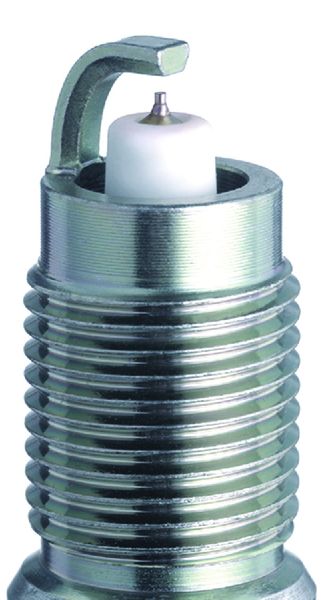
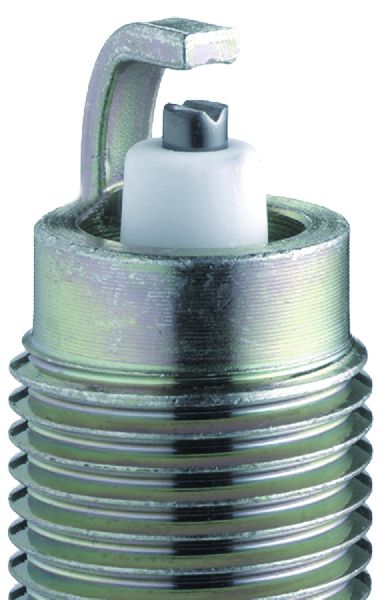
How to confirm: After confirming the coil is good, remove the spark plug from cylinder 8. Inspect it for wear on the electrode, carbon fouling, oil contamination, or cracks in the porcelain. Compare it to a new plug. The correct gap should be between 0.024 and 0.071 inches.
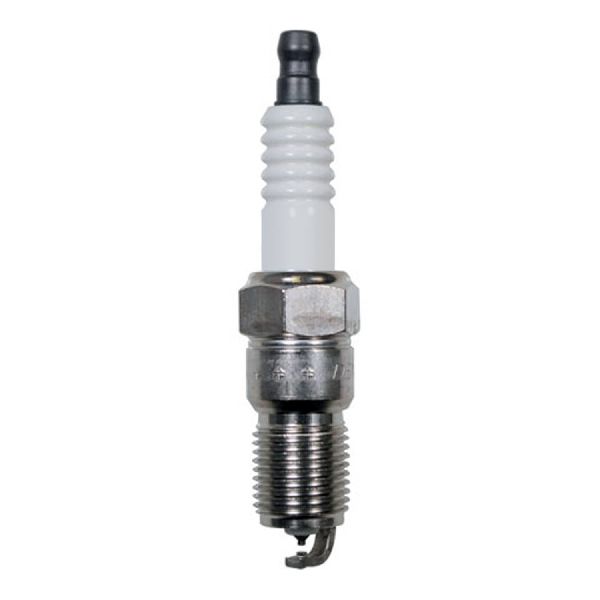
Typical fix: Replace the spark plug. If one is worn, it's best practice to replace all 8. Note: The 4.6L 3V engine uses a specific two-piece spark plug design (Motorcraft SP-515) that is notorious for breaking during removal. Follow Ford's TSB 08-7-6 procedure, which involves using a penetrating fluid and working the plug back and forth. Having a specialized extraction tool (like the Lisle 65600) on hand is highly recommended.
Est. part cost: $15-$25 per plug - Clogged or Faulty Fuel Injector ⚪ Low Probability → Shop Fuel Injector
How to confirm: Listen to the injector with a mechanic's stethoscope; it should have a consistent, audible clicking sound. You can also use a 'noid light' to confirm the electrical pulse is reaching the injector. Swapping the injector with another cylinder is also a valid diagnostic step, though more labor-intensive than swapping a coil.
Typical fix: Replace the faulty fuel injector.
Est. part cost: $50-$100
Rare But Worth Checking
- Leaking Valve Cover Gasket: → Shop Engine Valve Cover The valve cover gasket set includes seals for the spark plug tubes. If these seals fail, oil can fill the spark plug well, saturate the ignition coil boot, and cause a misfire. If you find oil instead of water in the spark plug well, this is the likely cause.
- Damaged Coil or Injector Wiring: The wiring harness leading to the coil or injector for cylinder 8 can become brittle and break over time due to heat and vibration, causing an open or shorted circuit. Check the connector and wiring for any visible damage.
- Low Engine Compression: If ignition and fuel systems are confirmed to be working, a mechanical issue like a burnt valve, worn piston rings, or a leaking head gasket could be the cause. A compression test on cylinder 8 is needed to diagnose this. Head gasket failures are a known, though less common, issue on the 2006-2010 4.6L V8.
- Internal Engine Component Wear: Manufacturer TSB Bulletin #TSB 25-2572 notes that a P0308 code may be due to the camshaft and/or valve tappet having excess wear within the engine assembly.
Diagnosis Steps
- Confirm code P0308 with an OBD-II scanner. Note if the Check Engine Light is flashing, indicating a severe misfire.
- Visually inspect the area around cylinder 8 (driver's side, rearmost cylinder) for signs of water intrusion from the wiper cowl above.
- If water is present, remove the 7mm bolt holding the coil, disconnect the connector, and remove the coil. Blow out the spark plug well with compressed air and dry the coil boot. Repair the cowl leak with RTV sealant. Clear codes and test drive.
- If no water is found, swap the cylinder 8 ignition coil with the coil from cylinder 7. Clear codes and drive. If the code changes to P0307, the ignition coil is bad and must be replaced.
- If the code remains P0308, the issue is likely the spark plug or fuel injector. Remove and inspect the spark plug for wear or fouling. Be aware of the high potential for breakage and follow TSB 08-7-6.
- If the plug and coil are good, investigate the fuel injector. Listen for a steady clicking sound. Use a noid light to test for an electrical signal.
- If all else fails, check the wiring harness for damage and perform a compression test to rule out mechanical engine problems.
Parts You'll Likely Need
- Ignition Coil
(OEM #DG-511)— This is the most common part to fail, either from age or from the common water leak issue on this vehicle.
Trusted brands: Motorcraft
OEM price range: $50-$75
Aftermarket price range: $25-$50 - Spark Plug
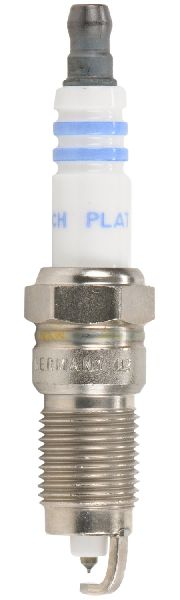
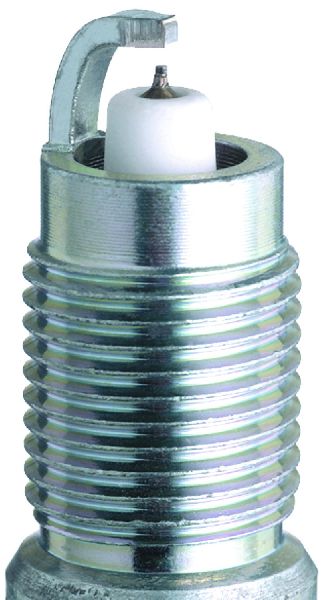
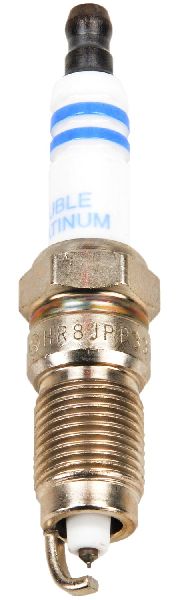
(OEM #SP-515 / SP-546)— Spark plugs are a regular maintenance item and can cause misfires when worn. It's often replaced with the coil. The original two-piece SP-515 is known to break. The updated Motorcraft SP-546 is a one-piece design that prevents this issue.
Trusted brands: Motorcraft, NGK, Champion
OEM price range: $15-$25
Aftermarket price range: $8-$15 - RTV Silicone Sealant — Needed to fix the common water leak from the wiper cowl that causes the P0308 code on these Explorers. Permatex Ultra Black is a commonly recommended brand for this repair.
Trusted brands: Permatex, 3M
OEM price range: $10-$20
Aftermarket price range: $5-$15 - Broken Spark Plug Extractor Tool
(OEM #Lisle 65600)— A highly recommended tool to have on hand before attempting to change the original two-piece spark plugs on the 4.6L 3V engine, due to their high likelihood of breaking off in the cylinder head.
Trusted brands: Lisle, Cal-Van
Aftermarket price range: $60-$100
Related Codes That Often Appear With This One
- P0300 — If the misfire is intermittent or affects other cylinders, a P0300 (Random/Multiple Cylinder Misfire) may be stored alongside P0308.
- P0358 — This code indicates a fault in the ignition coil primary or secondary circuit for cylinder 8. It points more directly to an electrical problem with the coil or its wiring, rather than a fuel or mechanical issue.
- P0349 — An intermittent signal from the camshaft position sensor on Bank 2 (driver's side) can cause incorrect spark and fuel timing, leading to misfires on cylinders on that bank, including cylinder 8.
- P0316 — This code indicates a misfire detected on startup. Manufacturer TSB Bulletin #TSB 26-2011 notes that P0316 and P0308 may occur together due to software issues in the powertrain control module (PCM).
Technical Service Bulletins (TSBs) & Recalls
- TSB 08-7-6: Details the specific procedure for removing the original two-piece spark plugs from 4.6L 3V engines to minimize the risk of breakage. It involves soaking the plugs with a solvent before removal.
- TSB 05-15-8: Addresses a ticking/knocking noise from the 4.6L/5.4L 3V valvetrain due to lash adjusters, a potential source of mechanical engine noise that could be mistaken for a misfire-related sound.
- TSB Bulletin #TSB 26-2011: Notes that vehicles may exhibit an illuminated MIL with DTCs P0300, P0316, and/or P0301 through P0308 due to software in the powertrain control module (PCM).
- TSB Bulletin #TSB 25-2572: Indicates that rough engine performance or a P0308 code may be caused by excess wear on the camshaft and/or valve tappet.
Platform-Specific Known Issues
- A water leak from the windshield wiper cowl seam is a very common cause of P0308, as the leak path drips directly onto the cylinder 8 ignition coil.
Mechanic-Grade Diagnostic Values
- OEM Ignition Coil (e.g., Motorcraft DG-511) Primary Resistance — expected: 0.55 Ohms. Failure: A reading of infinity (open circuit) or significantly higher/lower than spec.
- OEM Ignition Coil (e.g., Motorcraft DG-511) Secondary Resistance — expected: 5.5k Ohms (5,500 Ohms). Failure: A reading significantly outside the 6k-12k Ohm range often cited for COPs, or an open circuit.
- Fuel Injector Resistance — expected: 11-18 Ohms. Failure: A reading outside of this range, or an open/shorted circuit, indicates a faulty injector coil.
- Fuel Pressure (Key On, Engine Off) — expected: 35-45 PSI. Failure: Significantly lower pressure (e.g., 10 PSI) suggests a weak fuel pump, a leak, or a faulty fuel pressure driver module.
- Fuel Pressure (Engine Running at Idle) — expected: Around 55 PSI, but can vary based on the Fuel Pump Driver Module's command.. Failure: Pressure that drops off under load or is significantly below spec can cause lean misfires.
Hidden / Shadow Codes Worth Checking
- Mode $06, TID $53: This is not a standard DTC, but a Test ID within the OBD-II system that tracks the raw misfire count for each cylinder. A technician can view these counts to see if cylinder 8 is registering misfires, even if not enough have occurred to trigger the Check Engine Light. This is useful for diagnosing intermittent issues. (see via A capable OBD-II scan tool or software like FORScan that can access Mode $06 diagnostic data.)
Scan Tool Commands That Help
- Ford IDS / FORScan: Power Balance Test — This is the definitive test to confirm a misfire. The tool graphically displays the power contribution of each cylinder in real-time. A technician can command the PCM to disable the fuel injector for each cylinder one by one. If disabling cylinder 8 causes no change in engine RPM or smoothness, it confirms that cylinder was not contributing power in the first place.
- Ford IDS / FORScan: KOEO Injector Electrical Self Test (Buzz Test) — This test verifies the electrical integrity of the injector circuits from the PCM. The PCM commands all injectors to 'buzz.' An inconsistent or missing buzz from cylinder 8 would point towards a wiring or injector solenoid problem, rather than a clog.
Wiring & Ground Locations
- Cylinder 8 Ignition Coil PCM Pin — On some Ford models, the control for the cylinder 8 ignition coil is Pin 6 of connector C175B at the Powertrain Control Module (PCM).. For advanced diagnosis, a technician can test for continuity and voltage signals directly at the PCM pin to determine if the fault lies in the wiring harness or the PCM itself, after ruling out the coil.
- G104 (Example Ground) — Typically located on the left rear of the engine compartment on Ford trucks of this era.. A poor engine ground can cause a weak spark on all cylinders, but can sometimes manifest as an intermittent misfire on a single cylinder. Verifying the main engine-to-chassis ground is clean and tight is a crucial step if simple fixes fail.
Real Owner Repair Stories
- YouTube channel 'Last Frontier Garage' (1998 Ford Expedition 4.6L (Similar engine, different chassis but same diagnostic principle)) — P0308 misfire code, rough running, funky coolant issues.
❌ Tried (didn't work) Replaced spark plugs and performed other ignition system fixes.
✅ What actually fixed it The root cause was a failed head gasket leaking coolant directly into cylinder 8. A compression test with the engine cold showed coolant being forced out of the spark plug hole, confirming the diagnosis. The final fix was replacing the head gaskets. - NHTSA ODI #11318028 — An owner reported a continuous P0308 cylinder 8 misfire where the problem was actually that cylinder 4 had low or no compression, which was dragging down cylinder 8 as well.
OEM Part Supersession History
SP-515→SP-546— The SP-515 was the replacement for the even earlier, more problematic SP-507 plug. The SP-546 is a further revision, believed to be largely identical in performance but potentially with manufacturing or material tweaks. Both are the problematic two-piece design.
Heads up: Both SP-515 and SP-546 are specified for this engine and are interchangeable, but many owners now opt for the one-piece aftermarket equivalent (e.g., Champion 7989) to avoid the breakage issue entirely.
Diagnostic Flowchart
Other Known Issues on This Vehicle
Issues unrelated to this code that are worth knowing about as an owner of this generation:
- Cracked Rear Liftgate Applique Panel 🟠 Medium — Extremely common. Cracks often develop due to thermal stress and vibration. This is more than cosmetic, as it allows water to enter the liftgate and damage the latch mechanism.
- Transmission Faults (6R60 Transmission) 🔴 High — Common, especially in 2006 models. Symptoms include harsh shifting, lunging, hesitation, and illumination of the wrench light. Sometimes caused by RFI from cheap aftermarket ignition coils. (Ref: Recall 07V181000 for loose transmission oil cooler lines.)
- Radiator Leaks 🟠 Medium — Frequently reported, particularly on the 2006 model year. Leaks often occur at the seams where the plastic end tanks are crimped to the aluminum core.
- Timing Chain Rattle / Phaser Issues 🔴 High → Shop Engine Timing Chain — A known issue with the 3V modular engine family. Worn timing chain guides, tensioners, or VCT phasers can cause a rattling or ticking noise, especially on startup. If ignored, can lead to severe engine damage. (Ref: TSB 05-15-8 addresses related engine noises.)
- Faulty Blend Door Actuator 🟡 Low — A common problem where the HVAC system makes a clicking noise from the dashboard and fails to direct air to the correct vents.
Used vs. New Parts: Buying Guide for This Vehicle
When a used part is the smart pick: For this repair, buying used parts is generally not recommended. The primary failure parts (ignition coil, spark plug) are wear items and relatively inexpensive new. A used ignition coil carries the risk of having limited remaining life. The only exception might be a larger component like a wiring harness section if a specific connector is damaged and unavailable separately.
Donor-vehicle mileage cap: roughly under 80000 miles for the part to have meaningful remaining life.
What to inspect on the donor part:
- For an ignition coil, check for cracks in the plastic housing.
- Inspect the coil boot for tears, brittleness, or oil saturation.
- Ensure the electrical connector pins are clean and not corroded.
- Avoid any parts from an engine bay that shows signs of extreme heat, oil leaks, or flood damage.
OEM-only on this vehicle (don't cheap out):
- While not strictly 'OEM-only', using Motorcraft ignition coils (DG-511) and spark plugs (SP-546 or the prior SP-515) is highly recommended by forum veterans and Ford specialists for predictable performance and longevity. Many aftermarket coils have a reputation for premature failure.
Aftermarket brands forum-validated for this vehicle:
- For ignition coils, brands like Denso or NGK are generally considered reliable if Motorcraft is unavailable.
- For a one-piece spark plug alternative to avoid breakage, Champion (part #7989) is a frequently cited option.
Brands owners have reported issues with on this vehicle:
- Unnamed, no-brand ignition coil sets sold at very low prices on platforms like Amazon or eBay are frequently reported to fail within months.
Real Owner Stories
Aggregated from forums and TSBs cited above. Mileages and costs reflect what owners reported in those sources.
2006 Mercury Mountaineer 4.6L 3V V8
Symptoms: Frustrating chase of multiple misfire codes including P0302, P0307, and P0300.
What fixed it: Diagnostic process involved swapping coils and investigating fuel injectors.
Source hint: Ford Truck Enthusiasts Forums: Problems with 2006 4.6L Mercury Mountaineer
2006-2010 Ford Explorer 4.6L 3V V8
Symptoms: Misfire occurring specifically after heavy rain or a car wash; water pooled around the ignition coil boot in the rearmost driver's side cylinder.
What fixed it: Removed the ignition coil, used compressed air to blow water out of the spark plug well, dried the coil/boot, and sealed the wiper cowl seam with RTV silicone sealant.
Source hint: YouTube: 2006-2010 Ford Explorer P0308 Cylinder 8 Misfire: Check This Out First Before Going to Your Mechanic
Related OBD-II Codes
Frequently Asked Questions
Why does my 2006-2010 Ford Explorer misfire on cylinder 8 specifically after it rains?
Which TSB should I follow when changing the spark plugs on my 4.6L 3V engine?
Is there a specific tool I need if a spark plug breaks in my 4.6L 3V Explorer?
Can I just dry out the cylinder 8 spark plug well, or do I need to buy parts?
How can I tell if my P0308 code is a bad ignition coil or something else?
Does the Mercury Mountaineer suffer from this same P0308 water leak issue?
Helpful Videos
We Have This Part in Stock

The information in this article is provided for general reference and educational purposes only. Vehicle specifications, procedures, and part compatibility can vary by production date, trim level, and region. Always consult your vehicle's factory service manual and verify part numbers before purchasing or performing repairs. Safety-critical components such as airbags, seat belts, and braking systems should be installed by a qualified professional.
- Ford Explorer:
- 🧭 Diagnostic Flowchart
- 🎬 Helpful Videos
- 🛍️ Shop This Part
- What's Unique About the 2006-2010 Ford Explorer
- Symptoms You May Notice
- Most Likely Causes
- Rare But Worth Checking
- Diagnosis Steps
- Parts You'll Likely Need
- Related Codes That Often Appear With This One
- Technical Service Bulletins (TSBs) & Recalls
- Platform-Specific Known Issues
- Mechanic-Grade Diagnostic Values
- Hidden / Shadow Codes Worth Checking
- Scan Tool Commands That Help
- Wiring & Ground Locations
- Real Owner Repair Stories
- OEM Part Supersession History
- Other Known Issues on This Vehicle
- Used vs. New Parts: Buying Guide for This Vehicle
- Real Owner Stories
- 2006 Mercury Mountaineer 4.6L 3V V8
- 2006-2010 Ford Explorer 4.6L 3V V8
- Related OBD-II Codes
- Frequently Asked Questions
- 🎟️ Get 5% Off