

P0308 on 2011-2014 Ford F-150 6.2L V8: Cylinder 8 Misfire Causes and Fixes
P0308 means cylinder 8 is misfiring. On the 6.2L V8, this is most often caused by a bad ignition coil, a worn-out spark plug, or a faulty spark plug wire. A full ignition service for cylinder 8 (coil, two plugs, and wire) is the most common and effective fix. In rarer cases, it can be a sign of a broken valve spring.
- P0308 on a 6.2L F-150 is a misfire on cylinder 8, the rearmost cylinder on the driver's side.
- The most likely culprits are worn ignition components: the ignition coil, the two spark plugs, or the short spark plug wire.
- A simple diagnostic test is to swap the cylinder 8 ignition coil with another cylinder's coil to see if the misfire code follows it.
- Do not ignore a flashing check engine light, as it signals a severe misfire that can quickly damage the expensive catalytic converters.
- When replacing spark plugs, remember that this engine requires two per cylinder (16 total).
What's Unique About the 2011-2014 Ford F-150
The 6.2L Boss V8 in the F-150 has a unique ignition setup that is critical to understanding misfires. It's a Single Overhead Cam (SOHC) engine but features two spark plugs per cylinder. Each cylinder has one coil-on-plug (COP) for the top spark plug, and a short spark plug wire that connects that coil to a second, lower spark plug. This dual-plug design, particularly the lower plug and its wire, are frequent sources of misfires on this specific engine due to the high-heat environment.
Symptoms You May Notice
- Rough or shaking idle
- Engine hesitation or stumbling during acceleration
- Noticeable loss of power
- Flashing Check Engine Light
- Decreased fuel economy
- Engine may be harder to start
- Audible metallic knocking or ticking if caused by a broken valve spring.
- Backfiring or popping through the intake, audible with the air filter box open.
- Replacing only one of the two spark plugs in the cylinder.
- Replacing the oxygen sensor, which is rarely the root cause of a single-cylinder misfire code.
- Assuming a ticking noise is a simple exhaust leak when it could be a precursor to valve spring failure.
Most Likely Causes
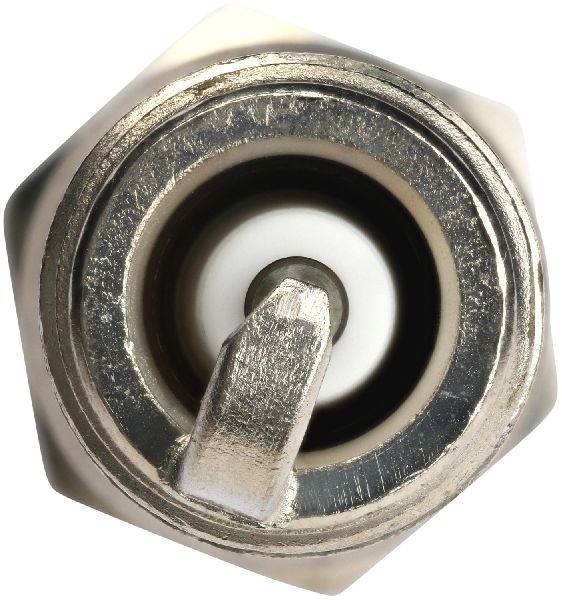
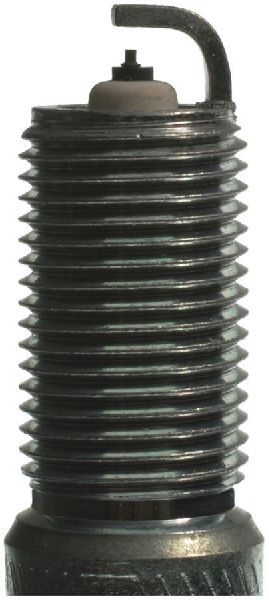
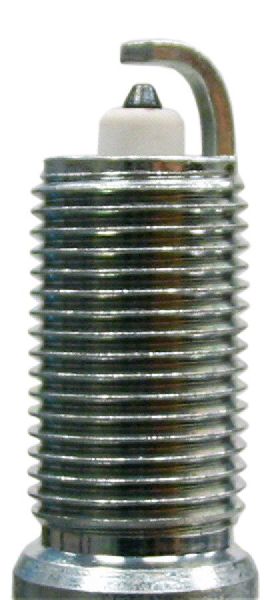
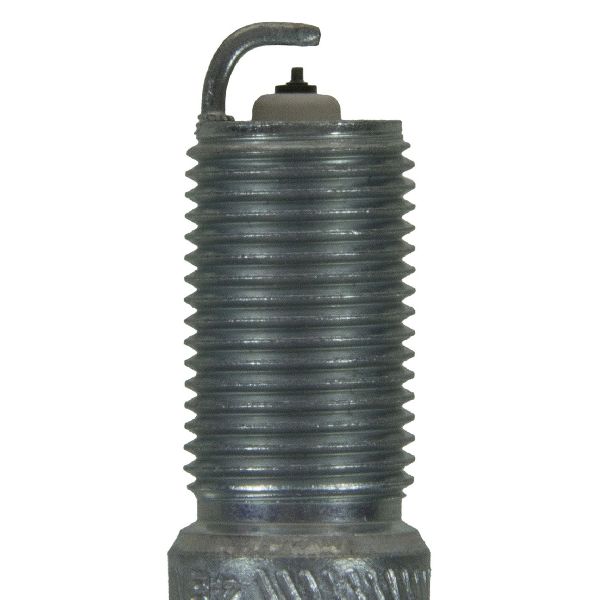
- Worn or Faulty Spark Plugs 🔴 High Probability → Shop Spark Plug The 6.2L V8 uses two spark plugs per cylinder (16 total), doubling the potential failure points. The lower plugs, in particular, can be susceptible to wear and fouling due to their location and heat exposure. Service intervals are often neglected because of the complexity of changing 16 plugs.
How to confirm: Inspect both spark plugs from cylinder 8. Look for worn electrodes, cracks in the porcelain, or heavy carbon/oil deposits. The gap may also be out of specification. The specified gap is 1.04–1.2 mm (0.041–0.047 in).
Typical fix: Replace both spark plugs for cylinder 8. It is best practice to replace all 16 spark plugs if they are near or over their service life (typically 60,000-100,000 miles).
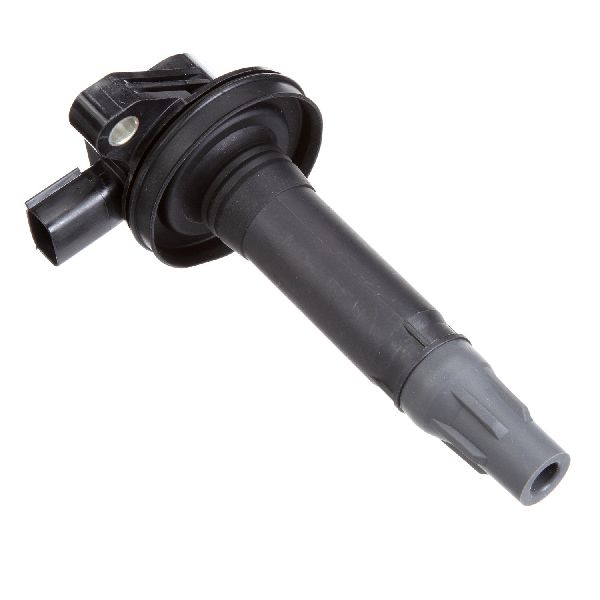
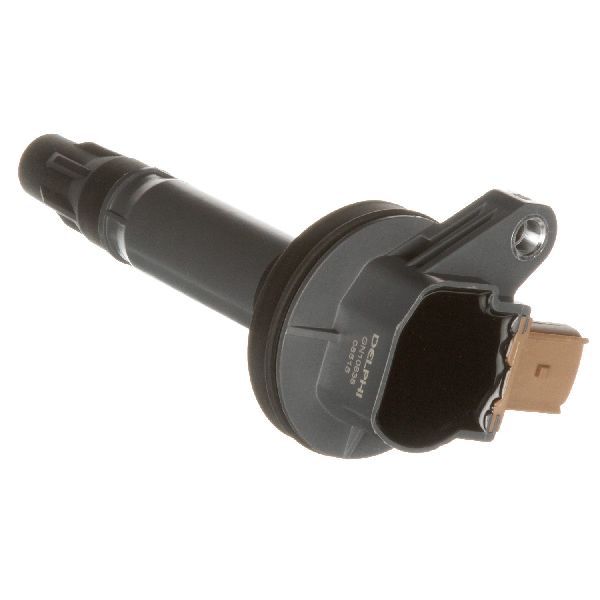
Est. part cost: $5-$15 per plug - Failed Ignition Coil 🔴 High Probability → Shop Ignition Coil Coil-on-plug systems are a common failure point on many modern vehicles due to constant exposure to high heat and vibration. Moisture can get past the boot seal, causing internal corrosion and failure of the coil windings.
How to confirm: Swap the ignition coil from cylinder 8 with an adjacent cylinder (e.g., cylinder 7). Clear the codes and drive the vehicle. If the code changes to P0307, the ignition coil is faulty. 🎬 Watch: How to swap and test your cylinder 8 ignition coil. This is the most common and effective diagnostic step.
Typical fix: Replace the faulty ignition coil. Many owners choose to replace the corresponding spark plugs and wire at the same time.
Est. part cost: $40-$90 - Bad Spark Plug Wire 🟡 Medium Probability → Shop Spark Plug The 6.2L V8 is one of the few modern F-150 engines to use spark plug wires. The short wire connecting the coil to the lower spark plug is exposed to significant heat and can degrade over time, causing the spark to arc to the engine block.
How to confirm: Visually inspect the wire for cylinder 8 for any signs of cracking, melting, or corrosion on the terminals. In a dark garage, you may be able to see the spark arcing from the wire or boot to the engine. The resistance of the wire can also be checked with a multimeter.
Typical fix: Replace the spark plug wire for cylinder 8. It is often sold as a complete set for the engine.
Est. part cost: $50-$100 for a full set - Clogged or Faulty Fuel Injector ⚪ Low Probability → Shop Fuel Injector
How to confirm: After ruling out the ignition system, a mechanic can perform a fuel injector balance test. A DIY method is to listen to the injector with a mechanic's stethoscope; it should have a consistent, rhythmic clicking sound. You can also swap the injector with another cylinder to see if the misfire follows, though this is more labor-intensive.
Typical fix: Replace the faulty fuel injector. This is more complex as it involves depressurizing the fuel rail.
Est. part cost: $50-$120
Rare But Worth Checking
- Broken Valve Spring: While relatively rare, there are many documented cases of broken valve springs on the 6.2L V8, especially on earlier models. A technician describes it as a 'super common problem' they see often. The fix involves removing the valve cover to visually confirm and replacing the spring, which can sometimes be done without removing the cylinder head by pressurizing the cylinder with air.
- Low Engine Compression: If all ignition and fuel components for cylinder 8 check out, a mechanical issue like a burnt valve, worn piston rings, or a damaged head gasket could be the cause. This must be confirmed with a compression test and potentially a cylinder leak-down test. A healthy 6.2L engine should show compression readings around 175-185 PSI per cylinder.
- Faulty Powertrain Control Module (PCM): → Shop Engine Control Module (ECM) The PCMs in 2011-2016 Super Duty trucks with the 6.2L are known to suffer from failed internal driver circuits for the ignition coils or fuel injectors due to heat and stress. This can manifest as a persistent misfire on one or more cylinders even after all other components have been replaced. This should be considered a last resort after exhausting all other diagnostic paths.
Diagnosis Steps
- Confirm the code P0308 is present using an OBD-II scanner.
- Note if the Check Engine Light is steady or flashing. A flashing light indicates a severe misfire that can damage the catalytic converter and warrants immediate attention.
- Locate cylinder 8. On the Ford 6.2L V8, the cylinders are numbered 1-4 on the passenger side (front to back) and 5-8 on the driver's side (front to back). Cylinder 8 is the rearmost cylinder on the driver's side, closest to the firewall.
- Swap the ignition coil from cylinder 8 with the coil from cylinder 7. Clear the codes and run the engine. If the code changes to P0307, the coil is bad and needs replacement. This is the most common first step.
- If the code remains P0308, inspect the ignition components for cylinder 8. Remove the coil, the spark plug wire, and both spark plugs. Look for cracks, corrosion, oil fouling, or excessive wear.
- If ignition components appear worn, replace the coil, wire, and both spark plugs for cylinder 8 as a set for a complete repair.
- If the ignition system is confirmed to be good, the next step is to check the fuel injector. Listen for its operation or have it professionally tested.
- If the misfire persists, especially if it was sudden and severe, the possibility of a broken valve spring should be investigated. This requires removing the driver's side valve cover for visual inspection.
- If all else fails, perform a compression test on cylinder 8 to rule out mechanical engine damage like a bad valve, piston, or head gasket.
Parts You'll Likely Need
- Ignition Coil
(OEM #DG526)— This is one of the most common failure points for a P0308 code. Heat and vibration cause the coil to fail electronically or develop internal corrosion. The part is listed for the left (driver's) side.
Trusted brands: Motorcraft, NGK, Denso
OEM price range: $60-$120
Aftermarket price range: $30-$60 - Spark Plug
(OEM #SP-526-X (or CYFS-12-FPX))— The 6.2L engine uses two plugs per cylinder, and they are a primary wear item. The original SP-526 part number has been superseded by SP-526-X. Remember to purchase two for the cylinder.
Trusted brands: Motorcraft, NGK, Autolite
OEM price range: $10-$15
Aftermarket price range: $5-$10 - Spark Plug Wire Set
(OEM #WR6135)— The short wire to the lower spark plug is unique to the 6.2L engine and is a known failure point due to extreme heat. It's often best to replace the full set if they are original. Note that this part number is sometimes listed as a single boot/wire.
Trusted brands: Motorcraft, Standard Motor Products (SMP)
OEM price range: $80-$120
Aftermarket price range: $40-$70
Related Codes That Often Appear With This One
- P0300 — If the misfire is intermittent or affects multiple cylinders, a P0300 (Random/Multiple Cylinder Misfire) may be stored alongside P0308. This might point towards a vacuum leak or fuel delivery issue affecting the whole engine.
- P0316 — This code indicates a misfire was detected within the first 1,000 engine revolutions on startup, which is common when a component like a coil or plug has completely failed. It frequently appears with other P030x codes.
Technical Service Bulletins (TSBs) & Recalls
- TSB 18-2188: While for 2017-2018 Super Duty trucks, this TSB addresses misfire codes (P0300-P0308) and crank/no-start conditions caused by fuel-fouled spark plugs in cold weather. It indicates that a PCM software update was developed to improve cold weather fueling strategies, showing that misfires on this engine can sometimes be software-related.
Platform-Specific Known Issues
- A broken valve spring has been noted by many owners as a cause for a sudden and severe misfire on the 6.2L engine. One owner on YouTube documented the failure and repair, noting the truck became very rough suddenly. Another on Reddit experienced a cracked piston as a result of a valve spring failure at 150k miles.
Mechanic-Grade Diagnostic Values
- Spark Plug Gap — expected: 1.04–1.2 mm (0.041–0.047 in). Failure: A gap outside of this range can lead to a weak or inconsistent spark.
- Engine Compression — expected: ~175-185 PSI per cylinder. Failure: A reading significantly lower than other cylinders (e.g., 0 PSI or a large percentage difference) indicates a mechanical engine problem like a broken valve spring, burnt valve, or bad piston rings.
- Mode $06 Misfire Data (TID $A9) — expected: Value of 0 or a very low number.. Failure: A high count for Test ID $A9 (Misfire Cylinder 8 Data) indicates the number of misfire events recorded for that cylinder, even if it hasn't been enough to set a CEL. This can identify an intermittent misfire before it becomes a hard fault.
Hidden / Shadow Codes Worth Checking
- Mode $06, Test IDs $A2-$A9: These are not codes but test results for the misfire monitor. Each ID corresponds to a cylinder (e.g., $A2 for Cyl 1, $A9 for Cyl 8 on this V8). It shows a raw count of misfire events during a drive cycle. This is extremely valuable for detecting intermittent misfires that aren't severe enough to set a P030x code yet. (see via A scan tool that can display OBD-II Mode $06 data, such as FORScan or higher-end professional scanners.)
Scan Tool Commands That Help
- Ford IDS, FORScan, or high-end bidirectional scanner: Power Balance Test — This is a critical first step for diagnosing a misfire. The test graphically displays the RPM contribution of each cylinder in real-time. A cylinder with a misfire will show a significant drop in performance compared to the others, instantly confirming which cylinder is at fault without swapping parts.
- Ford IDS, FORScan, or high-end bidirectional scanner: Cylinder Contribution Test — This is an older name for the Power Balance Test and functions similarly by disabling injectors one by one to measure the RPM drop. It's used to pinpoint a non-contributing or weakly contributing cylinder.
Wiring & Ground Locations
- G101 — On the right side (passenger) fender apron, near the battery.. This is a primary power ground for the engine control system. A poor connection here can cause a host of erratic electronic issues, including phantom misfires or weak spark, as it affects the PCM's power supply.
- G104 — On the left side (driver) fender apron, near the hood hinge and EEC test connector.. This serves as the case ground for the Powertrain Control Module (PCM). A compromised ground here can lead to improper PCM function and has been linked to PCM failure.
- Cylinder 8 Coil Connector — The electrical connector on the ignition coil for cylinder 8 (driver's side, rearmost cylinder).. The pins and wires at this connector can be tested for proper voltage from the PCM and for continuity to ground. A damaged connector or wire is a possible, though less common, cause of a single-cylinder misfire.
Real Owner Repair Stories
- YouTube channel 'Fuse Troop Outdoorsmen' (2013 Ford F-150 6.2L with 120,000 miles) — Sudden, severe engine misfire and shutter while driving. Check engine light came on with code P0308.
❌ Tried (didn't work) Replaced all 16 spark plugs., Replaced the ignition coil on cylinder 8.
✅ What actually fixed it The cause was a broken valve spring on cylinder 8. The owner removed the valve cover to find the broken spring. The repair involved pressurizing the cylinder with air to hold the valve in place while replacing the broken spring and the valve seal. - YouTube channel 'PowerStroke Tech Talk w/ARod' (2014 Ford F-250 Super Duty with 6.2L V8) — Severe knocking noise, backfiring through the intake, and multiple misfire codes including a dead hole on cylinder #2.
❌ Tried (didn't work) Initial scan showed multiple misfires, making it hard to pinpoint.
✅ What actually fixed it A manual compression test revealed cylinder #2 had zero compression. Removing the valve cover showed a broken exhaust valve spring, which came out in three pieces. After replacing the spring (Part No. BC3Z-6513-B) and confirming the valve wasn't bent via a leak-down test, the engine ran smoothly.
OEM Part Supersession History
SP-526→SP-526-X / CYFS-12-FPX— Improved design for durability and performance.
Heads up: SP-513 is also listed as a replacement in some catalogs but SP-526-X is the direct, correct part for this application.
Model Year Variations Within This Range
- 2011-2014: The 6.2L V8 in the F-150 was a premium engine option, often found in Lariat, Platinum, and Harley-Davidson trims, and was standard in the SVT Raptor. Unlike most other F-150s of this generation which moved to Electric Power Assisted Steering (EPAS), models with the 6.2L V8 retained a traditional hydraulic power steering system.
- 2011-2014 F-150 vs 2017+ Super Duty: While the same basic engine, the 6.2L in the 2017 and later Super Duty trucks received modified camshafts and tuning for increased torque (430 lb-ft vs 434 lb-ft in the F-150, but at a lower RPM). This means some internal parts may not be interchangeable.
Diagnostic Flowchart
Other Known Issues on This Vehicle
Issues unrelated to this code that are worth knowing about as an owner of this generation:
- Broken Valve Springs 🔴 High — The most well-known serious issue, though not extremely common. Seems more prevalent on earlier 2010-2012 models but can occur at any mileage, often after 100,000 miles. A failure can lead to catastrophic engine damage if the valve drops into the cylinder.
- Fuel Pump Fuse 27 Relocation 🟠 Medium — A very common preventative maintenance item. The original fuse in position 27 for the fuel pump is under-rated for the current, causing it to overheat and melt the fuse box, leading to a no-start condition. Ford provides a kit (EL3Z-14293-A) to relocate the fuse to a larger, more robust slot. (Ref: Not a formal recall, but a well-documented fix with an official Ford service kit.)
- Transmission Molded Lead Frame Failure 🔴 High — Common on F-150s of this generation with the 6R80 transmission. The internal molded lead frame houses speed sensors. Failure causes sudden, unexpected downshifts to 1st or 2nd gear, loss of speedometer, and warning lights. Can be very dangerous at highway speeds. (Ref: Ford issued Customer Satisfaction Program 19N01 to extend the warranty for this specific part.)
Used vs. New Parts: Buying Guide for This Vehicle
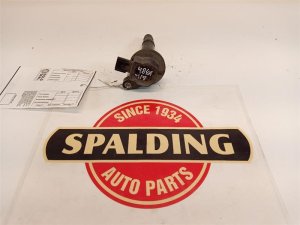
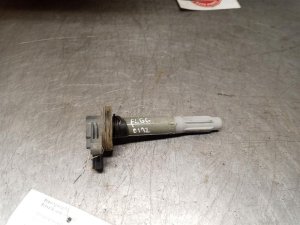
When a used part is the smart pick: A used ignition coil can be a good choice for diagnostics (swapping to confirm a failure) or as a budget replacement, provided it comes from a lower-mileage, known-good donor vehicle. Other major electronic modules like the PCM can be purchased used, but require professional programming to the vehicle's VIN.
Donor-vehicle mileage cap: roughly under 80000 miles for the part to have meaningful remaining life.
What to inspect on the donor part:
- For ignition coils, check the plastic housing for cracks or signs of heat damage.
- Ensure the electrical connector pins are clean and free of corrosion.
- Ask for the mileage and history of the donor vehicle if possible; avoid parts from vehicles with known flood or fire damage.
OEM-only on this vehicle (don't cheap out):
- Spark Plugs: These are inexpensive wear items; the cost savings of used plugs are negligible and the risk of introducing a faulty part is high.
- Valve Springs: These are critical internal engine components that fatigue over time. Never install a used valve spring; always use new OEM or high-quality aftermarket parts.
- Spark Plug Wires: These degrade with heat and time. Given their relatively low cost and importance, new wires are always the best practice.
Aftermarket brands forum-validated for this vehicle:
- Ignition Coils: Motorcraft (OEM), NGK, Denso.
- Spark Plugs: Motorcraft (OEM), NGK, Autolite.
Brands owners have reported issues with on this vehicle:
- Unbranded, no-name ignition coils and sensors from online marketplaces are frequently cited on forums as being unreliable, failing quickly, and causing persistent diagnostic issues.
Real Owner Stories
Aggregated from forums and TSBs cited above. Mileages and costs reflect what owners reported in those sources.
2013 Ford F-150 6.2L V8 — 120000 miles
Symptoms: Sudden, severe P0308 misfire and very rough running condition.
What fixed it: Replacement of a broken valve spring on cylinder 8.
Source hint: YouTube: 'Ford 6.2L Engine Misfire/Shutter Problem FIX!!!'
2011 Ford F-250 6.2L V8
Symptoms: Misfires on cylinders 4 and 7; replacing coils did not change the condition.
What fixed it: Dealer performed a 'CKP Neutral profile correction' to have the computer relearn the crankshaft position sensor.
Source hint: Ford F-150 Forum: '6.2L Misfire cylinders 4 & 7'
2013 Ford F-250 6.2L V8 — 150000 miles
Symptoms: Flashing check engine light; the failure eventually led to a bent valve and cracked piston.
What fixed it: Full engine replacement due to catastrophic damage from a broken valve spring.
Source hint: Reddit r/Trucks: 'Broken valve spring leads to a new motor'
Related OBD-II Codes
Frequently Asked Questions
Where is cylinder 8 located on my 6.2L V8 F-150?
Why does my 6.2L engine have 16 spark plugs, and do I need to change all of them for a P0308?
Does TSB 18-2188 apply to my 2011-2014 F-150?
My Check Engine Light is flashing while I accelerate. Is it safe to drive?
I replaced the coil and plugs but still have a P0308. Could it be a mechanical issue?
What is the correct spark plug gap for my 2011-2014 F-150 6.2L?
Helpful Videos
Used OEM Parts in Stock
New Aftermarket Parts Available

The information in this article is provided for general reference and educational purposes only. Vehicle specifications, procedures, and part compatibility can vary by production date, trim level, and region. Always consult your vehicle's factory service manual and verify part numbers before purchasing or performing repairs. Safety-critical components such as airbags, seat belts, and braking systems should be installed by a qualified professional.
- Ford F-150:
- 🧭 Diagnostic Flowchart
- 🎬 Helpful Videos
- 🛍️ Shop This Part
- What's Unique About the 2011-2014 Ford F-150
- Symptoms You May Notice
- Most Likely Causes
- Rare But Worth Checking
- Diagnosis Steps
- Parts You'll Likely Need
- Related Codes That Often Appear With This One
- Technical Service Bulletins (TSBs) & Recalls
- Platform-Specific Known Issues
- Mechanic-Grade Diagnostic Values
- Hidden / Shadow Codes Worth Checking
- Scan Tool Commands That Help
- Wiring & Ground Locations
- Real Owner Repair Stories
- OEM Part Supersession History
- Model Year Variations Within This Range
- Other Known Issues on This Vehicle
- Used vs. New Parts: Buying Guide for This Vehicle
- Real Owner Stories
- 2013 Ford F-150 6.2L V8 — 120000 miles
- 2011 Ford F-250 6.2L V8
- 2013 Ford F-250 6.2L V8 — 150000 miles
- Related OBD-II Codes
- Frequently Asked Questions
- 🎟️ Get 5% Off