

P0308 on 2015-2022 GMC Acadia: Why This Code Shouldn't Exist and What to Do
The P0308 code indicates a misfire on cylinder 8, but the GMC Acadia does not have an 8-cylinder engine. This code is almost certainly an error from the scan tool. Re-scan your vehicle, preferably with a different, professional-grade scanner, to get the correct code (likely P0300-P0306) before purchasing any parts.
- A P0308 code on a 2015-2022 GMC Acadia is an error, as the vehicle does not have 8 cylinders.
- Do not buy any parts. The first and most important step is to re-scan the vehicle to find the true trouble code, using a different or better quality scanner if necessary.
- The error is most likely caused by the OBD-II scanner itself or an incorrect vehicle profile selected in the tool. This is a known issue on GM platforms.
- Once the correct code is found (e.g., P0306), you can begin diagnosing the real misfire, which is often caused by a bad ignition coil or spark plug on that cylinder.
What's Unique About the 2015-2022 Gmc ACADIA
The central issue with a P0308 code on a 2015-2022 GMC Acadia is that it's physically impossible. These vehicles were never manufactured with a V8 engine, making a misfire on an eighth cylinder impossible. The appearance of this code is a red flag indicating a likely error with the OBD-II scanner being used, an incorrect vehicle profile selected within the scanner's software, or, in very rare cases, an ECU software glitch. Some generic scanners may misinterpret the data stream from the GM ECU, incorrectly assigning a misfire event to a non-existent cylinder. The provided TSB (PIP5628G) is a general GM document covering misfires on engines from P0300 to P0308 🎬 Watch: How to diagnose and fix a P0300 random misfire. and applies to a wide range of vehicles, including those with V8s, which is why this code is mentioned in official literature but does not apply to the Acadia platform.
Diagnostic Flowchart
Tap your situation to follow the diagnostic path that matches what you're seeing on this vehicle.
Generation note: This range covers the end of the first generation (2015-2016) and the entire second generation (2017-2022). Neither generation was ever offered with a V8 engine, so the P0308 code is impossible for both. The issue is not with the vehicle generation but with the diagnostic tools used.
Symptoms You May Notice
- Rough idle or shaking while stationary
- Hesitation or stumbling during acceleration
- Noticeable loss of engine power
- Flashing Check Engine Light
- Decreased fuel economy
- Smell of unburnt fuel from the exhaust
- Attempting to locate or purchase parts for 'cylinder 8', such as an ignition coil, spark plug, or fuel injector. No such parts exist for this vehicle.
Most Likely Causes
- Incorrect Scan Tool Reading 🔴 High Probability Generic or low-cost OBD-II scanners can sometimes misinterpret data from the vehicle's ECU, leading to false codes. This is a known issue across GM platforms where the scanner software incorrectly maps the misfire data.
How to confirm: Re-scan the vehicle with a different, preferably higher-quality or professional-grade, scan tool. Often, simply clearing the code and re-reading will produce the correct one.
Typical fix: Obtain the correct misfire code (e.g., P0301-P0306) and proceed with diagnosing the actual issue. For V6 models, P0306 is a commonly misread code.
Est. part cost: $0 - Wrong Vehicle Profile in Scanner 🟡 Medium Probability If the scanner was previously used on a V8-equipped GM vehicle (like a Sierra or Yukon) and not reset, it may interpret the Acadia's V6 or I4 data incorrectly.
How to confirm: Verify that the vehicle information selected in your scan tool's menu is correctly set to 'GMC Acadia' for the proper year and engine.
Typical fix: Correct the vehicle profile in the scan tool and re-scan for codes.
Est. part cost: $0 - User Misread The Code ⚪ Low Probability
How to confirm: Carefully re-read the code displayed on the scanner. P0306 (Cylinder 6 Misfire) is a possible and common code on V6 models and could be mistaken for P0308 at a glance.
Typical fix: Confirm the correct code and begin diagnosis for that specific cylinder.
Est. part cost: $0
Rare But Worth Checking
- Engine Control Unit (ECU) Software Fault: This is extremely unlikely, but if multiple professional-grade scan tools consistently report P0308 on an Acadia, the ECU may have a serious internal error that requires dealer-level diagnostics and potential reprogramming or replacement. This would be a last resort after all other diagnostic avenues are exhausted.
Diagnosis Steps
- STOP: Do not attempt any repairs based on the P0308 code. Acknowledge that it is not a valid code for a GMC Acadia.
- Verify Scan Tool Setup: Check the settings in your OBD-II scanner. Ensure the vehicle profile is correctly set for your specific year and model of GMC Acadia.
- Re-Scan for Codes: Clear the codes and perform a new scan. If possible, use a different, higher-quality scanner to see if the results are consistent.
- Identify the Correct Code: The goal is to find the true trouble code, which will likely be in the range of P0300 to P0306.
- Diagnose the *Actual* Misfire: Once you have a valid code (e.g., P0304 for Cylinder 4 Misfire), begin standard misfire diagnosis. This typically involves inspecting the ignition coil, spark plug, and fuel injector for that specific cylinder. A common diagnostic step is to swap the ignition coil from the misfiring cylinder with a known good one and see if the code follows the coil.
- Seek Professional Help: If multiple reliable scanners persistently show a P0308 code, this points towards a rare ECU fault that requires a visit to a dealership or a specialized repair shop for advanced diagnostics.
Parts You'll Likely Need
- No Parts Needed for P0308 — This code is a diagnostic error. No parts should be purchased until the correct misfire code is identified by re-scanning the vehicle. Once the true code is known (e.g., P0306), common parts would include an ignition coil or spark plug for that specific cylinder.
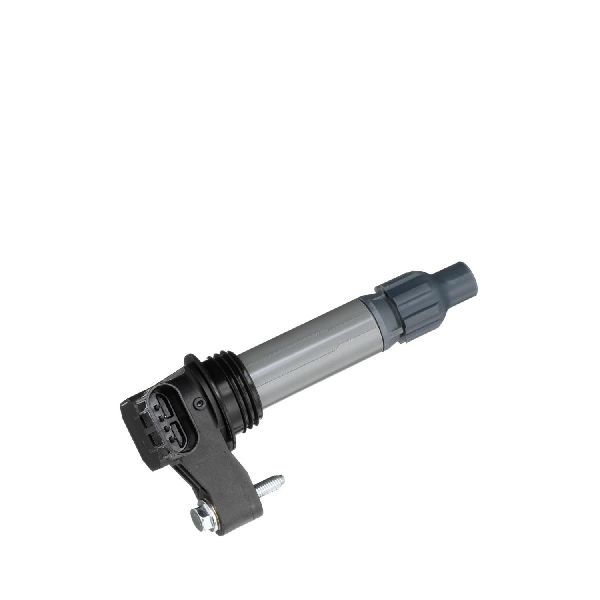
- Ignition Coil (For a REAL Misfire Code)
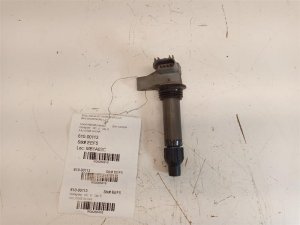
(OEM #ACDelco D521C (GM Genuine #25198623))— This is an example for a confirmed misfire on a 3.6L V6 Acadia (e.g., P0306). A failed ignition coil is one of the most common causes of a single-cylinder misfire on this engine.
Trusted brands: ACDelco (OEM), Delphi, NGK, Denso
OEM price range: $40 - $60
Aftermarket price range: $25 - $50
Related Codes That Often Appear With This One
- P0300 — This is a 'Random/Multiple Cylinder Misfire' code. The underlying issue causing the misfire might be what's confusing the scanner, or it could be the actual code you find upon re-scanning. Carbon buildup on intake valves is a known issue on the 3.6L V6 that can cause multiple misfires.
- P0301-P0306 — These are the valid cylinder-specific misfire codes for a GMC Acadia. The P0308 is likely a misinterpretation of one of these codes. For example, a real issue on cylinder 6 (P0306) is a common cause of misfires on the V6 engine, often due to a failed ignition coil or spark plug.
- P0016, P0017 — These are camshaft/crankshaft position correlation codes. On the GM 3.6L V6, these are classic symptoms of a stretched timing chain, which can also cause misfires. While less common on later models, it's a known issue for this engine family.
Technical Service Bulletins (TSBs) & Recalls
- PIP5628G: This Technical Service Bulletin is a general guide for GM technicians to gather specific data (using GDS2 scan tool and PICO scope) when diagnosing misfire codes from P0300 to P0308. It is not a fix, but a procedure to ensure accurate information is collected before contacting the Technical Assistance Center (TAC). Its inclusion of P0308 is to cover all possible misfire codes across the entire GM lineup, including V8 engines.
Platform-Specific Known Issues
- The primary vehicle-specific issue is the impossibility of this code appearing on this platform, which points to a diagnostic tool error.
- The 3.6L V6 engine used in many Acadias is known for potential timing chain stretch, particularly in earlier models, which can cause various misfire codes.
- Carbon buildup on the intake valves of the direct-injected 3.6L V6 can also lead to rough running and misfire codes, typically P0300 or multiple cylinder misfires.
Mechanic-Grade Diagnostic Values
- Low-Pressure Fuel System (at idle) — expected: 300-400 kPa (43-58 psi). Failure: Pressure significantly below this range indicates a weak in-tank fuel pump, which can starve the high-pressure pump and cause misfires.
- High-Pressure Fuel System (Key On, Engine Off, Pump Commanded On) — expected: 345-690 kPa (50-100 psi). Failure: Pressure outside this range can indicate an issue with the high-pressure fuel pump or its control module.
- Ignition Coil Primary Winding Resistance — expected: 0.4 - 2.0 ohms. Failure: A reading outside this range (e.g., open circuit or zero resistance) indicates a faulty coil.
- Ignition Coil Secondary Winding Resistance — expected: 6,000 - 10,000 ohms. Failure: A reading outside this range suggests the internal windings are compromised.
- Direct Fuel Injector Resistance (3.6L V6) — expected: Approximately 1.5 - 1.6 ohms. Failure: While minor variations exist, a significant deviation or an open/shorted reading on one injector compared to the others points to a failure.
Hidden / Shadow Codes Worth Checking
- Misfire Counters (Current/History): Professional scan tools like the GM GDS2 or Tech2 do not just show a code, but also display 'Current Misfire' and 'Misfire History' counters for each individual cylinder. A few random counts can be normal due to road imperfections, but a rapidly incrementing counter on a specific cylinder confirms the true location of the misfire, even before a P030X code is officially set. (see via GM GDS2, Tech2, or high-end bidirectional scan tools with GM-specific software.)
Scan Tool Commands That Help
- GDS2 / High-End Bidirectional Scanner: Cylinder Power Balance Test — This is the definitive professional test to find the source of a misfire. The command allows a technician to disable one fuel injector at a time while monitoring engine RPM. If disabling a cylinder causes a significant RPM drop, that cylinder was contributing power. If disabling a cylinder causes little or no change in RPM, that cylinder is the one misfiring.
- GDS2 / High-End Bidirectional Scanner: Fuel Pump On/Off — Used for testing the fuel system. A technician can command the in-tank fuel pump on without the engine running to safely check for correct low-side fuel pressure.
- GDS2 / Tech2: Crankshaft Position (CKP) / Camshaft Position (CMP) Relearn — After replacing a crankshaft sensor, camshaft sensor, or reprogramming the PCM, this procedure must be performed. It helps the PCM more accurately detect misfires by learning the variations of the crankshaft reluctor wheel. Failure to perform this can lead to false misfire counts.
Wiring & Ground Locations
- G112 — Rear of the engine, mounted to the rear of the cylinder head (Bank 1).. This is a primary ground for the ignition coils on Bank 1 (cylinders 1, 3, 5). A loose or corroded G112 can cause misfires on that entire bank.
- G114 — Left rear of the engine.. This ground is for the ignition coils on Bank 2 (cylinders 2, 4, 6). A technician on YouTube found a loose bolt at this location caused an intermittent P0300 and misfires on cylinders 2, 4, and 6.
- G103 — On the left side of the engine compartment, on the inner fender panel or cowl area, often near the brake booster.. This is a major ground point for the Body Control Module (BCM) and the Data Link Connector (DLC). A poor connection here can cause bizarre communication issues between the scan tool and the vehicle's modules, potentially leading to erroneous codes.
- ECM Ground — The Engine Control Module (ECM) itself must be properly grounded to the engine block.. An improper ECM ground can create voltage differentials that cause the module to behave erratically, leading to a wide range of phantom codes and running issues. The ECM, sensors, and engine block must all be on the same ground plane for stable operation.
Real Owner Repair Stories
- YouTube channel 'The ASE Mechanic' (2015 GMC Acadia) — P0300 (Random/Multiple Misfire) with misfires specifically on the even-numbered cylinders (2, 4, 6). The engine was running rough intermittently.
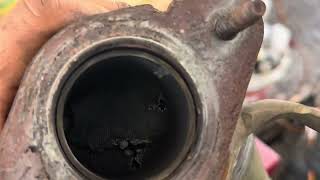
❌ Tried (didn't work) The owner had driven the car for over two weeks with the issue, leading to a melted catalytic converter.
✅ What actually fixed it The technician found a loose 8mm ground bolt at the left rear of the engine (likely G114), which provides the ground for the Bank 2 ignition coils. Tightening this bolt resolved the intermittent misfire condition. - Edmunds Car Forums (2011 GMC Acadia Denali with 82,000 miles) — Check engine light with misfire codes.
❌ Tried (didn't work) A chemical induction cleaning service was performed for around $400, which only temporarily solved the problem. The mechanic also recommended using top-tier gas and fuel additives (Sea Foam), but the light returned the next day.
✅ What actually fixed it The issue was diagnosed as severe, hard carbon deposits on the intake valves, a common problem for direct-injection engines. The final recommended fix was a more aggressive service, such as walnut shell blasting, which requires removing the intake manifold to physically clean the valves. - Reddit r/MechanicAdvice (2011 GMC Acadia 3.6L) — Misfires on all cylinders of one bank (2, 4, and 6), causing the engine to run on only three cylinders. The user confirmed 12v power to the coils and injectors but saw no trigger pulse from the ECU.
❌ Tried (didn't work) The user verified power and ground to the affected components.
✅ What actually fixed it The user suspected an issue with the camshaft position sensors or VVT actuators on that bank, as a fault there would cause the ECU to shut down the entire bank. While the user did not post a final resolution, their diagnosis correctly identified that a lack of signal from the ECU was the immediate cause, pointing away from individual coils or injectors.
OEM Part Supersession History
12621750, 12658183→12674754 (ACDelco D521C)— Standard part evolution for improved durability and performance. The newer coils feature pure copper windings and better corrosion-resistant coatings.
Heads up: While this part number is often associated with GM V8s, it is also listed as compatible with some V6 applications. Always verify fitment with the vehicle's VIN before purchasing.
Model Year Variations Within This Range
- 2015-2016 vs 2017-2022: The GMC Acadia was completely redesigned for the 2017 model year, marking the start of the second generation. While both generations used a 3.6L V6, the engines and fuel systems are different (e.g., first-gen used the LLT engine, later second-gen used the LGX). Parts like fuel pressure sensors are not interchangeable between generations. Always confirm parts are for the correct generation and engine.
Helpful Videos
Used OEM Parts in Stock
New Aftermarket Parts Available


The information in this article is provided for general reference and educational purposes only. Vehicle specifications, procedures, and part compatibility can vary by production date, trim level, and region. Always consult your vehicle's factory service manual and verify part numbers before purchasing or performing repairs. Safety-critical components such as airbags, seat belts, and braking systems should be installed by a qualified professional.
- Gmc ACADIA:
- 🧭 Diagnostic Flowchart
- 🎬 Helpful Videos
- 🛍️ Shop This Part
- What's Unique About the 2015-2022 Gmc ACADIA
- Symptoms You May Notice
- Most Likely Causes
- Rare But Worth Checking
- Diagnosis Steps
- Parts You'll Likely Need
- Related Codes That Often Appear With This One
- Technical Service Bulletins (TSBs) & Recalls
- Platform-Specific Known Issues
- Mechanic-Grade Diagnostic Values
- Hidden / Shadow Codes Worth Checking
- Scan Tool Commands That Help
- Wiring & Ground Locations
- Real Owner Repair Stories
- OEM Part Supersession History
- Model Year Variations Within This Range
- 🎟️ Get 5% Off