

P0308 on 2005-2009 GMC Envoy 5.3L: Cylinder 8 Misfire Causes and Fixes
P0308 on a GMC Envoy indicates a misfire in cylinder 8, which is only possible on the 5.3L V8 engine option found in Denali models. The most common causes are a bad ignition coil or spark plug. However, a failed Active Fuel Management (AFM) lifter is a frequent and more serious cause specific to this engine, often accompanied by a distinct ticking noise.
- P0308 on a 2005-2009 Envoy means a cylinder 8 misfire, which is only possible on the 5.3L V8 engine.
- Start your diagnosis with the cheapest and easiest fixes: the ignition coil and spark plug for cylinder 8.
- Listen for a distinct ticking noise from the engine. This is a strong sign of a failed AFM lifter, a common and serious issue on this engine.
- Do not ignore a flashing check engine light. Driving with a severe misfire can quickly lead to expensive catalytic converter damage.
- If the problem is a failed lifter or camshaft, the repair is complex and best handled by a professional mechanic.
What's Unique About the 2005-2009 Gmc ENVOY
This code is only possible on Envoy models equipped with the 5.3L V8 engine, such as the Denali trim. These engines feature Active Fuel Management (AFM), which deactivates cylinders 1, 4, 6, and 7 to improve fuel economy. Cylinder 8 is not an AFM cylinder itself, but the system's complexity and oil pressure requirements can lead to issues affecting the entire engine. The AFM lifters are a known major failure point, often becoming stuck or collapsing, which can lead to misfires on any cylinder, including P0308. This mechanical issue is more severe than typical ignition or fuel problems and is a well-documented weakness of this powertrain across multiple GM platforms.
Diagnostic Flowchart
Tap your situation to follow the diagnostic path that matches what you're seeing on this vehicle.
Symptoms You May Notice
- Flashing or solid Check Engine Light
- Rough or shaky idle
- Loss of engine power and poor acceleration
- Hesitation or jerking during driving
- Engine ticking or knocking noise, especially from the valve cover area
- Reduced fuel economy
- Smell of unburnt fuel from the exhaust
- Replacing only the spark plug when the ignition coil is the actual cause.
- Replacing fuel system components when the root cause is a mechanical failure like a collapsed AFM lifter.
- Replacing the accelerator pedal for other codes when a water leak into a harness connector is the true issue, as noted in TSB 07-06-04-019.
Most Likely Causes
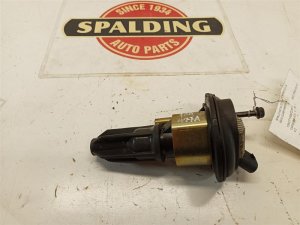
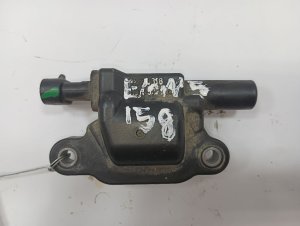
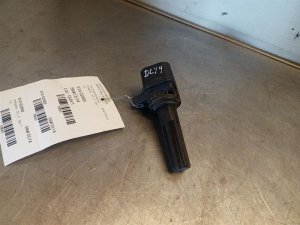
- Faulty Ignition Coil 🔴 High Probability → Shop Ignition Coil The coil-on-plug design is generally reliable, but age and heat cycles can cause the coils to fail. Cylinder 8 is located at the rear of the engine bay, where heat can be more concentrated.
How to confirm: Swap the ignition coil from cylinder 8 with another cylinder (e.g., cylinder 6 on the same passenger-side bank). Clear the codes and drive the vehicle. If the code changes to P0306, the ignition coil is bad.
Typical fix: Replace the faulty ignition coil. It is often recommended to replace the spark plug at the same time. The OEM part is ACDelco 12699382.
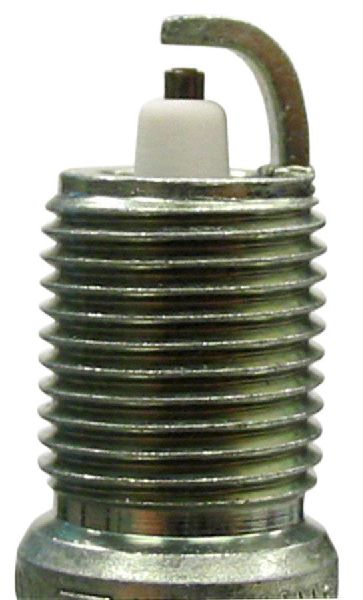
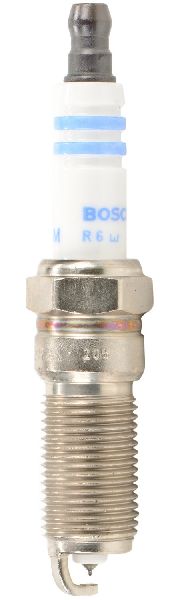
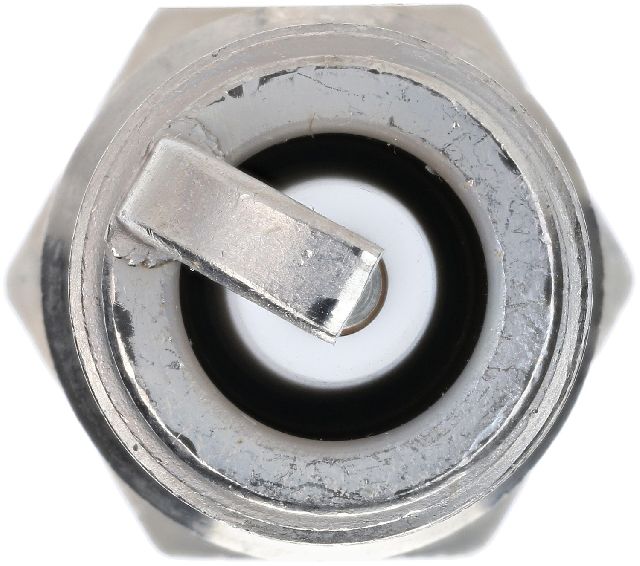
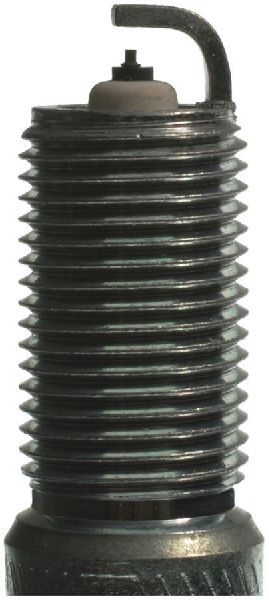
Est. part cost: $40-$80 - Worn or Fouled Spark Plug 🔴 High Probability → Shop Spark Plug Spark plugs are a standard wear item. The #8 plug can be difficult to access due to tight clearance with the firewall and heat shields, sometimes leading to it being skipped during maintenance.
How to confirm: After confirming the coil is good, remove the spark plug from cylinder 8. Inspect it for wear, carbon buildup, oil fouling, or damage. A heavily fouled or worn plug is a direct cause of misfire.
Typical fix: Replace the spark plug. It's best practice to replace all 8 spark plugs at the same time for even performance. Special tools like a stubby extension and spark plug pliers can make the #8 plug easier to replace.
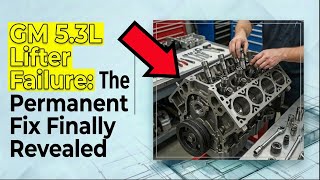
Est. part cost: $5-$15 per plug - Failed Active Fuel Management (AFM) Lifter 🟡 Medium Probability → Shop Engine Valve Lifter The 5.3L V8 engine's AFM system lifters are a well-documented failure point. They can become mechanically stuck or collapsed due to issues with oil pressure, aeration, or internal pin damage, preventing the valve from opening correctly. While cylinder 8 is not an AFM cylinder, problems within the AFM system (like a failing oil pump or VLOM) can affect oil pressure engine-wide, leading to lifter failure on any cylinder.
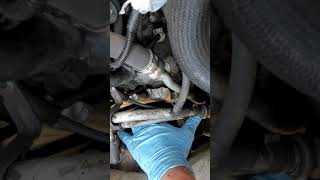
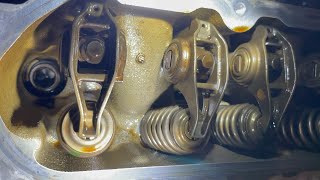
How to confirm: If ignition and fuel system checks pass, a distinct ticking noise from the top of the engine is a strong indicator. A mechanic can confirm by removing the valve cover and checking for a loose rocker arm on cylinder 8, indicating a collapsed lifter. 🎬 Watch: How to diagnose and replace a collapsed AFM lifter. A compression test may also show low compression on the affected cylinder.
Typical fix: This is a complex and labor-intensive repair. It involves removing the cylinder head to replace the faulty lifters. Many owners opt to replace all AFM lifters at once or install an AFM-delete kit to prevent future failures. This repair is best left to a professional.
Est. part cost: $200-$600 for lifters and gaskets - Clogged or Defective Fuel Injector ⚪ Low Probability → Shop Fuel Injector
How to confirm: Use a 'noid light' to verify the injector is receiving an electrical pulse from the PCM. To confirm a clog, the injector must be removed and tested or swapped with another cylinder's injector, which is more involved than swapping a coil.
Typical fix: Replace the faulty fuel injector.
Est. part cost: $50-$120
Rare But Worth Checking
- Worn Camshaft Lobe: → Shop Engine Camshaft As mentioned in TSB #PIP4138R and #19-NA-219, a worn camshaft lobe can cause a misfire. This is often a consequence of a failed lifter roller and is a major mechanical repair requiring camshaft replacement.
- Intake Manifold Gasket Leak: → Shop Engine Intake Manifold A vacuum leak from a failed intake manifold gasket near the cylinder 8 runner can lean out the air/fuel mixture, causing a misfire. This may be accompanied by a hissing sound or a lean code (P0171/P0174).
- Low Engine Compression: Caused by issues like worn piston rings, a leaking head gasket, or burnt valves, this prevents proper combustion. A compression test will diagnose this.
- Damaged Spark Plug Wire/Boot: → Shop Spark Plug The short wire boot between the coil and plug can fail. Inspect for cracks, burns, or carbon tracking inside the boot, which allows the spark to ground out before reaching the plug.
Diagnosis Steps
- Read the trouble codes with an OBD-II scanner and note any other codes present, such as P0300.
- Note the cylinder layout: On the 5.3L V8, cylinders 1-3-5-7 are on the driver's side (front to back), and 2-4-6-8 are on the passenger's side (front to back). Cylinder 8 is the rearmost on the passenger side.
- Listen for a distinct ticking or knocking sound from the passenger side valve cover area, which could point to a lifter issue.
- Swap the ignition coil from cylinder 8 with cylinder 6 (the next one forward on the same bank). Clear the codes and drive. If the misfire code changes to P0306, 🎬 See this step-by-step P0308 diagnostic walkthrough. the coil is faulty.
- If the misfire remains on cylinder 8, inspect and swap the spark plug. Check for wear, damage, or fouling. Accessing the #8 plug can be difficult and may require specific tools.
- Inspect the spark plug boot for any carbon tracks, cracks, or damage that could cause the spark to arc to the cylinder head.
- If ignition components are good, check the fuel injector wiring with a noid light. Consider swapping the injector if possible, though this is more labor-intensive.
- If the above steps do not resolve the issue, perform an engine compression test on cylinder 8 to check for mechanical issues like bad rings or valves.
- If compression is low or a loud tick is present, the issue is likely a failed lifter and/or worn camshaft lobe. This diagnosis is best confirmed by a professional mechanic by removing the valve cover to inspect for a loose rocker arm.
Parts You'll Likely Need
- Ignition Coil
(OEM #12699382)— Ignition coils are a common failure item that directly causes a single-cylinder misfire.
Trusted brands: ACDelco, Delphi, Michigan Motorsports
OEM price range: $50-$80
Aftermarket price range: $30-$60 - Iridium Spark Plug
(OEM #41-162)— Spark plugs are a routine maintenance item and a primary cause of misfires as they wear out.
Trusted brands: ACDelco, NGK
OEM price range: $10-$20
Aftermarket price range: $8-$15 - Active Fuel Management (AFM) Lifter Set
(OEM #12645725 (Set of 4 AFM lifters), 12698946 (Single AFM lifter))— A collapsed or stuck AFM lifter is a very common mechanical failure on this engine that results in a misfire. It is recommended to replace them in sets.
Trusted brands: ACDelco, General Motors, Sealed Power
OEM price range: $250-$400
Aftermarket price range: $150-$300 - Fuel Injector — A clogged or electrically failed fuel injector will prevent the correct amount of fuel from entering the cylinder, causing a misfire.
Trusted brands: ACDelco, Bosch
OEM price range: $80-$150
Aftermarket price range: $40-$90
Related Codes That Often Appear With This One
- P0300 — If the misfire is intermittent or other cylinders are also misfiring, a general 'Random Misfire' code P0300 may be stored alongside P0308.
Technical Service Bulletins (TSBs) & Recalls
- PIP4138R: Notes that DTCs P0300-P0308 can be caused by a worn camshaft lobe and/or lifter, requiring mechanical inspection if other diagnostics fail.
- PIP5628G: Mentions codes P0300-P0308 in the context of diagnostic information gathering for technical assistance, indicating it's a known issue.
- PIP4568S: Specifically addresses engine misfires on AFM cylinders (1, 4, 6, or 7) due to a lifter that is unlocked or mechanically collapsed/stuck, which is the root cause of many P030x codes on this engine.
- 19-NA-219: Discusses various engine noises and misfires (P0300-P0308) and points to potential causes like worn cam lobes, sticking valves, broken valve springs, or a collapsed AFM lifter.
Platform-Specific Known Issues
- The 5.3L V8 (LH6) engine is widely known for issues with its Active Fuel Management (AFM) system. The specialized lifters for cylinders 1, 4, 6, and 7 are prone to failure. These failures are often linked to the Valve Lifter Oil Manifold (VLOM) or low oil pressure, which causes the lifter's internal locking pins to wear or get stuck. This has been the subject of numerous technical service bulletins and class-act
Mechanic-Grade Diagnostic Values
- Fuel Pressure (Key ON, Engine OFF) — expected: 55-62 psi (385-425 kPa). Failure: Pressure below 55 psi may indicate a weak fuel pump or faulty regulator, leading to lean misfires.
- Ignition Coil Primary Resistance — expected: 0.4 - 0.6 ohms. Failure: A reading outside this range (open circuit or high resistance) indicates a faulty coil winding.
- Ignition Coil Secondary Resistance — expected: 5,000 - 7,200 ohms (5.0k - 7.2k Ω). Failure: A reading significantly outside this range points to a breakdown in the secondary coil windings.
- Fuel Injector Resistance — expected: 12.0 - 12.5 ohms. Failure: Low resistance suggests a shorted injector, while very high or infinite resistance indicates an open circuit within the injector coil.
- Running Compression Test — expected: 60 - 90 PSI at idle (should be consistent with a known good cylinder). Failure: Significantly lower pressure compared to a healthy cylinder points towards a mechanical issue like a collapsed lifter or poor valve sealing that may not be apparent in a static (cranking) compression test.
Hidden / Shadow Codes Worth Checking
- Mode $06, TID $A2-$A9: These are not DTCs but Test IDs within Mode $06 that store raw misfire counts for each cylinder (A2 for Cyl 1, A3 for Cyl 2, etc., up to A9 for Cyl 8). A technician can view these counts to see if misfires are occurring even if they aren't frequent enough to set a P0308 code. (see via Requires an advanced OBD-II scanner that can access and display Mode $06 test data.)
Scan Tool Commands That Help
- Tech2 / GDS2 (or equivalent professional scanner): Cylinder Power Balance Test — This test systematically deactivates one cylinder at a time and measures the corresponding drop in engine RPM. If disabling cylinder 8 causes little or no RPM drop compared to other cylinders, it confirms that cylinder 8 is not contributing power, pinpointing the misfire.
- Tech2 / GDS2 (or equivalent professional scanner): Injector Cut-Out Test — Similar to a power balance test, this allows the technician to manually disable the fuel injector for cylinder 8. It helps differentiate between a fuel and spark issue. If the engine sound/RPM doesn't change when the injector is cut, it confirms a problem with that cylinder.
- Tech2 / GDS2 (or equivalent professional scanner): AFM System Enable/Disable — While cylinder 8 is not an AFM cylinder, commanding the AFM system on and off while monitoring oil pressure and engine smoothness can help diagnose problems with the overall system (like the VLOM or oil pump) that could be causing oiling issues leading to a non-AFM lifter failure.
Wiring & Ground Locations
- G103 — On the front of the passenger side (right side) cylinder head.. This is a primary engine ground. A loose or corroded G103 can cause erratic behavior in sensors and actuators, including the ignition coils and injectors on that bank, potentially leading to misfires. TSBs for similar platforms mention checking this ground for looseness.
- G104 — On the rear of the driver's side (left side) cylinder head, where the main ground strap from the firewall connects.. This is the main engine-to-chassis ground. Poor connection here can cause a host of electrical issues, including weak spark energy across all cylinders as the coils struggle to find a good ground path.
- Cylinder 8 Ignition Coil Connector — The electrical connector on the ignition coil for the rearmost cylinder on the passenger side.. The wiring and plastic connector can become brittle from heat due to its location near the firewall. Inspect for cracked plastic, spread terminals, or corrosion which can cause an intermittent connection and misfire.
Real Owner Repair Stories
- Camaro5 Forum user 'Fredryberg' (2010 Camaro SS (LS3 Engine)) — Service Stabilitrac light, flashing check engine light, P0308 code. Smelled raw fuel from exhaust.
❌ Tried (didn't work) Checked for loose spark plug wires., Swapped plug wires between cylinder 8 and 6., Replaced the spark plug in cylinder 8 (old plug was fouled with gas)., Swapped ignition coils between cylinders., Swapped fuel injectors between cylinders.
✅ What actually fixed it After swapping all common ignition and fuel components with no change, the strong consensus and next diagnostic step was a broken valve spring on cylinder 8. - Reddit user '509VolleyballDad' (2011 Chevy Suburban (5.3L Engine)) — P0308 code.
❌ Tried (didn't work) Initial diagnosis pointed towards typical ignition parts.
✅ What actually fixed it The root cause was found to be the heater core quick-connects located on the firewall, which were dripping coolant directly onto the cylinder 8 spark plug wire and coil area, causing the spark to short out. Fixing the coolant leak and cleaning the components resolved the P0308 code.
Model Year Variations Within This Range
- 2005-2009: The Gen IV 5.3L engine family (including the LH6) had a critical mid-cycle change. Early models (approx. 2005-2006) used a 24x crankshaft reluctor wheel and an E40 ECM. Later models (approx. 2007-2009) switched to a 58x reluctor wheel and an E38 ECM. These systems are not interchangeable. This is a critical distinction if replacing the engine or ECM.
Helpful Videos
Used OEM Parts in Stock
New Aftermarket Parts Available


The information in this article is provided for general reference and educational purposes only. Vehicle specifications, procedures, and part compatibility can vary by production date, trim level, and region. Always consult your vehicle's factory service manual and verify part numbers before purchasing or performing repairs. Safety-critical components such as airbags, seat belts, and braking systems should be installed by a qualified professional.
- Gmc ENVOY:
- 🧭 Diagnostic Flowchart
- 🎬 Helpful Videos
- 🛍️ Shop This Part
- What's Unique About the 2005-2009 Gmc ENVOY
- Symptoms You May Notice
- Most Likely Causes
- Rare But Worth Checking
- Diagnosis Steps
- Parts You'll Likely Need
- Related Codes That Often Appear With This One
- Technical Service Bulletins (TSBs) & Recalls
- Platform-Specific Known Issues
- Mechanic-Grade Diagnostic Values
- Hidden / Shadow Codes Worth Checking
- Scan Tool Commands That Help
- Wiring & Ground Locations
- Real Owner Repair Stories
- Model Year Variations Within This Range
- 🎟️ Get 5% Off