

P0308 on 2005 GMC Jimmy Classic: Why This Code Is Impossible and How to Fix the Real Misfire
A P0308 code is impossible on a stock 2005 GMC Jimmy Classic, as its 4.3L V6 engine only has six cylinders. This indicates a scan tool error or vehicle misidentification. The actual problem is likely a misfire on cylinders 1-6 (often random, code P0300), commonly caused by a worn distributor cap and rotor, a known issue on this engine.
- The P0308 code is invalid for a 2005 GMC Jimmy Classic; it indicates a problem with your diagnostic tool, not your engine.
- The actual issue is a misfire on one of the six cylinders (P0301-P0306).
- The most likely cause of a misfire on this truck is a worn distributor cap and rotor, which is a common and inexpensive part to replace.
- Other common causes include bad spark plugs/wires or a failing 'spider' fuel injector assembly.
- Always start diagnosis by inspecting the distributor cap and rotor for corrosion or wear.
What's Unique About the 2005-2005 Gmc JIMMY CLASSIC
The key issue for this platform is the discrepancy itself. The 2005 Jimmy Classic uses the venerable 4.3L Vortec V6 (RPO code LU3), an engine known for specific misfire causes, none of which involve a non-existent eighth cylinder. Misfires on this engine (P0301-P0306 and especially P0300) are common and frequently trace back to the distributor system, which is prone to moisture intrusion and wear, or the spider fuel injection system. Therefore, a P0308 code should immediately shift the diagnostic focus from 'what's wrong with cylinder 8?' to 'why is my diagnostic tool giving me impossible information?' and then to diagnosing the common causes of a P0300 random misfire.
Diagnostic Flowchart
Tap your situation to follow the diagnostic path that matches what you're seeing on this vehicle.
Symptoms You May Notice
- Rough or shaking idle.
- Hesitation or stumbling during acceleration.
- Flashing or steady Check Engine Light, often with P0300.
- Noticeable loss of engine power.
- Difficulty starting the engine, especially when cold or in damp weather.
- Stalling.
- Engine may backfire or pop due to moisture in the distributor.
- Poor fuel economy.
- Searching for a problem with cylinder 8. The primary misdiagnosis is taking the P0308 code at face value, which is impossible for this vehicle's V6 engine.
- Replacing only one component of the ignition system. Due to the common failure of the distributor cap and rotor, it's often best to replace the cap, rotor, plugs, and wires as a complete tune-up to resolve a P0300 misfire.
Most Likely Causes
- Worn Distributor Cap and Rotor 🔴 High Probability The distributor on the 4.3L V6 is located at the rear of the engine where poor airflow and moisture can cause the terminals inside the cap to corrode, leading to weak or misdirected spark. The distributor vents can become clogged, trapping moisture and ozone, which accelerates corrosion. This is a very common failure item and a primary cause of P0300 random misfires.
How to confirm: Remove the distributor cap (held by two T-20 Torx screws) and inspect the inside terminals for white or greenish corrosion, carbon tracking (black lines), or physical wear. Moisture inside the cap is a tell-tale sign.
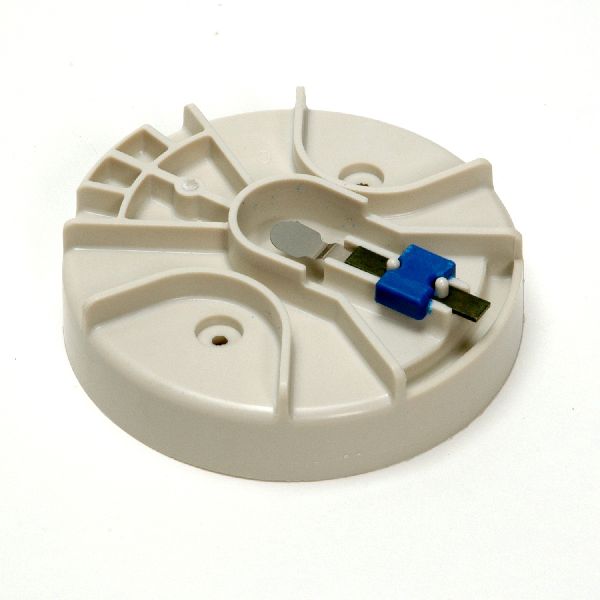
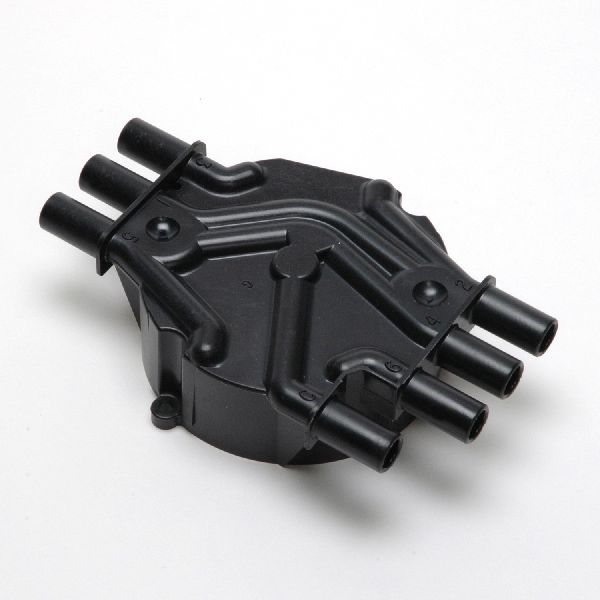
Typical fix: Replace the distributor cap and rotor as a set. 🎬 Watch: Step-by-step guide to replacing the distributor cap and rotor. Using genuine ACDelco parts is highly recommended for fit and longevity. Applying a small amount of dielectric grease to the terminals can help prevent future corrosion.
Est. part cost: $25-$70 - Failed Spark Plugs or Wires 🟡 Medium Probability → Shop Spark Plug These are standard maintenance items that wear out over time. Wires can be damaged by heat from the engine, causing the spark to arc to ground before reaching the plug. Owners often replace these along with the cap and rotor to solve a misfire.
How to confirm: Inspect spark plugs for wear, fouling, or damage. Test spark plug wires with a multimeter to check for proper resistance (typically under 1,000 ohms per foot); a wire with excessively high or infinite resistance is bad.
Typical fix: Replace all spark plugs and spark plug wires as a set to ensure consistent performance. ACDelco Iridium or Platinum plugs are common OEM choices.
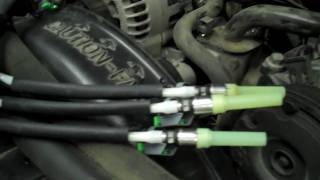
Est. part cost: $50-$120 - Faulty Spider Fuel Injection Assembly 🟡 Medium Probability The 4.3L V6 uses a Central Sequential Fuel Injection (CSFI) system, often called a 'spider injector'. The individual poppet valves or injectors at the end of the lines are known to clog or leak fuel into the intake manifold, causing misfires, hard starting when warm, and rich running conditions.
How to confirm: A fuel pressure leak-down test is the primary diagnostic method. After priming the system, the pressure should not drop more than 5 PSI in 10 minutes. A rapid drop indicates a leak, likely from the spider assembly or fuel pressure regulator. Visually inspecting inside the throttle body for signs of fuel washing can also indicate a leak.
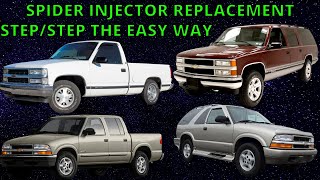
Typical fix: The original spider assembly should be replaced with an upgraded Multiport Fuel Injection (MFI) unit, which is significantly more reliable. This involves removing the upper intake manifold. 🎬 See how to replace the spider injector assembly yourself. This is considered a permanent fix to the original design's flaws.
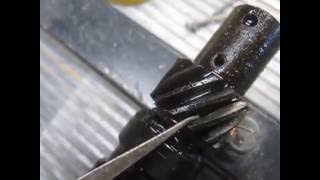
Est. part cost: $250-$400 - Worn Distributor Assembly ⚪ Low Probability → Shop Distributor Over high mileage, the gear at the bottom of the distributor shaft that meshes with the camshaft can wear down, becoming sharp like a razor blade. This creates excessive play ('slop') in the distributor shaft, causing erratic ignition timing and random misfires (often a P0300 code). Worn internal bushings can also cause excessive shaft play.
How to confirm: Remove the distributor cap and attempt to wiggle the rotor. Significant side-to-side or up-and-down play indicates wear in the distributor shaft bushings or gear. A more precise method is checking the 'Cam Retard' PID with a capable scan tool; it should be 0° +/- 2° at 1000 RPM. A value outside this range, especially one that jumps around, points to a worn gear or a distributor that needs to be re-timed.
Typical fix: Replace the entire distributor assembly. After replacement, the camshaft position sensor offset (cam retard) must be set correctly to 0° +/- 2° using a scan tool to ensure proper synchronization between the cam and crank sensors.
Est. part cost: $100-$250
Rare But Worth Checking
- Leaking Intake Manifold Gaskets: → Shop Engine Intake Manifold The lower intake manifold gaskets on the 4.3L V6 can fail, causing vacuum leaks (lean condition) or allowing coolant to enter the combustion chamber (white smoke, sweet smell), which can lead to misfires. This is a known issue on the Vortec engine family.
- Low Fuel Pressure: A weak fuel pump or clogged fuel filter can starve the engine for fuel, causing lean misfires across multiple cylinders. Fuel pressure should be 60-66 psi (key on, engine off) and hold steady.
Diagnosis Steps
- Verify Vehicle and Code: First, confirm you are working on a 2005 GMC Jimmy Classic with its original 4.3L V6. Re-scan the vehicle with a different, high-quality OBD-II scanner to see if the P0308 code reappears or if a different code (like P0300, P0301, etc.) is present.
- Assume a General Misfire (P0300): Since P0308 is invalid, proceed by diagnosing a P0300 random misfire condition, which is the most common underlying issue.
- Inspect Distributor Cap and Rotor: Remove the distributor cap (two T-20 Torx screws). Check for moisture, corrosion (white/green powder), carbon tracks, and wear on the internal terminals and the rotor. This is the most common point of failure and the easiest to check.
- Inspect Ignition Wires and Plugs: Check for visible damage to spark plug wires. Pull a spark plug from an easily accessible cylinder to check its condition. A worn, fouled, or damaged plug can identify the need for a tune-up.
- Check Fuel Pressure and Leak-down: Connect a fuel pressure gauge to the Schrader valve on the fuel rail. Pressure should be 60-66 psi (key on, engine off). Then, watch the gauge for 10 minutes. If pressure drops more than 5 psi, it indicates a leak, very likely from the spider injector assembly inside the intake manifold.
- Check for Vacuum Leaks: Listen for hissing sounds around the intake manifold and vacuum hoses with the engine running. Spraying carb cleaner or starter fluid in suspect areas will cause a momentary change in engine RPM if a leak is present.
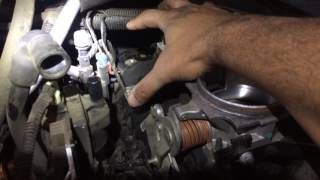
- Check Distributor Shaft Play and Cam Retard: With the cap off, check for excessive rotational or vertical play in the distributor rotor, which indicates a worn distributor gear or shaft. 🎬 Watch: How to identify a worn or damaged distributor gear. If you have a capable scan tool, check the 'Cam Retard' PID while holding the engine at 1000 RPM. The reading must be 0° +/- 2°.
Parts You'll Likely Need
- Distributor Cap and Rotor Kit
(OEM #ACDelco D328A (Cap), ACDelco D465 (Rotor))— This is the most frequent cause of misfires on the 4.3L V6 due to corrosion
Related Codes That Often Appear With This One
- P0300 — This is the most likely 'real' code. If the cause is a worn distributor, bad fuel pressure, or a large vacuum leak, multiple cylinders will misfire randomly, triggering a P0300 'Random/Multiple Cylinder Misfire' code.
- P0301-P0306 — These codes indicate misfires on specific cylinders (1 through 6). If the scan tool error is corrected, one of these codes will likely be present, pointing to the actual problem cylinder. A failing spider injector may initially cause a misfire on just one or two cylinders.
- P1345 — This code indicates a Camshaft to Crankshaft Position Correlation error. It is often set when the distributor gear is severely worn or if the distributor has been installed incorrectly, causing the cam retard offset to be significantly out of specification.
Technical Service Bulletins (TSBs) & Recalls
- PIP5628G: This is a general diagnostic aid for technicians contacting GM's Technical Assistance Center (TAC) for misfire codes P0300-P0308 and/or P050D. It provides a template of information to collect before calling, such as freeze frame data and results from compression and leak-down tests. Its inclusion of 'P0308' is generic to cover all possible GM engines (including V8s) and does not indicate that a V6 can set this code.
Platform-Specific Known Issues
- Distributor System Vulnerability: The distributor's location and design make it susceptible to moisture accumulation, leading to rapid corrosion of the cap and rotor terminals.
- Spider Injector Failures: The original Central Port Injection (CPI) system is a known weak point, with the poppet valves prone to sticking or leaking.
- Distributor Gear Wear: High-mileage 4.3L engines can develop significant wear on the distributor drive gear, causing erratic timing that the computer interprets as a random misfire (P0300).
Mechanic-Grade Diagnostic Values
- Fuel Pressure (Key On, Engine Off) — expected: 60-66 PSI. Failure: Pressure below 60 PSI, or a drop of more than 5 PSI in 10 minutes (leak-down test).
- Camshaft Retard (CMP Retard) PID — expected: 0° ± 2° (checked with a scan tool above 1,000 RPM). Failure: A value consistently outside the ±2° range, or one that jumps erratically, indicates a worn distributor gear or incorrect installation.
- Total Fuel Trim (STFT + LTFT) — expected: Between -10% and +10%. Failure: Sustained values above +10% indicate the engine is running lean (e.g., vacuum leak, weak fuel delivery). Values below -10% indicate a rich condition (e.g., leaking injector/regulator).
- Ignition Coil Primary Resistance — expected: 0.15 - 0.6 Ohms. Failure: A reading outside this range suggests a faulty coil winding.
- Ignition Coil Secondary Resistance — expected: 3,000 - 10,000 Ohms (3k-10k Ω). Failure: A reading outside this range indicates a problem with the secondary coil winding.
- Timing Chain Slack (Crankshaft Rotation Method) — expected: 3-5° of crankshaft rotation before the distributor rotor moves.. Failure: More than 8-10 degrees of play indicates excessive slack, which can cause erratic timing and misfires.
Scan Tool Commands That Help
- Tech2 / Professional Scan Tool: Read 'Cam Retard' PID — This is a critical step for diagnosing a P0300 on a 4.3L Vortec. An incorrect value directly points to a worn distributor gear or incorrect distributor installation, a very common cause of random misfires on this engine.
- Tech2 / Professional Scan Tool: Crankshaft Position System Variation Learning (CASE Relearn) — This procedure should be performed after replacing the crankshaft position sensor, distributor, or PCM. An unlearned sensor can falsely report misfires, leading to a P0300 code even when no mechanical misfire is present.
- Tech2 / Professional Scan Tool: Cylinder Contribution / Power Balance Test — This function allows the technician to disable one cylinder at a time to see the corresponding drop in RPM. If disabling a cylinder causes little or no change in RPM, that cylinder is the one misfiring. This helps isolate a single-cylinder misfire (P0301-P0306) when a P0300 is present.
Wiring & Ground Locations
- PCM Ground — A ground wire for the Powertrain Control Module (PCM) is typically located on a stud at the rear of the cylinder head or on the engine block itself.. A poor PCM ground can cause countless erratic issues, including false sensor readings and incorrect ignition/injector commands, which can lead to misfire codes.
- G102 / Ignition System Ground — Typically located at the left rear of the engine, grounding the ignition coil(s).. A corroded or loose ground for the ignition coil and module can cause a weak or intermittent spark, directly leading to misfires.
- G103 — Located on the cowl in the engine compartment, often above the brake booster.. This ground serves the Data Link Connector (DLC). A poor connection here could potentially cause communication issues with the scan tool, although it is less likely to be the root cause of the misfire itself.
- Engine to Firewall Ground Strap — A braided strap connecting the back of the engine/cylinder head to the vehicle's firewall.. This is a primary engine ground. If it's broken or corroded, the ignition system may try to find another path to ground, leading to weak spark and misfires.
Real Owner Repair Stories
- YouTube user 'cuda garage' (Chevy 4.3L V6 (platform unspecified, but engine is identical)) — Persistent P0300 multiple misfire code.
❌ Tried (didn't work) Spark plugs, Spark plug wires, Distributor cap, Distributor rotor, Injectors
✅ What actually fixed it The distributor gear was severely worn down to a 'wafer thin' or 'knife edge' thickness, creating excessive play and causing erratic timing. Replacing the entire distributor assembly resolved the misfire. - YouTube user 'Ivan's Garage' (Chevrolet 4.3L V6) — P0300 and specific misfires on cylinders 5 and 6. Rough running at low RPM and in reverse.
❌ Tried (didn't work) Spark plugs, Spark plug wires, Ignition coil, Distributor, Spider injector assembly (junkyard part)
✅ What actually fixed it After a cylinder leak-down test showed a major leak on cylinder 5, the cylinder head was removed. The root cause was a failed hydraulic lifter. After replacing all lifters and machining the heads, the misfire was resolved.
OEM Part Supersession History
Various (for Central Sequential Fuel Injection 'CSFI' assembly)→ACDelco 217-3028 / Delphi FJ10565 (for Multiport Fuel Injection 'MFI' assembly)— The original CSFI 'spider' used poppet valves that were prone to clogging with carbon and leaking. The upgraded MFI design moves the electronic injector to the end of the line, recessing it from engine heat and preventing carbon buildup, which greatly improves reliability, idle quality, and throttle response.
Heads up: This is a highly recommended upgrade. When replacing a failed CSFI unit, it is industry best practice to install the MFI upgrade kit rather than another CSFI unit.
Model Year Variations Within This Range
- 2005: The 2005 GMC Jimmy was the final model year and was sold as the 'Jimmy Classic'. It was a carryover of the second-generation S-10/Blazer platform. For this model year, the 4.3L V6 (LU3) should have already been equipped from the factory with the more reliable Multiport Fuel Injection (MFI) spider assembly, not the older, failure-prone Central Sequential Fuel Injection (CSFI) poppet valve style. However, confirming which unit is installed is always wise during diagnosis.
Helpful Videos
We Have This Part in Stock


The information in this article is provided for general reference and educational purposes only. Vehicle specifications, procedures, and part compatibility can vary by production date, trim level, and region. Always consult your vehicle's factory service manual and verify part numbers before purchasing or performing repairs. Safety-critical components such as airbags, seat belts, and braking systems should be installed by a qualified professional.
- Gmc JIMMY CLASSIC:
- 🧭 Diagnostic Flowchart
- 🎬 Helpful Videos
- 🛍️ Shop This Part
- What's Unique About the 2005-2005 Gmc JIMMY CLASSIC
- Symptoms You May Notice
- Most Likely Causes
- Rare But Worth Checking
- Diagnosis Steps
- Parts You'll Likely Need
- Related Codes That Often Appear With This One
- Technical Service Bulletins (TSBs) & Recalls
- Platform-Specific Known Issues
- Mechanic-Grade Diagnostic Values
- Scan Tool Commands That Help
- Wiring & Ground Locations
- Real Owner Repair Stories
- OEM Part Supersession History
- Model Year Variations Within This Range
- 🎟️ Get 5% Off