

P0308 on 2001-2005 GMC Safari: An Impossible Code and What It Really Means
A 2001-2005 GMC Safari has a V6 engine and cannot generate a P0308 code, which is for Cylinder 8. If you see this code, it's likely a scanner error. The actual problem is a misfire on one of the six cylinders (P0301-P0306), most often caused by a worn distributor cap and rotor.
- P0308 is an impossible code for a GMC Safari; it has a V6 engine. The true code is likely P0300 or P0301-P0306.
- The most common cause of a misfire on this van is a worn distributor cap and rotor, often due to moisture and corrosion.
- Always use high-quality (ACDelco or Delphi) ignition components, as this engine is sensitive to aftermarket part quality.
- Before replacing expensive parts, perform a thorough visual inspection of the distributor system.
- Driving with a misfire can damage the catalytic converter, turning a small repair into a very expensive one.
What's Unique About the 2001-2005 Gmc SAFARI
The key issue for the GMC Safari and this code is the engine configuration. These vans exclusively used the 4.3L Vortec V6 engine, making a P0308 (Cylinder 8 Misfire) impossible. If a mechanic or scan tool reports P0308, the vehicle is likely misidentified or the tool is misinterpreting the data. The actual issue is almost certainly a misfire on one of the existing six cylinders (P0301-P0306) or a random misfire (P0300). Misfires on this platform are extremely common and are frequently traced back to the distributor ignition system, which is a known weak point due to its location and susceptibility to moisture and wear.
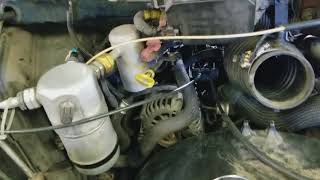
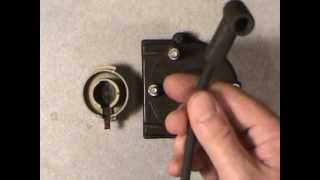
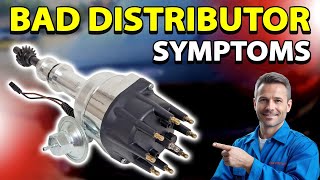
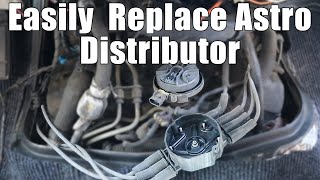
🎬 Watch: Diagnosing a common random misfire from a bad distributor.Diagnostic Flowchart
Tap your situation to follow the diagnostic path that matches what you're seeing on this vehicle.
Symptoms You May Notice
- Rough or shaking idle
- Hesitation or stumbling during acceleration
- Flashing or steady Check Engine Light
- Noticeable loss of engine power
- Difficulty starting the engine, especially in damp conditions or high humidity.
- Reduced fuel economy
- Possible fuel smell from the exhaust.
- Replacing only the spark plugs without changing the distributor cap and rotor.
- Replacing the ignition coil, which is a durable component and rarely the cause of a single-cylinder or random misfire compared to the cap and rotor.
- Assuming a bad fuel pump when the issue is the fuel pressure regulator located within the intake manifold as part of the spider injector assembly.
Most Likely Causes
- Worn Distributor Cap and Rotor 🔴 High Probability The distributor is located at the back of the engine where moisture can collect, often from a dripping A/C accumulator line directly above it. This leads to rapid corrosion of the internal contacts (often seen as white or green residue) and carbon tracking, causing weak or misdirected spark. The distributor vents can also become clogged, trapping moisture and blow-by gasses. Aftermarket parts are also known to fail quickly.
How to confirm: Remove the interior engine cover ('doghouse'). Unbolt the distributor cap (typically two Torx screws) and inspect the inside terminals and the metal tip of the rotor for white or green corrosion, black carbon tracking, or physical wear like melting or pitting.
Typical fix: Replace the distributor cap and rotor as a set. It is highly recommended to use high-quality OEM parts from brands like ACDelco or Delphi to ensure longevity. Ensure the distributor housing vents are clear.
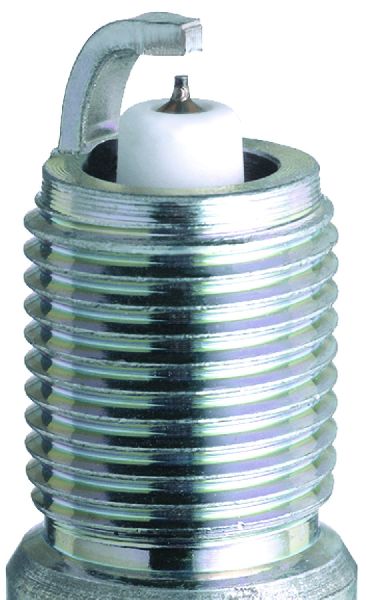
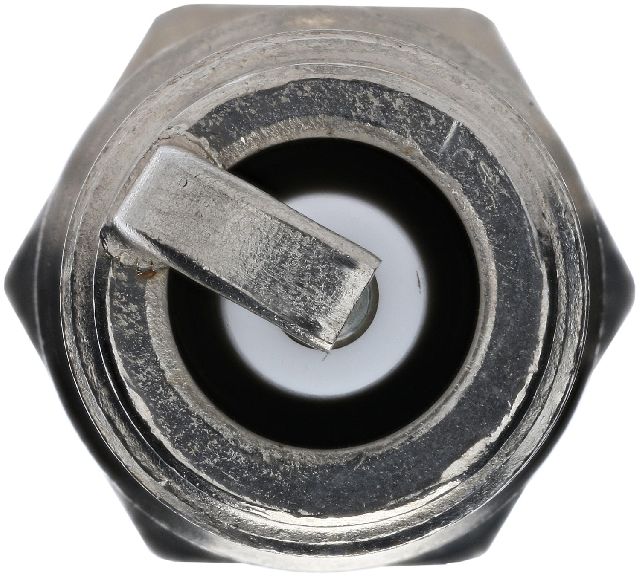
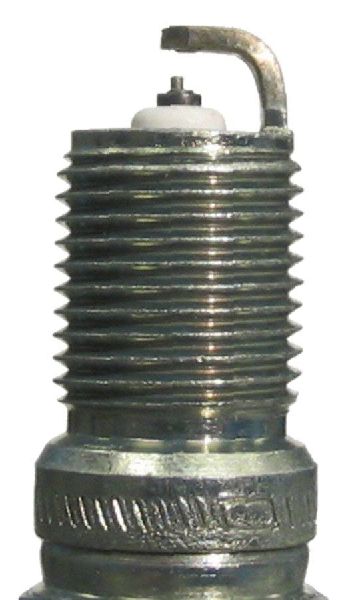
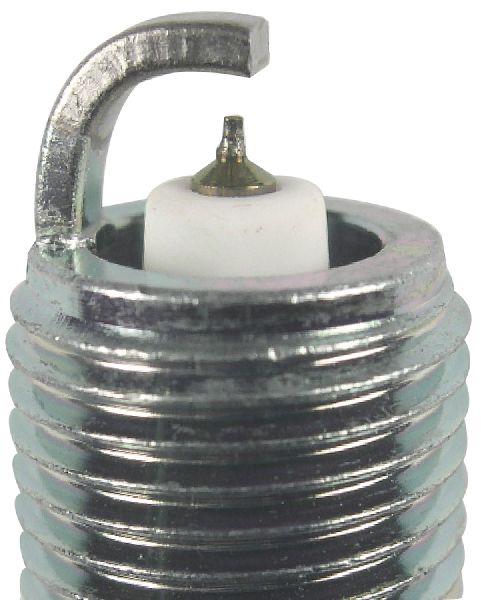
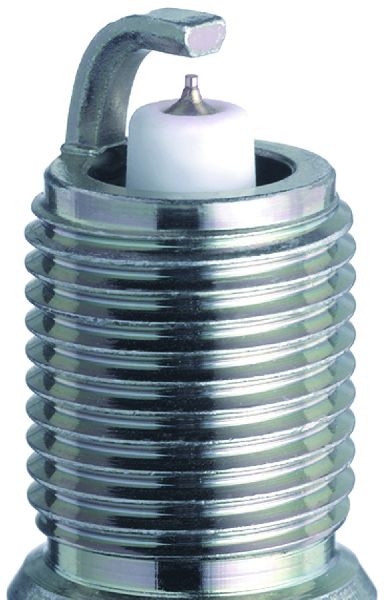
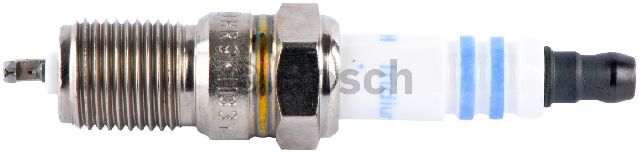
Est. part cost: $30-$80 - Failed Spark Plugs or Wires 🟡 Medium Probability → Shop Spark Plug These are standard maintenance items that wear out over time. Due to the high-energy ignition system and tight engine bay, low-quality wires can allow spark to arc to ground (often against the exhaust manifold) instead of reaching the plug.
How to confirm: Inspect spark plugs for wear, fouling, or incorrect gap. At night, with the engine running, look for any blue sparks arcing from the wires to the engine block. Wires should be tested for resistance; a common rule of thumb is less than 8,000 ohms per foot.
Typical fix: Replace all six spark plugs and the full set of spark plug wires. Applying dielectric grease to the plug boots is recommended to prevent moisture intrusion and spark jump.
Est. part cost: $50-$150 - Worn Distributor Assembly 🟡 Medium Probability → Shop Distributor Over many miles (often around 100k+), the gear at the bottom of the distributor shaft that meshes with the camshaft can wear out, becoming sharp like a razor blade. This creates excessive rotational play ('slop') in the shaft, causing erratic timing and misfires that a new cap and rotor won't fix. The internal bushings can also wear, allowing the shaft to wobble.
How to confirm: With the distributor cap off, grab the rotor and try to wiggle it rotationally. If the rotor can be raised up and down, the bushings are worn. If there is significant rotational play, the gear teeth are likely worn. A worn gear will have a noticeable sharp edge that can be caught with a pointed tool.
Typical fix: Replace the entire distributor assembly. This requires setting the engine to Top Dead Center (TDC) for cylinder #1 or carefully marking the rotor's position relative to the distributor body before removal to ensure correct timing upon installation. A Crankshaft Variation Relearn procedure with a scan tool is recommended after replacement.
Est. part cost: $100-$250 - Faulty Central Port Fuel Injection (CPFI) Spider ⚪ Low Probability These engines use a central 'spider' injector assembly located under the upper intake manifold. The small poppet valves at the end of each fuel line can get stuck, clogged, or leak. The central fuel pressure regulator, part of this assembly, can also leak internally, causing a hard start and rich running condition.
How to confirm: This is more difficult to diagnose. It often requires a fuel pressure test to check for leak-down after the engine is shut off; a rapid drop in pressure suggests a leak. Isolating a single faulty injector often requires a professional-grade scan tool with injector balance test capabilities.
Typical fix: Replace the entire fuel injector assembly. It is highly recommended to upgrade from the original Sequential Central Port Injection (SCPI) unit to the newer Multi-Port Fuel Injection (MPFI) spider assembly (e.g., Delphi FJ10565), which is more reliable and less prone to clogging.
Est. part cost: $200-$400
Rare But Worth Checking
- Leaking Lower Intake Manifold Gaskets: → Shop Engine Intake Manifold These gaskets can fail and leak coolant into the engine oil (check for milky oil on the dipstick or oil cap) or cause a vacuum leak, leading to a lean misfire. Check for unexplained coolant loss.
- Internal Engine Mechanical Failure: In high-mileage engines, a misfire can be caused by a collapsed lifter, worn camshaft lobe, or poor valve seating, resulting in low compression on one cylinder. A compression test is needed to diagnose this.
- Chafed Wiring Harness: In rare cases, the engine wiring harness can rub against a bracket or the A/C compressor, shorting out a wire for an injector or sensor. This can cause an intermittent misfire that changes when the engine moves under load (e.g., shifting from Drive to Reverse).
Diagnosis Steps
- Confirm the vehicle is a 2001-2005 GMC Safari. Acknowledge that a P0308 code is not possible and that the scan tool is likely misinterpreting the data or using a generic diagnostic template.
- Use the scan tool to check for the actual misfire codes, which will be between P0301 and P0306, or a P0300. Check misfire counters if available.
- Remove the interior engine cover ('doghouse').
- Visually inspect the distributor cap, rotor, and spark plug wires for corrosion, carbon tracks, or damage. This is the most likely cause.
- If the cap and rotor look worn, replace them as a set with high-quality parts (ACDelco/Delphi recommended). Also, replace plugs and wires if they are old or show signs of arcing.
- If the misfire persists, check for rotational play in the distributor shaft by wiggling the rotor. Excessive slop indicates a worn distributor gear, requiring replacement of the entire distributor assembly.
- Perform a fuel pressure test. The Vortec 4.3L requires a steady 60-66 PSI with the key on, engine off, and it should not drop more than 5 PSI in 10 minutes. A rapid drop indicates a leak, likely from the internal fuel pressure regulator or spider assembly.
- If ignition and fuel pressure are good, perform an engine compression test to check for mechanical issues like a bad valve, worn piston rings, or a failed head gasket.
Parts You'll Likely Need
- Distributor Cap and Rotor Kit
(OEM #ACDelco D328A (Cap), D465 (Rotor))— This is the most frequent failure point for misfires on the 4.3L Vortec engine due to its susceptibility to moisture and corrosion.
Trusted brands: ACDelco, Delphi
OEM price range: $50-$80
Aftermarket price range: $25-$50 - Spark Plugs and Wire Set
(OEM #ACDelco 9746KK (Wires), ACDelco 41-993 (Plugs))— These are routine maintenance items that are a common cause of misfires when worn.
Trusted brands: ACDelco, NGK
OEM price range: $80-$150
Aftermarket price range: $50-$100 - Fuel Injector Spider Assembly (MPFI Upgrade)
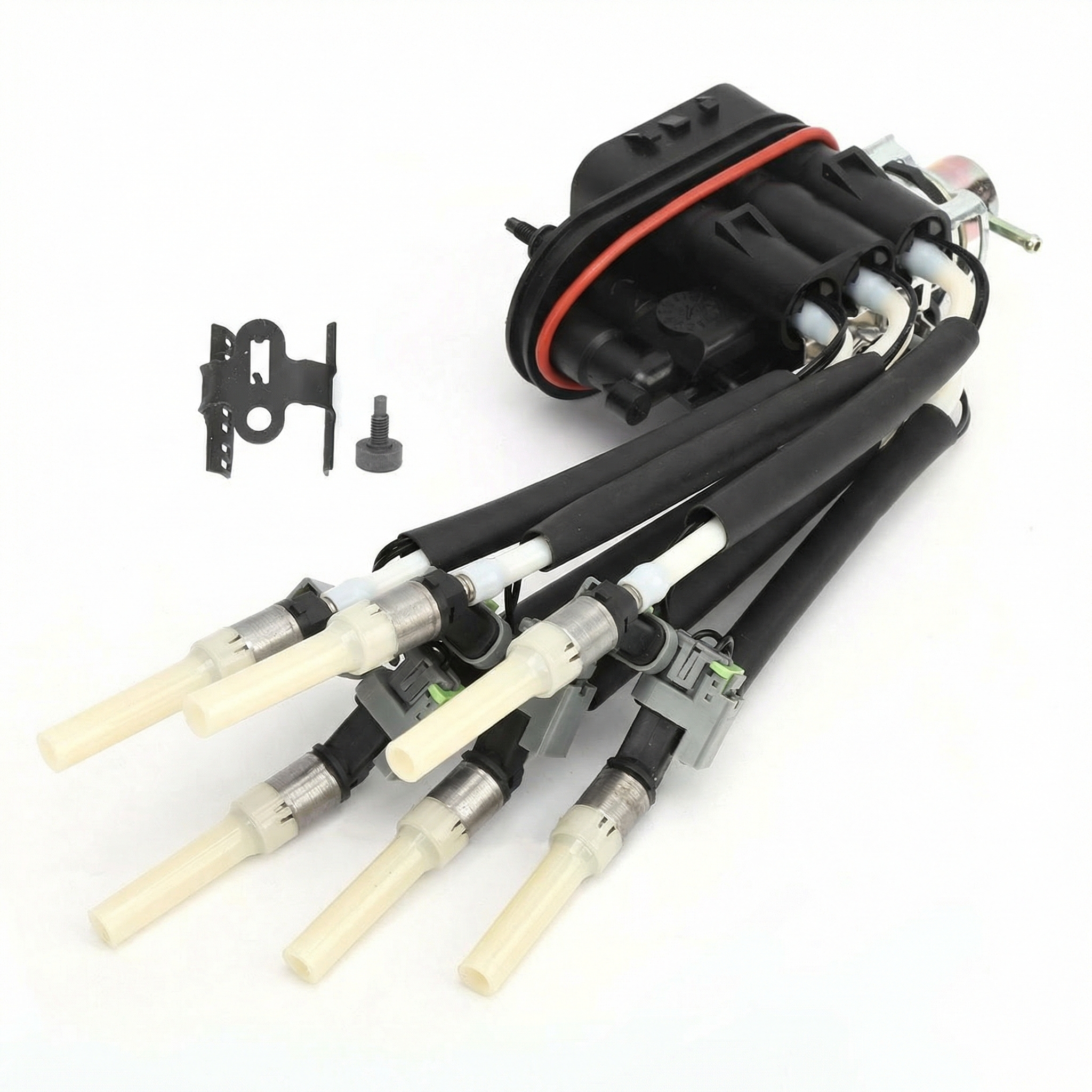
(OEM #Delphi FJ10565, GM 12568332 / 19210688)— The original poppet-style injectors are prone to clogging and failure. The MPFI unit is a common and recommended reliability upgrade if a fuel injector is diagnosed as the cause.
Trusted brands: Delphi, ACDelco, Standard Motor Products
OEM price range: $250-$400
Aftermarket price range: $150-$250
Related Codes That Often Appear With This One
- P0300 — If multiple cylinders are misfiring due to a failing distributor cap, fuel pressure issue, or vacuum leak, P0300 (Random/Multiple Cylinder Misfire) will be stored along with, or instead of, specific cylinder codes.
- P0301 - P0306 — These are the correct codes for a misfire on a GMC Safari. The last digit indicates the specific cylinder (e.g., P0301 is Cylinder 1). You will have one of these codes, not P0308.
Technical Service Bulletins (TSBs) & Recalls
- PIP5628G: A general GM bulletin about diagnosing misfire codes P0300-P0308, confirming that V8 engines are part of this diagnostic family but not specific to the Safari.
- 03-06-04-041A: Addresses random misfires (P0300) on these vans caused by A/C line condensation dripping on the distributor cap.
Platform-Specific Known Issues
- A Technical Service Bulletin (TSB #03-06-04-041A) was issued regarding the P0300 random misfire code caused by condensation from the A/C line dripping onto the distributor and clogged distributor vents causing internal corrosion. The recommended fix includes inspecting/cleaning the vents and potentially installing a foam sleeve over the A/C line.
- The non-adjustable distributor clamp can be problematic. As the timing chain stretches over the engine's life, the ignition timing retards slightly. Some owners modify the clamp to allow for slight rotational adjustment of the distributor to compensate for this wear, which can improve performance and reliability.
Mechanic-Grade Diagnostic Values
- Camshaft Position (CMP) Retard Offset — expected: 0° +/- 2° at idle after snapping the throttle above 2,000 RPM. Failure: A reading outside the +/- 2° range. Values of 6-8° can cause misfires. Values approaching +/- 15° can cause significant cross-firing inside the distributor cap. A P1345 code may set if the value exceeds ~27°.
- Fuel Pressure (Key On, Engine Off) — expected: 60-66 psi. Failure: Pressure below 60 psi indicates a weak pump or faulty regulator. Pressure above 66 psi indicates a faulty regulator.
- Fuel Pressure Leak-Down — expected: Pressure should not drop more than 5 psi in 10 minutes after the pump shuts off.. Failure: A rapid pressure drop indicates a leaking fuel pressure regulator, leaking poppet valve/injector, or a leak in the fuel lines.
- Injector Balance Test Pressure Drop — expected: All cylinders should have a similar pressure drop.. Failure: An injector with a significantly smaller or larger pressure drop compared to the average indicates a clogged or leaking injector. The acceptable variance is typically within 1.5 psi (10 kPa) of the average.
Hidden / Shadow Codes Worth Checking
- Mode 6, Test ID $A2-$A7: These are not codes but test results for misfire counts for each cylinder (A2 for Cyl 1, A3 for Cyl 2, etc.). Even without a P030x code, a technician can view these counters on an advanced scan tool to see if a specific cylinder is accumulating misfires, indicating an intermittent or developing problem. (see via A scan tool capable of reading Mode 6 data. The raw data needs to be interpreted, but many modern scanners translate it into readable misfire counts.)
Scan Tool Commands That Help
- Tech 2 (or equivalent professional scanner): Crankshaft Variation Relearn (CASE Relearn) — This procedure is required after replacing the crankshaft position sensor, the PCM, or the entire distributor. It synchronizes the PCM with the minor variations of the crankshaft reluctor wheel, ensuring accurate misfire detection. Failure to perform this can lead to false P0300 codes or inaccurate misfire data.
- Tech 2 (or equivalent professional scanner): Injector Balance Test — Used to diagnose a faulty fuel injector 'spider'. The tool individually fires each injector and measures the corresponding drop in fuel pressure. This can pinpoint a single clogged or leaking injector poppet that is causing a misfire, which is difficult to find otherwise.
- Tech 2 (or equivalent professional scanner): Misfire Graphic Display / Misfire Counters — To view real-time and historical misfire counts per cylinder. This is invaluable for identifying which cylinder is the primary offender, even with a general P0300 code. A few counts can be normal from road vibrations, but a rapidly incrementing counter on one cylinder points to the problem area.
- Tech 2 (or equivalent professional scanner): CMP Retard Offset Data — To check the distributor's rotational position relative to the camshaft. An incorrect offset, caused by a worn distributor gear or improper installation, is a very common cause of P0300 on these engines. The scan tool is the only way to accurately measure and set this critical parameter.
Wiring & Ground Locations
- G103 — On the lower right (passenger) side of the engine block, often near the crankshaft position sensor.. This is a primary battery-to-engine block ground. A poor connection here can cause unstable voltage for all engine sensors, including the crankshaft and camshaft position sensors, leading to erratic data and potential misfire codes.
- G104 — On the lower left side of the evaporator housing, behind the receiver drier on the firewall.. This ground serves the fuel pump relay and A/C compressor clutch. An intermittent ground here could potentially affect fuel pump operation, though it's less common than other causes.
- G105 — On one of the thermostat housing bolts/studs.. This is a critical ground for the PCM (Powertrain Control Module), MAF sensor, and the Ignition Control Module (ICM). A corroded or loose connection here is a prime suspect for unexplained electronic and ignition issues, including random misfires.
- G107 — On the left (driver's) side of the engine, accessed by removing the engine doghouse. It shares a bolt with G106.. This ground specifically serves the Ignition Control Module (ICM) and the instrument panel. A fault here can directly impact spark generation and lead to misfires.
Real Owner Repair Stories
- Reddit user on r/s10 (Chevy S-10 with 4.3L Vortec V6 at 200,000 miles (mechanically identical to Safari)) — Persistent random misfire (P0300).
❌ Tried (didn't work) The user did not specify, but the context implies that simpler fixes like cap, rotor, plugs, and wires were likely attempted first.
✅ What actually fixed it Replacing the entire distributor assembly. The original distributor's drive gear had worn down to be as 'thin as razor blades', causing excessive play in the distributor shaft and erratic timing.
OEM Part Supersession History
GM 17091432 (or similar SCPI/CSFI assembly)→GM 19210688 / ACDelco 217-3028 / Delphi FJ10565 (MPFI assembly)— The original Sequential Central Port Injection (SCPI) design used poppet valves that were highly prone to clogging and leaking.
Heads up: While visually different, the upgraded MPFI spider assembly is a direct, interchangeable replacement for the older SCPI unit and is considered the only long-term reliable fix.
Model Year Variations Within This Range
- 2001-2002 (approx.): These earlier models in the range were more likely to be factory-equipped with the less reliable Sequential Central Port Injection (SCPI) 'spider' injector assembly, which is prone to clogging and failure.
- 2003-2005 (approx.): These later models were more likely to come from the factory with the upgraded Multi-Port Fuel Injection (MPFI) 'spider' assembly. While more reliable, they can still fail, but it is less common than with the earlier SCPI design. The diagnosis remains the same.
Helpful Videos

Used OEM Parts in Stock
New Aftermarket Parts Available

The information in this article is provided for general reference and educational purposes only. Vehicle specifications, procedures, and part compatibility can vary by production date, trim level, and region. Always consult your vehicle's factory service manual and verify part numbers before purchasing or performing repairs. Safety-critical components such as airbags, seat belts, and braking systems should be installed by a qualified professional.
- Gmc SAFARI:
- 🧭 Diagnostic Flowchart
- 🎬 Helpful Videos
- 🛍️ Shop This Part
- What's Unique About the 2001-2005 Gmc SAFARI
- Symptoms You May Notice
- Most Likely Causes
- Rare But Worth Checking
- Diagnosis Steps
- Parts You'll Likely Need
- Related Codes That Often Appear With This One
- Technical Service Bulletins (TSBs) & Recalls
- Platform-Specific Known Issues
- Mechanic-Grade Diagnostic Values
- Hidden / Shadow Codes Worth Checking
- Scan Tool Commands That Help
- Wiring & Ground Locations
- Real Owner Repair Stories
- OEM Part Supersession History
- Model Year Variations Within This Range
- 🎟️ Get 5% Off