

P0308 on 2010-2017 GMC Terrain: Decoding a Misfire on a Non-Existent Cylinder
Receiving a P0308 code on a GMC Terrain is confusing because the vehicle has no cylinder 8. This 'phantom' code points not to a simple misfire, but to a serious Engine Control Module (ECM) software glitch or internal failure. Professional diagnosis is required to check for software updates or a faulty ECM.
- P0308 on a GMC Terrain is a 'phantom code' because the vehicle does not have a cylinder 8.
- Do not attempt to replace standard misfire components like spark plugs or coils for cylinder 8.
- The cause is almost certainly an ECM software glitch or a hardware failure within the ECM itself.
- Diagnosis requires professional-level tools to check for software updates per TSB #PIP5628G.
- This code should be considered serious and addressed promptly to avoid unpredictable engine behavior.
What's Unique About the 2010-2017 Gmc TERRAIN
The key issue for the Terrain is the appearance of this 'phantom' code. While a P0308 on a V8 engine would trigger a standard misfire diagnosis (checking plugs, coils, injectors for cylinder 8), on a Terrain it immediately signals a deeper, more complex electronic issue. General Motors has acknowledged diagnostic challenges with misfire codes in this range (P0300-P0308) through Technical Service Bulletin #PIP5628G, indicating this is a known, if uncommon, scenario requiring special attention from technicians. The TSB instructs technicians to gather specific data with a GDS2 scan tool for the Technical Assistance Center (TAC), underscoring the complexity of the issue.
Diagnostic Flowchart
Tap your situation to follow the diagnostic path that matches what you're seeing on this vehicle.
Symptoms You May Notice
- Check Engine Light is on or flashing
- Rough or unstable idle
- Engine hesitation or stumbling during acceleration
- Noticeable loss of engine power
- Engine may be hard to start
- Vehicle may stall unexpectedly
- Replacing spark plugs, ignition coils, or fuel injectors for 'cylinder 8'. These components do not exist on this vehicle, and attempting to diagnose it as a standard misfire will fail.
Most Likely Causes
- Engine Control Module (ECM) Software Glitch 🔴 High Probability → Shop Engine Control Module (ECM) The existence of TSB #PIP5628G for misfire codes, including the phantom P0308, suggests that software anomalies are a recognized cause for these specific diagnostic issues on GM platforms.
How to confirm: A GM-specific scan tool (like a GDS2/MDI) must be used to connect to GM's TIS2Web service to check for available software calibrations for the ECM. The bulletin specifically mentions collecting data and session logs for the Technical Assistance Center (TAC), reinforcing the need for dealer-level tools.
Typical fix: Reprogramming the ECM with the latest manufacturer software. This procedure is often referred to as 'flashing' the ECM.
Est. part cost: $0 (if under warranty) - $200 (for labor) - Faulty Engine Control Module (ECM) 🟡 Medium Probability → Shop Engine Control Module (ECM) Internal failure of the ECM's driver circuits, memory, or processor can cause it to generate erroneous codes, such as a misfire on a non-existent cylinder. These failures can be triggered by age, heat cycles, or voltage irregularities.
How to confirm: This is a process of elimination. If the ECM software is confirmed to be the latest version and all other potential causes of general misfires (P0300) or rough running have been ruled out, the ECM itself becomes the primary suspect. A technician may also check power and ground signals to the ECM to ensure it's not an external wiring issue.
Typical fix: Replacement of the ECM, which must be programmed to the vehicle's VIN using a J2534 interface tool or equivalent.
Est. part cost: $400-$1000 - Severe Engine Mechanical or Timing Issue ⚪ Low Probability The 2.4L and 3.6L engines in this platform are known for timing chain issues. A severely stretched chain could cause erratic crankshaft and camshaft sensor signals, potentially confusing the ECM's misfire detection logic to the point of generating an illogical code like P0308.
How to confirm: Use a scan tool to check cam/crank correlation PIDs. 🎬 See how to analyze misfire scan data on GM vehicles A physical inspection of the timing system or a compression test may be necessary if sensor data is inconclusive. TSB #PIP5628G specifically asks technicians to perform a relative compression test using an oscilloscope.
Typical fix: Replacement of timing chain, tensioners, and guides.
Est. part cost: $600-$1500
Rare But Worth Checking
- Wiring Harness Issues:
- Faulty ECM Power Relay:
Diagnosis Steps
- Verify the code P0308 with a reliable OBD-II scanner and confirm no other codes are present.
- Confirm the vehicle's engine configuration (2.4L I4, 3.0L V6, or 3.6L V6) and acknowledge that cylinder 8 does not exist.
- Connect a GM-specific diagnostic tool (GDS2/MDI) to check for Technical Service Bulletins (TSBs) and available software updates for the Engine Control Module (ECM), specifically referencing TSB #PIP5628G.
- If a software update is available, perform the ECM reprogram ('flash') procedure according to manufacturer instructions.
- If the code persists after the update, follow the diagnostic steps outlined in TSB #PIP5628G. This includes saving freeze-frame data, performing a relative compression test with an oscilloscope, and checking fuel injector balance.
- Investigate any other stored codes, especially P0300 (Random Misfire) or P050D (Cold Start Rough Idle), as they are linked in the TSB.
- Perform a thorough inspection of the ECM's power and ground circuits and wiring harnesses for any signs of damage, corrosion, or looseness.
- If no other faults are found and the software is current, the ECM is the likely cause of the failure and requires replacement and programming to the vehicle's VIN.
Parts You'll Likely Need
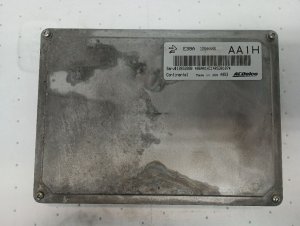
- Engine Control Module (ECM)
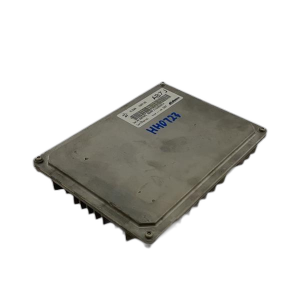
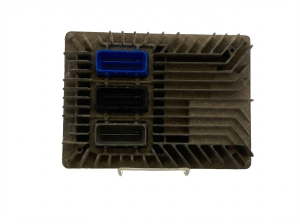
(OEM #12651993 (supersedes 12616889, 12637106, 12642665, among others, for some 2010-2011 models - VIN specific))— This is the most likely hardware failure when a P0308 code appears on a vehicle without 8 cylinders, after software issues have been ruled out.
Trusted brands: ACDelco (GM Genuine Part)
OEM price range: $450-$1000
Aftermarket price range: $250-$700
Related Codes That Often Appear With This One
- P0300 — This indicates a random or multiple cylinder misfire. The underlying issue causing the ECM confusion may also trigger a general misfire code.
- P050D — This code for 'Cold Start Rough Idle' is specifically mentioned alongside P0300-P0308 in TSB #PIP5628G, indicating a direct link in the diagnostic process for GM technicians.
- P0301 - P0306 — Misfire codes for the actual cylinders (1-6 for V6, 1-4 for I4) may accompany P0308 if a real misfire is occurring concurrently with the ECM fault.
Technical Service Bulletins (TSBs) & Recalls
- PIP5628G: Communicates information that will need to be provided to TAC to aid in diagnosing if a vehicle comes in with misfire and DTC Codes P0300 - P0308 and/or P050D. It provides a specific diagnostic template for technicians to follow.
Platform-Specific Known Issues
- The primary vehicle-specific issue is the documented possibility of the ECM generating this 'phantom' misfire code, as noted in GM's TSB #PIP5628G.
- The 2.4L Ecotec engine is known for excessive oil consumption and timing chain issues, while the 3.6L V6 (LFX) can also suffer from stretched timing chains. These mechanical issues can, in rare cases, confuse the ECM's misfire detection logic.
Mechanic-Grade Diagnostic Values
- Relative Compression Test (using PicoScope/Oscilloscope) — expected: All cylinders should display a consistent and uniform compression pattern on the oscilloscope.. Failure: One or more cylinders showing a significantly lower or uneven peak compared to the others, indicating a potential mechanical issue (valves, rings, etc.) that could be confusing the ECM.
- Fuel Injector Balance Test (using GDS2) — expected: The pressure drop for each injector during the test should be nearly identical.. Failure: An injector that causes a significantly smaller or larger pressure drop than the others, indicating it is clogged or leaking. This can create conditions that might contribute to the ECM's confusion.
- ECM/Ignition Module Supply Voltage — expected: Stable battery voltage (typically 12.0V+ with key on, 13.2-14.5V with engine running).. Failure: Low or fluctuating voltage can cause unpredictable ECM behavior, including setting false codes. The TSB specifically calls out checking supply voltage to ignition modules and injectors.
Scan Tool Commands That Help
- GDS2: Save Freeze Frame / Failure Records — This is the first step requested by TSB #PIP5628G to capture the exact engine parameters at the moment the phantom code was set.
- GDS2: Fuel Injector Balance Test — To rule out a real but subtle fuel delivery issue that could be contributing to erratic sensor readings, as recommended by TSB #PIP5628G.
- GDS2: Crankshaft Position Variation Learn — After any repair involving the crankshaft, flywheel, or ECM. TSB #PIP5628G asks if this has been performed, as incorrect CKP data is a primary cause of misfire detection errors.
- GDS2: Capture GDS2 Session Log — When the issue is difficult to duplicate or diagnose. The session log records extensive data that can be sent to GM's Technical Assistance Center (TAC) for analysis, a key step in the TSB's procedure.
Wiring & Ground Locations
- G101 — Located at the lower front of the engine block.. This is a primary ground point for the Engine Control Module (ECM) and Transmission Control Module (TCM). A poor connection here can cause erratic ECM behavior and false codes.
- G103 — Located on the cowl in the left rear of the engine compartment, often near the brake booster.. This ground serves the BCM, Instrument Panel Cluster (IPC), and the Data Link Connector (DLC). A fault here can disrupt communication between modules and the scan tool, complicating diagnosis.
- ECM Harness to Engine Block — Various black wires from the ECM wiring harness.. Technicians note that on many GM vehicles, ensuring the ECM has a clean, direct, and robust ground path directly to the engine block is critical for preventing intermittent and phantom electrical issues.
OEM Part Supersession History
12616889, 12637106, 12642665, 12650256→12651993— Standard part evolution for hardware/software revisions and component availability.
Heads up: The final part number, 12651993, is specified for 2010-2011 models with the 2.4L I4 or 3.0L V6. It is critical to verify the correct ECM part number by VIN, as different engines and model years use different modules. All replacements require programming.
Model Year Variations Within This Range
- 2010-2012: The optional V6 engine was the 3.0L LF1.
- 2013-2017: The optional V6 engine was upgraded to the 3.6L LFX, which has a different cylinder head design, fuel pump, and injectors. This change means the ECM hardware and software are different from the earlier V6 models.
Helpful Videos

We Have This Part in Stock

The information in this article is provided for general reference and educational purposes only. Vehicle specifications, procedures, and part compatibility can vary by production date, trim level, and region. Always consult your vehicle's factory service manual and verify part numbers before purchasing or performing repairs. Safety-critical components such as airbags, seat belts, and braking systems should be installed by a qualified professional.
- Gmc TERRAIN:
- 🧭 Diagnostic Flowchart
- 🎬 Helpful Videos
- 🛍️ Shop This Part
- What's Unique About the 2010-2017 Gmc TERRAIN
- Symptoms You May Notice
- Most Likely Causes
- Rare But Worth Checking
- Diagnosis Steps
- Parts You'll Likely Need
- Related Codes That Often Appear With This One
- Technical Service Bulletins (TSBs) & Recalls
- Platform-Specific Known Issues
- Mechanic-Grade Diagnostic Values
- Scan Tool Commands That Help
- Wiring & Ground Locations
- OEM Part Supersession History
- Model Year Variations Within This Range
- 🎟️ Get 5% Off