

P0308 on 2004-2009 Hummer H2: Cylinder 8 Misfire Causes and Fixes
P0308 on a Hummer H2 indicates a misfire in cylinder 8. The most common culprits are a bad spark plug, ignition coil, or plug wire, typically located at the rearmost position on the passenger side. Expect to pay $5-$25 for a plug and $50-$110 for a coil. Start diagnosis there before suspecting more serious issues like a worn camshaft, which is a known but less common problem on these engines.
- P0308 is a misfire on cylinder 8, which is the rearmost cylinder on the passenger side of the engine.
- Start your diagnosis with the simple, high-probability parts: swap the ignition coil, then the spark plug, with another cylinder to see if the misfire code follows.
- Do not drive extensively with a flashing Check Engine Light, as this can quickly destroy your catalytic converter, a very expensive part to replace.
- Be aware of the TSB regarding worn camshafts. If basic ignition and fuel system checks don't solve the misfire, a more serious mechanical issue could be the cause.
What's Unique About the 2004-2009 Hummer H2
The Hummer H2 uses robust, but now aging, GM V8 engines (LQ4 and L92). While the common causes for a P0308 misfire are standard ignition or fuel system parts, these specific platforms have a documented history of more severe mechanical issues. A Technical Service Bulletin (PIP4138P) specifically points to the possibility of a worn camshaft lobe or lifter causing misfires (P0300-P0308), which is a much more involved and expensive repair than a simple tune-up. Cylinder 8's location at the rear of the engine bay can also subject it to higher heat, potentially accelerating the degradation of ignition components. Furthermore, poor engine ground straps are a known issue on H2s, which can cause a variety of strange electrical issues, including misfires.
🎬 Watch this professional diagnostic walkthrough for a 6.0L engine misfire.Diagnostic Flowchart
Tap your situation to follow the diagnostic path that matches what you're seeing on this vehicle.
Generation note: This range covers two powertrain generations. The 2004-2007 models use the 6.0L LQ4 V8 engine. The 2008-2009 models were updated with the more powerful 6.2L L92 V8, which also features Variable Valve Timing (VVT). While the fundamental causes of a P0308 misfire are the same, some part numbers and potential VVT-related causes (phaser, solenoid) are specific to the L92. Spark plug recommendations also differ, with platinum plugs (41-962) often recommended for pre-2007 models and iridium plugs (41-110) for 2007 and newer.
Symptoms You May Notice
- Rough or shaking idle
- Noticeable loss of power, especially during acceleration
- Hesitation or stumbling from the engine
- Flashing Check Engine Light (indicates a severe misfire that can damage the catalytic converter)
- Increased fuel consumption
- Smell of raw gasoline from the exhaust
- Engine noise described as a 'tick' or 'chirp' which could indicate a lifter or exhaust leak issue
- Replacing the catalytic converter. A misfire can cause converter damage, but the converter itself does not cause the misfire. The root cause must be fixed first.
- Replacing oxygen sensors. O2 sensors report on the state of the exhaust gas; they do not cause a single-cylinder misfire.
Most Likely Causes
- Worn or Fouled Spark Plug 🔴 High Probability → Shop Spark Plug Spark plugs are a primary wear item. On the H2, cylinder 8 is at the back of the engine on the passenger side, making it somewhat difficult to access and potentially neglected during service.
How to confirm: Visually inspect the spark plug from cylinder 8. Look for a worn electrode, cracks in the porcelain, or heavy carbon/oil deposits. The easiest test is to swap it with a plug from a known good cylinder (e.g., cylinder 6) and see if the misfire code moves to P0306.
Typical fix: Replace the spark plug. It is best practice to replace all 8 spark plugs at the same time. Use ACDelco 41-962 (Platinum) for 2004-2007 models and ACDelco 41-110 (Iridium) for 2008-2009 models. Do not adjust the gap on these plugs.
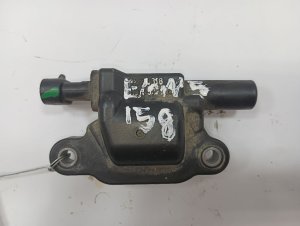
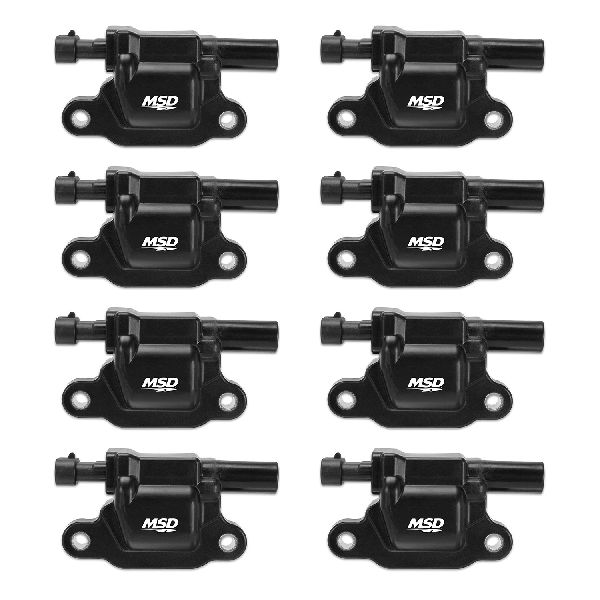
Est. part cost: $5-$25 per plug - Failed Ignition Coil Pack 🔴 High Probability → Shop Ignition Coil Heat cycles and high voltage cause coils to fail over time. Cylinder 8's rearward position can lead to higher ambient temperatures, stressing the coil. This is a very common failure for a single-cylinder misfire on GM V8s.
How to confirm: Swap the ignition coil from cylinder 8 with the coil from another cylinder (e.g., cylinder 6). Clear the codes and drive the vehicle. If the code changes to P0306, the coil is faulty.
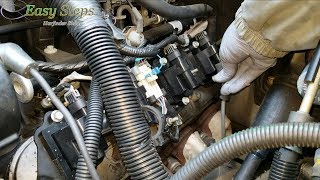
Typical fix: Replace the faulty ignition coil. It is mounted directly on the valve cover above the spark plug. Using a quality OEM replacement like ACDelco is recommended. 🎬 See this quick guide on replacing your H2 ignition coils.
Est. part cost: $50-$110 - Bad Spark Plug Wire 🟡 Medium Probability → Shop Spark Plug The wires connecting the coil to the spark plug can degrade from heat and age, causing the spark to become weak or arc to the engine block. The wire for cylinder 8 is long and routed in a hot area.
How to confirm: Visually inspect the wire for cracks, burns, or corrosion. With the engine running in the dark, you can sometimes see the spark arcing from the wire to a metal surface. Test its resistance with a multimeter or swap it with a known good wire.
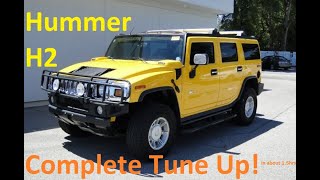
Typical fix: Replace the spark plug wire. It is recommended to replace the full set of 8 wires. 🎬 Watch a complete tune-up of spark plugs, wires, and coils.
Est. part cost: $50-$100 for a set - Clogged or Faulty Fuel Injector 🟡 Medium Probability → Shop Fuel Injector Fuel injectors can become clogged with debris or fail electronically, preventing the correct amount of fuel from being delivered to cylinder 8.
How to confirm: Listen to the injector with a mechanic's stethoscope; it should have a consistent clicking sound. You can also test its resistance or, more definitively, swap it with an injector from another cylinder to see if the misfire follows.
Typical fix: Replace the faulty fuel injector. It's important to verify if your H2 requires standard or Flex Fuel (E85) compatible injectors.
Est. part cost: $60-$150
Rare But Worth Checking
- Worn Camshaft Lobe and/or Lifter: → Shop Engine Camshaft A manufacturer TSB (PIP4138P) specifically calls this out as a potential cause for P0300-P0308 codes if common ignition/fuel diagnostics do not isolate the problem. This is a significant mechanical failure that prevents the cylinder's valves from opening and closing correctly. It may be preceded by a ticking or knocking noise from the engine. Diagnosis involves removing the valve cover to check for loose rocker arms or using a borescope to inspect the lifter.
- Intake Manifold Gasket Leak: → Shop Engine Intake Manifold A vacuum leak near the intake runner for cylinder 8 can lean out the air/fuel mixture enough to cause a misfire. This would often be accompanied by lean codes like P0171 or P0174. A diagnostic smoke test is the most effective way to confirm a leak.
- Low Engine Compression: Internal engine damage such as a worn piston ring, a burnt or non-seating valve, or a leaking head gasket can cause a loss of compression in cylinder 8. A broken valve spring is another possibility. A compression test followed by a cylinder leak-down test will confirm this.
- Poor Engine Ground: Hummer H2s are known to have issues with corroded or loose ground straps, particularly the main engine-to-chassis ground. A bad ground can cause a weak spark or erratic behavior from sensors and coils, leading to misfires that are hard to diagnose. Inspecting and cleaning all major ground points is a valid diagnostic step.
- VVT System Fault (2008-2009 L92 Only): On the 6.2L engine, a failing camshaft phaser or VVT oil control solenoid can cause timing issues that may manifest as a misfire on one or more cylinders. One owner on a forum reported fixing a persistent misfire by replacing the phaser and solenoid.
Diagnosis Steps
- Confirm the P0308 code is present using an OBD-II scanner. Check for any other codes.
- Identify cylinder 8. On GM V8s, cylinders are numbered 1-3-5-7 on the driver's side (front to back) and 2-4-6-8 on the passenger side (front to back). Cylinder 8 is the rearmost cylinder on the passenger side.
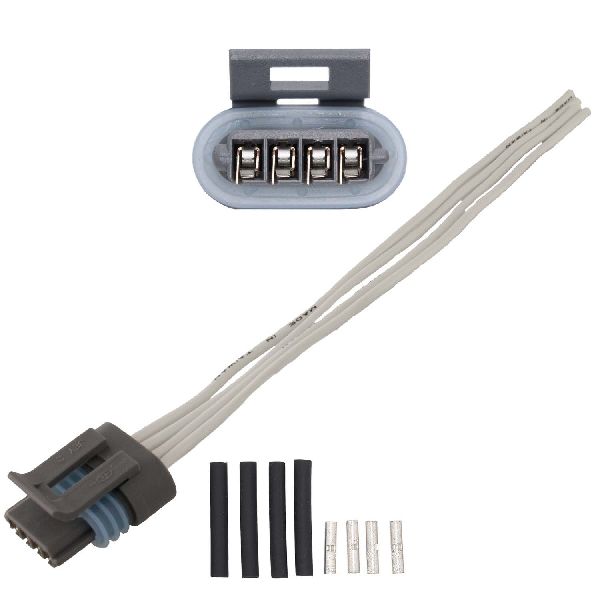
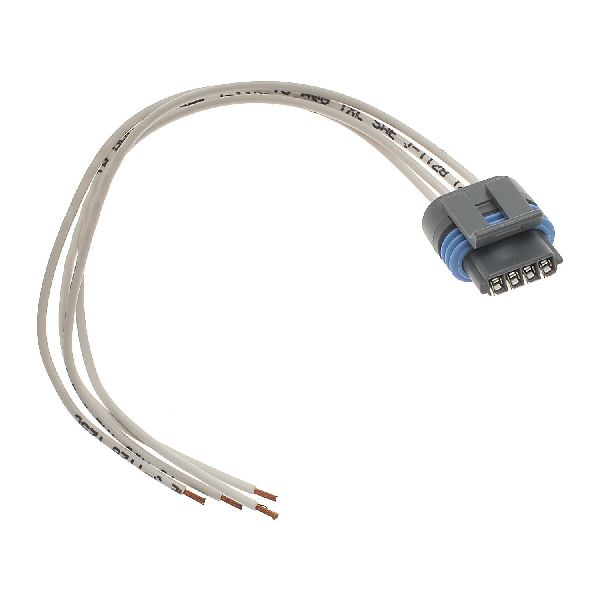
- Perform a visual inspection. Check the wiring harness for the coil and injector at cylinder 8 for any obvious damage, looseness, or corrosion. Inspect engine ground straps for corrosion or looseness.
- Swap the ignition coil from cylinder 8 with another cylinder (e.g., cylinder 6). Clear the codes and run the engine. If the code changes to P0306, the ignition coil is bad.
- If the code does not move, swap the spark plug from cylinder 8 with another cylinder. If the code moves, the spark plug is bad.
- If the code remains on cylinder 8, inspect the spark plug wire for damage. Test its resistance with a multimeter or swap it with another wire.
- If ignition components are good, check the fuel injector. Listen for a steady clicking sound. You can also test its resistance or swap it with another injector to see if the code follows.
- If the misfire persists, perform a compression test on cylinder 8 to check for mechanical engine problems like bad rings, valves, or head gasket. A healthy reading is typically 120-150 PSI or higher.
- If compression is good, consider less common causes. Test for vacuum leaks using a smoke machine. For 2008-2009 models, investigate the VVT system.
- If all else fails and especially if a ticking noise is present, refer to TSB PIP4138P and inspect for a worn camshaft lobe and/or a collapsed lifter. This requires removing the valve cover.
Parts You'll Likely Need
- Ignition Coil
(OEM #19418992 (Supersedes 12573190))— This is one of the most frequent causes of a single-cylinder misfire and is a simple part to replace during diagnosis.
Trusted brands: ACDelco (GM Genuine), Delphi, MSD
Related Codes That Often Appear With This One
- P0300 — If the misfire is intermittent or affects multiple cylinders, a P0300 (Random Misfire) code may appear alongside the P0308.
- P0171 or P0174 — If the misfire is caused by a vacuum leak, the engine may run lean, triggering these codes for Bank 1 or Bank 2.
- P0327 or P0332 — These are knock sensor codes. A persistent misfire can sometimes be misinterpreted as engine knock, or a separate issue with the knock sensor circuit could be present. One owner reported these alongside other electrical codes.
Technical Service Bulletins (TSBs) & Recalls
- PIP5628G: Communicates information needed to aid in diagnosing misfire codes P0300 - P0308.
- PIP4138P: Advises checking for a worn camshaft lobe and/or lifter for P0300-P0308 codes if other diagnostics fail.
Platform-Specific Known Issues
- TSB #PIP4138P notes that for engine misfire codes P0300-P0308, if standard diagnostics do not find the cause, technicians should inspect for a worn camshaft lobe and/or lifter. This points to a known, albeit less common, mechanical failure point.
- TSB #PIP5628G also mentions misfire codes P0300-P0308 in a bulletin about information needed for diagnosis by GM's Technical Assistance Center, suggesting some cases can be complex.
- Owners on forums report chasing persistent, sometimes code-less misfires, eventually tracing them to issues like faulty VVT components on the 6.2L L92, or bad engine ground straps.
Mechanic-Grade Diagnostic Values
- Ignition Coil Primary Resistance — expected: 0.49 - 0.57 ohms. Failure: A reading outside this range indicates a faulty coil winding.
- Ignition Coil Secondary Resistance — expected: 9.5 - 11.1 kOhms. Failure: A reading outside this range indicates a faulty secondary winding.
- VVT Solenoid Resistance (2008-2009 L92) — expected: Generally between 5 and 25 ohms, with some sources specifying 8-12 ohms.. Failure: A reading that is too high, too low, or infinite (open circuit) suggests the solenoid is faulty.
- Long Term Fuel Trim (LTFT) at Idle — expected: Ideally close to 0%, within +/- 10%.. Failure: Sustained high positive trims (e.g., +25%) can indicate a vacuum leak or, conversely, a severely restricted air filter or clogged fuel filter, forcing the ECM to add excessive fuel.
Hidden / Shadow Codes Worth Checking
- Misfire Counters / Misfire History: This is not a standard DTC but a live data parameter on GM-specific scan tools (like the Tech2) that shows a running count of misfires per cylinder, even if they aren't frequent enough to set a P0308 code. It is invaluable for identifying an intermittent or developing problem cylinder before it triggers the check engine light. (see via GM Tech2, GDS2, or high-end aftermarket scanners with GM-specific software.)
Scan Tool Commands That Help
- GM Tech2 / GDS2: Crankshaft Position Variation Learn (CASE Relearn) — This procedure re-calibrates the ECM to the crankshaft position sensor's signal, improving misfire detection accuracy. It should be performed after replacing the crank sensor, PCM, or on high-mileage engines where timing chain wear can cause false misfire counts. Failure to perform this can lead to persistent, hard-to-diagnose P0300 or single-cylinder misfire codes.
- GM Tech2 / GDS2: Misfire Graphic — To visually monitor misfire counts on all cylinders in real-time under various engine loads and RPMs. This helps confirm if the misfire is isolated to cylinder 8 and under what specific conditions it occurs.
- GM Tech2 / GDS2: Injector Balance Test — To test if a fuel injector is clogged or failing electronically. The tool commands each injector to fire for a set duration and measures the corresponding drop in fuel pressure, allowing for comparison between cylinders.
Wiring & Ground Locations
- G102 — At the left front/side of the engine block.. This is a critical ground point that specifically grounds all eight ignition coils. Corrosion or a loose connection here can cause a weak spark on one or more cylinders, leading to misfires.
- G103 / G104 — Located at the top rear of the engine, on the left (G104) and right (G103) sides.. These are primary engine harness grounds to the chassis. A poor connection at these points can cause erratic behavior in multiple sensors and actuators, including the ignition system and PCM, leading to difficult-to-diagnose misfires.
- Crankshaft Position (CKP) Sensor — At the lower right rear side of the engine block, behind the starter motor.. The ECM relies entirely on the CKP sensor to detect misfires by monitoring tiny variations in crankshaft speed. A faulty sensor, damaged wiring, or a poor connection can lead to inaccurate misfire reporting.
Real Owner Repair Stories
- ScannerDanner Forum user 'JupiterBandit' (2003 Hummer H2 6.0L) — P0300 random misfire, heavily concentrated on cylinders 5 and 6. LTFTs were maxed out at +25%.
❌ Tried (didn't work) Replacing spark plugs and wires., Swapping ignition coils., Performing a CKP relearn procedure.
✅ What actually fixed it The root cause was a severely clogged engine air filter and a clogged fuel filter. Replacing both basic maintenance items caused the LTFT to drop significantly (to +9% and +14%) and almost completely eliminated the misfire counts. - GMTNation forum user 'GENMOTMAN' (2007 GM Vehicle (similar engine architecture)) — Misfire detected on cylinder #4 using Tech2Win misfire graphics, but no DTC was set.
❌ Tried (didn't work) Initial diagnosis was difficult as no code was present.
✅ What actually fixed it Upon removing the ignition coil from the suspect cylinder, the spark plug tube and coil boot were found to be filled with engine oil from a leaking valve cover gasket. The oil compromised the coil's ability to deliver spark. The fix was to replace the valve cover gasket and the oil-soaked coil.
"I Checked Everything" — The Actual Cause
- In one documented case, a severe random misfire (P0300) with maxed-out long-term fuel trims (+25%) was not caused by a vacuum leak, which a smoke test is designed to find. The actual cause was a combination of a completely clogged air filter and a clogged fuel filter. This created a lean condition by restricting air and fuel *inflow*, rather than by allowing unmetered air *in*, fooling the diagnostic process into mimicking a large vacuum leak.
When the Usual Fixes Don't Work
- While it is common to immediately suspect a failed ignition coil or spark plug for a P0308, owners should not neglect fundamental maintenance. In a documented case on a 2003 H2, after replacing plugs and wires failed to solve a severe misfire, the actual root cause was found to be a combination of a completely clogged air filter and fuel filter. This highlights that extreme restrictions in air intake or fuel delivery can manifest as misfire codes before addressing more expensive components.
- A misfire does not always mean the ignition component itself has failed internally. In another case, a persistent misfire was traced to a leaking valve cover gasket that allowed the spark plug well to fill with oil. The oil shorted the connection between the coil and the plug. Simply replacing the coil without fixing the oil leak would not have resolved the issue long-term.
OEM Part Supersession History
12573190 (ACDelco D514A)→12739916 or 19418992— Standard part evolution and updates by the manufacturer.
Heads up: This is the later-style 'round' or 'Delphi' coil. It is not interchangeable with the early 'square' style coils (e.g., GM 12558693) used on approximate 2004-2006 models. Visual confirmation is required before ordering.
Model Year Variations Within This Range
- 2004-2007 (LQ4) vs 2008-2009 (L92): The 2008-2009 L92 engine uses a 58x crankshaft reluctor wheel, whereas the earlier LQ4 uses a 24x wheel. This is a fundamental electronic difference that makes their respective PCMs and crankshaft position sensors incompatible.
- 2004-2006 vs 2007+: Ignition coils changed from an early 'square' body style (e.g., GM 12558693) to a later 'round' Delphi style (e.g., GM 12573190). The coils and their mounting brackets are not directly interchangeable.
- 2004: Some early 2004 models may still have the iron cylinder heads from the initial LQ4 design, while later 2004 and all subsequent models used aluminum 317-casting heads.
Helpful Videos
Used OEM Parts in Stock
New Aftermarket Parts Available


The information in this article is provided for general reference and educational purposes only. Vehicle specifications, procedures, and part compatibility can vary by production date, trim level, and region. Always consult your vehicle's factory service manual and verify part numbers before purchasing or performing repairs. Safety-critical components such as airbags, seat belts, and braking systems should be installed by a qualified professional.
- Hummer H2:
- 🧭 Diagnostic Flowchart
- 🎬 Helpful Videos
- 🛍️ Shop This Part
- What's Unique About the 2004-2009 Hummer H2
- Symptoms You May Notice
- Most Likely Causes
- Rare But Worth Checking
- Diagnosis Steps
- Parts You'll Likely Need
- Related Codes That Often Appear With This One
- Technical Service Bulletins (TSBs) & Recalls
- Platform-Specific Known Issues
- Mechanic-Grade Diagnostic Values
- Hidden / Shadow Codes Worth Checking
- Scan Tool Commands That Help
- Wiring & Ground Locations
- Real Owner Repair Stories
- "I Checked Everything" — The Actual Cause
- When the Usual Fixes Don't Work
- OEM Part Supersession History
- Model Year Variations Within This Range
- 🎟️ Get 5% Off