

P0308 on 2003-2008 Isuzu Ascender: Cylinder 8 Misfire Causes and Fixes
On a 2003-2008 Isuzu Ascender with the 5.3L V8, a P0308 code is most often caused by a failed ignition coil, a worn spark plug, or a bad spark plug wire for cylinder 8. Start by swapping the coil and plug to diagnose. For 2005-2007 models, listen for a distinct ticking noise, as a failed AFM lifter is also a common, more serious cause. A DIY fix with basic ignition parts can cost between $30 and $100.
- P0308 on an Isuzu Ascender means a misfire on cylinder 8, which is only possible on models with the 5.3L V8 engine.
- The most likely causes are bad ignition components: the coil, spark plug, or plug wire.
- A simple diagnostic step is to swap the ignition coil from cylinder 8 with another cylinder to see if the misfire code follows the coil.
- Do not ignore a flashing Check Engine Light, as it signals a severe misfire that can quickly destroy the catalytic converter, leading to a much more expensive repair.
- If basic ignition and fuel system parts don't fix the problem, a more serious mechanical issue like low compression or a worn camshaft could be the cause.
What's Unique About the 2003-2008 Isuzu ASCENDER
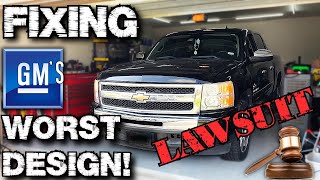
The Isuzu Ascender is built on the General Motors GMT360 platform, sharing its 5.3L V8 engine and ignition system with the Chevrolet Trailblazer and GMC Envoy. Misfires on this platform are common, often stemming from heat-soaked ignition components. For 2005-2007 models with the LH6 V8, the engine included Active Fuel Management (AFM), a system that could sometimes contribute to valvetrain issues leading to misfires. A failed AFM lifter for an AFM-enabled cylinder is a well-documented cause of misfires on these engines, often presenting with a ticking or chirping sound that corresponds with engine RPM. A known issue on these V8 engines is the difficulty in accessing the cylinder 8 spark plug 🎬 Watch this guide for tips on replacing plugs and wires. and wire due to tight clearance at the firewall, making repairs more challenging.
Diagnostic Flowchart
Tap your situation to follow the diagnostic path that matches what you're seeing on this vehicle.
Symptoms You May Notice
- Check Engine Light is on or flashing (a flashing light indicates a severe misfire)
- Rough or vibrating engine idle
- Hesitation or stumbling during acceleration
- Noticeable loss of engine power
- Reduced fuel economy
- Smell of raw fuel from the exhaust
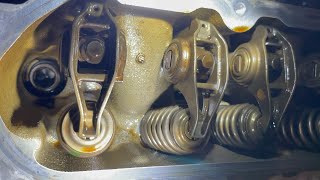
- A rhythmic ticking or chirping sound from the engine 🎬 See how to diagnose AFM lifter noise and valvetrain issues., especially on models with AFM
- Replacing only the spark plug when the ignition coil or wire was the actual point of failure.
- Assuming the misfire is a simple tune-up issue when it is caused by a clogged fuel injector.
- On AFM engines, repeatedly replacing ignition parts when the root cause is a collapsed lifter causing zero compression.
Most Likely Causes
- Failed Ignition Coil 🔴 High Probability → Shop Ignition Coil Ignition coils on the GMT360 platform are a common failure item due to constant exposure to high engine heat, especially for the rear cylinders like #8. These are individual coil-near-plug units connected by a short wire.
How to confirm: Swap the ignition coil from cylinder 8 with another cylinder (e.g., cylinder 6 on the same bank). Clear the codes and drive. If the code changes to P0306, the coil is bad.
Typical fix: Replace the faulty ignition coil. Many owners choose to replace all eight coils at once as a preventative measure. Use a quality brand like ACDelco.
Est. part cost: $25 - $60 - Worn or Fouled Spark Plug 🔴 High Probability → Shop Spark Plug
How to confirm: After ruling out the coil, remove the spark plug from cylinder 8. Inspect it for a worn electrode, heavy carbon buildup, oil fouling, or cracks in the porcelain insulator. Oil fouling can be a clue to AFM-related oil consumption issues.
Typical fix: Replace the spark plug. It is best practice to replace all eight spark plugs at the same time using the recommended ACDelco Iridium plugs.
Est. part cost: $5 - $15 - Bad Spark Plug Wire 🟡 Medium Probability → Shop Spark Plug The 5.3L V8 uses short spark plug wires that connect the coil to the plug. These can degrade from heat and age, causing a weak spark. The wire for cylinder 8 is in a high-heat area and can be difficult to access and inspect without breaking.
How to confirm: Inspect the wire for any visible damage, cracks, or signs of arcing. Check for a loose connection at the coil pack or spark plug. Swapping wires with another cylinder can also diagnose the issue, but they are often brittle and may break upon removal.
Typical fix: Replace the spark plug wire set. It's recommended to replace them as a set along with the spark plugs.
Est. part cost: $40 - $80 - Clogged or Faulty Fuel Injector 🟡 Medium Probability → Shop Fuel Injector The Multec 2 injectors used on some 5.3L V8s are known to become clogged from carbon buildup. As cylinder 8 is the last on the fuel rail, it can sometimes collect sediment. A TSB was issued for driveability issues related to clogged injectors on these models.
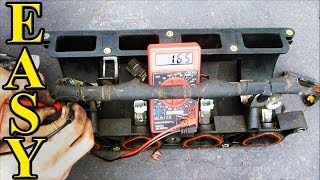
How to confirm: Listen to the injector with a mechanic's stethoscope; it should have a consistent clicking sound. You can also swap the injector with another cylinder, but this is more labor-intensive than swapping a coil. A professional scan tool can perform an injector balance test. 🎬 Learn how to test fuel injector resistance with a multimeter.
Typical fix: Clean or replace the faulty fuel injector. Some shops recommend replacing all eight injectors as a set to ensure balanced fuel delivery.
Est. part cost: $40 - $90
Rare But Worth Checking
- Failed AFM Lifter (2005-2007 Models): → Shop Engine Valve Lifter On the LH6 engine with Active Fuel Management, the specialized lifters can collapse or become stuck due to oil pressure issues or internal failure. This prevents the valves from opening, causing a complete lack of compression and a persistent misfire. Symptoms include a loud, rhythmic ticking/tapping noise and low/no compression on the affected cylinder. This is a major mechanical repair that often requires camshaft replacement as well.
- Cracked Castech Cylinder Head: → Shop Engine Cylinder Head A known defect in some cylinder heads manufactured by 'Castech' for GM V8s can cause a crack that allows coolant to leak into the cylinder or crankcase. These heads are identified by a 'battery' shaped logo under the valve cover and often have the casting number '706'. This is often accompanied by unexplained coolant loss and milky, sludgy oil.
- Low Cylinder Compression: If ignition and fuel system checks don't resolve the issue, a mechanical problem could be the cause. This can include a failing non-AFM lifter, a worn camshaft lobe, bent pushrod, or a leaking head gasket. A compression test is needed to diagnose this.
Diagnosis Steps
- Read the trouble code with an OBD-II scanner to confirm P0308. Note if any other codes are present.
- Listen for abnormal engine noises. A distinct, rhythmic ticking or tapping sound strongly points towards a valvetrain issue, likely a failed AFM lifter on 2005-2007 models.
- Swap the ignition coil from cylinder 8 with cylinder 6. Clear the codes and run the engine. If the code changes to P0306, the coil is faulty.
- If the code remains P0308, inspect the spark plug and spark plug wire for cylinder 8. Look for wear, damage, or loose connections. Replace if necessary. Be careful as the old wire may be brittle.
- If ignition components are good, check the fuel injector for cylinder 8. Listen for a steady clicking sound and inspect the wiring connector.
- If the problem persists, especially if a ticking noise is present, perform a compression test on cylinder 8 to check for mechanical engine problems. A reading near zero suggests a collapsed AFM lifter.
- Check for vacuum leaks around the intake manifold, particularly near the cylinder 8 runner.
- If experiencing unexplained coolant loss, remove the valve cover to check for the 'Castech' logo on the cylinder head, which would indicate a high probability of a cracked head.
Parts You'll Likely Need
- Ignition Coil
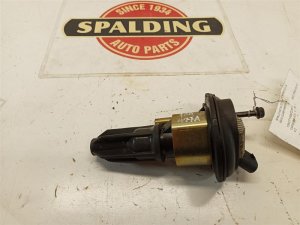
(OEM #12570616)— This is the most common failure point for a single-cylinder misfire on the GM 5.3L V8 due to heat and vibration. The original coils are often round.
Trusted brands: ACDelco (D585 or D510C), Delphi (GN10119), NGK, Standard Motor Products (UF262)
OEM price range: $40-$70
Aftermarket price range: $25-$50 - Spark Plug
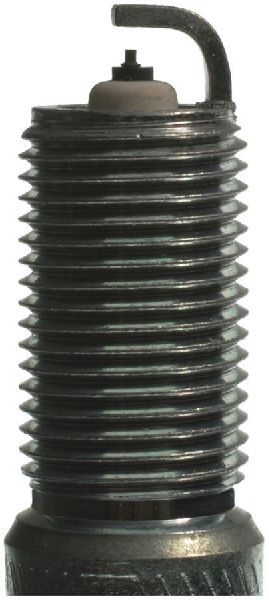
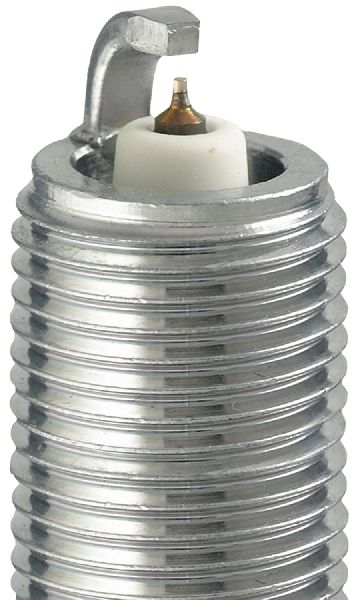
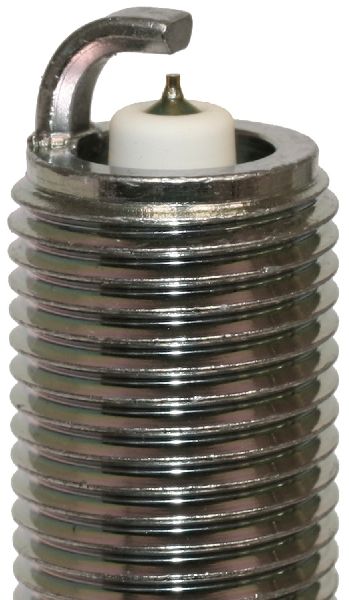
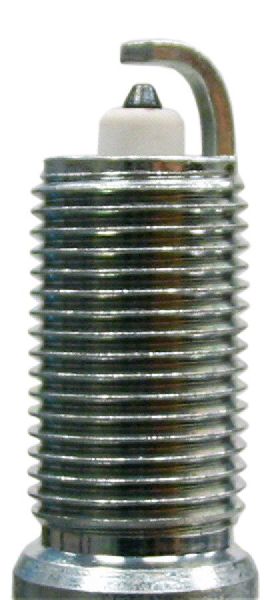
(OEM #41-110)— Spark plugs are a routine maintenance item and a frequent cause of misfires as they wear out. The recommended plug is an ACDelco Professional Iridium.
Trusted brands: ACDelco, NGK
OEM price range: $8-$15
Aftermarket price range: $5-$10 - Spark Plug Wire Set
(OEM #9748RR (ACDelco Professional))— The wires that carry spark to the plugs degrade over time, especially in high-heat areas like cylinder 8.
Trusted brands: ACDelco, NGK, Denso
OEM price range: $60-$90
Aftermarket price range: $40-$80 - Fuel Injector
(OEM #17113553)— Injectors on these engines are prone to clogging, which starves the cylinder of fuel and causes a misfire.
Trusted brands: ACDelco, Delphi
OEM price range: $70-$120
Aftermarket price range: $40-$90
Related Codes That Often Appear With This One
- P0300 — If the misfire is intermittent or affects multiple cylinders, a P0300 (Random Misfire) code may be stored alongside P0308. This can happen with a failing AFM lifter or a major vacuum leak.
- P0171 / P0174 — These 'System Too Lean' codes can appear if a vacuum leak (like a failed intake manifold gasket) or a clogged fuel injector is the root cause of the misfire.
- P050D — This code for 'Cold Start Rough Idle' is often investigated alongside P0300-P0308 misfire codes per GM TSB PIP5628, as they can be related.
Technical Service Bulletins (TSBs) & Recalls
- PIP5628: Preliminary information for diagnosing DTC Codes P0300 - P0308 and/or P050D. This TSB provides a checklist for technicians to gather data before contacting GM's technical assistance, covering spark, fuel, compression, and leak-down tests.
- PIP4138R: Addresses engine misfire (P0300-P0308) potentially caused by a worn camshaft lobe or lifter roller on V8 engines, a known failure mode for AFM lifters.
- IB07-02-S001: Issued for 2003-2007 Ascender models regarding various driveability issues, including misfires, caused by clogged fuel injectors.
- 06-06-01-019B: GM TSB addressing coolant loss on V8 engines, often caused by cracked Castech cylinder heads.
Platform-Specific Known Issues
- A Technical Service Bulletin (PIP5628) was issued by GM providing a diagnostic template for technicians to use when encountering misfire codes P0300-P0308 and/or P050D.
Mechanic-Grade Diagnostic Values
- Fuel Pressure (Key On, Engine Off) — expected: 55-62 PSI for standard fuel engines; 48-54 PSI for Flex Fuel (FFV) engines.. Failure: Pressure below the specified range indicates a weak fuel pump or leak. Pressure that drops more than 5 PSI in one minute after the pump shuts off suggests a leaking injector or faulty check valve.
- Ignition Coil Resistance — expected: Primary Resistance: ~0.5 - 0.7 Ohms. Secondary Resistance: ~2,000 - 6,000 Ohms (2kΩ - 6kΩ).. Failure: A reading of infinity (OL) or significantly outside the expected range indicates a failed coil.
- Fuel Injector Resistance — expected: 11 - 14 Ohms at room temperature.. Failure: A reading outside this range, or a variance of more than 3 ohms between any two injectors, points to a faulty injector.
- Scan Tool Fuel Injector Balance Test — expected: The pressure drop for each injector should be within 1.5 PSI of the average drop of all cylinders.. Failure: An injector whose pressure drop is significantly more or less than the others is either clogged or leaking.
Hidden / Shadow Codes Worth Checking
- Misfire Counters (per cylinder): These are not traditional DTCs but live data points showing the number of misfire events for each individual cylinder. A cylinder can accumulate hundreds of misfires before it crosses the threshold to set a P030X code and turn on the light. (see via Requires a professional-grade scan tool like the GM Tech 2 or a high-end Autel/Snap-on scanner. Look for 'Misfire Data' or 'Misfire Graphic' under the engine control module's special functions or data display.)
Scan Tool Commands That Help
- GM Tech 2 / GDS2 (or equivalent professional scanner): Crankshaft Position (CKP) Variation Relearn — This procedure is mandatory after replacing the crankshaft position sensor, PCM, or performing major engine work. It synchronizes the sensor with the actual crankshaft position, ensuring accurate misfire detection. Failure to perform it can cause false misfire counts.
- GM Tech 2 / GDS2 (or equivalent professional scanner): Injector Balance Test — Use this when a fuel-related misfire is suspected after ignition components have been ruled out. The tool individually fires each injector and measures the corresponding drop in fuel rail pressure, quickly identifying a clogged or faulty injector without removing it.
- GM Tech 2 / GDS2 (or equivalent professional scanner): Cylinder Balance Test / Power Balance — This function deactivates one cylinder at a time and measures the drop in engine RPM. If disabling a cylinder causes little to no change in RPM, that cylinder is not contributing power, confirming the location of the misfire.
Wiring & Ground Locations
- G103 / G104 — Typically located on the rear of the driver's side cylinder head or the front of the passenger's side cylinder head, bolted to the engine block.. These are the primary engine-to-chassis ground points. A loose or corroded ground at these locations can cause erratic behavior in the ignition system, including weak spark and false sensor readings, leading to misfire codes.
- Ignition Coil and Injector Harness — Runs across the top of the valve covers and along the intake manifold. The harness for cylinder 8 is at the very back of the engine against the firewall.. The rear of the engine is a high-heat area. The harness, especially the section for cylinder 8, is prone to heat degradation, causing brittle connectors and chafed wires that can lead to an intermittent connection for the coil or injector.
Real Owner Repair Stories
- Common narrative from Trailvoy.com and GMTNation.com forums (2006 GMC Envoy (sister vehicle) with 5.3L LH6 V8, ~120,000 miles) — Started with a P0300 random misfire, eventually becoming a persistent P0307 (Cylinder 7 Misfire). Noticeable loss of power and a rhythmic ticking/tapping noise from the engine that increased with RPM.
❌ Tried (didn't work) Replaced all 8 spark plugs and wires., Swapped ignition coil from cylinder 7 to cylinder 5 (code did not move)., Cleaned the MAF sensor and throttle body., Ran multiple bottles of fuel injector cleaner through the system.
✅ What actually fixed it A compression test showed near-zero compression on cylinder 7. The root cause was a collapsed AFM (Active Fuel Management) lifter. The owner opted for a full AFM delete kit, which included replacing the AFM lifters with standard lifters, a non-AFM camshaft, a new valley cover, and a PCM tune to disable the AFM system. This permanently resolved the misfire and ticking noise.
"I Checked Everything" — The Actual Cause
- A common scenario for the 2005-2008 models is chasing a P0308 code where all standard tests (ignition swap, injector check, smoke test for vacuum leaks) come back clean. The actual cause is often a purely mechanical failure inside the engine, such as a collapsed AFM lifter. A smoke test will show no leaks because the valvetrain itself is failing to open the valve, a problem that external tests cannot detect. The definitive diagnosis in this case is a compression test, which will show abnormally low or zero compression on cylinder 8.
OEM Part Supersession History
ACDelco D585 (GM 10457730, 12563293)→ACDelco D510C (and other square-body coils)— The original 'round' body ignition coils were prone to failure from heat saturation. They were superseded by a more robust 'square' body design, often referred to as the LS2/LS3 style coil, which offers better reliability and heat resistance.
Heads up: The square coils may require a different mounting bracket and wiring harness adapter to fit on an engine originally equipped with round coils. However, many aftermarket kits facilitate this popular upgrade.
Model Year Variations Within This Range
- 2003-2004: These models used the 5.3L LM4 V8, a Gen III engine without Active Fuel Management (AFM). Misfire diagnosis should focus strictly on ignition, fuel, and base mechanical issues, as AFM lifter failure is not a possible cause.
- 2005-2008: These models used the 5.3L LH6 V8, a Gen IV engine that introduced Active Fuel Management (AFM). For these years, a failed AFM lifter, faulty VLOM, or AFM-related oil pressure issue becomes a primary and common cause for misfires, especially on cylinders 1, 4, 6, and 7 (the AFM cylinders). Cylinder 8 is NOT an AFM cylinder, so a P0308 on these models points back to traditional ignition/fuel/mechanical causes, but the overall engine system is more complex.
Helpful Videos
Used OEM Parts in Stock
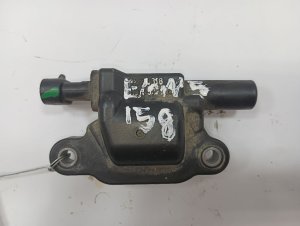
New Aftermarket Parts Available
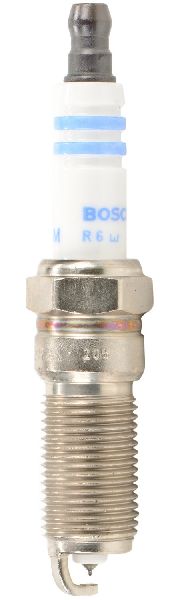
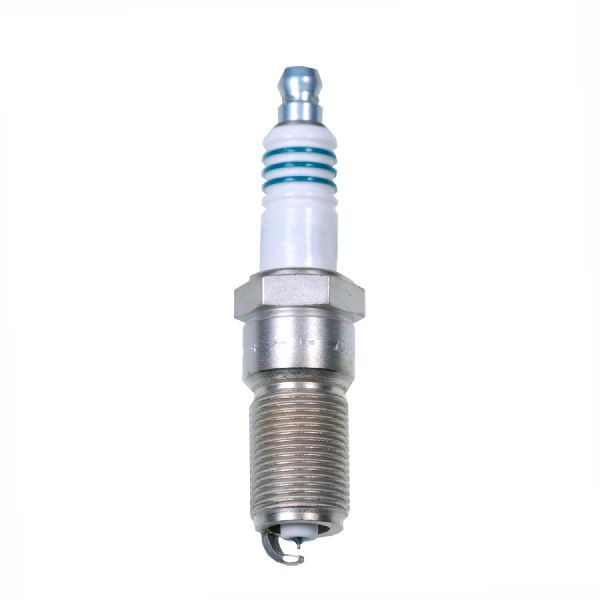

The information in this article is provided for general reference and educational purposes only. Vehicle specifications, procedures, and part compatibility can vary by production date, trim level, and region. Always consult your vehicle's factory service manual and verify part numbers before purchasing or performing repairs. Safety-critical components such as airbags, seat belts, and braking systems should be installed by a qualified professional.
- Isuzu ASCENDER:
- 🧭 Diagnostic Flowchart
- 🎬 Helpful Videos
- 🛍️ Shop This Part
- What's Unique About the 2003-2008 Isuzu ASCENDER
- Symptoms You May Notice
- Most Likely Causes
- Rare But Worth Checking
- Diagnosis Steps
- Parts You'll Likely Need
- Related Codes That Often Appear With This One
- Technical Service Bulletins (TSBs) & Recalls
- Platform-Specific Known Issues
- Mechanic-Grade Diagnostic Values
- Hidden / Shadow Codes Worth Checking
- Scan Tool Commands That Help
- Wiring & Ground Locations
- Real Owner Repair Stories
- "I Checked Everything" — The Actual Cause
- OEM Part Supersession History
- Model Year Variations Within This Range
- 🎟️ Get 5% Off