

P0308 on 2009-2014 Jaguar XF V8: Cylinder 8 Misfire Causes and Fixes
P0308 on a Jaguar XF V8 is a misfire on cylinder 8, most often caused by a failed ignition coil or a worn spark plug. Replacing the coil and plug for the affected cylinder is the most common and effective fix. Cylinder 8 is the rearmost cylinder on the driver's side (US/LHD).
- P0308 means cylinder 8 is misfiring, a problem only applicable to the V8 engine versions of the 2009-2014 Jaguar XF.
- The most likely causes are a bad ignition coil or a worn-out spark plug.
- A simple diagnostic test is to swap the ignition coil from cylinder 8 with another cylinder to see if the misfire code follows the coil.
- Do not ignore a flashing check engine light, as it signals a severe misfire that can quickly damage your expensive catalytic converters.
- While DIY-friendly, accessing the rear cylinders (like cylinder 8) can be tight but is achievable with basic tools.
What's Unique About the 2009-2014 Jaguar XF
The 2009-2014 Jaguar XF V8 engines (4.2L and 5.0L) are generally robust, but ignition system components are common wear items. Ignition coil failure is a known issue on these petrol models, often due to high heat exposure in the engine bay. Additionally, a Technical Service Bulletin (SSM-63697, now superseded by SSM71812) specifically notes that restricted fuel injectors due to poor fuel quality can cause misfire codes like P0308. TSB JTB00533NAS1 also points to a fuel injection calibration issue on cold starts that can cause this code, requiring a software update to fix.
Diagnostic Flowchart
Tap your situation to follow the diagnostic path that matches what you're seeing on this vehicle.
Generation note: The 2009-2014 period covers the first generation (X250) of the Jaguar XF, but it includes a significant facelift in 2012. Pre-facelift (2009-2011) models used 4.2L and 5.0L V8s. Post-facelift (2012-2014) models continued with the 5.0L V8 but also introduced V6 and I4 engines. This P0308 guide is only applicable to the V8 models from the entire 2009-2014 range.
Symptoms You May Notice
- Flashing or steady Check Engine Light
- Rough or vibrating idle, especially when stopped
- Hesitation or stumbling during acceleration
- Noticeable loss of engine power
- Reduced fuel economy
- A smell of unburned fuel from the exhaust
- Engine shaking or wobbling more than usual.
- Replacing oxygen sensors. While a misfire can trigger other codes related to emissions, the O2 sensors are usually reporting the problem, not causing it.
- Replacing the catalytic converter. A misfire can destroy a catalytic converter, but the converter itself will not cause a P0308 code. The misfire must be fixed first.
Most Likely Causes
- Failed Ignition Coil 🔴 High Probability → Shop Ignition Coil Ignition coils are a very common failure point on modern high-heat engines, and the Jaguar AJ-V8 is no exception. Cylinder 8's location at the rear of the engine bay can expose it to more heat, potentially accelerating degradation.
How to confirm: The easiest way to confirm a bad coil is to swap the ignition coil from cylinder 8 with one from another cylinder (e.g., cylinder 6). Clear the codes and drive the car. If the code changes to P0306, the coil is faulty. Cylinder 8 is the rearmost cylinder on the left-hand (driver's side in the US) bank.
Typical fix: Replace the failed ignition coil. It is often recommended to replace all 8 coils and spark plugs at the same time, especially on higher mileage vehicles, as they tend to fail around the same time. This prevents future repeat repairs.
Est. part cost: $40-$90 per coil for aftermarket, $90-$120 for OEM. - Worn or Fouled Spark Plug 🔴 High Probability → Shop Spark Plug Spark plugs are a regular maintenance item with a finite lifespan. Worn electrodes, incorrect gap, or carbon/oil fouling can prevent a strong spark, leading to a misfire.
How to confirm: Remove the spark plug from cylinder 8. Inspect it for wear (rounded electrode), damage (cracked porcelain), or fouling (e.g., covered in black, sooty carbon or wet with oil). A healthy spark plug should have a light tan-colored electrode.
Typical fix: Replace the spark plug. It is best practice to replace all 8 spark plugs at the same time to ensure even performance and avoid future misfires. Always use a torque wrench for installation.
Est. part cost: $15-$30 per plug for OEM-spec Iridium plugs (e.g., NGK, Denso). - Clogged or Faulty Fuel Injector 🟡 Medium Probability → Shop Fuel Injector A Jaguar TSB (SSM-63697) directly points to restricted fuel injectors from poor fuel quality as a cause for misfires on these vehicles. The injectors can become clogged with deposits, preventing them from delivering the correct amount of fuel.
How to confirm: This is more difficult to diagnose. A professional can perform a fuel injector flow test. A DIY method involves listening to the injector with a mechanic's stethoscope to check for a consistent, audible clicking sound. You can also swap the injector with another cylinder, similar to the ignition coil test, but this is a much more labor-intensive job.
Typical fix: First, try a high-quality fuel system cleaner. If that fails, the injector for cylinder 8 will need to be professionally cleaned or replaced. If one is clogged, others may be as well.
Est. part cost: $70-$200 per injector.
Rare But Worth Checking
- Leaking Valve Cover Gasket: → Shop Engine Valve Cover If the valve cover gasket or, more commonly, the spark plug tube seal, fails, oil can leak into the spark plug well. This oil submerges the bottom of the ignition coil and the spark plug connection, causing it to short out and leading to a misfire. When replacing the coil, check for oil in the tube; if present, the valve cover gasket set must be replaced. 🎬 See how to fix oil leaks in your spark plug tubes.
- Vacuum Leak: A leak in a vacuum hose, PCV system, or intake manifold gasket can introduce unmetered air, disrupting the air/fuel mixture for a specific cylinder bank, which could manifest as a single cylinder misfire.
- Low Cylinder Compression: Internal engine issues like a worn piston ring, a burnt exhaust valve, or a problem with a valve seat can cause a loss of compression, leading to a misfire. This is less common and requires a mechanical compression test to diagnose. A reading below 120 PSI is indicative of a problem.
- Faulty Powertrain Control Module (PCM): → Shop Engine Control Module (ECM) In rare cases, the fault can be with the PCM itself. This could be a failed ignition driver circuit for cylinder 8, a defective fuel injector driver, or corrupted software. This should only be considered after all other possibilities have been exhaustively ruled out.
Diagnosis Steps
- Read the code with an OBD-II scanner to confirm P0308 and check for any other codes. 🎬 Watch: A helpful overview of common P0308 causes and fixes.
- Identify cylinder 8. On Jaguar V8s (4.2L and 5.0L), the cylinders are numbered 1-4 on the right (passenger side, LHD) bank, front to back, and 5-8 on the left (driver's side, LHD) bank, front to back. Cylinder 8 is the rearmost cylinder on the driver's side.
- Visually inspect the area. Look for obvious issues like disconnected hoses, damaged wiring, or signs of oil leaks around the valve cover for the left bank.
- Swap the ignition coil from cylinder 8 with another cylinder on the same bank (e.g., cylinder 6). The coils are located under the plastic engine cover. Clear the codes and run the engine. If the code changes to P0306, the ignition coil is bad.
- If the code remains P0308, remove the ignition coil from cylinder 8 again and inspect the spark plug well for oil. If oil is present, the valve cover gasket and spark plug tube seals are leaking and must be replaced.
- If the well is dry, remove and inspect the spark plug for cylinder 8. Check for heavy carbon fouling, oil fouling, or a worn/damaged electrode. Replace if in doubt. It's best to replace all 8.
- If the coil and plug are good, the next suspect is the fuel injector. Listen for a steady clicking sound from the injector with a mechanic's stethoscope. An absence of clicking or an irregular sound indicates a problem.
- If the above steps do not reveal the cause, check for vacuum leaks around the intake manifold near cylinder 8 using a smoke machine or by carefully spraying brake cleaner and listening for a change in engine idle.
- If all else fails, perform a cylinder compression test to check for mechanical engine problems. This will identify issues like bad rings or valves and may require professional assistance.
Parts You'll Likely Need
- Ignition Coil
(OEM #C2Z18619 (For 5.0L V8))— This is the most common cause of a single-cylinder misfire on this platform.
Trusted brands: Denso, Bosch, NGK, Delphi
OEM price range: $90-$120
Aftermarket price range: $40-$90 - Spark Plug
(OEM #C2A1535 (For 4.2L V8), C2P23089 (For 5.0L V8))— A worn or fouled spark plug is a primary cause of misfires and is a standard maintenance item.
Trusted brands: NGK (e.g., Laser Iridium), Bosch, Denso
OEM price range: $20-$35
Aftermarket price range: $15-$25 - Fuel Injector — A Jaguar TSB specifically mentions fuel injectors can become restricted, causing misfires.
Trusted brands: Bosch
OEM price range: $150-$250
Aftermarket price range: $70-$150
Related Codes That Often Appear With This One
- P0300 — If the misfire is intermittent, severe, or starting to affect other cylinders, a P0300 (Random/Multiple Cylinder Misfire) code may appear alongside P0308.
- P0316 — As cited in TSB #JTB00533NAS1, this code for 'Misfire Detected On Startup' often accompanies specific cylinder misfire codes like P0308. The TSB indicates this combination can be caused by a fuel injection calibration issue on cold starts, which is resolved by a PCM software update.
- P0420 / P0430 — If the misfire has been ongoing, unburned fuel entering the exhaust will overheat and damage the catalytic converter. This leads to a 'Catalyst System Efficiency Below Threshold' code for the corresponding bank (P0430 for Bank 2, which contains cylinder 8).
Technical Service Bulletins (TSBs) & Recalls
- JTB00533NAS1: Notes that P0316 (misfire on startup) is often stored with P030x codes and may be caused by a fuel injection calibration issue requiring a PCM software update.
- SSM-63697: Links misfire codes (P0301-P0308) to restricted fuel injectors caused by poor fuel quality or contaminants. Note: A Special Service Message (SSM) is a formal communication from Jaguar similar to a TSB.
Platform-Specific Known Issues
- TSB SSM-63697 (superseded) indicates that poor fuel quality can lead to restricted fuel injectors, causing misfire codes like P0308.
- TSB JTB00533NAS1 identifies a software calibration issue that can cause misfires on cold start (with code P0316), fixable with a PCM update by a dealer.
- The 5.0L V8 engines are also known for potential timing chain guide and water pump issues, but these are less likely to cause a single-cylinder misfire code initially and would typically present with other symptoms like rattling noises.
- Accessing cylinder 8, at the very back of the engine bay on the driver's side, can be tight. While manageable, it is more difficult than the front cylinders.
Mechanic-Grade Diagnostic Values
- Fuel Pressure (5.0L GDI Engine) — expected: Low-pressure side (from tank): < 65 PSI. High-pressure side: ~500 PSI at idle, up to 2,100-2,800 PSI under load.. Failure: Low pressure on either side, especially a failure to build high pressure under acceleration, often triggers code P0087.
- Fuel Pressure (4.2L Port Injection Engine) — expected: Approximately 45-55 PSI (around 320 kPa).. Failure: Significantly lower pressure indicates a weak fuel pump or regulator issue.
- Ignition Coil Resistance — expected: Primary Winding: 0.3-2.0 Ω. Secondary Winding: 8.0-19.0 kΩ.. Failure: Readings outside the specified range suggest a faulty coil. However, swapping coils is often a more reliable dynamic test.
- VVT Solenoid Resistance (5.0L V8) — expected: A known good solenoid measures approximately 7 Ω across its terminals.. Failure: A significantly higher reading (e.g., 26 Ω) indicates a failed solenoid.
- Engine Ground Voltage Drop — expected: Well under 0.5V (500mV) when measured between the ground point and the battery negative terminal while cranking the engine.. Failure: A higher voltage reading indicates a poor ground connection, which can cause rough idle and various electrical issues.
Hidden / Shadow Codes Worth Checking
- Mode $06, TID $53: This is not a trouble code but a diagnostic monitor within the OBD-II system that tracks the misfire count for each cylinder. It can show a cylinder is experiencing misfires before the count is high enough to trigger a P0308 code and illuminate the check engine light. (see via An advanced OBD-II scan tool capable of reading Mode $06 data.)
Scan Tool Commands That Help
- JLR SDD (or equivalent advanced scanner): Cylinder Balance Test — To dynamically test the power contribution of each cylinder. This can confirm that cylinder 8 is underperforming compared to the others.
- JLR SDD (or equivalent advanced scanner): Reset Fuel Adaptations / Clear Learned Fuel Trims — This should be performed after replacing fuel system components (injectors, pumps) or fixing a major vacuum leak to force the PCM to relearn the long-term fuel strategy immediately.
- JLR SDD (or equivalent advanced scanner): Fuel Injector Calibration — On the 5.0L GDI engine, when a new fuel injector is installed, it should be calibrated to the ECM to ensure precise fuel delivery and optimal performance.
Wiring & Ground Locations
- Main Engine Ground Strap — Typically located on the right (US passenger) side of the vehicle, connecting the lower frame to the transmission bell housing or engine block, often near the starter motor.. A corroded or loose main engine ground can cause a variety of issues, including a rough idle and intermittent misfires that can be difficult to diagnose.
- G1Dxxx, G2Dxxx, etc. — Multiple grounding points exist throughout the vehicle, designated with identifiers like G1D108, G1D123, etc., in the official Jaguar electrical guides.. The ignition coils and PCM rely on clean grounds. A compromised ground point specific to the engine management system could potentially cause a misfire.
Real Owner Repair Stories
- Jaguar Forums user (200X XF with 90,000 miles) — P0308, P1314 (catalyst damage code), wobble-idle.
✅ What actually fixed it The owner replaced all 8 spark plugs with Bosch Iridium plugs and all 8 ignition coils with Spectra Premium parts. This resolved the codes and the rough idle. The owner noted finding oil in 6 of the 8 spark plug wells, indicating leaking valve cover seals, but did not replace them at the time. - Jaguar Forums user (2001 XK8 (4.0L V8, similar architecture) with 113,000 miles) — P0308 Misfire Detected.
✅ What actually fixed it The owner was advised that spark plugs are due at 100k miles and to check for oil in the plug wells from leaking cam cover seals, which can short the coil. The thread is marked as 'Resolved', indicating the standard fix of replacing the coil and/or plugs for cylinder 8 was successful. - Jaguar Forums user (XK with 5.0L V8) — Check Engine Light with VVT solenoid related codes for Bank 1.
✅ What actually fixed it The owner diagnosed a faulty VVT solenoid by measuring its resistance. The bad solenoid on Bank 1 read 26 ohms, while the good solenoid on Bank 2 read ~7 ohms. Applying a 9V battery to the good solenoid produced an audible 'clack', while the bad one was silent. Replacing the faulty VVT solenoid and associated gaskets fixed the issue.
"I Checked Everything" — The Actual Cause
- A smoke test is effective for finding vacuum leaks but will not identify other common or edge-case causes for P0308. If a smoke test comes back clean, the root cause is likely not an unmetered air leak. The actual cause could be a clogged fuel injector, which is a known issue per TSB SSM-63697, or (on 5.0L GDI engines) significant carbon buildup on the intake valves, which restricts airflow but does not create a leak. A failing VVT solenoid would also not be found with a smoke test.
When the Usual Fixes Don't Work
- While replacing the ignition coil and spark plug for cylinder 8 is the most common fix, it is not always the solution. If these parts have been replaced with known-good components and the P0308 code returns, the next steps should be guided by the engine type. For both the 4.2L and 5.0L, a clogged fuel injector is a strong possibility, as noted in Jaguar's own service bulletins. For the 5.0L GDI engine specifically, if ignition and fuel injector swaps do not resolve the misfire, the cause may be an edge case like severe carbon buildup on the intake valves or a failing VVT solenoid, which require more advanced diagnostics to confirm.
OEM Part Supersession History
AJ812146, AJ812987→C2P23089— Standard part revision and consolidation by Jaguar Land Rover.Denso OEM Coils (specific P/N not available)→C2Z18619 (Jaguar Branded), various aftermarket (Airtex/Wells, etc.)— Original manufacturer (Denso) reportedly no longer produces the coils for this application.
Heads up: While many aftermarket coils work, quality can vary. Sticking to well-known OEM-supplier brands like Denso (if found), Bosch, or NGK is recommended.
Model Year Variations Within This Range
- 2009 (4.2L V8): This engine uses a simpler Multi-Port Fuel Injection (MPFI) system with fuel injectors in the intake runners. It is not subject to intake valve carbon buildup. Diagnostic focus for fuel issues should be on the single fuel pump, regulator, and port injectors at a system pressure of ~45-55 PSI.
- 2010-2014 (5.0L V8): This engine uses Gasoline Direct Injection (GDI), which adds significant complexity. It features two camshaft-driven High-Pressure Fuel Pumps (HPFPs) that can generate over 2,500 PSI. This introduces the HPFPs and high-pressure sensor as potential failure points. GDI makes the engine prone to misfires from carbon buildup on intake valves, a problem the 4.2L does not have.
Helpful Videos
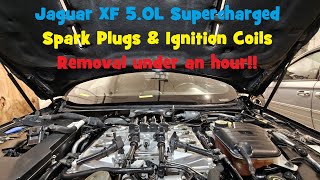
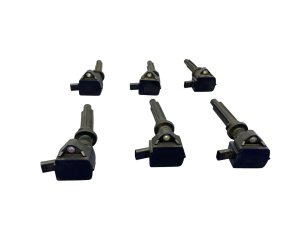
We Have This Part in Stock
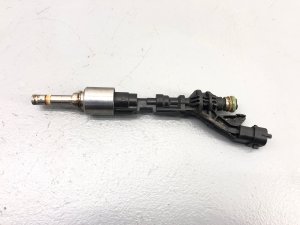

The information in this article is provided for general reference and educational purposes only. Vehicle specifications, procedures, and part compatibility can vary by production date, trim level, and region. Always consult your vehicle's factory service manual and verify part numbers before purchasing or performing repairs. Safety-critical components such as airbags, seat belts, and braking systems should be installed by a qualified professional.
- Jaguar XF:
- 🧭 Diagnostic Flowchart
- 🎬 Helpful Videos
- 🛍️ Shop This Part
- What's Unique About the 2009-2014 Jaguar XF
- Symptoms You May Notice
- Most Likely Causes
- Rare But Worth Checking
- Diagnosis Steps
- Parts You'll Likely Need
- Related Codes That Often Appear With This One
- Technical Service Bulletins (TSBs) & Recalls
- Platform-Specific Known Issues
- Mechanic-Grade Diagnostic Values
- Hidden / Shadow Codes Worth Checking
- Scan Tool Commands That Help
- Wiring & Ground Locations
- Real Owner Repair Stories
- "I Checked Everything" — The Actual Cause
- When the Usual Fixes Don't Work
- OEM Part Supersession History
- Model Year Variations Within This Range
- 🎟️ Get 5% Off