

P0308 on 2010-2014 Jaguar XK: Cylinder 8 Misfire Causes and Fixes
P0308 on a 2010-2014 Jaguar XK with the 5.0L V8 indicates a misfire in cylinder 8. The most common cause is a faulty ignition coil or a worn-out spark plug. Swapping the coil from cylinder 8 with another is the fastest way to confirm the problem. If ignition parts are not the cause, a restricted fuel injector is a known issue on this engine.
- P0308 specifically points to a misfire in cylinder 8, the rearmost cylinder on the driver's side.
- Start your diagnosis by swapping the ignition coil from cylinder 8 to another cylinder. This is a free and highly effective test.
- If the check engine light is flashing, stop driving immediately to prevent expensive damage to the catalytic converter.
- If new coils and plugs don't fix the issue, the next most likely cause on this specific engine is a clogged fuel injector, as noted in a Jaguar TSB.
What's Unique About the 2010-2014 Jaguar XK
The 2010-2014 Jaguar XK uses the 5.0L AJ133 V8 engine, which features gasoline direct injection (GDI). While ignition components are the most frequent culprits for a P0308 code, this engine platform has a known issue with fuel injectors. Jaguar issued a Special Service Message (SSM-63697) indicating that restricted fuel injectors due to poor fuel quality can cause misfires, making it a key secondary cause to investigate if spark plugs and coils are not at fault. Additionally, due to the GDI design, carbon buildup on the back of intake valves can occur over time, though it's less severe than on some other GDI engines.
Diagnostic Flowchart
Tap your situation to follow the diagnostic path that matches what you're seeing on this vehicle.
Symptoms You May Notice
- Flashing or solid Check Engine Light
- Engine vibration or shaking, especially at idle
- Rough running and hesitation during acceleration
- Noticeable loss of engine power
- Increased fuel consumption
- A smell of unburned fuel from the exhaust
- Misfire that appears or worsens as the engine warms up
- Replacing only the spark plug when the ignition coil is the actual cause.
- Replacing fuel pumps or MAF sensors before diagnosing the specific cylinder components (coil, plug, injector).
- Assuming an injector is bad when the issue is a wiring fault to the injector.
Most Likely Causes
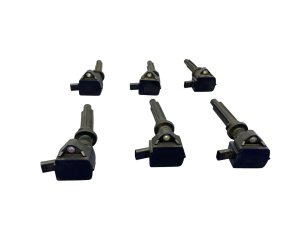
- Faulty Ignition Coil 🔴 High Probability → Shop Ignition Coil Coil-on-plug systems are common failure points on many modern engines due to high heat and vibration. The rear cylinders, like #8, can experience higher temperatures, potentially shortening coil life. Oil leaks from the valve cover gaskets into the spark plug wells are also a common cause of coil failure.
How to confirm: Swap the ignition coil from cylinder 8 with another cylinder (e.g., cylinder 6 on the same bank). Clear the codes and run the engine. If the code changes to P0306, the coil is bad. Accessing the rear coils can be tight, but is possible without removing the fuel rail.
Typical fix: Replace the faulty ignition coil. It is often recommended to replace the corresponding spark plug at the same time. Many owners choose to replace all 8 coils if they are original 🎬 See this walkthrough for replacing coils and spark plugs. and the vehicle has high mileage.
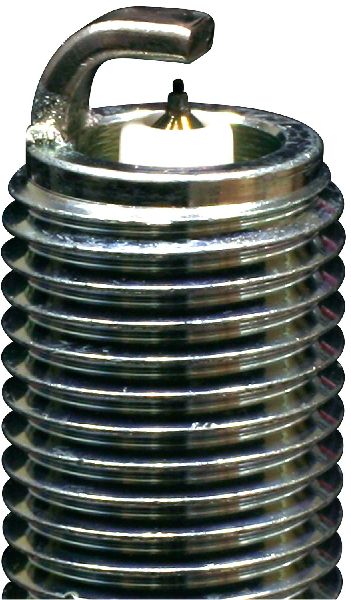
Est. part cost: $40-$90 - Worn or Fouled Spark Plug 🔴 High Probability → Shop Spark Plug Spark plugs are a routine maintenance item. The service interval for older XK models is often cited as every 30,000-40,000 miles. A plug can also be fouled by oil from a leaking valve cover gasket or, in more serious cases, coolant from an internal leak.
How to confirm: After ruling out the coil, remove the spark plug from cylinder 8. Inspect it for wear, carbon fouling, oil, or damage to the electrode or ceramic insulator. A 'steam-cleaned' or unusually clean appearance can indicate a coolant leak into the cylinder. Compare it to a plug from a healthy cylinder.
Typical fix: Replace the spark plug. It is best practice to replace all 8 spark plugs if they are near the end of their service interval to ensure even performance.
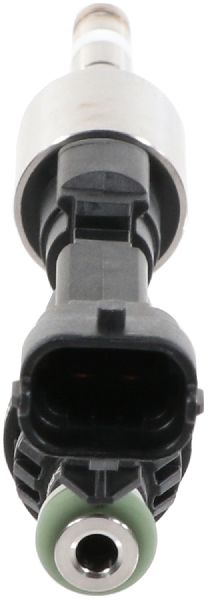
Est. part cost: $15-$30 per plug - Restricted or Failed Fuel Injector 🟡 Medium Probability → Shop Fuel Injector Jaguar TSB #SSM-63697 and its successor SSM71812 specifically call out restricted fuel injectors from poor fuel quality or contaminants as a cause for P030x codes on the 5.0L AJ133 engine. These high-pressure GDI injectors can become clogged or fail, leading to a lean misfire.
How to confirm: This is more complex. A professional can perform a fuel injector balance test or analyze fuel trim data. A DIY method involves listening to the injector with a mechanic's stethoscope to check for a consistent clicking sound. Swapping injectors is possible but is much more labor-intensive than swapping coils and requires depressurizing the fuel rail.
Typical fix: Replace the faulty fuel injector. Due to the direct injection system, this is an involved job that may require special tools to remove a seized injector. 🎬 Watch: How to remove injectors without expensive special tools. New injectors may also need to be calibrated to the ECU using specific software.
Est. part cost: $100-$250 - Vacuum Leak ⚪ Low Probability
How to confirm: Perform a smoke test to check for leaks in the intake manifold, vacuum hoses, or PCV system. A leak near the intake runner for cylinder 8 could lean out the mixture enough to cause a misfire. Spraying carburetor cleaner around suspected areas while the engine is running and listening for a change in idle RPM can also help, but a smoke test is more definitive.
Typical fix: Replace the leaking gasket or hose.
Est. part cost: $20-$150
Rare But Worth Checking
- Low Engine Compression: If ignition and fuel system checks do not resolve the issue, a mechanical problem like a worn piston ring, a bad valve, head gasket failure, or even issues with the timing chain could be the cause. A compression test and a cylinder leak-down test are needed to diagnose this.
- Intake Valve Carbon Buildup: As a direct-injection (GDI) engine, the AJ133 does not spray fuel over the intake valves, which can lead to carbon accumulation over many miles. Severe buildup on the valves for cylinder 8 could impede airflow and cause a misfire. This typically requires professional cleaning, such as walnut blasting.
- Leaking Supercharger Intercooler: On supercharged models, the integrated intercoolers (charge coolers) can develop internal coolant leaks. This allows coolant to be drawn directly into the cylinders, which can cause a misfire. If you have a supercharged engine and suspect a coolant leak but the head gasket seems fine, this is a possibility to investigate.
Diagnosis Steps
- Read the fault codes with an OBD-II scanner to confirm P0308 and check for any other codes like P0300, P0316, or P1316.
- Identify cylinder 8, which is the rearmost cylinder on the driver's side (US/LHD).
- Swap the ignition coil from cylinder 8 with the coil from cylinder 6 (the next one forward on the same bank). Access is tight but does not require removing major components.
- Clear the codes, start the engine, and let it idle or drive briefly. Re-scan for codes.
- If the code is now P0306, the ignition coil is faulty and needs replacement.
- If the code remains P0308, the problem is not the coil. Proceed to inspect the spark plug. Before removing the coil again, check the spark plug well for any pooled oil, which would indicate a leaking valve cover gasket that must be replaced.
- Remove and inspect the spark plug from cylinder 8 for excessive wear, fouling, or damage. Replace if necessary. It's best practice to replace all 8 if their age is unknown or near the service interval.
- If the coil and plug are good, the issue may be the fuel injector. Listen for a steady clicking sound from the injector with a stethoscope. Check the wiring and connector to the injector for damage.
- If the injector is silent or has an irregular tick, it may be faulty. Diagnosis from here often requires professional tools for fuel pressure and balance testing.
- If ignition and fuel components are ruled out, consider a vacuum leak (perform a smoke test) or a mechanical issue (perform a compression and/or cylinder leak-down test).
Parts You'll Likely Need
- Ignition Coil
(OEM #AJ811373)— This is the most common failure part for a single-cylinder misfire on the AJ133 engine. The original OEM coils were made by Denso.
Trusted brands: Bosch, Denso, Standard Motor Products, Airtex/Wells
OEM price range: $70-$110
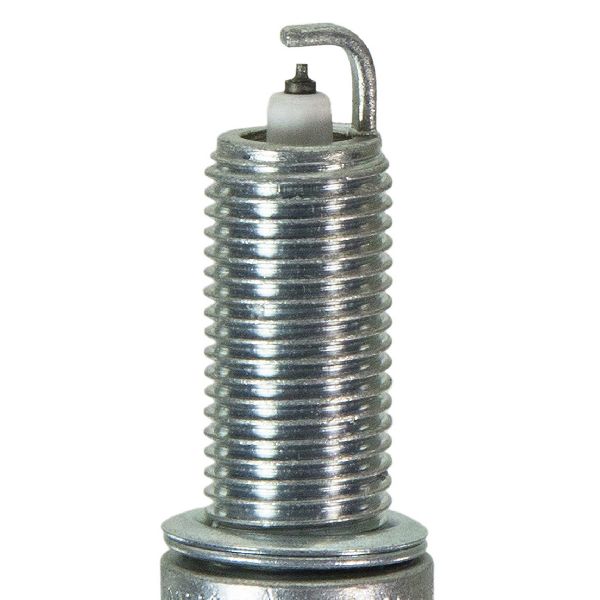
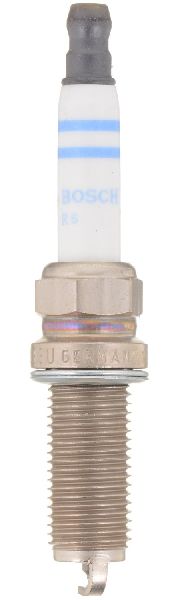
Aftermarket price range: $40-$90 - Spark Plug
(OEM #C2P16992)— Spark plugs are a regular maintenance item and can cause misfires when worn or fouled. They are typically replaced when diagnosing a misfire. The OEM plug is often an NGK Iridium model.
Trusted brands: NGK (ILKAR7C10), Bosch
OEM price range: $20-$30
Aftermarket price range: $15-$25 - Fuel Injector
(OEM #C2D24386)— A known issue on this platform, as cited by Jaguar TSB SSM-63697, where fuel contaminants can restrict the injector, causing a misfire. This part number may be superseded by C2D45732 or C2D55183.
Trusted brands: Bosch (OEM supplier)
OEM price range: $150-$250
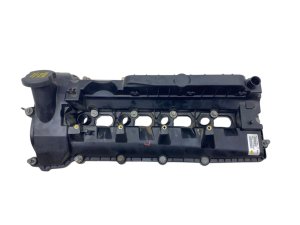
Aftermarket price range: $100-$180 - Valve Cover Gasket Set — If oil is found in the spark plug well for cylinder 8, the valve cover gasket and spark plug tube seals have failed and must be replaced to prevent repeat failure of the new ignition coil.
Related Codes That Often Appear With This One
- P0300 — If the misfire becomes more widespread or intermittent across multiple cylinders, a P0300 (Random/Multiple Cylinder Misfire) code may be triggered.
- P0316 — This code indicates a misfire was detected within the first 1000 engine revolutions on startup. It often appears with specific cylinder misfire codes like P0308 and is mentioned in related TSBs.
- P1316 — This is a Jaguar-specific code indicating the misfire is severe enough to potentially damage the catalytic converter.
Technical Service Bulletins (TSBs) & Recalls
- SSM-63697: Notes that misfire codes (P0301-P0308) may be stored due to poor fuel quality or contaminants restricting a fuel injector.
- JTB00533NAS1: Addresses engine misfires that occur only on a cold start, which may require a PCM software update.
Platform-Specific Known Issues
- Restricted Fuel Injectors: Jaguar Special Service Message SSM-63697 directly links P030x misfire codes on the 5.0L engine to fuel injectors being restricted by poor fuel quality or contaminants. This is a well-documented issue across the JLR 5.0L V8 family.
- Oil in Spark Plug Wells: A common issue is the failure of the valve cover gaskets and spark plug tube seals, allowing engine oil to fill the spark plug wells. This oil can short out the ignition coil, causing a misfire. A forum user on JaguarForums.com with a P0308 code found a significant amount of oil in the cylinder #8 well was the direct cause.
Mechanic-Grade Diagnostic Values
- High-Pressure Fuel System Pressure (GDI) — expected: Varies from ~34 bar (500 psi) at idle up to ~145 bar (2100 psi) under full power.. Failure: A P0087 code (Fuel Rail/System Pressure - Too Low) along with misfire codes points to a failing high-pressure fuel pump (HPFP) or a leaking injector.
- Engine Compression — expected: A healthy cylinder generally shows 120-150 PSI, with minimal variation between cylinders.. Failure: A significantly lower reading in cylinder 8 indicates a mechanical issue like worn piston rings, leaking valves, or a head gasket failure.
- Ignition Coil Secondary Resistance (General Guide) — expected: Approximately 9.5—11.1 kilohms. This is a general specification and may not be exact for the OEM Denso coil, but a reading far outside this range suggests a fault.. Failure: An open circuit (infinite resistance) or a reading significantly outside the expected range.
Hidden / Shadow Codes Worth Checking
- Mode 6 Misfire Data: The onboard diagnostic system actively monitors misfires for each individual cylinder. While not a 'shadow code,' accessing the live misfire count data for cylinder 8 can reveal intermittent misfires that haven't yet met the threshold to set a hard P0308 code. (see via A professional-level scan tool like Jaguar's SDD (Symptom Driven Diagnostics) or an advanced OBD-II scanner with Mode 6 capability.)
Scan Tool Commands That Help
- JLR SDD (Symptom Driven Diagnostics): Fuel Injector Calibration / Configuration — This function is required after replacing a GDI fuel injector on the 5.0L V8. The new injector's flow characteristics must be programmed into the Powertrain Control Module (PCM) to ensure correct fuel delivery and prevent subsequent misfires or fuel trim issues.
Wiring & Ground Locations
- Engine-to-Chassis Ground Strap — On the driver's side (LHD), a braided ground strap runs from the gearbox bellhousing area to a stud on the chassis, just behind the front wheel.. This is a primary ground path for the entire powertrain. Corrosion or looseness can cause erratic sensor readings and introduce electrical noise, potentially leading to misfire detection faults.
- Driver's Side A-Pillar Ground Stud — Located inside the cabin, behind the driver's side kick panel or A-pillar trim.. This is a major grounding point for many interior modules. While less direct, a poor ground here can cause communication issues with the PCM, leading to a variety of difficult-to-diagnose electrical faults.
OEM Part Supersession History
C2D24386→C2D45732, C2D55183— Part has been updated by the manufacturer over time. Later revisions may offer improved reliability or slight design changes.
Heads up: These part numbers are generally interchangeable for the 5.0L V8. Other equivalent part numbers include 8W939F593BC, C2P16489, and LR079542. The OEM supplier is Bosch.
Model Year Variations Within This Range
- 2010-2014: The XK received a cosmetic facelift for the 2012 model year, including new headlights and trim. However, the 5.0L V8 AJ133 powertrain and ZF six-speed automatic transmission remained mechanically unchanged throughout this period. Later model years may have received factory PCM software updates not present on earlier cars.
Helpful Videos
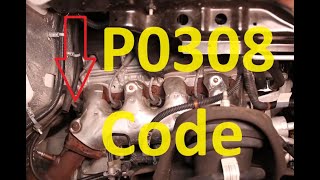
![P0301-P0308 | Spark plugs Replacement for Range Rover 5.0 [L405-L494]](https://img.youtube.com/vi/TgzRoSfT-J8/mqdefault.jpg)
Used OEM Parts in Stock
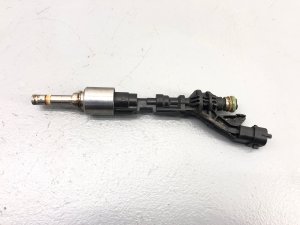

New Aftermarket Parts Available

The information in this article is provided for general reference and educational purposes only. Vehicle specifications, procedures, and part compatibility can vary by production date, trim level, and region. Always consult your vehicle's factory service manual and verify part numbers before purchasing or performing repairs. Safety-critical components such as airbags, seat belts, and braking systems should be installed by a qualified professional.
- Jaguar XK:
- 🧭 Diagnostic Flowchart
- 🎬 Helpful Videos
- 🛍️ Shop This Part
- What's Unique About the 2010-2014 Jaguar XK
- Symptoms You May Notice
- Most Likely Causes
- Rare But Worth Checking
- Diagnosis Steps
- Parts You'll Likely Need
- Related Codes That Often Appear With This One
- Technical Service Bulletins (TSBs) & Recalls
- Platform-Specific Known Issues
- Mechanic-Grade Diagnostic Values
- Hidden / Shadow Codes Worth Checking
- Scan Tool Commands That Help
- Wiring & Ground Locations
- OEM Part Supersession History
- Model Year Variations Within This Range
- 🎟️ Get 5% Off