

P0308 on 2010-2013 Land Rover LR4: Cylinder 8 Misfire Causes and Fixes
On a 2010-2013 Land Rover LR4, code P0308 is most often caused by a failed ignition coil or spark plug on cylinder 8. A faulty fuel injector is the next most likely culprit. In some cases, carbon buildup on intake valves can also lead to this misfire. Expect to pay $50-$150 for a DIY coil and plug swap.
- P0308 on a 2010-2013 LR4 indicates a misfire in the rearmost cylinder on the driver's side.
- Start your diagnosis by swapping the ignition coil from cylinder 8 to cylinder 6. This is a quick, no-cost test that often identifies the problem.
- If the coil is not the issue, replace the spark plug. If the problem persists, the fuel injector is the next most likely cause.
- Do not drive for an extended period if the check engine light is flashing, as this can cause expensive damage to your catalytic converter.
- Consider the fuel quality, as per Land Rover's own technical bulletin, if the misfire appeared after refueling.
What's Unique About the 2010-2013 Land Rover LR4
The 5.0L V8 engine (AJ133) in the 2010-2013 LR4 is a direct-injection powerplant known for being sensitive to ignition and fuel system health. While ignition coils and spark plugs are common culprits for P0308, this platform has documented issues with fuel injectors, as noted in TSBs and owner forums. Furthermore, as a direct-injection engine, it is susceptible to carbon buildup on the intake valves, which can restrict airflow to a cylinder and cause a misfire. Cylinder 8 is located at the rear of the engine on the driver's side, making access slightly more challenging than the front cylinders.
Diagnostic Flowchart
Tap your situation to follow the diagnostic path that matches what you're seeing on this vehicle.
Symptoms You May Notice
- Rough or vibrating idle
- Hesitation or stumbling during acceleration
- Noticeable loss of engine power and 'Restricted Performance' message
- Solid Check Engine Light (CEL)
- Flashing Check Engine Light (CEL) under load or acceleration.
- Reduced fuel economy.
- Strong smell of gasoline from the exhaust.
- Replacing all fuel injectors when only one is bad.
- Replacing the catalytic converter, which is usually damaged as a *result* of a persistent misfire, not the cause of it.
- Replacing oxygen sensors, which may report abnormal readings due to the misfire but are not the root cause.
Most Likely Causes
- Faulty Ignition Coil 🔴 High Probability → Shop Ignition Coil Coil-on-plug ignition systems are a frequent failure point on many modern engines as they age. The high heat environment in the 5.0L V8's engine bay contributes to the degradation of the coil's internal electronics over time.
How to confirm: The easiest way to confirm a bad coil is to swap the ignition coil from cylinder 8 with another cylinder (e.g., cylinder 6, which is the next one forward on the driver's side bank). Clear the codes and drive the vehicle. If the code changes to P0306, the ignition coil is faulty.
Typical fix: Replace the faulty ignition coil. It is often recommended to replace the corresponding spark plug at the same time, as a failing plug can stress a new coil.
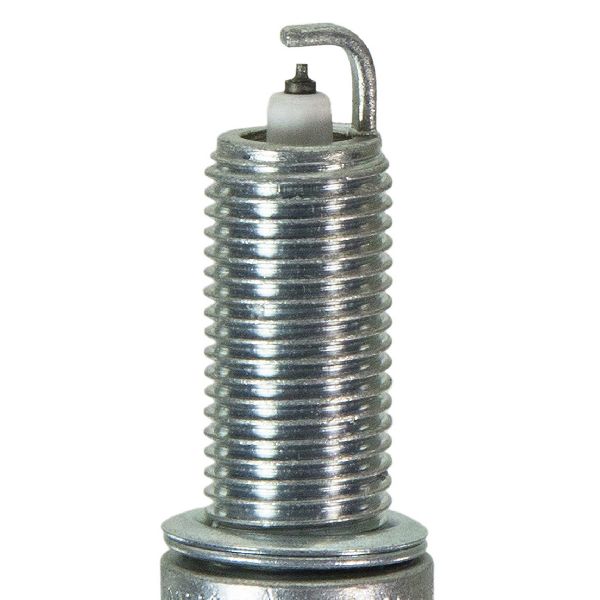
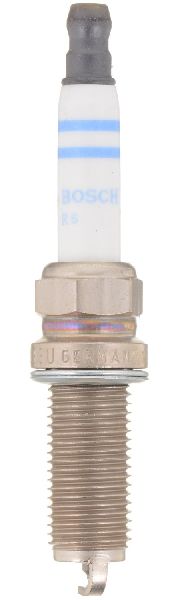
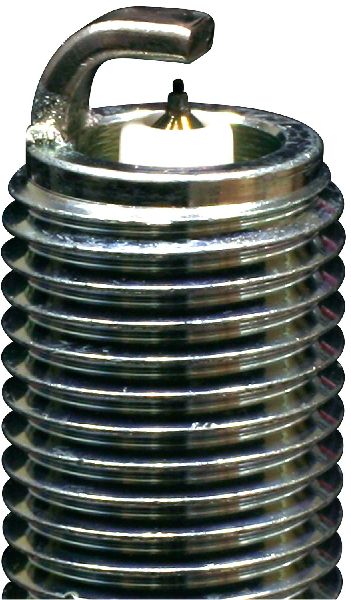
Est. part cost: $50-$120 - Worn or Fouled Spark Plug 🔴 High Probability → Shop Spark Plug Spark plugs are a regular maintenance item with a service life of around 105,000 miles on the 5.0L engine. If they are past their service interval, or if another issue like a leaking injector or oil consumption causes them to become fouled with fuel, oil, or carbon, they can cause a misfire.
How to confirm: After ruling out the ignition coil, remove the spark plug from cylinder 8. Inspect it for wear on the electrode, cracks in the porcelain, or heavy deposits. A plug that appears 'steam cleaned' or unusually clean compared to others can indicate a coolant leak into that cylinder.
Typical fix: Replace the spark plug on cylinder 8. It is best practice to replace all 8 spark plugs at the same time if they are near the end of their service life to ensure consistent performance.
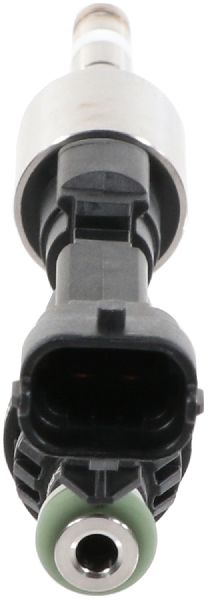
Est. part cost: $15-$30 per plug - Clogged or Faulty Fuel Injector 🟡 Medium Probability → Shop Fuel Injector The direct injection fuel injectors on the 5.0L V8 operate under extremely high pressure (over 2,000 PSI) and can become clogged from fuel contaminants or fail electronically. Land Rover has issued TSBs related to misfires caused by poor fuel quality leading to restricted injectors. In some cases, injectors can get stuck open, leading to a rich condition and a strong fuel smell.
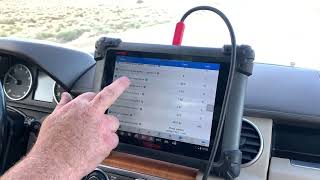
How to confirm: If the coil and plug swap doesn't move the misfire, the injector is a strong suspect. A professional can perform a fuel injector balance test. A DIY method involves swapping injectors between cylinders (e.g., 8 and 6), but this is a much more labor-intensive job requiring special tools to remove the injector from the head. Watching fuel trim data on a scan tool can also help; a large negative fuel trim on Bank 2 🎬 See how a mechanic diagnoses a persistent LR4 misfire. could indicate a leaking injector.
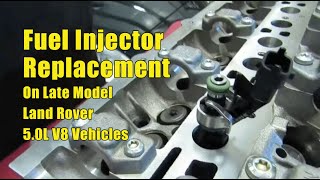
Typical fix: Replace the fuel injector for cylinder 8. This requires removing the fuel rail and using a special slide-hammer puller tool. 🎬 Watch: A guide to replacing fuel injectors on the 5.0L V8. The Teflon seal at the tip of the injector must also be replaced.
Est. part cost: $100-$250 - Intake Valve Carbon Buildup 🟡 Medium Probability As a direct injection engine, fuel is sprayed directly into the cylinder, not over the back of the intake valves. This means there's no gasoline to wash away carbon deposits that form from the PCV system. Over time, this buildup can restrict airflow into cylinder 8, causing a lean misfire.
How to confirm: This is difficult to confirm without disassembly. A borescope inspection of the intake ports with the intake manifold removed is the most direct way. A compression test may show slightly lower readings on the affected cylinder. This is often a diagnosis of exclusion after ignition and fuel delivery have been ruled out.
Typical fix: The intake manifold must be removed and the valves need to be physically cleaned, most commonly through walnut blasting. Some owners attempt chemical cleaning methods, but physical removal is most effective.
Est. part cost: $0 (if cleaning manually) to $500+ (for professional walnut blasting service) - Poor Fuel Quality ⚪ Low Probability Land Rover issued Technical Service Bulletin LTB00409NAS3 specifically mentioning that poor fuel quality or contamination can cause misfire codes (P0301-P0308) and a rough idle by restricting fuel injector flow.
How to confirm: This is difficult to confirm directly but can be suspected if the misfires started immediately after refueling. The issue may resolve after using a quality fuel system cleaner and refueling with top-tier, premium (91+ octane) gasoline.
Typical fix: Use a quality fuel injector cleaner (like Sea Foam or Techron) and fill the tank with premium (91+ octane) gasoline from a reputable station.
Est. part cost: $15-$30 for fuel additive
Rare But Worth Checking
- Vacuum Leak: A vacuum leak from a cracked hose or a faulty intake manifold gasket near cylinder 8 could lean out the air/fuel mixture and cause a misfire. A common source can be an unseated air intake boot after other service.
- Low Compression: If all ignition and fuel components check out, a mechanical engine issue could be the cause. This can be due to worn piston rings, a burnt valve, or a failing head gasket. 🎬 Watch: A deep dive into major mechanical engine failures and repairs. A compression test followed by a leak-down test on cylinder 8 is needed to diagnose this.
- Wiring or ECU Issue: In rare cases, a damaged wire in the harness leading to the coil or injector for cylinder 8, or a faulty driver in the Engine Control Unit (ECU), could cause the misfire. This was noted by one owner on a forum after exhausting all other options.
Diagnosis Steps
- Verify the Code: Use an OBD-II scanner to confirm P0308 is the active code. Note any other codes present, especially P0300 or P0316.
- Locate Cylinder 8: On the 5.0L V8, the cylinders are numbered 1-3-5-7 on the passenger side (Bank 1) and 2-4-6-8 on the driver's side (Bank 2), from front to back. Cylinder 8 is the rearmost cylinder on the driver's side.
- Test the Ignition Coil: Swap the ignition coil from cylinder 8 with the coil from cylinder 6 (the cylinder in front of it). Clear the codes, start the engine, and drive to see if the misfire code moves to P0306. If it does, the ignition coil is bad.
- Inspect the Spark Plug: If the misfire remains on cylinder 8, remove the coil and spark plug. Check the plug for excessive wear, damage, or fouling (black and sooty for rich, white for lean, or wet with oil/coolant). If it looks bad, replace it. It's best to replace all 8 if they are old.
- Check the Fuel Injector: If the coil and plug are good, the fuel injector is the next likely suspect. Listen for a consistent clicking sound from the injector with a mechanic's stethoscope. A more involved test is to swap the injector with another cylinder, but this requires significant disassembly and a special puller tool.
- Check for Vacuum Leaks: With the engine running, carefully spray brake cleaner or a propane torch (unlit) around the intake manifold near cylinder 8. If the engine RPM changes, you have a vacuum leak.
- Perform a Compression Test: If all else fails, a mechanical issue is possible. Perform a dry and wet compression test on cylinder 8 and compare the reading to a healthy cylinder (like cylinder 6). A significant drop in pressure (more than 25% lower than the highest reading) points to an internal engine problem.
Parts You'll Likely Need
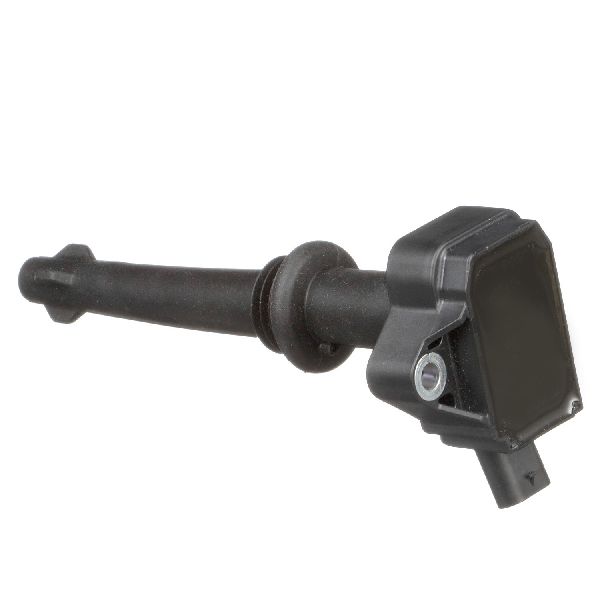
- Ignition Coil
(OEM #LR010687)— This is the most common cause of a single-cylinder misfire and the easiest to diagnose via swapping.
Trusted brands: Bosch, Delphi, Denso
OEM price range: $90-$140
Aftermarket price range: $45-$90. - Spark Plug
(OEM #LR025605)— Spark plugs are a routine wear item. A fouled or worn plug on cylinder 8 will cause a misfire.
Trusted brands: NGK, Bosch
OEM price range: $20-$35
Aftermarket price range: $15-$25 - Fuel Injector
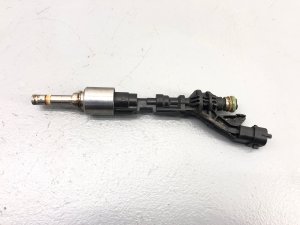
(OEM #LR079542)— Direct injectors on the 5.0L V8 are a known failure point, either becoming clogged or failing electronically. This is a common cause after ruling out ignition components.
Trusted brands: Bosch (OEM), Standard Motor Products
OEM price range: $150-$250
Aftermarket price range: $90-$170
Related Codes That Often Appear With This One
- P0300 — If the misfire is intermittent or starting to affect other cylinders, a P0300 (Random/Multiple Cylinder Misfire) code may appear alongside P0308.
- P0316 — This code indicates a misfire was detected within the first 1,000 engine revolutions at startup, which is common with a persistent single-cylinder misfire. Many JLR TSBs for misfires require both a P030x and a P0316 to be present for certain repair paths.
Technical Service Bulletins (TSBs) & Recalls
- LTB00409NAS3: A rough idle condition and misfire DTCs may be caused by poor fuel quality or fuel contamination, leading to clogged fuel injectors.
- JTB00322NAS2: Outlines a procedure for addressing misfires on the 5.0L engine, recommending injector replacement if the misfire occurs when the engine is hot (coolant temp > 76°C).
- JTB-00241-NAS1: Acknowledges that rough idle and misfires on the 5.0L AJ133 engine can be caused by clogged injectors and recommends a fuel induction system cleaning before replacement.
Platform-Specific Known Issues
- TSB on Fuel Quality: Land Rover issued Technical Service Bulletin LTB00409NAS3, which states that a rough idle and misfire codes (P0301-P0308) can be caused by poor fuel quality or contamination leading to clogged injectors.
- TSB on Hot/Cold Misfires: Jaguar issued a related TSB (JTB00322NAS2) for the 5.0L engine that provides a detailed diagnostic path depending on whether the misfire occurs when the engine is hot or cold, pointing towards injector replacement for 'hot' misfires.
- Carbon Buildup: Owners on forums like Reddit have been advised by shops that heavy carbon buildup on intake valves is a cause for misfires on this engine, sometimes leading to recommendations for an engine rebuild when a valve cleaning (walnut blasting) would suffice.
Mechanic-Grade Diagnostic Values
- Low-Pressure Fuel System (Key On, Engine Off) — expected: Primes to ~105 PSI when driver's door is opened.. Failure: Pressure significantly below 105 PSI indicates a weak low-pressure pump or leak.
- Low-Pressure Fuel System (Engine Idling, Warmed Up) — expected: 79 PSI is typical, but can be as low as 65 PSI.. Failure: Sustained pressure below 65 PSI points to a weak in-tank fuel pump.
- High-Pressure Fuel System (Cold Start/High Idle) — expected: Should be no lower than 2,000 PSI.. Failure: Failure to reach ~2,000 PSI can indicate a failing high-pressure fuel pump (HPFP).
- High-Pressure Fuel System (Engine Idling, Warmed Up) — expected: Levels out at approximately 500 PSI.. Failure: Erratic pressure or values significantly different from 500 PSI at idle can suggest an HPFP or sensor issue.
- High-Pressure Fuel System (Under Load at 3,000 RPM) — expected: Should increase to ~2,000 PSI (13-14 MPa).. Failure: If pressure fails to rise with RPM or flatlines under load, the HPFP is a likely culprit.
- Fuel Injector Resistance — expected: While a specific spec for the GDI injectors is not the primary test, a comparative test between injectors should yield very similar readings. Older port-injected Land Rover injectors are specified around 14.5 ohms, but this is not directly applicable to the GDI engine.. Failure: An injector with a resistance reading significantly different from the others is suspect. However, mechanical clogging is more common than electrical failure and won't be found with a resistance test.
Scan Tool Commands That Help
- JLR SDD (Symptom Driven Diagnostics): Live Misfire Data / Power Balance Test — To confirm in real-time that cylinder 8 is the source of the misfire counts, which is more precise than a generic P0308 code.
- JLR SDD (Symptom Driven Diagnostics): Fuel Injector Balance Test — To measure the pressure drop and flow rate of each injector to identify one that is clogged or leaking, after ignition issues have been ruled out.
- JLR SDD (Symptom Driven Diagnostics): Fuel System - High Pressure Fuel System Bleed — This service routine is required after replacing a high-pressure fuel pump or injectors to safely bleed air from the system.
Wiring & Ground Locations
- C0634 at ECM — This is one of the main connectors at the Engine Control Module (ECM).. A wiring diagram indicates the control wire for Fuel Injector #8 is located at Pin 29 of this connector. Checking for continuity and voltage at this pin can diagnose a wiring harness or ECM driver fault.
- Engine Ground Straps — Main engine-to-chassis ground straps are located on the sides of the engine block. Other critical ground points are located behind the front wheel arch liners.. A corroded or loose engine ground can cause erratic electrical behavior, including weak spark or incorrect sensor readings, leading to misfires that are difficult to diagnose.
Real Owner Repair Stories
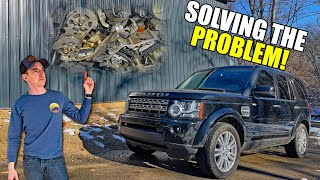
- YouTube channel 'TheLostCauseRanch' (2011 Land Rover LR4, 183,000 miles) — Audible knocking/slapping noise from engine, restricted performance message, and timing-related fault codes along with misfires.
❌ Tried (didn't work) The diagnosis pointed directly to a timing issue rather than typical ignition or fuel component swaps.
✅ What actually fixed it The root cause was a worn timing chain tensioner guide. The piston on the hydraulic tensioner had worn a deep groove into the aluminum guide, preventing it from maintaining proper chain tension. The fix was to replace the timing chains, tensioners, and the updated guides which feature a steel insert to prevent this wear.
When the Usual Fixes Don't Work
- While P0308 is most commonly a straightforward ignition or fuel injector problem, on the 2010-2012 LR4 it can be an early symptom of a much more serious underlying issue: timing chain failure. Multiple owners and specialists have documented cases where persistent, unresolved misfires were ultimately traced back to stretched timing chains caused by worn tensioner guides. In these instances, replacing the coil, spark plug, and even the fuel injector on cylinder 8 provides no relief. The actual fix is a complete timing chain service with updated metal-reinforced guides, a labor-intensive and expensive repair. This is a critical distinction, especially for higher-mileage vehicles in the 2010-2012 range.
OEM Part Supersession History
LR011964 (and others)→LR079542, LR105439— Revisions to improve reliability and performance. The injectors are a known failure point.
Heads up: It is critical to use the correct, most up-to-date part number for the vehicle's VIN. Using incorrect or mixed revisions of injectors can cause running issues. Kits often come with a new retainer clip and Teflon seal (like LR037089) which must be replaced.
Model Year Variations Within This Range
- 2010-2012: These model years were equipped with timing chain tensioner guides made of a softer aluminum. The tensioner piston would wear a groove into the guide, leading to slack in the chain, incorrect timing, and eventually misfire codes or catastrophic failure.
- 2013: Late in the 2012 model year and for all of 2013, Land Rover began using updated timing chain guides with a steel insert that resists wear from the tensioner piston. As a result, 2013 models are considered significantly more reliable regarding this specific failure mode.
Helpful Videos
Used OEM Parts in Stock
New Aftermarket Parts Available


The information in this article is provided for general reference and educational purposes only. Vehicle specifications, procedures, and part compatibility can vary by production date, trim level, and region. Always consult your vehicle's factory service manual and verify part numbers before purchasing or performing repairs. Safety-critical components such as airbags, seat belts, and braking systems should be installed by a qualified professional.
- Land Rover LR4:
- 🧭 Diagnostic Flowchart
- 🎬 Helpful Videos
- 🛍️ Shop This Part
- What's Unique About the 2010-2013 Land Rover LR4
- Symptoms You May Notice
- Most Likely Causes
- Rare But Worth Checking
- Diagnosis Steps
- Parts You'll Likely Need
- Related Codes That Often Appear With This One
- Technical Service Bulletins (TSBs) & Recalls
- Platform-Specific Known Issues
- Mechanic-Grade Diagnostic Values
- Scan Tool Commands That Help
- Wiring & Ground Locations
- Real Owner Repair Stories
- When the Usual Fixes Don't Work
- OEM Part Supersession History
- Model Year Variations Within This Range
- 🎟️ Get 5% Off