

P0308 on 2001-2002 Oldsmobile Intrigue: An Impossible Code & How to Find the Real Misfire
A P0308 code is impossible on the V6-only 2001-2002 Oldsmobile Intrigue, as it means 'Cylinder 8 Misfire' and the vehicle only has 6 cylinders. This error points to a faulty scan tool or a typo. You likely have a misfire on a different cylinder (P0301-P0306). The most common causes for actual misfires are bad spark plugs or faulty ignition coils.
- P0308 is an impossible code for a 2001-2002 Oldsmobile Intrigue; do not waste time or money trying to fix cylinder 8.
- Your first step must be to re-scan the vehicle with a reliable OBD-II tool to find the true misfire code (P0300-P0306).
- The most likely causes for a real misfire on this car are worn spark plugs or a faulty ignition coil/module.
- Driving with a flashing Check Engine Light can cause expensive damage to your catalytic converter.
- For the 3.8L engine, the ignition coil packs and the Ignition Control Module are the most probable cause of a misfire.
What's Unique About the 2001-2002 Oldsmobile INTRIGUE
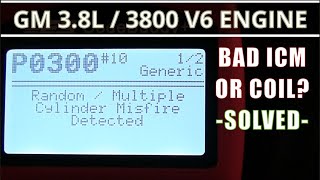
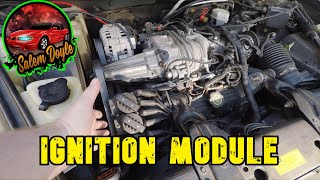
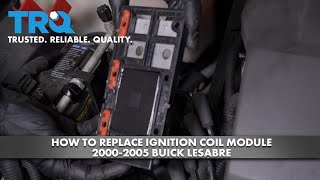
The key platform-specific issue for the 2001-2002 Oldsmobile Intrigue regarding a P0308 code is that it's impossible. Both the standard 3.5L LX5 V6 and the previously available 3.8L L36 V6 are six-cylinder engines. Any guide that suggests diagnosing cylinder 8 on this car is incorrect. The focus must immediately shift to questioning the validity of the code itself and then pursuing a proper diagnosis for a general misfire (P0300) 🎬 Watch: How to solve a GM 3800 misfire in minutes or a specific, valid cylinder misfire (P0301-P0306). The actual misfire is often related to well-documented failure points on these engines, such as the Ignition Control Module (ICM) 🎬 See this walkthrough on replacing the Ignition Control Module on the 3.8L V6.
Diagnostic Flowchart
Tap your situation to follow the diagnostic path that matches what you're seeing on this vehicle.
Symptoms You May Notice
- Flashing or solid Check Engine Light
- Rough or shaking idle
- Hesitation or stumbling during acceleration
- Noticeable loss of engine power
- Poor fuel economy
- Smell of raw fuel from the exhaust
- Engine stalls when warm but restarts after cooling down (points to Crankshaft Position Sensor)
- Searching for or attempting to diagnose cylinder #8.
- Replacing parts without first confirming the correct trouble code with a reliable scanner.
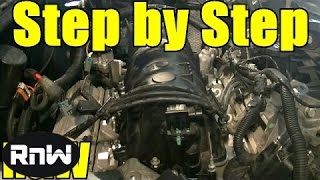
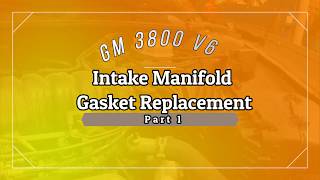
- Replacing only the upper intake manifold gaskets on a 3.8L without replacing the failure-prone plastic manifold itself. 🎬 Watch: Step-by-step guide to replacing the 3800 intake manifold
Most Likely Causes
- Invalid Scan Tool Reading or Typo 🔴 High Probability The vehicle only has a V6 engine, making a P0308 code physically impossible.
How to confirm: Confirm the engine only has 6 cylinders by visual inspection. Use a different, known-good OBD-II scanner to re-read the codes. Double-check that the correct vehicle profile is selected in the scanner.
Typical fix: Re-scan the vehicle to get the correct trouble code (likely P0300, or P0301 through P0306).
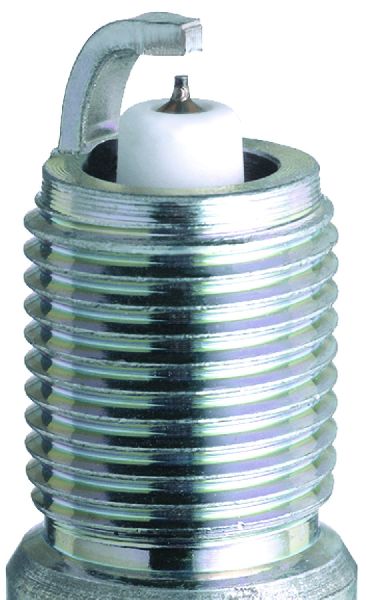
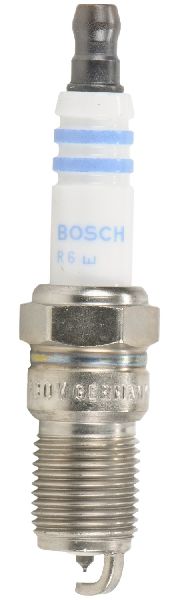
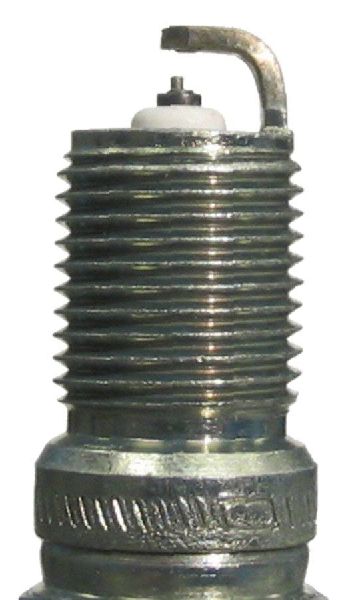
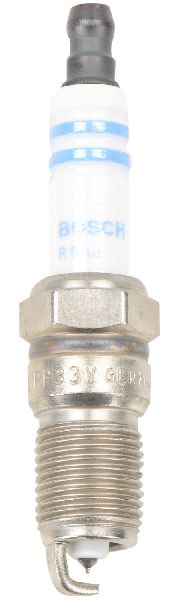
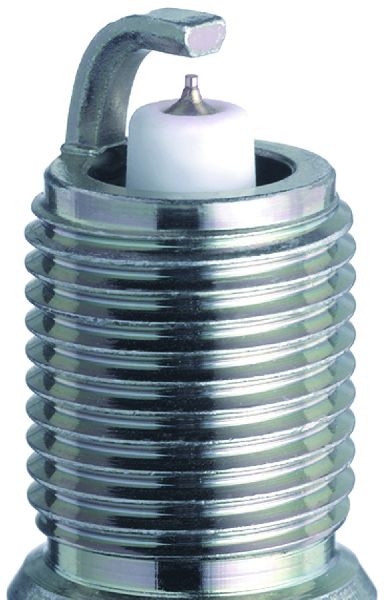
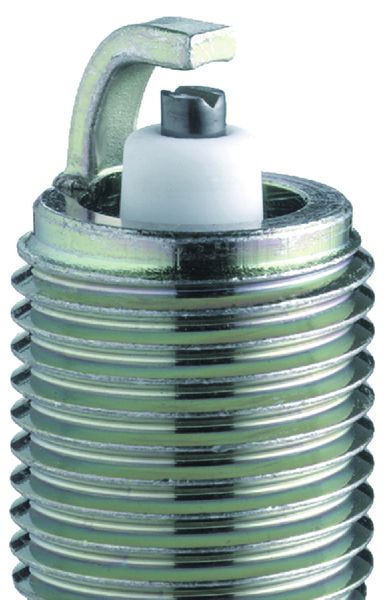
Est. part cost: $0 - Worn or Faulty Spark Plugs 🔴 High Probability → Shop Spark Plug Spark plugs are a common wear item and a primary cause of misfires on any gasoline engine. The GM 3.8L V6, in particular, is sensitive to spark plug wear.
How to confirm: Remove the spark plugs from the misfiring cylinder (once the correct cylinder is identified). Inspect for wear, fouling (black, oily, or white deposits), or damage to the electrode or ceramic insulator. A recommended gap for the 3.8L is 0.060 inches.
Typical fix: Replace all spark plugs as a set. Use plugs from a reputable brand like NGK or ACDelco.
Est. part cost: $20-$60 - Faulty Ignition Coil or Ignition Control Module (ICM) 🔴 High Probability → Shop Ignition Coil The GM 3.8L V6 uses a waste-spark system with three coil packs mounted on an Ignition Control Module (ICM). Both the coils and the module are very common failure points that cause misfires. The 3.5L engine uses a more modern coil-on-plug design, which can also fail individually.
How to confirm: For the 3.8L, swap the suspected bad coil with a known good one from another cylinder pair and see if the misfire code follows the coil. For the 3.5L, swap the coil-on-plug unit from the misfiring cylinder to another cylinder. If the code moves (e.g., P0302 becomes P0304), the coil is bad. The ICM on the 3.8L can be tested at many auto parts stores, but can sometimes test good and still be faulty under load.
Typical fix: Replace the single faulty ignition coil or the entire ICM if necessary.
Est. part cost: $40-$150 - Bad Spark Plug Wires (3.8L Engine) 🟡 Medium Probability → Shop Spark Plug The 3.8L engine uses spark plug wires, which can degrade over time, causing increased resistance or arcing. The 3.5L engine is a coil-on-plug design and does not have separate wires.
How to confirm: Inspect wires for cracking, burning, or loose connections. With the engine running in the dark, look for any visible arcing from the wires to the engine block. Test resistance with a multimeter.
Typical fix: Replace all spark plug wires as a set.
Est. part cost: $30-$70 - Faulty Fuel Injector ⚪ Low Probability → Shop Fuel Injector
How to confirm: Use a mechanic's stethoscope or a long screwdriver to listen to the injector; you should hear a consistent clicking sound. You can also test the injector's resistance with a multimeter or swap it with another cylinder's injector to see if the misfire follows.
Typical fix: Replace the faulty fuel injector. It is often recommended to replace the O-rings and seals on surrounding injectors at the same time.
Est. part cost: $50-$100
Rare But Worth Checking
- Failed Upper Intake Manifold (3.8L Engine): → Shop Engine Intake Manifold The original plastic upper intake manifold on the 3.8L L36 engine is a notorious failure point. The plastic around the EGR port can degrade and crack, causing an internal coolant leak. This can lead to misfires, unexplained coolant loss, and eventually catastrophic engine damage (hydrolock) if not addressed. An aftermarket Dorman manifold (part #615-180) is a common, improved replacement.
- Faulty Crankshaft Position Sensor (CKP): A very common failure on both the 3.5L and 3.8L GM engines of this era. A failing CKP sensor often causes the engine to stall when it gets hot and then refuse to start until it has cooled down. It can also cause intermittent misfires and erratic tachometer behavior before it fails completely. An owner on an Edmunds forum confirmed this exact symptom and fix.
- Vacuum Leak: A significant vacuum leak from a cracked hose or a failed intake manifold gasket can cause a lean condition and lead to misfires, often triggering a P0300 (random misfire) code along with a specific cylinder code.
- Low Engine Compression: This is a more serious mechanical issue, potentially caused by a leaking head gasket, worn piston rings, or a burnt valve. A compression test is needed to diagnose this.
- Faulty Powertrain Control Module (PCM): → Shop Engine Control Module (ECM) In extremely rare cases, a failing PCM could erroneously report a code for a non-existent cylinder. This should only be considered after all other possibilities, including scan tool error, have been exhaustively ruled out.
Diagnosis Steps
- Acknowledge that P0308 is an impossible code for this vehicle.
- Verify the vehicle information (2001-2002 Oldsmobile Intrigue) is correct.
- Obtain a different, known-good OBD-II scanner. Clear any existing codes and perform a fresh scan.
- If a new code appears (e.g., P0304), begin diagnosis for that specific cylinder.
- If no code appears, drive the vehicle until the Check Engine Light returns and re-scan.
- Once the correct misfiring cylinder is identified, inspect the spark plug, ignition coil (or coil pack), and spark plug wire (if 3.8L).
- A common diagnostic technique is to swap the ignition coil of the misfiring cylinder with a known good cylinder. Clear the codes and drive the vehicle. If the misfire code 'moves' to the new cylinder, the ignition coil is faulty. This is a proven method for these engines.
- If the coil is not the issue, perform the same swap test with the spark plug.
- If ignition components are good, investigate the fuel injector for the corresponding cylinder.
- If misfires are random (P0300) or accompanied by coolant loss on a 3.8L, inspect the upper intake manifold near the EGR port for signs of cracking or coolant leaks.
- If the car stalls when hot and won't restart until cool, the Crankshaft Position Sensor is the primary suspect.
- If the misfire persists, consider checking for vacuum leaks or performing an engine compression test.
Parts You'll Likely Need
- Ignition Coil(s)
(OEM #ACDelco D585 (for 3.5L LX5) or ACDelco D555 (for 3.8L L36))— A very common failure point on both the 3.5L (coil-on-plug) and 3.8L (coil pack) engines leading to specific cylinder misfires.
Trusted brands: ACDelco, Delphi
OEM price range: $50-$90
Aftermarket price range: $30-$60 - Spark Plugs
(OEM #ACDelco 41-101 (Iridium, for 3.5L))— Standard maintenance item and the most frequent cause of misfires. Should be replaced as a full set.
Trusted brands: NGK, ACDelco
OEM price range: $8-$15 per plug
Aftermarket price range: $4-$10 per plug
Related Codes That Often Appear With This One
- P0300 — If the scan tool error is intermittent, it might also throw a P0300 for Random/Multiple Cylinder Misfire, which is the actual underlying problem.
- P0301, P0302, P0303, P0304, P0305, P0306 — One of these codes is the true code your car is trying to report. The P0308 is likely a corrupted or misinterpreted signal for one of these valid codes.
- P0171 — System Too Lean (Bank 1). A vacuum leak, such as from a failed intake manifold gasket, can cause this code to appear alongside misfire codes.
Technical Service Bulletins (TSBs) & Recalls
- PIP5628G: This is a general GM bulletin for technicians on how to collect and report data for misfire codes P0300-P0308. It is not specific to the Intrigue and its inclusion of P0308 is for completeness across all GM engines, including V8s. It does not mean the Intrigue has 8 cylinders.
- 01-06-01-007B: This bulletin (mentioned in forum and video content) specifically addresses the failure of the composite upper intake manifold on the 3.8L L36 engine due to heat from the EGR system, which can cause coolant leaks and misfires.
Platform-Specific Known Issues
- The primary vehicle-specific issue is that P0308 is an impossible code due to the V6 engine configuration.
- For models with the 3.8L L36 V6, the ignition control module (ICM) and coil packs are a well-documented weak point and a top cause for misfires.
- The provided Technical Service Bulletin, PIP5628G, is a general GM guide for diagnosing misfires (P0300-P0308), indicating a standardized diagnostic approach that technicians would use, even if P0307 and P0308 are not applicable to this specific V6 model.
Mechanic-Grade Diagnostic Values
- Fuel Pressure (3.5L LX5 V6) — expected: 41 - 47 psi (284 - 325 kPa). Failure: Pressure below this range can cause lean misfires; pressure above can cause rich conditions. A ruptured regulator diaphragm may leak fuel into its vacuum hose.
- Fuel Pressure (3.8L L36 V6) — expected: 48 - 55 psi (key on, engine off). Failure: Significantly lower pressure indicates a weak pump or clogged filter. Pressure that drops rapidly after the pump primes indicates a leak or faulty check valve.
- Ignition Coil Secondary Resistance (3.8L L36 V6) — expected: 5,000 - 10,000 Ohms (5k-10k Ω). Failure: A reading of infinity (OL) or well outside this range indicates a bad coil. Note that a coil can sometimes test good when cold but fail under heat and load.
- Ignition Coil Primary Resistance (3.8L L36 V6) — expected: 0.2 - 0.7 Ohms (Ω). Failure: Readings outside this very low range suggest a fault in the primary windings of the coil.
- Fuel Injector Resistance (Both Engines) — expected: 11 - 14 Ohms (Ω). Failure: A resistance reading significantly higher or lower than this range indicates a failed injector coil. This is a static test and does not check for clogging.
Hidden / Shadow Codes Worth Checking
- Mode $06, Test ID $53: This is not a 'code' but a specific data parameter within the generic OBD-II functions. It provides raw misfire counts per cylinder for the current and last 10 driving cycles. This data is what the PCM uses to eventually set a P030x code. (see via A scan tool that can display Mode $06 data. The data will show a component ID for each cylinder and a test value (the misfire count). Even if no Check Engine Light is on, these counters can reveal which cylinder is misfiring intermittently.)
- Misfire History (Tech2): A GM Tech2 or equivalent high-end scan tool can display a 'Misfire Graph' or 'Misfire History' data list. This provides a graphical representation and historical counts of misfires for each cylinder, which is more detailed than standard Mode $06 data. (see via Requires a GM Tech2, MDI with GDS2, or a professional-grade scanner with GM-specific software. This is found under the engine data display or special functions menu.)
Scan Tool Commands That Help
- GM Tech2 / Professional Scan Tool: Crankshaft Position (CKP) Variation Relearn — After replacing a crankshaft position sensor, or if you suspect false misfires are being counted due to road vibrations or engine wear. This procedure helps the PCM more accurately detect misfires by relearning the subtle variations in the crankshaft's rotation.
- GM Tech2 / Professional Scan Tool: Fuel Injector Balance Test — To identify a weak or clogged fuel injector when you suspect a fuel-related misfire. The tool will command each injector to fire for a set duration while you monitor fuel pressure drop with a mechanical gauge. An injector that causes a smaller pressure drop than the others is under-delivering fuel.
- GM Tech2 / Professional Scan Tool: Power Balance Test — To identify a misfiring cylinder in real-time. This function allows the technician to disable one cylinder at a time (by cutting spark or fuel) and observe the corresponding drop in engine RPM. A cylinder that causes little or no RPM drop when disabled is the one that is not contributing, i.e., misfiring.
Real Owner Repair Stories
- Edmunds Car Forums user '99tcandalero' (1999 Oldsmobile Intrigue 3.5L with 96k miles) — Recurring P0306 (Cylinder 6 Misfire) code, especially after replacing spark plugs.
❌ Tried (didn't work) Replacing the #6 spark plug a second time., Swapping ignition modules between banks (the misfire did not move)., Using three different types of fuel injector cleaner.
✅ What actually fixed it The owner pulled the electrical connector off the #6 fuel injector, cleaned the contacts with electrical cleaning spray, and worked the connector on and off several times. This cleaning of the connector resolved the misfire.
OEM Part Supersession History
17113398, 12570618, 12575028, 89060414→19245527— Part number consolidation and design updates for the fuel pressure regulator for the 3.5L LX5 engine.
Heads up: These part numbers all refer to the regulator for the 3.5L engine. The regulator for the 3.8L L36 engine (e.g., PR190) is different and not compatible.
Model Year Variations Within This Range
- 2001 vs 2002: The 3.8L L36 V6 engine was available in 1999-2001 models but was completely phased out for the 2002 model year, which only came with the 3.5L LX5 V6. This is a critical distinction, as the ignition system (coil-on-plug vs. coil packs/ICM), intake manifold design, and other components are entirely different between the two engines.
Helpful Videos
We Have This Part in Stock

The information in this article is provided for general reference and educational purposes only. Vehicle specifications, procedures, and part compatibility can vary by production date, trim level, and region. Always consult your vehicle's factory service manual and verify part numbers before purchasing or performing repairs. Safety-critical components such as airbags, seat belts, and braking systems should be installed by a qualified professional.
- Oldsmobile INTRIGUE:
- 🧭 Diagnostic Flowchart
- 🎬 Helpful Videos
- 🛍️ Shop This Part
- What's Unique About the 2001-2002 Oldsmobile INTRIGUE
- Symptoms You May Notice
- Most Likely Causes
- Rare But Worth Checking
- Diagnosis Steps
- Parts You'll Likely Need
- Related Codes That Often Appear With This One
- Technical Service Bulletins (TSBs) & Recalls
- Platform-Specific Known Issues
- Mechanic-Grade Diagnostic Values
- Hidden / Shadow Codes Worth Checking
- Scan Tool Commands That Help
- Real Owner Repair Stories
- OEM Part Supersession History
- Model Year Variations Within This Range
- 🎟️ Get 5% Off