

P0308 on 2000-2002 Pontiac Firebird: Cylinder 8 Misfire Causes and Fixes
P0308 on a 2000-2002 Firebird with the LS1 V8 means cylinder 8 is misfiring. The most common causes are a bad spark plug, spark plug wire, or ignition coil. Expect to pay $10-$75 for parts, with DIY diagnosis being straightforward by swapping components between cylinders. The main challenge is the difficult physical access to cylinder 8 at the rear passenger side of the engine.
- P0308 on your Firebird LS1 means cylinder 8 (passenger side, rear) is misfiring.
- Do not drive if the check engine light is flashing to avoid catalytic converter damage.
- The most likely cause is a simple ignition part: spark plug, wire, or coil.
- Diagnose by swapping parts (coil, then plug) with a neighboring cylinder to see if the misfire code follows.
- Be prepared for a difficult job due to the tight access to cylinder 8. Accessing it from below the car is often easier.
What's Unique About the 2000-2002 Pontiac FIREBIRD
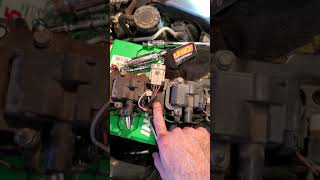
The P0308 code on the fourth-generation Firebird's LS1 engine is a classic powertrain issue. The primary challenge isn't the diagnosis, which is usually straightforward, but the physical access to the components. Cylinder 8 is the rearmost cylinder on the passenger side, notoriously difficult to reach due to tight clearance against the firewall. Many owners and mechanics find it easier to access the spark plug and wire from underneath the car, which may require a variety of ratchet extensions. Some owners report having to remove the starter to gain adequate access from below.
🎬 Watch: A quick walkthrough on removing the difficult cylinder 8 plug.Diagnostic Flowchart
Tap your situation to follow the diagnostic path that matches what you're seeing on this vehicle.
Symptoms You May Notice
- Rough or shaking idle
- Hesitation or stumbling during acceleration
- Noticeable loss of engine power
- Flashing Check Engine Light (indicates a severe misfire)
- Solid Check Engine Light
- Smell of unburned fuel from the exhaust
- Engine may be hard to start
- Replacing all eight ignition coils when only one is bad. The swap-and-test method is crucial to save money.
- Assuming a major engine failure before performing basic ignition and fuel system diagnostics. One owner on LS1Tech was quoted $7500 for a new engine by a dealer who suspected a bad piston, highlighting the need for thorough DIY diagnosis first.
Most Likely Causes
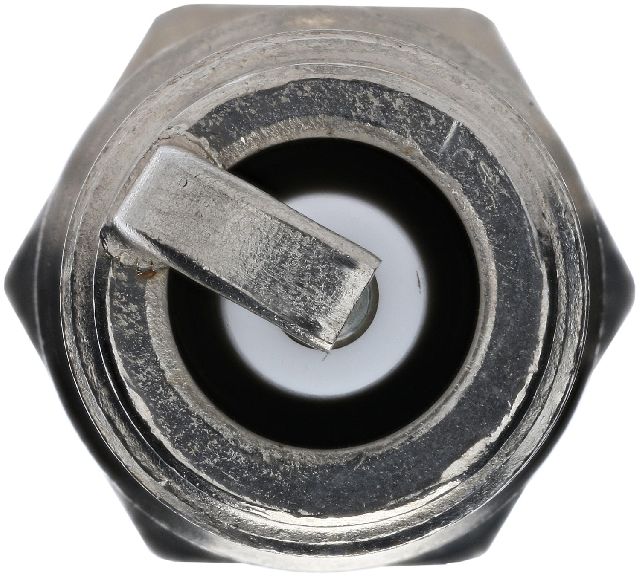
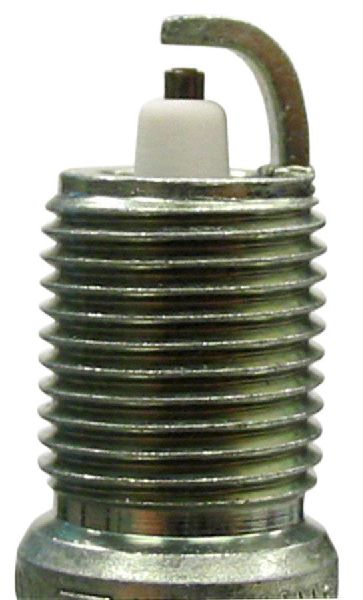
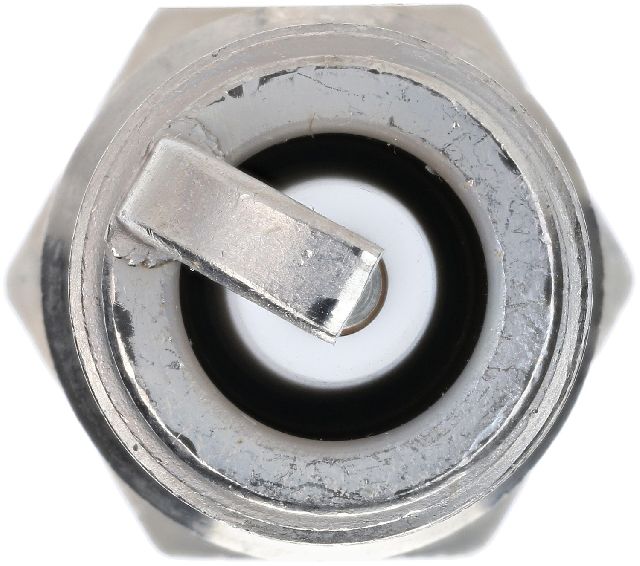
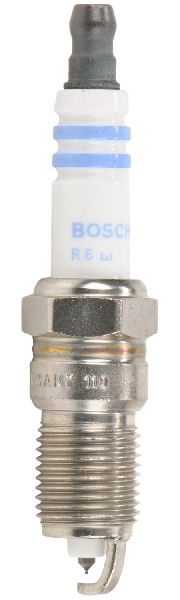
- Worn or Fouled Spark Plug 🔴 High Probability → Shop Spark Plug Spark plugs are regular wear items. Due to the difficulty of accessing cylinder 8, it may have been skipped during previous tune-ups. Some owners on forums report issues with certain plug brands, with many recommending NGK TR55s for naturally aspirated engines or sticking with the OEM ACDelco plugs.
How to confirm: Remove the spark plug from cylinder 8 and inspect it for wear, damage, or fouling from oil or carbon. A definitive test is to swap the cylinder 8 plug with another cylinder (e.g., cylinder 6). If the code changes to P0306, the spark plug is bad.
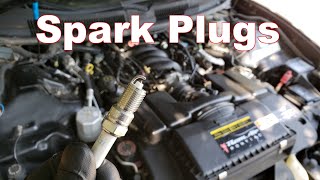
Typical fix: Replace the spark plug. It is best practice to replace all eight plugs at the same time. Many owners recommend applying dielectric grease to the plug boots 🎬 See this full guide for replacing all LS1 spark plugs. during installation.
Est. part cost: $5-$15 per plug - Faulty Spark Plug Wire 🔴 High Probability → Shop Spark Plug High engine bay temperatures can degrade spark plug wires over time, causing the insulation to break down and arc. The wire for cylinder 8 is long and routed in a hot area near the exhaust manifold. The connection at the plug or coil can also become loose.
How to confirm: Visually inspect the wire for cracks, burns, or corrosion. Ensure it's fully seated on both the spark plug and the ignition coil. Swap the cylinder 8 wire with another cylinder's wire (of similar length if possible, like cylinder 6). If the misfire code moves to that cylinder, the wire is faulty.
Typical fix: Replace the spark plug wire. It is recommended to replace the entire set of wires with a quality OEM or aftermarket set like MSD or Taylor.
Est. part cost: $40-$80 for a set - Failed Ignition Coil 🟡 Medium Probability → Shop Ignition Coil The LS1 uses a reliable coil-on-plug ignition system, but individual coils can fail from heat and age, leading to a weak or no-spark condition. While generally durable, failures are not uncommon on high-mileage vehicles.
How to confirm: Swap the ignition coil from cylinder 8 with another cylinder (e.g., cylinder 6). Clear the codes and run the engine. If the misfire code changes to P0306, the coil is bad.
Typical fix: Replace the faulty ignition coil. It is generally not necessary to replace all eight.
Est. part cost: $30-$75 - Clogged or Faulty Fuel Injector ⚪ Low Probability → Shop Fuel Injector Fuel injectors can become clogged with deposits over time, especially if the vehicle sits for long periods or if lower quality fuel is used. An electrical failure within the injector can also occur.
How to confirm: Use a mechanic's stethoscope or a long screwdriver to listen to the injector; it should make a consistent clicking sound. A more advanced test is to swap the injector with another cylinder, but this is more labor-intensive. A noid light can also be used to confirm the injector is receiving an electrical signal from the ECM.
Typical fix: Replace the faulty fuel injector. It may be worthwhile to have the injectors professionally cleaned and flow-tested if they are removed.
Est. part cost: $50-$120
Rare But Worth Checking
- Low Compression (Mechanical Engine Damage): If ignition and fuel system checks do not resolve the issue, a mechanical problem could be the cause. On LS1 engines, this can include a broken valve spring, a bent pushrod, a failed lifter, or worn piston rings/damaged piston. A broken valve spring can cause a steady miss at all speeds. A compression test and cylinder leak-down test are necessary to diagnose these issues.
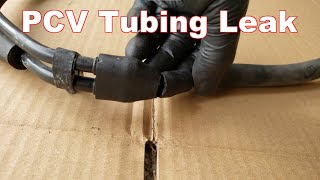
- Intake Manifold Gasket Leak: → Shop Engine Intake Manifold A vacuum leak from the intake manifold gasket near the cylinder 8 runner could cause a lean misfire. This would typically be accompanied by a hissing sound and possibly other lean codes (e.g., P0171, P0174). Diagnosis can be done by carefully spraying brake cleaner near the gasket with the engine running and listening for an idle change. 🎬 Watch: How damaged PCV tubing can cause a rough idle misfire.
Diagnosis Steps
- Read the code with an OBD-II scanner to confirm P0308 is present. Note if the Check Engine Light is flashing and if any other codes like P0300 are stored.
- Begin with the easiest and most probable causes. Visually inspect the spark plug wire for cylinder 8 (passenger side, rearmost cylinder) for any visible damage or a loose connection at the coil or plug.
- Swap the ignition coil from cylinder 8 with the coil from cylinder 6 (passenger side, third from front). Clear the codes and drive the vehicle to see if the misfire code changes to P0306. If it does, the coil is bad.
- If the code remains P0308, move the original coil back. Next, swap the spark plug from cylinder 8 with cylinder 6. Clear codes and re-test. If the code is now P0306, the spark plug is bad.
- If the code is still P0308, inspect the spark plug wire. If a suitable length wire is available for swapping (e.g., from cylinder 6), perform a swap. If the code moves, the wire is bad. Otherwise, test the wire's resistance with a multimeter.
- If ignition components are ruled out, check the fuel injector for cylinder 8. Listen for a steady clicking sound using a long screwdriver. A more definitive test is to use a noid light to check for an electrical signal or swap the injector with another cylinder.
- If all of the above steps do not identify the problem, the issue is likely mechanical. Perform a cylinder compression test and a leak-down test on cylinder 8 to check for issues like a bad valve, broken spring, or piston ring failure.
Parts You'll Likely Need
- Spark Plug
(OEM #12621258)— This is the most common wear item responsible for single-cylinder misfires. Many owners opt for NGK TR55 plugs as a popular, effective alternative.
Trusted brands: ACDelco, NGK
OEM price range: $10-$20
Aftermarket price range: $5-$15 - Spark Plug Wire Set — Heat and age cause the insulation to break down, leading to a weak or lost spark. The #8 wire is particularly susceptible due to its location.
Trusted brands: ACDelco, MSD, Michigan Motorsports
OEM price range: $60-$100
Aftermarket price range: $40-$80 - Ignition Coil
(OEM #12558693)— Internal windings can fail from heat and vibration over time, causing a misfire. This part number has been superseded by GM part # 19418993.
Trusted brands: ACDelco, Delphi
OEM price range: $50-$90
Aftermarket price range: $30-$75
Related Codes That Often Appear With This One
- P0300 — If the misfire is intermittent, severe enough to affect crankshaft speed erratically, or if other cylinders are also misfiring, a P0300 (Random/Multiple Cylinder Misfire) code may appear alongside P0308.
Technical Service Bulletins (TSBs) & Recalls
- PIP5628G: A general GM technical service bulletin for diagnosing misfire codes P0300-P0308. It outlines a diagnostic flow for technicians, starting with confirming the concern, performing a relative compression test, and then moving to ignition or fuel system checks based on the results
Platform-Specific Known Issues
- Access to the cylinder 8 spark plug is notoriously difficult due to its location at the rear of the engine bay on the passenger side, tucked against the firewall.
- Many mechanics and owners access the #8 plug from underneath the vehicle. This often requires a good collection of different length ratchet extensions and a swivel socket.
- In some cases, removing the starter motor is necessary to create enough room to work from below.
- Another method is to remove the passenger-side ignition coil bracket from above to create more clearance for your hands and tools.
Mechanic-Grade Diagnostic Values
- Stock Fuel Injector Resistance — expected: 12.7-13.3 ohms. Failure: A reading significantly outside this range, or that differs substantially from the other seven injectors, points to a faulty injector.
- Ignition Coil Primary Resistance — expected: 0.4 to 0.6 ohms. Failure: A reading outside this range indicates a faulty coil.
- Ignition Coil Secondary Resistance — expected: 5,000 to 7,200 ohms (5.0kΩ - 7.2kΩ). Failure: A reading outside this range indicates a faulty coil.
- Spark Plug Wire Resistance — expected: Varies by brand; good quality aftermarket wires are often 25-50 ohms per foot. Stock wires may be higher, around 300-400 ohms for a short wire.. Failure: Extremely high resistance (in the thousands of ohms, e.g., 7kΩ - 13kΩ) or an open circuit (infinite resistance) indicates a bad wire. High resistance can be caused by corrosion at the terminals.
- Fuel Pressure — expected: 55-62 psi (Key On, Engine Off). Failure: While low fuel pressure typically causes a random misfire (P0300), it's a foundational check. Pressure significantly below 55 psi could contribute to a lean misfire on a single cylinder under certain conditions.
Hidden / Shadow Codes Worth Checking
- Mode $06, Test ID $A2-$A9: A standard OBD-II scanner's Mode $06 can access misfire counter data for each individual cylinder. Test ID $A2 corresponds to cylinder 1, $A3 to cylinder 2, and so on, up to $A9 for cylinder 8. This allows a technician to see the raw number of misfire events counted by the PCM, even if they aren't yet frequent enough to set a P0308 code. This is useful for diagnosing intermittent misfires. (see via Any OBD-II scan tool with Mode $06 capability.)
Scan Tool Commands That Help
- Tech 2 / GDS2: Misfire Graphic — When diagnosing an intermittent misfire, the 'Misfire Graphic' function on a GM Tech 2 scanner provides a real-time count of misfires per cylinder. This is more advanced than a standard code reader and can help pinpoint whether the misfire on cylinder 8 is constant or only occurs under specific conditions (e.g., high RPM, specific engine load).
- Tech 2 / GDS2: Injector Balance Test — If a fuel injector is suspected, this bidirectional command allows the technician to fire each injector individually and measure the corresponding drop in fuel pressure. If cylinder 8's injector test results in a smaller pressure drop compared to the others, it indicates it is clogged or flowing less fuel.
Wiring & Ground Locations
- Cylinder 8 Injector Control — Blue PCM Connector, Pin 77 (Dark Blue/White wire).. This is the specific wire from the Powertrain Control Module (PCM) that sends the signal to fire the fuel injector for cylinder 8. A break, short, or poor connection in this wire or at the pin will cause a P0308.
- Cylinder 8 Ignition Control — Red PCM Connector, Pin 35 (for 1999-2000) or Pin 36 (for 2001-2002) - check specific year diagram. This wire goes to the ignition control module/coil.. This wire carries the signal from the PCM to the ignition coil for cylinder 8. Damage to this wire can prevent the coil from charging and firing, resulting in a no-spark condition and a P0308 code.
- G100 / G104 — On the lower right side of the engine block, often near or above the starter solenoid.. This is a primary engine block ground. A loose or corroded connection here can cause a host of electrical issues, including weak spark or erratic sensor readings that could lead to a misfire code.
- G102 — Located at the left rear of the engine, sometimes on the cylinder head. This ground is specifically for the 8 ignition coils.. This is the most critical ground for the ignition system. Since all eight coils share this ground point, a poor connection here can cause random misfires (P0300) but can also manifest as a single cylinder misfire if the connection for that bank is weaker.
Real Owner Repair Stories
- LS1Tech Forum User (2001 Camaro SS (LS1)) — P0308 code, noticeable misfire.
❌ Tried (didn't work) Replaced spark plug, Replaced spark plug wire, Swapped ignition coils
✅ What actually fixed it The final cause was a broken valve spring on the cylinder 8 exhaust valve. The owner performed a compression test which showed low compression, leading to the discovery upon removing the valve cover.
OEM Part Supersession History
12558693→19355500, then 19418993— Standard part evolution and supplier changes.
Heads up: The original coils used on 1998-early 2000s F-bodies (often called 'LS1 style') have a different physical shape and connector than later 'truck style' coils (like the D585). While truck coils are often considered an upgrade for performance, they require a different wiring harness adapter and mounting bracket and are not a direct bolt-in replacement for the original 12558693 coils.
Model Year Variations Within This Range
- 2001-2002: LS1 engines in these years received the superior LS6 intake manifold, which eliminated the EGR system. They also used a slightly smaller camshaft profile from the Vortec truck engines to improve low-end torque and meet emissions without EGR. Fuel injectors were also changed to a 28 lb/hr rating. These changes mean that some engine components and PCM tuning are not directly interchangeable with 2000 models.
- 2000: The 2000 model year continued to use the LS1 intake manifold with an EGR system and 26 lb/hr fuel injectors. This was the last year for this configuration before the switch to the LS6-style intake in 2001.
Helpful Videos
We Have This Part in Stock

The information in this article is provided for general reference and educational purposes only. Vehicle specifications, procedures, and part compatibility can vary by production date, trim level, and region. Always consult your vehicle's factory service manual and verify part numbers before purchasing or performing repairs. Safety-critical components such as airbags, seat belts, and braking systems should be installed by a qualified professional.
- Pontiac FIREBIRD:
- 🧭 Diagnostic Flowchart
- 🎬 Helpful Videos
- 🛍️ Shop This Part
- What's Unique About the 2000-2002 Pontiac FIREBIRD
- Symptoms You May Notice
- Most Likely Causes
- Rare But Worth Checking
- Diagnosis Steps
- Parts You'll Likely Need
- Related Codes That Often Appear With This One
- Technical Service Bulletins (TSBs) & Recalls
- Platform-Specific Known Issues
- Mechanic-Grade Diagnostic Values
- Hidden / Shadow Codes Worth Checking
- Scan Tool Commands That Help
- Wiring & Ground Locations
- Real Owner Repair Stories
- OEM Part Supersession History
- Model Year Variations Within This Range
- 🎟️ Get 5% Off