

P0308 on 2008-2011 Pontiac G3: An Impossible Misfire Code Explained
The code P0308 (Cylinder 8 Misfire) is impossible on a 2008-2011 Pontiac G3, as it only has a 4-cylinder engine. If you have a misfire, your actual code is likely P0301-P0304. The most common cause is a worn ignition coil pack or old spark plugs, often exacerbated by a leaking valve cover gasket.
- P0308 is an impossible code for your Pontiac G3. Your car only has 4 cylinders.
- Your actual problem is a misfire. You need to re-scan the vehicle to find the correct code (P0301, P0302, P0303, or P0304).
- The most likely cause of the misfire is a bad ignition coil pack and/or worn-out spark plugs.
- Before replacing parts, check for oil in the spark plug tubes, which indicates a leaking valve cover gasket—another common cause.
- Check for GM Emission Recall #11290, which relates directly to misfire-causing issues on your car.
What's Unique About the 2008-2011 Pontiac G3
The Pontiac G3 is a rebadged Chevrolet Aveo, sharing the same 1.6L E-TEC II / ECOTEC engine and T250 platform. Misfires on this engine are extremely common and are frequently traced back to a small list of ignition system components. A notable issue for this platform was GM Emission Recall #11290, which addressed a "degraded connection between the spark plug boots on the ignition coil assembly and the spark plugs" causing rough running and CEL illumination. Additionally, a very common and well-documented issue is the valve cover gasket becoming hard and brittle, allowing engine oil to pool in the spark plug wells. This oil shorts out the spark, fouling the plugs and causing a persistent misfire that won't be solved by just replacing ignition parts.
Diagnostic Flowchart
Tap your situation to follow the diagnostic path that matches what you're seeing on this vehicle.
Symptoms You May Notice
- Rough or shaky idle
- Hesitation or stumbling during acceleration
- Noticeable loss of engine power
- Flashing or solid Check Engine Light
- Decreased fuel economy
- Fuel smell from the exhaust
- Engine jerking, especially under load or going uphill
- Replacing only one spark plug instead of the full set.
- Replacing the O2 sensor when the issue is actually a vacuum leak or ignition problem causing a rich/lean condition.
- Replacing the ignition coil and plugs without addressing an underlying valve cover gasket leak, leading to a quick return of the misfire.
Most Likely Causes
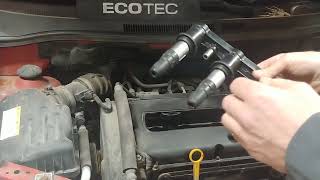
- Faulty Ignition Coil Pack 🔴 High Probability → Shop Ignition Coil The single coil pack design is a known weak point on the G3/Aveo platform and a leading cause of misfires. A failure in one section of the waste-spark system can cause misfires on two cylinders (e.g., 1 and 4, or 2 and 3) or random misfires under load. 🎬 Watch: Diagnosing a P0300 misfire on the 1.6L engine The original factory coils were known to be failure-prone.
How to confirm: With the engine running, carefully listen for arcing sounds near the coil pack. A more definitive test is to replace the coil pack, as it's a very common failure. If a new coil pack resolves the misfire, the old one was faulty. Misfires that only occur under load are a strong indicator of a weak coil.
Typical fix: Replace the entire ignition coil pack assembly. It is highly recommended to replace spark plugs and inspect the plug boots at the same time.
Est. part cost: $50-$100 - Worn or Fouled Spark Plugs 🔴 High Probability → Shop Spark Plug These are regular maintenance items with a 25,000-mile replacement interval per GM. GM issued Emission Recall #11290 for poor spark plug boot connections on these cars, which can accelerate plug fouling and wear. Furthermore, oil fouling from a leaking valve cover gasket is extremely common.
How to confirm: Remove the spark plug from the misfiring cylinder (e.g., P0301 = cylinder 1). Inspect for wear (rounded electrode), an excessively wide gap, or contamination from oil, fuel, or carbon. Oil-soaked plugs are a clear sign of a leaking valve cover gasket.
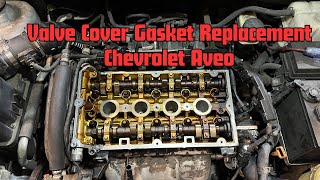
Typical fix: Replace all four spark plugs as a set. Use the correct OEM-spec plugs (e.g., NGK Laser Platinum) for best results. If plugs are oil-fouled, the valve cover gasket must be replaced to prevent a recurring problem. 🎬 See this walkthrough for replacing the valve cover gasket
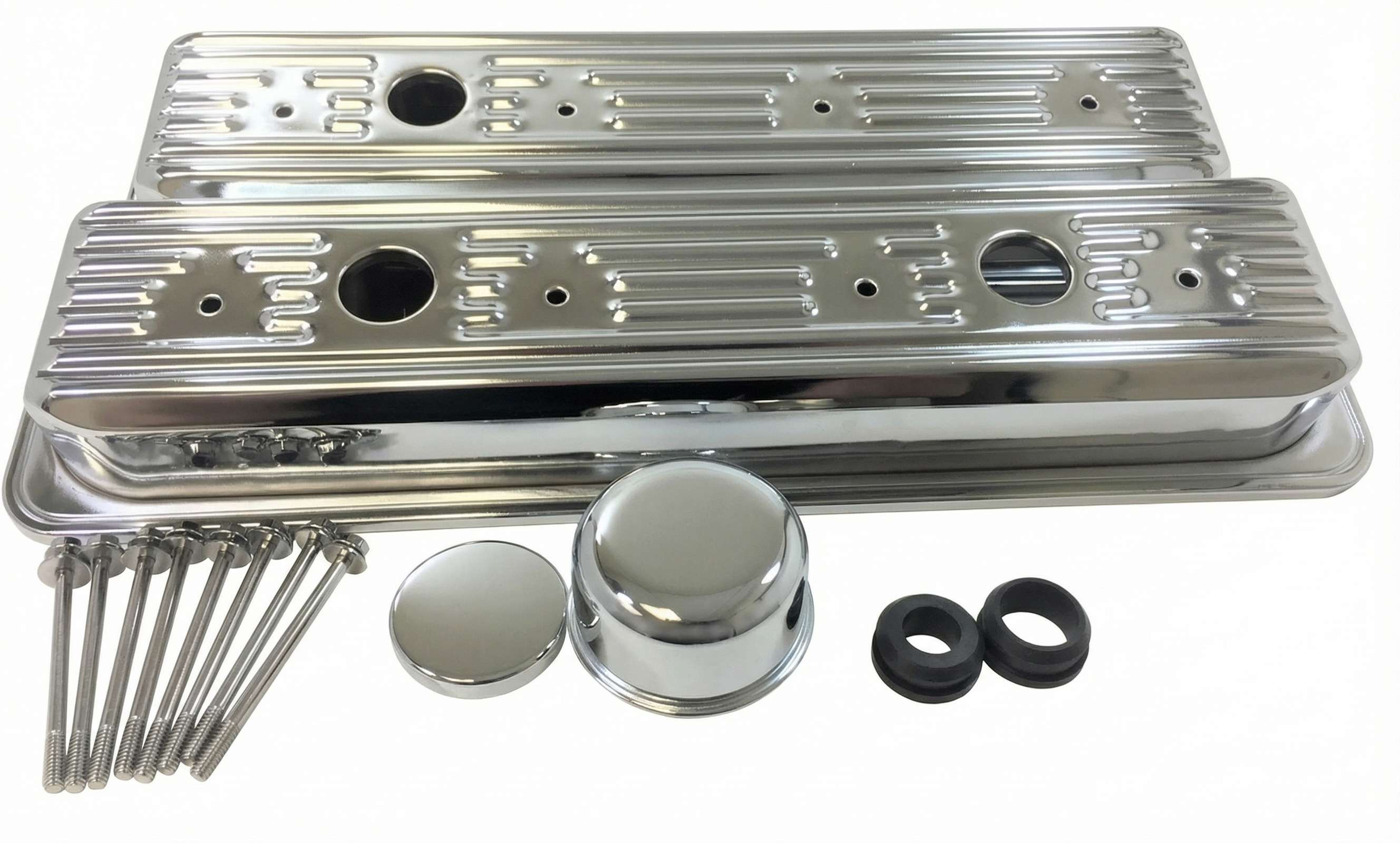
Est. part cost: $20-$40 - Leaking Valve Cover Gasket 🔴 High Probability → Shop Engine Valve Cover The gasket, particularly the integrated seals around the spark plug tubes, becomes hard and brittle with heat and age. This allows engine oil to leak directly into the spark plug wells, shorting out the spark and causing a misfire. This is one of the most widely reported issues on the G3/Aveo platform.
How to confirm: When you remove the ignition coil pack, look for liquid engine oil pooled in the spark plug tubes or coating the spark plug boots and ceramic part of the plugs.
Typical fix: Replace the valve cover gasket and the spark plug tube seals (they are often integrated into a single gasket set). It is critical to thoroughly clean all oil from the wells, boots, and plugs before reassembly. Oil-soaked plugs and boots should be replaced.
Est. part cost: $25-$50 - Vacuum Leak 🟡 Medium Probability The engine bay has numerous plastic and rubber vacuum hoses that can crack or split with age and heat. A common failure point is the air intake hose splitting between the air filter box and the throttle body. This allows unmetered air to enter the engine and disrupt the air-fuel ratio.
How to confirm: Visually inspect the air intake boot and all vacuum lines for cracks or breaks. Listen for a hissing sound at idle. You can also carefully spray short bursts of brake cleaner or starter fluid around vacuum lines and the intake manifold gasket with the engine running. If the engine RPM changes, you've found the leak.
Typical fix: Replace the cracked or broken vacuum hose or gasket.
Est. part cost: $5-$30
Rare But Worth Checking
- Clogged or Faulty Fuel Injector: → Shop Fuel Injector While less common than ignition issues, a single injector can fail or become clogged, starving one cylinder of fuel and causing a dedicated misfire on that cylinder.
- Low Engine Compression: This is a serious mechanical issue (e.g., bad valve, worn piston rings, or head gasket failure) that requires a compression test to confirm. A healthy 1.6L engine should have compression readings around 170 PSI per cylinder.
- Skipped Timing Belt: → Shop Engine Timing Chain The 1.6L is an interference engine. If the timing belt stretches or skips a tooth, camshaft timing will be incorrect, leading to poor performance and misfires. This is a critical maintenance item that should be inspected if ignition and fuel systems check out.
- Faulty Camshaft or Crankshaft Position Sensor: → Shop Engine Camshaft A failing sensor can send incorrect data to the ECU, causing timing issues and misfires. This often appears with other codes like P0016.
Diagnosis Steps
- Confirm the actual trouble code. Re-scan your vehicle, preferably with a different, higher-quality OBD-II scanner, to get the correct P030x code (e.g., P0302 for cylinder 2).
- Inspect for Oil Leaks. Remove the plastic engine cover and the ignition coil pack (held by T40 Torx bolts). Look down into the spark plug tubes for any signs of pooled engine oil. If oil is present, the valve cover gasket is leaking and must be replaced.
- Inspect the Ignition System. Check the coil pack for cracks, carbon tracking, or oil contamination. Examine the spark plug boots for swelling, cracks, or oil saturation.
- Inspect the Spark Plugs. Remove the plugs (requires a 5/8" spark plug soc 🎬 Watch: Easy spark plug replacement and tune-up guideket). Check for wear, fouling (especially oil), damage, or an incorrect gap. The OEM gap is typically 0.040 inches. If they are old or oil-soaked, replace them all.
- Check for Vacuum Leaks. Visually inspect the large intake air hose for cracks. With the engine running, listen for hissing noises. Carefully spray starter fluid around vacuum lines and gaskets; a change in engine idle indicates a leak.
- If no obvious cause is found, consider replacing the ignition coil pack. It is the most common failure point for misfires on this engine that aren't caused by oil leaks.
- If the issue persists, proceed to more advanced diagnostics: test fuel injector resistance, check fuel pressure, and perform an engine compression test to rule out mechanical problems.
Parts You'll Likely Need
- Ignition Coil Pack
(OEM #96476979)— This is the most frequent cause of misfires on the 1.6L engine in the G3 and Aveo.
Trusted brands: ACDelco (OEM), Delphi, NGK, Standard Motor Products (UF-620)
OEM price range: $80-$120
Aftermarket price range: $50-$90 - Spark Plugs
(OEM #NGK BKR6E-11 (Standard) or Laser Platinum equivalent)— A routine maintenance item that is a primary cause of misfires. They should always be replaced when installing a new coil pack or if they are fouled by oil.
Trusted brands: NGK, ACDelco, Denso
OEM price range: $30-$50
Aftermarket price range: $20-$40 - Valve Cover Gasket Set
(OEM #ACDelco 55573746 / Fel-Pro VS50724R)— Required if you find oil has leaked into the spark plug wells, causing the misfire. This is a very common failure on this engine.
Trusted brands: Fel-Pro, ACDelco, Mahle
OEM price range: $35-$60
Aftermarket price range: $25-$50
Related Codes That Often Appear With This One
- P0300 — If the misfire is random or affects multiple cylinders (e.g., from a vacuum leak or failing coil pack), you will see P0300 (Random/Multiple Misfire Detected) instead of, or in addition to, a specific cylinder code.
- P0301, P0302, P0303, P0304 — These are the actual, valid misfire codes for a Pontiac G3. The last digit indicates the misfiring cylinder. Your scan tool likely made an error showing P0308. A misfire on cylinders 2 and 3, for example, could point to one side of the coil pack failing.
Technical Service Bulletins (TSBs) & Recalls
- PIP5628G: A general GM bulletin mentioning the P0300-P0308 range for misfire diagnosis across many vehicles, but not specific to the G3's impossible P0308 code.
- 11290C: This is the official GM recall number for the degraded spark plug boot connection issue. The service procedure was updated to include using compressed air to help remove the old boots from the coil pack.
Platform-Specific Known Issues
- GM Emission Recall #11290: Issued for 2009-2010 G3 models for a poor connection between the spark plug boots and spark plugs, which could cause the check engine light to illuminate and the engine to run rough. The fix involved installing new spark plug boots and spark plugs.
- Oil Leaking into Spark Plug Wells: The valve cover gasket design is a known weak point, frequently leading to oil fouling of the center two spark plugs, causing a P0302 or P0303 code. This is a very common repair documented by many owners.
Mechanic-Grade Diagnostic Values
- MAF Sensor Reading at Idle — expected: ~2 g/s at ~800 RPM. Failure: Significantly higher or lower readings can indicate a vacuum leak or sensor failure.
- Fuel Injector Resistance — expected: Typically 11-14 Ohms for this type of injector.. Failure: A reading far outside this range, or an open circuit (OL), indicates a failed injector.
- Mode 6 Misfire Counts — expected: Value of zero or very low single digits over a drive cycle.. Failure: A high count for a specific cylinder (e.g., cylinder 2) points to the source of an intermittent misfire, even without a P0302 code.
Hidden / Shadow Codes Worth Checking
- Mode 6 Misfire Data: This is not a trouble code, but a data monitoring function within the OBD-II system. It tracks misfire events per cylinder over the last 10 drive cycles. It can reveal which cylinder is misfiring before the count is high enough to trigger a Check Engine Light and a P030x code. (see via A capable OBD-II scan tool that supports Mode $06 / Onboard Monitoring tests.)
Scan Tool Commands That Help
- GM Tech2 / GDS2: Crankshaft Position Variation Learn (CASE Relearn) — This procedure must be performed after replacing the crankshaft position sensor, PCM, or performing major engine work. Failure to do so can lead to inaccurate misfire detection and a persistent P0300 code, as the PCM's profile of the crankshaft reluctor wheel is incorrect.
- GM Tech2 / GDS2: Misfire Data / Misfire Graph — To view live misfire counts for each cylinder. This is more direct than Mode 6 and can pinpoint which cylinder is currently misfiring, which is essential for diagnosing intermittent issues. A GM tech noted that a few random counts can be normal, but a consistently incrementing counter on one cylinder indicates a true problem.
Wiring & Ground Locations
- G103 — Below the Engine Control Module (ECM).. This is a primary ground point for the engine management system. A poor connection here can cause erratic ECM behavior, leading to false sensor readings and misfire codes.
- G104 — Next to the starter motor.. This is a major engine block ground. A loose or corroded connection here can affect the grounding of the entire ignition system, including the coil pack and sensors, causing weak spark and misfires.
- ECM/PCM Ground Wires — In the harness connected to the ECM. On GM vehicles of this era, these are typically solid black wires.. The ECM relies on a clean ground reference. These wires should be securely grounded to the engine block or cylinder head. A faulty ECM ground is a common cause of difficult-to-diagnose electronic issues, including misfires.
- C106 Connector — On the upper cylinder head area, connecting the engine harness to the fuel injector harness.. If a misfire is suspected to be fuel-related (P0301, P0302, etc.), this connector is a key point to check for corrosion or loose pins affecting the signal to a specific fuel injector.
Real Owner Repair Stories
- Chevrolet Aveo forum user 'petflunky' (2005 Chevy Aveo) — Misfire on all cylinders (P0300), engine dumping fuel.
❌ Tried (didn't work) Checking spark, Checking timing, Compression test, Replacing coolant temp sensor, Checking fuel injectors
✅ What actually fixed it The mechanic discovered several camshaft caps on the top end had worked themselves loose. After re-torquing the cam caps to spec, the engine ran perfectly. The theory was the loose caps allowed play that prevented the valves from opening correctly, causing a severe air/fuel mixture problem and misfires. - YouTube video from Phillip Bailey (2011 Chevy Aveo 1.6L) — P0300 Random Misfire code, rough running.
❌ Tried (didn't work) Owner replaced spark plugs and ignition coil pack, which only helped for a day or two.
✅ What actually fixed it The new aftermarket coil pack was found to be defective, causing a consistent misfire on cylinder #2. This was confirmed using an ignition secondary tester and by viewing live misfire data on a scan tool, which showed counts racking up exclusively on cylinder 2. Replacing the defective new coil with another one fixed the misfire. - YouTube video from AUTOMOTRIZ TIPO SPCA (2009 Pontiac G3) — Vehicle shut off while driving on the highway and would not restart. No communication with the ECU.
❌ Tried (didn't work) Scanning for codes (no communication with engine module).
✅ What actually fixed it After checking power and ground lines to the Engine Control Unit (ECU), the ECU itself was found to be damaged and was the root cause of the failure.
OEM Part Supersession History
55573746→25209141— This is the part number for the valve cover assembly. Part numbers are often superseded due to design revisions, manufacturing changes, or supplier updates.
Heads up: The new part number should be a direct replacement for the old one.
Model Year Variations Within This Range
- 2009-2011: For 2009, the Pontiac G3 (and Chevy Aveo) received a new, more fuel-efficient 1.6L Ecotec engine with variable valve timing, replacing the older 1.6L E-TEC II. This engine produced slightly more power (107 hp vs 103 hp). While diagnostically similar, parts may not be interchangeable with pre-2009 models.
Helpful Videos
We Have This Part in Stock

The information in this article is provided for general reference and educational purposes only. Vehicle specifications, procedures, and part compatibility can vary by production date, trim level, and region. Always consult your vehicle's factory service manual and verify part numbers before purchasing or performing repairs. Safety-critical components such as airbags, seat belts, and braking systems should be installed by a qualified professional.
- Pontiac G3:
- 🧭 Diagnostic Flowchart
- 🎬 Helpful Videos
- 🛍️ Shop This Part
- What's Unique About the 2008-2011 Pontiac G3
- Symptoms You May Notice
- Most Likely Causes
- Rare But Worth Checking
- Diagnosis Steps
- Parts You'll Likely Need
- Related Codes That Often Appear With This One
- Technical Service Bulletins (TSBs) & Recalls
- Platform-Specific Known Issues
- Mechanic-Grade Diagnostic Values
- Hidden / Shadow Codes Worth Checking
- Scan Tool Commands That Help
- Wiring & Ground Locations
- Real Owner Repair Stories
- OEM Part Supersession History
- Model Year Variations Within This Range
- 🎟️ Get 5% Off