

P0308 on 2000-2004 Pontiac Montana EXT: Why This Misfire Code Is Impossible and How to Find the Real Problem
A P0308 code is impossible on a 2000-2004 Pontiac Montana, as it only has a V6 engine and no cylinder 8. The code indicates a scan tool error or a rare PCM fault. If your engine is misfiring, the actual code is likely P0300-P0306, often caused by a failed ignition coil pack, bad spark plug wires, or a leaking lower intake manifold gasket.
- P0308 is an impossible code for a 2000-2004 Pontiac Montana; it means 'Cylinder 8 Misfire' but the van only has a V6 engine.
- The appearance of this code is almost certainly an error from your OBD-II scan tool. You must re-scan with another tool to find the real code (P0300-P0306).
- Do not buy any parts to fix a 'cylinder 8' misfire.
- Once you have the correct code, the most likely causes of a real misfire on this van are bad spark plugs/wires, a failed ignition coil, a leaking fuel pressure regulator, or failing lower intake manifold gaskets.
What's Unique About the 2000-2004 Pontiac MONTANA EXT
The core issue here is the conflict between the code and the vehicle's hardware. The Pontiac Montana and its GM U-body platform mates (like the Chevrolet Venture and Oldsmobile Silhouette) used the 3.4L LA1 V6 engine exclusively during this period. Therefore, a P0308 code is an anomaly. While most often a scan tool error, a GM TSB (PIP5628C) for other platforms does list P0308 in a range of possible misfire codes, indicating a potential for the PCM itself to generate this false code. The actual misfire-related issues on this specific van are almost always codes P0300-P0306, frequently stemming from well-documented weaknesses in the ignition system or intake manifold gaskets.
Diagnostic Flowchart
Tap your situation to follow the diagnostic path that matches what you're seeing on this vehicle.
Symptoms You May Notice
- Check Engine Light is on or flashing
- Rough idle or engine shaking
- Hesitation or stumbling during acceleration
- Loss of engine power
- Reduced fuel economy
- Smell of raw gasoline from the exhaust
- Attempting to find or replace parts for a 'cylinder 8' that does not exist.
- Replacing a single spark plug or coil without addressing the root cause or replacing parts in sets, especially given the difficult access to the rear bank.
- Replacing ignition components repeatedly when the true cause is a leaking intake manifold gasket fouling the spark plugs with coolant.
Most Likely Causes
- Scan Tool Error / Incompatibility 🔴 High Probability The vehicle has a V6 engine, making a P0308 code a logical impossibility. This points to the diagnostic tool as the source of the error, especially with cheaper scanners struggling with the J1850 VPW protocol used by these vans.
How to confirm: Re-scan the vehicle's computer with a different, high-quality OBD-II scanner. The correct code (likely P0300, P0301, P0302, P0303, P0304, P0305, or P0306) should appear. Check the fuse for the OBD-II port/accessory outlet, as a blown fuse can cause communication errors.
Typical fix: No parts are needed. Use a reliable scan tool to retrieve the actual trouble code and diagnose the real problem.
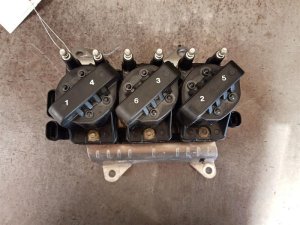
Est. part cost: $0 - Faulty Ignition Coils or Ignition Control Module 🟡 Medium Probability → Shop Ignition Coil The 3.4L V6 uses a waste-spark ignition system with three coil packs mounted on an ignition control module (ICM). Both the coils and the ICM are known failure points and will cause a misfire on two cylinders simultaneously (e.g., companion cylinders 1-4, 2-5, 3-6).
How to confirm: Perform a spark test on the affected cylinder's wire. Swap the suspected coil pack with a known good one and see if the misfire code moves to the new cylinders. If the misfire is on two companion cylinders and swapping the coil doesn't change the affected cylinders, the ICM is the likely culprit.
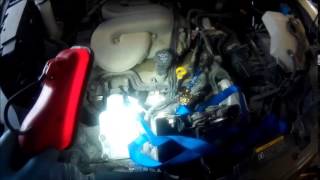
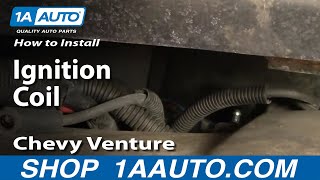
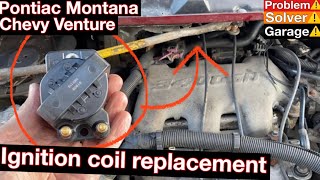
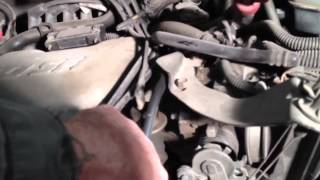
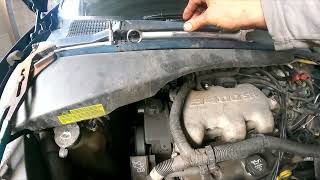
Typical fix: Replace the faulty ignition coil pack. If multiple coils are failing or diagnosis points to it, replace the ignition control module underneath them. 🎬 Watch: How to replace the ignition coil and module. The ICM is a very common failure on the 3.4L engine.
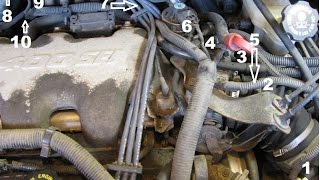
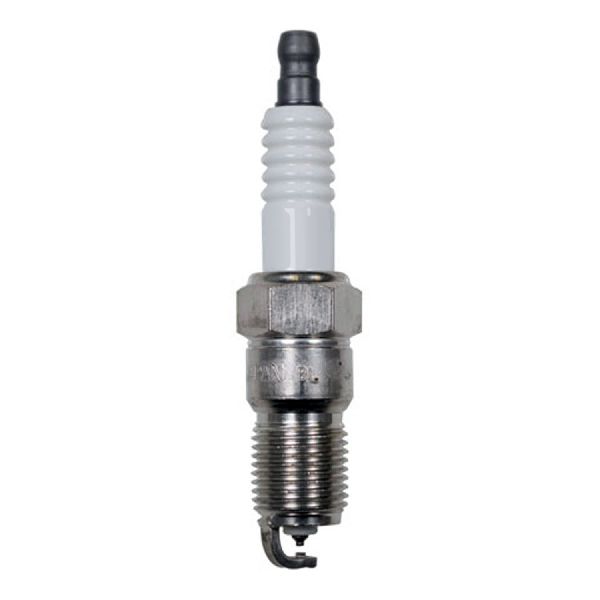
Est. part cost: $30-$70 for a single coil, $60-$120 for a set of three. $60-$120 for an aftermarket ignition control module. - Worn Spark Plugs and/or Wires 🟡 Medium Probability → Shop Spark Plug The rear bank of cylinders (2, 4, 6) is extremely difficult to access against the firewall, leading to spark plugs and wires often being neglected during routine maintenance. The most common professional technique involves removing the upper engine mount bolts ('dog bones') and using a ratchet strap to tilt the engine forward for clearance. 🎬 See this walkthrough for accessing and replacing rear spark plugs.
How to confirm: Inspect the spark plugs for wear, fouling, or incorrect gap. Inspect wires for cracks, burns, or high resistance. It is highly recommended to replace plugs and wires as a set due to the labor involved.
Typical fix: Replace all six spark plugs and the full set of spark plug wires. It is recommended to do both at the same time. Given the difficulty, using high-quality parts like ACDelco or NGK is advised to avoid repeat labor.
Est. part cost: $50-$120 for a quality set of plugs and wires. - Leaking Lower Intake Manifold (LIM) Gaskets ⚪ Low Probability → Shop Engine Intake Manifold This is one of the most notorious problems on the GM 3.4L V6 engine. The original plastic-carrier gaskets fail from heat and exposure to Dex-Cool coolant, allowing coolant to leak externally or internally into the oil or cylinders, causing misfires.
How to confirm: Check for signs of coolant loss with no visible external leaks. Look for milky, frothy residue on the oil cap or dipstick, indicating coolant in the oil. A cooling system pressure test may reveal the leak. A white, sweet-smelling exhaust is also a key indicator.
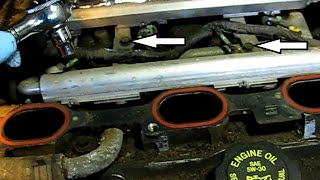
Typical fix: Replace the lower intake manifold gaskets with the updated metal-frame design, such as Fel-Pro part number MS 98014 T. This is a labor-intensive job.
Est. part cost: $50-$100 for the gasket set. - Leaking Fuel Pressure Regulator ⚪ Low Probability → Shop Fuel Injection Pressure Regulator The diaphragm in the fuel pressure regulator on the 3.4L V6 is a common failure item. It ruptures and allows raw fuel to be sucked into the engine via the vacuum line, causing a rich condition and random misfires (P0300).
How to confirm: Locate the fuel pressure regulator on the fuel rail. Disconnect its vacuum hose. If liquid fuel is present in the hose or drips from the regulator's nipple, it has failed. The expected fuel pressure for a 2000 model is 48-55 PSI, while 2001-2004 models specify 52-59 PSI.
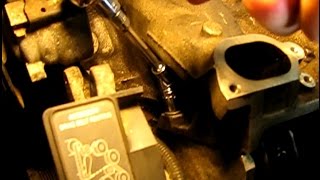
Typical fix: Replace the fuel pressure regulator.
Est. part cost: $40-$80
Rare But Worth Checking
- Clogged or Faulty Fuel Injector: → Shop Fuel Injector While less common than ignition issues, a single injector can fail or become clogged, causing a misfire on only one cylinder. Sometimes running a quality fuel system cleaner like Techron can resolve a minor clog.
- Low Engine Compression: A mechanical issue like a burnt valve or, in severe cases, a failed head gasket can cause a loss of compression and a persistent misfire on one cylinder. A compression test is needed to verify.
- Faulty Powertrain Control Module (PCM): → Shop Engine Control Module (ECM) In very rare instances where multiple high-end scanners all report P0308 and no other codes, and there are no other wiring issues, the PCM itself could have an internal fault causing it to report a nonsensical code.
Diagnosis Steps
- Confirm the P0308 code with a second, reliable OBD-II scanner. If it disappears and a different code (P0300-P0306) appears, proceed with diagnosing the new code.
- If a specific cylinder misfire is identified (e.g., P0304), inspect the spark plug and wire for that cylinder. For rear bank access, consider tilting the engine forward.
- Swap the ignition coil responsible for the misfiring cylinder with a known good coil. (Note: The 3.4L uses three coils, each firing two companion cylinders: 1-4, 2-5, 3-6). Clear the codes and see if the misfire code follows the coil to a new cylinder (e.g., a P0304 becomes a P0301 after swapping the 1-4 coil). If it does, the coil is bad. If the misfire stays on the same two cylinders, suspect the Ignition Control Module.
- If ignition components are good, check fuel pressure. Then, check the fuel pressure regulator's vacuum line for any signs of raw fuel.
- If no ignition or fuel delivery faults are found, inspect for vacuum leaks, especially around the intake manifold gaskets. Perform a cooling system pressure test if you suspect a coolant leak from the LIM gasket.
- If the misfire persists, perform a compression test on the affected cylinder to check for mechanical engine problems like a bad valve or head gasket.
Parts You'll Likely Need
- Ignition Coil Set
(OEM #ACDelco D555 (or supersession 19353734))— The waste-spark coil packs are a common failure point causing misfires on this engine.
Trusted brands: ACDelco, Delphi, Carquest - Spark Plug Wires — Wires degrade over time, and the difficult access to the rear bank means they are often neglected.
Trusted brands: ACDelco, NGK, Carquest Premium - Spark Plugs
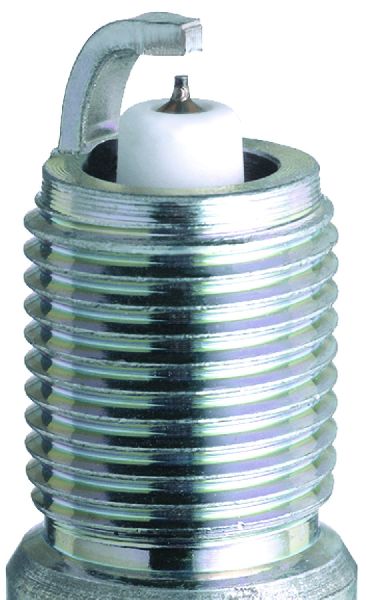
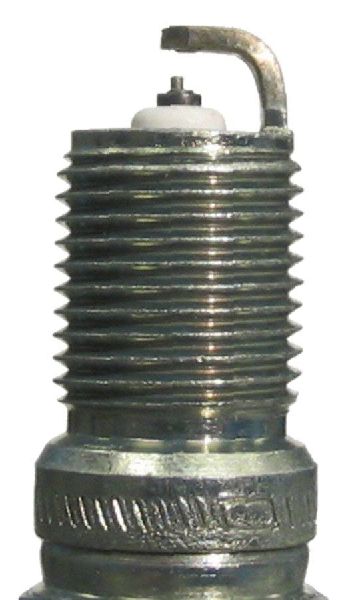
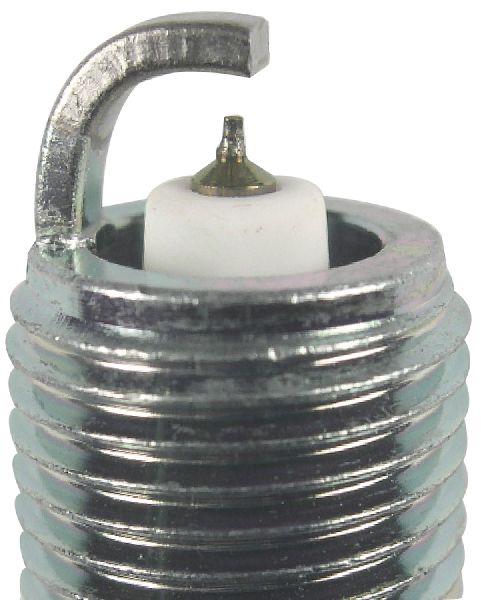
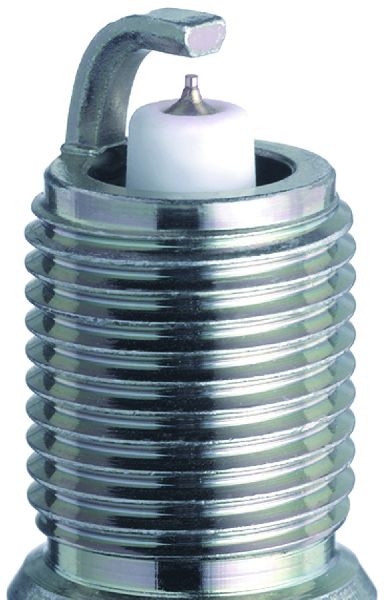
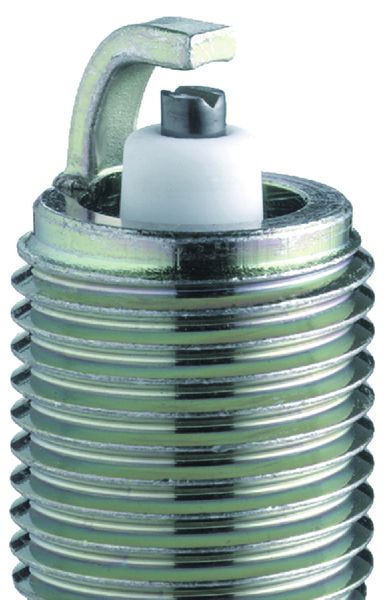
(OEM #ACDelco 41-101 (Iridium))— A basic tune-up item and a frequent cause of misfires. Using OEM-spec plugs is highly recommended on this engine to avoid compatibility issues.
Trusted brands: ACDelco, NGK - Lower Intake Manifold Gasket Set
(OEM #Fel-Pro MS 98014 T)— The original plastic gaskets are a notorious failure point on the 3.4L V6, causing coolant and vacuum leaks. The Fel-Pro metal-frame gasket is the widely accepted permanent fix.
Trusted brands: Fel-Pro - Fuel Pressure Regulator — The internal diaphragm is a common failure item, leading to a rich condition and random misfires.
Trusted brands: ACDelco, Delphi, Standard Motor Products
Related Codes That Often Appear With This One
- P0300 — This is the correct code for a random/multiple cylinder misfire. If the cause is a vacuum leak, bad fuel pressure regulator, or failing intake gaskets, multiple cylinders will misfire randomly, triggering P0300.
- P0301-P0306 — This is the actual code you should see. For example, P0301 for cylinder 1, P0302 for cylinder 2, etc. This will pinpoint the real location of the misfire.
- P0172 — If the fuel pressure regulator fails and leaks fuel into the vacuum line, it will cause a 'System Too Rich' code alongside random misfires.
- P0171 — If the lower intake manifold gasket fails and creates a vacuum leak, it will cause a 'System Too Lean' code along with misfires.
Technical Service Bulletins (TSBs) & Recalls
- PIP5628C: While not specific to this vehicle, this GM TSB acknowledges that a range of misfire codes from P0300 to P0308 can be generated by the PCM, correcting the assumption that the code can only come from a scan tool error.
Platform-Specific Known Issues
- Rear Spark Plug Access: → Shop Spark Plug The most significant maintenance challenge on this van is accessing the rear bank of spark plugs (cylinders 2, 4, 6). The clearance to the firewall is minimal. The accepted method for DIY and professional repair is to remove the top engine mount bolts ('dog bones') and use a ratchet strap to pull the engine assembly forward, creating several inches of extra room to work.
- Lower Intake Manifold Gasket Failure: → Shop Engine Intake Manifold The 3.4L LA1 engine is famous for the failure of its original nylon/plastic LIM gaskets, exacerbated by GM's Dex-Cool coolant. This failure allows coolant to mix with oil, causing sludge and engine damage, or to leak into cylinders, causing misfires. The standard, permanent fix is to replace them with an aftermarket metal-framed gasket set like the Fel-Pro MS 98014 T.
Mechanic-Grade Diagnostic Values
- Fuel Pressure (Key On, Engine Off) — expected: 52-59 PSI (359-407 kPa) for 2001-2004 models. Should hold pressure with minimal drop after the pump primes.. Failure: Pressure below spec indicates a weak pump or leak. Pressure that drops rapidly to zero after the key is turned off indicates a bad check valve in the pump or a leaking regulator/injector.
- Fuel Pressure (Engine Idling) — expected: 48-55 PSI (331-379 kPa) for 2000 models. Pressure should increase by 5-10 PSI when the vacuum line is removed from the fuel pressure regulator.. Failure: No pressure increase when the vacuum line is removed points to a faulty regulator.
- Ignition Coil Secondary Resistance — expected: 6,000 - 13,000 Ohms (6kΩ - 13kΩ). Failure: A reading significantly outside this range, or an open circuit (OL), indicates a failed coil winding.
- Fuel Injector Resistance — expected: 11.6 - 12.8 Ohms at room temperature.. Failure: A reading far outside this range indicates a failed injector coil.
- Long-Term Fuel Trim (LTFT) at Idle — expected: Stable between -10% and +10%. Failure: Sustained positive values (>+10%) suggest a vacuum leak (like from LIM gaskets). Sustained negative values (<-10%) suggest a rich condition (like from a leaking fuel pressure regulator).
Scan Tool Commands That Help
- GM Tech 2 / Tech2Win: Special Functions -> Crankshaft Position Variation Learn (Crank Relearn) — After replacing a crankshaft sensor, PCM, or on high-mileage engines to improve the accuracy of misfire detection. A GM tech noted that road imperfections can cause false misfire counts, and this procedure helps the PCM distinguish between road shock and true engine speed variations.
- GM Tech 2 / Tech2Win: Misfire Graphic — To view live misfire counts per cylinder, which is essential for diagnosing intermittent misfires that may not be severe enough to set a specific P030x code but still cause a P0300 or a driveability issue.
Wiring & Ground Locations
- Powertrain Control Module (PCM) — Located inside the air cleaner assembly in the left (driver's side) front of the engine compartment.. This is the computer that is generating the trouble code. While a PCM fault is rare, its location is critical for checking connector integrity and for any advanced wiring diagnosis. A mouse nest chewing wires near the PCM is a documented cause of bizarre electrical issues on this platform.
- G101 / G113 — Located at the left front of the engine, on the lower block or near the starter.. This is a primary ground for the PCM and other critical engine sensors. A poor, corroded, or loose ground at this location can cause a multitude of bizarre, hard-to-diagnose electrical issues, including communication errors and false sensor readings that could potentially lead to incorrect trouble codes.
- Starter Relay — In the underhood fuse/relay center.. While not directly related to misfires, a documented case on a 2004 Montana showed that complex electrical issues, including a no-crank condition that could be confused with other faults, stemmed from the starter control circuit, which is controlled by the PCM. Understanding this circuit (pins 30, 87, 85, 86) is crucial for diagnosing complex electrical faults.
Real Owner Repair Stories
- Carjunky Forum user (2003 Pontiac Montana (3.4L V6)) — P0300 and P0301, flashing Service Engine Soon light.
❌ Tried (didn't work) Replacing spark plugs with Bosch brand, Replacing spark plug wires, Replacing ignition coils, Replacing a fuel injector
✅ What actually fixed it The problem was resolved by removing the Bosch spark plugs and installing OEM-spec ACDelco plugs. A responding user noted, 'Anything but Delco in these is asking for trouble,' and claimed to have fixed multiple GM vehicles with persistent misfires simply by swapping out aftermarket plugs for OEM ones. - GMTNation forum user 'GENMOTMAN' (2007 GM Vehicle (similar Tech2 diagnostics)) — Intermittent stumble when warmed up and stopped at a light, no DTCs stored.
❌ Tried (didn't work) Cleaning fuel injectors, Verifying fuel system operation
✅ What actually fixed it Using the 'Misfire Graphics' function on a Tech2Win scanner, the owner identified cylinder #4 as the source. Upon inspection, the spark plug tube was filled with oil from a leaking valve cover gasket, which had compromised the ignition coil. Replacing the coil and gasket solved the problem.
OEM Part Supersession History
ACDelco D555→GM 19353734— Part consolidation and potential design updates.
Heads up: The original D555 part number is widely recognized and cross-references to many aftermarket coils. The supersession to 19353734 is the current GM OE path. Both are functionally identical for this application.Original plastic-carrier Lower Intake Manifold Gaskets→Fel-Pro MS 98014 T (metal carrier)— The original nylon/plastic gaskets were prone to failure from heat and chemical breakdown from Dex-Cool coolant.
Heads up: The Fel-Pro MS 98014 T is the industry-standard repair part and is considered a significant upgrade over the original design. It is designed to be a direct replacement.
Model Year Variations Within This Range
- 2000 vs. 2001-2004: Fuel pressure specifications differ slightly. 2000 models specify 48-55 PSI, while 2001-2004 models specify a slightly higher 52-59 PSI. This is important to know when performing fuel system diagnostics.
Helpful Videos
Used OEM Parts in Stock
New Aftermarket Parts Available

The information in this article is provided for general reference and educational purposes only. Vehicle specifications, procedures, and part compatibility can vary by production date, trim level, and region. Always consult your vehicle's factory service manual and verify part numbers before purchasing or performing repairs. Safety-critical components such as airbags, seat belts, and braking systems should be installed by a qualified professional.
- Pontiac MONTANA EXT:
- 🧭 Diagnostic Flowchart
- 🎬 Helpful Videos
- 🛍️ Shop This Part
- What's Unique About the 2000-2004 Pontiac MONTANA EXT
- Symptoms You May Notice
- Most Likely Causes
- Rare But Worth Checking
- Diagnosis Steps
- Parts You'll Likely Need
- Related Codes That Often Appear With This One
- Technical Service Bulletins (TSBs) & Recalls
- Platform-Specific Known Issues
- Mechanic-Grade Diagnostic Values
- Scan Tool Commands That Help
- Wiring & Ground Locations
- Real Owner Repair Stories
- OEM Part Supersession History
- Model Year Variations Within This Range
- 🎟️ Get 5% Off