

P0308 on 2007-2010 Saturn Outlook: Why It's (Usually) Impossible & How to Fix Real Misfires (P0301-P0306)
The P0308 code is technically impossible on a 2007-2010 Saturn Outlook because it only has a 6-cylinder (V6) engine. However, GM's own service information acknowledges the code can appear due to diagnostic anomalies. If you see it, your real issue is a misfire on cylinders 1-6, most often caused by a failed ignition coil, worn spark plug, or stretched timing chain.
- You do not have a P0308 code. Your Saturn Outlook has a V6 engine, so the code must be P0300 or P0301-P0306. Double-check your scanner.
- The most likely cause for a single-cylinder misfire is a bad ignition coil or spark plug. Swapping the coil is the easiest way to diagnose this.
- Accessing the rear three cylinders (2, 4, 6) requires removing the upper intake manifold, adding time and complexity to the job. It's wise to replace all six plugs and coils at once.
- If you have random misfires (P0300) and other codes like P0008, you likely have the common, and expensive, stretched timing chain issue.
- For 2009-2010 models, carbon buildup on the intake valves is a known cause of misfires that won't be fixed by replacing ignition or fuel parts.
What's Unique About the 2007-2010 Saturn OUTLOOK
The key issue with the Saturn Outlook and its GM Lambda siblings (GMC Acadia, Buick Enclave, Chevrolet Traverse) isn't the P0308 code, but the high frequency of real misfires caused by several known platform weaknesses. The 3.6L V6 engines (LY7 in 2007-2008, LLT in 2009-2010) are notorious for premature timing chain stretching, which can cause various misfire and timing-related codes. This was so common that GM issued Special Coverage Adjustment 11340C, extending the warranty to 10 years/120,000 miles for this specific issue. Additionally, the 2009-2010 models with the direct-injected (LLT) engine are prone to carbon buildup on the intake valves, another common source of misfires.
Diagnostic Flowchart
Tap your situation to follow the diagnostic path that matches what you're seeing on this vehicle.
Symptoms You May Notice
- Rough or shaking engine idle
- Hesitation or stumbling during acceleration
- Noticeable loss of power
- Solid or flashing Check Engine Light
- Decreased fuel economy
- Engine running louder than usual
- Replacing oxygen sensors. While a misfire can affect O2 sensor readings, the sensors are rarely the cause of a specific cylinder misfire.
- Replacing the catalytic converter. A misfire can damage a catalytic converter, but the converter itself does not cause the misfire. The misfire must be fixed first.
Most Likely Causes
- Faulty Ignition Coil 🔴 High Probability → Shop Ignition Coil Ignition coils are a common failure item on most modern vehicles, including the Outlook's 3.6L V6. Heat and vibration cause the internal windings to break down over time. The rear bank (cylinders 1, 3, 5, near the firewall) is more prone to failure due to higher heat.
How to confirm: Identify the misfiring cylinder (e.g., P0304 for cylinder 4). Swap the ignition coil from the misfiring cylinder with one from a known good cylinder. Clear the codes and drive. If the code 'follows' the coil (e.g., you now have a P0302 after swapping with cylinder 2), the coil is bad.
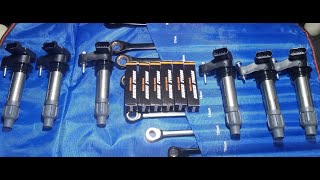
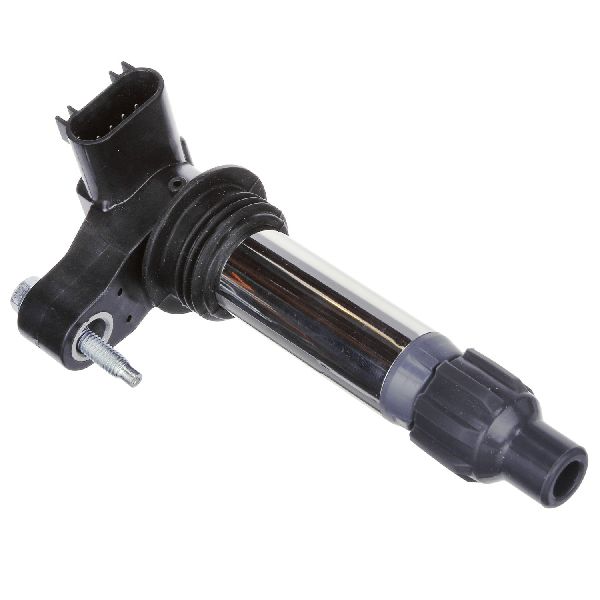
Typical fix: Replace the faulty ignition coil. It is strongly recommended to replace all six coils and spark plugs at the same time, especially since accessing the rear three coils requires removing the upper intake manifold 🎬 Watch: How to replace the rear ignition coils, a labor-intensive job. The OEM part is often an ACDelco D501C.
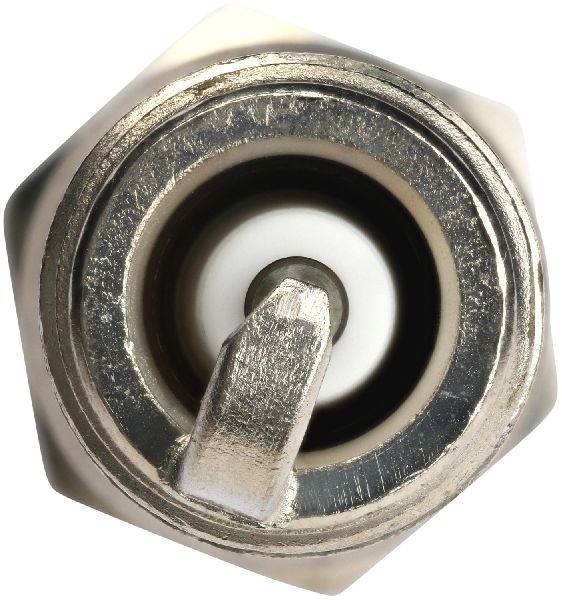
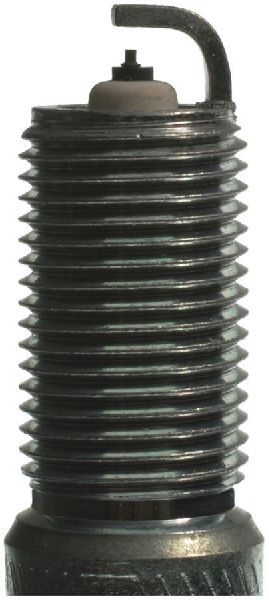
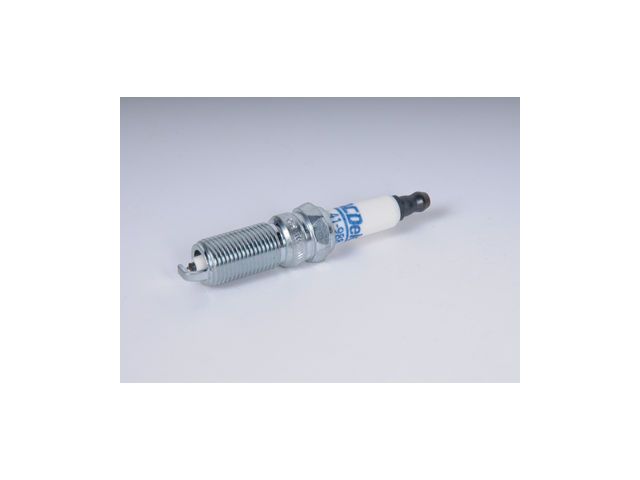
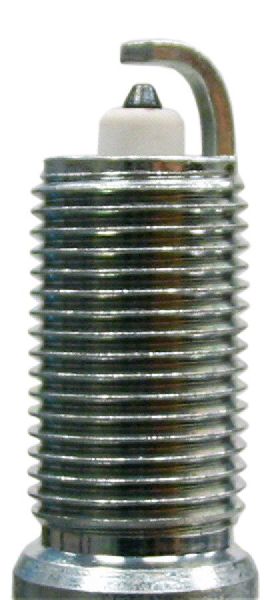
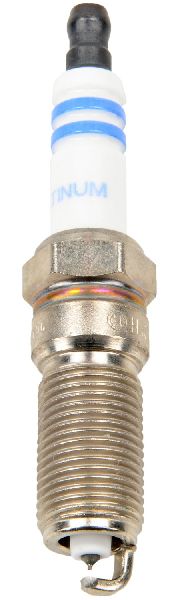
Est. part cost: $30-$120 per coil. A common OEM part number is ACDelco D501C. - Worn or Fouled Spark Plugs 🔴 High Probability → Shop Spark Plug Spark plugs are a routine maintenance item with a typical service life of 60,000-80,000 miles. Worn electrodes or fouling from oil or carbon can prevent a strong spark, causing a misfire.
How to confirm: After confirming the coil is good, inspect the spark plug from the misfiring cylinder. Look for worn electrodes, heavy carbon deposits, oil fouling, or cracks in the ceramic insulator. Compare it to a new plug.
Typical fix: Replace the spark plugs. It is best practice to replace all six at once. Given the labor to remove the intake manifold for the rear bank, it is highly advisable to do plugs and coils simultaneously.
Est. part cost: $40-$100 for a set of six - Stretched Timing Chains 🟡 Medium Probability → Shop Engine Timing Chain The 3.6L V6 in the Outlook is infamous for premature timing chain wear. This was so common that GM issued a Special Coverage Adjustment (#11340C) extending the warranty, which has since expired. The original issue was often attributed to an inadequate chain design and an overly optimistic Oil Life Monitor (OLM) system, leading to oil degradation and accelerated wear. Stretched chains cause the camshaft timing to be out of sync with the crankshaft, leading to misfires (often random, P0300) and specific timing codes (P0008, P0016, P0017, P0019).
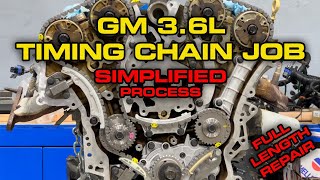
How to confirm: This is a complex diagnosis. It often starts with seeing codes like P0008 or P0016 alongside misfire codes. A mechanic can check camshaft deviation angles with a high-end scan tool. Physical confirmation requires significant engine disassembly, often lowering the engine cradle. 🎬 See this full walkthrough of the timing chain replacement
Typical fix: This is a major, labor-intensive repair requiring replacement of all three timing chains, guides, and tensioners with updated parts. This is not a typical DIY job and can cost between $2,000 and $3,800.
Est. part cost: $300-$700 for a full kit from a reputable brand like Cloyes or OEM. - Carbon Buildup on Intake Valves (2009-2010 LLT Engine) 🟡 Medium Probability Direct injection (DI) engines spray fuel directly into the cylinder, so gasoline detergents don't wash over the intake valves. Oil vapor from the PCV system can bake onto the hot valves, restricting airflow and causing misfires, especially on cold starts or at idle.
How to confirm: Diagnosis often involves eliminating all other causes first. A borescope can be used to visually inspect the intake valves by removing the intake manifold. Symptoms include rough idle and misfires that don't resolve with new plugs or coils.
Typical fix: The valves must be physically cleaned. The most effective method is walnut shell blasting, a professional service where crushed walnut shells are blasted into the intake ports to scour off carbon without damaging the metal. 🎬 Watch: How walnut blasting cleans carbon from intake valves
Est. part cost: $0 (if cleaning manually) - $50 (walnut media). Professional service can cost $350 and up. - Faulty Fuel Injector ⚪ Low Probability → Shop Fuel Injector Less common than ignition issues, but an injector can become clogged or fail electronically, preventing the correct amount of fuel from reaching the cylinder. This can be more common on the direct-injection LLT engine.
How to confirm: After ruling out spark, you can test the injector. A 'noid' light can check for an electrical signal. Swapping injectors between cylinders is possible but more involved than swapping coils, especially on the DI engine.
Typical fix: Replace the faulty fuel injector. Sometimes, a professional ultrasonic cleaning can restore function.
Est. part cost: $50-$150 per injector
Rare But Worth Checking
- Leaking Valve Cover Gasket: → Shop Engine Valve Cover The valve cover gaskets can leak oil into the spark plug tubes. This oil will saturate the ignition coil boot and cause it to fail, leading to a misfire. If you find oil when changing a coil or plug, you must replace the valve cover gasket and the spark plug tube seals to prevent repeat failures. A user on Saturn Forum noted an oily residue on a fuel injector, which could also stem from a nearby valve cover leak.
- Faulty Engine Control Module (ECM): → Shop Engine Control Module (ECM) In rare cases, the driver circuit within the ECM that controls an ignition coil can fail. TSB #PIP5038B notes that for some 2009 models, internal ECM issues could damage coils, requiring replacement of the ECM, all coils, and plugs.
- Loose Ground Connection: A YouTube video on a GMC Acadia with intermittent misfires on one bank traced the issue to a loose engine ground strap. Before extensive repairs, ensure all engine and chassis grounds are clean and tight.
Diagnosis Steps
- First, verify the actual trouble code with a reliable OBD-II scanner. Confirm that it is not P0308, or if it is, understand it represents a real misfire on an existing cylinder (1-6). Identify the specific cylinder that is misfiring (e.g., P0304 is Cylinder 4).
- Identify the misfiring cylinder's location. Bank 2 (even numbers: 2, 4, 6) is at the front of the vehicle. Bank 1 (odd numbers: 1, 3, 5) is at the rear, against the firewall.
- Swap the ignition coil from the misfiring cylinder with a coil from an adjacent, working cylinder.
- Clear the trouble codes and start the engine. Let it run for a few minutes or take a short drive.
- Re-scan for codes. If the misfire code has moved to the new cylinder (e.g., P0304 changed to P0302 after swapping with cylinder 2), the coil is bad.
Parts You'll Likely Need
- Ignition Coil
(OEM #D501C)— This is the most common cause of a single-cylinder misfire. They are a frequent failure item due to heat and vibration.
Trusted brands: ACDelco, Delphi
OEM price range: $70-$120
Aftermarket price range: $30-$80 - Spark Plugs — These are a standard maintenance item and are often replaced along with ignition coils to ensure a complete and lasting repair.
Trusted brands: ACDelco, NGK
OEM price range: $10-$20 per plug
Aftermarket price range: $6-$15 per plug - Timing Chain Kit — For misfires related to codes P0008, P0016, etc., this is the ultimate fix. The 3.6L engine is known for this issue, and a complete kit with updated parts is required.
Trusted brands: ACDelco, Cloyes
OEM price range: $450-$700
Aftermarket price range: $300-$500
Related Codes That Often Appear With This One
- P0300 — This is a 'Random Misfire' code. It often appears with specific cylinder misfire codes or can be a precursor to them. It's also strongly associated with timing chain issues and vacuum leaks.
- P0301-P0306 — These are the actual, valid misfire codes for the Saturn Outlook's six cylinders. You will have one of these, not P0308.
- P0008 — This code indicates an 'Engine Positions System Performance' error on Bank 1. It is a hallmark sign of stretched timing chains on the 3.6L V6 and frequently accompanies misfire codes caused by the timing issue.
- P0016, P0017, P0019 — Like P0008, these codes indicate a loss of synchronization between the crankshaft and camshafts on Bank 1 or Bank 2. They are classic indicators of a stretched timing chain on this platform.
Technical Service Bulletins (TSBs) & Recalls
- PIP5628G: Diagnostic aid for technicians encountering misfire codes P0300-P0308, confirming the code can be logged.
- 11340C: Special Coverage Adjustment for premature timing chain wear, extending the warranty to 10 years/120,000 miles (now expired).
- PIP5038B: Notes rare cases of ECM failure causing ignition coil damage on some 2009 models.
Platform-Specific Known Issues
- Impossible Code: P0308 is not a valid code for the V6-only Saturn Outlook. The problem is a misfire on cylinders 1-6 (P0301-P0306) or a random misfire (P0300).
- Timing Chain Failure: The 3.6L V6 is widely known for premature timing chain stretching, causing misfires and timing codes. GM issued TSB #12-06-01-009F and Special Coverage Adjustment #11340C related to this issue.
- Carbon Buildup: The 2009-2010 models with the direct-injected LLT engine are prone to heavy carbon deposits on intake valves, leading to misfires. TSB #PIP5029C addresses this issue.
Mechanic-Grade Diagnostic Values
- Ignition Coil Primary Winding Resistance — expected: 0.4 to 2.0 ohms. Failure: A reading outside this range indicates a faulty coil.
- Ignition Coil Secondary Winding Resistance — expected: 6,000 to 10,000 ohms (6k-10k Ω). Failure: A reading outside this range, especially an open circuit (infinite resistance), points to a failed coil.
- Camshaft Position Sensor Reference Voltage (KOEO) — expected: Approximately 5V at the sensor connector with the key on, engine off.. Failure: No voltage or significantly low voltage suggests a wiring or ECM problem, not necessarily a bad sensor.
- Scan Tool Cam/Crank Correlation (LLT Engine) — expected: Within a few degrees of crankshaft rotation.. Failure: The ECM may set a timing code like P0017 if a camshaft is more than 10-13 degrees out of sync with the crankshaft, indicating a stretched chain.
Scan Tool Commands That Help
- GM Tech2 / GDS2: Misfire Graphics / Misfire Data List — This function provides a real-time graph or counter for misfires on each individual cylinder. It is extremely useful for identifying an intermittent or low-frequency misfire that may not be severe enough to set a specific P030x code but is still causing a driveability issue.
- GM Tech2 / GDS2 or other high-end scan tool: Crankshaft Position (CKP) Variation Relearn — This procedure must be performed after replacing a crankshaft position sensor, the ECM, or performing major engine work like a timing chain replacement. Failure to perform the relearn can cause the ECM to inaccurately detect misfires or even set false misfire codes because it hasn't learned the minor variations of the new or disturbed components.
- GM Tech2 / GDS2: Injector Balance Test — If an ignition problem has been ruled out for a specific cylinder misfire, this test can be used to command each injector to fire and measure the corresponding drop in fuel pressure. A smaller-than-specified pressure drop for one cylinder can indicate a clogged or failing injector.
Wiring & Ground Locations
- Engine Control Module (ECM) — Located in the left front corner of the engine compartment.. The ECM sends the control signal to each ignition coil. A failure in the ECM's internal driver circuit for a specific cylinder can cause a persistent misfire on that cylinder. Testing the control wire from the ECM connector to the coil connector can verify wiring integrity.
- Main Engine Ground Strap — A thick, often braided, cable connecting the engine block to the vehicle's chassis/frame to complete the electrical circuit.. A loose, corroded, or broken main engine ground can cause a host of electrical issues, including weak spark and intermittent misfires that can be difficult to diagnose. The alternator and ignition system rely on this ground for a stable electrical path.
- G115 (Ground Point) — For a 2008 model, a ground point designated G115 is located on the left side of the engine compartment, on the inner fender panel.. Multiple components may share a single ground point. Corrosion or looseness at this specific location can cause seemingly unrelated issues, including problems with modules that monitor engine performance.
Real Owner Repair Stories
- GMTNation forum user (2007 GM Vehicle (platform shared with Outlook)) — Engine stumble or hesitation under load, but no specific misfire DTC was set.
❌ Tried (didn't work) Initial scanning showed no trouble codes, making diagnosis difficult.
✅ What actually fixed it Using a Tech2 scanner's 'misfire graphics' feature, the owner identified that cylinder #4 was the problem. Upon removing the #4 ignition coil, it was found to be full of oil from a leaking valve cover gasket. Cleaning the oil out of the spark plug tube and replacing the compromised coil pack solved the misfire. - JK-Forum.com user (Jeep with 3.6L engine (different platform, but same diagnostic principle)) — Persistent P0304 (Cylinder 4 Misfire) that only occurred at idle. Engine ran smooth off-idle.
❌ Tried (didn't work) Swapping the spark plug, ignition coil, and fuel injector from cylinder #4 to cylinder #2; the misfire did not move and remained on cylinder #4., Initial compression test showed a good reading of 130-135 psi.
✅ What actually fixed it A later, more thorough leak-down test revealed the true cause. The test showed a massive air leak from the exhaust pipe on cylinder #4, indicating a bad exhaust valve or valve seat that was not sealing properly at idle. This required cylinder head removal for repair.
OEM Part Supersession History
ACDelco D501C→GM 12629037— This is an interchange part number. D501C is a widely recognized part number for the ignition coil used on the 2009 Outlook 3.6L V6.GM 12651450 (Timing Chain Kit)→GM 12700436 (or equivalent updated kit)— The original timing chains were prone to premature stretching. The updated kits were released to provide a more durable, long-term repair.
Heads up: It is critical to use the complete, updated kit for the repair. Installing only a new chain on old guides or tensioners will lead to repeat failure.
Model Year Variations Within This Range
- 2007-2008: These models use the port-injected LY7 engine. They are not susceptible to the intake valve carbon buildup seen in later models but are still highly prone to the timing chain stretching issue.
- 2009-2010: These models use the direct-injected LLT engine. This engine is prone to carbon buildup on the back of the intake valves, which can cause misfires. The fuel system and pistons are also different from the earlier LY7.
- All: GM issued an ECM software update to recalibrate the Oil Life Monitor (OLM). The original algorithm allowed for excessively long oil change intervals, which contributed to oil degradation and accelerated timing chain wear.
Helpful Videos

Used OEM Parts in Stock
New Aftermarket Parts Available

The information in this article is provided for general reference and educational purposes only. Vehicle specifications, procedures, and part compatibility can vary by production date, trim level, and region. Always consult your vehicle's factory service manual and verify part numbers before purchasing or performing repairs. Safety-critical components such as airbags, seat belts, and braking systems should be installed by a qualified professional.
- Saturn OUTLOOK:
- 🧭 Diagnostic Flowchart
- 🎬 Helpful Videos
- 🛍️ Shop This Part
- What's Unique About the 2007-2010 Saturn OUTLOOK
- Symptoms You May Notice
- Most Likely Causes
- Rare But Worth Checking
- Diagnosis Steps
- Parts You'll Likely Need
- Related Codes That Often Appear With This One
- Technical Service Bulletins (TSBs) & Recalls
- Platform-Specific Known Issues
- Mechanic-Grade Diagnostic Values
- Scan Tool Commands That Help
- Wiring & Ground Locations
- Real Owner Repair Stories
- OEM Part Supersession History
- Model Year Variations Within This Range
- 🎟️ Get 5% Off