

P0314 on 2005-2018 Subaru Forester: Causes for Unspecified Cylinder Misfire and Fixes
P0314 on a Subaru Forester means the engine is misfiring, but the computer can't tell which cylinder. The most common causes are worn spark plugs and failing ignition coils, often due to oil leaking into the spark plug tubes. On 2014-2017 models, check for a faulty alternator pulley, which can create a 'phantom' misfire code even if the engine runs fine; this is a widely documented issue with a specific TSB fix.
- P0314 means there is a misfire, but the specific cylinder is unknown.
- For 2005-2018 Foresters, the most likely culprits are worn spark plugs and ignition coils, often compromised by oil leaks from valve cover gaskets.
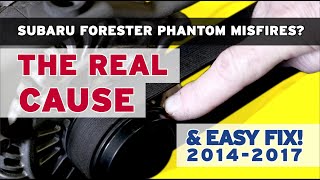
- If you own a 2014-2017 Forester and the engine runs smoothly despite the check engine light, the cause is very likely a faulty alternator pulley creating a 'phantom' code, as outlined in a Subaru TSB.
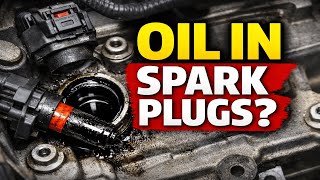
- Always inspect for oil in the spark plug tubes when diagnosing a misfire on a Forester.
- Do not ignore a P0314 code, as it can lead to more expensive catalytic converter damage if left unaddressed.
What's Unique About the 2005-2018 Subaru Forester
On many vehicles, P0314 points directly to a basic tune-up. For the Subaru Forester, especially the 2014-2017 SJ generation with the FB25 engine, this code has a notorious platform-specific cause: a faulty alternator and clutch pulley assembly. Vibrations from the original, defective pulley can be misinterpreted by the crankshaft position sensor as an engine misfire, triggering codes like P0314 or P030x even when the engine is running perfectly smoothly. Beyond this, the horizontal 'boxer' engine design (both older EJ25 and newer FB25) makes valve cover gaskets prone to leaking oil into the spark plug tubes over time, which degrades ignition coils and wires, leading to misfires.
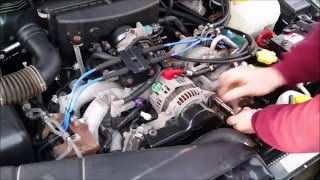
Generation note: The 2005-2018 range covers three Forester generations: the SG (2005-2008, EJ25 engine), SH (2009-2013, EJ25/FB25 engines), and SJ (2014-2018, FB25 engine). While ignition component failure from oil leaks is common across all, the SJ generation (2014-2017 specifically) is subject to Technical Service Bulletin 07-136-18 🎬 Watch: How to identify and fix these phantom misfires. for false misfires caused by a faulty alternator pulley. The earlier EJ25-equipped models are highly prone to head gasket failures which can also lead to misfires.
Symptoms You May Notice
- Engine running rough or shaking, especially at idle
- Hesitation or stumbling during acceleration
- Noticeable loss of engine power
- Reduced fuel economy
- Solid or flashing Check Engine Light
- Backfiring from the exhaust, especially at idle or on deceleration
- Replacing only one spark plug or coil when a full set is needed, or when the root cause is an oil leak that will damage the new part.
- Replacing ignition components on a 2014-2017 model without first investigating TSB 07-136-18 for the faulty alternator pulley, especially if the engine is not running rough.
Most Likely Causes
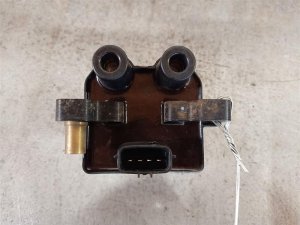
- Worn Spark Plugs or Failing Ignition Coils/Wires 🔴 High Probability → Shop Ignition Coil Due to the boxer engine design, valve cover gaskets and spark plug tube seals are very common failure points, allowing engine oil to leak directly into the spark plug wells. This oil saturation degrades the ignition coil boots and spark plug wires, causing the spark to ground out and lead to an intermittent misfire. This is a well-documented issue in owner forums.
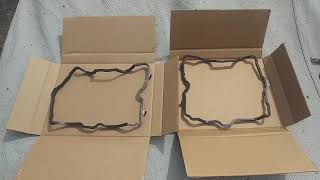
How to confirm: Visually inspect the ignition coils and spark plugs after removal. The presence of liquid oil in the spark plug tubes 🎬 See this DIY guide for replacing gaskets and spark plugs. is definitive proof of leaking seals. Inspect plugs for wear (electrode erosion), fouling, or incorrect gap. Check ignition coils and wires for signs of arcing (carbon tracks), cracking, or oil saturation. A scan tool can monitor misfire counters while swapping coils between cylinders to see if the misfire follows the coil.
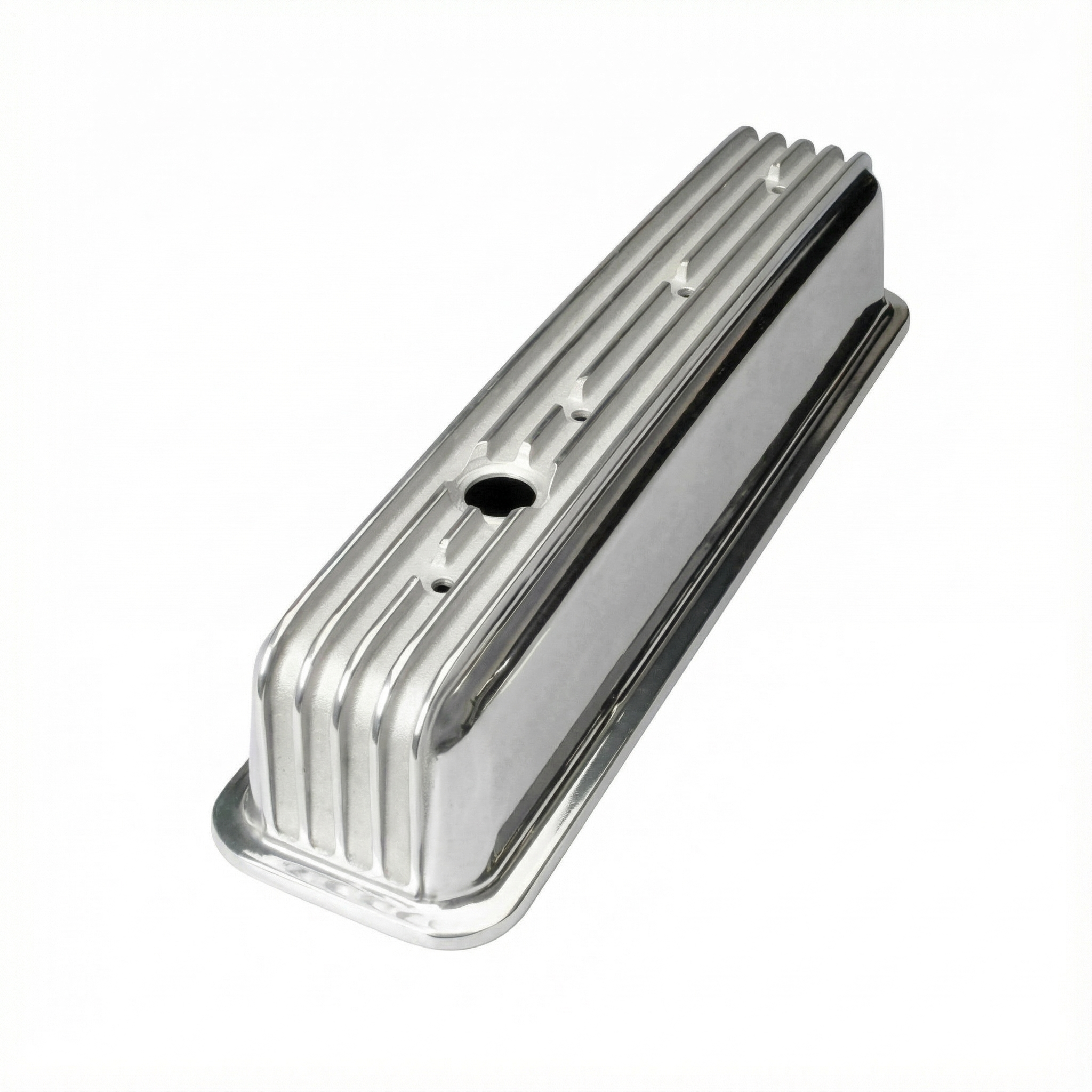
Typical fix: Replace all spark plugs and any faulty ignition coils or wires. It is highly recommended to replace the valve cover gaskets and spark plug tube seals if they are found to be leaking to prevent a repeat failure.
Est. part cost: $100-$300 - Faulty Alternator and/or Clutch Pulley Assembly (False Misfire) 🔴 High Probability → Shop Alternator Subaru Technical Service Bulletin 07-136-18 (and others like 11-174-17R) was issued for 2014-2017 Foresters with the 2.5L FB25 engine. The original alternator pulley assembly can create a resonance/vibration that the crankshaft sensor incorrectly interprets as a misfire. This is a very common cause of 'phantom' misfires where the engine runs smoothly but throws codes P0314, P0300, or P030x.
How to confirm: This is the likely cause if the engine runs perfectly but the code persists. Visually inspect the alternator pulley. The original, faulty pulley is black; the updated, corrected pulley is silver/metallic. A technician can use a Subaru-specific scan tool (SSM4) to monitor 'Battery Current' and 'Cylinder Roughness' data. If the battery current fluctuates more than +/- 3A while the roughness counter for a cylinder steadily increases, the TSB confirms the alternator assembly is the cause.
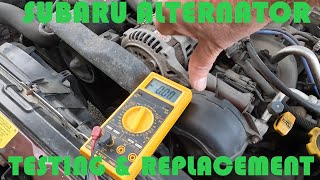
Typical fix: Replace the alternator, v-belt, and tensioner assembly as a set with the updated parts specified in the TSB. 🎬 Watch: Step-by-step walkthrough for replacing a Subaru alternator. The updated parts include Alternator (p/n 23700AB030), Tensioner (p/n 23769AA111), and Belt (p/n 23780AA111).
Est. part cost: $400-$800 - Vacuum Leak 🟡 Medium Probability With age, rubber and plastic vacuum hoses, as well as intake manifold gaskets, can become brittle and crack. The PCV (Positive Crankcase Ventilation) hose is a common culprit, becoming brittle and cracking where it connects to the valve. A clogged PCV valve can also increase crankcase pressure, forcing oil past seals.
How to confirm: Listen for a hissing sound around the engine bay at idle. A mechanic can perform a smoke test, which fills the intake system with smoke to visually identify the source of any leaks. You can also carefully spray brake cleaner or propane around suspected vacuum lines; a change in engine idle indicates a leak has been found.
Typical fix: Replace the cracked hose or faulty gasket. The PCV valve is an inexpensive maintenance item that should be replaced periodically.
Est. part cost: $10-$150 - Dirty or Clogged Fuel Injectors ⚪ Low Probability → Shop Fuel Injector Carbon deposits can build up on fuel injectors over time, disrupting the spray pattern and causing a lean condition in one or more cylinders, leading to an intermittent misfire. This is more common on higher-mileage vehicles. The introduction of Direct Injection (DIT) engines in some later models (like the Forester XT) can make them more susceptible to carbon buildup on intake valves, which can indirectly affect cylinder performance.
How to confirm: A professional fuel system cleaning may resolve the issue temporarily. A more definitive test involves using a scan tool to perform a power balance test or swapping injectors between cylinders to see if the misfire code follows the injector. The ultimate confirmation is removing the injectors for flow testing.
Typical fix: Professional fuel system cleaning or replacement of the clogged injector(s).
Est. part cost: $100-$400
Rare But Worth Checking
- Low Cylinder Compression: This indicates a more serious internal engine problem, such as worn piston rings, a burnt valve, or a failing head gasket. On EJ25 engines (pre-2011), head gasket failure is a very common issue that can lead to misfires. A compression test is required for diagnosis.
- Faulty Crankshaft Position Sensor: → Shop Engine Crankshaft Position Sensor The sensor itself can fail intermittently, sending erratic signals to the PCM and preventing it from correctly identifying cylinder positions and misfires. This is less common than the other causes but possible.
Diagnosis Steps
- Read the code with an OBD-II scanner and check for any other pending or active codes.
- If the vehicle is a 2014-2017 Forester and runs smoothly, investigate TSB 07-136-18 regarding the alternator pulley first. Check if the pulley is the original black version. If possible, use a scan tool to monitor Battery Current and Cylinder Roughness data.
- If the engine runs rough, begin with a full ignition system inspection. Pull the ignition coils and spark plugs. Look for oil in the spark plug tubes, a definitive sign of a leaking valve cover gasket and tube seals. Inspect plugs for wear, damage, or fouling.
- Check for vacuum leaks. Listen for hissing noises at idle. Inspect the PCV hose and other visible lines for cracks. A smoke test is the most effective way to find a leak.
- If ignition and vacuum systems are good, consider fuel system issues. Check fuel pressure and consider a professional fuel injector cleaning or swapping injectors to isolate the problem.
- If all else fails, perform a cylinder compression test to rule out mechanical engine problems like bad rings, valves, or a failed head gasket.
- After any repair, clear the codes and perform a test drive to ensure the issue is resolved.
Parts You'll Likely Need
- Spark Plugs
(OEM #e.g., NGK SILZKAR7B11 for FB25 engines)— This is the most common cause of misfires and a standard maintenance item.
Trusted brands: NGK, Denso
OEM price range: $60-$100
Aftermarket price range: $40-$80 - Ignition Coil
(OEM #e.g., 22433AA642 for FB25 engines)— Often fails along with spark plugs, or is damaged by oil leaks from the valve cover gasket.
Trusted brands: Denso, NGK, Hitachi
OEM price range: $100-$150
Aftermarket price range: $50-$100 - Valve Cover Gasket Kit (with tube seals)
(OEM #e.g., 10966AA040 (Tube Seal), 13294AA070 (Gasket))— Extremely common failure point on boxer engines, leading to oil contamination of ignition components.
Trusted brands: Fel-Pro, Ishino, Genuine Subaru
OEM price range: $80-$120
Aftermarket price range: $40-$70 - Alternator Assembly (for TSB)
(OEM #23700AB030)— Required part to fix the 'phantom misfire' issue on 2014-2017 models as per TSB 07-136-18.
Trusted brands: Genuine Subaru
OEM price range: $500-$700
Aftermarket price range: $300-$500
Related Codes That Often Appear With This One
- P0300 — P0300 indicates random/multiple cylinder misfires. If the P0314 fault becomes more frequent or affects more cylinders, it can escalate to a P0300. The alternator TSB also lists P0300 as a primary symptom.
- P0301, P0302, P0303, P0304 — If the PCM eventually identifies the specific cylinder that is misfiring, it will set one of these codes. The false misfire TSB for 2014-2017 models also lists these codes as potential symptoms.
Technical Service Bulletins (TSBs) & Recalls
- TSB 07-136-18: Details the diagnosis and repair for false misfires (P0300, P030x, P0314) on 2014-2016 Foresters by replacing the alternator, tensioner, and belt with updated parts.
- TSB 11-174-17R: A broader ECM reprogramming TSB that also addresses issues related to alternator control and potential battery drain on 2017-2018 Foresters.
- TSB 02-157-14R: Addresses excessive oil consumption on 2011-2015 models by replacing the engine short block.
Platform-Specific Known Issues
- A Technical Service Bulletin (11-174-17R) exists for 2014-2017 Forester models where a faulty alternator pulley can cause false misfire codes (P0300, P030x, P0314).
- A Technical Service Bulletin (09-78-20R) exists for various models including the 2019 Forester for a carbon cleaning procedure to address misfire codes.
Mechanic-Grade Diagnostic Values
- Ignition Coil Primary Resistance (EJ25 engine, e.g., 2005-2010) — expected: 0.73 Ω ± 10%. Failure: A reading outside this range indicates a faulty coil pack.
- Ignition Coil Secondary Resistance (EJ25 engine, e.g., 2005-2010) — expected: 12.8 kΩ ± 15%. Failure: A reading outside this range indicates a faulty coil pack.
- Spark Plug Wire Resistance (SH Forester, e.g., 2010 Impreza) — expected: Cyl 1/3: 5-13 kΩ; Cyl 2/4: 8-20 kΩ. Failure: Resistance outside the specified range for the wire's length indicates a bad wire.
- Mode $06 Misfire Count per Cylinder — expected: A count near zero.. Failure: A high count (several hundred or more) on one cylinder relative to others, even without a specific P030x code, points to an intermittent misfire in that cylinder. This can help pinpoint the problem cylinder when only a P0314 is present.
Hidden / Shadow Codes Worth Checking
- Mode $06 Test IDs (e.g., TID $0C, Component ID $01-$04): This is not a 'code' but a data point within a professional scan tool's Mode $06 function. It shows the raw misfire count for each individual cylinder during the last and current drive cycles. This allows a technician to see which cylinder is the source of the P0314 even when the PCM hasn't set a specific P0301-P0304 code. (see via A professional-grade scan tool with Mode $06 capability is required. Basic code readers cannot access this data.)
Scan Tool Commands That Help
- Subaru Select Monitor (SSM) or equivalent pro-level scanner: Cylinder Roughness Monitor — This is the specific data parameter to monitor when diagnosing the TSB for false misfires on 2014-2017 models. If the roughness counter for a cylinder increases steadily while the engine is running smoothly, it points to the alternator pulley issue.
- Subaru Select Monitor (SSM) or equivalent pro-level scanner: Power Balance Test — This function allows the technician to disable one fuel injector at a time to see the effect on engine RPM. If disabling an injector causes little to no drop in RPM, that cylinder was not contributing properly, indicating a misfire related to that cylinder's fuel or spark.
Wiring & Ground Locations
- Main Engine Ground Strap — Typically runs from the engine block (often near the alternator or starter) to the chassis/frame rail, right below the battery.. A corroded or loose main engine ground can cause erratic sensor readings and insufficient voltage for the ignition coils, leading to weak spark and intermittent misfires that are hard to trace.
- Intake Manifold Ground — On many Subaru engines, there are grounding points directly on the intake manifold.. The ECU and many critical sensors get their ground reference from the intake manifold. A poor connection here can cause the ECU to receive noisy signals from the crankshaft and camshaft sensors, leading to misfire detection errors.
- Firewall Ground — A ground strap often connects the transmission housing or the rear of the engine block to the vehicle's firewall.. This ground is crucial for the overall electrical stability of the powertrain. Corrosion or looseness can contribute to floating grounds and unpredictable electrical behavior, including misfires.
OEM Part Supersession History
Various black-colored alternator pulleys→Alternator Assembly P/N 23700AB030 (with silver/metallic pulley)— The original pulley design created vibrations that were misread by the crank sensor as an engine misfire, triggering false P0314/P030x codes.
Heads up: Simply replacing the pulley is not the recommended fix; the entire alternator, belt, and tensioner assembly should be replaced with the updated part numbers to ensure resolution.
Model Year Variations Within This Range
- 2005-2010 (SG/SH with EJ25 engine): These models use a single ignition coil pack with spark plug wires. Testing involves checking primary and secondary resistance of the coil pack and the resistance of each individual wire. They are also highly susceptible to internal head gasket leaks causing misfires.
- 2011-2018 (SH/SJ with FB25 engine): These models use a coil-on-plug ignition system, with an individual coil for each spark plug. Diagnosis involves swapping coils between cylinders to see if the misfire follows the coil. These engines are less prone to head gasket failure but are the primary group affected by oil leaks from the cam carrier/valve covers into the plug tubes.
- 2014-2017 (SJ with FB25 engine): This specific range is subject to TSB 07-136-18 for false misfires caused by a faulty alternator pulley assembly, a diagnosis that should be prioritized if the engine runs smoothly.
Diagnostic Flowchart
Other Known Issues on This Vehicle
Issues unrelated to this code that are worth knowing about as an owner of this generation:
- Excessive Oil Consumption (FB Engines) 🔴 High — Common in 2011-2015 models with the FB25 engine. Can consume over a quart of oil between changes. Led to a class-action lawsuit and service bulletins (e.g., 02-157-14R) to replace the short block assembly. (Ref: TSB 02-157-14R)
- Head Gasket Failure (EJ25 Engines) 🔴 High — Extremely common on naturally aspirated 2.5L EJ25 engines, typically from 1999-2010. Failure often occurs between 100,000 and 150,000 miles, causing external oil leaks or internal coolant/oil mixing.
- CVT Transmission Issues 🟠 Medium — Affects models with the continuously variable transmission (CVT), particularly from 2012-2018. Symptoms include shuddering, hesitation, and potential failure. Subaru extended the powertrain warranty to 10 years/100,000 miles for many affected vehicles. (Ref: Warranty Extension Program)
- Failing Wheel Bearings 🟠 Medium — A common failure item across many model years. Symptoms include a loud humming or grinding noise from the wheel area that changes with speed. Rear bearings are frequently cited as failing first.
Used vs. New Parts: Buying Guide for This Vehicle
When a used part is the smart pick: Used parts can be a good option for major mechanical components like an alternator, especially if you can verify it's the updated part number from a post-2017 donor vehicle. Body parts or interior components are also excellent candidates for used purchase from a salvage yard or a specialized Subaru recycler.
Donor-vehicle mileage cap: roughly under 80000 miles for the part to have meaningful remaining life.
What to inspect on the donor part:
- For alternators, look for the silver/metallic pulley indicating it's the updated TSB part.
- Check for minimal corrosion on electrical connectors and housings.
- Ask the salvage yard for the VIN of the donor car to verify its year and check for accident history.
- For any used part, inquire about the return policy in case it's defective.
OEM-only on this vehicle (don't cheap out):
- Crankshaft Position Sensor: Aftermarket sensors are notoriously unreliable and can cause no-start or stalling issues. The cost savings are not worth the potential for being stranded.
- Gaskets (Head Gasket, Valve Cover Gaskets): Always use high-quality OEM or OEM-supplier (e.g., Ishino, Fel-Pro) gaskets. Cheap gaskets are likely to fail prematurely.
- PCV Valve: This is a cheap but critical part. An OEM valve ensures correct crankcase pressure regulation; aftermarket versions can be inconsistent.
Aftermarket brands forum-validated for this vehicle:
- Ignition Coils/Plugs: NGK and Denso are OEM suppliers to Subaru and are trusted for quality and reliability.
- Suspension: KYB is a well-regarded OEM equivalent for struts if you are not buying from Subaru directly.
Brands owners have reported issues with on this vehicle:
- Unbranded/White-box electrical sensors (Crank/Cam sensors, O2 sensors) from online marketplaces.
- Cheap, complete strut assemblies (e.g., from RockAuto) have been reported by users to have poor ride quality and short lifespans compared to OEM or KYB.
Real Owner Stories
Aggregated from forums and TSBs cited above. Mileages and costs reflect what owners reported in those sources.
2014 Forester XT
Symptoms: Owner experienced a Check Engine Light for a misfire code (P0300), which is often triggered by the same fault as P0314.
What fixed it: The issue was resolved by performing the repair outlined in the alternator TSB, which involves replacing the alternator, v-belt, and tensioner assembly with updated parts.
Source hint: Reddit r/subaru/comments/gqg93k/2014_forester_xt_cel/
2009 Forester
Symptoms: Owner discovered oil in the spark plug wells.
What fixed it: The problem was identified as leaking valve cover gaskets and spark plug tube seals. The fix is to replace these seals to prevent oil from contaminating the ignition components.
Source hint: Reddit r/AskMechanics/comments/d9z98o/09_forester_oil_in_spark_plug_well/
Related OBD-II Codes
Frequently Asked Questions
My 2015 Forester is running perfectly smooth but the Check Engine Light is on for P0314. What could be the cause?
How can I visually check if my Forester has the faulty alternator pulley mentioned in the TSB?
I found oil in the spark plug tubes of my Forester. Is this related to the P0314 code?
My mechanic says I need to replace the alternator, belt, and tensioner to fix a misfire code. Does that make sense for a 2016 Forester?
What is the most common cause of a P0314 code if my engine is actually running rough?
Is there a TSB related to carbon buildup causing misfires on newer Foresters?
Helpful Videos
We Have This Part in Stock

The information in this article is provided for general reference and educational purposes only. Vehicle specifications, procedures, and part compatibility can vary by production date, trim level, and region. Always consult your vehicle's factory service manual and verify part numbers before purchasing or performing repairs. Safety-critical components such as airbags, seat belts, and braking systems should be installed by a qualified professional.
- Subaru Forester:
- 🧭 Diagnostic Flowchart
- 🎬 Helpful Videos
- 🛍️ Shop This Part
- What's Unique About the 2005-2018 Subaru Forester
- Symptoms You May Notice
- Most Likely Causes
- Rare But Worth Checking
- Diagnosis Steps
- Parts You'll Likely Need
- Related Codes That Often Appear With This One
- Technical Service Bulletins (TSBs) & Recalls
- Platform-Specific Known Issues
- Mechanic-Grade Diagnostic Values
- Hidden / Shadow Codes Worth Checking
- Scan Tool Commands That Help
- Wiring & Ground Locations
- OEM Part Supersession History
- Model Year Variations Within This Range
- Other Known Issues on This Vehicle
- Used vs. New Parts: Buying Guide for This Vehicle
- Real Owner Stories
- 2014 Forester XT
- 2009 Forester
- Related OBD-II Codes
- Frequently Asked Questions
- 🎟️ Get 5% Off