

P0316 on 2015-2019 Ford Edge: Startup Misfire, Coolant Intrusion, and Fixes
On a 2015-2019 Ford Edge with the 2.0L EcoBoost engine, code P0316 is a serious warning, most often caused by a known engine block defect that allows coolant to leak into the cylinders. This is not a simple tune-up issue; the most common fix is a complete long block engine replacement, which is a costly and complex repair. This issue is the subject of multiple TSBs and a class-action lawsuit.
- P0316 on a 2015-2018 Ford Edge 2.0L is not a routine maintenance code; it is a strong indicator of a serious, known engine defect.
- The most likely cause is coolant leaking into the engine's cylinders due to a flaw in the engine block.
- Do not ignore this code. Check your coolant level immediately. If it's low, have the vehicle professionally diagnosed.
- The correct and permanent repair is almost always a full engine long block replacement, which is a very expensive job.
- Simply replacing spark plugs or ignition coils will not solve the underlying problem.
What's Unique About the 2015-2019 Ford EDGE

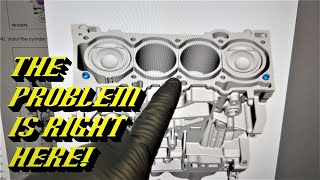
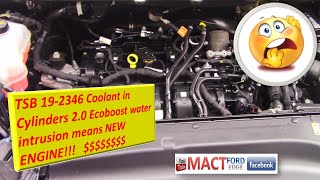
For the 2015-2018 Edge with the twin-scroll 2.0L EcoBoost engine, P0316 is a notorious code. 🎬 Watch: Understanding the P0316 misfire code on startup. It is strongly linked to a well-documented design flaw in the engine block. The engine's 'open-deck' design has a slot machined between the cylinders for coolant flow, creating a weak point in the head gasket sealing surface. This can lead to a breach, allowing coolant to seep into the cylinders, especially after the engine cools down. This isn't a typical ignition or fuel problem; it's a major mechanical failure. 🎬 See a mechanic explain this alarming EcoBoost engine defect. Owner complaints and a consolidated class-action lawsuit allege Ford knew of the defect but failed to provide an adequate remedy. Ford's own Technical Service Bulletins (TSBs) like 19-2346 and 22-2229 acknowledge the problem and recommend a complete long block engine replacement as the official repair.
🎬 Watch this walkthrough of the TSB for coolant intrusion.Diagnostic Flowchart


Tap your situation to follow the diagnostic path that matches what you're seeing on this vehicle.
Symptoms You May Notice

- Rough, shaky idle immediately after starting, which may smooth out after a few seconds
- Engine stumbling or stalling on a cold start.
- Illuminated Check Engine Light, often flashing during the startup misfire
- Noticeable loss of engine power and acceleration
- White smoke from the exhaust, especially on startup (from burning coolant)
- Gradual but consistent loss of engine coolant with no visible external leaks
- A sweet smell from the vents or exhaust, which is the scent of burning antifreeze.
- Replacing only spark plugs and ignition coils. While these can be symptoms, they are often not the root cause on this specific engine. If the P0316 code returns quickly after a tune-up, the underlying mechanical issue (coolant intrusion) was likely missed.
Most Likely Causes

- Engine Coolant Intrusion into Cylinders 🔴 High Probability A known design flaw in the 2.0L EcoBoost engine block ('open deck' design) creates a weak spot between cylinders, allowing coolant to leak into the combustion chamber. This issue is widespread enough to have prompted multiple TSBs and a class-action lawsuit.
How to confirm: A technician will perform a cooling system pressure test. TSB 19-2346 specifies pressurizing the system and letting it sit for an extended period (some recommend up to 5 hours); a significant pressure drop indicates a leak. Following a failed pressure test, a borescope is used to visually inspect the inside of the cylinders for liquid coolant, a 'steam-cleaned' piston top, or coolant trails on the cylinder wall.
Typical fix: Replacement of the engine long block assembly with a revised part (e.g., Part No. J2GZ-6006-E). This is the only official Ford-recommended permanent fix.
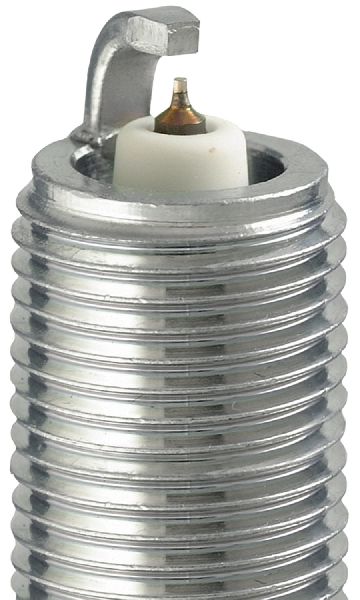
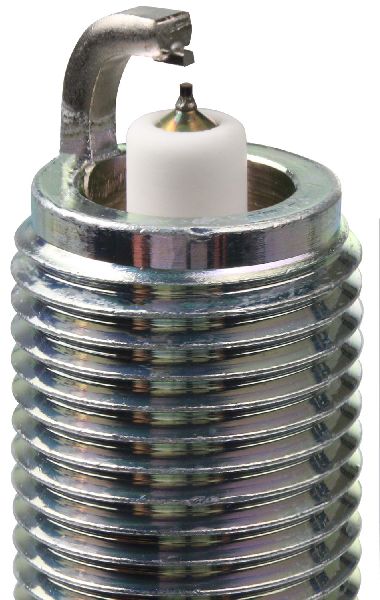
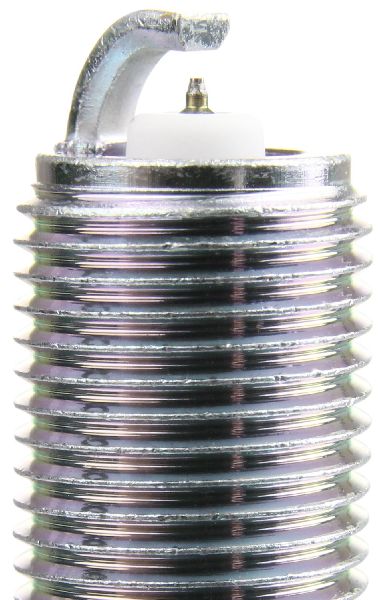
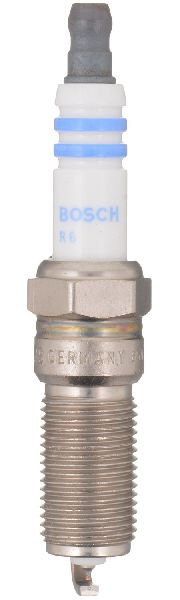
Est. part cost: $4000-$7000+ - Fouled or Damaged Spark Plugs 🟡 Medium Probability → Shop Spark Plug Spark plugs are a secondary failure. They become fouled with coolant due to the primary issue of engine block intrusion, causing them to misfire. In some cases, coolant contamination can cause the spark plug to seize in the cylinder head, complicating repairs.
How to confirm: Remove spark plugs and inspect for a wet, greenish or whitish residue (coolant), or a 'steam-cleaned' white appearance.
Typical fix: Replace all spark plugs. However, this is a temporary fix that only addresses a symptom. The P0316 code will return if the underlying coolant leak is not addressed.
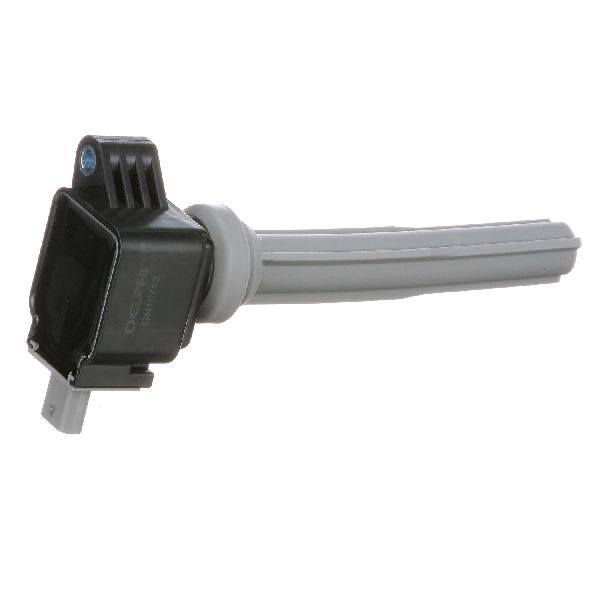
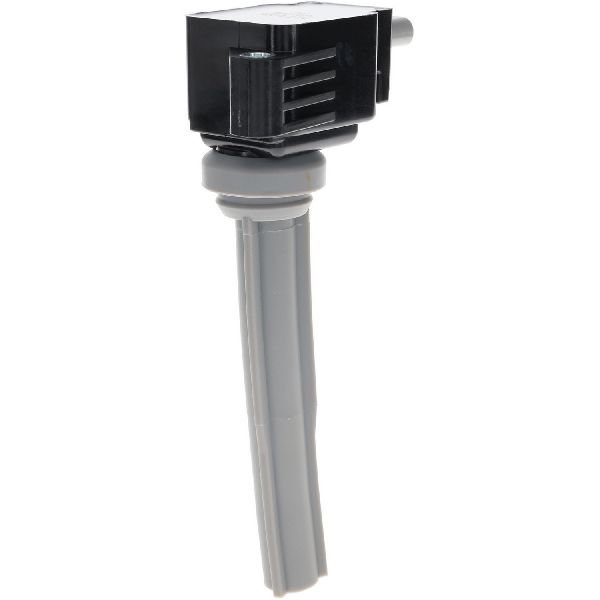
Est. part cost: $40-$100 - Faulty Ignition Coil(s) ⚪ Low Probability → Shop Ignition Coil While less common than the coolant issue, an ignition coil can fail independently, preventing a spark on startup. This is a standard potential cause for any misfire code.
How to confirm: If another misfire code (like P0302) is present, swap the ignition coil from the misfiring cylinder with a known good cylinder. If the misfire code follows the coil, the coil is bad.
Typical fix: Replace the faulty ignition coil.
Est. part cost: $50-$120
Rare But Worth Checking
- Crankshaft Position Sensor (CKP) Failure: A failing CKP sensor can provide erratic data to the PCM during startup, leading it to incorrectly flag a misfire. This is a possible cause if all other ignition and mechanical checks pass.
- Fuel Injector Issues: → Shop Fuel Injector A leaking or clogged fuel injector can cause a rich or lean condition in one cylinder at startup, leading to a misfire. Carbon buildup on direct injection engines is also a possible contributor.
Diagnosis Steps
- Scan for all DTCs. Note any specific cylinder misfire codes (P0301-P0304) that accompany P0316, as this points to the cylinder(s) to inspect first.
- Check engine coolant level in the reservoir. A low level with no visible external leaks is a major red flag for internal consumption.
- Perform a cooling system pressure test as per TSB guidelines. Pressurize the system and monitor for at least 5 hours. A significant pressure drop confirms an internal leak.
- If the pressure test fails, remove all spark plugs. Inspect them for signs of coolant contamination (white/green residue, wetness) or a steam-cleaned appearance.
- Use a borescope to look inside each cylinder through the spark plug hole. Visually check for any liquid coolant, a 'steam-cleaned' piston top, or vertical trails of coolant on the cylinder walls.
- If no coolant is found, proceed with standard misfire diagnostics: check spark, fuel injector pulse, and compression on the affected cylinder(s).
- If coolant is confirmed in a cylinder, the engine long block needs to be replaced according to Ford's TSBs (19-2346, 22-2229).
Parts You'll Likely Need
- Engine Long Block Assembly
(OEM #J2GZ-6006-E (supersedes previous versions))— This is the official Ford-recommended fix for the coolant intrusion issue. This part number represents the updated engine design intended to correct the original flaw.
Trusted brands: Motorcraft (OEM)
OEM price range: $4000-$7000
Aftermarket price range: $3500-$6000 - Spark Plugs
(OEM #SP-537 (Motorcraft))— Often fouled by coolant as a direct result of the primary engine failure. They must be replaced during engine replacement or if found to be contaminated during diagnosis.
Trusted brands: Motorcraft, NGK
OEM price range: $60-$100
Aftermarket price range: $40-$80 - Ignition Coils
(OEM #CM5Z-12029-K)— A potential but less likely cause of a startup misfire. May be replaced during diagnosis if one is found to be faulty. TSB 22-2229 lists this as an 'If Needed' part during the long block replacement.
Trusted brands: Motorcraft, Bosch, Delphi
OEM price range: $60-$90
Aftermarket price range: $40-$70
Related Codes That Often Appear With This One
- P0300 — Random/Multiple Cylinder Misfire Detected. This often accompanies P0316 when the coolant issue affects more than one cylinder or the misfire is severe.
- P0301, P0302, P0303, P0304 — These codes indicate a misfire in a specific cylinder (1, 2, 3, or 4). They are frequently seen with P0316 and help pinpoint which cylinder is taking on coolant. Cylinders 2 and 3 are most commonly affected.
- P0217, P1299 — Engine Overheat Condition / Cylinder Head Over-temperature Protection. These codes are listed in TSB 19-2346 as potential companion codes when coolant loss becomes significant enough to cause overheating.
Technical Service Bulletins (TSBs) & Recalls
- 22-2229: The most recent TSB for coolant intrusion, superseding earlier versions.
- 19-2346: An earlier TSB detailing the coolant intrusion issue and the long block replacement procedure.
- SSM 54504: A manufacturer bulletin that lists P0316 with other misfire codes in relation to excessive oil consumption, a separate but sometimes related issue.
Platform-Specific Known Issues
- 2.0L EcoBoost Coolant Intrusion: The most significant issue for this vehicle and code. A defect in the engine block casting allows coolant to leak directly into the cylinders. This is confirmed by numerous owner complaints, multiple Ford TSBs (e.g., 19-2346, 22-2229), and is the subject of a class-action lawsuit (Miller, et al. v. Ford Motor Company). The flaw is specific to the 'open deck' block design where coolant channels were cut between the cylinders.
- Class Action Lawsuit: Owners and lessees of affected vehicles (including the 2015-2018 Edge) are part of a lawsuit alleging Ford knowingly sold vehicles with this engine defect. The suit claims Ford's remedies have been insufficient and that replacement engines can have the same flaw if they are not the updated design.
Mechanic-Grade Diagnostic Values
- Ignition Coil Primary Resistance — expected: 0.4 - 2.0 ohms. Failure: A reading outside this range, especially 0 (short) or infinite (open), indicates a faulty coil.
- Ignition Coil Secondary Resistance — expected: 6,000 - 10,000 ohms. Failure: A reading significantly outside this range suggests the secondary winding has failed.
- Crankshaft Position Sensor (CKP) Resistance (2-wire sensor) — expected: 200 - 1,000 ohms. Failure: A reading of 0 ohms indicates a short, while an infinite reading indicates an open circuit.
- Low-Side Fuel Pressure (Key On, Engine Off) — expected: 35 - 42 psi. Failure: Pressure significantly below this range indicates a weak in-tank fuel pump or clogged filter.
- Scan Tool Live Data: Misfire Counts — expected: Mode $06 data should show zero or very few misfire counts on all cylinders after warmup.. Failure: A high number of counts on a specific cylinder, even without a P030x code, points to the problem cylinder.
Hidden / Shadow Codes Worth Checking
- Mode $06 Data (TID $A2-$AB): This is not a DTC but a diagnostic monitoring function. It displays raw misfire counts for each cylinder during the current and last 10 driving cycles. This allows a technician to see which cylinder is misfiring before the count is high enough to trigger a P030x trouble code. (see via Requires an advanced OBD-II scan tool or software like FORScan that can access Mode $06 test results.)
Scan Tool Commands That Help
- Ford IDS, FORScan, high-end bidirectional scanners (Snap-on, Autel): Power Balance Test — This is a key diagnostic test when a misfire is felt but the specific cylinder is unknown. The tool commands the PCM to sequentially shut off the fuel injector to each cylinder. If shutting off a cylinder causes no change in engine RPM drop, that cylinder is identified as the non-contributing (misfiring) one.
- Ford IDS, FORScan, high-end bidirectional scanners: Misfire Monitor Neutral Profile Correction — This is a mandatory relearn procedure after replacing the PCM, crankshaft position sensor, or performing major engine repairs (like a long block replacement). The PCM learns the minor variations in the crankshaft's rotation to accurately detect misfires. If not performed, the PCM can falsely detect misfires and set codes like P0316.
Wiring & Ground Locations
- G108 — Top of the transmission housing.. This is a primary engine and powertrain control module (PCM) ground. A poor connection here can cause erratic sensor readings and unpredictable behavior from the ignition and fuel systems.
- G105 — On the left side of the engine compartment, typically on the frame rail or inner fender.. Another critical chassis ground for various engine components. Verifying it is clean and tight is a fundamental step in diagnosing any electrical issue.
- PCM Grounds — The main PCM grounds (pins 1, 2, and 4 on one connector in some diagrams) are bundled and terminate at a single ground point on the chassis.. All sensor reference voltages and ignition control signals rely on a solid PCM ground. A fault at this single point can cause widespread and difficult-to-diagnose issues, including misfires.
- Front Bumper Grounds — Behind the front bumper cover, there are ground points for the main wiring harness.. While less likely to be the primary cause, these grounds are part of the main harness that includes engine sensor wiring, and a poor connection could potentially introduce electrical noise.
Real Owner Repair Stories
- Reddit user in r/fordfusion (2017 Ford Fusion 2.0L EcoBoost, under 74k miles) — Unspecified, but diagnosed with coolant intrusion requiring engine replacement.
❌ Tried (didn't work) Initial dealer approach was 'nothing we can do'.
✅ What actually fixed it A complete long block replacement. The owner contacted Ford corporate directly and was able to get Ford to cover $5,000 of the $5,800 total cost, despite being out of the base warranty. - Reddit user in r/fordfusion (Lincoln MKC 2.0L EcoBoost, 65k miles) — Check engine light with code P0302, rough idle on startup.
❌ Tried (didn't work) Replaced spark plugs and ignition coils. The code returned a week later.
✅ What actually fixed it This case highlights a misdiagnosis. A mechanic performed a 60-hour cooling system pressure test which showed NO pressure loss, and a borescope inspection found no coolant. Despite this, the symptoms persisted. The final fix was not posted, but the story is valuable as it shows a standard pressure test can be inconclusive.
"I Checked Everything" — The Actual Cause
- The equivalent for this issue is a cooling system pressure test that passes, yet the engine is still consuming coolant. In one documented case, a mechanic performed an extensive 60-hour pressure test on an MKC with the 2.0L EcoBoost, which showed no loss of pressure. Despite the 'clean' test, the vehicle continued to exhibit classic coolant intrusion symptoms (P0302, rough idle on cold start), indicating a very slow or intermittent leak that standard test procedures can miss. Another owner reported gradual coolant loss even after a shop performed a pressure check and found no leaks.
When the Usual Fixes Don't Work
- While the overwhelming cause of P0316 on this platform is coolant intrusion, a diagnosis should not be assumed without proof. There are rare instances where a standard pressure test may not reveal the leak, requiring a longer duration test (5+ hours) or repeat testing. In the absolute absence of any signs of coolant loss or consumption after thorough testing, standard misfire diagnostics for the ignition system, fuel system, and CKP sensor circuit should be performed before condemning the engine.
OEM Part Supersession History
JS7Z-6006-A, JS7Z-6006-C, JJ7Z-6006-B→J2GZ-6006-E— The original long block assemblies used an engine block with a slot machined between the cylinders. This design provided insufficient sealing surface for the head gasket, leading to coolant intrusion. The updated J2GZ-6006-E long block uses a redesigned engine block where the slot is replaced with smaller, cross-drilled coolant passages, providing more surface area for the head gasket to seal properly.
Model Year Variations Within This Range
- 2015-2019 (pre-redesign): These model years use the original engine block design with a coolant slot cut between the cylinders, making them highly susceptible to the coolant intrusion failure that causes code P0316.
- 2020+ and replacement engines from mid-2019: These engines feature the redesigned block where the slot is replaced by cross-drilled coolant passages. This provides a more robust head gasket sealing surface and is believed to have resolved the coolant intrusion issue.
Helpful Videos


Used OEM Parts in Stock
New Aftermarket Parts Available

The information in this article is provided for general reference and educational purposes only. Vehicle specifications, procedures, and part compatibility can vary by production date, trim level, and region. Always consult your vehicle's factory service manual and verify part numbers before purchasing or performing repairs. Safety-critical components such as airbags, seat belts, and braking systems should be installed by a qualified professional.
- Ford EDGE:
- 🧭 Diagnostic Flowchart
- 🎬 Helpful Videos
- 🛍️ Shop This Part
- What's Unique About the 2015-2019 Ford EDGE
- Symptoms You May Notice
- Most Likely Causes
- Rare But Worth Checking
- Diagnosis Steps
- Parts You'll Likely Need
- Related Codes That Often Appear With This One
- Technical Service Bulletins (TSBs) & Recalls
- Platform-Specific Known Issues
- Mechanic-Grade Diagnostic Values
- Hidden / Shadow Codes Worth Checking
- Scan Tool Commands That Help
- Wiring & Ground Locations
- Real Owner Repair Stories
- "I Checked Everything" — The Actual Cause
- When the Usual Fixes Don't Work
- OEM Part Supersession History
- Model Year Variations Within This Range
- 🎟️ Get 5% Off