

P0316 on 2019 Ford Fusion Energi: Startup Misfire, Causes, and Fixes
On a 2019 Ford Fusion Energi, code P0316 indicates a misfire on startup. While this can be caused by basic ignition issues, it is a major warning sign for a known, serious problem of coolant leaking into the engine cylinders due to a flaw in the engine block. This requires immediate professional diagnosis.
- P0316 on a 2019 Fusion Energi is a serious code that should be diagnosed immediately.
- The most likely cause is a known engine block flaw leading to coolant leaking into the cylinders, a repair that often requires engine replacement.
- Key symptoms to watch for are a rough start, unexplained coolant loss, and white exhaust smoke.
- Do not simply replace spark plugs or coils without first ruling out the coolant intrusion issue.
- Check with a Ford dealer for any potential warranty extensions or customer satisfaction programs related to this known issue.
What's Unique About the 2019-2019 Ford FUSION ENERGI
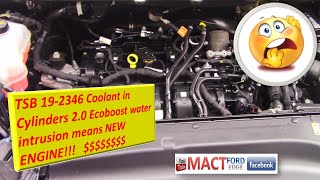
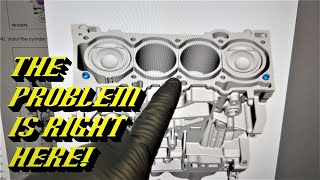
The 2019 Fusion Energi uses a 2.0L Atkinson-Cycle engine. This engine family, while generally more reliable than its EcoBoost counterparts, shares fundamental block architecture with engines known to have a significant design flaw that can lead to coolant intrusion into the cylinders. The flaw is a weak point in the engine block casting between the cylinders, which can develop a crack. Ford has issued multiple Technical Service Bulletins (TSBs), including TSB 22-2322 and TSB 19-2346 🎬 Watch: A detailed breakdown of the TSB for coolant intrusion., that directly link misfire codes like P0316 to this coolant intrusion issue on related 2.0L engines. Therefore, unlike in many other vehicles where P0316 might point to a simple tune-up, on this specific platform it must be treated as a potential indicator of a critical engine problem that may require a short block or long block replacement.
Diagnostic Flowchart
Tap your situation to follow the diagnostic path that matches what you're seeing on this vehicle.
Symptoms You May Notice
- Rough running or shaking, especially on a cold start.
- Illuminated Check Engine Light (MIL).
- Noticeable loss of engine coolant with no visible external leaks.
- White, sweet-smelling smoke from the exhaust, particularly on startup.
- Engine overheating or temperature gauge running high.
- Engine may stall or cut out.
- Replacing only the spark plugs and ignition coils without checking for coolant intrusion. If the root cause is a cracked block, new ignition parts will quickly become fouled by coolant and the misfire will return.
- Mistaking the rough run condition for a transmission problem.
Most Likely Causes
- Engine Coolant Intrusion into Cylinders 🔴 High Probability A known design flaw in the 2.0L engine block can cause a crack to form between the coolant passages and the cylinder walls, often between cylinders 2 and 3. This allows coolant to seep into the combustion chamber, especially after the engine has cooled down. This issue is documented in Ford TSBs 22-2322 and 19-2346 for related engines. The issue has been the subject of multiple class-action lawsuits.
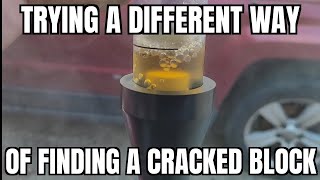
How to confirm: A mechanic will perform a cooling system pressure test to check for internal leaks; a drop of more than 4 PSI over 5 hours is a strong indicator. They will also use a borescope to look for coolant inside the cylinders (which makes the piston top appear 'steam cleaned') and check the spark plugs for white or greenish deposits. A chemical block test can also be used to detect combustion gases in the coolant.
Typical fix: The only correct repair is to replace the engine short block or long block assembly with a redesigned part from Ford.
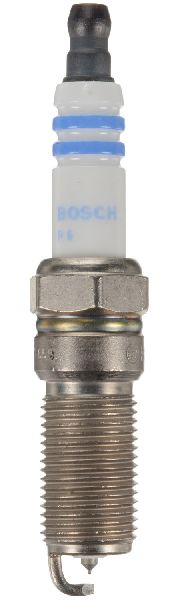
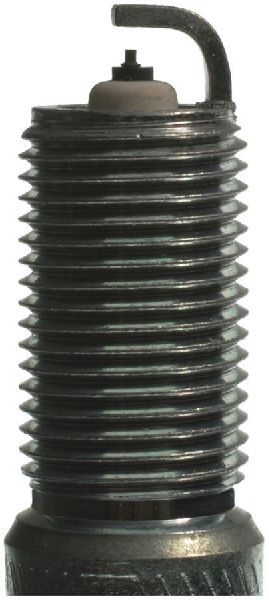
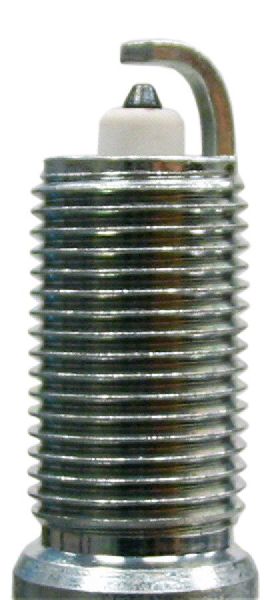
Est. part cost: $3000-$7000 - Worn or Fouled Spark Plugs 🟡 Medium Probability → Shop Spark Plug If coolant intrusion is occurring, it will quickly foul the spark plugs, causing a misfire. Even without coolant issues, spark plugs are a regular maintenance item that can cause misfires when worn.
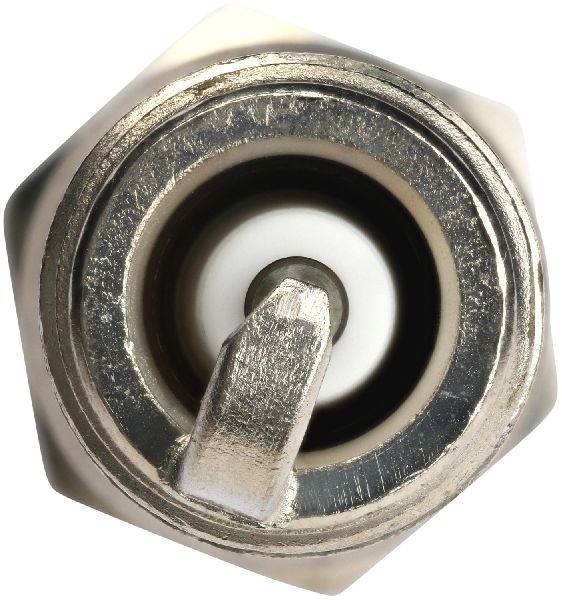
How to confirm: Remove the spark plugs and inspect them for wear, carbon buildup, or signs of coolant contamination (a white, clean appearance or deposits).
Typical fix: Replace all spark plugs. Use the OEM-specified Motorcraft plugs for best results.
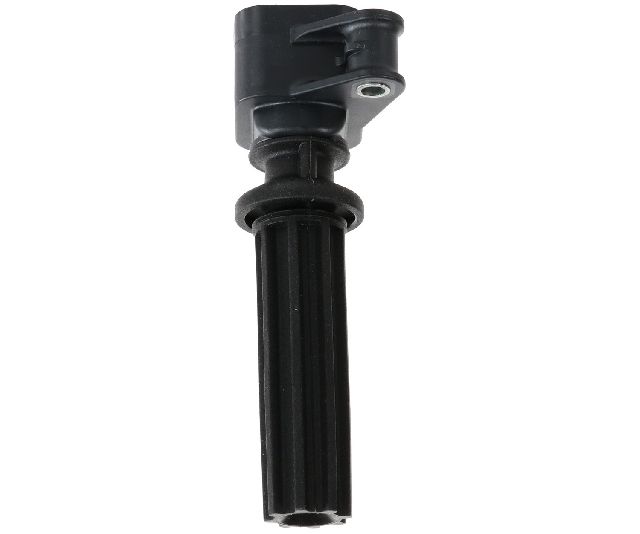
Est. part cost: $20-$60 - Failing Ignition Coil(s) 🟡 Medium Probability → Shop Ignition Coil
How to confirm: If a specific cylinder misfire code (e.g., P0301) is present, swap the ignition coil from the misfiring cylinder with one from a known good cylinder. If the misfire code follows the coil to the new cylinder, the coil is bad.
Typical fix: Replace the faulty ignition coil. It is often recommended to replace them as a set if they are original and high-mileage.
Est. part cost: $30-$90 per coil - Faulty Fuel Injector ⚪ Low Probability → Shop Fuel Injector
How to confirm: Requires professional diagnosis, which may involve checking fuel trims with a scan tool or performing an injector balance test.
Typical fix: Replace the faulty fuel injector.
Est. part cost: $50-$150
Rare But Worth Checking
- Low or poor quality fuel. The switch between summer and winter blend fuels can sometimes trigger a P0316 code without other faults.
- Clogged catalytic converter.
- Engine mechanical issue (e.g., burned valve, low compression).
- Crankshaft Position Sensor (CKP) issue.
Diagnosis Steps
- Read all stored DTCs with an OBD-II scanner. Note any accompanying codes like P0300-P0304, P0217, or P1299.
- Check the coolant level in the reservoir. If it is low and there are no visible external leaks, suspect an internal leak.
- Perform a cold start and observe the exhaust for white, sweet-smelling smoke, a tell-tale sign of burning coolant.
- Inspect the spark plugs from the misfiring cylinders. Look for signs of being 'steam-cleaned' or having white/green deposits, which indicates coolant contamination.
- If coolant intrusion is suspected, a professional must perform a cooling system pressure test. A pressure drop of more than 4 PSI in 5 hours indicates an internal leak.
- A mechanic should use a borescope to visually inspect the inside of the cylinders for any signs of coolant (puddling, clean piston tops). Cylinders 2 and 3 are the most common points of failure.
- If no coolant intrusion is found, proceed with standard misfire diagnosis: test the ignition coils, fuel injectors, and check for vacuum leaks.
Parts You'll Likely Need
- Engine Short Block Assembly
(OEM #HS7Z-6009-A)— This is the official Ford-recommended repair for the coolant intrusion issue, which is the most common serious cause of P0316 on this vehicle. It replaces the flawed engine block with an updated design. Note: Part number DS7Z-6009-A is for the Hybrid/Energi models.
Trusted brands: Motorcraft
OEM price range: $3500-$5000
Aftermarket price range: $3000-$4500 - Ignition Coil
(OEM #DS7Z-12029-B)— A faulty ignition coil is a common cause for any misfire code and is a primary diagnostic suspect if coolant intrusion is ruled out.
Trusted brands: Motorcraft, NGK, Denso
OEM price range: $60-$90
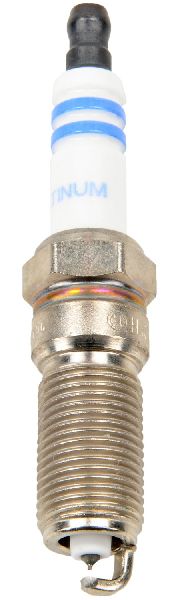
Aftermarket price range: $30-$60 - Spark Plugs
(OEM #SP-530 (AYFS32YR))— Spark plugs are a standard maintenance item and are the first parts to be fouled by an internal coolant leak, directly causing the misfire.
Trusted brands: Motorcraft, NGK
OEM price range: $40-$60 (set)
Aftermarket price range: $20-$40 (set)
Related Codes That Often Appear With This One
- P0300 — Indicates a random or multiple cylinder misfire, which is common when coolant affects more than one cylinder.
- P0301, P0302, P0303, P0304 — These codes pinpoint the specific cylinder(s) that are misfiring, helping to focus diagnostic efforts. The coolant intrusion issue often affects cylinders 2 and 3.
- P0217 — Indicates an engine overheat condition, which can be a direct result of coolant loss from a leak into the cylinders. This code is specifically mentioned in Ford's TSBs related to this issue.
- P1299 — Indicates the Cylinder Head Overtemperature Protection system is active. The PCM may shut down cylinders to reduce heat during a severe overheat event caused by coolant loss. This code is also listed in the relevant TSBs.
Technical Service Bulletins (TSBs) & Recalls
- TSB 22-2322: Addresses a rough running condition with DTCs including P0316 due to coolant intrusion into the cylinder, recommending replacement of the short block. This TSB primarily references the 1.5L EcoBoost but describes the same failure mode.
- TSB 22-2229: An earlier bulletin, also linking DTCs like P0316 to coolant intrusion and a rough run condition.
- TSB 19-2346: A key bulletin for the related 2.0L EcoBoost engine that explicitly lists P0316 as a primary DTC for coolant intrusion and states the fix is to replace the long block engine assembly for vehicles built before April 2019.
Platform-Specific Known Issues
- Coolant Intrusion: The 2.0L engine in the 2019 Fusion Energi is subject to a known design flaw where the engine block can crack internally, allowing coolant to leak into the cylinders. Ford has acknowledged this in TSBs 22-2322 and 22-2229 for related engines, and the recommended repair is a short or long block replacement. The flaw is specifically a slot cut between the cylinders in the block deck, which was revised to a stronger drilled-hole design in mid-2019.
Mechanic-Grade Diagnostic Values
- Cooling System Pressure Test — expected: Pressure drop of less than 4 PSI over 5 hours.. Failure: A pressure drop of more than 4 PSI in 5 hours strongly indicates an internal coolant leak when no external leaks are visible.
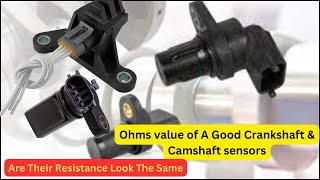
- Crankshaft Position Sensor Resistance — expected: Typically between 200 and 1,000 Ohms, depending on the specific sensor model.. Failure: An open circuit (infinite resistance) or a reading far outside the expected range.
- Mode $06 Misfire Data — expected: Misfire counts for each cylinder should be at or near zero during a drive cycle.. Failure: A cylinder showing a significant number of misfires compared to others, even if it hasn't triggered a specific P030x code yet. The threshold for setting a light is a calibrated percentage (e.g., >1.97%).
Hidden / Shadow Codes Worth Checking
- Mode $06, Test ID $A2-$AB, Component ID $01-$0A: This refers to the misfire monitor data for each cylinder within Mode $06. It provides raw misfire counts for the last 10 driving cycles and the current driving cycle, allowing a technician to see which cylinder is misfiring intermittently even if a P030x code has not been set. (see via A professional scan tool or advanced OBD-II software like FORScan.)
Scan Tool Commands That Help
- Ford IDS, FORScan, or equivalent professional scanner: Power Balance Test — This is a crucial active test to pinpoint a misfiring cylinder. The tool sequentially disables each fuel injector and graphs the corresponding drop in engine RPM. A cylinder that shows little or no RPM drop when its injector is cut is not contributing power, confirming the location of the misfire.
- Ford IDS, FORScan, or equivalent professional scanner: Misfire Monitor Neutral Profile Correction — This relearn procedure is required after major engine repairs, PCM replacement, or crankshaft position sensor replacement. The PCM learns the minor variations in the crankshaft reluctor wheel to accurately detect misfires. Failure to perform this procedure can cause false misfire codes (like P0316) to be set after a repair.
- Ford IDS, FORScan, or equivalent professional scanner: KAM (Keep Alive Memory) Reset — Should be performed after replacing components like fuel injectors or sensors. This clears the learned adaptive strategies from the PCM, forcing it to relearn values based on the new parts. This can sometimes resolve persistent issues after a repair has been made.
Wiring & Ground Locations
- G101 / G102 — Located at the left front of the engine compartment.. G101 is a primary ground for the Powertrain Control Module (PCM), and G102 grounds the ignition coils. A loose or corroded connection at either of these points can cause erratic PCM behavior, weak spark, and intermittent misfires.
- G108 — Located at the left rear of the engine compartment on the PHEV (Energi) model.. This is another critical engine compartment ground. Poor contact at this location can lead to various sensor and module issues, potentially contributing to misfire detection problems.
- PCM Power Fuses — In the under-hood fuse box (Power Distribution Box). Specific fuses include F51, F52, and F54 for the PCM.. These fuses supply power to the PCM. While a blown fuse would likely cause a no-start condition, a poor connection or intermittent fault in the fuse box could lead to unpredictable PCM behavior and misfire codes.
OEM Part Supersession History
N/A (Block with open-deck coolant slits)→J2GZ-6006-E (Example Long Block PN)— The original engine block design was prone to cracking between the cylinders. The revised design uses stronger, cross-drilled circular holes for coolant flow instead of the weaker open slits, preventing the crack that leads to coolant intrusion.
Heads up: Using a pre-revision engine block for replacement will lead to a repeat failure of the same coolant intrusion issue. It is critical to ensure any replacement block or long block assembly is the updated design.
Model Year Variations Within This Range
- Early 2019 (built on or before April 8, 2019): Vehicles built before this date are equipped with the original engine block design that is prone to coolant intrusion. TSB 19-2346 specifically applies to these vehicles.
- Late 2019 (built after April 8, 2019): Vehicles built after this date should have the redesigned engine block with drilled coolant passages, making the coolant intrusion issue far less likely. For these vehicles, a P0316 code is more likely to be caused by traditional ignition or fuel system faults.
Helpful Videos

Used OEM Parts in Stock
New Aftermarket Parts Available

The information in this article is provided for general reference and educational purposes only. Vehicle specifications, procedures, and part compatibility can vary by production date, trim level, and region. Always consult your vehicle's factory service manual and verify part numbers before purchasing or performing repairs. Safety-critical components such as airbags, seat belts, and braking systems should be installed by a qualified professional.
- Ford FUSION ENERGI:
- 🧭 Diagnostic Flowchart
- 🎬 Helpful Videos
- 🛍️ Shop This Part
- What's Unique About the 2019-2019 Ford FUSION ENERGI
- Symptoms You May Notice
- Most Likely Causes
- Rare But Worth Checking
- Diagnosis Steps
- Parts You'll Likely Need
- Related Codes That Often Appear With This One
- Technical Service Bulletins (TSBs) & Recalls
- Platform-Specific Known Issues
- Mechanic-Grade Diagnostic Values
- Hidden / Shadow Codes Worth Checking
- Scan Tool Commands That Help
- Wiring & Ground Locations
- OEM Part Supersession History
- Model Year Variations Within This Range
- 🎟️ Get 5% Off