

P0316 on 2009-2014 Jaguar XF: Misfire on Startup Causes and Fixes
P0316 on a 2009-2014 Jaguar XF means a misfire was detected right after starting the engine, within the first 1,000 revolutions. It's most often caused by faulty fuel injectors, bad ignition coils, or worn spark plugs. On the 5.0L V8, this is a very common symptom of failing fuel injectors. Expect to pay $150-$400 for coils and plugs, and potentially $1000+ for injector issues at a dealership.
- P0316 means your Jaguar XF is misfiring right after you start it.
- Always check for other codes (P0301-P0308) to know which cylinder is failing.
- The most likely causes are bad fuel injectors, worn spark plugs, or failing ignition coils.
- Due to manufacturer service bulletins, suspecting a faulty fuel injector on this car is a very reasonable starting point, especially if plugs and coils check out.
- Do not ignore a flashing check engine light, as this indicates a severe misfire that can quickly damage your catalytic converter.
What's Unique About the 2009-2014 Jaguar XF
For the 2009-2014 Jaguar XF, which uses several engines including the 4.2L V8, 5.0L V8 (AJ133), and 3.0L V6 (AJ126), this code is frequently linked to specific component issues noted by Jaguar. Manufacturer bulletins specifically call out poor fuel quality and faulty fuel injectors as a primary cause, more so than on many other vehicles. The direct-injection system on the 5.0L V8 is particularly sensitive, and injector failure is a well-documented weak point. Additionally, early 5.0L V8s can have timing chain guide issues that may manifest as misfires. Some software calibration issues can also falsely trigger this code after a cold start, which is addressed by TSB JTB00533NAS1.
Diagnostic Flowchart
Tap your situation to follow the diagnostic path that matches what you're seeing on this vehicle.
Symptoms You May Notice
- Check Engine Light (MIL) is on or flashing
- Rough or vibrating idle, especially on a cold start.
- Engine hesitation or stumbling upon acceleration.
- Reduced engine power and the vehicle may enter 'Limp Mode'.
- Hard starting, requiring longer than usual cranking.
- Strong smell of gasoline from the exhaust, indicating unburnt fuel.
- Replacing oxygen (O2) sensors. O2 sensors report on the results of combustion; they are not the cause of a misfire. A misfire will often trigger O2 sensor codes, but the root cause is upstream in the fuel, ignition, or mechanical systems.
Most Likely Causes
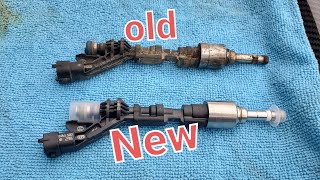
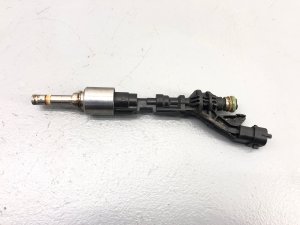
- Faulty Fuel Injectors 🔴 High Probability → Shop Fuel Injector Jaguar has issued multiple Technical Service Bulletins (TSBs) directly linking P0316 and other misfire codes to faulty or restricted fuel injectors on the 5.0L V8 engine. This is a widely-discussed, well-documented issue in owner forums. The direct injectors can become clogged or fail electronically.
How to confirm: A technician can perform a fuel injector balance test. A DIY method involves swapping the suspect injector with one from another cylinder to see if the misfire code follows the injector. However, removing injectors on the 5.0L V8 can be difficult and may require a special slide hammer tool.
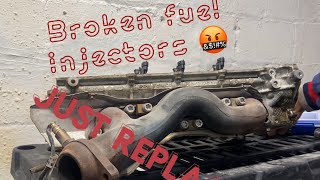
Typical fix: Replace the faulty fuel injector(s). Due to the labor involved, it is often recommended to replace all four injectors on the affected bank at the same time. A new seal kit is required when reinstalling injectors.
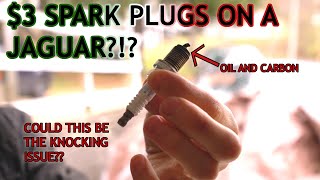
Est. part cost: $50-$150 per injector (aftermarket), $250-$415 per injector (OEM) - Worn or Fouled Spark Plugs 🔴 High Probability → Shop Spark Plug Spark plugs are a standard wear item. The recommended replacement interval is between 30,000 and 50,000 miles, depending on the engine. Worn plugs are a very common cause for misfires as they age.
How to confirm: Remove the spark plug from the misfiring cylinder (identified by codes P0301-P0308) and inspect it for wear (rounded electrode), carbon fouling, or oil contamination.
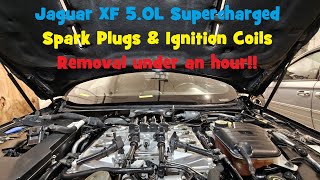
Typical fix: Replace the spark plugs. It is best practice to replace all plugs at the same time using high-quality Iridium plugs (e.g., NGK or Denso). 🎬 See how to remove spark plugs and coils in under an hour.
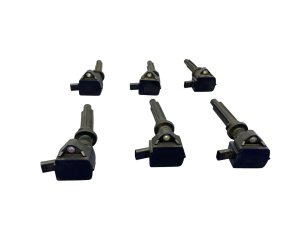
Est. part cost: $80-$200 for a set - Failing Ignition Coil 🟡 Medium Probability → Shop Ignition Coil Ignition coils are a common failure point on most modern vehicles, leading to a lack of spark. Heat and vibration cause them to fail over time.
How to confirm: Swap the ignition coil from the misfiring cylinder with a coil from a non-misfiring cylinder. Clear the codes and run the engine. If the misfire code moves to the new cylinder (e.g., P0304 changes to P0302), the coil is bad. Testing with a multimeter is often inconclusive on these coils due to internal electronics.
Typical fix: Replace the faulty ignition coil. It's wise to use a reputable brand like Bosch, Denso, or NGK.
Est. part cost: $50-$120 per coil - Poor Fuel Quality ⚪ Low Probability A Jaguar TSB explicitly mentions poor fuel quality or contaminants as a cause for misfires and code P0316 by restricting injector flow. These high-performance engines are designed for premium, high-octane fuel.
How to confirm: This is difficult to confirm directly but can be suspected if the problem appeared immediately after refueling. Trying a different, high-quality fuel station can be a diagnostic step.
Typical fix: Add a quality fuel system cleaner (such as Techron or BG 44K) and fill the tank with high-octane fuel from a top-tier gas station.
Est. part cost: $15-$30 for additives
Rare But Worth Checking
- Mechanical Engine Issues (Timing): On early 5.0L V8 engines, the timing chain tensioners and guides can wear prematurely. This can cause the timing to jump, leading to misfires and potentially catastrophic engine damage. A rattling noise on startup is a key symptom. 🎬 Watch: How to check for timing chain and guide wear noise.
- Vacuum Leak: A significant vacuum leak from a cracked hose, PCV valve, or faulty intake manifold gasket can lean out the air-fuel mixture enough to cause a misfire on startup. A hissing sound from the engine bay at idle is a common clue.
- Low Fuel Pressure: A weak high-pressure or in-tank fuel pump or a clogged fuel filter can cause low pressure across the entire system, leading to random misfires, often accompanied by code P0087.
- Intake Valve Carbon Buildup: As a direct-injection engine, the 5.0L V8 is prone to carbon buildup on the back of the intake valves. This can disrupt airflow into the cylinders, especially on a cold start, causing a rough idle and misfires.
- Faulty Crankshaft Position Sensor (CKP): The misfire monitor relies on the CKP sensor to detect variations in engine speed. A faulty sensor can sometimes incorrectly report a misfire, though this is uncommon.
- PCM Software Issue: TSB JTB00533NAS1 and Emissions Recall J038 indicate that a software calibration issue can cause misfire codes, including P0316, to be set incorrectly, especially on a cold start. A dealer software update is the fix.
Diagnosis Steps
- Use an OBD-II scanner to read all stored codes. Pay close attention to any cylinder-specific codes (P0301-P0308) as they pinpoint the problem area.
- Check for any applicable TSBs or Recalls, especially JTB00533NAS1 and J038, which relate to software updates for false misfire detection.
- If a specific cylinder is identified (e.g., P0304), start by swapping the ignition coil with a neighboring cylinder. Clear the codes and see if the misfire code follows the coil (e.g., changes to P0305). If it does, the coil is faulty.
- If the misfire remains on the original cylinder, inspect the spark plug. Look for signs of wear, fouling, or damage. Replace if in doubt, ensuring correct gap and type.
- If the coil and plug are good, the fuel injector is the next likely culprit, especially on the 5.0L V8. This is more involved and may require professional diagnosis, but swapping injectors is a definitive test.
- If the misfire is random (P0300) or affects a whole bank, investigate causes common to all cylinders. Check for vacuum leaks using a smoke machine, test fuel pressure (both low and high pressure systems), and consider fuel quality.
- Listen for a rattle from the front of the engine on startup, which could indicate a timing chain issue on 5.0L engines.
- Inspect the crankshaft position sensor and its wiring for any visible damage or corrosion.
Parts You'll Likely Need
- Fuel Injector (5.0L V8)
(OEM #C2D24386 (supersedes 8W939F593AD, LR011964))— Jaguar TSBs and extensive owner reports identify faulty injectors as a primary cause for this code on the 5.0L XF.
Trusted brands: Bosch (OEM supplier), Jaguar
OEM price range: $250-$415
Aftermarket price range: $50-$150 - Ignition Coil
(OEM #AJ813917 (This part number appears to be for a coolant pipe, a common error. Correct coil P/N is often 6R83-12A366-AA or similar))— A failed ignition coil is a very common cause for a targeted misfire on a single cylinder.
Trusted brands: Bosch, NGK, Delphi, Duralast
OEM price range: $100-$180
Aftermarket price range: $50-$120 - Spark Plug
(OEM #NGK Iridium IX or Denso Iridium)— Spark plugs are a routine maintenance item and a worn plug is a simple and frequent cause of misfires.
Trusted brands: NGK, Denso
OEM price range: $20-$35 per plug
Aftermarket price range: $10-$20 per plug
Related Codes That Often Appear With This One
- P0300 — This code means 'Random/Multiple Cylinder Misfire Detected.' It often appears with P0316 when the misfire is not isolated to a single, consistent cylinder, pointing towards a systemic issue like fuel pressure or a vacuum leak.
- P0301-P0308 — These codes correspond to a specific misfiring cylinder (e.g., P0301 for Cylinder 1). They are extremely helpful for diagnosis, as they tell you exactly where to start looking for a bad plug, coil, or injector.
- P0087 — Indicates 'Fuel Rail/System Pressure - Too Low'. This can appear alongside P0316 if a failing fuel pump is the root cause of the misfire.
Technical Service Bulletins (TSBs) & Recalls
- JTB00533NAS1: Addresses rough idle, poor running, and misfire codes including P0316 during cold starts, caused by a software calibration issue.
- SSM-63697: Links misfire codes, including P0316 on 5.0L engines, directly to poor fuel quality or fuel contaminants restricting fuel injector flow.
- Emissions Recall J038 (related to TSB J051): A software error could cause the MIL to illuminate and store misfire codes P0301-P0308 and P0316. The fix is a no-charge software update.
Platform-Specific Known Issues
- Fuel Injector Failures (5.0L V8): → Shop Fuel Injector TSB #SSM63697 points directly to fuel injector flow restriction from poor fuel quality as a cause for P0316. Owner forums are filled with stories of misfires being resolved by replacing one or all injectors. One owner on JaguarForums noted a dealer quote of $2,700 to replace injectors on one bank.
- Cold Start Misfire Software Update: TSB #JTB00533NAS1 specifically addresses hard starting, rough idle, and misfires (including P0316) during a cold start (coolant below 75°C / 167°F), caused by a fuel injection calibration issue. The fix is a PCM software update.
- Timing Chain Tensioner Wear (Early 5.0L V8): Early production AJ133 5.0L V8 engines are known for premature wear of the timing chain guides and tensioners. This can cause timing to be off, leading to misfires. A tell-tale sign is a metallic rattle from the front of the engine for a few seconds on a cold start.
Mechanic-Grade Diagnostic Values
- High-Pressure Fuel Rail Pressure (5.0L V8) — expected: At startup: ~1450-2100 PSI. At idle: ~500-800 PSI. Under load: up to 2800+ PSI.. Failure: Pressure drops significantly under acceleration or fails to build at startup. A reading of 500-600 PSI at wide-open-throttle indicates a major fueling issue.
- Low-Pressure Fuel System Pressure (In-tank pump feed to HPFPs) — expected: Key-on, engine-off (priming): ~55 PSI. At idle: ~40-75 PSI.. Failure: Pressure significantly below this range indicates a failing in-tank pump or clogged filter, which can starve the high-pressure pumps.
- Ignition Coil Resistance — expected: While some generic guides suggest ~0.5 ohms for primary and ~10 k-ohms for secondary windings, this is not reliable for modern Jaguar coils.. Failure: Due to internal electronic components, a simple resistance test with an ohmmeter is often inconclusive and can give misleading readings. The definitive test is swapping the coil to another cylinder and seeing if the misfire code follows.
Scan Tool Commands That Help
- Jaguar SDD (Symptom Driven Diagnostics): Symptom-Based Guided Diagnostics — This is the dealer-level approach. Instead of just reading codes, the technician inputs the symptom (e.g., 'rough idle on startup'). SDD then runs a pre-determined flowchart of tests, analyzes relevant live data, and provides a step-by-step diagnostic path, which is more efficient than guessing.
- Jaguar SDD (Symptom Driven Diagnostics): Clear Adaptations — After replacing major components like fuel injectors or a throttle body, fuel trim and other learned values in the PCM should be reset to allow the system to re-learn with the new parts, ensuring smooth operation.
Wiring & Ground Locations
- Engine Control Module (ECM) — Located at the right rear of the engine compartment.. This is the computer that detects the misfire. All relevant sensor (CKP, Cam) and actuator (coil, injector) wiring terminates here. Checking for corrosion or damage at its connectors is a valid diagnostic step for persistent, hard-to-trace issues.
- G1D123 — A primary engine ground point located at the left rear of the engine compartment.. A poor ground connection at this point can cause erratic behavior from sensors and actuators, including the ignition coils and injectors, leading to intermittent and hard-to-diagnose misfires.
- Diagnostic Connector (DLC) — Located behind the left kick panel in the driver's footwell.. This is the port used to connect an OBD-II scanner or the dealer SDD tool to communicate with the vehicle's modules.
Real Owner Repair Stories
- ScannerDanner Forum user 'Taylor' (2014 Jaguar XK 5.0L (mechanically similar to XF 5.0L)) — Vehicle starts but hesitates ('bucs') on heavy acceleration. 'Restricted Performance' message is displayed. Scan tool shows fuel pressure demand at 1460 PSI on startup, but it drops to 0 within a minute.
❌ Tried (didn't work) Replacing the two high-pressure fuel pumps (HPFPs) with used units from a donor engine did not solve the problem.
✅ What actually fixed it The root cause was found to be a mechanical engine issue. The mechanic discovered pieces of a broken timing chain guide in the oil pan and heard a rattle from the valve cover. The suspected cause of the low fuel pressure was timing chain misalignment, as the HPFPs are driven by the camshafts.
"I Checked Everything" — The Actual Cause
- In cases where random misfires (P0300) and startup misfires (P0316) are accompanied by low fuel pressure codes (P0087), a technician might suspect a vacuum leak and perform a smoke test. If the smoke test is clean, and even replacing fuel pumps doesn't solve the issue, the root cause could be mechanical timing. On the 5.0L V8, worn timing chain guides can cause the timing to be off, which in turn affects the mechanical high-pressure fuel pumps driven by the camshafts, leading to fuel pressure issues that mimic a fuel system failure.
OEM Part Supersession History
8W93-9F593-AD→C2D24386— Part revision and improvement by the manufacturer to address reliability issues.
Heads up: The original part number 8W93-9F593-AD is widely associated with failures. C2D24386 is the current recommended replacement. Bosch, the OEM supplier, offers equivalent parts 0 261 500 159 and 0 261 500 298.
Model Year Variations Within This Range
- 2009 vs. 2010-2014: The 2009 model year primarily used the port-injected 4.2L V8. For the 2010 model year, Jaguar introduced the new 5.0L direct-injection V8 (AJ133). This is a critical distinction, as the high rate of fuel injector failures, high-pressure fuel pump issues, and timing chain guide problems are predominantly associated with the 2010-onward 5.0L engine, not the earlier 4.2L.
Helpful Videos

We Have This Part in Stock

The information in this article is provided for general reference and educational purposes only. Vehicle specifications, procedures, and part compatibility can vary by production date, trim level, and region. Always consult your vehicle's factory service manual and verify part numbers before purchasing or performing repairs. Safety-critical components such as airbags, seat belts, and braking systems should be installed by a qualified professional.
- Jaguar XF:
- 🧭 Diagnostic Flowchart
- 🎬 Helpful Videos
- 🛍️ Shop This Part
- What's Unique About the 2009-2014 Jaguar XF
- Symptoms You May Notice
- Most Likely Causes
- Rare But Worth Checking
- Diagnosis Steps
- Parts You'll Likely Need
- Related Codes That Often Appear With This One
- Technical Service Bulletins (TSBs) & Recalls
- Platform-Specific Known Issues
- Mechanic-Grade Diagnostic Values
- Scan Tool Commands That Help
- Wiring & Ground Locations
- Real Owner Repair Stories
- "I Checked Everything" — The Actual Cause
- OEM Part Supersession History
- Model Year Variations Within This Range
- 🎟️ Get 5% Off