

P0316 on 2010-2014 Jaguar XK: Startup Misfire Causes and Fixes
On the 2010-2014 Jaguar XK with the 5.0L V8, code P0316 almost always points to a faulty fuel injector, a common issue documented in Jaguar's own service bulletins. While spark plugs and coils are possible causes, the high failure rate of direct injectors on this engine means they should be the primary suspect, especially if accompanied by cylinder-specific misfire codes.
- P0316 means your Jaguar XK's engine misfired within the first 1,000 revolutions after being started.
- On this specific vehicle, the most likely cause is a faulty or clogged fuel injector, a known issue with the 5.0L V8 engine.
- Always check for other codes (P0301-P0308) to identify the specific misfiring cylinder, which is crucial for diagnosis.
- Do not ignore a flashing check engine light, as it signals a severe misfire that can quickly destroy your catalytic converters, a very costly repair.
- While you can start by checking ignition coils and spark plugs, be prepared for the possibility of needing to replace one or more fuel injectors.
What's Unique About the 2010-2014 Jaguar XK
The 5.0L V8 engine (AJ133) used in this generation of Jaguar XK is well-known for issues with its direct fuel injectors. Jaguar has released multiple Technical Service Bulletins (TSBs), like SSM-63697 and JTB00241NAS1, that directly link startup misfire codes like P0316 to restricted or failing fuel injectors due to fuel quality or contaminants. While spark plugs and ignition coils are common misfire culprits on any vehicle, the high frequency of injector failures on this specific platform, widely discussed in owner forums, means they should be a primary suspect, not an afterthought. In some cases, a software calibration issue can also trigger this code, which is addressed by a dealer-installable update per TSB JTB00533NAS1.
Diagnostic Flowchart
Tap your situation to follow the diagnostic path that matches what you're seeing on this vehicle.
Symptoms You May Notice
- Check Engine Light (CEL) is on or flashing
- Rough or vibrating engine at idle, especially on a cold start
- Engine hesitation or stumbling on acceleration
- Hard starting, requiring longer than usual cranking
- Noticeable change in engine sound or a muffled thud from the exhaust
- Strong smell of unburnt gasoline from the exhaust
- Replacing only spark plugs and ignition coils without considering the fuel injectors. Given the high probability of injector failure on this engine, it's a common mistake to assume the issue is only with the ignition system.
- Mistaking an internal supercharger coolant leak for a failed head gasket on supercharged models due to similar symptoms like coolant consumption and misfires.
Most Likely Causes
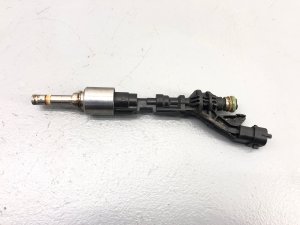
- Faulty or Clogged Fuel Injectors 🔴 High Probability → Shop Fuel Injector Jaguar has issued multiple TSBs (e.g., SSM-63697, JTB00241NAS1) for the 5.0L V8 engine, explicitly citing poor fuel quality or contaminants causing restricted fuel injector flow, leading to misfires. This is a widely documented failure in owner forums, where a single failed injector can sometimes cause issues across an entire cylinder bank.
How to confirm: If a misfire code for a specific cylinder (e.g., P0304) is present, swap the suspect fuel injector with one from a different cylinder. This is labor-intensive. If the code follows the injector to the new cylinder, the injector is faulty. A professional can also perform an injector balance test or use a multimeter to check resistance. As these are high-impedance injectors, a healthy reading should be in the range of 12-18 ohms.
Typical fix: Replace the faulty fuel injector(s). Due to the high failure rate and the significant labor involved (especially on supercharged models where the supercharger must be removed), it is strongly recommended to replace all 8 injectors at once with new seals. Using professionally cleaned and flow-tested used injectors is a budget-conscious alternative.
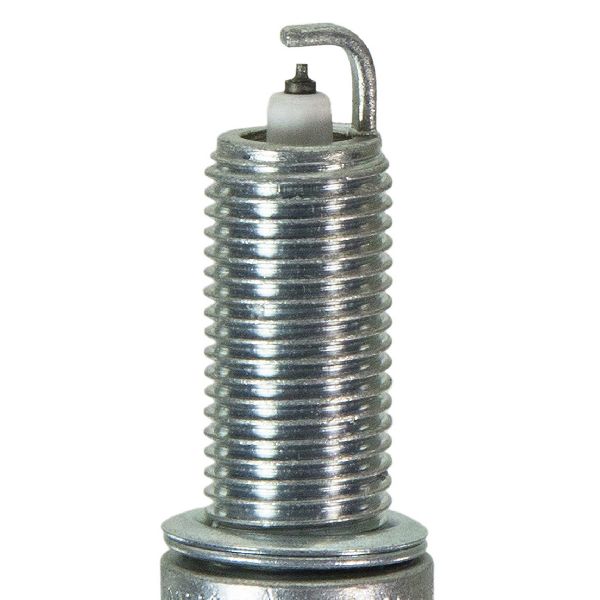
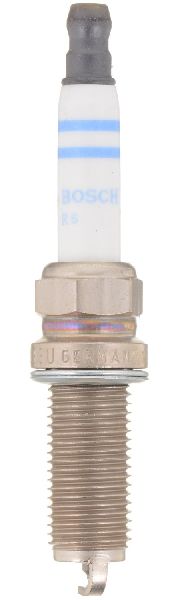
Est. part cost: $80-$250 per injector (Bosch OEM is often cheaper than Jaguar branded). - Worn or Fouled Spark Plugs 🟡 Medium Probability → Shop Spark Plug
How to confirm: Remove the spark plug from the misfiring cylinder. Inspect for wear, carbon buildup, oil, or coolant fouling. Compare it to a new plug. The service interval for these plugs is typically around 70,000 miles, but they can fail sooner.
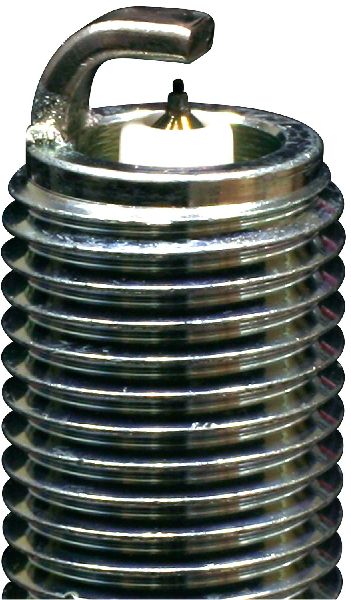
Typical fix: Replace all 8 spark plugs. It's crucial to use the correct OEM-spec Iridium plugs (e.g., NGK or Denso) and ensure they are gapped correctly for this high-performance engine.
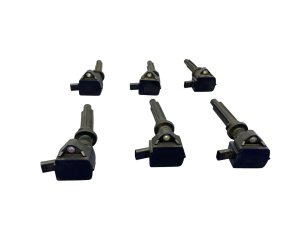
Est. part cost: $80-$150 for a set of 8 - Failing Ignition Coil 🟡 Medium Probability → Shop Ignition Coil Ignition coils are a common failure point on many modern engines.
How to confirm: Swap the ignition coil from the misfiring cylinder with one from a known good cylinder. Clear the codes and run the engine. If the misfire code moves to the new cylinder, the coil is bad. A bench test with a multimeter should show primary resistance between 0.4-2 ohms and secondary resistance between 6,000-10,000 ohms, but an in-spec reading doesn't guarantee good performance under load.
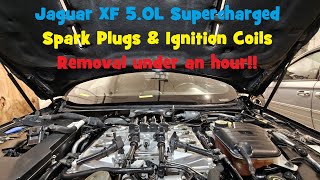
Typical fix: Replace the faulty ignition coil. Many owners choose to replace all 8 at the same time as a preventative measure, especially if they are original and high-mileage. Use reputable brands like Denso or Bosch. 🎬 Watch: This quick guide shows how to remove coils and plugs.
Est. part cost: $50-$120 per coil - Poor Fuel Quality ⚪ Low Probability Jaguar TSB SSM-63697 and JTB00241NAS1 specifically mention poor fuel quality as a cause for injector restriction and misfires. These high-performance direct-injection engines are sensitive to fuel quality and ethanol content.
How to confirm: This is difficult to confirm directly but can be suspected if issues began after a recent refuel. Try using a top-tier, high-octane fuel from a different station.
Typical fix: Add a high-quality fuel system cleaner with PEA (polyetheramine) to the tank and fill with premium fuel. TSB JTB00241NAS1 outlines a professional fuel induction system cleaning procedure using specific BG products.
Est. part cost: $15-$30 for a bottle of fuel system cleaner
Rare But Worth Checking
- Vacuum Leak: A leak in a vacuum hose, PCV valve, or intake manifold gasket can lean out the air-fuel mixture and cause misfires. A smoke test is the most effective way to find a vacuum leak.
- Low Fuel Pressure: While less common than injector issues, a weak high-pressure fuel pump (HPFP) or low-pressure in-tank pump can cause misfires across multiple cylinders. This would likely be accompanied by other codes like P0087 (Fuel Rail/System Pressure - Too Low).
- Internal Supercharger Coolant Leak (Supercharged models): On supercharged 5.0L engines, the intercooler (charge air cooler) located under the supercharger can leak coolant internally. This coolant gets ingested by the engine, causing misfires and white smoke, often misdiagnosed as a head gasket failure. The only symptom may be mysterious coolant loss with no external leaks. 🎬 Watch: How to identify and fix common 5.0L coolant leaks.
- Timing Chain and Tensioner Issues: Early AJ133 engines (approx. 2010-2012) are known for timing chain tensioner and guide wear. A stretched chain or failing tensioner can cause a brief rattle on cold start and can lead to incorrect cam timing, potentially triggering a P0316 misfire before more severe timing correlation codes 🎬 See a complete walkthrough of the timing chain and guide repair. (like P0016) appear.
Diagnosis Steps
- Read all stored fault codes with an OBD-II scanner. Note any cylinder-specific codes (P0301-P0308) as they are your starting point.
- If a specific cylinder is identified, swap the ignition coil with a neighboring one. Clear codes and see if the fault code follows the coil. If it does, the coil is bad.
- If the misfire stays, inspect the spark plug in the affected cylinder for wear, damage, or fouling. Replace if in any doubt.
- If the coil and plug are good, the fuel injector is the most likely culprit. This is an advanced repair. A definitive DIY test is to swap the injector with another cylinder, but this requires significant disassembly.
- If multiple random misfires (P0300) are present, investigate systemic issues. Check for vacuum leaks using a smoke machine, paying attention to the PCV system. Check fuel pressure for both the low-pressure and high-pressure pumps.
- Check for TSBs. TSB JTB00533NAS1 points to a software issue causing cold start misfires that can be fixed with a PCM update by a dealer using JLR-specific software (SDD or Pathfinder).
- On supercharged models with unexplained coolant loss, suspect an internal leak from the charge air cooler under the supercharger.
- Listen for a 2-5 second rattle on cold startup, which could indicate timing chain guide/tensioner wear, a more serious mechanical issue.
Parts You'll Likely Need
- Fuel Injector
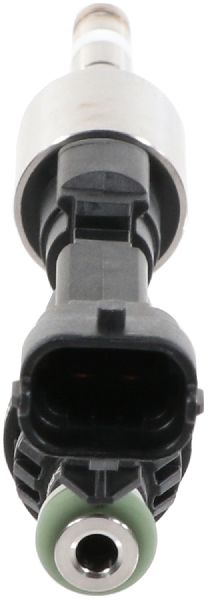
(OEM #C2D24386 / LR079542 (Bosch # 0261500298))— This is the most common cause of P0316 on the Jaguar 5.0L V8, as documented in manufacturer TSBs and countless owner forums.
Trusted brands: Bosch (OEM), Jaguar
OEM price range: $150-$420
Aftermarket price range: $80-$150 - Ignition Coil — A common failure item on most modern engines and a primary cause for misfires.
Trusted brands: Bosch, Denso, NGK
OEM price range: $70-$120
Aftermarket price range: $40-$80 - Spark Plug — A routine maintenance item that can cause misfires when worn or fouled.
Trusted brands: NGK, Denso
OEM price range: $15-$25 per plug
Aftermarket price range: $10-$20 per plug
Related Codes That Often Appear With This One
- P0300 — This indicates a random or multiple cylinder misfire. It often appears with P0316 if the problem affects an entire bank (due to a bad injector) or is systemic (fuel pressure, vacuum leak).
- P0301-P0308 — These codes pinpoint the exact cylinder that is misfiring (e.g., P0304 for cylinder 4). They are extremely helpful for diagnosis and almost always accompany P0316, as noted in multiple TSBs.
- P0087 — Indicates 'Fuel Rail/System Pressure - Too Low'. This can appear with P0316 if a fuel injector is stuck open, causing a drop in rail pressure, or if a high-pressure fuel pump is failing.
Technical Service Bulletins (TSBs) & Recalls
- SSM-63697: Misfire codes may be stored due to poor fuel quality or contaminants restricting fuel injector flow.
- JTB00533NAS1: Addresses hard start, rough idle, and misfire codes (including P0316) due to a software calibration issue on cold starts.
- JTB00241NAS1: Recommends a professional fuel system cleaning for misfires caused by fuel contamination.
- Emissions Recall J038/J051: A software update to correct false illumination of the MIL with misfire codes.
Platform-Specific Known Issues
- TSB SSM-63697: Directly links misfire codes (including P0316) on the 5.0L engine to poor fuel quality or contaminants restricting fuel injector flow, causing a misfire and engine vibration at idle.
- TSB JTB00533NAS1: Addresses hard starting, rough idle, and misfire codes P0316 and P0300-P0308 during cold starts (below 75°C / 167°F), which may be caused by a fuel injection calibration issue requiring a PCM software update.
- TSB JTB00241NAS1: Outlines a procedure for cleaning the air intake and fuel system with specific BG products when misfires are caused by poor fuel quality leading to clogged injectors.
- Emissions Recall (related to TSB J051): A software error on some 2010-2014 models could cause the MIL to illuminate and store misfire codes P0301-P0308 and P0316. The fix was a no-charge software update.
Mechanic-Grade Diagnostic Values
- High-Pressure Fuel Rail Pressure — expected: Exceeds 2,000 PSI (138 bar) under operation. Design limit is 350 bar (5076 psi).. Failure: Significantly lower pressure, especially under load, or readings that don't rise from the low-pressure baseline. Often triggers P0087.
- Low-Pressure Fuel Pump Pressure (In-tank) — expected: Approximately 55-60 PSI (3.8-4.1 bar) at idle.. Failure: Readings significantly below this range indicate a failing in-tank pump or clogged filter.
- Fuel Injector Resistance — expected: 12 - 18 ohms (typical for high-impedance injectors). All injectors should read within 0.5 ohms of each other.. Failure: An open circuit (infinite resistance), a short (near zero resistance), or a reading that deviates significantly from the other injectors.
- Engine Ground Voltage Drop Test — expected: Well under 0.5V (500mV) when measured between the engine block and the negative battery terminal while cranking the engine.. Failure: A reading above 0.5V indicates high resistance in the main ground strap, which can cause numerous electrical issues, including misfires.
Scan Tool Commands That Help
- Jaguar SDD (Symptom Driven Diagnostics) / Pathfinder: Fuel System Diagnostics & Cylinder Balance Tests — Required for accurately diagnosing the high-pressure fuel system, as generic OBD-II scanners lack the capability. These tools can command specific fuel pressures and perform active tests to isolate failing injectors or pumps, and are necessary to apply software updates mentioned in TSBs.
Wiring & Ground Locations
- Main Engine Ground Strap — Typically located on the right (passenger) side of the vehicle, connecting the engine block or bell housing to the chassis frame, often under the starter motor or near the catalytic converter.. A poor engine ground can cause erratic behavior from sensors and actuators, including ignition coils and fuel injectors. A high-resistance ground can lead to a weak spark or incorrect injector firing, causing misfires that are difficult to diagnose.
Real Owner Repair Stories
- JaguarForums user (Land Rover with 5.0L Supercharged V8 (AJ133 engine, shared with XK)) — Engine was disassembled for other reasons.
✅ What actually fixed it During disassembly, the user photographed severe carbon fouling on the intake valves, demonstrating that it's a real-world problem on these direct-injection engines. This buildup can restrict airflow and cause misfires, a condition that new injectors or coils would not solve. - JaguarForums user 'croco' (2014 Jaguar XFR (5.0L Supercharged V8)) — Rough idle, lower than expected fuel economy (300 miles per tank).
❌ Tried (didn't work) Not specified, but the user opted for chemical cleaning rather than part replacement.
✅ What actually fixed it The user performed an intake valve cleaning using a can of CRC Intake & Turbo Cleaner sprayed directly into the throttle body while the engine ran at 2500 RPM. After a one-hour soak and test drive, the result was a noticeably smoother idle and an increase in fuel economy to 315-325 miles per tank. This suggests carbon buildup was the cause of the poor running condition.
"I Checked Everything" — The Actual Cause
- A smoke test is designed to find unmetered air (vacuum) leaks. However, it will not detect issues like severe carbon buildup on the back of intake valves, which restricts airflow rather than letting extra air in. Similarly, an internal coolant leak from the supercharger's charge air cooler would not be found with a smoke test but can cause persistent misfires.
When the Usual Fixes Don't Work
- While faulty fuel injectors are the most common cause for P0316 on the 5.0L V8, it is not the only cause. Multiple owner accounts and mechanic reports point to significant carbon buildup on the intake valves as a root cause of misfires and rough running. In these cases, replacing injectors, coils, and plugs will not solve the problem. A chemical intake cleaning procedure or manual walnut-shell blasting is required to remove the deposits and restore proper airflow. Therefore, if standard ignition and fuel component swaps do not resolve the misfire, investigating carbon buildup is a critical next step.
OEM Part Supersession History
C2P16489 (Jaguar)→C2D24386, then C2D45732, then C2D55183. The current Bosch OEM equivalent is 0 261 500 298, which itself replaced Bosch P/N 0 261 500 159.— Revisions to improve reliability and performance of the fuel injector.
Model Year Variations Within This Range
- 2010-2012: Engines produced in this period used plastic timing chain guides that are known to be brittle and prone to premature failure. A rattling noise on cold startup is a key symptom. Later models (2013+) used improved guide material.
- 2013-2014: The high-pressure fuel pump part number changes for vehicles from VIN B52041 onwards. The later pump is P/N C2Z31828. Pre-VIN B52041 vehicles use a different part.
Helpful Videos
Used OEM Parts in Stock
New Aftermarket Parts Available

The information in this article is provided for general reference and educational purposes only. Vehicle specifications, procedures, and part compatibility can vary by production date, trim level, and region. Always consult your vehicle's factory service manual and verify part numbers before purchasing or performing repairs. Safety-critical components such as airbags, seat belts, and braking systems should be installed by a qualified professional.
- Jaguar XK:
- 🧭 Diagnostic Flowchart
- 🎬 Helpful Videos
- 🛍️ Shop This Part
- What's Unique About the 2010-2014 Jaguar XK
- Symptoms You May Notice
- Most Likely Causes
- Rare But Worth Checking
- Diagnosis Steps
- Parts You'll Likely Need
- Related Codes That Often Appear With This One
- Technical Service Bulletins (TSBs) & Recalls
- Platform-Specific Known Issues
- Mechanic-Grade Diagnostic Values
- Scan Tool Commands That Help
- Wiring & Ground Locations
- Real Owner Repair Stories
- "I Checked Everything" — The Actual Cause
- When the Usual Fixes Don't Work
- OEM Part Supersession History
- Model Year Variations Within This Range
- 🎟️ Get 5% Off