

P0316 on 2015-2019 Lincoln MKC: Startup Misfire and Critical Coolant Intrusion Warning
On a 2015-2019 Lincoln MKC with the 2.0L EcoBoost engine, P0316 is a critical warning. It almost always indicates coolant is leaking into the engine cylinders due to a known engine block defect. The only permanent fix is replacing the engine with a redesigned long block, a repair that can cost between $6,000 and $11,000.
- P0316 on a 2.0L EcoBoost Lincoln MKC is a critical code that almost always points to a failed engine block, not a simple tune-up part.
- Symptoms include a rough idle on startup, unexplained coolant loss, and white exhaust smoke.
- Do not drive the vehicle. Continuing to operate it can lead to catastrophic, unrepairable engine damage.
- The only correct fix is a complete long block engine replacement with a redesigned part, as specified by Lincoln's own service bulletins.
- This is a very expensive repair, costing thousands of dollars if the vehicle is outside of its powertrain warranty.
What's Unique About the 2015-2019 Lincoln MKC
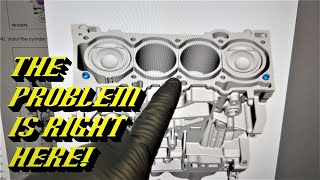
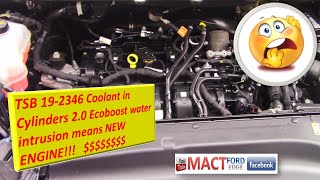
For the 2015-2019 Lincoln MKC with the 2.0L EcoBoost engine, P0316 is not a typical maintenance code. It is strongly linked to a well-documented design flaw in the engine block. The 'open-deck' design features a thin passage for coolant between the cylinders, which is prone to cracking or allowing the head gasket to fail. This allows coolant to leak directly into the combustion chamber, causing the startup misfire that triggers P0316. Ford and Lincoln have acknowledged this widespread issue through multiple Technical Service Bulletins (TSBs) 🎬 Watch: A deep dive into the TSB for this engine flaw., and it has also led to class-action lawsuits. The redesigned engine block, introduced for service replacements and in production around 2019-2020, uses a revised casting to prevent this specific failure.
Diagnostic Flowchart
Tap your situation to follow the diagnostic path that matches what you're seeing on this vehicle.
Symptoms You May Notice
- Rough running or shaking on startup, which may smooth out after a minute.
- Constantly low coolant level with no visible external leaks.
- White, sweet-smelling smoke from the exhaust, especially on a cold start.
- Check engine light is on or flashing.
- Engine overheating or temperature gauge fluctuating wildly.
- Gurgling sound from the engine area after shutdown as coolant seeps into the cylinder.
- Replacing only the spark plugs and ignition coils without addressing the underlying coolant leak. If the plugs are fouled by coolant, the misfire will return quickly.
- Misdiagnosing the issue as a simple head gasket failure without acknowledging the underlying engine block flaw, leading to a repeat failure if only the gasket is replaced.
Most Likely Causes
- Engine Block Coolant Intrusion 🔴 High Probability A known design flaw in the 2.0L EcoBoost engine block used in vehicles built on or before April 18, 2019, creates a weak point between cylinders, allowing coolant to leak into the combustion chamber. This is documented in TSB 22-2229 and TSB 19-2346.
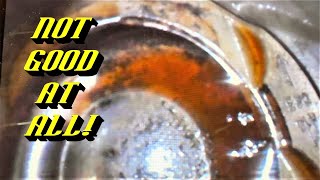
How to confirm: A technician will perform a cooling system pressure test. The system is pressurized and monitored. According to TSB 19-2208, a pressure drop of more than 4 psi (27.57 kPa) after 5 hours with no external leaks confirms an internal leak. A borescope inspection may also reveal a washed-clean piston top or visible coolant in the cylinder. A chemical test can also be used to detect exhaust gases in the coolant.
Typical fix: The only permanent repair is to replace the engine with a redesigned long block assembly that features a revised block casting. Repairs with the old-style block will fail again.
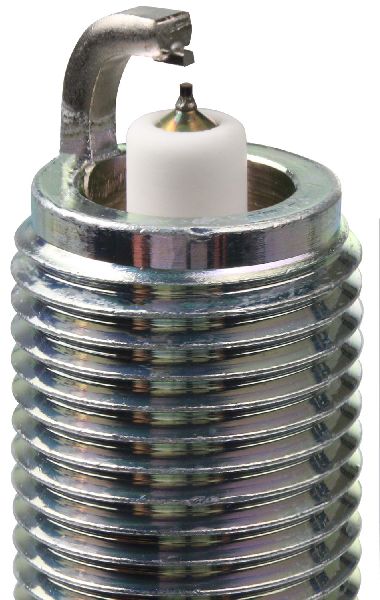
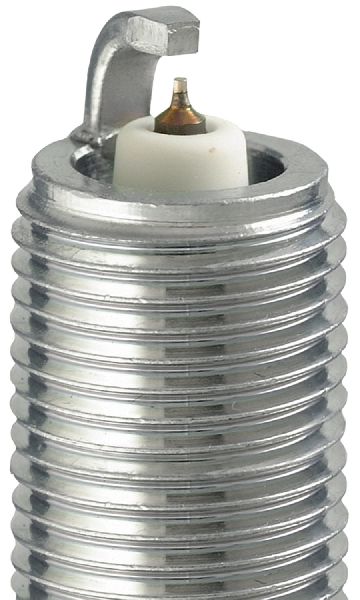
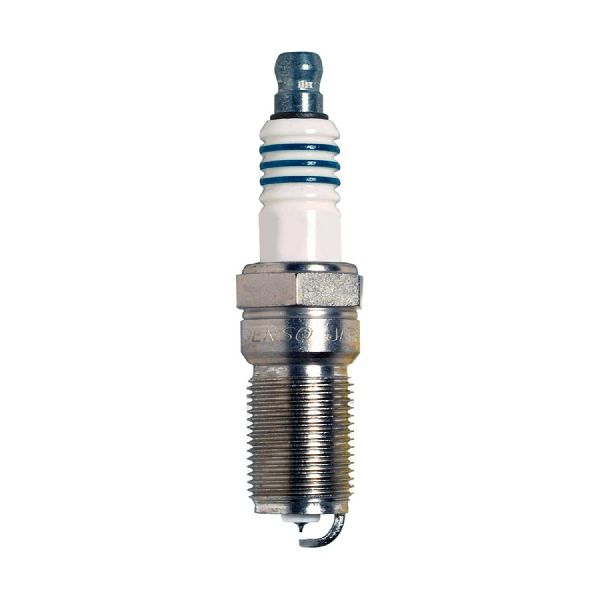
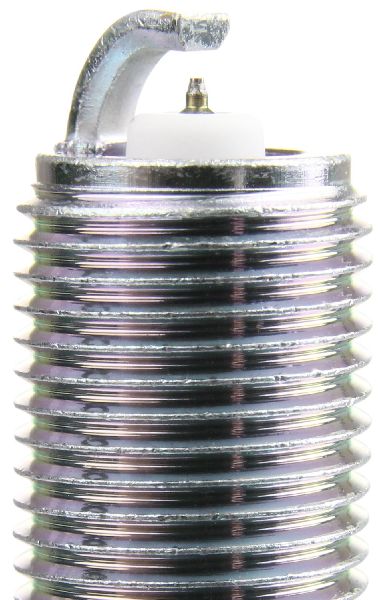
Est. part cost: $3,500-$5,000 - Worn or Fouled Spark Plugs ⚪ Low Probability → Shop Spark Plug
How to confirm: Inspect the spark plugs from the misfiring cylinders. A plug that is wet with coolant, black with carbon, or has a worn electrode should be replaced. However, if a plug is coolant-fouled, it is a symptom of the larger coolant intrusion problem.
Typical fix: Replace all spark plugs. Use OEM-spec Motorcraft plugs for best performance.
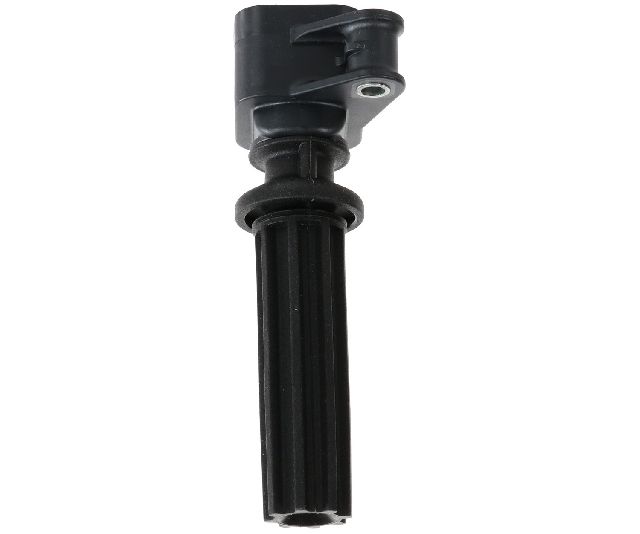
Est. part cost: $40-$80 - Faulty Ignition Coil ⚪ Low Probability → Shop Ignition Coil
How to confirm: Swap the ignition coil from the misfiring cylinder with a coil from a known good cylinder. If the misfire code follows the coil to the new cylinder (e.g., P0301 changes to P0303), the coil is bad.
Typical fix: Replace the faulty ignition coil. It is often recommended to replace them as a set if they are original.
Est. part cost: $50-$100 - Leaking Fuel Injector ⚪ Low Probability → Shop Fuel Injector
How to confirm: A fuel injector can leak down overnight, causing a rich condition and misfire on startup. This is less common than coolant intrusion but possible. A professional diagnosis is required to test injector flow and leak-down rates.
Typical fix: Replace the faulty fuel injector.
Est. part cost: $100-$250
Diagnosis Steps
- Verify the presence of P0316 and any accompanying P030x codes with an OBD-II scanner.
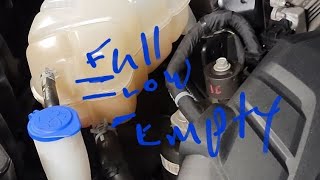
- Check the engine coolant level in the reservoir. If it is low and there are no visible external leaks, suspect coolant intrusion.
- Inspect the exhaust for white, sweet-smelling smoke on a cold start, a classic sign of burning coolant.
- Perform a cooling system pressure test. Pressurize the system to the specification on the cap. Per TSB 19-2208, let it sit for 5 hours. A pressure drop of more than 4 psi (27.57 kPa) indicates a leak.
- If an internal leak is confirmed, remove spark plugs and use a borescope to inspect the inside of the cylinders. Look for a piston that appears steam-cleaned or for visible droplets of coolant. Cylinders 2 and 3 are the most common failure points.
- Perform a chemical block test to detect the presence of combustion gases in the cooling system, which would confirm a breach between the combustion chamber and coolant passages.
- If no signs of coolant intrusion are present, proceed with standard misfire diagnosis: inspect spark plugs, swap ignition coils, and test fuel injectors.
Parts You'll Likely Need
- Engine Long Block Assembly
(OEM #J2GZ-6006-E (example part number, VIN specific))— This is the only permanent fix for the coolant intrusion issue, as documented in Ford/Lincoln's TSBs. The replacement engine has a revised block design to prevent the failure from recurring.
Trusted brands: Motorcraft, Jasper (Remanufactured)
OEM price range: $3500-$5000
Aftermarket price range: $3000-$4500 - Engine Long Block Service Kit
(OEM #J2GZ-6079-C (example for Edge, VIN specific))— This kit includes necessary gaskets, seals, and one-time-use bolts required for the engine replacement job, as specified by the TSB.
Trusted brands: Motorcraft
OEM price range: $200-$400 - Spark Plugs — Will be necessary as part of the engine replacement and are a first step in basic misfire diagnosis.
Trusted brands: Motorcraft
OEM price range: $60-$90
Aftermarket price range: $40-$70 - Ignition Coils — A potential but unlikely cause of the misfire. They are often replaced during an engine swap as a preventative measure.
Trusted brands: Motorcraft, NGK, Denso
OEM price range: $70-$120
Aftermarket price range: $50-$90
Related Codes That Often Appear With This One
- P0300 — Indicates a random or multiple cylinder misfire, which is common when coolant intrusion affects more than one cylinder.
- P0301, P0302, P0303, P0304 — These codes pinpoint the specific cylinder(s) that are misfiring. P0316 is often accompanied by one of these codes, most commonly P0302 or P0303 on this engine.
- P1299, P0217 — These codes indicate an engine overheat condition, which can be caused by the loss of coolant from the intrusion issue.
Technical Service Bulletins (TSBs) & Recalls
- TSB 22-2229: Supersedes previous bulletins. Confirms that DTCs including P0316 may be due to coolant intrusion and the fix is to replace the long block engine assembly.
- TSB 19-2346: Details the issue for 2017-2019 MKC models built on or before April 18, 2019, listing affected DTCs including P0316 and stating the fix is a long block replacement.
- TSB 19-2208: An earlier, superseded version of 19-2346 which first detailed the 5-hour, 4-psi pressure drop diagnostic criteria.
- SSM 47204: An early Special Service Message identifying a rough run condition with P0316 on 2.0L EcoBoost engines due to coolant intrusion from block corrosion.
Platform-Specific Known Issues
- The 2.0L EcoBoost engine used in MKC models built on or before April 18, 2019, has a documented design flaw in the engine block that allows coolant to leak into the cylinders. This is not a matter of poor maintenance but a manufacturing defect. Ford has issued multiple TSBs (TSB 22-2229, TSB 19-2346) that identify the problem and prescribe a long block engine replacement as the only solution. The issue is prevalent enough to have resulted in a class-action lawsuit against Ford, alleging the company knew of the defect but continued to sell the vehicles.
Mechanic-Grade Diagnostic Values
- High-Pressure Fuel System Pressure — expected: 65 to 2150 psi (448 to 14824 kPa), depending on engine load.. Failure: Pressure that is significantly below the requested value on a scan tool can indicate a failing high-pressure fuel pump.
- Spark Plug Gap — expected: 0.7–0.8 mm (0.027–0.031 in). Failure: An incorrect gap can lead to inefficient spark and contribute to misfires.
- Ignition Coil Primary/Secondary Resistance (Aftermarket Example) — expected: Primary: ~0.410 Ohms, Secondary: ~9.810K Ohms. Failure: Readings significantly outside of these values can indicate a failed coil. Note: These values are for an MSD performance coil and may differ from OEM.
Hidden / Shadow Codes Worth Checking
- Mode $06 Misfire Data (e.g., TID $A2-$AF): This is not a DTC, but a diagnostic function. Mode $06 allows viewing of misfire counts for each individual cylinder over the current and last 10 driving cycles. Even if the misfire count isn't high enough to set a P030x code, you can see which cylinder is accumulating misfires, pointing to the source of the P0316. (see via Requires a scan tool capable of reading Mode $06 data, such as Ford's IDS, FORScan, or other professional-grade scanners.)
Scan Tool Commands That Help
- Ford IDS (or FORScan): Power Balance Test — This is an active test used to pinpoint a misfiring cylinder. The tool disables one cylinder at a time and displays the RPM drop. A cylinder with a significantly smaller RPM drop than the others is not contributing its share of power, confirming it as the source of the misfire.
Wiring & Ground Locations
- Under-Hood Fuse Box: Fuse F34 — Located in the fuse box in the engine compartment.. This fuse supplies power to the ignition coils (Vehicle Power 4). A fault on this circuit could cause a misfire on all cylinders.
- Under-Hood Fuse Box: Fuse F26 — Located in the fuse box in the engine compartment.. This fuse supplies power to the Powertrain Control Module (Vehicle Power 1). A loss of power here would cause a no-start and multiple codes.
- Ignition Coil Connector — On top of the valve cover, plugging into each of the four ignition coils.. This is a 3-pin connector. Damaged wiring or a loose connection at a specific coil can cause a misfire in that cylinder. The connector pigtail is available as a service part (e.g., WPT-931).
- Main Engine Ground Strap — Typically a braided metal strap connecting the engine block to the vehicle's chassis/frame.. A poor engine ground can cause a host of electrical issues, including weak spark and erratic sensor readings, which can lead to misfires. Ensuring this connection is clean and tight is a fundamental diagnostic step.
Real Owner Repair Stories
- NHTSA Complaint Records (2017 Lincoln MKC, 111,000 miles) — Vehicle sputtered with a misfire, check engine light flashing.
✅ What actually fixed it Vehicle was taken to a dealer and diagnosed with coolant intrusion in cylinder #3, causing engine failure. The prescribed fix was engine replacement. - NHTSA Complaint Records (2019 Lincoln MKC) — Check engine light on, head gasket problem.
✅ What actually fixed it A dealer performed a compression test and confirmed the failure matched TSB 22-2229. The engine was replaced with a new long block. The owner paid a portion of the cost ($4265.05) after assistance from Lincoln corporate. - Reddit user on r/fordfusion (Ford Fusion with 2.0L EcoBoost) — Coolant intrusion issue.
✅ What actually fixed it The engine was replaced under warranty with part number J2GZ-6006-E. Other users confirmed this is the redesigned long block intended to fix the flaw, as referenced in TSB 22-2229.
"I Checked Everything" — The Actual Cause
- While a smoke test is not applicable, the equivalent for this issue is a cooling system pressure test that passes, yet the vehicle still loses coolant. In one documented case on a platform-mate vehicle, a dealer's pressure test came back 'all ok', but the coolant level was still dropping. This can happen if the crack in the engine block only opens and leaks coolant under specific thermal expansion conditions (i.e., when the engine is at full operating temperature), which may not be present during a standard cold pressure test.
OEM Part Supersession History
JS7Z-6006-A, JS7Z-6006-C, JJ7Z-6006-B→J2GZ-6006-E— The original long block assemblies were prone to the coolant intrusion defect. The updated part, J2GZ-6006-E, is the redesigned long block with revised block casting to permanently correct the flaw.
Heads up: Using a new-old-stock or salvaged engine with one of the original part numbers will lead to a repeat failure. Only the J2GZ-6006-E or a later supersession should be used for replacement.
Model Year Variations Within This Range
- 2015-2019 (specifically before April 18, 2019): The critical difference is the engine block design. Per TSB 19-2346, vehicles built on or before April 18, 2019, were fitted with the engine block susceptible to the coolant intrusion flaw. Vehicles built after this date, and service replacement engines (like part J2GZ-6006-E), use a revised block design that mitigates this specific failure.
Helpful Videos

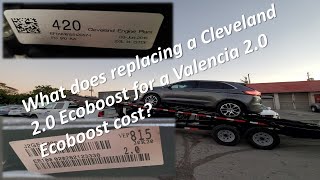
We Have This Part in Stock


The information in this article is provided for general reference and educational purposes only. Vehicle specifications, procedures, and part compatibility can vary by production date, trim level, and region. Always consult your vehicle's factory service manual and verify part numbers before purchasing or performing repairs. Safety-critical components such as airbags, seat belts, and braking systems should be installed by a qualified professional.
- Lincoln MKC:
- 🧭 Diagnostic Flowchart
- 🎬 Helpful Videos
- 🛍️ Shop This Part
- What's Unique About the 2015-2019 Lincoln MKC
- Symptoms You May Notice
- Most Likely Causes
- Diagnosis Steps
- Parts You'll Likely Need
- Related Codes That Often Appear With This One
- Technical Service Bulletins (TSBs) & Recalls
- Platform-Specific Known Issues
- Mechanic-Grade Diagnostic Values
- Hidden / Shadow Codes Worth Checking
- Scan Tool Commands That Help
- Wiring & Ground Locations
- Real Owner Repair Stories
- "I Checked Everything" — The Actual Cause
- OEM Part Supersession History
- Model Year Variations Within This Range
- 🎟️ Get 5% Off