

P0322 on 2007-2016 Audi A5: Crank Sensor Failure, No-Start Causes, and Fixes
P0322 on a 2007-2016 Audi A5 almost always means the crankshaft position sensor (also called the engine speed sensor or G28) has failed. This will likely cause the engine to crank but not start, or stall unexpectedly while driving. Replacing the sensor is the most common fix, with an OEM part costing around $90-$130 and aftermarket options available for less.
- P0322 on your Audi A5 means the crankshaft position sensor (G28) has likely failed, which is a critical issue that can leave you stranded.
- The most common symptoms are the engine cranking but not starting, or stalling suddenly while driving.
- Do not drive the vehicle until it is repaired, as a sudden stall is a major safety hazard.
- The most probable fix is replacing the crankshaft position sensor. While the part is not overly expensive, access can be tight, making it a moderately difficult DIY job.
- Always check the wiring and connector to the sensor for damage before replacing the sensor itself.
What's Unique About the 2007-2016 Audi A5
On the first-generation Audi A5 (B8 platform), the P0322 code is a relatively common and well-documented issue. The primary cause is often the failure of the crankshaft position sensor (G28) due to heat cycles and age. The sensor's location, typically on the transmission bell housing or near the oil filter housing, can make replacement a tight squeeze, particularly on the 2.0T engines, but it is a manageable DIY task for many owners. While the sensor itself is the usual point of failure, it's worth noting that wiring issues, such as oil-soaked or heat-damaged insulation near the sensor connector, can sometimes mimic a sensor failure.
Generation note: The 2007-2016 year range covers the first generation (Type 8T/8F) of the Audi A5, which is part of the B8 platform. This includes the initial release from 2007-2011 and the facelifted version from 2012-2016. The causes and fixes for P0322 are generally consistent across this entire generation, though sensor location can vary slightly depending on the engine (2.0T, 3.2L V6, 4.2L V8). The issue is also prevalent on platform mates like the Audi A4 and Q5 which share the same engines.
Symptoms You May Notice
- Engine cranks but will not start
- Engine stalls unexpectedly, especially when warm
- Rough idling or misfiring
- Noticeable loss of engine power
- Tachometer may not work or behave erratically (may drop to zero while driving)
- Check Engine Light (CEL) is illuminated
- On TDI diesel models, a flashing glow plug light may accompany the CEL
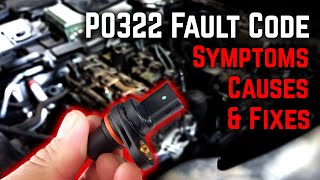
- EPC (Electronic Power Control) light may illuminate intermittently 🎬 Watch: P0322 symptoms, causes, and fixes explained
- Replacing the camshaft position sensor. While camshaft sensor failure can cause similar symptoms, P0322 specifically points to the crankshaft position sensor circuit.
- Replacing spark plugs or ignition coils. While a no-start or misfire condition can be caused by ignition components, the P0322 code is a clear indicator to investigate the crankshaft position sensor first.
- Assuming a timing chain issue. While a slipped timing chain can cause stalling and no-start issues, it is usually accompanied by other codes (like P0011, P0019) and mechanical noise. P0322 as a standalone code points strongly to the sensor circuit.
Most Likely Causes
- Faulty Crankshaft Position Sensor (G28) 🔴 High Probability → Shop Engine Crankshaft Position Sensor The sensor is located in a high-heat area of the engine bay, and repeated heat cycles can cause the internal electronics to fail over time. This is a very common failure point on the B8 platform.
How to confirm: Use an OBD-II scanner with live data capability (VCDS/VAG-COM is recommended). While cranking the engine, monitor the 'Engine RPM' parameter. A reading of '0' RPM is a strong indication that the sensor or its circuit is faulty. A healthy sensor can also be tested with a multimeter for resistance, typically between 450-1000 Ohms.
Typical fix: Replace the crankshaft position sensor. It is typically held in by a single T30 Torx bolt. Using a quality OEM-supplier part like Bosch is highly recommended, as cheap aftermarket sensors have a high failure rate.
Est. part cost: $30-$150 - Damaged Wiring or Faulty Connector 🟡 Medium Probability The wiring harness for the sensor is routed through hot areas of the engine bay, which can lead to brittle insulation, chafing, or melting over time. Oil or coolant leaks are common on the B8 platform and can saturate the connector, causing a poor connection or short circuit.
How to confirm: Visually inspect the wiring harness leading to the crankshaft position sensor for any signs of damage, such as cracks, melting, or oil saturation. Check the electrical connector for corrosion, bent pins, or a loose connection. Wiggle the harness while the engine is running (if possible) to see if it causes a stall.
Typical fix: Repair the damaged section of the wiring harness or replace the connector. Ensure a secure connection to the new sensor. Use zip ties to secure the new wiring away from heat sources.
Est. part cost: $10-$50
Rare But Worth Checking
- Faulty Engine Control Module (ECM): → Shop Engine Control Module (ECM) This is extremely rare and should only be considered after the sensor and its wiring have been definitively ruled out as the cause. In some cases, coolant or oil can travel up the wiring harness and damage the ECM. Ross-Tech has documented instances of coolant contamination in the ECM causing G28 sensor codes.
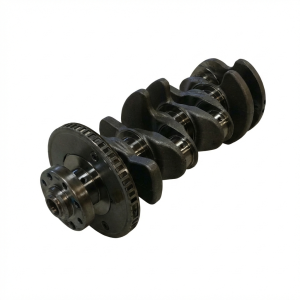
- Damaged Reluctor Ring: The sensor reads teeth on a reluctor wheel mounted on the crankshaft. While uncommon, this wheel can be damaged during major engine or transmission work, leading to a missing or incorrect signal.
Diagnosis Steps
- Connect an OBD-II scanner and confirm that P0322 is the active code. Note any other codes present.
- Access the live data stream on the scanner and monitor the Engine RPM while cranking the engine. A '0' RPM reading strongly suggests a problem with the G28 sensor circuit.
- Visually inspect the crankshaft position sensor's wiring harness and connector for any signs of damage, such as melting, chafing, or fluid contamination. Pay close attention to the area near the connector.
- If the wiring appears to be in good condition, the next step is to replace the crankshaft position sensor (G28).
- For 3.2L/4.2L engines, the sensor is located on the driver's side of the transmission bell housing. Access requires moving the coolant expansion tank aside.
- For 2.0T engines, the sensor is typically located on the engine block, near the oil filter. Access can be very tight, and removing the oil filter may be necessary for easier access. 🎬 See this B8 crankshaft position sensor replacement walkthrough Some owners have successfully used an endoscope camera to help guide tools into the tight space.
- Using a T30 Torx socket, remove the single bolt securing the sensor and carefully pull the old sensor out. Be prepared for some oil to seep out.
- Lubricate the O-ring on the new sensor with clean engine oil before installation.
- Install the new sensor, tighten the bolt (do not overtighten), and reconnect the electrical connector, ensuring it clicks into place.
- Clear the trouble codes with the OBD-II scanner and start the engine to confirm the repair.
Parts You'll Likely Need
- Crankshaft Position Sensor (Engine Speed Sensor G28)
(OEM #06H906433D / 06H906433E (supersedes C/D for 2.0T engines), 06E906433 (for 3.2L V6), 07L905163C (for 4.2L V8))— This sensor is the most common cause of the P0322 code due to its susceptibility to heat-related failure.
Trusted brands: Bosch (OEM supplier), Genuine Audi
OEM price range: $90-$130
Aftermarket price range: $25-$80
Related Codes That Often Appear With This One
- P0321 — P0321 indicates a 'Range/Performance' issue with the same sensor circuit. It often appears as an intermittent fault before the sensor fails completely and triggers P0322.
- P0300, P0301, etc. — Random or specific cylinder misfire codes can be triggered because the ECM cannot correctly time the ignition spark without a valid signal from the crankshaft position sensor.
- P0727 — This code for 'Engine Speed Input Circuit No Signal' can also be triggered by a faulty G28 sensor, as it provides the primary engine speed data.
Platform-Specific Known Issues
- Tight Access on 2.0T Engines: On the 2.0T engine, the sensor is notoriously difficult to access without removing other components. It is located near the oil filter, and many DIYers find it necessary to remove the oil filter to gain enough clearance to work. A user on the Ross-Tech forums reported success using an endoscope camera to guide the tool onto the bolt without removing anything else.
- Coolant Tank Removal for V6/V8 Access: For the V6 and V8 engines, the sensor is located on the transmission bell housing. Access from the top of the engine bay requires unbolting and setting aside the coolant expansion tank to reach the sensor below. 🎬 Watch: Step-by-step engine speed sensor replacement DIY
Mechanic-Grade Diagnostic Values
- Engine RPM in VCDS/VAG-COM Live Data — expected: >200 RPM while cranking the engine.. Failure: A reading of '0' RPM while the engine is physically turning over is a definitive sign that the ECM is receiving no signal from the G28 sensor or its circuit.
- Crankshaft Position Sensor (G28) internal resistance — expected: 480 - 1000 Ohms between pins 2 and 3 of the sensor connector.. Failure: An open circuit (infinite resistance) or a value significantly outside this range indicates a failed sensor. Note that a sensor can test good when cold but fail when hot (heat-soak failure).
- Voltage supply to G28 sensor connector — expected: Approximately 5.0 V between pins 1 and 3 of the harness-side connector with the ignition on.. Failure: No voltage or significantly low voltage points to a problem in the wiring harness or the ECM's 5V reference circuit.
- Wiring harness continuity check — expected: Max 1.5 Ohms resistance between the sensor connector pins and their corresponding pins at the ECM connector.. Failure: Higher resistance indicates an open circuit or corrosion in the wire that needs to be repaired.
Scan Tool Commands That Help
- VCDS (VAG-COM): Advanced Measuring Values (or Measuring Blocks on older ECUs) — This is the primary function used to monitor 'Engine Speed' live data during cranking to confirm if the ECM is receiving a signal from the G28 sensor.
Wiring & Ground Locations
- Engine Control Module (ECM/J623) — Located in the engine bay plenum, under the windshield cowl on the driver's side. It is housed in a black plastic box that must be opened to access the module.. The G28 sensor sends its signal directly to the ECM. All wiring tests for continuity, shorts to power, or shorts to ground will terminate at the ECM's large multi-pin connectors.
- Primary Engine/Transmission Ground — The main ground strap is typically located on the transmission bellhousing, connecting it to the chassis.. A poor engine ground can cause a host of electrical issues and erratic sensor behavior. While not a direct cause of a 'No Signal' code, verifying the main ground is clean and tight is a crucial step in any electrical diagnosis.
- G28 Sensor Connector — This is the 3-pin grey connector attached to the sensor's pigtail. On the 2.0T, the other end of this short harness connects to the main engine harness near the intake manifold. For V6/V8 engines, it connects to the harness near the firewall.. This is the primary point for testing the sensor's resistance and the voltage supply from the ECM. The terminals must be clean and make a secure connection.
Real Owner Repair Stories
- AudiWorld Forums (2008 Audi Q7 4.2 V8 FSI (Engine platform shared with A5)) — Cranks but does not fire, P0322 code is active and returns immediately after clearing.
❌ Tried (didn't work) Replacing the crankshaft position sensor with a new Bosch unit., Replacing the sensor a second time with another new part., Replacing the female connector pigtail on the wiring harness.
✅ What actually fixed it The owner discovered that wiggling the sensor wire where it met the main engine harness would cause the engine to briefly fire. This indicated a break in the wire further up the harness, not at the sensor or connector itself. The final fix required repairing the damaged wire within the main harness. - Ross-Tech Forums (Audi A4 B8.5 (Facelift model, similar platform)) — Persistent P0322 code, intermittent juddering or 'blips' in torque while driving. Car eventually went into limp mode.
❌ Tried (didn't work) Replacing the engine speed sensor (G28) with a new Febi Bilstein part., Replacing the entire wiring loom from the sensor to the ECU.
✅ What actually fixed it The user was still diagnosing at the time of the post, but the key takeaway for other mechanics is that even after replacing both the sensor and the entire sensor-to-ECU wire loom, the problem persisted. This points towards an extremely rare fault, potentially with the ECM itself or the reluctor wheel, and serves as a caution that the common fixes are not always the solution.
OEM Part Supersession History
06H906433C / 06H906433D→06H906433E— Standard part revision and improvement by the manufacturer.
Heads up: The latest revision, 06H906433E, is the correct replacement for 2.0T engines across the B8/B8.5 generation.
Diagnostic Flowchart
Other Known Issues on This Vehicle
Issues unrelated to this code that are worth knowing about as an owner of this generation:
- 2.0T TFSI Excessive Oil Consumption 🔴 High — Very common on early B8 models (2009-2011.5) with the CAEB engine code. Can start as early as 50,000 miles. A class-action lawsuit was filed for this issue.
- Timing Chain Tensioner Failure (2.0T) 🔴 High → Shop Engine Timing Chain — The original timing chain tensioner can fail without warning, leading to jumped timing and catastrophic engine damage. Affects pre-facelift (B8) models primarily. Failure can occur between 60,000 and 100,000 miles. (Ref: TSB 2025428/11)
- Carbon Buildup on Intake Valves 🟠 Medium — A common issue for all direct-injection engines on this platform (2.0T, 3.2L, 4.2L). Typically requires cleaning every 50,000-80,000 miles to prevent misfires, rough idle, and power loss.
- Water Pump / Thermostat Failure 🟠 Medium — The water pumps, often with plastic housings, are a known failure point across all engines, leading to coolant leaks and overheating. Failure is common around 60,000-90,000 miles. (Ref: Recalls were issued for some early B8 S4 models.)
- Mechatronic Unit Failure (S-Tronic/DSG) 🔴 High — The 'brain' of the dual-clutch transmission can fail, causing jerky shifting, transmission errors on the dash, and failure to engage gears. It is an expensive repair.
- Worn Control Arm Bushings 🟡 Low — The front multi-link suspension's control arm bushings wear out, causing clunking noises over bumps and sloppy steering feel. Typically needs attention after 80,000 miles.
Used vs. New Parts: Buying Guide for This Vehicle
When a used part is the smart pick: It is never recommended to buy a used crankshaft position sensor. This is a relatively inexpensive electronic component that fails due to heat and age. A used part has unknown remaining life and carries a high risk of premature failure, forcing you to do the difficult replacement job a second time.
What to inspect on the donor part:
- Not applicable, do not purchase used.
OEM-only on this vehicle (don't cheap out):
- Crankshaft Position Sensor (G28)
Aftermarket brands forum-validated for this vehicle:
- Bosch (This is the Original Equipment Manufacturer and the most recommended choice)
- Continental/VDO
- Delphi
- NTK
Brands owners have reported issues with on this vehicle:
- Unbranded, low-cost sensors from online marketplaces. Forum users frequently report these parts failing within weeks or months, or even being dead-on-arrival.
Real Owner Stories
Aggregated from forums and TSBs cited above. Mileages and costs reflect what owners reported in those sources.
Audi A5 (B8 platform)
Symptoms: The car stuttered and lost power on the motorway, remaining drivable but unable to shift out of 2nd gear. The EPC and Check Engine lights illuminated. The engine would only turn over after 3 or 4 seconds of cranking and provided no power beyond first gear.
What fixed it: Replacement of the Ignition/Distributor Engine Speed Input Circuit (P0322).
Source hint: r/Audi
Audi A4 (B6 platform)
Symptoms: The car was stalling and throwing the P0322 code after timing work was performed.
What fixed it: Fixed timing and addressed the engine speed sensor circuit.
Source hint: AudiWorld forum thread titled 'fixed timing car now stalling throwing p0322 code'
Audi A6
Symptoms: An owner reported that the vehicle hit a rev limiter and threw two new codes, P0322 and P0421, despite the engine bay never getting wet. The diagnostic codes indicated an issue with the engine ignition distributor having no signal and the catalytic system being below threshold.
What fixed it: Documented under NHTSA ODI #11325248.
Source hint: NHTSA ODI #11325248
Related OBD-II Codes
Frequently Asked Questions
I have a 2.0T Audi A5 and can't even see the sensor. Do I really need to remove the oil filter?
My A5 is stalling when the engine gets warm. Is this typical for a P0322 error?
Which replacement part should I use for the G28 sensor on my B8 platform Audi?
Is there a specific TSB for timing issues on my 2010 Audi A5 2.0T?
How can I use VCDS to confirm the G28 sensor is the cause of my no-start?
I have a V6 Audi A5; is the sensor in the same place as the 2.0T?
Helpful Videos


We Have This Part in Stock

The information in this article is provided for general reference and educational purposes only. Vehicle specifications, procedures, and part compatibility can vary by production date, trim level, and region. Always consult your vehicle's factory service manual and verify part numbers before purchasing or performing repairs. Safety-critical components such as airbags, seat belts, and braking systems should be installed by a qualified professional.
- Audi A5:
- 🧭 Diagnostic Flowchart
- 🎬 Helpful Videos
- 🛍️ Shop This Part
- What's Unique About the 2007-2016 Audi A5
- Symptoms You May Notice
- Most Likely Causes
- Rare But Worth Checking
- Diagnosis Steps
- Parts You'll Likely Need
- Related Codes That Often Appear With This One
- Platform-Specific Known Issues
- Mechanic-Grade Diagnostic Values
- Scan Tool Commands That Help
- Wiring & Ground Locations
- Real Owner Repair Stories
- OEM Part Supersession History
- Other Known Issues on This Vehicle
- Used vs. New Parts: Buying Guide for This Vehicle
- Real Owner Stories
- Audi A5 (B8 platform)
- Audi A4 (B6 platform)
- Audi A6
- Related OBD-II Codes
- Frequently Asked Questions
- 🎟️ Get 5% Off