

P0322 on 2011-2018 Audi A6 3.0T: Engine Speed Sensor Failure Causes and Fixes
P0322 on a 2011-2018 Audi A6 3.0T almost always indicates a failed Crankshaft Position Sensor (also called Engine Speed Sensor, G28). This will cause the engine to crank but not start, or stall unexpectedly, often when the engine is warm. Replacing the sensor is the most common fix, with parts costing between $40 and $150. Access to the sensor is difficult.
- P0322 on your Audi A6 means the engine's computer has lost the signal from the Crankshaft Position Sensor (G28).
- The most common symptoms are the engine cranking but not starting, or stalling unexpectedly while driving, especially when hot.
- The most likely fix is replacing the Crankshaft Position Sensor, but always inspect the wiring and connector first.
- Do not drive the vehicle, as it can stall at any time, creating a serious safety hazard.
- Accessing the sensor on the 3.0T engine is difficult and requires moving components like the transmission cooler lines and coolant expansion tank.
What's Unique About the 2011-2018 Audi A6
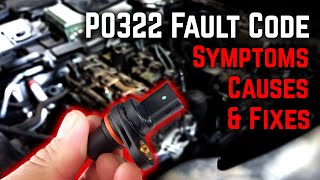
On the Audi A6 C7 platform with the 3.0T (EA837) engine, the P0322 code is a very common indicator 🎬 Watch: P0322 code causes, symptoms, and fixes explained of a failed Crankshaft Position Sensor (G28). While the failure itself is typical for many cars, accessing the sensor on this specific vehicle can be challenging. It is located on the driver's side of the transmission bell housing, and owners and technicians report that the automatic transmission fluid cooler lines often need to be unbolted and moved aside to gain access to the sensor's single retaining bolt. For better top-down access to the wiring connector, the coolant expansion tank may also need to be removed. The 2016-2018 C7.5 facelift models use an updated 'CREC' version of the 3.0T engine, but the location and failure pattern of the G28 sensor remain the same.
Symptoms You May Notice
- Engine cranks but will not start.
- Engine stalls suddenly while driving or idling, especially when warm (heat soak failure).
- Check Engine Light and/or EPC (Electronic Power Control) light is on.
- Tachometer shows 0 RPM while cranking the engine.
- Reduced engine power or 'limp mode'.
- Rough idling or engine hesitation.
- Intermittent jerking or shuddering while driving.
- Replacing the Camshaft Position Sensor instead of the Crankshaft Position Sensor. While they are related, P0322 specifically points to the engine speed input, which is the Crankshaft Position Sensor (G28).
- Replacing the battery or starter when the car cranks but won't start, without first checking for diagnostic trouble codes.
Most Likely Causes
- Failed Crankshaft Position Sensor (G28) 🔴 High Probability → Shop Engine Crankshaft Position Sensor The sensor is a common failure point on many modern vehicles, including Audis, due to constant exposure to high heat cycles from the engine and transmission, which degrades the internal electronics over time. Failures often present as 'heat soak' issues, where the car stalls when hot but may restart after cooling down.
How to confirm: After checking wiring, this is the most likely component to have failed. A diagnostic scan tool will show no RPM reading during cranking. Due to the difficulty of access, many choose to replace the sensor as a primary diagnostic step if wiring appears intact. A definitive test involves using an oscilloscope on the signal wire; a good sensor produces a clean square wave, while a failed one will show a flat line or erratic signal. A multimeter can be used to check the sensor's internal resistance, which should be between 700 and 1000 Ohms.
Typical fix: Replace the Crankshaft Position Sensor. This involves gaining access to the sensor on the transmission bell housing, removing a single T30 Torx bolt, unplugging the connector, and swapping the part. It is critical to 🎬 See this step-by-step Audi crankshaft sensor replacement walkthrough ensure the new sensor is fully seated before tightening.
Est. part cost: $40-$150 - Damaged Wiring or Connector 🟡 Medium Probability The sensor's wiring is located in a hot, tight area of the engine bay. Wires can become brittle and crack, or the harness can chafe against other components. The connector pins can also corrode or become loose, leading to an intermittent or complete loss of signal.
How to confirm: Visually inspect the wiring harness from the sensor to the main loom for signs of cracking, melting, or breaks. Check the connector for corrosion, moisture, or bent pins. Use a multimeter to test the connector (with sensor unplugged and ignition on): Pin 1 should have a 5V reference, Pin 3 should have continuity to ground, and Pin 2 is the signal wire.
Typical fix: Repair the damaged section of wire or replace the connector pigtail. Ensure the repair is properly sealed against moisture and heat.
Est. part cost: $10-$30
Rare But Worth Checking
- Failed Engine Control Module (ECM): → Shop Engine Control Module (ECM) This is extremely rare. Before suspecting the ECM, all other possibilities, including the sensor and its entire wiring circuit, must be exhaustively tested and ruled out. Coolant contamination from other failed components has been known to wick into the ECM harness and cause this fault.
- Damaged Reluctor Ring: The reluctor ring (or tone wheel) on the crankshaft, which the sensor reads, can be damaged or have missing teeth. This is uncommon but can happen, especially if there has been major engine or transmission work done previously. An oscilloscope pattern would appear irregular rather than completely absent.
Diagnosis Steps
- Connect an OBD-II scanner and confirm the P0322 code is present. Check for other codes, especially the VAG-specific code 16706.
- Use the scanner's live data function to monitor Engine RPM while cranking. If it reads 0 or is erratic, it confirms the ECM is not receiving a proper signal. Expected reading during crank is 150-350 RPM.
- Perform a thorough visual inspection of the Crankshaft Position Sensor's wiring harness and connector. Look for any obvious signs of damage, melting, or corrosion.
- If the wiring looks good, disconnect the sensor and use a multimeter to test the sensor's connector with the ignition on. Confirm Pin 1 has a 5V reference, and Pin 3 has a good ground.
- Test the internal resistance of the G28 sensor itself across pins 2 and 3. A good sensor should read between 700 and 1000 Ohms (0.7 to 1.0 kΩ).
- Check for continuity on the signal wire (Pin 2) from the sensor connector back to the ECM connector to rule out a break in the wire. Resistance should be less than 1.5 Ω.
- For a definitive diagnosis, connect an oscilloscope to the signal wire. A clean, repeating square wave pattern during cranking indicates a good sensor and wiring; a flat line or noisy signal points to a fault.
- If the wiring and connector test good, the Crankshaft Position Sensor itself is the most likely culprit and should be replaced. It is highly recommended to use an OEM or Bosch replacement part.
- After replacing the sensor, ensure it is fully seated and the bolt is properly tightened. An improperly seated sensor can cause a new P0322 code or long crank times. Clear the codes and perform a test drive, allowing the engine to reach full operating temperature to ensure the problem is resolved.
Parts You'll Likely Need
- Crankshaft Position Sensor (Engine Speed Sensor G28)
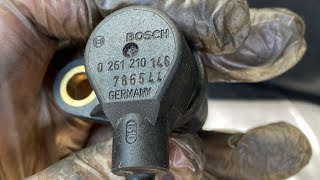
(OEM #06E906433G, superseded by 07L905163C)— This sensor is the primary source of the engine speed signal and is the most common failure point for the P0322 code on this vehicle. Part number may have been superseded; verify with VIN.
Trusted brands: Bosch (OEM), NTK, Genuine Audi
OEM price range: $80-$150
Aftermarket price range: $40-$90
Related Codes That Often Appear With This One
- P0321 — P0321 (VAG code 16705) indicates an 'implausible signal' from the same G28 sensor, suggesting an intermittent or performance-range issue rather than a complete loss of signal. They often point to the same failing sensor or wiring issue.
- P0300-P0306 — Misfire codes (P0300 for random, P0301-P0306 for specific cylinders) can be triggered because the ECM cannot properly time ignition without a reliable crankshaft signal.
- P0016 — This code for 'Crankshaft Position - Camshaft Position Correlation' can be triggered by a faulty G28 sensor because the ECM sees a mismatch between the two signals. While it can indicate a more serious timing chain issue, it often appears as a secondary code to P0322/P0321.
Platform-Specific Known Issues
- Access to the sensor is notably difficult on the C7 A6 3.0T. The ATF cooler lines are directly in the way and must be carefully unbolted and moved to reach the sensor's single T30 Torx bolt.
- The coolant expansion tank may need to be removed from its bracket and set aside to gain better access to the sensor's electrical connector from above.
Mechanic-Grade Diagnostic Values
- Crankshaft Position Sensor (G28) Internal Resistance — expected: 700 to 1000 Ohms (0.7 to 1.0 kΩ) between terminals 2 and 3.. Failure: A reading outside this range, or any continuity between terminals 1-2 or 1-3, indicates a faulty sensor.
- Live Data Engine RPM (while cranking) — expected: 150-350 RPM. Failure: A reading of 0 RPM confirms the ECM is receiving no signal.
- Wiring Harness Continuity (Sensor to ECM) — expected: Less than 1.5 Ω. Failure: Resistance higher than 1.5 Ω indicates a problem in the wiring harness, such as a break or corrosion.
- Sensor Connector Voltage (Key On, Engine Off) — expected: Pin 1 (to ECU): ~5V Reference Voltage. Pin 3 (to ECU): Ground (continuity to chassis ground).. Failure: Absence of 5V reference or a bad ground points to a wiring or ECM issue, not a sensor failure.
Hidden / Shadow Codes Worth Checking
- 16706: This is the VAG-specific fault code equivalent to P0322, meaning "Engine Speed Sensor (G28): No Signal". Seeing this code on a VAG-com tool like VCDS confirms the issue is with the G28 circuit. (see via VCDS (VAG-COM), OBDeleven, or other OEM-level diagnostic tools.)
- 16705 / P0321: VAG-specific code for "Engine Speed Sensor (G28): Implausible Signal". This often precedes a complete failure (P0322) and indicates the sensor signal is intermittent, noisy, or doesn't match the camshaft sensor signal, pointing to a failing sensor or wiring. (see via VCDS (VAG-COM), OBDeleven, or other OEM-level diagnostic tools.)
Scan Tool Commands That Help
- VCDS (VAG-COM) or similar: Read Measuring Value Blocks (MVB) for Engine Speed — This is the primary diagnostic step to confirm the fault. While cranking the engine, monitor the engine speed value. If it remains at 0 RPM, it confirms the ECM is not getting a signal from the G28 sensor.
- VCDS (VAG-COM): Adaptation - Channel 00 - Save — This function resets all adaptation values to factory defaults. It is generally NOT required or recommended for a simple G28 sensor replacement. It is a powerful tool that should be used with caution, as it can clear learned values for fuel trim, throttle body, and more, potentially causing other issues if used incorrectly.
Wiring & Ground Locations
- G28 Sensor Connector (T3w) — On the driver's side of the transmission bell housing, often obscured by ATF cooler lines.. This is the 3-pin connector for the sensor itself. Pin 1 is 5V reference, Pin 2 is signal, and Pin 3 is ground. All initial electrical tests are performed here.
- Engine Ground Strap — There are multiple key ground points. A primary engine-to-chassis ground strap is typically located near the alternator or on the side of the engine block. Another key ground point for the engine harness is on the left side longitudinal member in the engine compartment.. A corroded or loose main engine ground can cause a floating ground reference for multiple sensors, including the G28, leading to intermittent or no-signal faults.
- ECM Connector — The Engine Control Module (J220) is located in the plenum chamber (e-box) at the rear of the engine compartment, under the plastic cowl cover.. The G28 sensor wires terminate here. Performing a continuity test from the G28 sensor connector (T3w) to the corresponding pins at the ECM connector can definitively rule out a broken wire in the harness.
Real Owner Repair Stories
- AudiWorld Forums user (2014 Audi A6 2.0T (similar procedure and fault logic to 3.0T)) — Stalling at low RPMs, intermittent shuddering. After replacing sensor, experienced long crank times and the P0322 code returned.
❌ Tried (didn't work) Initial replacement of the Crankshaft Position Sensor with a new Bosch unit., Reinstalling the old sensor.
✅ What actually fixed it The user discovered the new sensor was not fully seated and the retaining bolt was not fully tightened. After properly tightening the bolt until it was snug, the long crank issue was resolved and the P0322 code disappeared. This highlights the importance of correct mechanical installation. - Ross-Tech Forums user (Volkswagen (with P0322)) — Car randomly gets jerky and stalls while driving, EPC light comes on.
❌ Tried (didn't work) Wiggling the sensor wire to check for a loose connection.
✅ What actually fixed it The user replaced the engine speed sensor (G28) with a new one from a dealer. The repair was successful, and the user noted they were able to perform the replacement using an endoscope camera to guide the tool, avoiding the need to remove other components. This confirms the sensor itself is the most common fix. - NHTSA ODI #11325248 (Audi A6) — An owner reported that their vehicle threw codes P0322 and P0421, noting that P0322 was for the engine ignition distributor no signal and that the vehicle experienced a rev limiter issue.
OEM Part Supersession History
06E906433G→07L905163C— Standard part revision and update by the manufacturer. The part may also have been superseded by 07L905163A and 07L905163B before the final 'C' revision.
Heads up: The part is often listed as a 'Camshaft Position Sensor' by vendors, which can be confusing. However, for the 3.0T engine, this part number is used for the G28 Engine Speed (Crankshaft) Sensor. Always verify fitment with the vehicle's VIN.
Diagnostic Flowchart
Other Known Issues on This Vehicle
Issues unrelated to this code that are worth knowing about as an owner of this generation:
- Water Pump & Thermostat Failure 🔴 High — Common failure item, often between 60,000 and 100,000 miles. The plastic housings are known to crack, causing significant coolant leaks. (Ref: Service actions were issued for some early models, but it remains a common repair.)
- PCV Valve Failure 🟠 Medium — Typically fails after 80,000 miles. Symptoms include a whistling noise, rough idle, increased oil consumption, and potential misfire codes. (Ref: An updated PCV valve design is available.)
- Timing Chain Tensioner Rattle 🔴 High → Shop Engine Timing Chain — More common on higher-mileage (100k+) or poorly maintained engines. Presents as a brief rattle on cold starts. Repair is very expensive as the engine must be removed.
- Carbon Buildup on Intake Valves 🟠 Medium — A known issue for all direct-injected engines. Becomes problematic after 60,000-80,000 miles, causing misfires and reduced performance. Less of an issue on 2016+ 'CREC' engines with dual injection.
- S-Tronic (DSG) Mechatronic Unit Failure 🔴 High — Can occur at various mileages. Symptoms include jerky shifting, gearbox malfunction warnings, and loss of gears. Repair or replacement is very costly.
- Supercharger Intercooler Coolant Leak 🟠 Medium — The intercooler cores, located under the supercharger, can develop internal coolant leaks, leading to coolant consumption with no visible external leak and potential for engine damage if ignored.
Used vs. New Parts: Buying Guide for This Vehicle
When a used part is the smart pick: A used part is not recommended for this repair. The Crankshaft Position Sensor is a relatively low-cost electronic component that fails due to heat and age. A used sensor from a donor vehicle will have an unknown amount of remaining life and carries a high risk of premature failure, making the difficult labor of replacement not worthwhile.
What to inspect on the donor part:
- Not applicable as used part is not recommended.
OEM-only on this vehicle (don't cheap out):
- Crankshaft Position Sensor (G28)
Aftermarket brands forum-validated for this vehicle:
- Bosch (this is the Original Equipment Manufacturer, OEM)
- NTK
Brands owners have reported issues with on this vehicle:
- Unnamed, no-brand sensors from online marketplaces. Forum users and professional technicians consistently advise against using cheap, unbranded electronic sensors, as they have a high failure rate and can cause persistent diagnostic issues.
Real Owner Stories
Aggregated from forums and TSBs cited above. Mileages and costs reflect what owners reported in those sources.
2014 Audi A6 2.0T
Symptoms: After installing a new Crankshaft Position Sensor (CPS), the car experienced a slower start and the P0322 code persisted.
What fixed it: Ensuring the sensor was fully seated and the mounting bolt was tightened correctly.
Source hint: AudiWorld Forums: '2014 2.0 - New CPS, slower start and P0322'
2011-2018 Audi A6 3.0T V6
Symptoms: Engine stalls suddenly while driving or idling, especially when warm (heat soak failure).
What fixed it: Replacement of the Crankshaft Position Sensor (G28) located on the transmission bell housing.
Source hint: ARTICLE CONTEXT: common_causes and symptoms
Audi A6 Owner Report
Symptoms: An owner reported that the vehicle threw codes P0322 and P0421, experiencing a rev limiter issue and noting that the P0322 code was for the engine ignition distributor no signal.
What fixed it: Diagnostic and repair of the ignition signal circuit.
Source hint: NHTSA ODI #11325248
Related OBD-II Codes
Frequently Asked Questions
Why does my Audi A6 3.0T stall when the engine is hot but start again after it cools down?
I'm seeing 0 RPM on my tachometer while trying to start my A6. Is this related to P0322?
Is there a specific part brand recommended for replacing the G28 sensor on the 3.0T V6?
How difficult is it to access the sensor on the C7 A6 3.0T?
What should the resistance be for a healthy G28 sensor on this Audi?
Can an improperly installed sensor cause the P0322 code to return?
Helpful Videos
Used OEM Parts in Stock
New Aftermarket Parts Available


The information in this article is provided for general reference and educational purposes only. Vehicle specifications, procedures, and part compatibility can vary by production date, trim level, and region. Always consult your vehicle's factory service manual and verify part numbers before purchasing or performing repairs. Safety-critical components such as airbags, seat belts, and braking systems should be installed by a qualified professional.
- Audi A6:
- 🧭 Diagnostic Flowchart
- 🎬 Helpful Videos
- 🛍️ Shop This Part
- What's Unique About the 2011-2018 Audi A6
- Symptoms You May Notice
- Most Likely Causes
- Rare But Worth Checking
- Diagnosis Steps
- Parts You'll Likely Need
- Related Codes That Often Appear With This One
- Platform-Specific Known Issues
- Mechanic-Grade Diagnostic Values
- Hidden / Shadow Codes Worth Checking
- Scan Tool Commands That Help
- Wiring & Ground Locations
- Real Owner Repair Stories
- OEM Part Supersession History
- Other Known Issues on This Vehicle
- Used vs. New Parts: Buying Guide for This Vehicle
- Real Owner Stories
- 2014 Audi A6 2.0T
- 2011-2018 Audi A6 3.0T V6
- Audi A6 Owner Report
- Related OBD-II Codes
- Frequently Asked Questions
- 🎟️ Get 5% Off