

P0322 on 1994-1999 Cadillac DeVille: Ignition Speed Input Circuit Fixes
This code typically indicates a problem with the crankshaft position sensors or the ignition control module. Expect a no-start or stalling condition. The most common fix is replacing the faulty sensor or module.
- P0322 on a 1994-1999 DeVille is a critical code indicating a complete loss of the engine speed signal, which will result in a no-start or stalling condition.
- The most likely causes are failed crankshaft position sensors, a bad Ignition Control Module (ICM), or damaged wiring.
- Do not drive the vehicle, as it can shut off at any time, creating a serious safety risk.
- Diagnosis should focus on verifying the signal from the two crankshaft sensors first, then checking the function of the Ignition Control Module before suspecting a wiring or PCM issue.
What's Unique About the 1994-1999 Cadillac DeVille
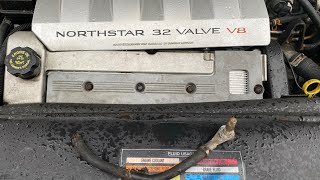
The 1993-1999 Northstar engine uses a unique ignition system with two crankshaft position sensors (CKP A and CKP B) and one camshaft position sensor that feed data to a dedicated Ignition Control Module (ICM). The ICM processes these signals before sending a final engine speed signal to the PCM. This means a P0322 code can be caused not just by the sensors themselves, but also by a failure of the ICM, which is a common point of failure on this platform. The two CKP sensors read a reluctor ring on the crankshaft that has 24 evenly spaced notches and 8 unevenly spaced notches to provide precise position information.
Symptoms You May Notice
- Engine cranks but will not start
- Engine stalls unexpectedly, especially when hot
- Intermittent stalling at idle or low speeds
- Check Engine Light is on
- Lack of power and poor acceleration
- Tachometer may not work or behave erratically
- Hard starting followed by rough running
- Replacing only one of the two crankshaft position sensors.
- Replacing the PCM when the Ignition Control Module is the actual cause of the signal loss.
- Replacing the fuel pump, as the symptoms of a no-start or stall can be similar.
Most Likely Causes
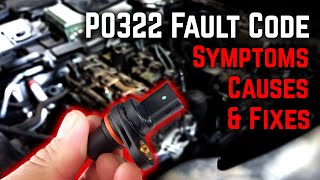
- Failed Crankshaft Position (CKP) Sensor(s) 🔴 High Probability → Shop Engine Crankshaft Position Sensor The Northstar engine has two CKP sensors located in a high-heat area behind the oil filter adapter housing, making them prone to failure over time from heat soak and vibration. Oil leaks from the housing can also contaminate the sensors and their connectors.
How to confirm: Use a scan tool to monitor engine RPM data while cranking. If RPM is 0, the sensors or their circuit are faulty. Test the sensor's resistance and output signal with a multimeter or oscilloscope. Visually inspect for oil contamination on the sensor connectors.
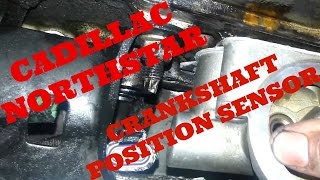
Typical fix: Replace both crankshaft position sensors as a pair. The sensors are often distinguished by connector color (one black, one gray). Access requires removing the oil filter and the oil filter adapter housing. 🎬 Watch: Step-by-step Northstar crankshaft sensor replacement
Est. part cost: $40-$100 for a pair of aftermarket sensors - Failed Ignition Control Module (ICM) 🟡 Medium Probability The ICM processes the signals from the crank and cam sensors before sending them to the PCM. It's a known failure point on this platform, and its failure will cut the signal to the PCM, triggering P0322. The module contains electronics that can fail from heat and age.
How to confirm: If the CKP sensors are confirmed to be sending a signal, but the PCM is not receiving it, the ICM is the likely culprit. This requires testing the input and output signals at the ICM connector with a multimeter or oscilloscope.
Typical fix: Replace the Ignition Control Module. It is typically located on the front of the engine, often integrated with the coil packs.
Est. part cost: $70-$150 - Damaged Wiring or Connectors 🟡 Medium Probability Engine heat can make wiring and plastic connectors brittle over time, leading to cracks, corrosion, or poor connections. The harness to the CKP sensors is particularly vulnerable due to its location near hot engine and exhaust components.
How to confirm: Visually inspect the wiring harnesses for the crankshaft position sensors and the ignition control module. Look for any signs of damage, melting, or corrosion. Perform a continuity test on the signal and ground wires.
Typical fix: Repair or replace the damaged section of the wiring harness or the connector.
Est. part cost: $10-$50 for repair materials
Rare But Worth Checking
- Failed Camshaft Position (CMP) Sensor: While the code points to the engine speed (crankshaft) circuit, a faulty camshaft position sensor can sometimes cause related ignition system issues on the Northstar engine.
- Weak Battery or Charging System Issue: → Shop Vehicle Battery A low battery voltage during cranking can sometimes prevent the sensors from generating a strong enough signal for the PCM to read, triggering the code.
- Failed Powertrain Control Module (PCM): → Shop Engine Control Module (ECM) This is very rare, but the PCM itself can fail. This should only be considered after all other possibilities (sensors, wiring, ICM) have been exhaustively ruled out.
Diagnosis Steps
- Connect an OBD-II scanner and check for any other stored codes.
- Monitor the live data for Engine RPM while cranking the engine. If it reads 0, there is no signal from the crankshaft sensors.
- Visually inspect the wiring and connectors for the crankshaft position sensors (located behind the oil filter housing) and the Ignition Control Module (ICM). Look for any signs of damage, corrosion, or loose connections.
- If the wiring appears okay, test the crankshaft position sensors. You can check their resistance with a multimeter or use an oscilloscope to check for a signal while cranking. The two sensors are often referred to as CKP A and CKP B.
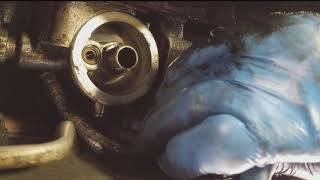
- To access the CKP sensors, you will need to raise the vehicle, remove the oil filter, and then unbolt the oil filter adapter housing (typically two 10mm bolts).
- If the sensors are producing a signal, the next step is to check the input and output signals at the Ignition Control Module to determine if it is faulty.
- If the ICM is receiving a signal from the sensors but not sending one to the PCM, the ICM needs to be replaced.
- If all sensors, wiring, and the ICM are confirmed to be good, the final step would be to diagnose a potential issue with the PCM, though this is highly unlikely.
Parts You'll Likely Need
- Crankshaft Position Sensor
(OEM #ACDelco 213-345)— These sensors are the primary source of the engine speed signal and are a very common failure item due to engine heat. It is highly recommended to replace both at the same time.
Trusted brands: ACDelco, Delphi, Standard Motor Products, Dorman
OEM price range: $50-$80 each
Aftermarket price range: $20-$50 each - Ignition Control Module
(OEM #ACDelco D1998A (replaces GM 19178832))— The ICM is a critical link between the sensors and the PCM on the Northstar engine and is a known point of failure that directly causes a P0322 code.
Trusted brands: ACDelco, Standard Motor Products
OEM price range: $150-$250
Aftermarket price range: $70-$150
Related Codes That Often Appear With This One
- P0300 — A random misfire code can be logged if the engine runs intermittently with an erratic crank signal before it fails completely.
- P0372 — Timing Reference High Resolution Signal A No Pulses. This is a more specific GM code that can accompany P0322, pointing directly to an issue with the crankshaft position sensor circuit.
Platform-Specific Known Issues
- Accessing the two crankshaft position sensors is difficult. They are located behind the oil filter adapter housing, which must be removed. This can be a messy job due to oil spillage. A video guide for a similar Northstar engine shows the process: https://www.youtube.com/watch?v=5z4_jwPSnBw
Mechanic-Grade Diagnostic Values
- Crankshaft Position Sensor (Magnetic/VR Type) AC Voltage Output — expected: ~0.2–2.0 VAC (peak). Failure: No AC voltage signal, or a flat line on an oscilloscope while the engine is cranking, indicates a failed sensor or a problem with the reluctor ring/wiring.
- Sensor Reference Voltage at Connector — expected: 5V or 12V (depending on system). Failure: Voltage below the specified reference (e.g., under 4.5V for a 5V reference) suggests a power supply problem from the PCM or a wiring issue.
Wiring & Ground Locations
- G101 — Located at the left front of the engine, on the lower block.. This is a primary ground point for the Engine Control Module (ECM) and Transmission Control Module (TCM). A poor connection here can cause erratic behavior and fault codes for various sensors, including the crankshaft position sensors. 🎬 Watch: How a bad ground causes a no-start
OEM Part Supersession History
GM 10489422→ACDelco D1998A / GM 19245557— Standard part number update and consolidation over time.
Model Year Variations Within This Range
- 1993-1994: Engines have a knock sensor below the firewall-side cylinder head and feature cast aluminum intake manifolds.
- 1995: Switched to a thermoplastic intake manifold, which changed how the EGR system feeds into the cylinders.
- 1996-1999: Received a new block casting. The knock sensor was relocated to under the intake manifold. The harmonic balancer bolt size was also changed.
- 2000+: The ignition system was significantly changed to a coil-on-plug design, eliminating the ICM and coil packs used in the 1994-1999 models. Parts are not interchangeable.
Diagnostic Flowchart
Other Known Issues on This Vehicle
Issues unrelated to this code that are worth knowing about as an owner of this generation:
- Head Gasket Failure (Pulled Head Bolts) 🔴 High — Very common, typically between 60,000 and 100,000 miles. The issue is not the gasket itself, but the fine-threaded head bolts pulling out of the aluminum block.
- Excessive Oil Consumption 🟠 Medium — Common on pre-2000 models due to carbon buildup on piston rings. Consumption of a quart of oil every 500-1,000 miles is not unusual.
- Rear Main Seal & Other Oil Leaks 🟠 Medium — Widespread issue due to seal design on pre-2000 models. Leaks from the oil pan and valve covers are also common.
- Difficult Starter Motor Replacement 🟠 Medium — The starter motor is located under the intake manifold in the 'V' of the engine, making replacement a labor-intensive job requiring 3-4+ hours.
Used vs. New Parts: Buying Guide for This Vehicle
When a used part is the smart pick: Used parts like the Ignition Control Module (ICM) can be a cost-effective option if sourced from a reputable seller with a warranty. Given the high cost of a new OEM module, a tested used unit from a low-mileage vehicle is a reasonable choice.
Donor-vehicle mileage cap: roughly under 100000 miles for the part to have meaningful remaining life.
What to inspect on the donor part:
- For an ICM, check for any cracks in the housing or corrosion on the electrical pins.
- For wiring harnesses, ensure the plastic connectors are not brittle or cracked and that there are no signs of previous repairs or melted insulation.
- Verify the donor vehicle was not in a front-end collision that could have damaged engine-mounted electronics.
OEM-only on this vehicle (don't cheap out):
- Crankshaft Position Sensors: Due to their critical function and high-heat location, using new, high-quality OEM (ACDelco) or reputable aftermarket sensors is strongly recommended to avoid repeat failures.
Aftermarket brands forum-validated for this vehicle:
- ACDelco (OEM)
- Delphi
- Standard Motor Products (SMP)
- Bosch
Brands owners have reported issues with on this vehicle:
- Generic, unbranded "white-box" sensors sold on auction sites are known for high failure rates and should be avoided for critical components like crankshaft sensors.
Real Owner Stories
Aggregated from forums and TSBs cited above. Mileages and costs reflect what owners reported in those sources.
Cadillac DeVille 4.6L Northstar V8
Symptoms: A user was trying to differentiate between the two crank sensors designated A and B (upper and lower) and understand the function of the 24X/8X reluctor ring they read.
What fixed it: Identification and replacement of the specific failed 24X Crank Sensor (designated A or B).
Source hint: CaddyInfo Cadillac Forum - "24X Crank Sensor"
Related OBD-II Codes
Frequently Asked Questions
Where are the crankshaft position sensors located on my 4.6L Northstar DeVille?
Why does my DeVille stall specifically when the engine is hot?
Can I replace just one crankshaft sensor to fix the P0322 code?
Is it okay to use a used Ignition Control Module (ICM) from a salvage yard?
Should I buy aftermarket crankshaft sensors for my Cadillac?
Could an oil leak be causing my P0322 code?
Helpful Videos
We Have This Part in Stock


The information in this article is provided for general reference and educational purposes only. Vehicle specifications, procedures, and part compatibility can vary by production date, trim level, and region. Always consult your vehicle's factory service manual and verify part numbers before purchasing or performing repairs. Safety-critical components such as airbags, seat belts, and braking systems should be installed by a qualified professional.
- Cadillac DeVille:
- 🧭 Diagnostic Flowchart
- 🎬 Helpful Videos
- 🛍️ Shop This Part
- What's Unique About the 1994-1999 Cadillac DeVille
- Symptoms You May Notice
- Most Likely Causes
- Rare But Worth Checking
- Diagnosis Steps
- Parts You'll Likely Need
- Related Codes That Often Appear With This One
- Platform-Specific Known Issues
- Mechanic-Grade Diagnostic Values
- Wiring & Ground Locations
- OEM Part Supersession History
- Model Year Variations Within This Range
- Other Known Issues on This Vehicle
- Used vs. New Parts: Buying Guide for This Vehicle
- Real Owner Stories
- Cadillac DeVille 4.6L Northstar V8
- Related OBD-II Codes
- Frequently Asked Questions
- 🎟️ Get 5% Off