

P0322 on 2011-2017 Chrysler 200 3.6L: Crank Sensor No-Start Causes and Fixes
On a 2011-2017 Chrysler 200 with the 3.6L V6, code P0322 is almost always caused by a failed crankshaft position sensor. This leads to a 'crank-no-start' condition or sudden stalling, often when the engine is hot. The fix is to replace the sensor with a genuine Mopar part (05149167AF), which costs around $50-$95, as aftermarket sensors are notoriously unreliable for this engine.
- P0322 on your Chrysler 200 3.6L almost certainly means the crankshaft position sensor has failed.
- The most common symptoms are the engine cranking but not starting, or stalling unexpectedly while driving, especially when hot.
- Do not drive the vehicle, as a sudden stall can be dangerous.
- The fix is to replace the sensor, which is located on the lower passenger side of the engine near the transmission.
- It is strongly recommended to use a genuine Mopar part (05149167AF) for this repair, as aftermarket versions are known to be unreliable.
What's Unique About the 2011-2017 Chrysler 200
While P0322 is a generic code, on the 3.6L Pentastar engine it points almost exclusively to the crankshaft position sensor circuit. The sensor is located on the lower passenger side of the engine block near the hot transmission bell housing, and failures due to 'heat soak' are extremely common. This is when the sensor works when cold but fails after a long drive once saturated with heat. Owner and mechanic experiences across multiple Chrysler/Jeep/Dodge platforms with this engine strongly suggest that using a genuine Mopar replacement sensor is crucial, as aftermarket sensors for this application have a well-documented reputation for premature or out-of-the-box failure.
Generation note: The 2011-2017 year range covers two generations of the Chrysler 200: the first (JS; 2011-2014) and the second (UF; 2015-2017). Both generations offered the 3.6L Pentastar V6, and the cause, diagnosis, and repair for code P0322 are consistent across both as the core engine architecture and sensor location are the same.
Symptoms You May Notice
- Engine cranks but does not start
- Engine stalls suddenly while driving, especially when hot, and may restart after cooling down
- Intermittent starting issues, sometimes requiring multiple key cycles
- Check Engine Light is illuminated
- Tachometer needle drops to zero or does not move while cranking
- The engine may run rough or hesitate before stalling
- Replacing the camshaft position sensor. While related, P0322 specifically indicates a loss of the primary engine speed signal from the crankshaft sensor.
- Replacing the fuel pump. A 'crank-no-start' is often blamed on the fuel pump, but a bad CKP sensor will prevent the PCM from commanding the fuel pump and injectors to operate during cranking.
- Replacing the battery or starter. If the engine is cranking over at a normal speed but not starting, the battery and starter are functioning correctly. A no-crank condition is a different issue.
Most Likely Causes
- Faulty Crankshaft Position Sensor (CKP) 🔴 High Probability → Shop Engine Crankshaft Position Sensor The sensor is located in a high-heat area near the transmission bell housing, making it susceptible to failure from thermal stress (heat soak) over many heat cycles. This is a well-documented weak point on the entire 3.6L Pentastar engine family.
How to confirm: Use a scan tool to monitor the 'Engine RPM' PID while cranking. If the RPM reads '0' while the engine is audibly turning over, the CKP sensor is not sending a signal. This is the most definitive test. You can also test for 5V reference, ground, and a fluctuating signal voltage at the sensor connector with a multimeter.
Typical fix: Replace the crankshaft position sensor. It is held in by a single 10mm or E8 external torx bolt. After replacement, a 'Cam/Crank Relearn' procedure with a capable scan tool is recommended to synchronize the new sensor with the PCM.
Est. part cost: $40-$95 for an OEM Mopar part. - Wiring Harness or Connector Issue ⚪ Low Probability The wiring harness runs near hot exhaust and engine components. Over time, the protective loom can become brittle and wires can chafe against brackets or melt from proximity to the exhaust, causing a short or open circuit.
How to confirm: Visually inspect the wiring harness leading to the crankshaft position sensor for any signs of melting, chafing, or corrosion at the connector pins. Perform a continuity test on the signal, ground, and voltage reference wires between the sensor connector and the PCM connector.
Typical fix: Repair the damaged section of the wiring harness using solder and heat-shrink tubing, or replace the connector pigtail if it is damaged. Secure the harness away from heat sources with new clips or zip ties.
Est. part cost: $10-$40 for a new connector pigtail or wiring repair supplies.
Rare But Worth Checking
- Faulty Powertrain Control Module (PCM): → Shop Engine Control Module (ECM) This is extremely rare. Before condemning the PCM, all other possibilities, including the sensor and its entire circuit (wires, connectors, power, and ground), must be exhaustively tested and ruled out. A failed PCM driver for the CKP circuit is a last-resort diagnosis.
Diagnosis Steps
- Connect an OBD-II scanner and confirm P0322 is the active or pending code. Note any other codes, like P0335.
- Access the live data stream on the scanner and monitor the 'Engine RPM' parameter while cranking the engine. If it remains at 0 RPM, the PCM is not receiving a signal from the CKP.
- If the RPM is 0, proceed to inspect the sensor and wiring. Raise and safely support the vehicle on jack stands.
- Locate the crankshaft position sensor on the passenger side (right side) of the engine block, mounted into the block near the transmission bell housing.
- Visually inspect the sensor's connector and the nearby wiring harness for obvious signs of damage, such as melting, chafing against engine components, or oil contamination.
- If the wiring appears intact, disconnect the sensor. With the key in the 'On' position, use a multimeter to check for a 5-volt reference and a good ground at the connector.
- If power and ground are present, the sensor itself is the most likely culprit. Replace the crankshaft position sensor. It is typically secured by a single 10mm or E8 external torx bolt. 🎬 See this step-by-step 3.6L Pentastar crankshaft sensor replacement
- After installing the new sensor, clear the trouble codes with the scan tool. It is also recommended to perform a 'Cam/Crank Relearn' or 'Crankshaft Position Relearn' procedure with a compatible scan tool to ensure the PCM is properly synchronized.
- Start the engine to confirm the repair is successful.
Parts You'll Likely Need
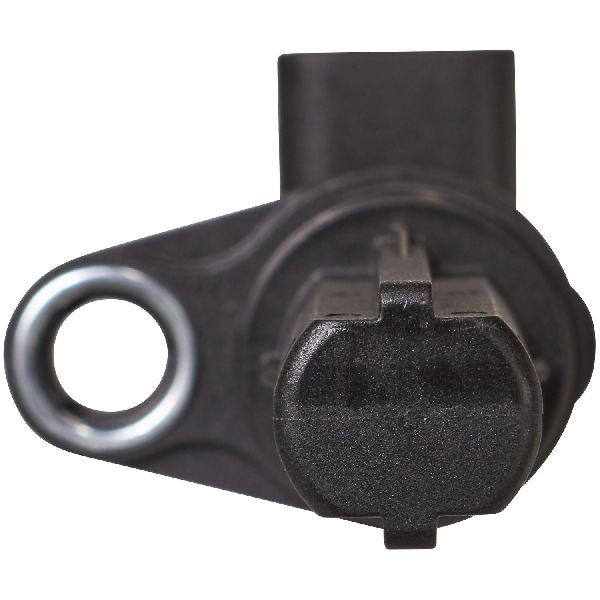
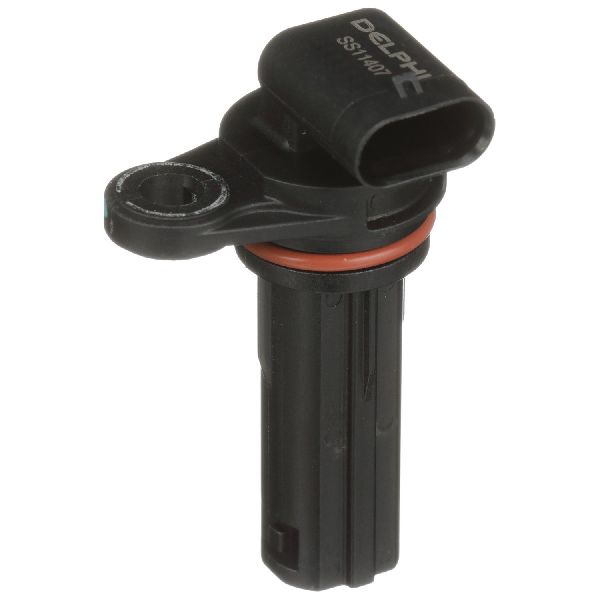
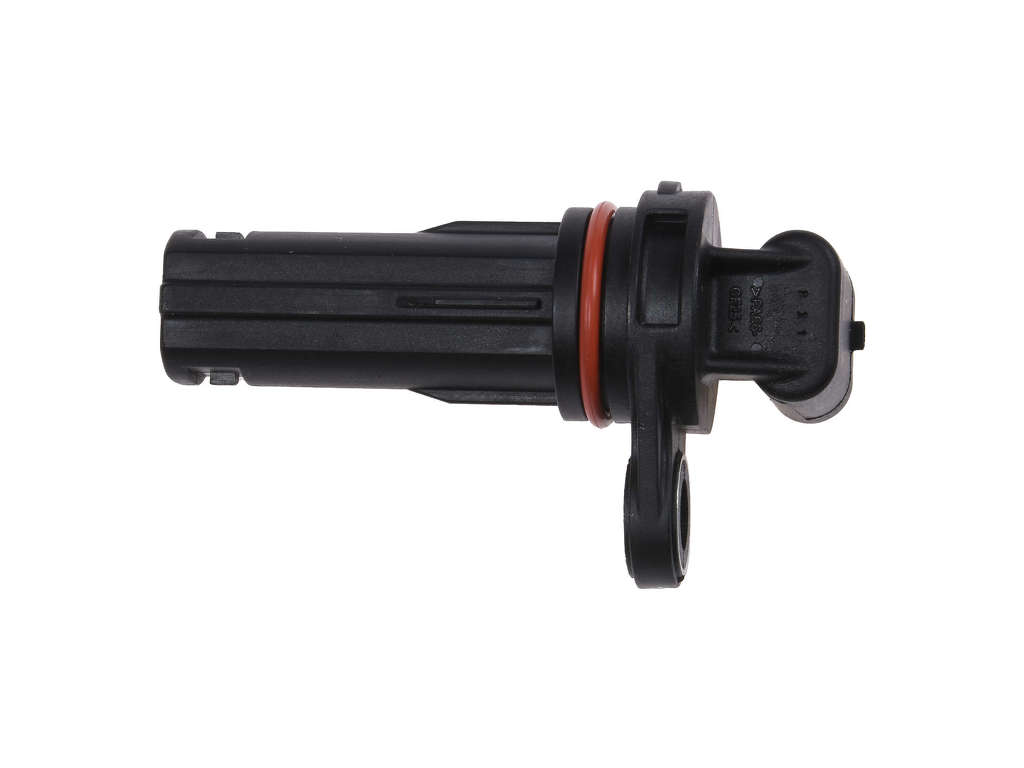
- Engine Crankshaft Position Sensor
(OEM #05149167AF)— This sensor is the primary cause of code P0322 on the 3.6L Pentastar engine, failing from heat exposure and causing a no-start or stalling condition. It has superseded previous part numbers 05149167AD and 05149167AE.
Trusted brands: Mopar
OEM price range: $40-$95
Aftermarket price range: $25-$60
Related Codes That Often Appear With This One
- P0335: Crankshaft Position Sensor 'A' Circuit Malfunction. This is a more general circuit fault code that often accompanies P0322.
Platform-Specific Known Issues
- There is a strong consensus in communities for vehicles with the 3.6L Pentastar engine that aftermarket crankshaft position sensors are unreliable and can fail quickly, sometimes immediately after installation. It is highly recommended to use a genuine OEM Mopar part for this repair to ensure longevity.
- A Reddit user on r/MechanicAdvice shared an experience of replacing a failed sensor on a Chrysler 200 with a Carquest aftermarket part, which worked for one minute and then failed again, highlighting the common issue with non-OEM parts.
Mechanic-Grade Diagnostic Values
- Crankshaft Position Sensor Supply Voltage — expected: 4.5 - 5.2 Volts. Failure: Voltage below 4.5V or above 5.2V indicates a problem with the PCM's 5V reference circuit or a short in the wiring.
- Crankshaft Position Sensor Ground Circuit Resistance — expected: Below 5.0 Ohms. Failure: Resistance higher than 5.0 Ohms indicates an open or high resistance in the ground circuit between the sensor and the PCM.
- Crankshaft Position Sensor Signal Voltage (Key On, Engine Off) — expected: 4.5 - 5.0 Volts. Failure: Voltage outside this range suggests a faulty sensor or a short in the signal wire.
- Crankshaft Position Sensor Signal (Oscilloscope) — expected: A clean square wave pattern that switches between approximately 0V and 5V as the engine is cranked.. Failure: A flat line at 0V or 5V, or a noisy/erratic pattern, confirms a failed sensor or circuit issue.
Scan Tool Commands That Help
- Chrysler wiTECH, Autel, Appcar DiagFCA, or other professional scan tools: Cam/Crank Relearn (also called Crankshaft Position Relearn) — This procedure is recommended after replacing the crankshaft position sensor, camshaft position sensor, or any timing components. It synchronizes the new sensor's signal with the PCM's learned values for optimal timing and performance. The engine coolant temperature must typically be above 158°F (70°C) to perform the routine.
Wiring & Ground Locations
- CKP Sensor Connector (3-Pin) — On the sensor body, located on the lower passenger side of the engine block, near the transmission bell housing.. This is the primary connection point to test for power, ground, and signal. The pins are: Pin 1 (Supply - 5V), Pin 2 (Signal), Pin 3 (Ground).
- PCM Connector C2 (Black) — The Powertrain Control Module (PCM) is located in the engine bay. C2 is one of the main connectors.. This connector contains the other end of the CKP sensor circuit. Pin 86 is the CKP Signal (BR/LB wire), Pin 87 is the 5 Volt Supply (YL/PK wire), and Pin 88 is the CKP Ground (DB/GY wire). This is the location for continuity and short-to-ground tests if a wiring fault is suspected.
- G105 — Right side of the engine compartment.. This is a primary engine compartment ground. A poor connection here can cause a variety of electrical issues, including erratic sensor readings.
- G21a — Left rear of the engine compartment.. Another key ground point in the engine bay. On some Chrysler models, a poor main ground has been known to cause no-start conditions that mimic sensor failures.
Real Owner Repair Stories
- AR15.com forum user (2012 Chrysler 200) — Car would not turn over (no-crank).
❌ Tried (didn't work) Charging and testing the battery (checked good)., Removing and testing the starter (checked good).
✅ What actually fixed it The final resolution was a bad main ground on the vehicle. Cleaning or replacing the main ground strap resolved the no-start issue that presented like a component failure.
OEM Part Supersession History
05149167AD→05149167AE— Standard part revision for improved reliability or manufacturing process change.05149167AE→05149167AF— Final and current revision of the part. Likely incorporates improvements to address heat-related failures.
Heads up: 05149167AF is the currently recommended and sold OEM part for this application.
Model Year Variations Within This Range
- 2011-2013: Early 3.6L Pentastar engines (2011-2013) were more prone to a specific left-bank cylinder head failure, which could cause ticking noises and misfires. While not directly related to P0322, severe engine mechanical issues could potentially cause erratic crankshaft rotation and trigger multiple codes.
- 2015-2017: The second generation Chrysler 200 (UF platform) paired the 3.6L V6 with a 9-speed ZF automatic transmission, whereas the first generation (JS platform) used a Chrysler 6-speed automatic. This does not change the diagnosis for P0322, as the engine and sensor location are the same.
Diagnostic Flowchart
Other Known Issues on This Vehicle
Issues unrelated to this code that are worth knowing about as an owner of this generation:
- Cracked Oil Filter / Cooler Housing Assembly 🔴 High — Extremely common across all 3.6L Pentastar applications. The plastic housing, located in the engine 'V', becomes brittle from heat and can crack, causing major oil and/or coolant leaks. (Ref: TSB 09-003-25 addresses misdiagnosis of leaks but acknowledges the high replacement rate.)
- Rocker Arm / Lifter Failure ('Pentastar Tick') 🔴 High — Common across all model years, particularly 2011-2016 models. Needle bearings in the rocker arms fail, causing a distinct ticking noise. If ignored, it can destroy the camshaft lobes. (Ref: Multiple class-action lawsuits have been filed regarding this issue.)
- ZF 9-Speed Transmission Problems (2015-2017 models) 🔴 High — Widespread issue affecting the second-generation (UF) models. Owners report harsh shifting, lurching, sudden shifts to neutral, and premature failure. (Ref: Multiple software updates and a recall (NHTSA #16V-529) were issued for some vehicles due to unexpected shifts to neutral.)
- Left Cylinder Head Defect (2011-2013 models) 🔴 High — Affected a significant number of early 3.6L Pentastar engines, causing misfires (P0300, P0302, P0304, P0306) due to premature valve guide wear. (Ref: Chrysler issued an extended warranty (X56) and TSB 09-002-14 to address this known problem.)
Used vs. New Parts: Buying Guide for This Vehicle
When a used part is the smart pick: For this specific repair, using a used crankshaft position sensor is NOT recommended. The part is a known failure item due to heat stress, and a used sensor from a junkyard has an unknown history and is likely to fail quickly, if it works at all. The low cost of a new OEM part makes it the only logical choice.
What to inspect on the donor part:
- Not applicable; avoid used sensors for this repair.
OEM-only on this vehicle (don't cheap out):
- Engine Crankshaft Position Sensor
Brands owners have reported issues with on this vehicle:
- General consensus across multiple forums strongly advises against all aftermarket brands for this specific sensor on the 3.6L Pentastar engine. Brands like Duralast, Carquest, and other no-name online parts have been reported to fail out-of-the-box or within minutes/days of installation.
Real Owner Stories
Aggregated from forums and TSBs cited above. Mileages and costs reflect what owners reported in those sources.
2012 Chrysler 200 3.6L Pentastar V6
Symptoms: The owner installed a new Carquest aftermarket crankshaft sensor, but the part failed and stopped working after only one minute of engine operation.
What fixed it: The context suggests avoiding aftermarket parts in favor of a genuine OEM Mopar sensor to resolve the failure.
Source hint: r/MechanicAdvice on Reddit
2011-2017 Chrysler 200 3.6L Pentastar V6
Symptoms: Persistent P0322 code and reliability issues after attempting repairs with three different aftermarket sensors.
What fixed it: Switching to a genuine Mopar sensor finally resolved the persistent code.
Source hint: DodgeForum.com
2011-2017 Chrysler 200 3.6L Pentastar V6
Symptoms: Sudden stalling and no-start conditions.
What fixed it: Replacement of the crankshaft position sensor.
Source hint: 200forums.com
Related OBD-II Codes
Frequently Asked Questions
Why did my Chrysler 200 stall while driving and then restart after it cooled down?
Can I use an aftermarket sensor from a local parts store to fix P0322 on my 2012 Chrysler 200?
Is there a specific procedure I need to perform after replacing the CKP sensor on my 3.6L Pentastar?
My 2013 Chrysler 200 has a P0322 code and a ticking sound from the engine; are they related?
Does the 2015-2017 Chrysler 200 have any other major issues I should watch for while fixing this code?
Where is the crankshaft position sensor located on the Chrysler 200 3.6L?
Helpful Videos
We Have This Part in Stock


The information in this article is provided for general reference and educational purposes only. Vehicle specifications, procedures, and part compatibility can vary by production date, trim level, and region. Always consult your vehicle's factory service manual and verify part numbers before purchasing or performing repairs. Safety-critical components such as airbags, seat belts, and braking systems should be installed by a qualified professional.
- Chrysler 200:
- 🧭 Diagnostic Flowchart
- 🎬 Helpful Videos
- 🛍️ Shop This Part
- What's Unique About the 2011-2017 Chrysler 200
- Symptoms You May Notice
- Most Likely Causes
- Rare But Worth Checking
- Diagnosis Steps
- Parts You'll Likely Need
- Related Codes That Often Appear With This One
- Platform-Specific Known Issues
- Mechanic-Grade Diagnostic Values
- Scan Tool Commands That Help
- Wiring & Ground Locations
- Real Owner Repair Stories
- OEM Part Supersession History
- Model Year Variations Within This Range
- Other Known Issues on This Vehicle
- Used vs. New Parts: Buying Guide for This Vehicle
- Real Owner Stories
- 2012 Chrysler 200 3.6L Pentastar V6
- 2011-2017 Chrysler 200 3.6L Pentastar V6
- 2011-2017 Chrysler 200 3.6L Pentastar V6
- Related OBD-II Codes
- Frequently Asked Questions
- 🎟️ Get 5% Off