

P0322 on 2005-2011 Ford Focus 2.0L: Crank-No-Start Causes and Fixes
On a 2005-2011 Ford Focus with the 2.0L engine, code P0322 almost always means the crankshaft position sensor (CKP) has failed. This causes the engine to crank but not start, or stall suddenly while driving. The sensor is a relatively inexpensive part (~$25-$75) and can be replaced by a DIYer with moderate skill in about an hour. The most common fix is replacing the sensor (Motorcraft DY-888).
- P0322 on a 2005-2011 Focus means the engine computer has lost the signal from the crankshaft position sensor.
- The most common symptoms are a crank-no-start condition or sudden engine stalling, often when hot.
- The most likely fix is replacing the crankshaft position sensor (Motorcraft DY-888).
- Do not drive the vehicle, as sudden stalling is a major safety hazard.
- Use the plastic alignment tool that comes with the new sensor to ensure the correct air gap.
- Before replacing parts, check battery health and look for corrosion at main power junctions, as this can mimic sensor failure.
What's Unique About the 2005-2011 Ford Focus
For this generation of Ford Focus with the 2.0L Duratec engine, the P0322 code is a very common pointer to a failed crankshaft position sensor. While wiring or computer issues are possible, the sensor itself is the most frequent point of failure. Owners often experience a sudden crank-no-start or an engine stall with little warning. This is frequently caused by heat-soak, where the sensor's internal electronics develop a fault when hot, causing it to stop sending a signal. After the engine cools down, the sensor may function normally again, leading to an intermittent stalling problem that can be difficult to diagnose until the sensor fails completely.
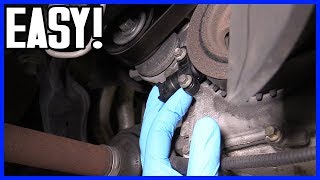
Generation note: This guide covers the second North American generation of the Ford Focus, which includes the pre-facelift Mk2 (2005-2007) 🎬 See how to replace the sensor on 2000-2007 models and the facelifted Mk2.5 (2008-2011). The 2.0L Duratec engine, which is a Mazda MZR-family design, and the location and function of the crankshaft position sensor are consistent across this entire year range.
Symptoms You May Notice
- Engine cranks but will not start.
- Engine stalls unexpectedly, sometimes only after it has warmed up.
- Sudden engine shutdown while driving.
- Tachometer needle does not move or reads 0 RPM while the engine is cranking.
- Check Engine Light is illuminated on the dashboard.
- Rough idling or engine hesitation before stalling.
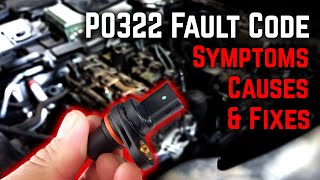
- Replacing the camshaft position sensor(s). P0322 specifically points to the engine speed input, 🎬 Watch this quick video explaining the P0322 code which is the crankshaft sensor, not the camshaft sensors.
- Replacing the fuel pump because of the crank-no-start symptom.
- Replacing ignition coils or spark plugs. While these can cause misfires, they will not cause a 'no signal' code from the crank sensor.
Most Likely Causes
- Failed Crankshaft Position Sensor (CKP) 🔴 High Probability → Shop Engine Crankshaft Position Sensor The sensor is exposed to significant heat and vibration at the front of the engine block. Over time, this can cause the internal windings or electronic components to crack or fail, especially when hot.
How to confirm: Watch the tachometer during cranking; if it stays at zero, the CKP signal is likely missing. A scan tool showing 0 RPM during crank confirms this. Given the high failure rate and low cost, direct replacement is the most common diagnostic step after a visual wiring check.
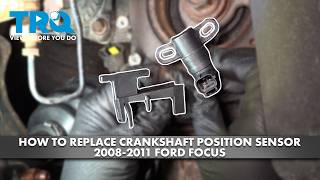
Typical fix: Replace the crankshaft position sensor. This involves accessing it from the passenger side wheel well. The sensor is held by two 8mm bolts. 🎬 Watch this step-by-step replacement guide for 2008-2011 models
Est. part cost: $25-$75 - Damaged Wiring or Connector 🟡 Medium Probability The wiring harness leading to the sensor can become brittle from heat cycles or damaged by road debris, causing an open or short in the circuit. The connector itself can also corrode or fail.
How to confirm: Visually inspect the wiring harness from the sensor back as far as possible for cracks, melting, or breaks. Check the electrical connector for corrosion, bent pins, or a loose fit. Wiggle the harness while the engine is running (if possible) to see if it causes a stall.
Typical fix: Repair the damaged section of wire or replace the connector pigtail. The Motorcraft connector is WPT-231.
Est. part cost: $15-$30
Rare But Worth Checking
- Weak Battery or Charging System Issue: → Shop Vehicle Battery A very low battery voltage during cranking can sometimes prevent the sensor from generating a strong enough signal for the PCM to read, triggering a P0322 code. Corrosion at the battery terminals or the high-voltage junction box can also cause intermittent electrical issues that may manifest as a P0322 code.
- Failed Powertrain Control Module (PCM): → Shop Engine Control Module (ECM) This is the least likely cause. The PCM itself can fail, but the sensor and wiring should be exhaustively ruled out before considering PCM replacement, which is expensive.
Diagnosis Steps
- Connect an OBD-II scanner to confirm P0322 is the only code present. Note any other codes.
- Watch the tachometer on the instrument cluster while cranking the engine. If it does not move at all, this strongly indicates a lack of signal from the CKP sensor.
- If you have a scan tool with live data, monitor the 'Engine RPM' PID while cranking. It should read several hundred RPM; if it reads 0, the PCM is not seeing a signal.
- Safely raise and support the front of the vehicle. Remove the front passenger side wheel and the plastic splash shield to access the front of the engine.
- Locate the crankshaft position sensor. On the 2.0L Duratec, it is mounted on the engine block, next to the main crankshaft pulley (harmonic balancer), held by two 8mm bolts.
- Visually inspect the sensor's electrical connector and wiring for obvious damage, corrosion, melting, or loose connections.
- If the wiring appears intact, the most probable cause is a failed sensor. Replacement is the most common and effective fix.
- When replacing, use the plastic alignment jig that comes with the new sensor to set the correct air gap. Torque the new sensor's 8mm bolts to 7 Nm (62 in-lbs).
- After replacement, clear the code with a scan tool. The car should now start and run correctly.
Parts You'll Likely Need
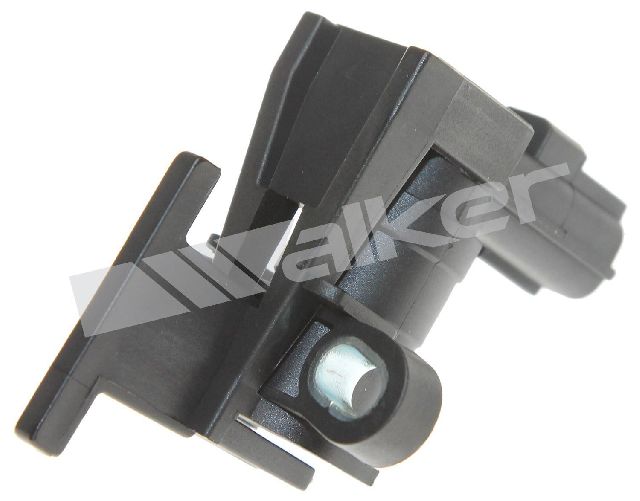
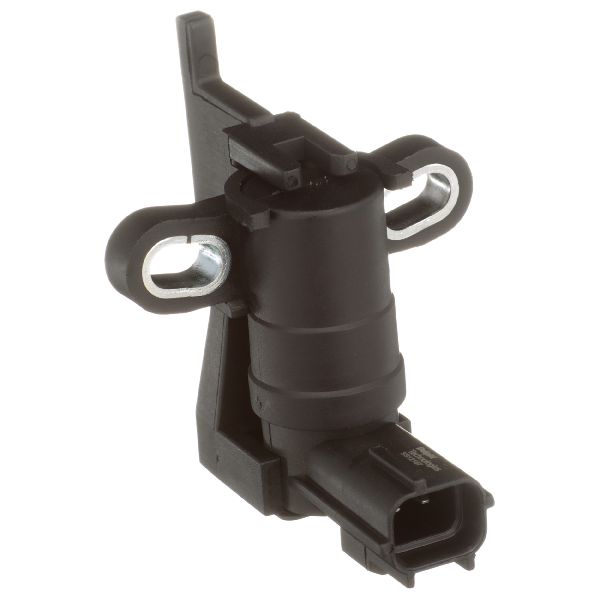
- Crankshaft Position Sensor
(OEM #1S7Z-6C315-AA (Ford Part Number), DY-888 (Motorcraft Service Number))— This sensor is the primary source of the engine speed signal and is the most common failure point for code P0322 on this vehicle.
Trusted brands: Motorcraft, NTK, Delphi, Bosch
OEM price range: $50-$75
Aftermarket price range: $25-$50
Platform-Specific Known Issues
- The replacement procedure for this sensor requires a special plastic alignment tool/jig that should come packaged with the new sensor. This tool is critical for setting the correct air gap between the sensor's tip and the teeth of the reluctor wheel on the crankshaft pulley. Failure to use it can result in an improper signal, causing the P0322 code to persist, poor running, or a no-start condition even with a new part.
Technical Service Bulletins (TSBs) & Recalls
- TSB Bulletin #TSB18-2062 — A manufacturer service bulletin notes that the engine may run rough, experience a crank no-start, loss of power, or loss of engine RPM with an illuminated MIL and code P0322. The bulletin outlines specific service procedures to correct these electrical system symptoms.
Mechanic-Grade Diagnostic Values
- Crankshaft Position Sensor (CKP) Resistance — expected: 985 to 1,600 Ω when cold (14 to 122°F), or 1,265 to 1,890 Ω when hot (122 to 212°F).. Failure: An open circuit (infinite resistance) or a value significantly outside the expected range indicates a failed sensor.
- Crankshaft Position Sensor (CKP) AC Voltage Output (for Variable Reluctance type sensors) — expected: A fluctuating AC voltage between 0.5V and 1.0V while cranking the engine.. Failure: A reading of 0V AC while cranking indicates the sensor is not generating a signal and has likely failed.
- CKP Sensor Supply Voltage (at connector, Key On Engine Off) — expected: Approximately 5.0 Volts on the reference wire from the PCM.. Failure: Voltage below 4.5V or 0V points to a problem with the PCM's 5V reference circuit or a short in the harness.
Scan Tool Commands That Help
- Ford IDS, FORScan, or equivalent professional scanner: Misfire Monitor Neutral Profile Correction — This procedure may be required after replacing the crankshaft position sensor or PCM. It allows the PCM to learn the mechanical variations of the crankshaft reluctor wheel to accurately detect misfires. Failure to perform this relearn can prevent the misfire monitor from running correctly and may lead to other issues or codes like P0315.
Wiring & Ground Locations
- CKP Sensor Connector — On the front of the engine block, near the main crankshaft pulley, passenger side.. This is the primary connection point for testing. It has three pins: a 5V reference from the PCM, a ground, and the signal wire that sends the engine speed data back to the PCM. Verifying power and ground here is the first step before condemning the sensor.
- High Voltage Junction Box (HVJB) — On or next to the battery in the engine bay.. Corrosion on the main terminals or internal fuses of this box can cause intermittent voltage drops throughout the vehicle's electrical system. This can lead to a P0322 code by starving the CKP sensor or PCM of stable voltage, even if the sensor and its direct wiring are perfectly fine.
Real Owner Repair Stories
- Reddit user on r/FocusST (Ford Focus ST (demonstrates a similar electrical system architecture)) — Persistent P0322 code and rough running.
❌ Tried (didn't work) Replacing the crankshaft position sensor., Checking the camshaft position sensor.
✅ What actually fixed it The root cause was corrosion in the High Voltage Junction Box (HVJB) caused by a failing battery. The fix involved replacing the battery, cleaning the HVJB corrosion, replacing the main MIDI bar fuses, and replacing the positive battery terminal end. - Owner Report (NHTSA ODI #11021038) — While reported on a similar Ford platform (Escape), an owner described a breakdown where the vehicle made a "torquing sound" and the dealer computer confirmed code P0322-PCM, indicating the PCM detected an error in the engine speed input circuit.
When the Usual Fixes Don't Work
- While the crankshaft position sensor is the cause in over 90% of cases for this vehicle, a notable exception involves the main power distribution system. In one documented case, a persistent P0322 that was not fixed by a new sensor was ultimately traced to corrosion at the High Voltage Junction Box near the battery. This caused intermittent voltage drops that prevented the sensor and PCM from communicating correctly. This highlights the need to confirm battery health and inspect main power and ground connections before replacing the PCM if a new sensor doesn't solve the issue.
OEM Part Supersession History
1S7Z-6C315-BA→1S7Z-6C315-AA— Standard part revision and improvement by the manufacturer.
Heads up: The newer part number (1S7Z-6C315-AA) is the correct and current replacement for all specified model years. The associated Motorcraft service number is DY-888.
Diagnostic Flowchart
Other Known Issues on This Vehicle
Issues unrelated to this code that are worth knowing about as an owner of this generation:
- Intake Manifold Runner Control (IMRC) Failure 🟠 Medium — Very common. The control solenoid pack fails due to heat/vibration, causing a P2008 code, poor low-end power, and sometimes a rattling noise if the internal flaps are worn.
- Cracked Plastic Thermostat Housing 🔴 High — Common at higher mileage. The plastic housing can become brittle and crack, causing a significant coolant leak.
- Passenger-Side Hydraulic Engine Mount Collapse 🟠 Medium — Extremely common. The fluid-filled mount fails, leading to excessive engine vibration felt in the cabin, especially at idle and under acceleration.
- Leaking Valve Cover Gasket 🟡 Low — Common. The gasket seals for the spark plug tubes fail, allowing oil to fill the wells, which can cause misfires and damage to the ignition coils.
- Alternator Failure 🟠 Medium — A frequent failure item after 80,000-120,000 miles. Symptoms include a battery light, dimming headlights, and eventual no-start condition as the battery drains.
Used vs. New Parts: Buying Guide for This Vehicle
When a used part is the smart pick: For this specific repair, sourcing a used electronic sensor is NOT recommended due to its low cost when new and its high failure rate from heat and vibration. However, obtaining related hardware like a splash shield, mounting bolts, or a connector pigtail from a salvage yard is a perfectly acceptable way to save money.
Donor-vehicle mileage cap: roughly under 150000 miles for the part to have meaningful remaining life.
What to inspect on the donor part:
- For a connector pigtail, ensure the wiring is flexible with no signs of cracking, melting, or previous repairs.
- Check that the locking tab on the connector is intact and clicks securely.
- For a splash shield, ensure it is not cracked or missing mounting tabs.
OEM-only on this vehicle (don't cheap out):
- Crankshaft Position Sensor - While not strictly 'OEM-only', using the Ford/Motorcraft part (DY-888) is highly recommended. Forum and mechanic consensus suggests that cheap, unbranded aftermarket sensors have a significantly higher rate of premature failure or out-of-the-box issues for this application.
Aftermarket brands forum-validated for this vehicle:
- Bosch
- NTK
- Delphi
Brands owners have reported issues with on this vehicle:
- Unbranded, 'white-box' parts from online marketplaces are frequently cited as unreliable for this specific sensor.
Real Owner Stories
Aggregated from forums and TSBs cited above. Mileages and costs reflect what owners reported in those sources.
2005-2011 Ford Focus 2.0L Duratec
Symptoms: Classic P0322 symptoms including crank-no-start or sudden stalling, often related to heat.
What fixed it: Replacing the crankshaft position sensor.
Source hint: Focus Fanatics Forum - Multiple threads on P0322
Ford Focus ST
Symptoms: Persistent P0322 code even after replacing the crankshaft position sensor.
What fixed it: Repairing corrosion at the High Voltage Junction Box (HVJB) caused by a bad battery.
Source hint: Reddit (r/FocusST) - P0322 New Crank Sensor Cam Sensor checks out
Related OBD-II Codes
Frequently Asked Questions
Why does my 2.0L Duratec stall only after the engine has warmed up?
Do I need any special tools to replace the CKP sensor on my 2005-2011 Focus?
Can I use a used sensor from a salvage yard to fix P0322?
What is the specific replacement connector part number for the Focus CKP sensor?
Is there a specific torque spec for the sensor bolts on the 2.0L Duratec?
My tachometer stays at 0 RPM while cranking; does this confirm a P0322 issue?
Helpful Videos

We Have This Part in Stock


The information in this article is provided for general reference and educational purposes only. Vehicle specifications, procedures, and part compatibility can vary by production date, trim level, and region. Always consult your vehicle's factory service manual and verify part numbers before purchasing or performing repairs. Safety-critical components such as airbags, seat belts, and braking systems should be installed by a qualified professional.
- Ford Focus:
- 🧭 Diagnostic Flowchart
- 🎬 Helpful Videos
- 🛍️ Shop This Part
- What's Unique About the 2005-2011 Ford Focus
- Symptoms You May Notice
- Most Likely Causes
- Rare But Worth Checking
- Diagnosis Steps
- Parts You'll Likely Need
- Platform-Specific Known Issues
- Technical Service Bulletins (TSBs) & Recalls
- Mechanic-Grade Diagnostic Values
- Scan Tool Commands That Help
- Wiring & Ground Locations
- Real Owner Repair Stories
- When the Usual Fixes Don't Work
- OEM Part Supersession History
- Other Known Issues on This Vehicle
- Used vs. New Parts: Buying Guide for This Vehicle
- Real Owner Stories
- 2005-2011 Ford Focus 2.0L Duratec
- Ford Focus ST
- Related OBD-II Codes
- Frequently Asked Questions
- 🎟️ Get 5% Off