

P0322 on 2001-2012 Ford Ranger 2.3L: Crank-No-Start Causes and Fixes
On a 2001-2012 Ford Ranger with the 2.3L Duratec engine, code P0322 almost always means the crankshaft position sensor (CKP) has failed, causing a crank-no-start or stalling condition. The fix is replacing the sensor, which requires a special plastic alignment tool to be used with the engine at Top Dead Center (TDC). The part costs around $30-$60.
- P0322 on a 2.3L Ranger means the engine computer sees no signal from the crankshaft position sensor, which will prevent the engine from running.
- The most likely cause is a failed crankshaft position sensor, with wiring issues being the second most common culprit.
- Do not drive the vehicle, as it can stall at any time, creating a serious safety hazard.
- Replacement is more complex than on many other vehicles; it requires setting the engine to TDC and using a special alignment tool that comes with the new sensor.
- Always check the wiring and connector for damage before replacing the sensor.
What's Unique About the 2001-2012 Ford Ranger
For the 2.3L Duratec engine in this generation of Ford Ranger, the P0322 code is a common indicator of a failed crankshaft position sensor. Unlike some vehicles where the sensor is a simple bolt-on part, replacing it on the 2.3L Duratec is more involved. The procedure requires setting the engine to Top Dead Center (TDC) for cylinder #1 and using a specific plastic alignment tool to correctly position the new sensor. This tool, which typically comes with a new OEM or quality aftermarket sensor kit, has a notch that slides over a specific tooth on the crankshaft pulley's reluctor wheel to ensure the sensor's magnetic tip is perfectly aligned. Failure to use this tool will result in incorrect timing, leading to a no-start condition or poor performance even with a new sensor.
Symptoms You May Notice
- Engine cranks but will not start
- Engine stalls unexpectedly, sometimes when it gets hot
- Tachometer reads zero or behaves erratically while cranking or running
- Rough idling or misfiring
- Noticeable loss of engine power
- Check Engine Light is on
- Replacing the camshaft position sensor (CMP) instead of the crankshaft position sensor (CKP). While both are position sensors, P0322 specifically points to the engine speed input, which is the primary role of the CKP sensor.
- Replacing ignition coils or fuel pump without first verifying the presence of a CKP signal, as a missing signal will disable both spark and fuel injection.
- Assuming a new sensor is good without proper alignment. On the 2.3L Duratec, the alignment procedure is critical; installing a new sensor without the tool will cause the same symptoms to persist.
Most Likely Causes
- Failed Crankshaft Position Sensor (CKP) 🔴 High Probability → Shop Engine Crankshaft Position Sensor The sensor is an electronic component exposed to significant heat and vibration at the front of the engine, making it a common failure point over time. Oil leaks from the front crankshaft seal can also contaminate the sensor and its wiring, accelerating failure.
How to confirm: Perform a 'no-start' diagnosis. Check for spark and fuel injector pulse while cranking. A lack of both often points to a missing CKP signal. The sensor's resistance can be tested with a multimeter (a good sensor typically reads between 390-400 ohms), but a failed sensor may also read open or shorted. An oscilloscope provides the most definitive test by visualizing the square wave signal during cranking; a flat line indicates no signal.
Typical fix: Replace the crankshaft position sensor and perform the required alignment procedure using the special tool.
Est. part cost: $25-$60 - Damaged Wiring or Connector 🟡 Medium Probability The sensor's wiring harness is located at the front of the engine and can be susceptible to damage from heat, oil leaks, or physical abrasion over time. The harness can chafe against the engine block or other components. A common point of failure is the degradation of the wire's insulation near the foil shield, causing the signal to leak to ground.
How to confirm: Visually inspect the wiring harness leading to the CKP sensor for any signs of cracking, fraying, melting, or corrosion. Check the electrical connector for bent, loose, or corroded pins. Wiggle the harness while the engine is running (if possible) to see if it induces a stall. With the PCM disconnected, check for continuity on both signal wires and ensure they are not shorted to each other or to ground.
Typical fix: Repair the damaged section of the wire or replace the connector pigtail. Ensure the connection is clean and secure. Use heat-shrink tubing to protect the repair.
Est. part cost: $10-$30
Rare But Worth Checking
- Faulty Powertrain Control Module (PCM): → Shop Engine Control Module (ECM) This is very rare and should only be considered after the sensor and wiring have been definitively ruled out as the cause.
- Weak Battery or Charging System Issue: → Shop Vehicle Battery A very low battery voltage during cranking can sometimes cause the PCM to fail to receive a clear signal from the sensor, triggering the code. This is less common than a failed sensor but is easy to check first.
- Damaged Reluctor Wheel/Tone Ring: Though uncommon, if the engine has had major front-end service (like a timing chain replacement), it's possible for the toothed reluctor wheel on the crankshaft pulley to be damaged, bent, or have debris lodged in it, preventing the CKP from getting a clean reading. The wheel has 35 teeth with one gap.
Diagnosis Steps
- Scan for any other stored trouble codes to see if other issues are present.
- Visually inspect the crankshaft position sensor and its electrical connector, located at the front of the engine near the main pulley. Look for loose connections, corrosion, or obvious damage to the wiring.
- If a no-start condition is present, check for spark at the spark plugs and for an injector pulse using a noid light. The absence of both strongly suggests a failed CKP sensor.
- If tools are available, use a multimeter to check for proper voltage and ground at the sensor connector according to the vehicle's service manual. Check the sensor's internal resistance; a reading between 390-400 ohms is typical for a good sensor. A reading of 250-1100 ohms may also be acceptable depending on the specific part.
- Using an oscilloscope is the most definitive way to test the sensor's output signal while cranking the engine. A flat line indicates no signal.
- If the sensor and wiring test good, check the vehicle's battery and charging system to ensure proper voltage.
- If the sensor is confirmed to be faulty, replace it using the mandatory alignment procedure.
Parts You'll Likely Need
- Crankshaft Position Sensor Kit
(OEM #1S7Z-6C315-AAA)— This is the most common failure for a P0322 code. The OEM kit includes the sensor and the critical alignment tool needed for proper installation on the 2.3L Duratec engine. This part number supersedes 1S7Z-6C315-BA.
Trusted brands: Motorcraft, Delphi, NGK/NTK, Bosch
OEM price range: $35-$65
Aftermarket price range: $25-$55 - Crankshaft Position Sensor (Sensor Only)
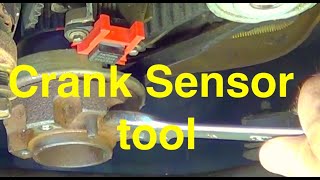
(OEM #1L5Z-6C315-AA)— This is the sensor itself, which may be sold without the alignment tool. It is crucial to ensure you have the tool for proper installation. 🎬 See how to use the crank sensor alignment tool Buying the kit (1S7Z-6C315-AAA) is strongly recommended to guarantee you have the necessary tool.
Trusted brands: Motorcraft, Standard Motor Products (SMP), Walker Products
OEM price range: $25-$40
Aftermarket price range: $20-$45
Related Codes That Often Appear With This One
- P0335 — P0335 is a generic code for 'Crankshaft Position Sensor A Circuit Malfunction.' P0322 is a more specific version indicating a complete loss of that signal. They often point to the same root cause.
Technical Service Bulletins (TSBs) & Recalls
- TSB 18-2062: While not specific to the Ranger 2.3L, this TSB addresses wiring harness chafing on other Ford models (like the Focus with a similar engine) that can cause P0322 and other codes, highlighting the possibility of a wiring fault. It instructs technicians to inspect the harness for chafing, particularly near ground G103, and repair damaged circuits. This bulletin notes that the condition can lead to the engine running rough, a crank no-start, or a loss of engine RPM.
Platform-Specific Known Issues
- Critical Need for Alignment Tool: The mounting holes for the CKP sensor are oblong, allowing for adjustment. The plastic alignment tool that comes with a new sensor is not just a guide; it is mandatory. It indexes the sensor against a specific tooth on the crankshaft pulley when the engine is at TDC, ensuring correct ignition and fuel timing. A video by 'FordTechMakuloco' on YouTube, while for a different engine, explains the concept well, and a video by '1A Auto Parts' shows the Ranger-specific process clearly. 🎬 Watch: How to replace the crankshaft position sensor
Mechanic-Grade Diagnostic Values
- Crankshaft Position Sensor (CKP) Internal Resistance — expected: 390 - 400 Ohms is a common reading for a good sensor. Some sources suggest a wider acceptable range of 250 - 1,100 Ohms.. Failure: A reading of 0 Ohms (short circuit) or infinite/OL (open circuit). Note that a sensor can still be bad even if it tests within spec, especially with heat-related intermittent failures.
- CKP Sensor AC Voltage Output (while cranking) — expected: 0.5 - 0.7 VAC. This test is performed by setting a multimeter to AC Volts and connecting the probes to the two sensor wires.. Failure: No AC voltage or a significantly lower voltage while the engine is cranking indicates a dead sensor.
- CKP Sensor Connector Voltage (Key On, Engine Off) — expected: According to a Ford workshop manual, both wires to ground should read between 1-3 volts. This is because the PCM sends a bias voltage on the signal lines.. Failure: 0 volts or a steady 5 volts on either wire could indicate a wiring problem or a faulty PCM driver.
Scan Tool Commands That Help
- Ford IDS / High-End Scanner: Cam/Crank Relearn — While a specific relearn is not typically required for just a CKP sensor swap on this platform, it is a function used after major timing component replacement (timing chain, phasers). Running this can help the PCM quickly adapt, but it is not the cause or fix for a P0322 code from a simple sensor failure. Some forum users have questioned if a relearn is needed, but others confirm swapping the sensor (with correct alignment) is all that's required.
Wiring & Ground Locations
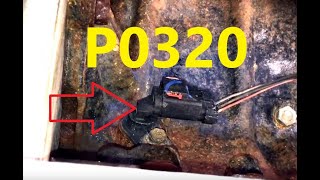
- CKP Sensor Connector — At the front of the engine, passenger side, near the main crankshaft pulley.. This is the primary connection point. Pins can become corroded or loose, and the wiring pigtail is exposed to heat and oil, making it a common failure point.
- G100 — On the lower left-hand (driver's side) front of the engine compartment, below the battery.. This is a major chassis and engine ground. A poor connection here can cause numerous, hard-to-diagnose electrical issues, including faulty sensor readings.
- G101 — On the left-hand (driver's side) of the upper radiator support.. Another critical engine bay ground point. The PCM and its sensors rely on clean ground paths to function correctly.
- G104 — On the lower left-hand (driver's side) front of the engine compartment, on the frame rail.. This frame ground is essential for the overall vehicle electrical system. Verifying it is clean and tight is a fundamental step in diagnosing any electrical fault code.
Real Owner Repair Stories
- Reddit user in r/fordranger (2010 Ford Ranger 2.3L Duratec) — No spark, crank-no-start condition.
❌ Tried (didn't work) Initial assumption was a bad CKP sensor.
✅ What actually fixed it Testing the wiring revealed the issue. The vinyl insulation on the CKP sensor harness wires had cracked, allowing the signal to short against the bare metal foil shield inside the harness. Repairing the wiring restored the signal and fixed the no-start problem. The PCM was not faulty. - NHTSA ODI #11021038 — An owner of a similar Ford model reported a loud torquing sound before the vehicle broke down; a dealer scan confirmed the P0322 code was stored in the PCM.
OEM Part Supersession History
1S7Z-6C315-BA→1S7Z-6C315-AAA— Standard part number update and revision by Ford.
Heads up: The parts are interchangeable. 1S7Z-6C315-AAA is the current OEM part number for the sensor kit.
Model Year Variations Within This Range
- 2001-2003: These early 2.3L Duratec engines were equipped with an electric thermostat and an Intake Manifold Runner Control (IMRC) system. These components were removed for the 2004 model year.
- 2004-2012: These engines have a simpler design without the electric thermostat and IMRC. They also received slightly different intake/exhaust camshafts and revised ECU programming. While these changes affect other aspects of the engine, the CKP sensor part number and replacement procedure for P0322 remain consistent across the entire 2001-2012 range.
- 2007-2012: The OBD-II communication protocol changed to CAN (Controller Area Network) starting in 2007. This does not change the physical repair for P0322 but affects the type of scan tool needed for more advanced diagnostics.
Diagnostic Flowchart
Other Known Issues on This Vehicle
Issues unrelated to this code that are worth knowing about as an owner of this generation:
- Intake Manifold Runner Control (IMRC) Failure 🟠 Medium — Common on 2001-2003 models; the system was removed for 2004+. Failure often involves a broken plastic actuator linkage or vacuum leaks, causing rough idle, power loss, and codes like P2004.
- Cracked Plastic Thermostat Housing 🟠 Medium — The plastic thermostat housing is prone to developing cracks or leaking at the seal over time, leading to coolant loss and potential overheating. Aftermarket metal housings are a popular and durable upgrade.
- Timing Chain Tensioner Wear 🟠 Medium → Shop Engine Timing Chain — While more reliable than the 4.0L V6, the 2.3L Duratec's timing chain tensioner can wear out at higher mileage (typically over 100k miles), causing a rattling noise from the front of the engine, especially on startup. If ignored, it can lead to jumped timing.
- Difficult-to-Access PCV Valve 🟡 Low — The PCV valve is located under the intake manifold and is very difficult to access, leading to it being neglected. A stuck valve or cracked hose can cause oil consumption, vacuum leaks, and rough running.
- Heated Thermostat (2001-2003 models) 🟡 Low — Early 2.3L Duratec models used an electrically heated thermostat. The heating element can fail, or owners may replace it with a non-heated version, which can set a check engine light if the connector is left unplugged.
Used vs. New Parts: Buying Guide for This Vehicle
When a used part is the smart pick: For this specific repair, buying a used crankshaft position sensor is NOT recommended. It is a relatively low-cost electronic part that is a common failure item due to heat and vibration. The labor involved in replacement, especially the alignment procedure, is significant enough that installing a used part with an unknown lifespan is a poor risk.
What to inspect on the donor part:
- Not applicable as a used sensor is not advised.
OEM-only on this vehicle (don't cheap out):
- While not strictly 'OEM-only', using the Motorcraft (OEM) sensor kit (1S7Z-6C315-AAA) is highly recommended. It guarantees you receive the mandatory plastic alignment tool and a sensor with proven reliability.
Aftermarket brands forum-validated for this vehicle:
- NGK/NTK
- Delphi
- Bosch
- Standard Motor Products (SMP) / Blue Streak
Brands owners have reported issues with on this vehicle:
- Ultra-cheap, unbranded sensors from online marketplaces like Amazon or eBay are frequently reported to be dead-on-arrival or fail prematurely, forcing you to repeat the labor-intensive repair.
Real Owner Stories
Aggregated from forums and TSBs cited above. Mileages and costs reflect what owners reported in those sources.
2001-2011 Ford Ranger 2.3L L4
Symptoms: Engine cranks but will not start; lack of spark and fuel injector pulse.
What fixed it: Replacement of the crankshaft position sensor using a step-by-step guide to set the engine to TDC and using the alignment tool correctly.
Source hint: YouTube.com - 'How to Replace Crankshaft Position Sensor 1998-2011 Ford Ranger 2.3L L4' by '1A Auto Parts'
2001-2012 Ford Ranger 2.3L Duratec
Symptoms: Persistent issues after sensor replacement, including potential harness pinching in the tight area near the sensor.
What fixed it: Checking the wiring harness for pinching or damage near the sensor.
Source hint: Ranger-Forums.com thread titled 'Relearn Crank Position Sensor'
2001-2012 Ford Ranger 2.3L Duratec
Symptoms: No-start/stall condition.
What fixed it: Replacement of the CKP sensor, noting the difficulty and the absolute need for the alignment tool.
Source hint: TheRangerStation.com forum threads
Related OBD-II Codes
Frequently Asked Questions
Can I use a used Crankshaft Position Sensor from a donor 2.3L Ranger to fix my P0322 code?
Is the alignment tool really necessary for the 2.3L Duratec CKP sensor replacement?
Does TSB 18-2062 apply to my 2.3L Ford Ranger?
Why does my Ranger stall specifically when the engine gets hot?
Could an oil leak be causing my P0322 code?
What should the resistance of a healthy CKP sensor be on a 2.3L Ranger?
Helpful Videos
We Have This Part in Stock


The information in this article is provided for general reference and educational purposes only. Vehicle specifications, procedures, and part compatibility can vary by production date, trim level, and region. Always consult your vehicle's factory service manual and verify part numbers before purchasing or performing repairs. Safety-critical components such as airbags, seat belts, and braking systems should be installed by a qualified professional.
- Ford Ranger:
- 🧭 Diagnostic Flowchart
- 🎬 Helpful Videos
- 🛍️ Shop This Part
- What's Unique About the 2001-2012 Ford Ranger
- Symptoms You May Notice
- Most Likely Causes
- Rare But Worth Checking
- Diagnosis Steps
- Parts You'll Likely Need
- Related Codes That Often Appear With This One
- Technical Service Bulletins (TSBs) & Recalls
- Platform-Specific Known Issues
- Mechanic-Grade Diagnostic Values
- Scan Tool Commands That Help
- Wiring & Ground Locations
- Real Owner Repair Stories
- OEM Part Supersession History
- Model Year Variations Within This Range
- Other Known Issues on This Vehicle
- Used vs. New Parts: Buying Guide for This Vehicle
- Real Owner Stories
- 2001-2011 Ford Ranger 2.3L L4
- 2001-2012 Ford Ranger 2.3L Duratec
- 2001-2012 Ford Ranger 2.3L Duratec
- Related OBD-II Codes
- Frequently Asked Questions
- 🎟️ Get 5% Off