

P0322 on 2000-2007 Ford Taurus: Engine Speed Circuit Causes and Fixes
On a 2000-2007 Ford Taurus, code P0322 almost always means the Crankshaft Position Sensor (CKP) has failed, causing a no-start or stalling condition. The plastic housing of the sensor often cracks from heat and age. A new Motorcraft sensor is the most common and reliable fix, costing around $50-$75 for the part, and is a DIY-friendly repair.
- P0322 on a 2000-2007 Taurus means the engine computer has lost the signal from the Crankshaft Position Sensor (CKP).
- The most common symptoms are the engine cranking but not starting, or stalling suddenly while driving.
- The most likely cause is a failed CKP sensor itself, which is a common and relatively inexpensive part to replace.
- Do not drive the vehicle, as a sudden stall is a serious safety hazard.
- The repair is DIY-friendly and can be done by accessing the sensor from the front passenger-side wheel well.
What's Unique About the 2000-2007 Ford Taurus
For the fourth-generation Ford Taurus (2000-2007), the P0322 code is a very common and straightforward indicator of a failed Crankshaft Position Sensor. The sensor is physically vulnerable, located low on the front of the engine where it is exposed to heat from the exhaust, oil leaks, and road debris. This exposure causes the sensor's plastic housing to become brittle and crack over time, leading to internal failure. While both the 3.0L Vulcan and 3.0L Duratec engines were available, the CKP sensor is located in the same accessible spot on the front of the engine for both. Owners typically experience a sudden crank-no-start or an engine that stalls when it gets warm, often with little warning. The fix is almost always a direct replacement of the sensor.
Symptoms You May Notice
- Engine cranks but will not start.
- Engine stalls unexpectedly, often when it gets warm and may restart after cooling down.
- Intermittent starting issues.
- Rough idling or engine misfiring.
- Tachometer (RPM gauge) reads 0 or does not move at all during cranking.
- Check Engine Light is on.
- Replacing the Camshaft Position Sensor (CMP). While both are position sensors, P0322 specifically points to a loss of the primary engine speed signal, which comes from the Crankshaft Position Sensor on this vehicle.
- Replacing the fuel pump. A no-start condition can be mistaken for a fuel delivery issue, but checking for an RPM signal first is a key diagnostic step to avoid unnecessary repairs. Many owners have needlessly replaced fuel pumps before diagnosing the true CKP sensor fault.
Most Likely Causes
- Failed Crankshaft Position Sensor (CKP) 🔴 High Probability → Shop Engine Crankshaft Position Sensor The sensor is a very common failure item due to its location, which exposes it to extreme heat cycles from the engine and exhaust. The plastic housing becomes brittle and cracks, allowing moisture and oil in, leading to failure.
How to confirm: Use a scan tool to monitor engine RPM while cranking. If the RPM reads 0, the sensor or its circuit is faulty. You can also watch the tachometer on the dash; if it doesn't move at all while cranking, the CKP sensor is the prime suspect. A visual inspection may reveal a crack in the sensor's plastic body.
Typical fix: Replace the Crankshaft Position Sensor. It is held by two 8mm bolts and is accessible from the passenger side wheel well after removing the splash shield.
Est. part cost: $25-$75 - Damaged Wiring or Connector 🟡 Medium Probability The wiring harness leading to the CKP sensor is located on the front of the engine and can be exposed to heat, oil, and road debris, leading to corrosion, melted insulation, or broken wires over time.
How to confirm: Visually inspect the wiring harness and the electrical connector at the sensor for any signs of fraying, melting, corrosion, or loose pins. Wiggle the harness near the connector while the engine is idling (if it runs); if the engine stumbles or stalls, a wiring fault is likely.
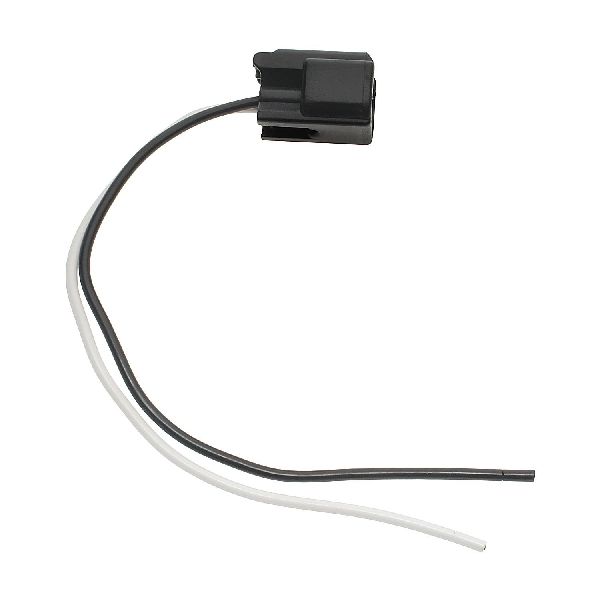
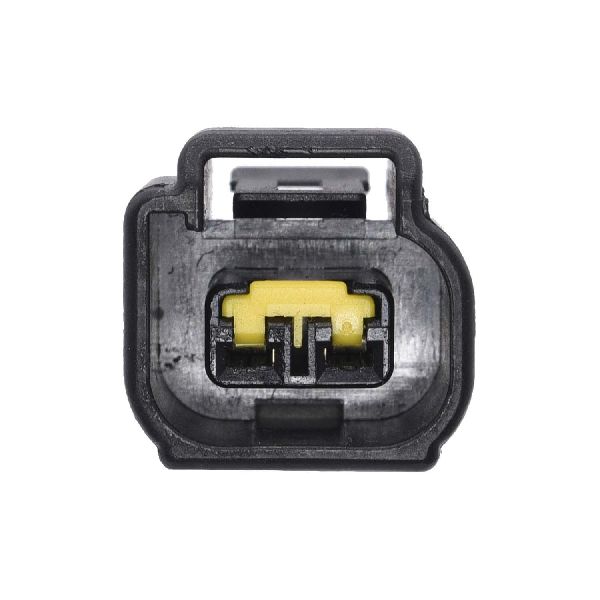
Typical fix: Repair the damaged section of the wiring harness or replace the connector pigtail. Pigtail connectors are widely available.
Est. part cost: $15-$50
Rare But Worth Checking
- Damaged Reluctor Ring: The CKP sensor reads teeth on a wheel (reluctor ring) attached to the crankshaft pulley. While rare, damage to these teeth from road debris or previous engine work can cause a loss of signal. This should be suspected if a new sensor and good wiring do not resolve the issue.
- Faulty Powertrain Control Module (PCM): → Shop Engine Control Module (ECM) A PCM failure is extremely rare but possible. This should only be considered after all other possibilities, including the sensor, wiring, and reluctor ring, have been definitively ruled out.
Diagnosis Steps
- Confirm the P0322 code is present using an OBD-II scanner.
- Use the scanner's live data function to monitor Engine RPM while cranking the engine. A reading of '0' strongly indicates a problem with the CKP sensor or its circuit.
- Turn off the vehicle and disconnect the battery.
- Safely raise the front passenger side of the vehicle, secure it with a jack stand, and remove the wheel.
- Remove the inner splash shield from the wheel well to gain access to the front of the engine and crankshaft pulley area.
- Locate the CKP sensor near the main crankshaft pulley. Visually inspect the sensor's wiring harness and connector for any obvious damage, corrosion, or loose connections. Look for cracks in the sensor's plastic housing.
- If the wiring appears intact, disconnect the sensor. Test for reference voltage (typically 5V) and ground at the connector with a multimeter with the key in the 'ON' position.
- If voltage and ground are present, the CKP sensor is the most likely culprit. Replace the sensor, which is typically held by two 8mm bolts.
- If voltage or ground is missing, trace the wiring harness back toward the PCM to find the open or short in the circuit.
- After repairs are complete, reconnect the battery, clear the trouble codes, and start the vehicle to confirm the fix.
Parts You'll Likely Need
- Crankshaft Position Sensor
(OEM #Motorcraft DY-941 (1F1Z-6C315-BA) for 3.0L Vulcan & Duratec)— This sensor is the most common point of failure for a P0322 code on the 2000-2007 Taurus, directly causing the no-signal condition.
Trusted brands: Motorcraft (Highly Recommended), Delphi, NGK/NTK, Standard Motor Products (SMP)
OEM price range: $50-$75
Aftermarket price range: $25-$60
Related Codes That Often Appear With This One
- P0320 — P0320 indicates a general malfunction or intermittent signal from the engine speed circuit, while P0322 indicates a complete loss of signal. P0320 may appear first as the sensor begins to fail intermittently before it fails completely and triggers P0322.
Technical Service Bulletins (TSBs) & Recalls
- TSB 13-4-17 - MIL ON WITH DTCS P0351-P0356: While not directly for P0322, this TSB addresses issues with coil-on-plugs on 2008 Taurus and other models with 3.0L/3.5L engines. A failing ignition coil can cause misfires, which is a symptom sometimes seen alongside or confused with CKP sensor issues.
- Bulletin #TSB18-2062: Although issued for other Ford models, this bulletin notes that a P0322 code can be associated with an engine that runs rough, a crank no-start condition, loss of power, or a loss of engine RPM.
Platform-Specific Known Issues
- Aftermarket Sensor Reliability: Forum discussions on sites like TaurusCarClub.com frequently warn against using cheap, unbranded aftermarket crankshaft position sensors. Many owners report these sensors failing within months or even weeks of installation, causing the P0322 code to return. The strong consensus is to spend the extra money on a genuine Motorcraft sensor for long-term reliability.
- Real Owner Experience (TaurusCarClub.com): A user on TaurusCarClub.com described a classic failure on their 2004 Taurus: 'The car started stalling at red lights once it was fully warmed up. Then one day, it just wouldn't start at all, just crank-crank-crank. The tach didn't move. Pulled the P0322 code. I replaced the crank sensor with a Motorcraft part...took about 45 minutes working through the wheel well. Started right up and has been perfect for a year since.' This story is representative of hundreds of similar experiences.
Mechanic-Grade Diagnostic Values
- Crankshaft Position Sensor (CKP) Internal Resistance — expected: 300 to 800 Ohms. Failure: A reading of 0 Ohms (short circuit) or infinite/OL (open circuit).
- Crankshaft Position Sensor (CKP) AC Voltage Output — expected: 0.4 to 1.0 Volts AC (while cranking). Failure: A reading of 0 Volts AC while the engine is cranking indicates a failed sensor.
Scan Tool Commands That Help
- Ford IDS, FORScan: Misfire Monitor Neutral Profile Correction — While not always mandatory on this specific Taurus generation to resolve a P0322, this procedure is used on many Fords after replacing the CKP sensor. It helps the PCM relearn the crankshaft's rotational profile to accurately detect misfires. It is good practice if the tool is available but generally not the cause of a P0322 code if skipped.
Wiring & Ground Locations
- PCM Connector Pins 21 & 22 — At the 104-pin Powertrain Control Module connector, located at the right rear corner of the engine compartment.. These are the specific pins for the CKP sensor signal. Testing for resistance (300-800 Ohms) and AC voltage (0.4-1.0V while cranking) across these two pins directly tests the entire sensor circuit, including the sensor itself and the wiring to the PCM.
- G102 / G103 — Right rear side of the engine compartment.. These are primary engine compartment ground points. A corroded or loose ground at these locations can cause a variety of electrical issues, including erratic sensor signals or a no-signal condition from the CKP sensor.
- Battery to Chassis/Engine Ground — Main ground strap from the battery negative terminal to the radiator support and a strap to the starter motor mounting bolt or transmission case.. A weak or corroded main ground is a common cause of intermittent electrical problems and no-start conditions. The PCM and its sensors rely on a solid ground connection to function correctly. A poor ground can cause a voltage drop that prevents the CKP from producing a readable signal.
Real Owner Repair Stories
- Go-Parts Forum Citation (Ford Explorer (similar 3.5L engine, but principle applies)) — Engine would crank for a long time before starting, then run poorly. Code P0322 was present.
❌ Tried (didn't work) The owner noted that many others online had replaced the crankshaft position sensor without fixing the issue.
✅ What actually fixed it The owner found a broken wire in the harness leading to the sensor. Splicing in a new wire to bypass the break resolved the P0322 code and the starting issue, confirming a wiring fault instead of a sensor failure. - NHTSA ODI #11021038: An owner of a similar Ford model reported a breakdown where the dealer's computer read code P0322-PCM after hearing a loud torquing sound.
OEM Part Supersession History
1F1Z-6C315-DA→1F1Z-6C315-DB— Part revision or supplier change.F3DZ-6C315-AFFV→1F1Z-6C315-DB— Part revision or supplier change.
Model Year Variations Within This Range
- 2000-2007: The fourth-generation Taurus was very consistent for this part. Both the 3.0L OHV Vulcan V6 (155hp) and the 3.0L DOHC Duratec V6 (201hp) used the same crankshaft position sensor (Motorcraft DY-941 / 1F1Z-6C315-BA) in the same location. No significant variations related to the P0322 fault exist within this model year range.
Diagnostic Flowchart
Other Known Issues on This Vehicle
Issues unrelated to this code that are worth knowing about as an owner of this generation:
- Catastrophic Front Subframe Rust/Corrosion 🔴 High — Very common in 'rust belt' states. Can become structurally unsafe, causing components like control arms to detach.
- AX4N/4F50N Transmission Failure 🔴 High — Prevalent in 2003-2005 models. Often presents as a sudden loss of acceleration or inability to engage gears due to stripped torque converter splines or internal failure.
- Fractured Front Coil Springs 🔴 High — Common on 1999-2001 models in high-corrosion areas, can cause the spring to contact and puncture the front tire. (Ref: Safety Recall 04S17, TSB 14-0149)
- Leaking Oil Pan and Valve Cover Gaskets 🟠 Medium — Extremely common across all years. The 3.0L Vulcan is notorious for oil leaks from the oil pan gasket and valve covers, which can drip onto the hot exhaust.
- Failed Camshaft Synchronizer Assembly 🟠 Medium — A frequent issue on the 3.0L Vulcan engine, causing a characteristic 'chirping' or 'squeaking' noise. If it fails completely, it can cause engine damage and misfires.
- Cracked/Leaking PCV Hose Elbow (Duratec) 🟡 Low — The rubber elbow under the intake manifold on the 3.0L DOHC Duratec engine degrades from oil exposure, causing a large vacuum leak, high idle, and lean codes.
Used vs. New Parts: Buying Guide for This Vehicle
When a used part is the smart pick: For a critical, low-cost electronic sensor like the Crankshaft Position Sensor, a used part is almost never a smart choice. The labor to replace it if the used part fails quickly outweighs any initial savings. A used part should only be considered as a temporary, emergency measure for diagnostic purposes.
Donor-vehicle mileage cap: roughly under 50000 miles for the part to have meaningful remaining life.
What to inspect on the donor part:
- Inspect the plastic housing for any cracks, which is the primary failure mode.
- Check the electrical connector pins for corrosion or damage.
- If possible, test the resistance with a multimeter before purchase; it should be between 300-800 ohms.
OEM-only on this vehicle (don't cheap out):
- Crankshaft Position Sensor (CKP)
Aftermarket brands forum-validated for this vehicle:
- Motorcraft (OEM)
- Delphi
- NGK/NTK
Brands owners have reported issues with on this vehicle:
- Unbranded, 'white box' sensors from online marketplaces are frequently reported on forums to have very short service lives.
Real Owner Stories
Aggregated from forums and TSBs cited above. Mileages and costs reflect what owners reported in those sources.
2004 Ford Taurus 3.0L
Symptoms: The car started stalling at red lights once it was fully warmed up. Then one day, it just wouldn't start at all, just crank-crank-crank. The tach didn't move. Pulled the P0322 code.
What fixed it: Replaced the crank sensor with a Motorcraft part through the wheel well.
Source hint: TaurusCarClub.com forum user experience cited in 'Real Owner Experience'
2006 Ford Taurus 3.0L
Symptoms: Engine cranks but will not start; P0322 code present.
What fixed it: Replacement of the crankshaft position sensor using 8mm sockets as demonstrated in a step-by-step guide.
Source hint: 1A Auto mechanic video
Ford Taurus 3.0L
Symptoms: No-start condition with DTC P0322.
What fixed it: Replacement of a physically cracked CKP sensor.
Source hint: Melniks Automotive YouTube video 'FORD NO START PROBLEM DTC P0322 EASY FAST FIX'
Related OBD-II Codes
Frequently Asked Questions
My 2004 Taurus stalls when warm but restarts after cooling; is this a known issue?
Should I use an aftermarket sensor or a Motorcraft part for my P0322 repair?
Does TSB 13-4-17 explain my P0322 code on my 2008 Taurus?
How can I tell if the CKP sensor is the problem without a scan tool?
Where is the Crankshaft Position Sensor located on the 3.0L Vulcan V6?
Can I just repair the wiring instead of replacing the sensor?
Helpful Videos

We Have This Part in Stock


The information in this article is provided for general reference and educational purposes only. Vehicle specifications, procedures, and part compatibility can vary by production date, trim level, and region. Always consult your vehicle's factory service manual and verify part numbers before purchasing or performing repairs. Safety-critical components such as airbags, seat belts, and braking systems should be installed by a qualified professional.
- Ford Taurus:
- 🧭 Diagnostic Flowchart
- 🎬 Helpful Videos
- 🛍️ Shop This Part
- What's Unique About the 2000-2007 Ford Taurus
- Symptoms You May Notice
- Most Likely Causes
- Rare But Worth Checking
- Diagnosis Steps
- Parts You'll Likely Need
- Related Codes That Often Appear With This One
- Technical Service Bulletins (TSBs) & Recalls
- Platform-Specific Known Issues
- Mechanic-Grade Diagnostic Values
- Scan Tool Commands That Help
- Wiring & Ground Locations
- Real Owner Repair Stories
- OEM Part Supersession History
- Model Year Variations Within This Range
- Other Known Issues on This Vehicle
- Used vs. New Parts: Buying Guide for This Vehicle
- Real Owner Stories
- 2004 Ford Taurus 3.0L
- 2006 Ford Taurus 3.0L
- Ford Taurus 3.0L
- Related OBD-II Codes
- Frequently Asked Questions
- 🎟️ Get 5% Off