

P0322 on 2010-2015 Hyundai Tucson 2.4L: Crank Sensor Failure Causes and Fixes
On a 2010-2015 Tucson with the 2.4L engine, code P0322 almost always means the crankshaft position sensor has failed. This can cause a no-start or sudden stalling. Replacing the sensor is a common DIY fix, with the part costing between $25 for an aftermarket version and $150 for an OEM part. This issue is also common on the Kia Sportage and Hyundai Sonata with the same engine.
- P0322 on a 2010-2015 Tucson means the engine computer has lost the signal from the crankshaft position sensor.
- This is a serious code that can cause the engine to stall without warning. Do not drive the vehicle.
- The most likely cause is a failed crankshaft position sensor. The second most likely cause is damaged wiring to that sensor.
- The sensor is located on the back of the engine, accessible from underneath, and is a manageable DIY replacement for many owners.
- Always confirm the correct part number for the sensor using your vehicle's VIN before purchasing.
What's Unique About the 2010-2015 Hyundai Tucson
The 2.4L Theta II engine used in this generation of Tucson has a well-documented history of internal problems, including connecting rod bearing failures that led to recalls and a lifetime engine warranty for many owners. While code P0322 is almost always a simple sensor failure, any significant engine knocking sound accompanying this code should be taken very seriously. It could be an early warning of the more severe engine issues this platform is known for, which often triggers a P1326 code after a mandatory software update (KSDS).
Symptoms You May Notice
- Engine cranks but will not start
- Engine stalls intermittently while driving, especially when warm or coming to a stop
- Extended cranking time before the engine starts
- Rough idling or engine misfiring
- Check Engine Light is on
- Tachometer reads 0 RPM while cranking 🎬 Watch: Common symptoms of a failing crankshaft sensor
- Replacing the camshaft position sensor. While related, the camshaft sensor typically throws different codes (like P0340). P0322 specifically points to a loss of the primary engine speed signal, which comes from the crankshaft sensor.
- Replacing fuel system components like the fuel pump. A no-start condition can be caused by a lack of fuel, but a P0322 code indicates the problem is with the ignition timing signal, which prevents both spark and fuel injection from being commanded correctly.
Most Likely Causes
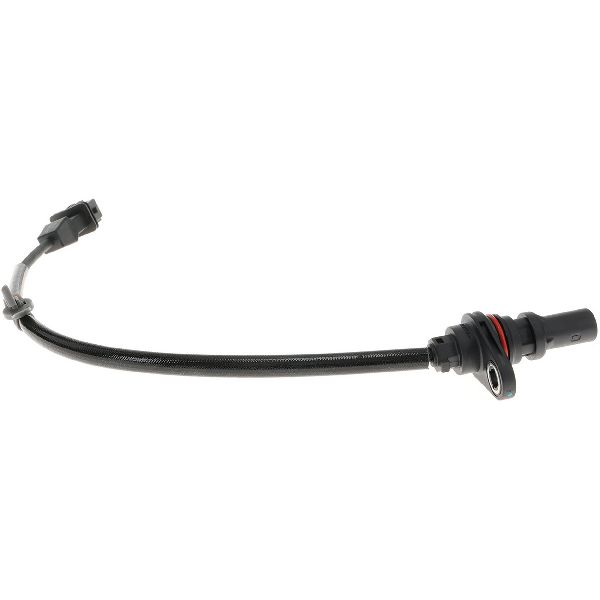
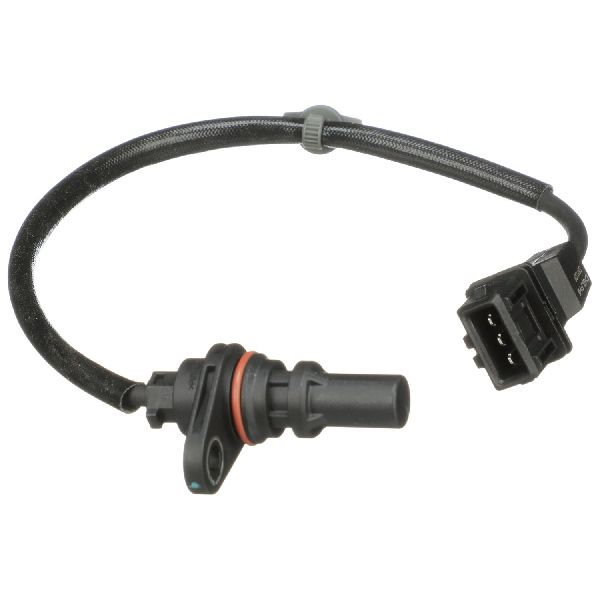
- Failed Crankshaft Position Sensor (CKP) 🔴 High Probability → Shop Engine Crankshaft Position Sensor Crankshaft position sensors are common failure points on many vehicles as they age due to constant exposure to heat and vibration. The failure is often heat-related; the sensor may work when the engine is cold but fail as it warms up, causing stalling. There is no specific design flaw on the Tucson, but it is the most frequent culprit for P0322.
How to confirm: After visually inspecting the wiring, the most definitive test is to check for a signal from the sensor using an oscilloscope while cranking the engine. A simpler method is to check for AC voltage or resistance with a multimeter, comparing the readings to the manufacturer's specifications. Given the high failure rate and low part cost, many DIYers opt to replace the sensor as a primary diagnostic step, especially if symptoms are intermittent and heat-related.
Typical fix: Replace the crankshaft position sensor. The sensor is located on the back of the engine block, near the transmission bell housing, and is held in by a single 10mm bolt. 🎬 See this walkthrough on locating and removing the sensor
Est. part cost: $25-$150 - Damaged Wiring or Connector 🟡 Medium Probability The sensor's wiring is routed near hot exhaust components and the transmission case, making it susceptible to melting, chafing, or corrosion over time. The connector itself can also become brittle and crack.
How to confirm: Visually inspect the entire length of the sensor's wiring harness from the sensor itself to the main engine harness. Look for any signs of melting, frayed wires, or damage. Wiggle the connector and wiring with the engine running (if possible) to see if it induces a stall. Check the connector for corrosion, bent pins, or a loose fit.
Typical fix: Repair the damaged section of wire or replace the connector pigtail. Ensure the repaired harness is properly secured away from heat sources or moving parts using zip ties.
Est. part cost: $5-$30
Rare But Worth Checking
- Damaged Reluctor Ring: The reluctor ring (or tone ring) is a toothed wheel that the crankshaft sensor reads. If it is damaged, cracked, or has debris on it, the sensor cannot produce a clean signal. This is rare but can happen if the engine has had other internal work or failures.
- Faulty Engine Control Module (ECM): → Shop Engine Control Module (ECM) While possible, a failed ECM is the least likely cause. All other possibilities, especially the sensor and its wiring, should be exhaustively ruled out before considering ECM replacement.
Diagnosis Steps
- Scan for other DTCs: Check if any other codes are present that could provide more clues (e.g., P0320, P1326).
- Visual Inspection: Get under the vehicle and locate the crankshaft position sensor on the rear of the engine block, near where it meets the transmission. It is often behind a small heat shield held by two 10mm bolts.
- Inspect the Connector and Wiring: Carefully examine the sensor's electrical connector for corrosion, damage, or loose pins. Follow the wiring harness as far as you can, looking for any signs of melting, chafing, or breaks.
- Test the Sensor (Optional): If you have a multimeter, you can check for resistance across the sensor's pins or check for AC voltage while an assistant cranks the engine. Compare your readings to the manufacturer's specifications. An oscilloscope is the best tool for confirming a good/bad signal.
- Remove the Heat Shield: Remove the two 10mm bolts holding the heat shield to gain access to the sensor's mounting bolt.
- Replace the Crankshaft Position Sensor: Remove the single 10mm bolt holding the sensor in place. The sensor may be stuck; gently twist and pull to remove it. Be careful, as old plastic sensors can become brittle and break off in the engine block. Lubricate the O-ring on the new sensor with clean engine oil before installation.
- Reassemble and Clear Codes: Install the new sensor, torque the bolt to specification (typically around 7-9 ft-lbs), reinstall the heat shield, and plug in the connector. Use a scan tool to clear the P0322 code.
- Perform Relearn Procedure: In most cases, the system will relearn on its own. For a faster adaptation, start the engine and let it idle for 10-15 minutes. This allows the ECM to calibrate to the new sensor's signal. Some manufacturers require a specific 'Crankshaft Variation Relearn' procedure with a capable scan tool, though this is less common on this specific Hyundai model.
Parts You'll Likely Need
- Crankshaft Position Sensor
(OEM #39180-2G000 or 39180-25300)— This sensor is the primary cause of code P0322. There may be two different part numbers used during this vehicle's production run; always verify with the vehicle's VIN before purchasing. 39180-2G000 is often associated with the GDI engines (2014-2015), while 39180-25300 is associated with MPI engines (2010-2013).
Trusted brands: Hyundai (Genuine OEM), Bosch, Delphi, NGK/NTK, Standard Motor Products (SMP)
OEM price range: $120-$180
Aftermarket price range: $25-$80
Related Codes That Often Appear With This One
- P0320 — P0320 indicates a general malfunction or range/performance issue in the engine speed input circuit, while P0322 indicates a complete loss of signal. You might see P0320 appear for an intermittent issue before it degrades to a complete failure and sets P0322.
- P1326 — This code is specific to Hyundai/Kia and is triggered by the Knock Sensor Detection System (KSDS). It indicates abnormal vibrations consistent with rod bearing failure. While not directly caused by the crank sensor, an owner might experience a P0322 stalling issue on an engine that is also at risk for the bearing failure that causes P1326.
Technical Service Bulletins (TSBs) & Recalls
- TSB 21-01-023H-1 / Campaign 953: This TSB details the installation of the Knock Sensor Detection System (KSDS) software. This update is designed to detect the unique vibrations of a failing connecting rod bearing and put the vehicle into a reduced-power 'limp mode' (triggering code P1326) to prevent catastrophic failure. This is critical context for any owner of a Theta II engine.
Platform-Specific Known Issues
- The 2.4L Theta II engine was subject to several major recalls (like Recall 162) and a class-action lawsuit for premature connecting rod bearing wear, which could lead to catastrophic engine failure. Hyundai extended the warranty on the engine short block to a lifetime warranty for eligible vehicles that have had the Knock Sensor Detection System (KSDS) software update performed. If P0322 is accompanied by a new, loud engine knocking sound or a flashing check engine light with code P1326, stop driving immediately and contact a Hyundai dealer to check for warranty coverage.
Mechanic-Grade Diagnostic Values
- Crankshaft Position Sensor (CKP) Signal Voltage — expected: A clean square wave of 2-5V amplitude when viewed on an oscilloscope while cranking.. Failure: Absence of a waveform, a flat line at 0V, or a distorted/noisy signal points to a sensor or wiring failure.
- Crankshaft Position Sensor (CKP) Supply Voltage — expected: Typically 5V at the sensor connector with the key in the 'ON' position.. Failure: Voltage below 4.5V suggests a power supply problem from the ECM or a wiring issue.
- Oil Control Valve (OCV) Coil Resistance — expected: 6.9–7.9 Ohms (Denso part) or 6.7–7.7 Ohms (Delphi part) at 68°F (20°C). While not a direct cause of P0322, a faulty OCV can cause related timing codes and is a common failure item on this engine.. Failure: A reading of 'OL' (open circuit) or a value significantly outside the specified range indicates a failed solenoid coil.
Scan Tool Commands That Help
- Hyundai GDS (Global Diagnostic System): Waveform Analysis / Live Data — To view the live data stream from the crankshaft position sensor while cranking the engine. The dealer tool provides the most reliable graphing of the sensor's output waveform to confirm if a signal is being generated, if it's clean, or if it's completely absent, which is the expected condition for a P0322.
Wiring & Ground Locations
- ECM Harness Connector [EEG-K] — At the Engine Control Module (ECM), typically located in the engine bay.. This is the main connector where signals from all engine sensors terminate. For advanced diagnosis, a technician would test for the CKP signal directly at the corresponding pin on this connector to rule out a wiring break between the sensor and the ECM. Pins 3 and 4 are typically power grounds for the ECM itself.
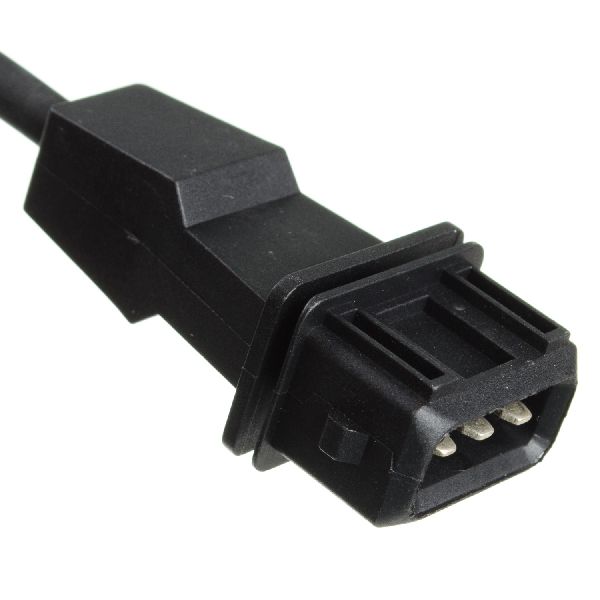
- CKP Sensor Connector — On the sensor pigtail, located at the back of the engine block near the transmission bell housing.. This is the primary point for testing sensor voltage and signal output. It is a 3-pin connector. One pin will have the supply voltage (approx. 5V), one will be the ground, and the third is the signal wire that sends the square wave back to the ECM. Checking for power and ground here is the first step in electrical diagnosis.
Real Owner Repair Stories
- Ross-Tech Forums (Volkswagen (similar P0322 issue, methodology applies)) — Car randomly gets jerky and stalls while driving, setting a P0322 code.
❌ Tried (didn't work) Resetting transmission adaptation settings.
✅ What actually fixed it Replacing the crankshaft position sensor (G28). The user noted the difficulty of accessing the sensor but confirmed that its replacement completely resolved the stalling and jerkiness.
OEM Part Supersession History
39180-25200→39180-25300— Updated part revision for improved reliability or manufacturing process change.
Heads up: This part is generally for the 2.4L MPI Theta II engines, typically found in the 2010-2013 Tucson models.N/A→39180-2G000— This is the part number for the 2.4L GDI Theta II engines.
Heads up: This part is for the GDI engines used in the 2014-2015 Tucson models and is not interchangeable with the 39180-25300 used in earlier MPI engines.
Model Year Variations Within This Range
- 2010-2013: These model years primarily used the 2.4L Theta II engine with Multi-Port Injection (MPI). The correct crankshaft position sensor is typically part number 39180-25300.
- 2014-2015: For the 2014 model year refresh, Hyundai updated the 2.4L Theta II engine with Gasoline Direct Injection (GDI). These engines require a different crankshaft position sensor, typically part number 39180-2G000. Always verify the correct part with the vehicle's VIN.
Diagnostic Flowchart
Other Known Issues on This Vehicle
Issues unrelated to this code that are worth knowing about as an owner of this generation:
- Catastrophic Engine Failure (Rod Bearing Wear) 🔴 High — Widespread enough to trigger multiple class-action lawsuits and recalls. Can occur at various mileages, often starting after 60,000 miles. (Ref: Recall 162, Campaign 953 (KSDS Update), and resulting Lifetime Engine Warranty.)
- Excessive Oil Consumption 🟠 Medium — Very common issue for the GDI version of this engine, often starting around 80,000-100,000 miles. Caused by carbon clogging oil control rings. (Ref: Hyundai TSB 23-EM-003H describes a piston soak procedure to attempt to free the rings.)
- Steering Column Coupler Failure 🟠 Medium — Extremely common. The flexible rubber coupler in the electronic power steering motor disintegrates, causing a distinct clicking or clunking noise when turning the steering wheel. Usually occurs between 50,000 and 100,000 miles. (Ref: TSB 17-ST-002 extends the warranty for this specific part.)
Used vs. New Parts: Buying Guide for This Vehicle
When a used part is the smart pick: A used part is generally not recommended for this specific repair. The crankshaft position sensor is an electronic component exposed to significant heat and vibration, and its failure is age-related. A used sensor from a junkyard carries a high risk of having limited remaining life or being faulty from the start.
Donor-vehicle mileage cap: roughly under 30000 miles for the part to have meaningful remaining life.
What to inspect on the donor part:
- Verify the donor vehicle's mileage is as low as possible.
- Inspect the plastic connector for any cracks, brittleness, or signs of heat damage.
- Ensure the wiring pigtail is intact with no signs of fraying or melting.
- If possible, test the resistance of the used sensor with a multimeter before purchase to ensure it's not an open circuit.
OEM-only on this vehicle (don't cheap out):
- Crankshaft Position Sensor: While some high-quality aftermarket brands are acceptable, many forum users and mechanics report immediate or premature failure with cheaper, no-name aftermarket sensors for Hyundai/Kia applications. Using a Genuine Hyundai/Kia part or a trusted OEM supplier like Bosch, Delphi, or NTK is strongly advised to avoid repeat repairs.
Aftermarket brands forum-validated for this vehicle:
- Bosch
- Delphi
- NTK
- Mando (often an OEM supplier for Hyundai)
Brands owners have reported issues with on this vehicle:
- Unbranded, low-cost sensors from online marketplaces are frequently cited as being unreliable and a common cause of the code returning shortly after repair.
Real Owner Stories
Aggregated from forums and TSBs cited above. Mileages and costs reflect what owners reported in those sources.
2013 Hyundai Tucson Limited 2.4L
Symptoms: The vehicle was experiencing intermittent stalling specifically while idling.
What fixed it: The crankshaft position sensor was identified as the primary suspect for the intermittent stalling issue.
Source hint: Hyundai-Forums.com thread titled '2013 Tucson Limited 2wd, stalling at idle'
2010-2015 Hyundai Tucson 2.4L Theta II — ~65000 miles
Symptoms: Loud engine knocking sound accompanied by a flashing check engine light.
What fixed it: Contacting a Hyundai dealer for potential warranty coverage under the lifetime engine short block extension due to connecting rod bearing wear.
Source hint: vehicle_specific_issues regarding Recall 162 and Campaign 953
Related OBD-II Codes
Frequently Asked Questions
My 2013 Tucson is stalling at idle; could this be related to the crankshaft sensor?
Is there a recall for the engine issues that might cause a P0322 or similar codes on my Theta II engine?
Where is the crankshaft position sensor located on the 2.4L Tucson?
Does my Tucson have a lifetime warranty for engine issues related to these codes?
Why does my tachometer stay at 0 RPM while I'm trying to start my Tucson?
Should I use a used sensor from a junkyard to fix the P0322 code?
Helpful Videos
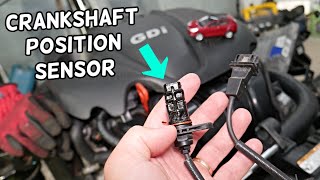
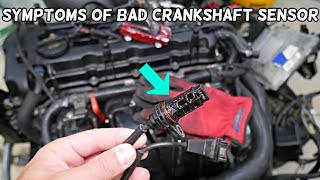
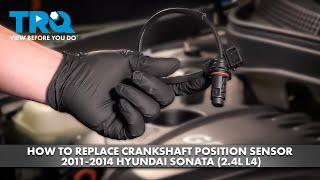
We Have This Part in Stock


The information in this article is provided for general reference and educational purposes only. Vehicle specifications, procedures, and part compatibility can vary by production date, trim level, and region. Always consult your vehicle's factory service manual and verify part numbers before purchasing or performing repairs. Safety-critical components such as airbags, seat belts, and braking systems should be installed by a qualified professional.
- Hyundai Tucson:
- 🧭 Diagnostic Flowchart
- 🎬 Helpful Videos
- 🛍️ Shop This Part
- What's Unique About the 2010-2015 Hyundai Tucson
- Symptoms You May Notice
- Most Likely Causes
- Rare But Worth Checking
- Diagnosis Steps
- Parts You'll Likely Need
- Related Codes That Often Appear With This One
- Technical Service Bulletins (TSBs) & Recalls
- Platform-Specific Known Issues
- Mechanic-Grade Diagnostic Values
- Scan Tool Commands That Help
- Wiring & Ground Locations
- Real Owner Repair Stories
- OEM Part Supersession History
- Model Year Variations Within This Range
- Other Known Issues on This Vehicle
- Used vs. New Parts: Buying Guide for This Vehicle
- Real Owner Stories
- 2013 Hyundai Tucson Limited 2.4L
- 2010-2015 Hyundai Tucson 2.4L Theta II — ~65000 miles
- Related OBD-II Codes
- Frequently Asked Questions
- 🎟️ Get 5% Off